Dendrology final

0.0(0)
Studied by 0 people
call kaiCall Kai
learnLearn
examPractice Test
spaced repetitionSpaced Repetition
heart puzzleMatch
flashcardsFlashcards
GameKnowt Play
Card Sorting

1/184

encourage image

There's no tags or description

Looks like no tags are added yet.

Last updated 5:28 PM on 5/12/26
Name
Mastery
Learn
Test
Matching
Spaced
Call with Kai

No analytics yet

Send a link to your students to track their progress

185 Terms

1
New cards

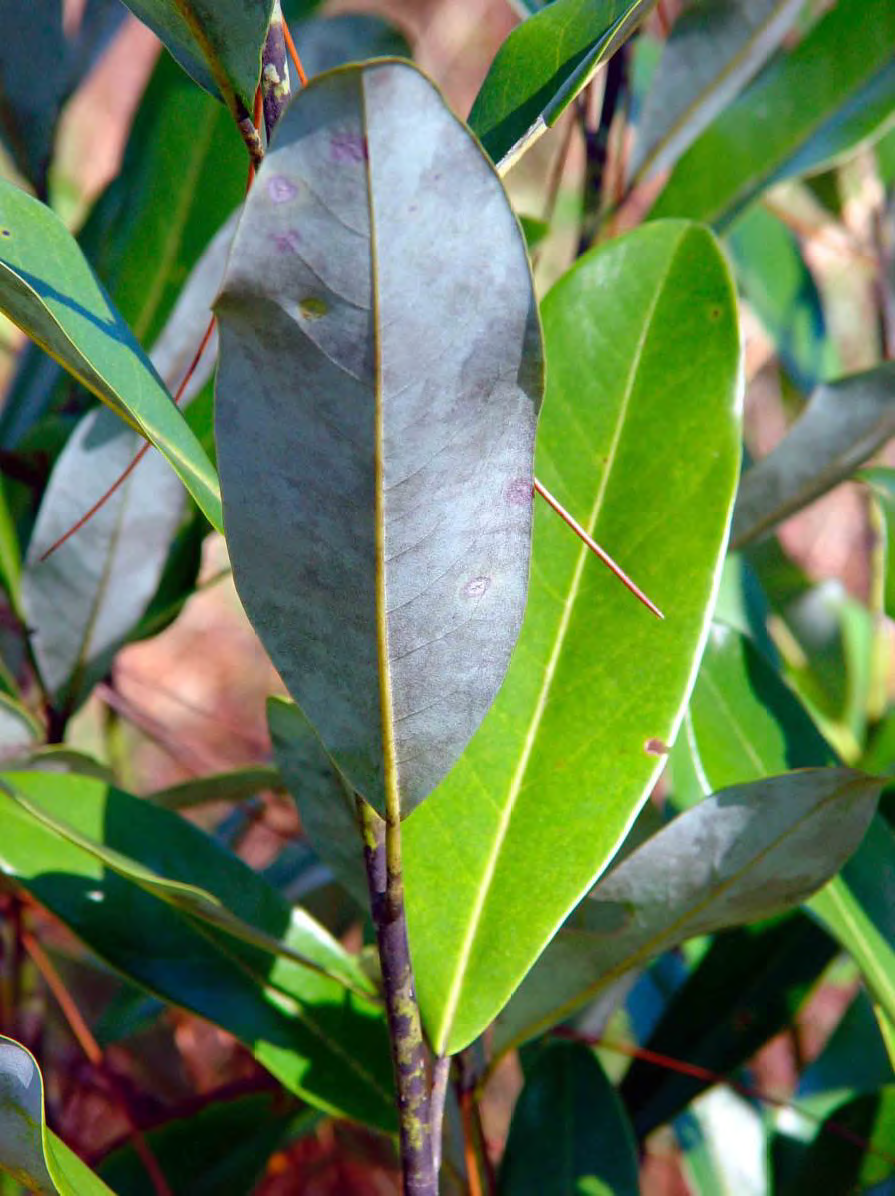
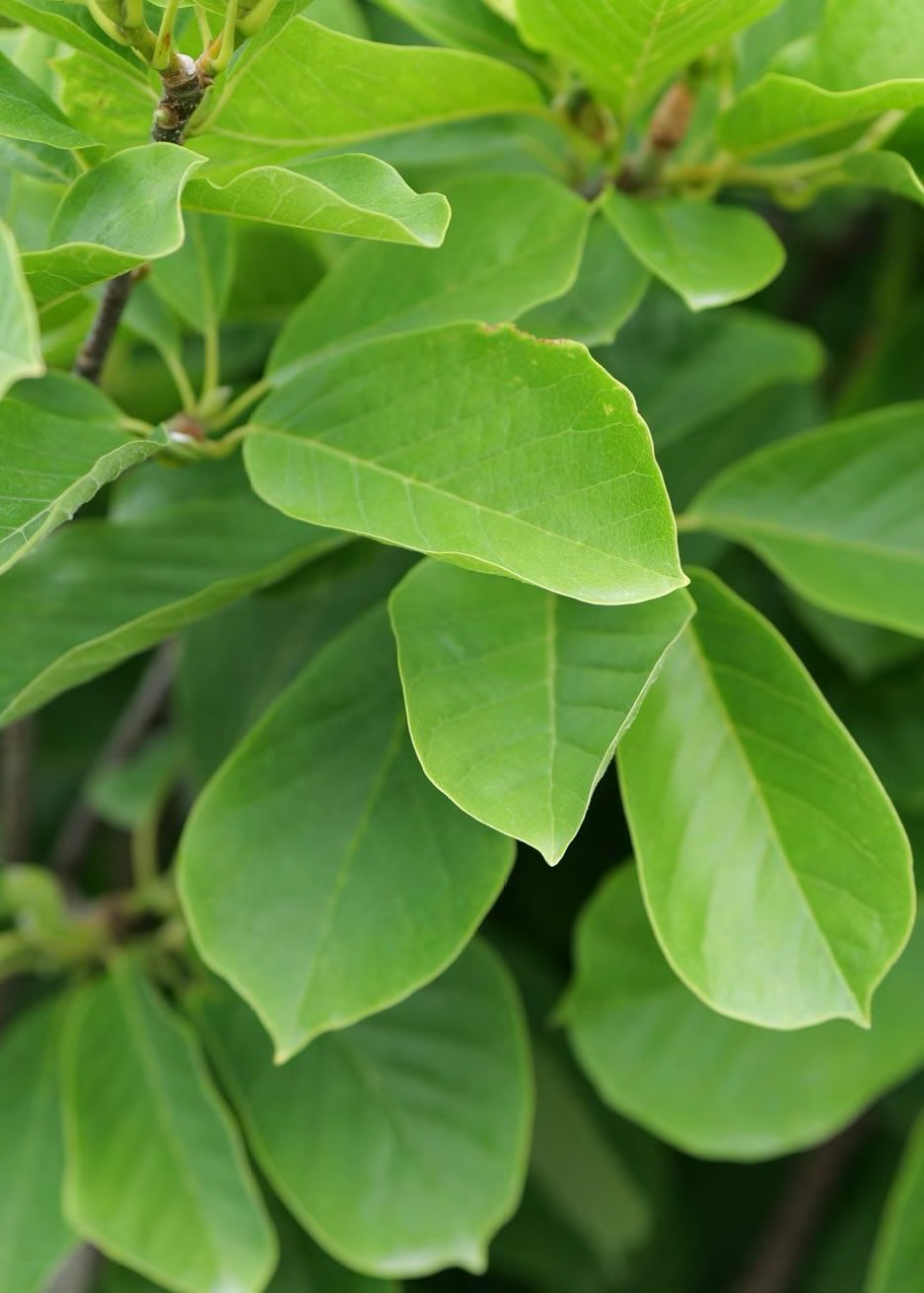
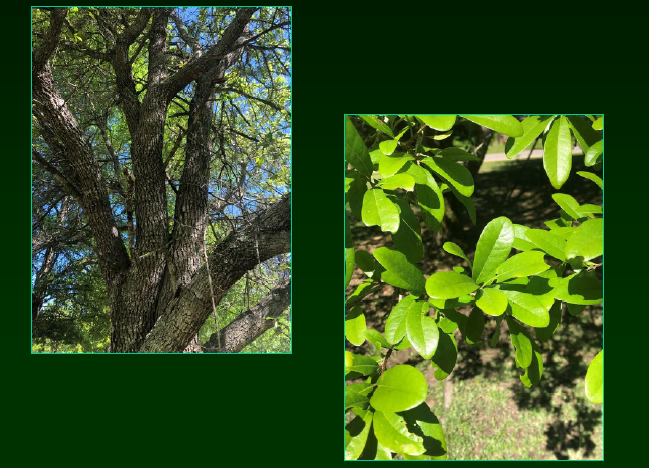
Magnolia virginiana

Magnoliaceae

Usually found in moist areas

Key Characters:

Evergreen leaves

Leaves whitish underneath

<p>•</p><p>Magnoliaceae</p><p>•</p><p>Usually found in moist areas</p><p>•</p><p>Key Characters:</p><p>•</p><p>Evergreen leaves</p><p>•</p><p>Leaves whitish underneath</p>
2
New cards

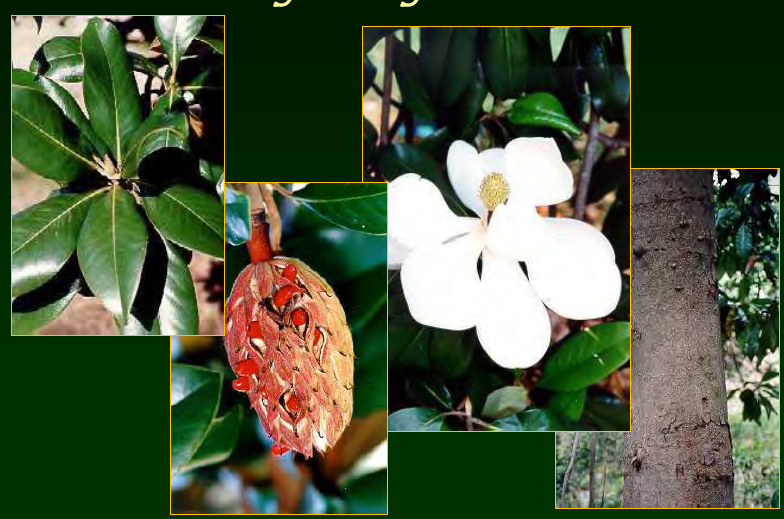
Magnolia grandiflora

MS state tree

Key Characters:

Large evergreen leaves

Usually pubescent underneath

“Magnolia” scent

Large tree

<p>•</p><p>MS state tree</p><p>•</p><p>Key Characters:</p><p>•</p><p>Large evergreen leaves</p><p>•</p><p>Usually pubescent underneath</p><p>•</p><p>“Magnolia” scent</p><p>•</p><p>Large tree</p>
3
New cards

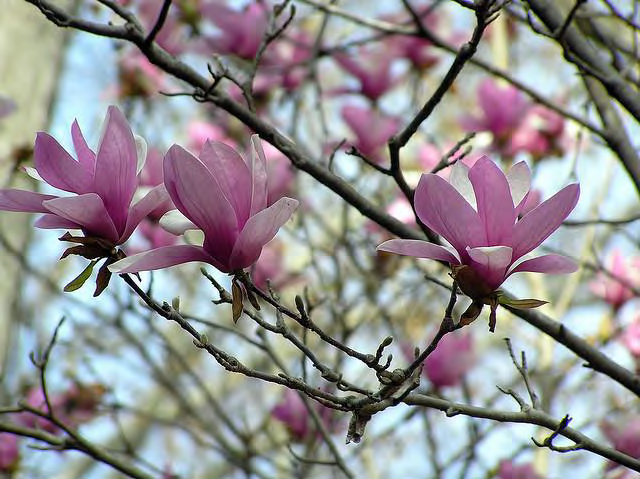
Magnolia x soulangiana

Hybrid of two Chinese magnolias

Key Characters:

Purple flowers

Pubescent buds

<p>•</p><p>Hybrid of two Chinese magnolias</p><p>•</p><p>Key Characters:</p><p>•</p><p>Purple flowers</p><p>•</p><p>Pubescent buds</p>
4
New cards

Magnolia pyramidata

Mesic forests, ravines

Similar to M. fraseri

Key Characters:

Deciduous

Smooth bark

Rhombus-shaped leaves (pandurate)

Auriculate leaf bases

Glabrous terminal buds

<p>•</p><p>Mesic forests, ravines</p><p>•</p><p>Similar to M. fraseri</p><p>•</p><p>Key Characters:</p><p>•</p><p>Deciduous</p><p>•</p><p>Smooth bark</p><p>•</p><p>Rhombus-shaped leaves (pandurate)</p><p>•</p><p>Auriculate leaf bases</p><p>•</p><p>Glabrous terminal buds</p>
5
New cards

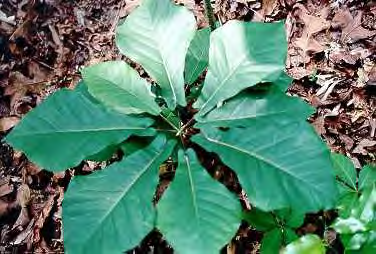
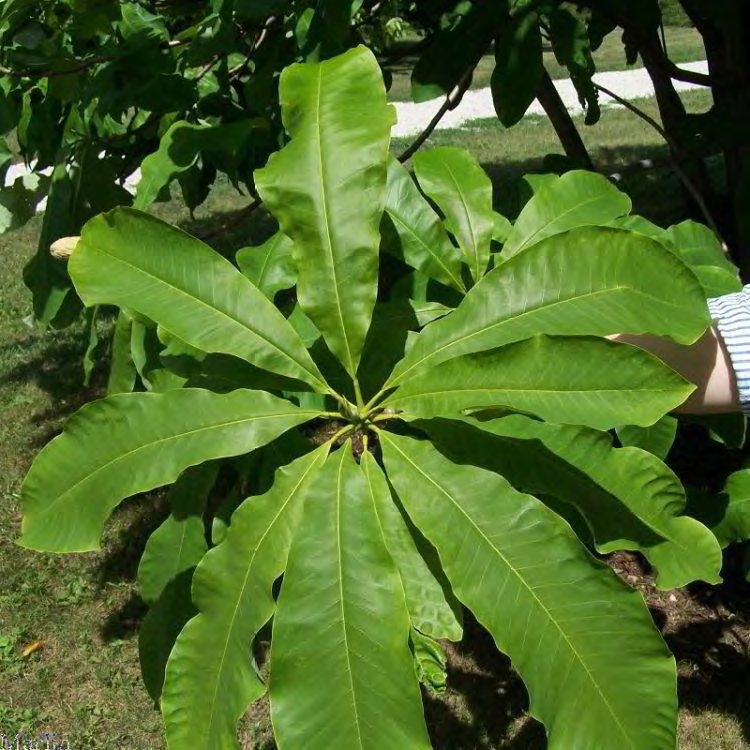
Magnolia tripetala

Mesic forests, ravines

Key Characters:

Deciduous

Smooth bark

Large leaves

Acute leaf bases

Glauous terminal buds

Leaves appear whorled (pseudo-whorled)
<p>•</p><p>Mesic forests, ravines</p><p>•</p><p>Key Characters:</p><p>•</p><p>Deciduous</p><p>•</p><p>Smooth bark</p><p>•</p><p>Large leaves</p><p>•</p><p>Acute leaf bases</p><p>•</p><p>Glauous terminal buds</p><p>•</p><p>Leaves appear whorled (pseudo-whorled)</p>
6
New cards

Magnolia denudata

Native to China

Cultivated in Buddhist gardens for >1,400 years

Key Characters:

Deciduous

Smooth bark

Rounded leaf bases

Acuminate leaf tips

<p>•</p><p>Native to China</p><p>•</p><p>Cultivated in Buddhist gardens for &gt;1,400 years</p><p>•</p><p>Key Characters:</p><p>•</p><p>Deciduous</p><p>•</p><p>Smooth bark</p><p>•</p><p>Rounded leaf bases</p><p>•</p><p>Acuminate leaf tips</p>
7
New cards
<p>Liriodendron tulipifera</p>

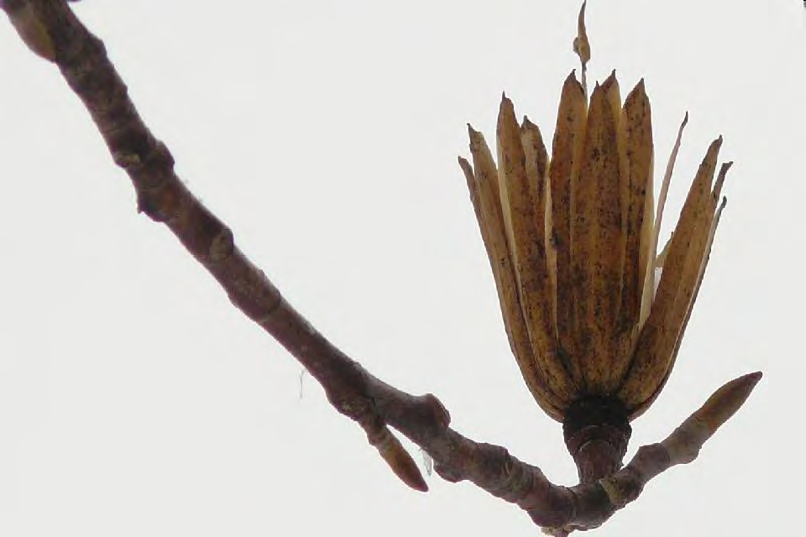
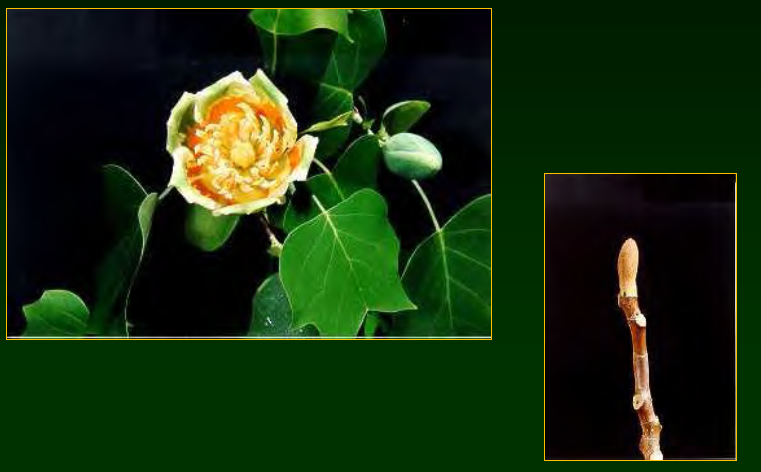
Liriodendron tulipifera

Magnoliaceae

ommon throughout eastern U.S.; everywhere in MS except Delta

Key Characters:

Distinctive leaves (truncate tips)

Yellow flowers

Smooth, gray bark

Circular stipule scars

Samaras

<p>•</p><p>Magnoliaceae</p><p>•</p><p>ommon throughout eastern U.S.; everywhere in MS except Delta</p><p>•</p><p>Key Characters:</p><p>•</p><p>Distinctive leaves (truncate tips)</p><p>•</p><p>Yellow flowers</p><p>•</p><p>Smooth, gray bark</p><p>•</p><p>Circular stipule scars</p><p>•</p><p>Samaras</p>
8
New cards

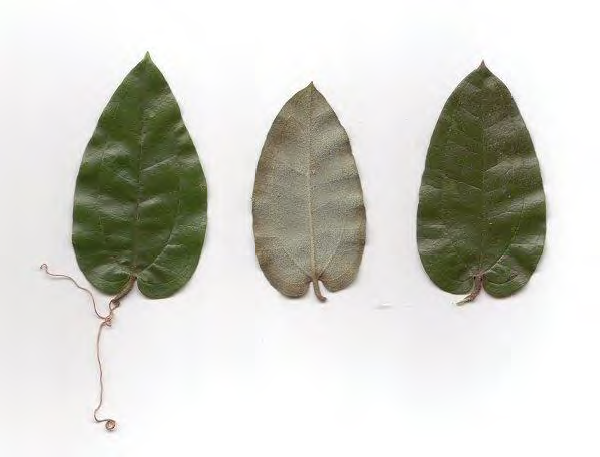
Smilax pumila

Smilacaceae

Key Characters:

Vine (doesn’t climb)

No thorns

Tomentose leaf undersides

<p>•</p><p>Smilacaceae</p><p>•</p><p>Key Characters:</p><p>•</p><p>Vine (doesn’t climb)</p><p>•</p><p>No thorns</p><p>•</p><p>Tomentose leaf undersides</p>
9
New cards

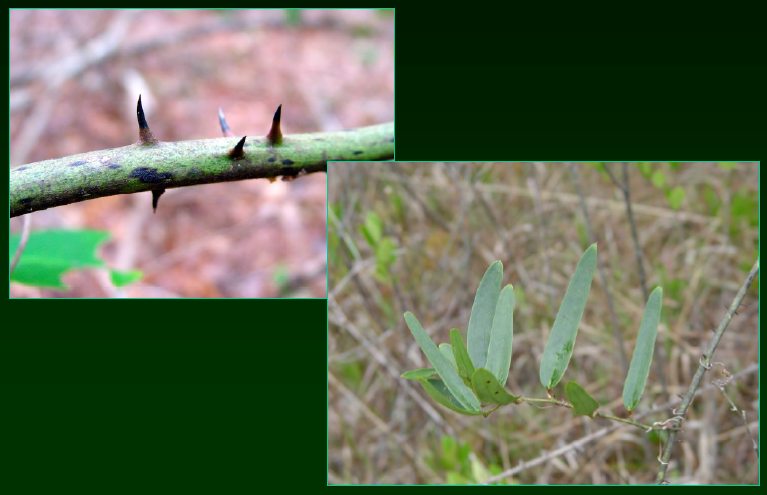
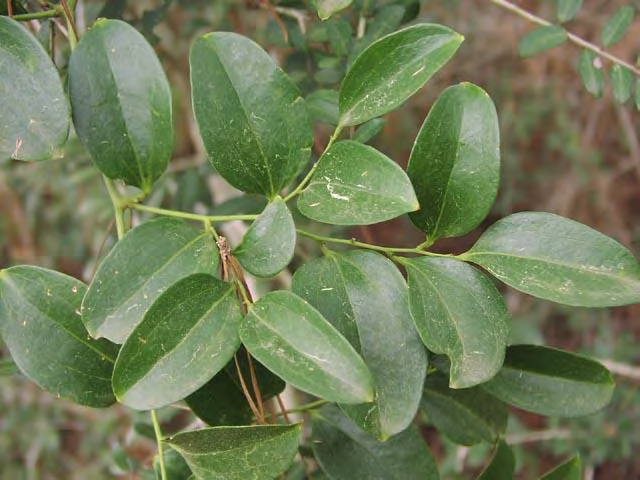
Smilax laurifolia

wet habitats

Key Characters:

Vine

Thick, evergreen leaves

Oblong leaves

Prominent midvein

Nasty, evil thorns

<p>wet habitats</p><p>•</p><p>Key Characters:</p><p>•</p><p>Vine</p><p>•</p><p>Thick, evergreen leaves</p><p>•</p><p>Oblong leaves</p><p>•</p><p>Prominent midvein</p><p>•</p><p>Nasty, evil thorns</p>
10
New cards

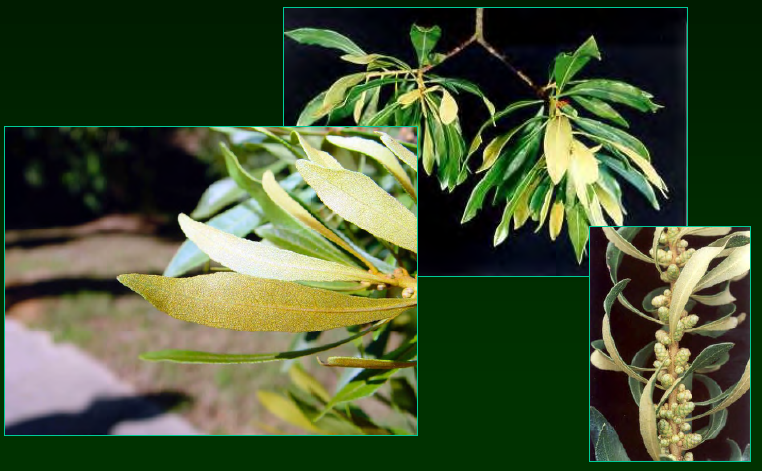
Morella cerifera

Myricaceae

Berries (drupes) important for wildlife

Key Characters:

Evergreen leaves

Bayberry scent

Tiny golden glands on leaf undersides

Small tree

<p>•</p><p>Myricaceae</p><p>•</p><p>Berries (drupes) important for wildlife</p><p>•</p><p>Key Characters:</p><p>•</p><p>Evergreen leaves</p><p>•</p><p>Bayberry scent</p><p>•</p><p>Tiny golden glands on leaf undersides</p><p>•</p><p>Small tree</p>
11
New cards

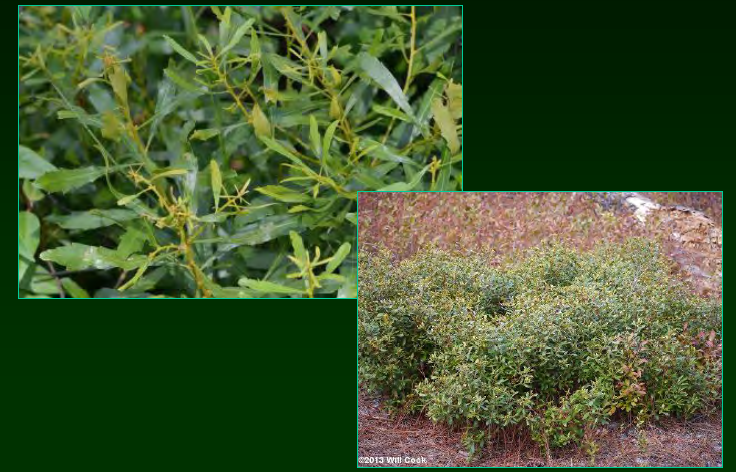
Morella pumila

Myricaceae

Dry, open habitat

Key Characters:

Similar to Morella cerifera but smaller leaves

Dwarf shrub

<p>•</p><p>Myricaceae</p><p>•</p><p>Dry, open habitat</p><p>•</p><p>Key Characters:</p><p>•</p><p>Similar to Morella cerifera but smaller leaves</p><p>•</p><p>Dwarf shrub</p>
12
New cards

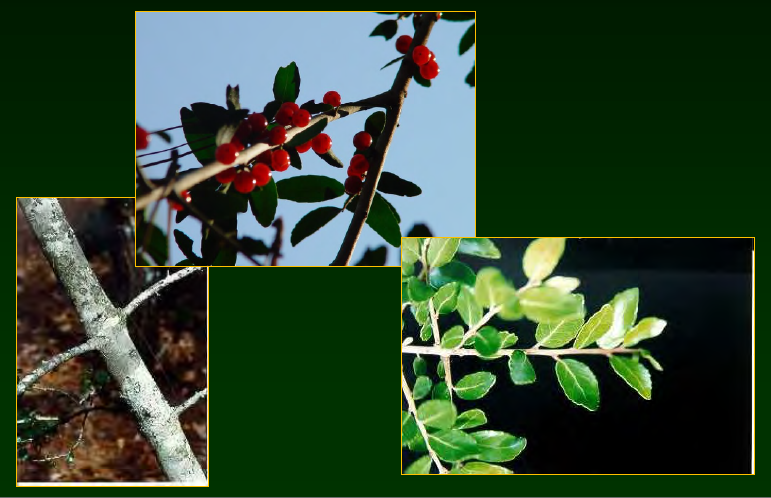
Ilex vomitoria

Aquifoliaceae

Leaves have caffeine

Key Characters:

Crenate leaves

Red berries

Light gray bark

Small tree

<p>•</p><p>Aquifoliaceae</p><p>•</p><p>Leaves have caffeine</p><p>•</p><p>Key Characters:</p><p>•</p><p>Crenate leaves</p><p>•</p><p>Red berries</p><p>•</p><p>Light gray bark</p><p>•</p><p>Small tree</p>
13
New cards

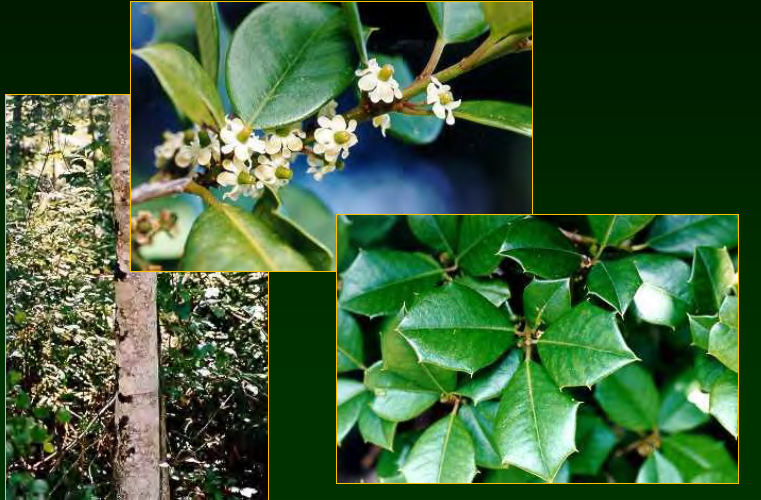
Ilex opaca

Key Characters:

Leaves with few marginal spines

Red berries

Light gray bark

Medium tree

<p>•</p><p>Key Characters:</p><p>•</p><p>Leaves with few marginal spines</p><p>•</p><p>Red berries</p><p>•</p><p>Light gray bark</p><p>•</p><p>Medium tree</p>
14
New cards

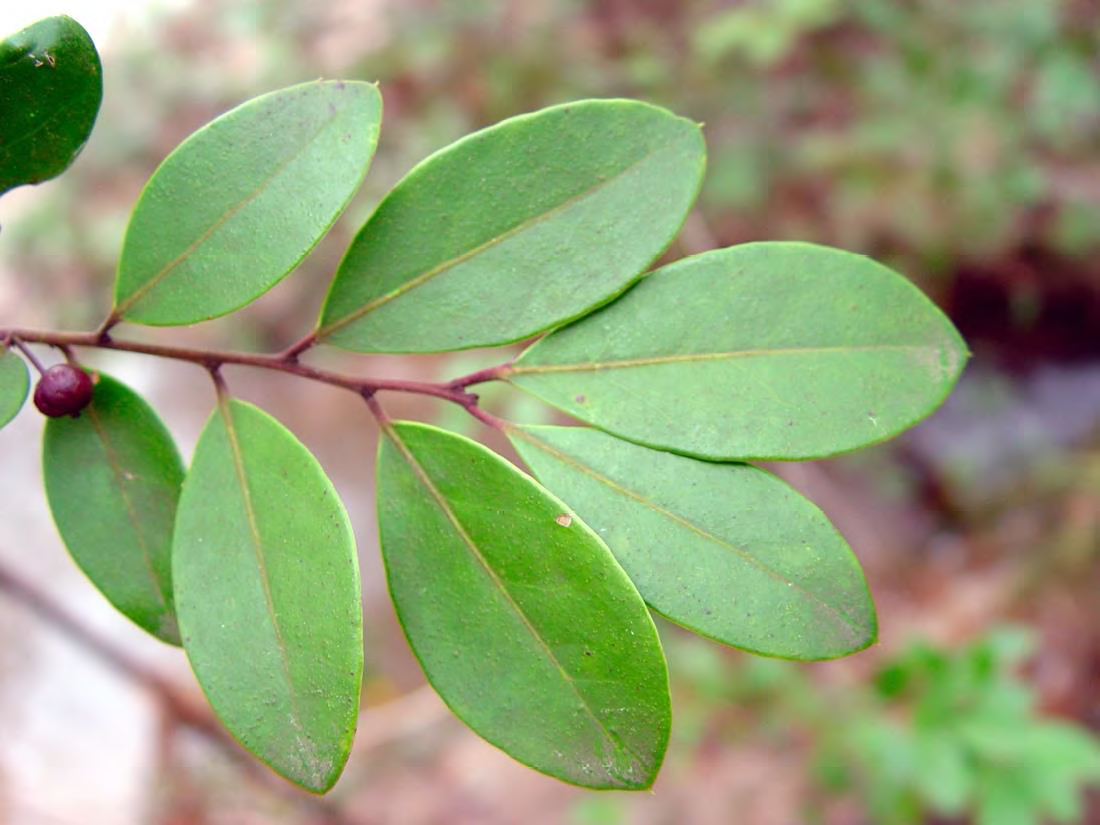
Ilex coriacea

Often near moist areas

Key Characters:

Few prickles on margins

Purple-maroon berries

Purple young twigs (but not always)

<p>•</p><p>Often near moist areas</p><p>•</p><p>Key Characters:</p><p>•</p><p>Few prickles on margins</p><p>•</p><p>Purple-maroon berries</p><p>•</p><p>Purple young twigs (but not always)</p>
15
New cards

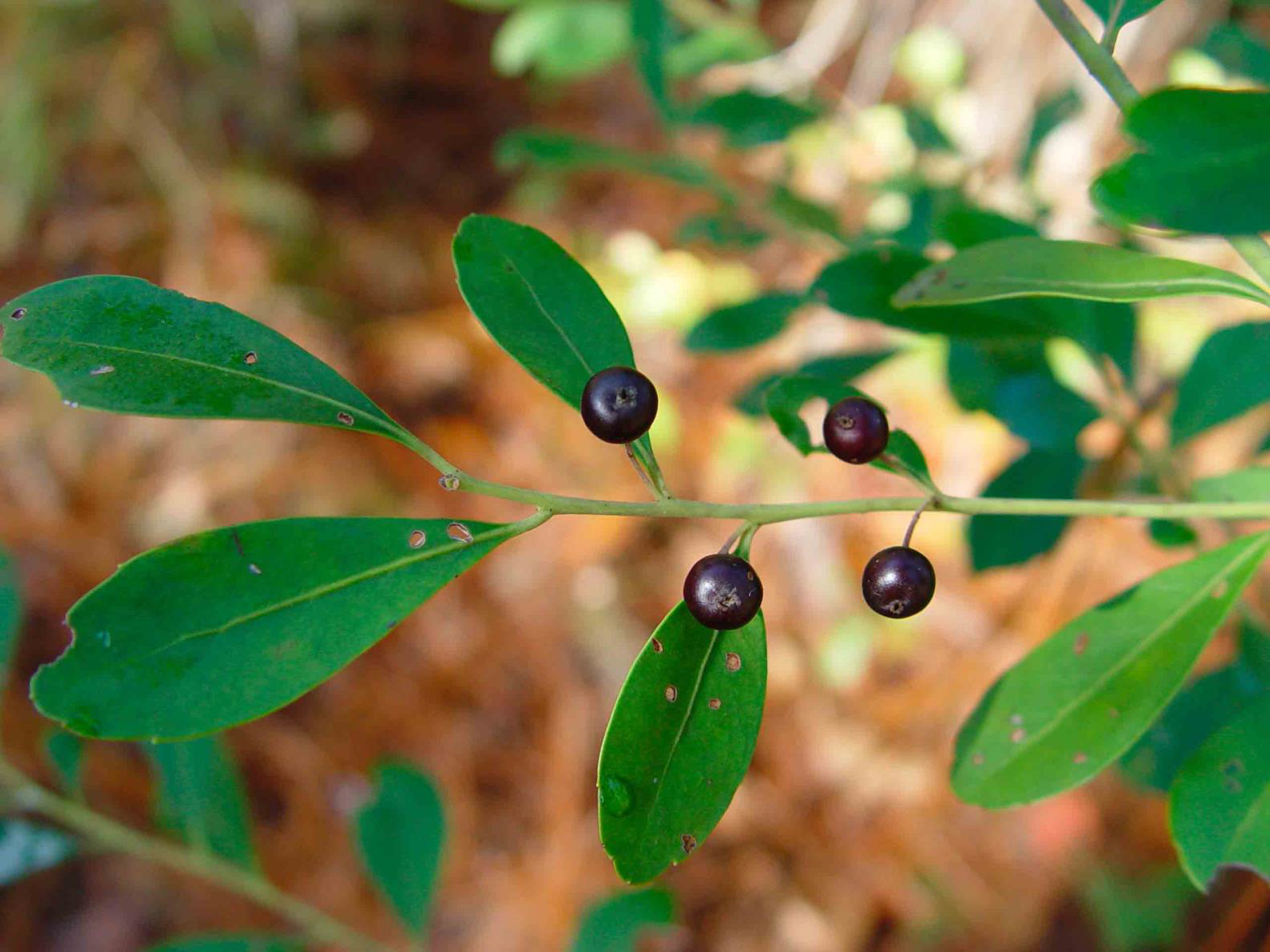
Ilex glabra

Clonal

Key Characters:

Yellowish-green, evergreen leaves

Black fruits

Crenate-serrate margins on distal end of leaves
<p>•</p><p>Clonal</p><p>•</p><p>Key Characters:</p><p>•</p><p>Yellowish-green, evergreen leaves</p><p>•</p><p>Black fruits</p><p>•</p><p>Crenate-serrate margins on distal end of leaves</p>
16
New cards

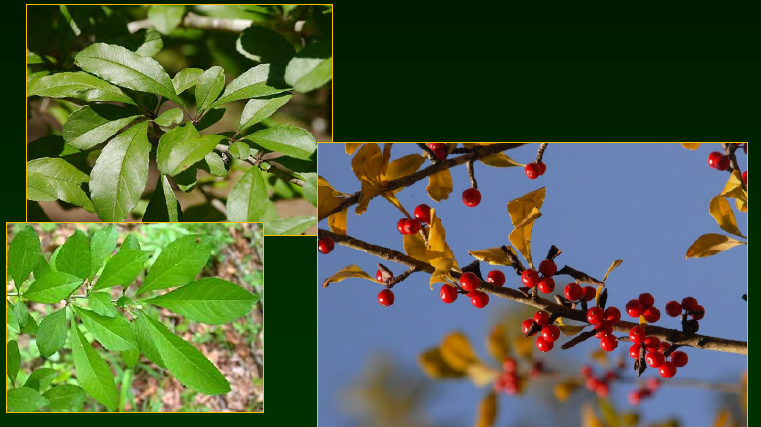
Ilex decidua

Bottomlands

Key Characters:

Deciduous

Red berries in winter

Light gray bark

Medium tree

<p>•</p><p>Bottomlands</p><p>•</p><p>Key Characters:</p><p>•</p><p>Deciduous</p><p>•</p><p>Red berries in winter</p><p>•</p><p>Light gray bark</p><p>•</p><p>Medium tree</p>
17
New cards

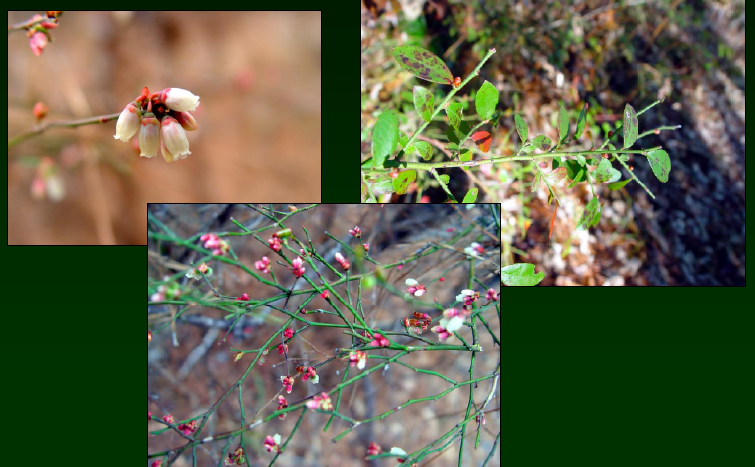
Vaccinium elliottii

Key Characters:

Green stems

White flowers, bloom in February

Purple berries

<p>•</p><p>Key Characters:</p><p>•</p><p>Green stems</p><p>•</p><p>White flowers, bloom in February</p><p>•</p><p>Purple berries</p>
18
New cards

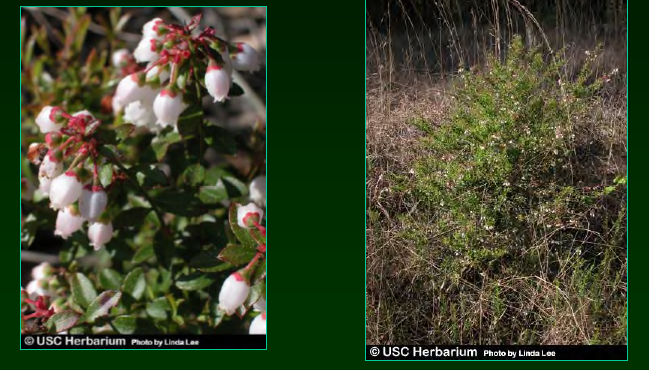
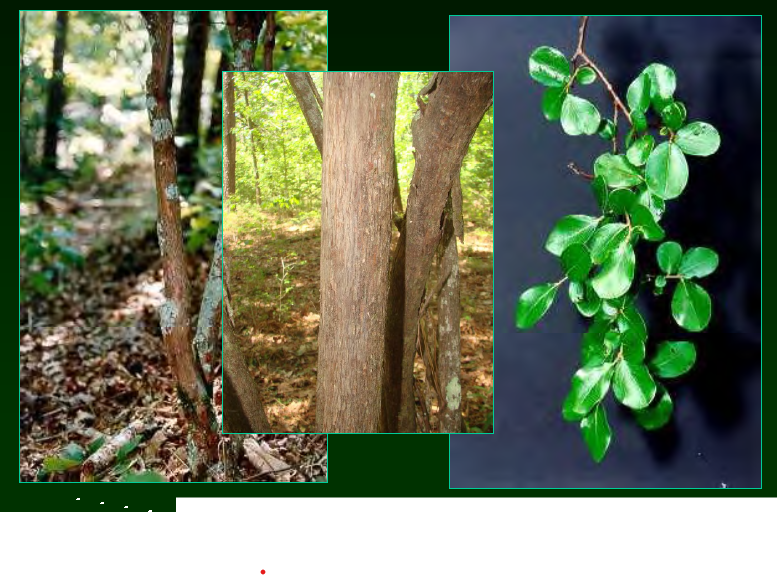
Vaccinium arboreum

Key Characters:

Persistent leaves

Sometimes with mucronate tips

Reddish-brown, shreddy bark

Campanulate flowers

Largest Vaccinium species in Coastal Plain
<p>•</p><p>Key Characters:</p><p>•</p><p>Persistent leaves</p><p>•</p><p>Sometimes with mucronate tips</p><p>•</p><p>Reddish-brown, shreddy bark</p><p>•</p><p>Campanulate flowers</p><p>•</p><p>Largest Vaccinium species in Coastal Plain</p>
19
New cards

Vaccinium myrsinites

Open forest (often dry)

Key Characters:

Small

Similar to V. elliottii but leaves much smaller

Similar to V. darrowii but leaves shiny

Campanulate flowers

<p>•</p><p>Open forest (often dry)</p><p>•</p><p>Key Characters:</p><p>•</p><p>Small</p><p>•</p><p>Similar to V. elliottii but leaves much smaller</p><p>•</p><p>Similar to V. darrowii but leaves shiny</p><p>•</p><p>Campanulate flowers</p>
20
New cards

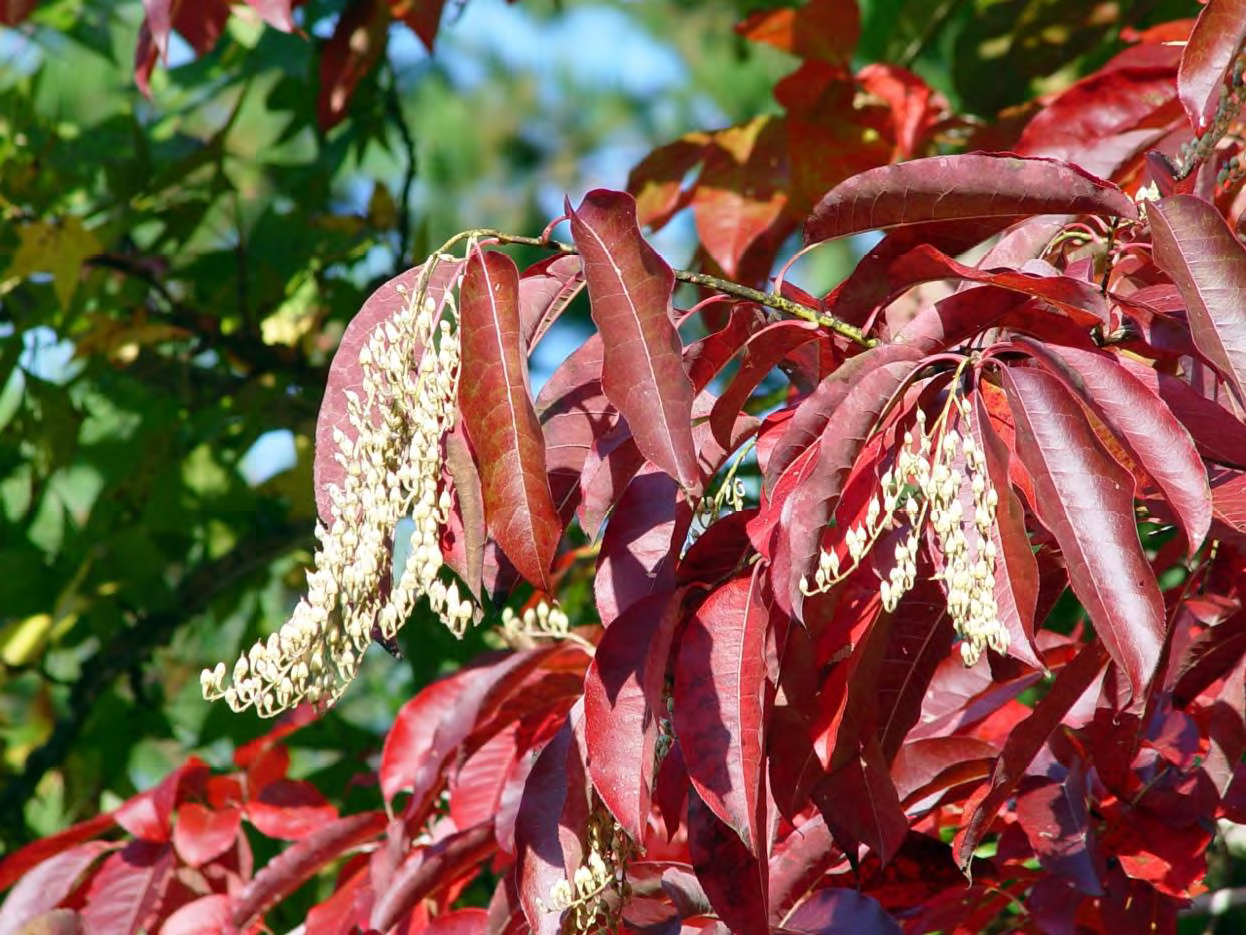
Oxydendrum arboreum

Ericaceae

Sour leaves due to oxalic acid

Bee forage (sourwood honey)

Key Characters:

Deep-furrowed bark with concave ridge surfaces and orange furrows

Racemes

Hairs on underside of midrib

<p>•</p><p>Ericaceae</p><p>•</p><p>Sour leaves due to oxalic acid</p><p>•</p><p>Bee forage (sourwood honey)</p><p>•</p><p>Key Characters:</p><p>•</p><p>Deep-furrowed bark with concave ridge surfaces and orange furrows</p><p>•</p><p>Racemes</p><p>•</p><p>Hairs on underside of midrib</p>
21
New cards

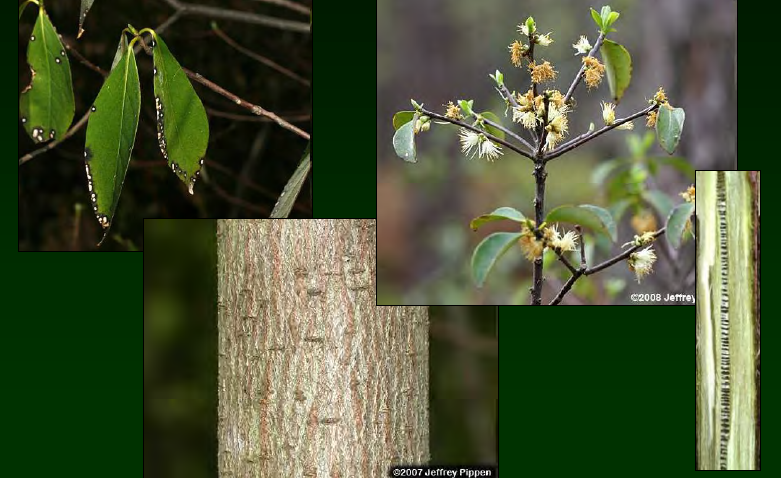
Symplocos tinctoria

Symplocaceae

Key Characters:

Evergreen

Yellowish petioles and midribs

Sweet taste

White flowers

<p>•</p><p>Symplocaceae</p><p>•</p><p>Key Characters:</p><p>•</p><p>Evergreen</p><p>•</p><p>Yellowish petioles and midribs</p><p>•</p><p>Sweet taste</p><p>•</p><p>White flowers</p>
22
New cards

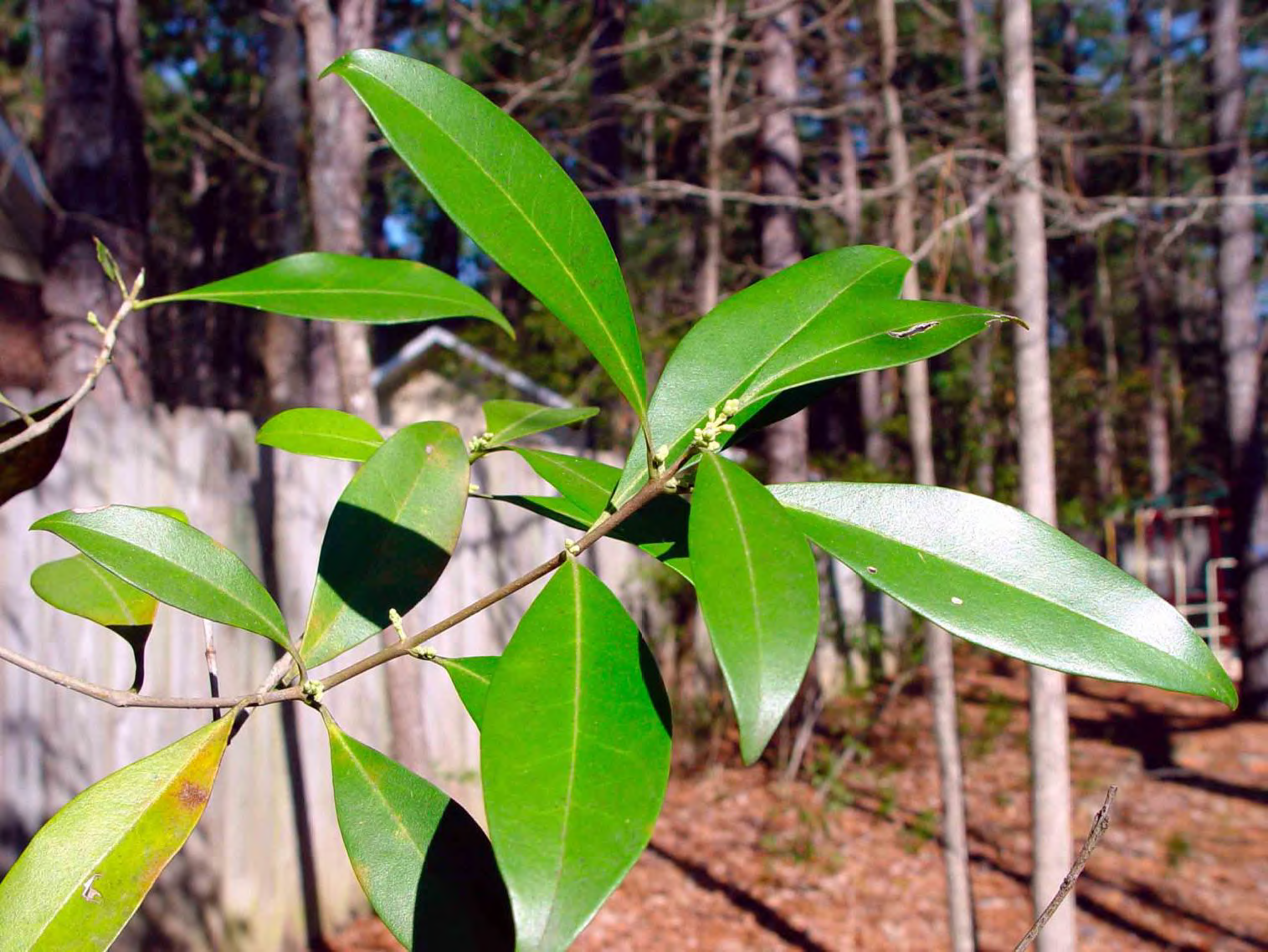
Cartrema americana

Oleaceae

Similar to Symplocos tinctoria

Formally known as Osmanthus americanus

Key Characters:

Evergreen leaves

Opposite leaves

<p>•</p><p>Oleaceae</p><p>•</p><p>Similar to Symplocos tinctoria</p><p>•</p><p>Formally known as Osmanthus americanus</p><p>•</p><p>Key Characters:</p><p>•</p><p>Evergreen leaves</p><p>•</p><p>Opposite leaves</p>
23
New cards

Tamala palustris

Lauraceae

Prefers, but not estricted to moist areas

Similar to Persea borbonia

Key Characters:

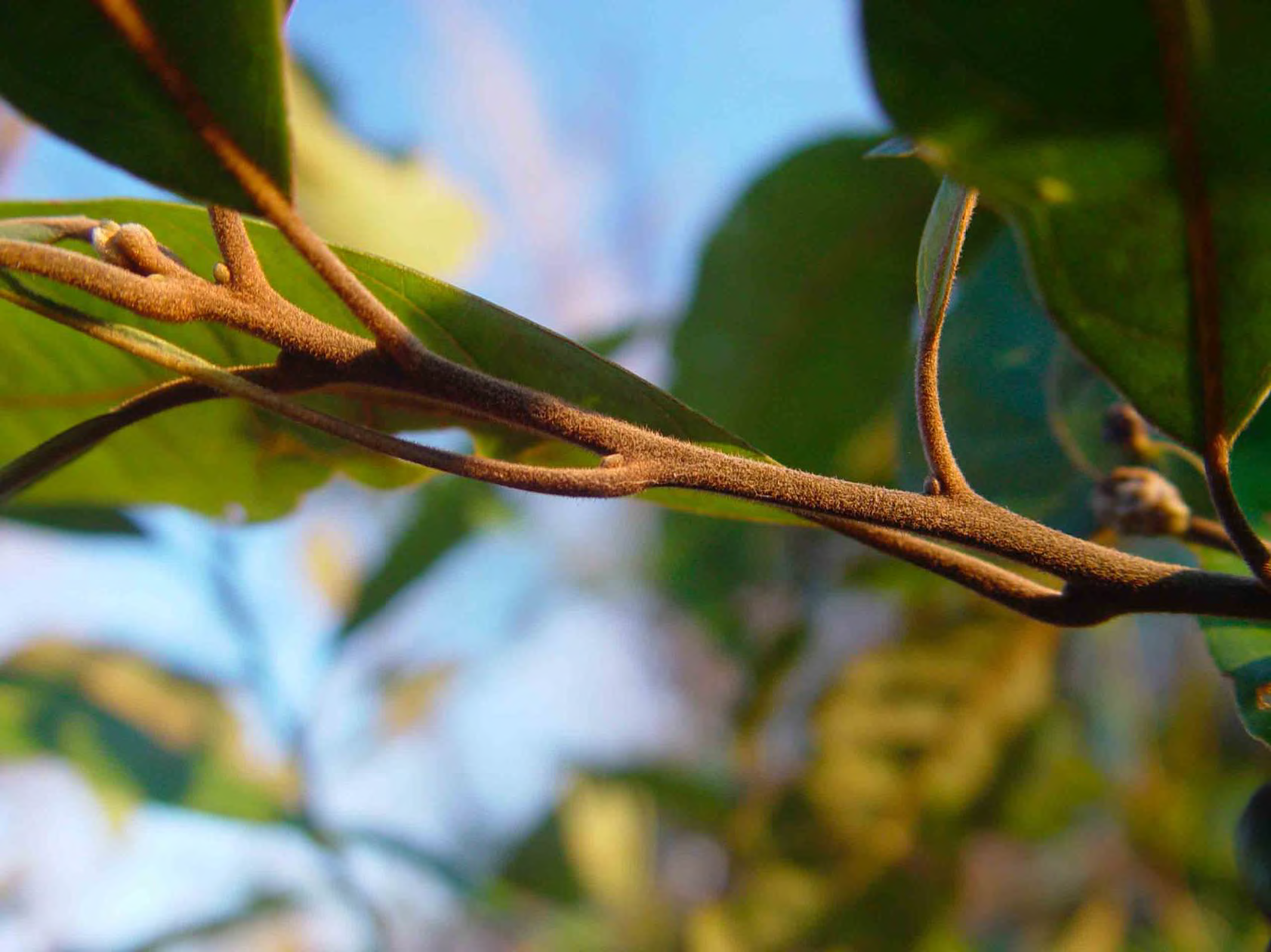
Rusty pubescence on twigs and midribs

Evergreen

Galls on leaves

Spicy scent

<p>•</p><p>Lauraceae</p><p>•</p><p>Prefers, but not estricted to moist areas</p><p>•</p><p>Similar to Persea borbonia</p><p>•</p><p>Key Characters:</p><p>•</p><p>Rusty pubescence on twigs and midribs</p><p>•</p><p>Evergreen</p><p>•</p><p>Galls on leaves</p><p>•</p><p>Spicy scent</p>
24
New cards

Fagus grandifolia

Fagaceae

Key Characters:

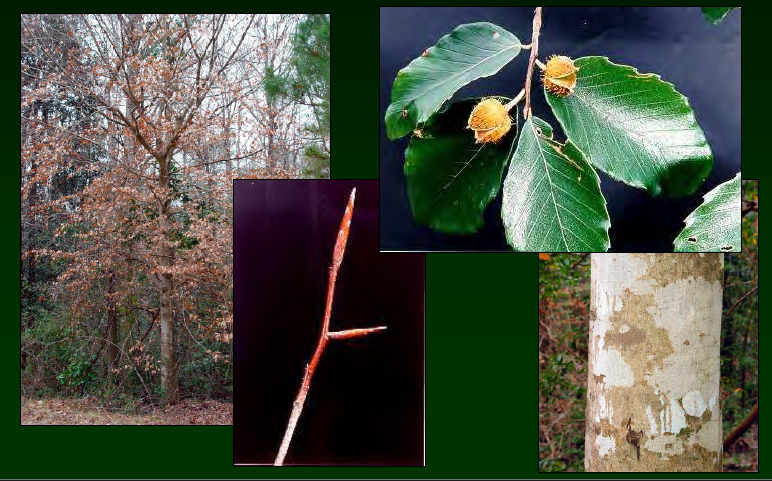
Serrate leaves

Two-ranked leaves

Long, pointed buds

Smooth, gray bark

Brown leaves persist over winter

<p>•</p><p>Fagaceae</p><p>•</p><p>Key Characters:</p><p>•</p><p>Serrate leaves</p><p>•</p><p>Two-ranked leaves</p><p>•</p><p>Long, pointed buds</p><p>•</p><p>Smooth, gray bark</p><p>•</p><p>Brown leaves persist over winter</p>
25
New cards

Quercus laurifolia

Fagaceae

May be same species as Q. hemisphaerica

Bottomlands

Key Characters:

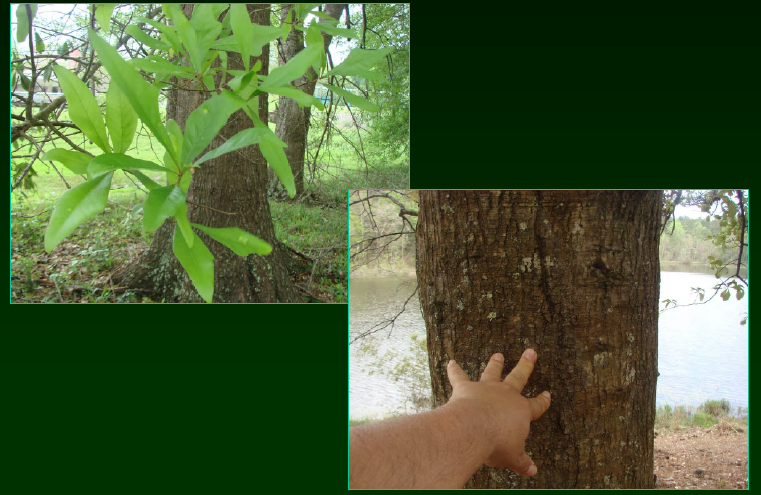
Evergreen leaves

Rhombus-shaped leaves

<p>•</p><p>Fagaceae</p><p>•</p><p>May be same species as Q. hemisphaerica</p><p>•</p><p>Bottomlands</p><p>•</p><p>Key Characters:</p><p>•</p><p>Evergreen leaves</p><p>•</p><p>Rhombus-shaped leaves</p>
26
New cards
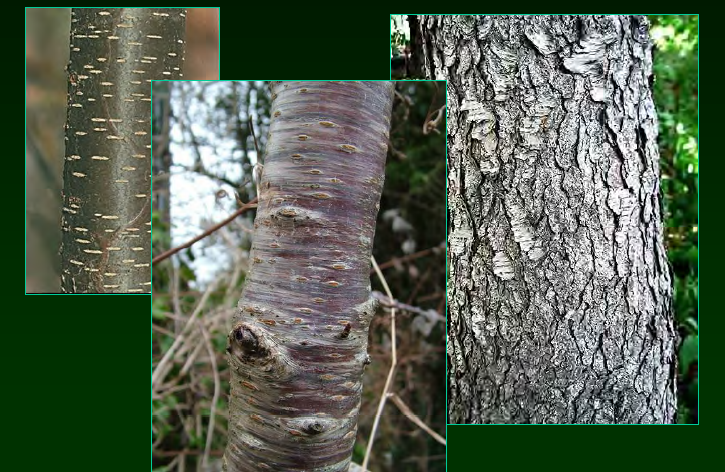
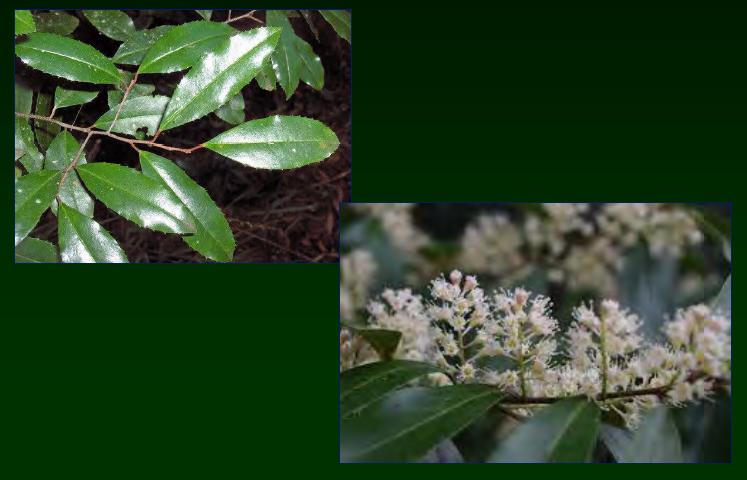
<p>Prunus serotina</p>

Prunus serotina

Rosaceae

Our largest and most common cherry

Valuable lumber

Cyanogenic glycosides

Key Characters:

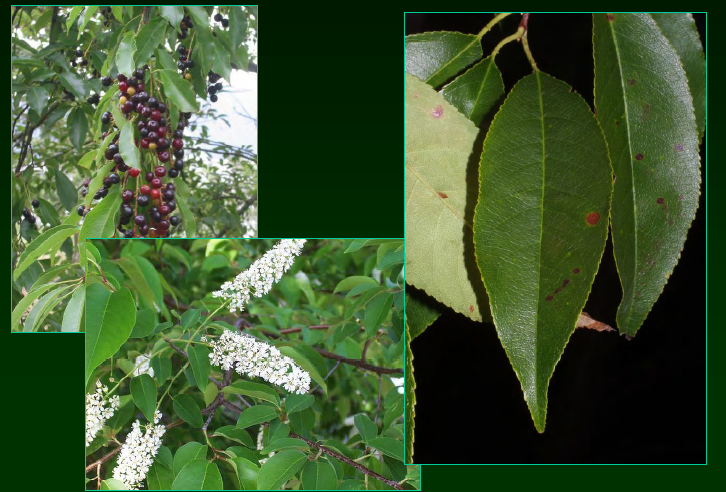
“Cherry” bark

Serrate leaves

White flowers in racemes

Purplish black drupes

<p>•</p><p>Rosaceae</p><p>•</p><p>Our largest and most common cherry</p><p>•</p><p>Valuable lumber</p><p>•</p><p>Cyanogenic glycosides</p><p>•</p><p>Key Characters:</p><p>•</p><p>“Cherry” bark</p><p>•</p><p>Serrate leaves</p><p>•</p><p>White flowers in racemes</p><p>•</p><p>Purplish black drupes</p>
27
New cards

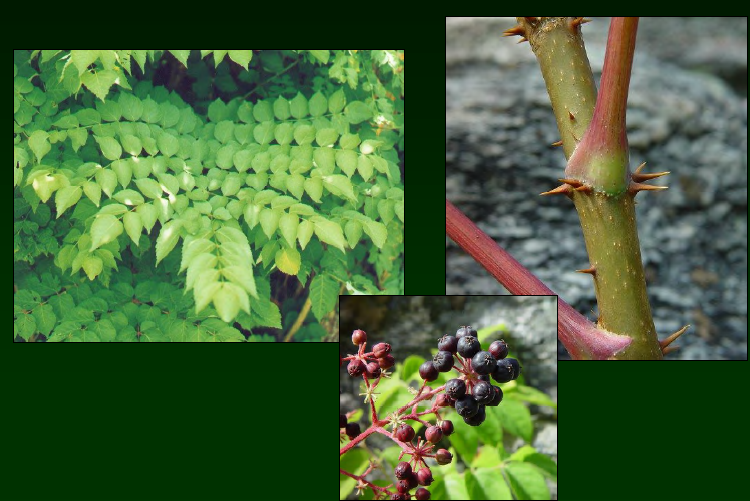
Aralia spinosa

Araliaceae

Common throughout SE U.S.

Found in mesic forests

Key Characters:

Heavily armed twigs

Large, bi-pinnately compound leaves

Black berries

<p>•</p><p>Araliaceae</p><p>•</p><p>Common throughout SE U.S.</p><p>•</p><p>Found in mesic forests</p><p>•</p><p>Key Characters:</p><p>•</p><p>Heavily armed twigs</p><p>•</p><p>Large, bi-pinnately compound leaves</p><p>•</p><p>Black berries</p>
28
New cards

Smilax smallii

Smilacaceae

Key Characters:

VIne

Dark evergreen leaves

No thorns

<p>Smilacaceae</p><p>Key Characters:</p><p>•</p><p>VIne</p><p>•</p><p>Dark evergreen leaves</p><p>•</p><p>No thorns</p>
29
New cards

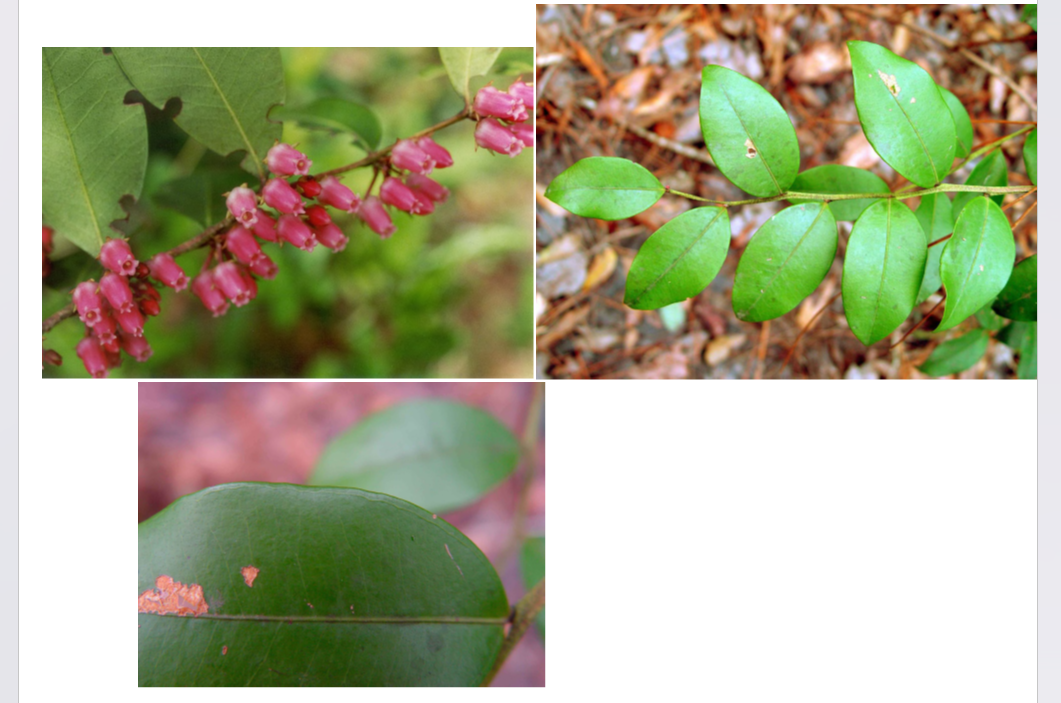
Lyonia lucida

Ericaceae

Coastal Plain

Restricted to moist areas

Key Characters:

Vein runs parallel to margin

Evergreen

Margins entire

Margins revolute on older leaves

<p>•</p><p>Ericaceae</p><p>•</p><p>Coastal Plain</p><p>•</p><p>Restricted to moist areas</p><p>•</p><p>Key Characters:</p><p>•</p><p>Vein runs parallel to margin</p><p>•</p><p>Evergreen</p><p>•</p><p>Margins entire</p><p>•</p><p>Margins revolute on older leaves</p>
30
New cards

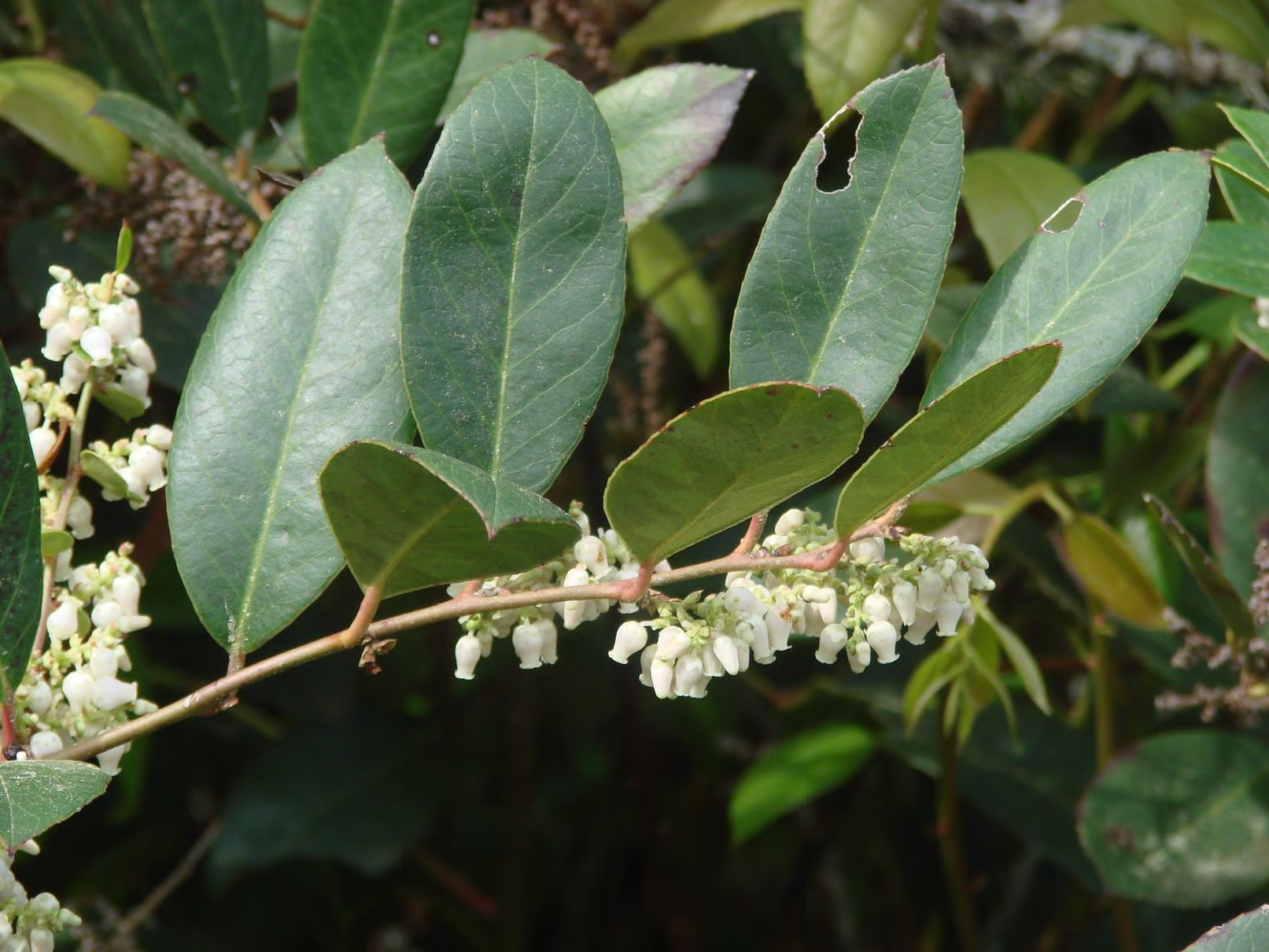
Leucothöe axillaris

Ericaceae

Restricted to moist areas

Key Characters:

Evergreen

Slight leaf serrations on distal ends of leaves

Small

Campanulate flowers

Poison

<p>•</p><p>Ericaceae</p><p>•</p><p>Restricted to moist areas</p><p>•</p><p>Key Characters:</p><p>•</p><p>Evergreen</p><p>•</p><p>Slight leaf serrations on distal ends of leaves</p><p>•</p><p>Small</p><p>•</p><p>Campanulate flowers</p><p>Poison</p>
31
New cards

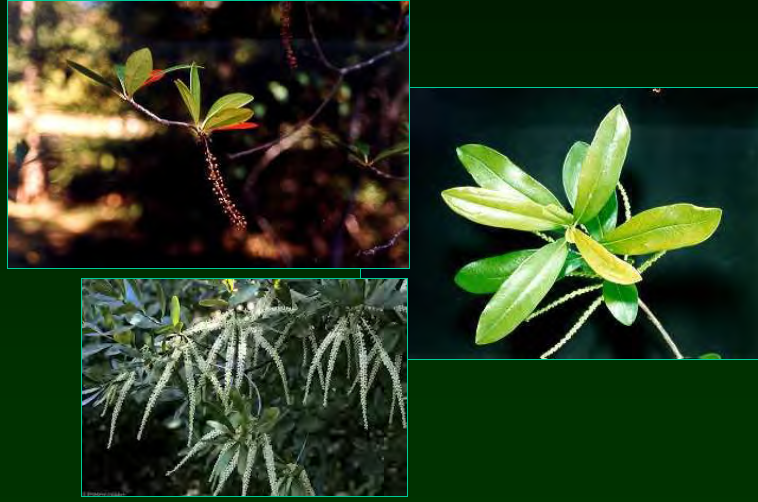
Cyrilla racemiflora

Cyrillaceae

Restricted to moist areas

Similar to Cliftonia

Can form thickets

Titi honey; bee-pasture

Key Characters:

Racemes

Irregular architecture

Reddish-brown bark

<p>•</p><p>Cyrillaceae</p><p>•</p><p>Restricted to moist areas</p><p>•</p><p>Similar to Cliftonia</p><p>•</p><p>Can form thickets</p><p>•</p><p>Titi honey; bee-pasture</p><p>•</p><p>Key Characters:</p><p>•</p><p>Racemes</p><p>•</p><p>Irregular architecture</p><p>•</p><p>Reddish-brown bark</p>
32
New cards
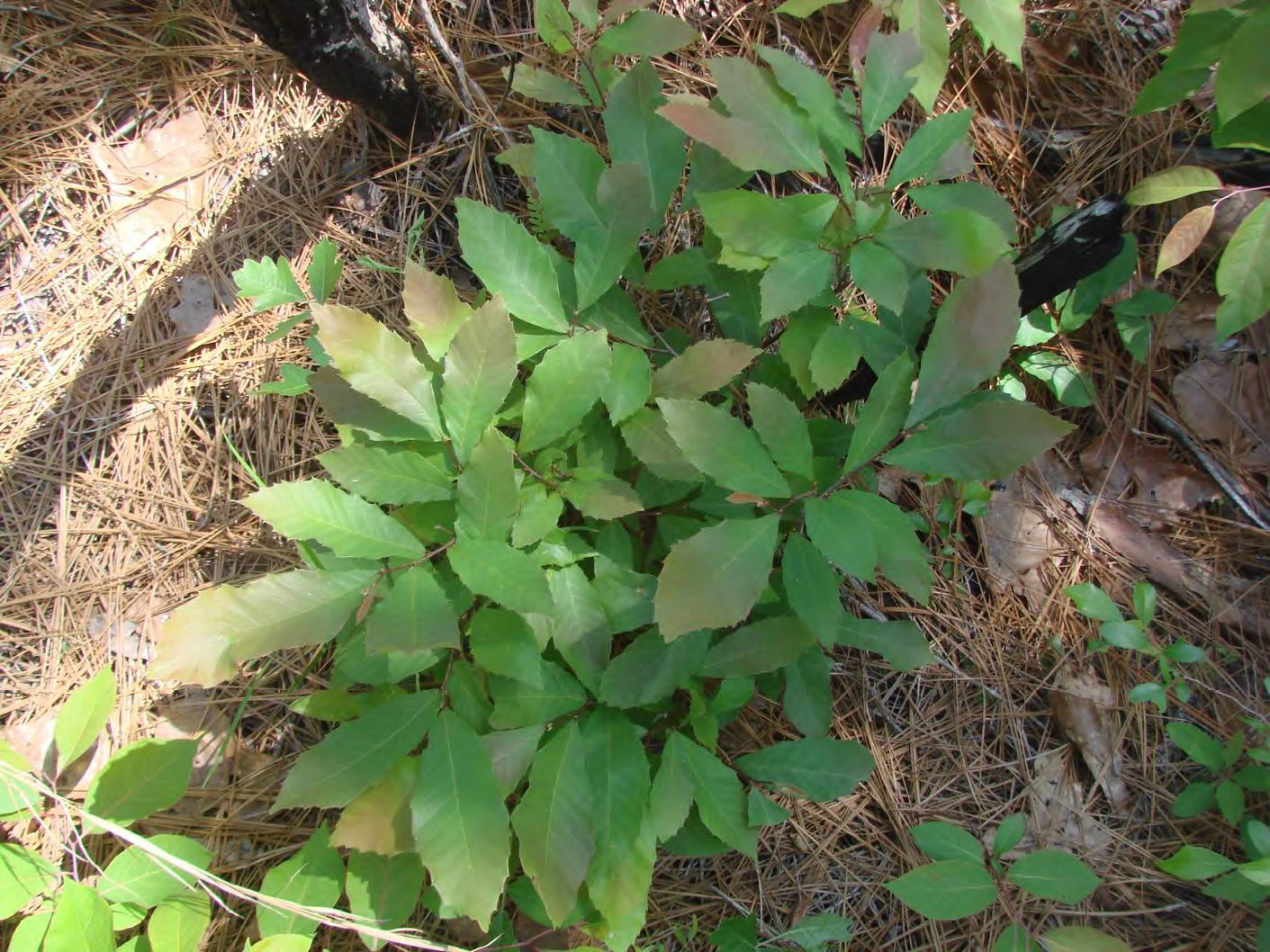
<p>Castanea pumila</p>

Castanea pumila

Small tree/shrub

Key Characters:

Dentate leaves

Often sprouting

Spiny fruits

<p>•</p><p>Small tree/shrub</p><p>•</p><p>Key Characters:</p><p>•</p><p>Dentate leaves</p><p>•</p><p>Often sprouting</p><p>•</p><p>Spiny fruits</p>
33
New cards

Quercus virginiana

Hurricane resistant

Dense wood

Key Characters:

Lateral growth habit

Evergreen

<p>•</p><p>Hurricane resistant</p><p>•</p><p>Dense wood</p><p>•</p><p>Key Characters:</p><p>•</p><p>Lateral growth habit</p><p>•</p><p>Evergreen</p>
34
New cards

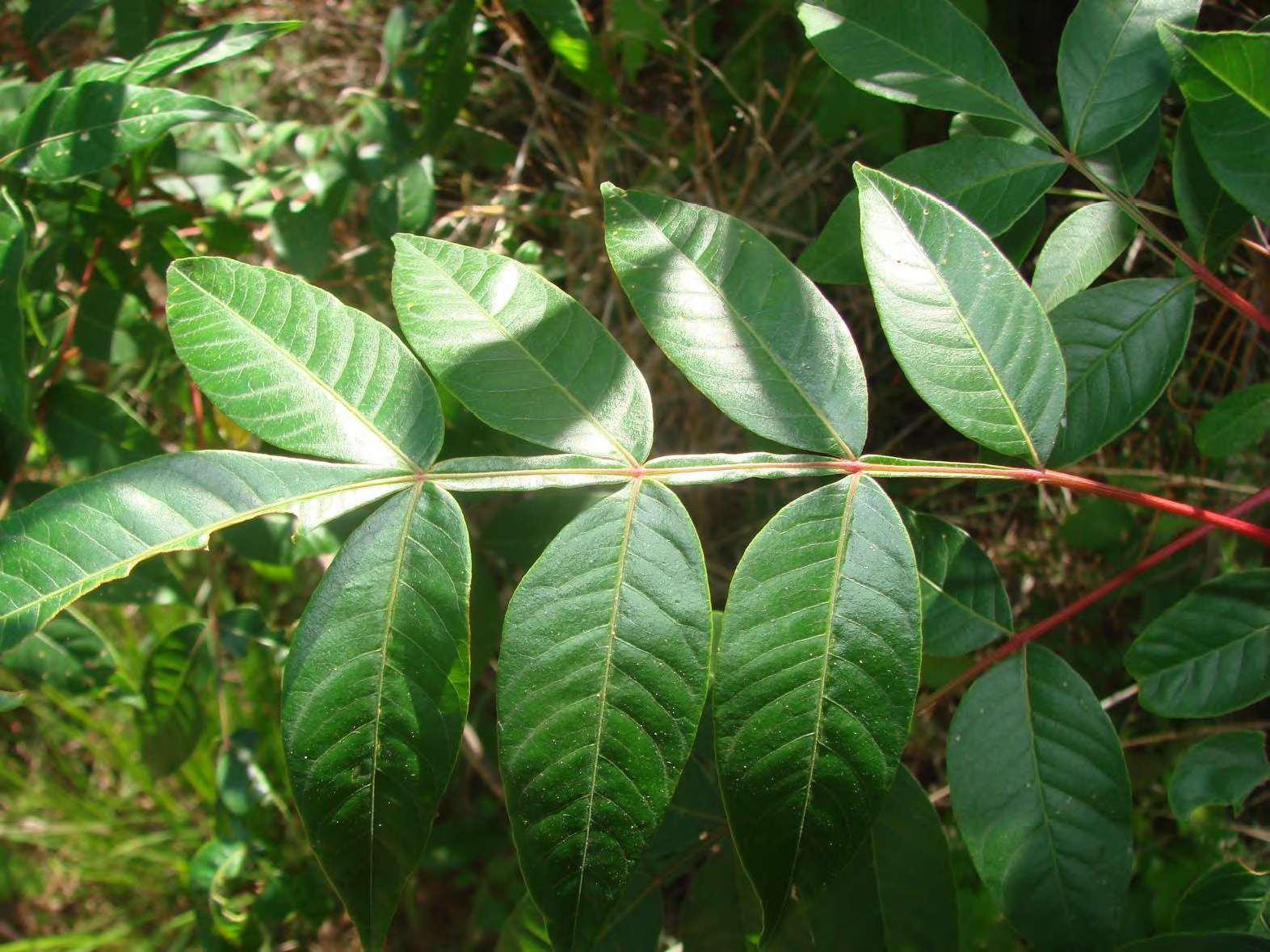
Rhus copallina

Key Characters:

Winged rachis

Glossy leaves

<p>•</p><p>Key Characters:</p><p>•</p><p>Winged rachis</p><p>•</p><p>Glossy leaves</p>
35
New cards

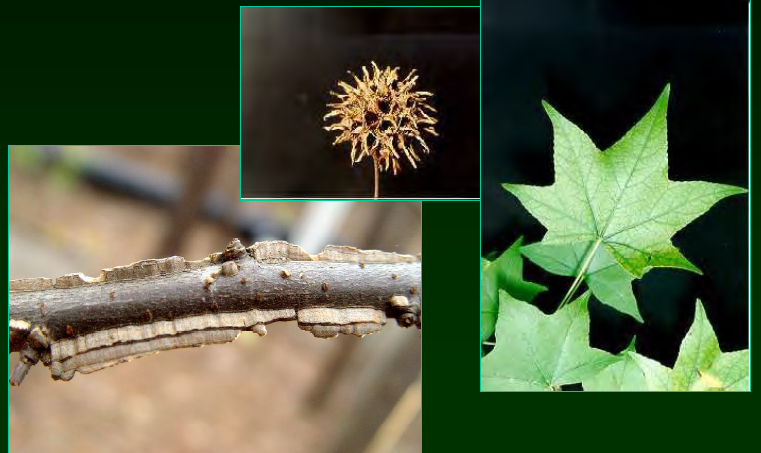
Liquidambar styraciflua

Altingiaceae

Key Characters:

Star-shaped leaves

Ridged twigs

Aggregate fruit of spiny capsules

<p>•</p><p>Altingiaceae</p><p>•</p><p>Key Characters:</p><p>•</p><p>Star-shaped leaves</p><p>•</p><p>Ridged twigs</p><p>•</p><p>Aggregate fruit of spiny capsules</p>
36
New cards

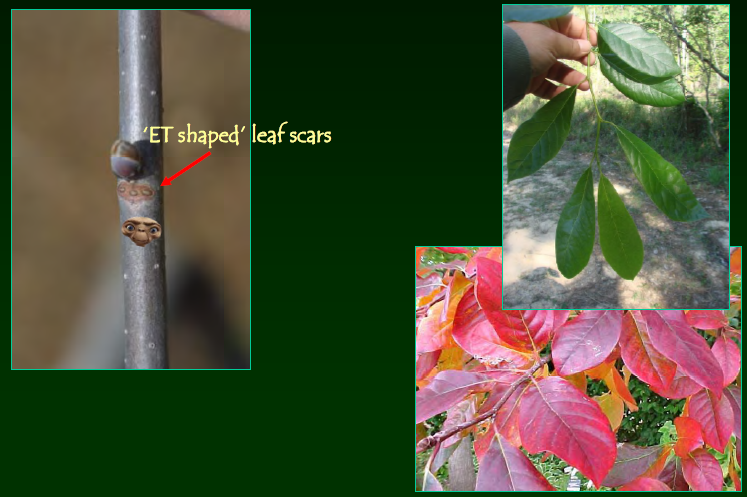
Nyssa sylvatica

Nyssaceae

Wide range of habitats

Nyssa = Greek water nymph

sylvatica = of the woods

Tupelo = tree of the swamp (Creek)

Key Characters:

Acuminate leaf tips on young leaves

Leaf scars with 3 bundle scars

Bright red fall foliage

<p>•</p><p>Nyssaceae</p><p>•</p><p>Wide range of habitats</p><p>•</p><p>Nyssa = Greek water nymph</p><p>•</p><p>sylvatica = of the woods</p><p>•</p><p>Tupelo = tree of the swamp (Creek)</p><p>•</p><p>Key Characters:</p><p>•</p><p>Acuminate leaf tips on young leaves</p><p>•</p><p>Leaf scars with 3 bundle scars</p><p>•</p><p>Bright red fall foliage</p>
37
New cards

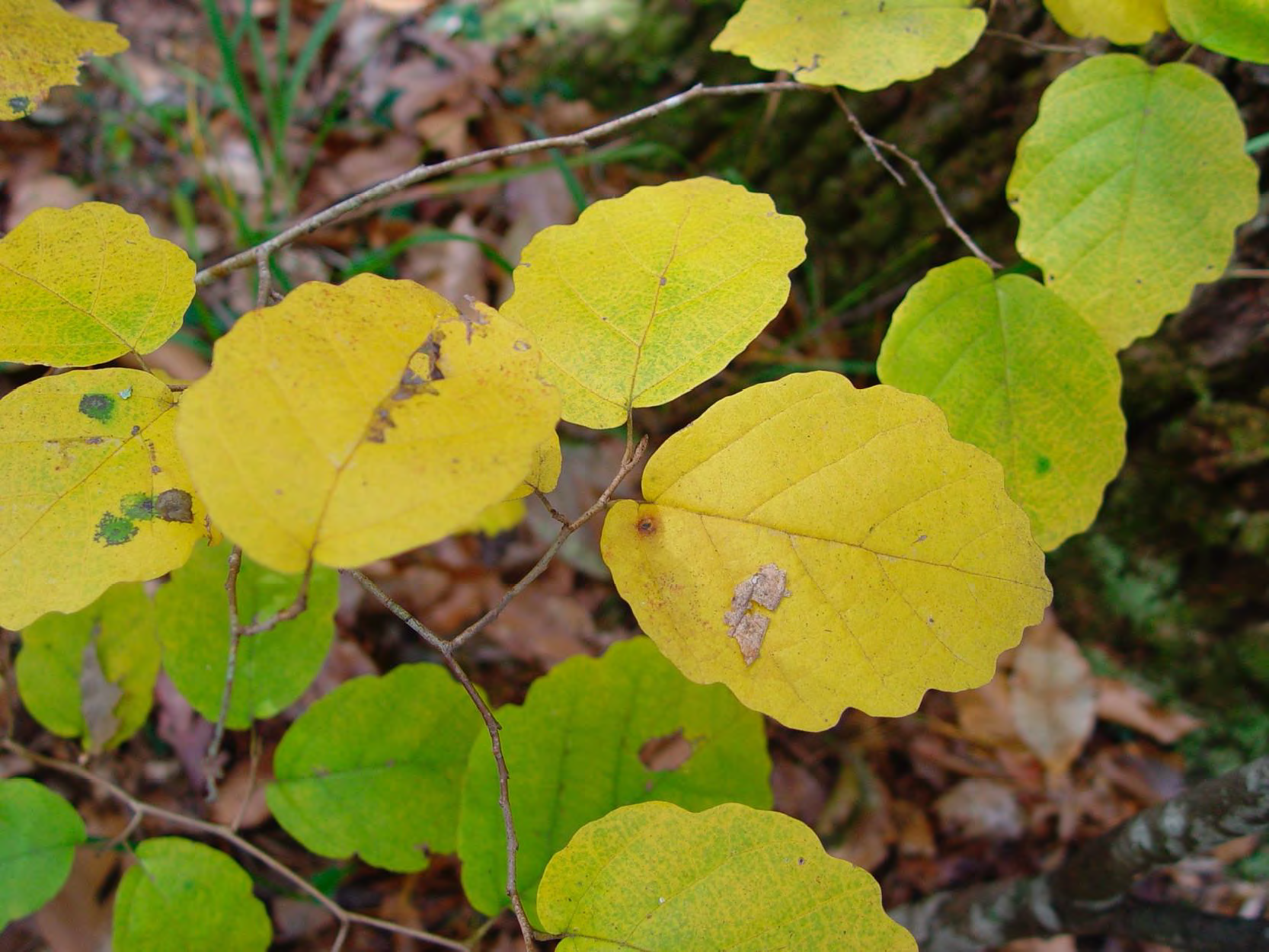
Hamamelis virginiana

Hamamelidaceae

Key Characters:

Undulate leaf margins

Yellow blooms in winter

<p>•</p><p>Hamamelidaceae</p><p>•</p><p>Key Characters:</p><p>•</p><p>Undulate leaf margins</p><p>•</p><p>Yellow blooms in winter</p>
38
New cards

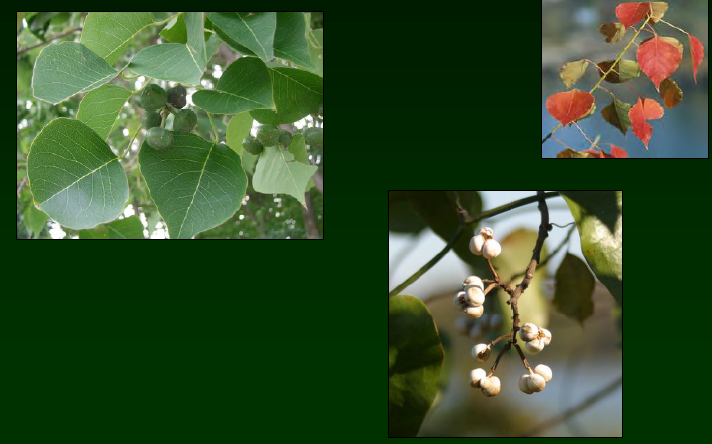
Triadica sebifera

Euphorbiaceae

Native to Asia

Introduced in Charleston by Andre Michaux

Acutely toxic

Key Characters:

Bi-pinnately compound leaves

Purple flowers

Persistent fruits

<p>•</p><p>Euphorbiaceae</p><p>•</p><p>Native to Asia</p><p>•</p><p>Introduced in Charleston by Andre Michaux</p><p>•</p><p>Acutely toxic</p><p>•</p><p>Key Characters:</p><p>•</p><p>Bi-pinnately compound leaves</p><p>•</p><p>Purple flowers</p><p>•</p><p>Persistent fruits</p>
39
New cards

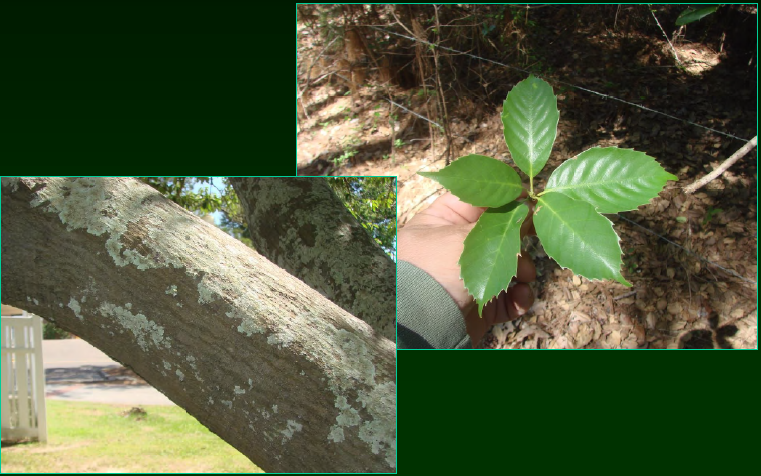
Quercus myrsinifolia

Ornamental

Japanese: shirakashi, preferred wood for bokken

Native to Asia

Key Characters:

Evergreen

Serrate leaves (large serrations)

Usually stop toward base of leaf

Smooth bark

<p>•</p><p>Ornamental</p><p>•</p><p>Japanese: shirakashi, preferred wood for bokken</p><p>•</p><p>Native to Asia</p><p>•</p><p>Key Characters:</p><p>•</p><p>Evergreen</p><p>•</p><p>Serrate leaves (large serrations)</p><p>•</p><p>Usually stop toward base of leaf</p><p>•</p><p>Smooth bark</p>
40
New cards

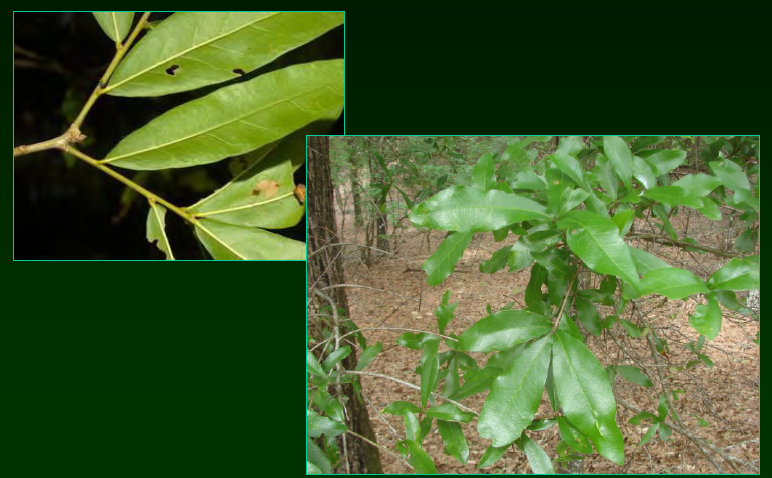
Quercus hemisphaerica

Dry upland soils, sand hills

Key Characters:

Evergreen

Glabrous leaf undersides

<p>•</p><p>Dry upland soils, sand hills</p><p>•</p><p>Key Characters:</p><p>•</p><p>Evergreen</p><p>•</p><p>Glabrous leaf undersides</p>
41
New cards

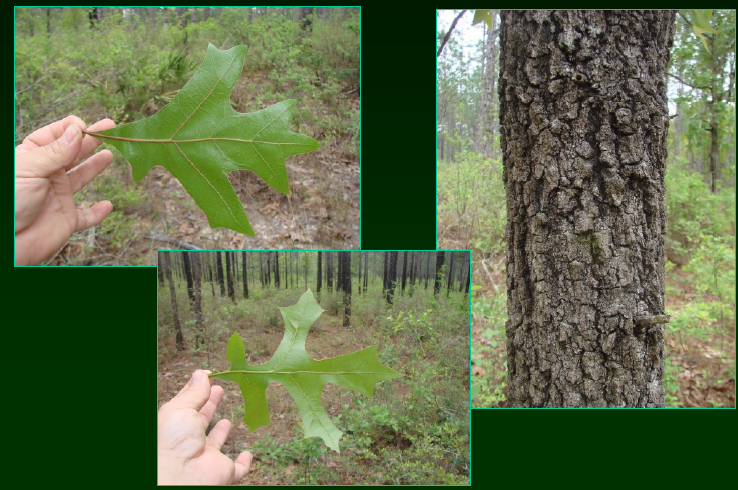
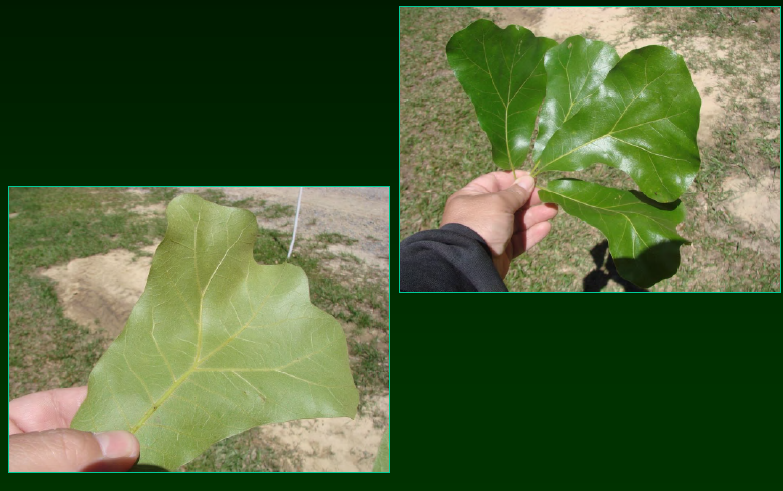
Quercus laevis

Restricted to dry, sandy areas

Key Characters:

Primarily three-lobed leaves

Acute leaf base

Pubescent underneath

<p>•</p><p>Restricted to dry, sandy areas</p><p>•</p><p>Key Characters:</p><p>•</p><p>Primarily three-lobed leaves</p><p>•</p><p>Acute leaf base</p><p>•</p><p>Pubescent underneath</p>
42
New cards

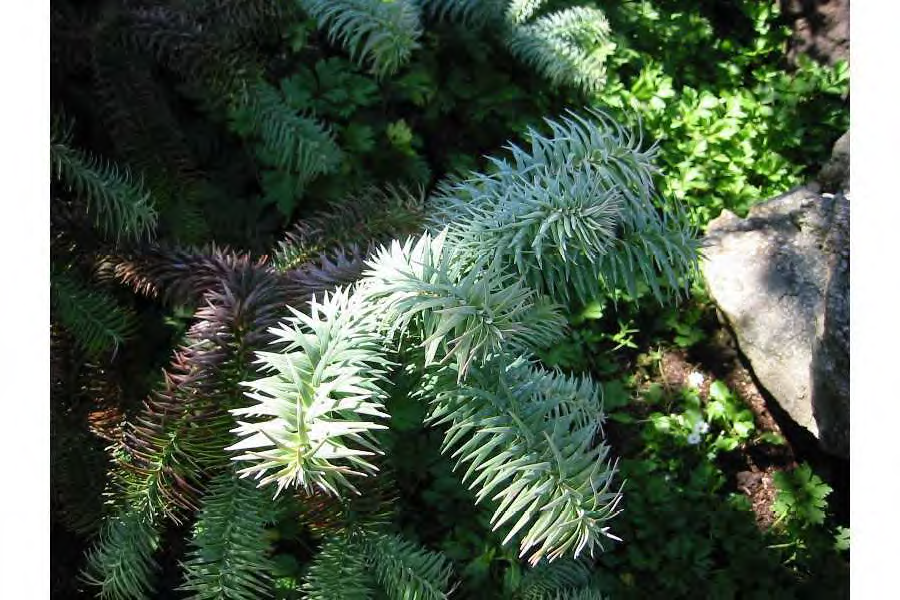
Cunninghamia lanceolata

Cupressaceae

Native to China, Vietnam, Laos

Key Characters:

Sharp needles

Whorled branches

Pendulous branches

<p>•</p><p>Cupressaceae</p><p>•</p><p>Native to China, Vietnam, Laos</p><p>•</p><p>Key Characters:</p><p>•</p><p>Sharp needles</p><p>•</p><p>Whorled branches</p><p>•</p><p>Pendulous branches</p>
43
New cards

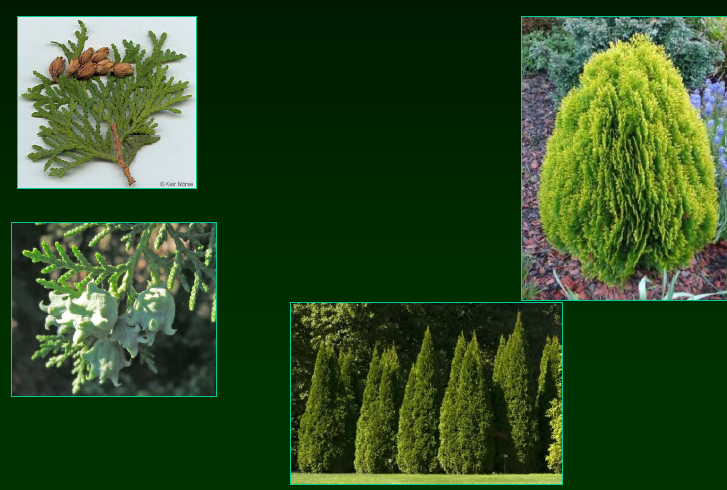
Thuja occidentalis

Cupressaceae

Native northern tier of states

Key Characters:

Evergreen

Flattened sprays of leaves

<p>•</p><p>Cupressaceae</p><p>•</p><p>Native northern tier of states</p><p>•</p><p>Key Characters:</p><p>•</p><p>Evergreen</p><p>•</p><p>Flattened sprays of leaves</p>
44
New cards

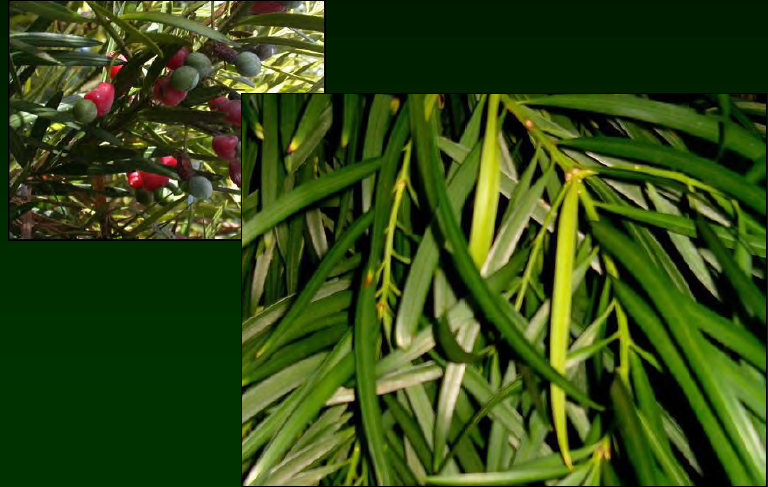
Podocarpus macrophyllus

Podocarpaceae

Native to Japan and China

Key Characters:

Opposite/sub-opposite leaves

Red, fleshy seeds

Stiff, narrow leaves

<p>•</p><p>Podocarpaceae</p><p>•</p><p>Native to Japan and China</p><p>•</p><p>Key Characters:</p><p>•</p><p>Opposite/sub-opposite leaves</p><p>•</p><p>Red, fleshy seeds</p><p>•</p><p>Stiff, narrow leaves</p>
45
New cards

Ulmus alata

Ulmaceae

Leaves very similar to Ostrya virginiana, Carpinus caroliniana, and Planera aquatica (other elms too)

Key Characters:

Winged twigs

Serrate leaves

<p>•</p><p>Ulmaceae</p><p>•</p><p>Leaves very similar to Ostrya virginiana, Carpinus caroliniana, and Planera aquatica (other elms too)</p><p>•</p><p>Key Characters:</p><p>•</p><p>Winged twigs</p><p>•</p><p>Serrate leaves</p>
46
New cards

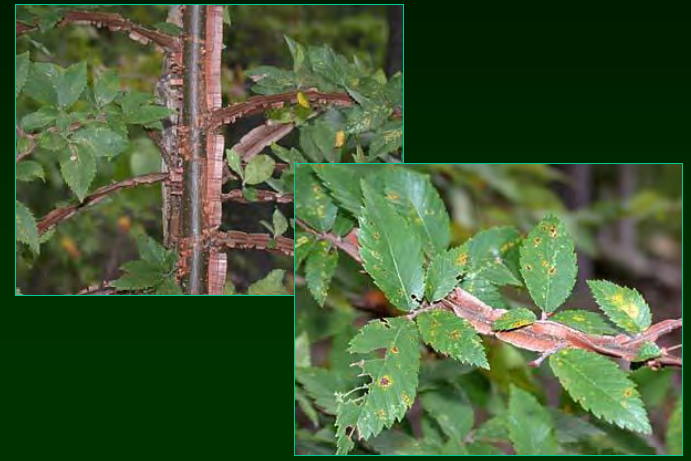
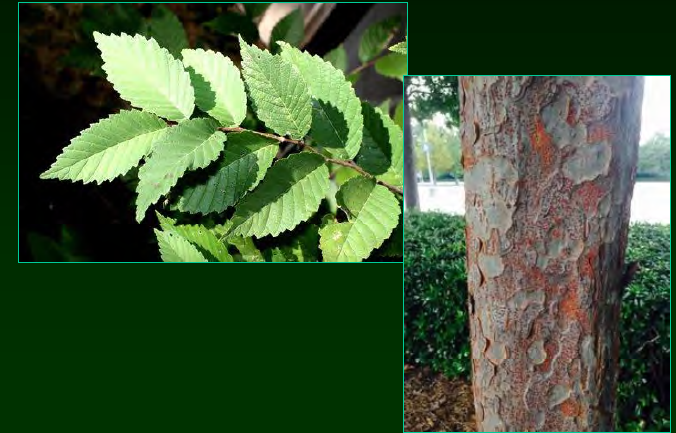
Ulmus parvifolia

Native to Asia

Popular urban tree

Key Characters:

Small serrate leaves

Peeling bark

<p>•</p><p>Native to Asia</p><p>•</p><p>Popular urban tree</p><p>•</p><p>Key Characters:</p><p>•</p><p>Small serrate leaves</p><p>•</p><p>Peeling bark</p>
47
New cards

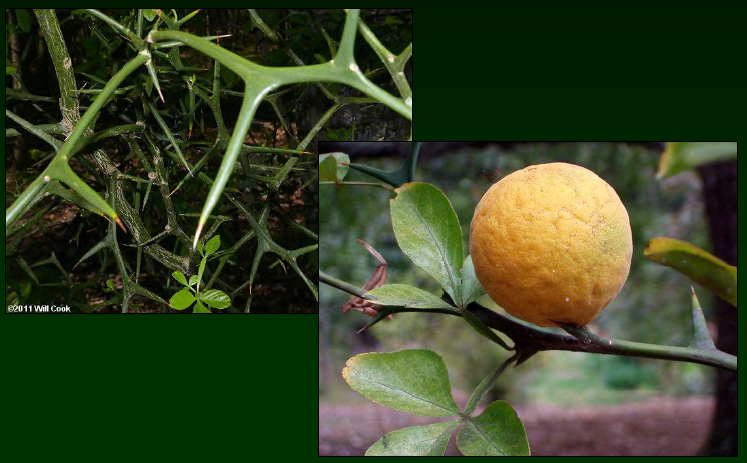
Citrus trifoliata

Rutaceae

SE Asia

Common rootstock

Key Characters:

Thorns!!

Trifoliate leaves

<p>•</p><p>Rutaceae</p><p>•</p><p>SE Asia</p><p>•</p><p>Common rootstock</p><p>•</p><p>Key Characters:</p><p>•</p><p>Thorns!!</p><p>•</p><p>Trifoliate leaves</p>
48
New cards

Key to Mississippi Palms

1 Climb to top of palm and jump off

Legs broken – Sabal palmetto

Legs not broken, 2

2 Grasp petiole tightly and rapidly pull upward

Hand lacerated – Serenoa repens

Hand intact, 3

3. Rapidly swing palms downward onto the base of trunk

Hand impaled – Raphidphyllum histrix

Hand intact – Sabal minor

49
New cards

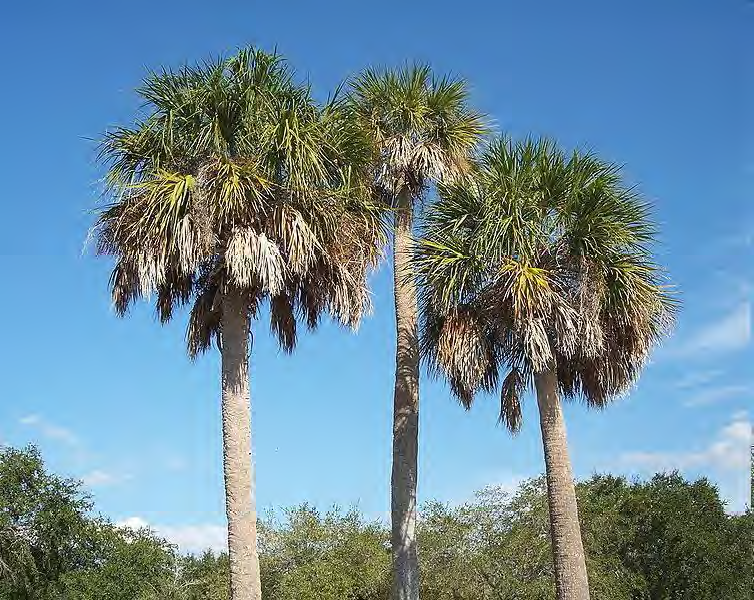
Sabal palmetto

Arecaceae

State tree of South Carolina

Cold and salt resistant

Key Characters:

Tall

costapalmate

<p>•</p><p>Arecaceae</p><p>•</p><p>State tree of South Carolina</p><p>•</p><p>Cold and salt resistant</p><p>•</p><p>Key Characters:</p><p>•</p><p>Tall</p><p>•</p><p>costapalmate</p>
50
New cards

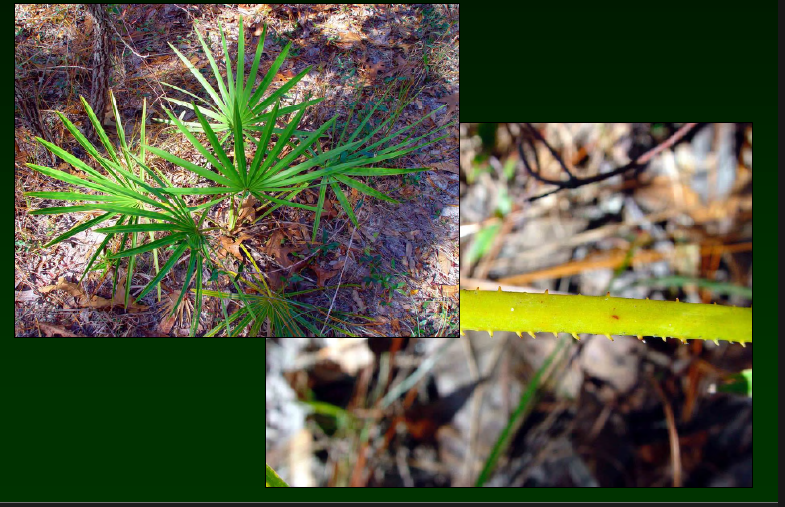
Serenoa repens

Arecaceae

Limited to dry, sandy sites

Key Characters:

Serrate petioles

<p>•</p><p>Arecaceae</p><p>•</p><p>Limited to dry, sandy sites</p><p>•</p><p>Key Characters:</p><p>•</p><p>Serrate petioles</p>
51
New cards

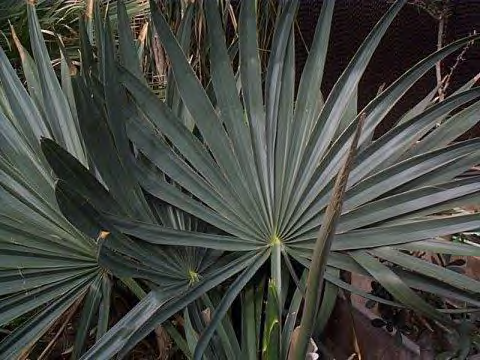
Sabal minor

Moist habitats

Key Characters:

Glaucous

Danger-free

<p>•</p><p>Moist habitats</p><p>•</p><p>Key Characters:</p><p>•</p><p>Glaucous</p><p>•</p><p>Danger-free</p>
52
New cards

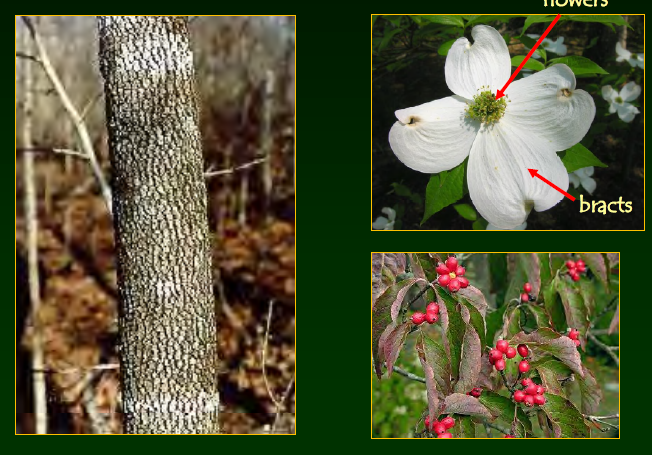
Benthamidia florida

Key Characters:

White “flowers” (bracts)

Red football-shaped fruits

Opposite leaves

Arcuate venation

Blocky bark

<p>•</p><p>Key Characters:</p><p>•</p><p>White “flowers” (bracts)</p><p>•</p><p>Red football-shaped fruits</p><p>•</p><p>Opposite leaves</p><p>•</p><p>Arcuate venation</p><p>•</p><p>Blocky bark</p>
53
New cards

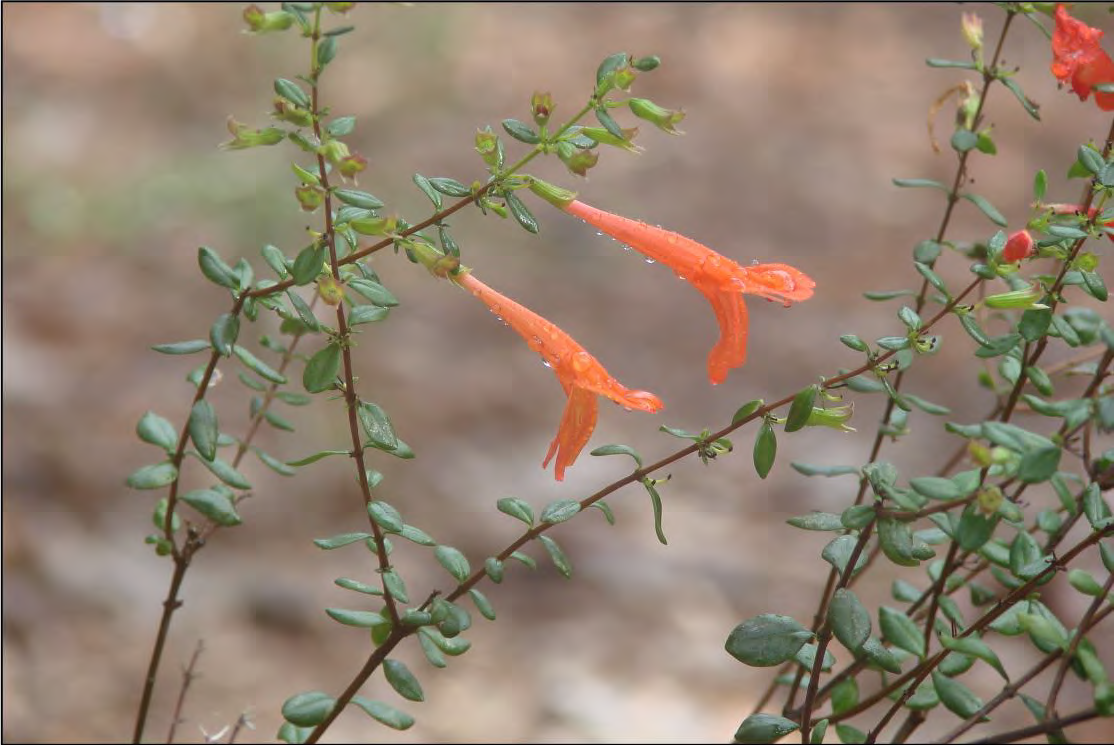
Clinopodium coccineum

Dry habitats

Key Characters:

Opposite, evergreen leaves

Glaucous leaves

Red tubular flowers

<p>•</p><p>Dry habitats</p><p>•</p><p>Key Characters:</p><p>•</p><p>Opposite, evergreen leaves</p><p>•</p><p>Glaucous leaves</p><p>•</p><p>Red tubular flowers</p>
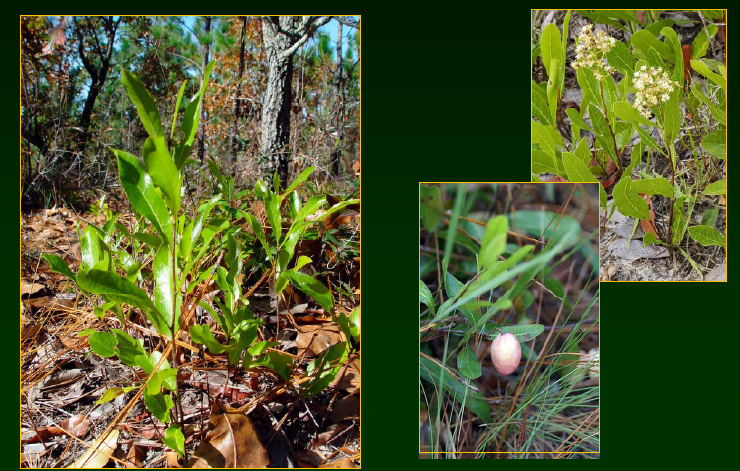
54
New cards

Geobalanus oblongifolius

Chrysobalanaceae

Sandhills or dune habitat

Fruits eaten by gopher tortoises

Key Characters:

Small (< 1m tall)

Vertical leaf orientation

Clonal

Olive shaped fruits

<p>•</p><p>Chrysobalanaceae</p><p>•</p><p>Sandhills or dune habitat</p><p>•</p><p>Fruits eaten by gopher tortoises</p><p>•</p><p>Key Characters:</p><p>•</p><p>Small (&lt; 1m tall)</p><p>•</p><p>Vertical leaf orientation</p><p>•</p><p>Clonal</p><p>•</p><p>Olive shaped fruits</p>
55
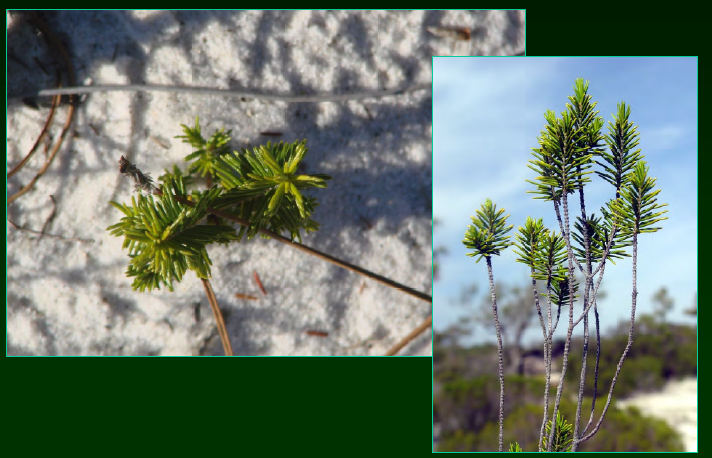
New cards

Ceratiola ericoides

Ericaceae

Monotypic genus

Key Characters:

Needle-like leaves

Sandy habitat

‘six-ranked’ leaves

<p>•</p><p>Ericaceae</p><p>•</p><p>Monotypic genus</p><p>•</p><p>Key Characters:</p><p>•</p><p>Needle-like leaves</p><p>•</p><p>Sandy habitat</p><p>•</p><p>‘six-ranked’ leaves</p>
56
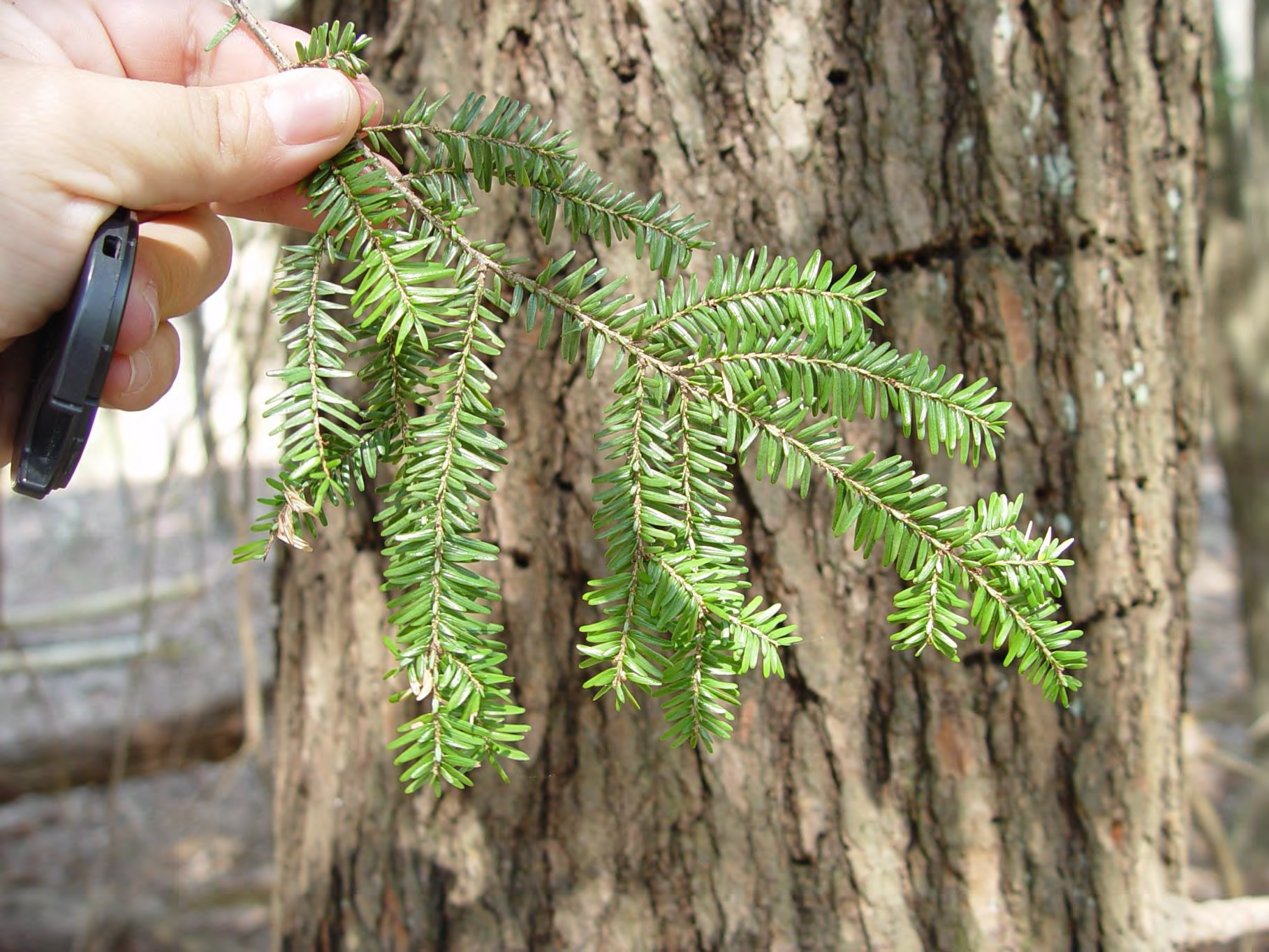
New cards

Tsuga canadensis

Pinaceae

Appalachians

Rocky gorges

Key Characters:

Two-ranked leaves

<p>•</p><p>Pinaceae</p><p>•</p><p>Appalachians</p><p>•</p><p>Rocky gorges</p><p>•</p><p>Key Characters:</p><p>•</p><p>Two-ranked leaves</p>
57
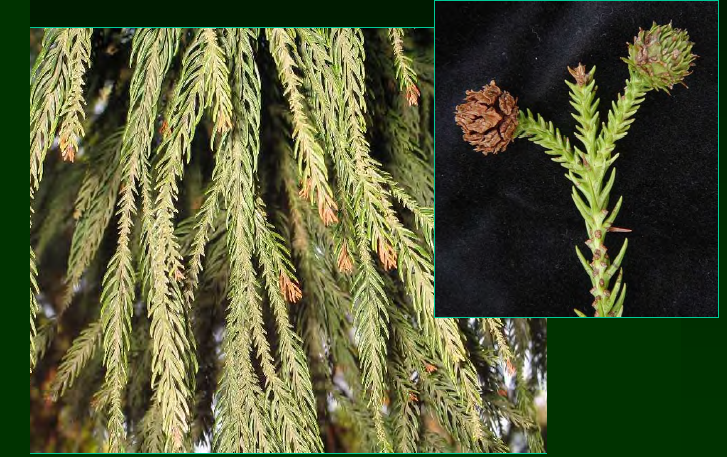
New cards

Cryptomeria japonica

Cupressaceae

Native to China and Japan

National tree of Japan

Key Characters:

Short, stout needles

Needles spirally arranged, five-ranked

Small, globose cones

Vertically-fissured bark

<p>•</p><p>Cupressaceae</p><p>•</p><p>Native to China and Japan</p><p>•</p><p>National tree of Japan</p><p>•</p><p>Key Characters:</p><p>•</p><p>Short, stout needles</p><p>•</p><p>Needles spirally arranged, five-ranked</p><p>•</p><p>Small, globose cones</p><p>•</p><p>Vertically-fissured bark</p>
58
New cards

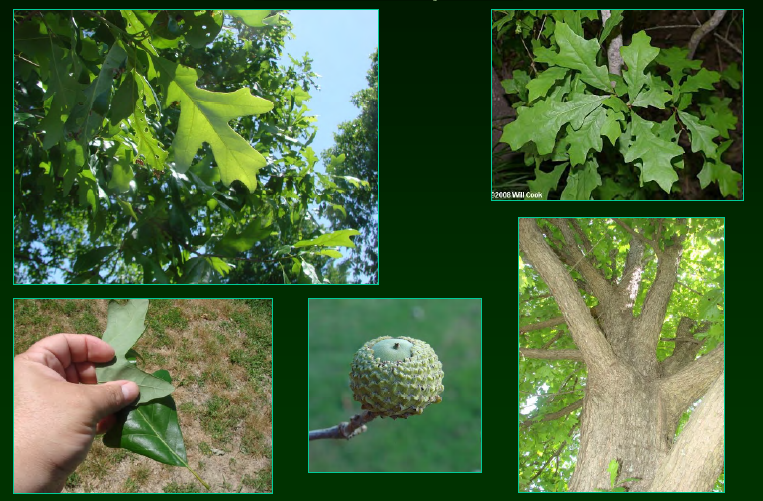
Quercus acutissima

Native to Asia

Popular tree for deer plantings

Key Characters:

Serrate leaves

Large, spiny acorns

Vase architecture

Orangish fissures in bark

<p>•</p><p>Native to Asia</p><p>•</p><p>Popular tree for deer plantings</p><p>•</p><p>Key Characters:</p><p>•</p><p>Serrate leaves</p><p>•</p><p>Large, spiny acorns</p><p>•</p><p>Vase architecture</p><p>•</p><p>Orangish fissures in bark</p>
59
New cards

Quercus lyrata

Bottomlands

Important wildlife food

Key Characters:

Enclosed acorn

Lobe tips angular

<p>•</p><p>Bottomlands</p><p>•</p><p>Important wildlife food</p><p>•</p><p>Key Characters:</p><p>•</p><p>Enclosed acorn</p><p>•</p><p>Lobe tips angular</p>
60
New cards

Quercus marilandica

Dry soils

Key Characters:

Very thick, glossy leaves

Pandurate leaves

Leaf lobes bristle-tipped

Rusty tomentose underneath

<p>•</p><p>Dry soils</p><p>•</p><p>Key Characters:</p><p>•</p><p>Very thick, glossy leaves</p><p>•</p><p>Pandurate leaves</p><p>•</p><p>Leaf lobes bristle-tipped</p><p>•</p><p>Rusty tomentose underneath</p>
61
New cards

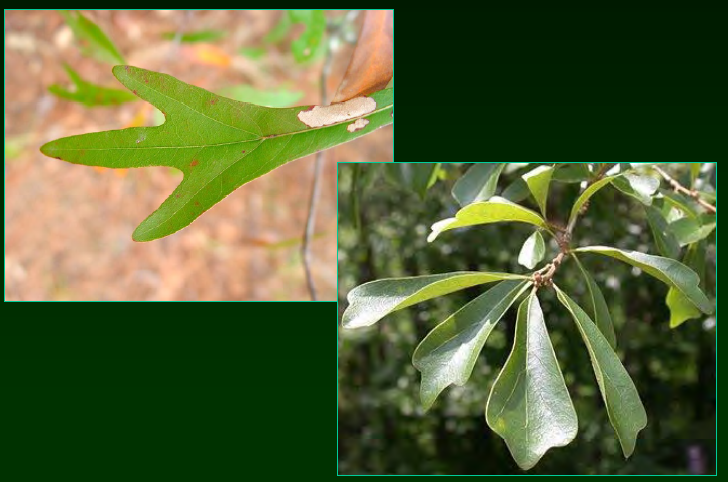
Quercus nigra

Leaf shape highly variable

Bottomlands but can grow most places

Key Characters:

Semi-evergreen to deciduous

Acute leaf base

Spatulate leaves

Leaves with 3-lobes (usually)

<p>•</p><p>Leaf shape highly variable</p><p>•</p><p>Bottomlands but can grow most places</p><p>•</p><p>Key Characters:</p><p>•</p><p>Semi-evergreen to deciduous</p><p>•</p><p>Acute leaf base</p><p>•</p><p>Spatulate leaves</p><p>•</p><p>Leaves with 3-lobes (usually)</p>
62
New cards

Morella caroliniensis

Moist habitat

N-fixation

Key Characters:

Similar to Myrica cerifera but larger leaves

Few to no golden glands

<p>•</p><p>Moist habitat</p><p>•</p><p>N-fixation</p><p>•</p><p>Key Characters:</p><p>•</p><p>Similar to Myrica cerifera but larger leaves</p><p>•</p><p>Few to no golden glands</p>
63
New cards

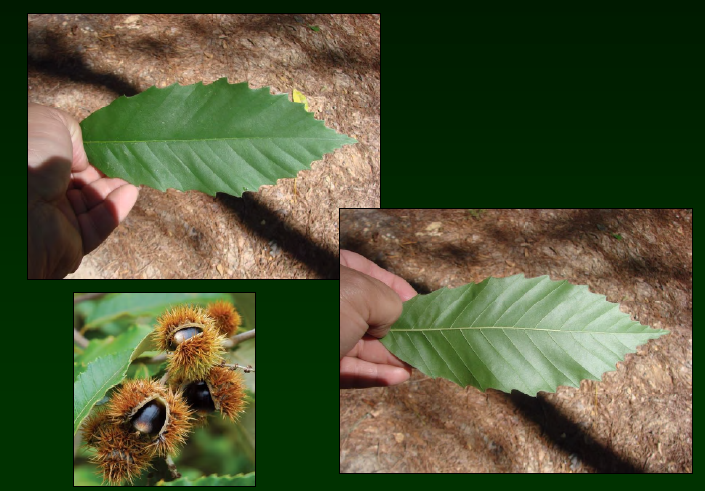
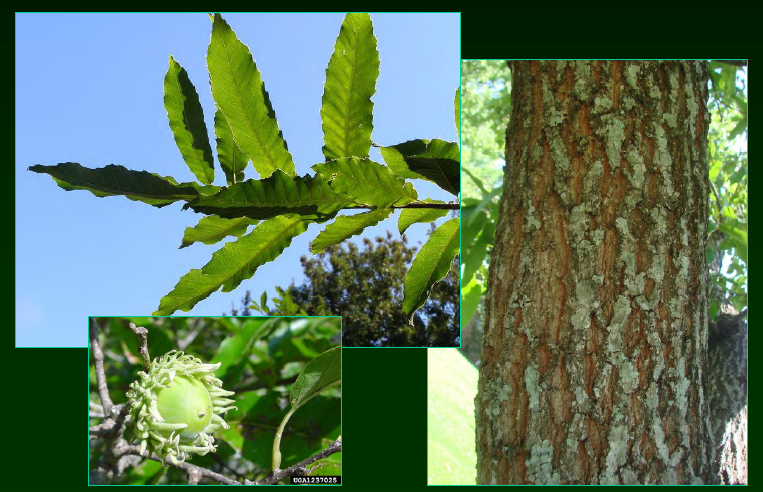
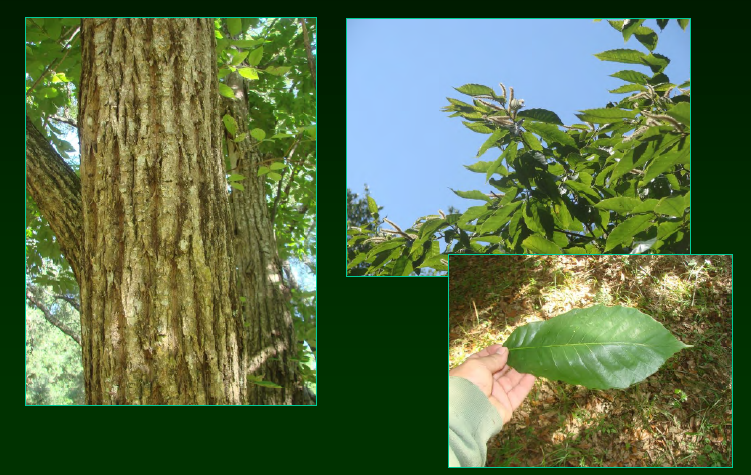
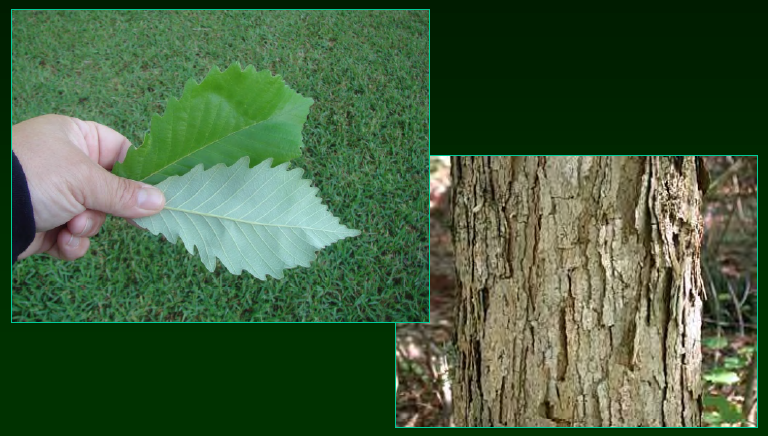
Castanea mollissima

Native to Asia

Resistant to Chestnut Blight

Key Characters:

Serrate leaves

Serrations have bristle tips

Vertical fissured bark

White, stinky flowers

Chestnuts!

<p>•</p><p>Native to Asia</p><p>•</p><p>Resistant to Chestnut Blight</p><p>•</p><p>Key Characters:</p><p>•</p><p>Serrate leaves</p><p>•</p><p>Serrations have bristle tips</p><p>•</p><p>Vertical fissured bark</p><p>•</p><p>White, stinky flowers</p><p>•</p><p>Chestnuts!</p>
64
New cards

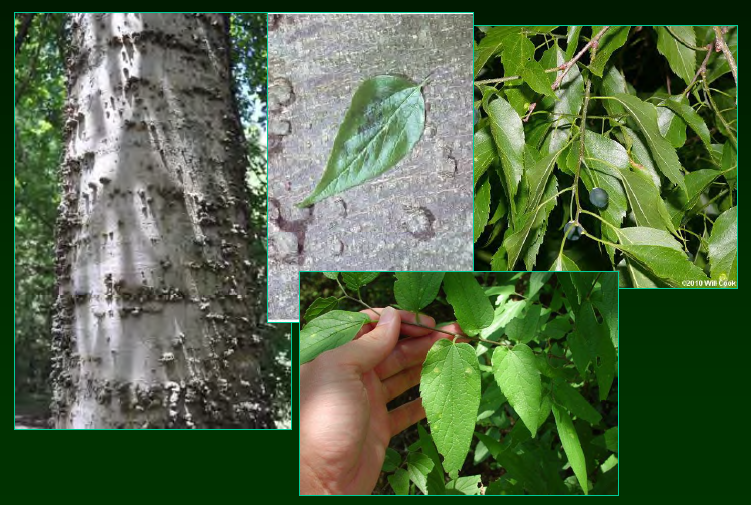
Celtis laevigata

Cannabaceae

Bottomland forest / calcareous soils

Key Characters:

Warty bark

Acuminate leaves

Serrate margins

Purple fruits

<p>•</p><p>Cannabaceae</p><p>•</p><p>Bottomland forest / calcareous soils</p><p>•</p><p>Key Characters:</p><p>•</p><p>Warty bark</p><p>•</p><p>Acuminate leaves</p><p>•</p><p>Serrate margins</p><p>•</p><p>Purple fruits</p>
65
New cards

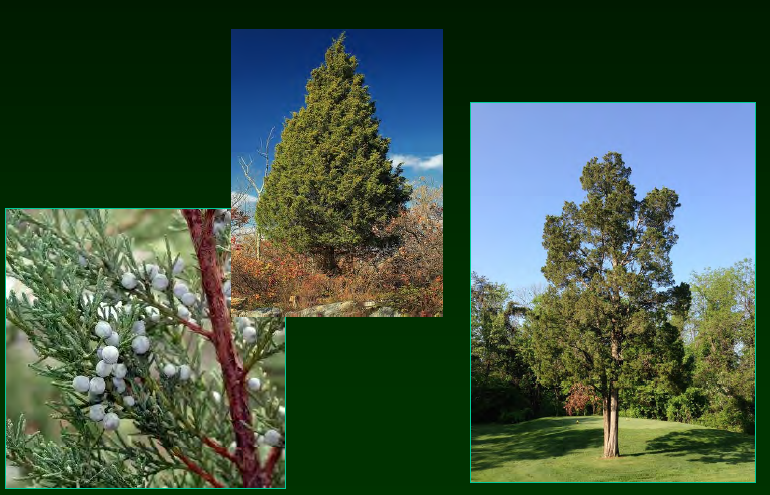
Juniperus virginiana

Cupressaceae

Key Characters:

Scales and needles

Acute scale tips

<p>•</p><p>Cupressaceae</p><p>•</p><p>Key Characters:</p><p>•</p><p>Scales and needles</p><p>•</p><p>Acute scale tips</p>
66
New cards

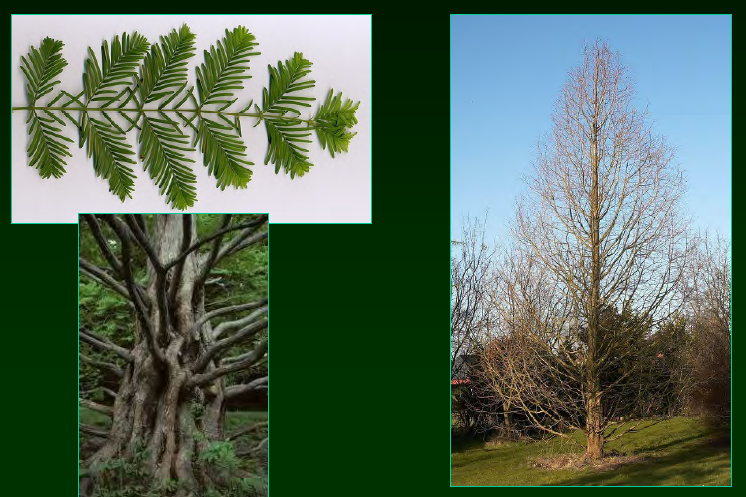
Metasequoia glyptostroboides

Cupressaceae

Native to China

Initially described from fossil material

Key Characters:

Very similar to Taxodium

Branches are ascending

<p>•</p><p>Cupressaceae</p><p>•</p><p>Native to China</p><p>•</p><p>Initially described from fossil material</p><p>•</p><p>Key Characters:</p><p>•</p><p>Very similar to Taxodium</p><p>•</p><p>Branches are ascending</p>
67
New cards

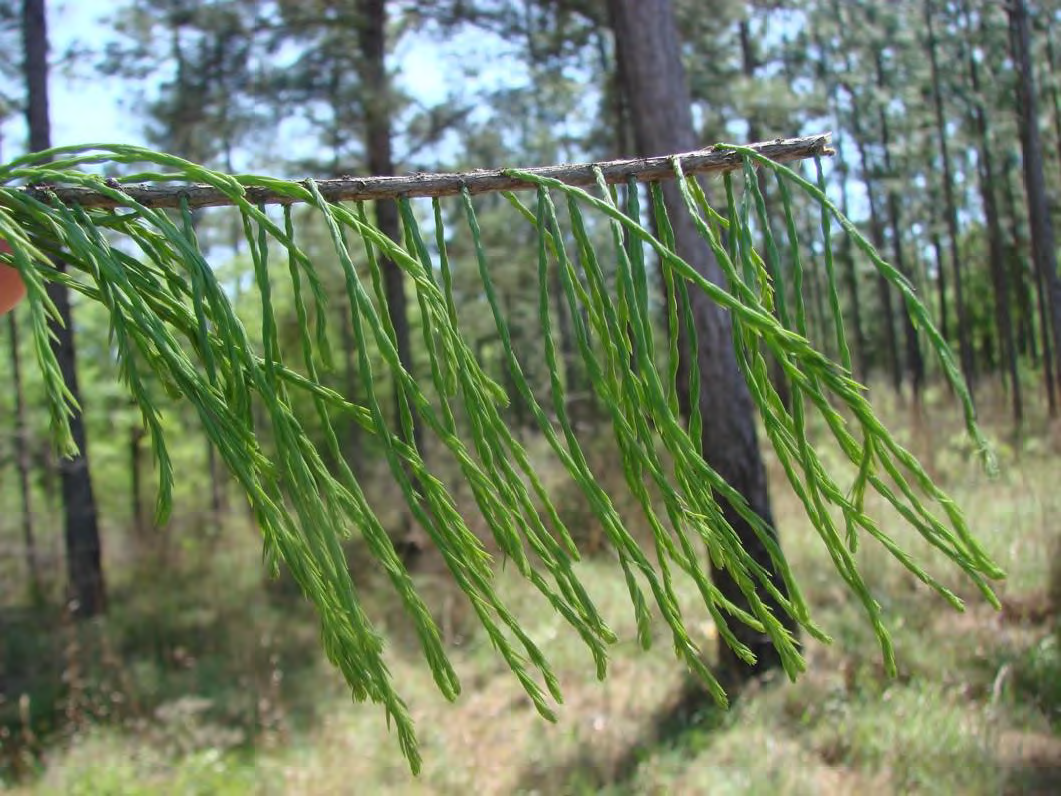
Taxodium ascendens

Cupressaceae

Similar to T. distichum

Deciduous conifer

Wet habitats

Key Characters:

Appressed needles

<p>•</p><p>Cupressaceae</p><p>•</p><p>Similar to T. distichum</p><p>•</p><p>Deciduous conifer</p><p>•</p><p>Wet habitats</p><p>•</p><p>Key Characters:</p><p>•</p><p>Appressed needles</p>
68
New cards

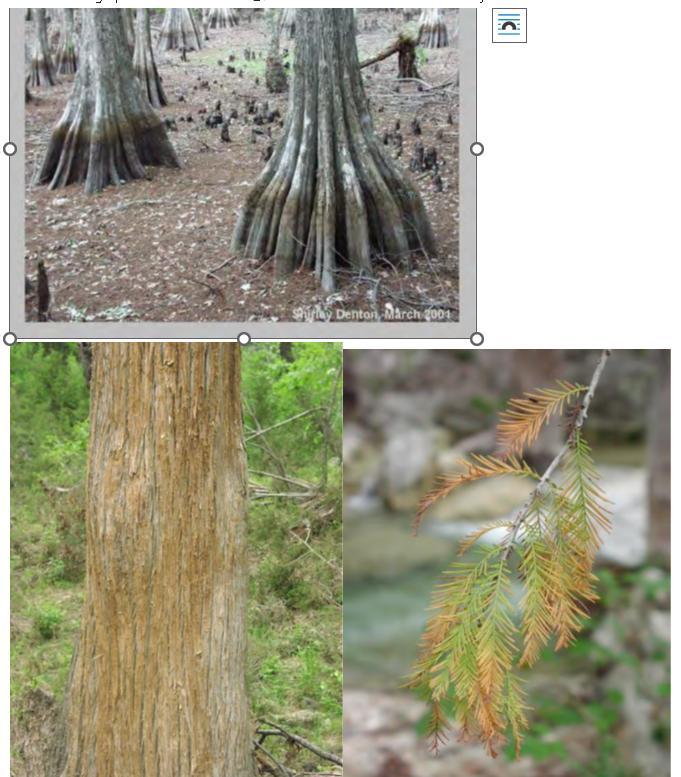
Taxodium distichum

Cupressaceae

Restricted to moist areas

Wood is most decay-resistant in SE

Deciduous conifer

Key Characters:

2-ranked needles on deciduous branchlets

Cypress knees

Shreddy bark

<p>•</p><p>Cupressaceae</p><p>•</p><p>Restricted to moist areas</p><p>•</p><p>Wood is most decay-resistant in SE</p><p>•</p><p>Deciduous conifer</p><p>•</p><p>Key Characters:</p><p>•</p><p>2-ranked needles on deciduous branchlets</p><p>•</p><p>Cypress knees</p><p>•</p><p>Shreddy bark</p>
69
New cards

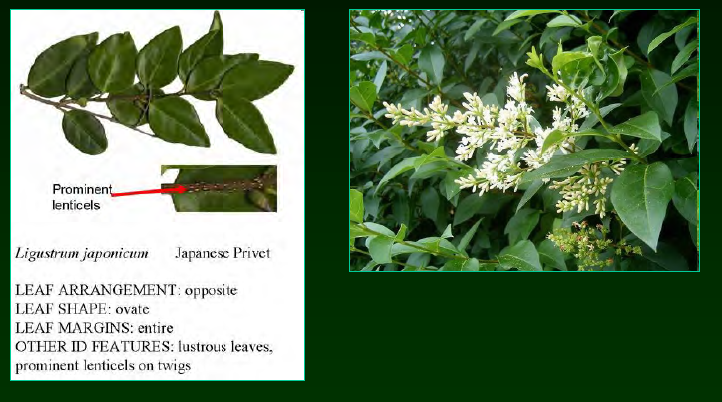
Ligustrum japonica

Widely used as a landscape plant

Not native, but not particularly invasive

Usually only near old homesteads

Key Characters:

Opposite leaves

Two-ranked leaves

Purple berries (drupes)

Glossy leaves

<p>•</p><p>Widely used as a landscape plant</p><p>•</p><p>Not native, but not particularly invasive</p><p>•</p><p>Usually only near old homesteads</p><p>•</p><p>Key Characters:</p><p>•</p><p>Opposite leaves</p><p>•</p><p>Two-ranked leaves</p><p>•</p><p>Purple berries (drupes)</p><p>•</p><p>Glossy leaves</p>
70
New cards

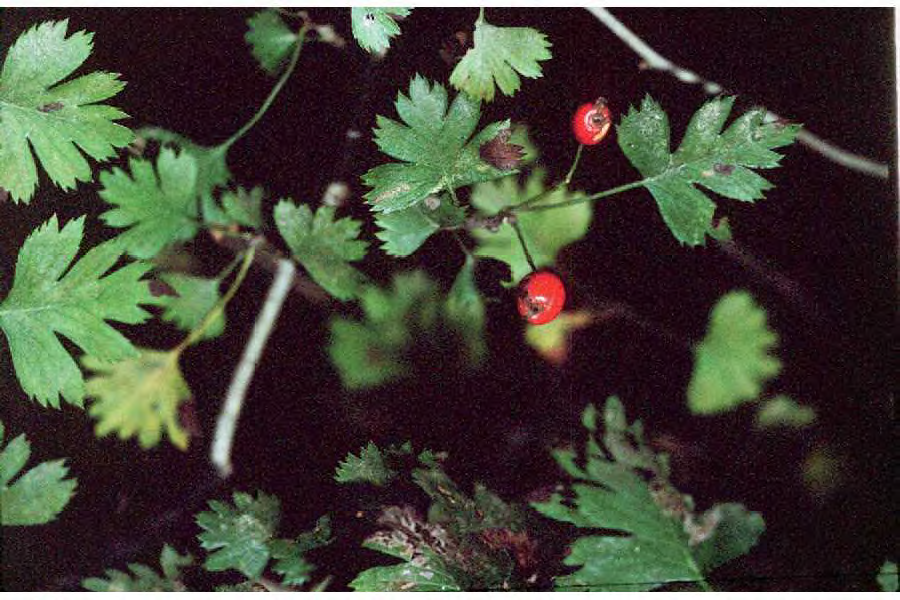
Crataegus marshallii

Rosaceae

Mesic forest

Key Characters:

Parsley-like leaves

Mottled bark

Thorns

<p>•</p><p>Rosaceae</p><p>•</p><p>Mesic forest</p><p>•</p><p>Key Characters:</p><p>•</p><p>Parsley-like leaves</p><p>•</p><p>Mottled bark</p><p>•</p><p>Thorns</p>
71
New cards

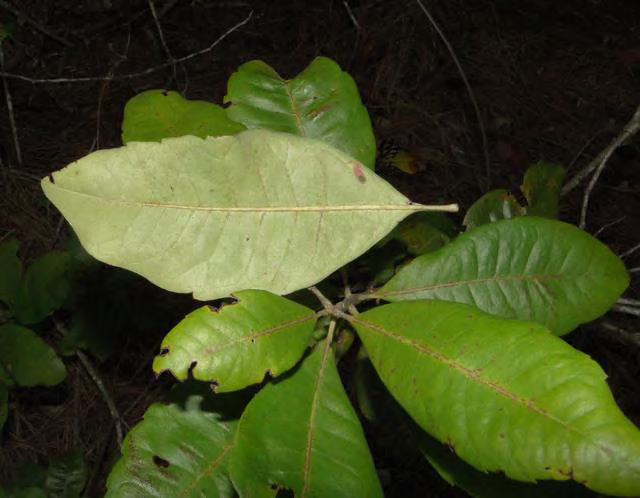
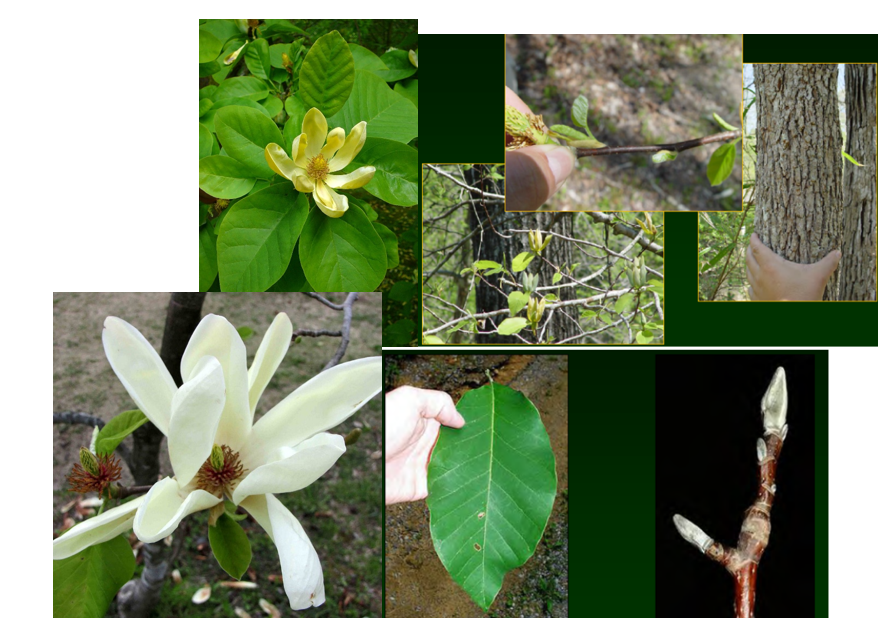
Magnolia acuminata

Mesic forest

Key Characters:

Acute leaf bases

Deciduous

Silky buds

Un-Magnolia-like bark (i.e., not smooth)

flowers with long, distinct, curled over petals
<p>•</p><p>Mesic forest</p><p>•</p><p>Key Characters:</p><p>•</p><p>Acute leaf bases</p><p>•</p><p>Deciduous</p><p>•</p><p>Silky buds</p><p>•</p><p>Un-Magnolia-like bark (i.e., not smooth)</p><p>flowers with long, distinct, curled over petals</p>
72
New cards

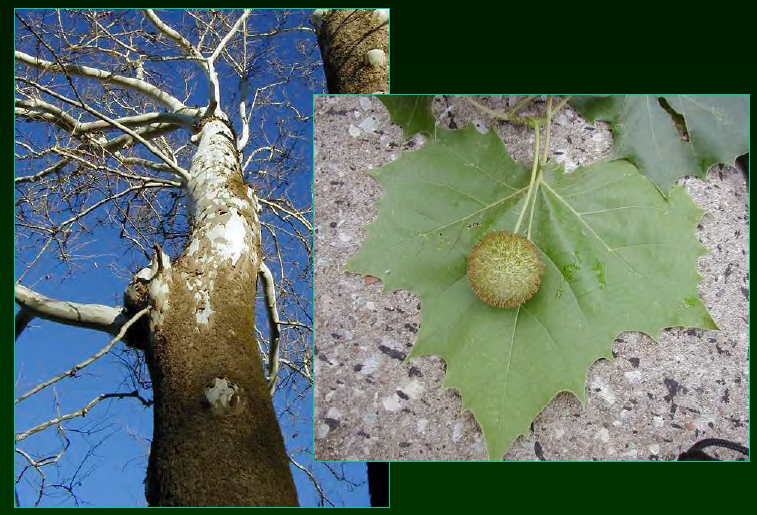
Platanus occidentalis

Platanaceae

Key Characters:

Mottled bark

Large palmate leaves

Fruits

<p>•</p><p>Platanaceae</p><p>•</p><p>Key Characters:</p><p>•</p><p>Mottled bark</p><p>•</p><p>Large palmate leaves</p><p>•</p><p>Fruits</p>
73
New cards

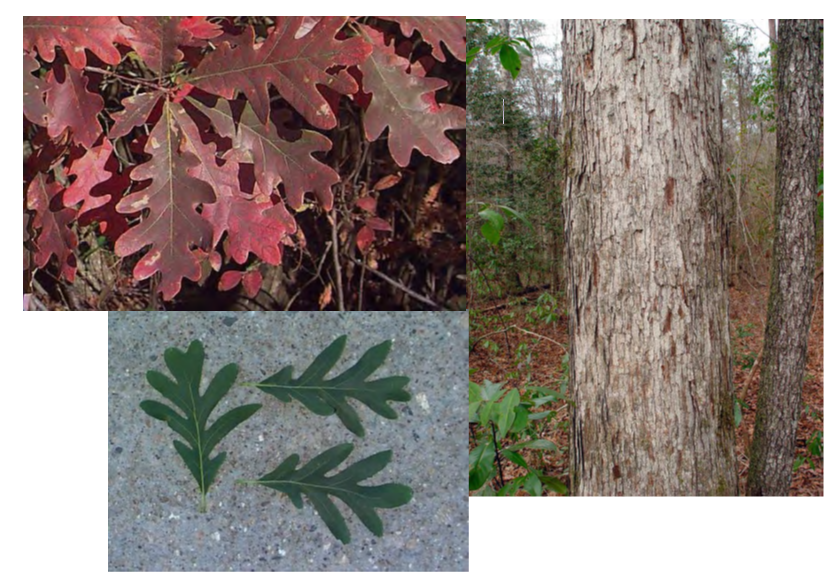
Quercus alba

Acorns are high value wildlife food

Key Characters:

Lobed leaves

Shaggy, flaky bark

<p>•</p><p>Acorns are high value wildlife food</p><p>•</p><p>Key Characters:</p><p>•</p><p>Lobed leaves</p><p>•</p><p>Shaggy, flaky bark</p>
74
New cards

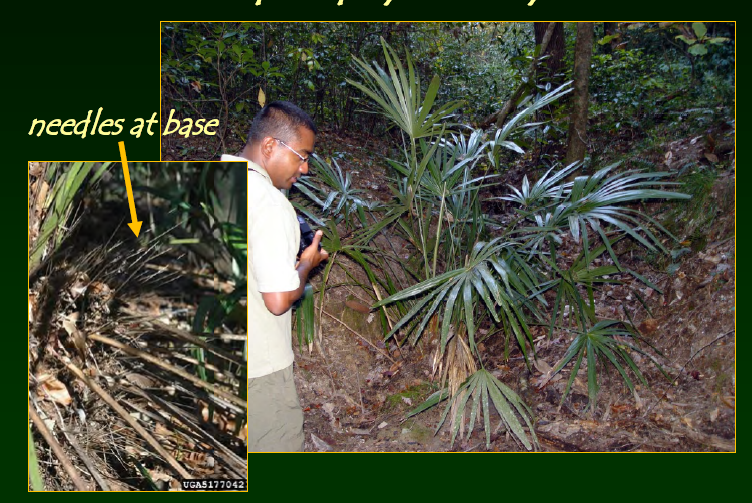
Rhapidophyllum hystrix

Arecaceae

Restricted to south Coastal Plain

Monotypic genus

Moist habitats

Key Characters:

Slightly taller than Sabal minor

Needles at base

<p>•</p><p>Arecaceae</p><p>•</p><p>Restricted to south Coastal Plain</p><p>•</p><p>Monotypic genus</p><p>•</p><p>Moist habitats</p><p>•</p><p>Key Characters:</p><p>•</p><p>Slightly taller than Sabal minor</p><p>•</p><p>Needles at base</p>
75
New cards

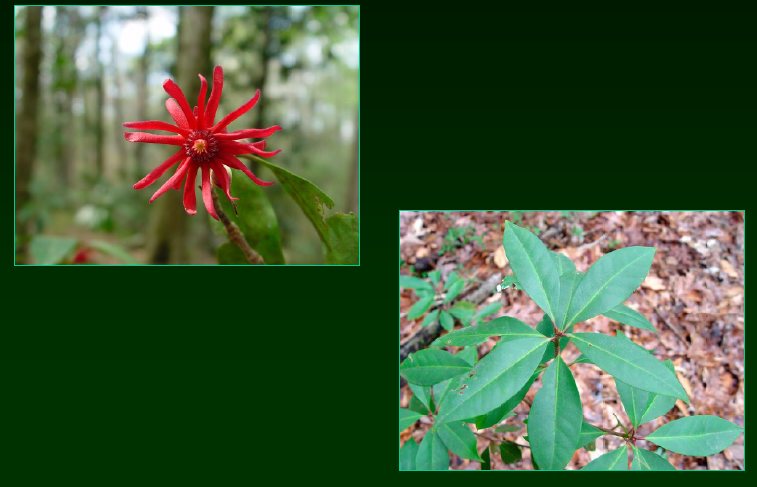
Illicium floridanum

Illiciaceae

Moist areas

Stinky flowers

Thermogenic flowers

Key Characters:

Evergreen leaves

Anise scent

Star-shaped fruits

Large maroon flowers

<p>•</p><p>Illiciaceae</p><p>•</p><p>Moist areas</p><p>•</p><p>Stinky flowers</p><p>•</p><p>Thermogenic flowers</p><p>•</p><p>Key Characters:</p><p>•</p><p>Evergreen leaves</p><p>•</p><p>Anise scent</p><p>•</p><p>Star-shaped fruits</p><p>•</p><p>Large maroon flowers</p>
76
New cards

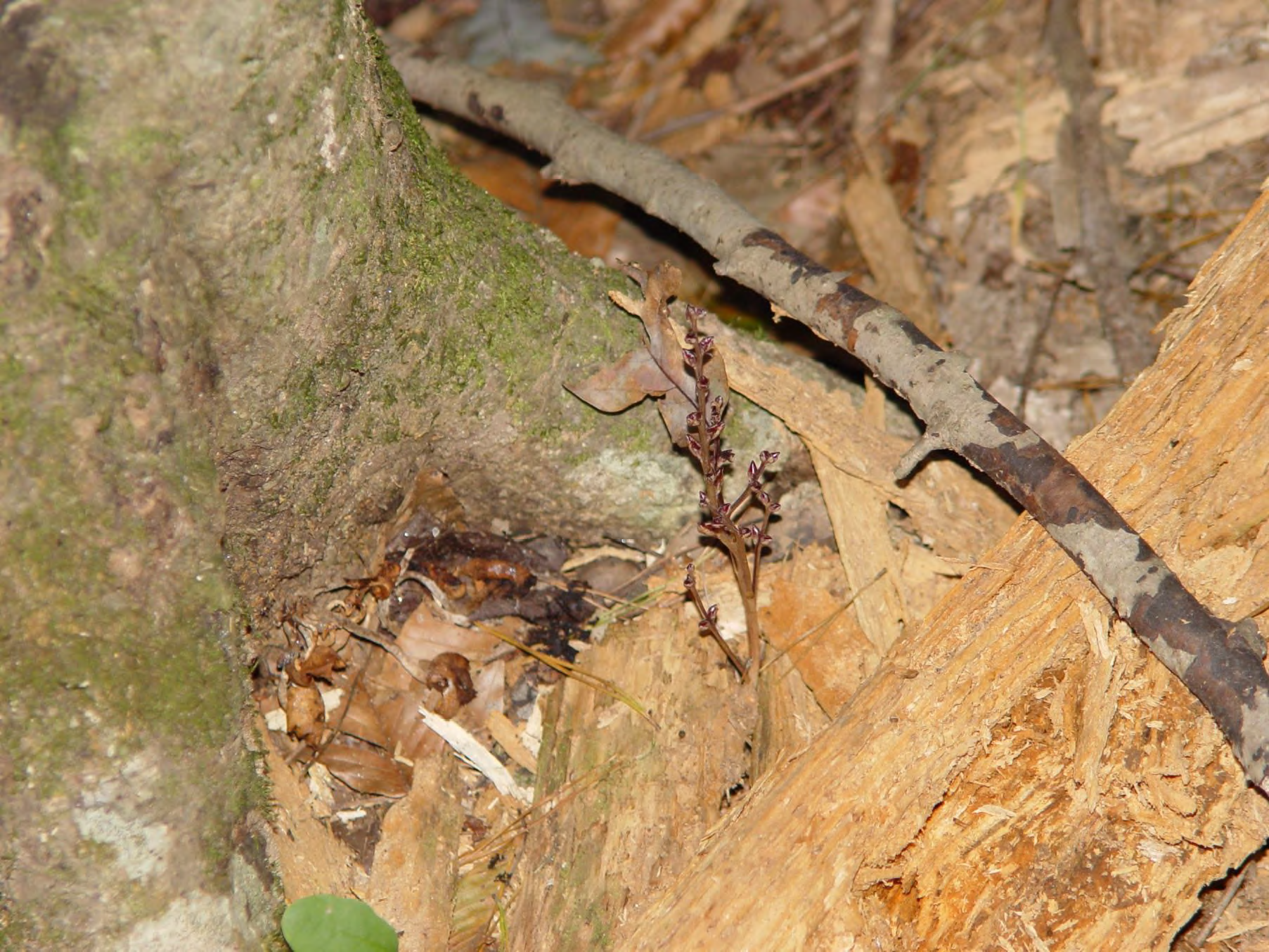
Epifagus virginiana

Orobanchaceae

Parasitic on Beech

Key Characters:

No chlorophyll

<p>•</p><p>Orobanchaceae</p><p>•</p><p>Parasitic on Beech</p><p>•</p><p>Key Characters:</p><p>•</p><p>No chlorophyll</p>
77
New cards

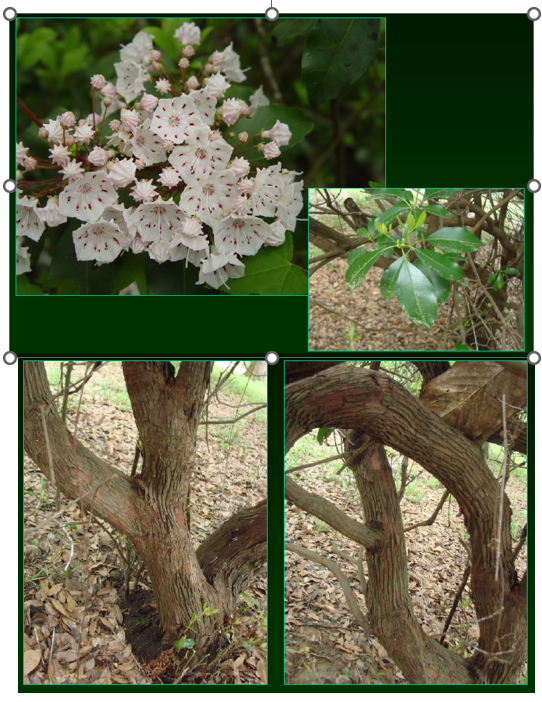
Kalmia latifolia

Ericaceae

Spring-loaded anthers

Toxic foliage

Key Characters:

Evergreen leaves

Irregular architecture

Whitish-pink flowers

Vertically striated bark

<p>•</p><p>Ericaceae</p><p>•</p><p>Spring-loaded anthers</p><p>•</p><p>Toxic foliage</p><p>•</p><p>Key Characters:</p><p>•</p><p>Evergreen leaves</p><p>•</p><p>Irregular architecture</p><p>•</p><p>Whitish-pink flowers</p><p>•</p><p>Vertically striated bark</p>
78
New cards

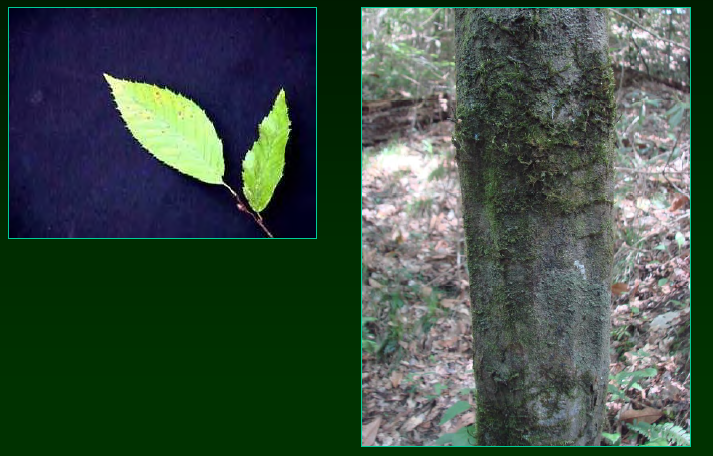
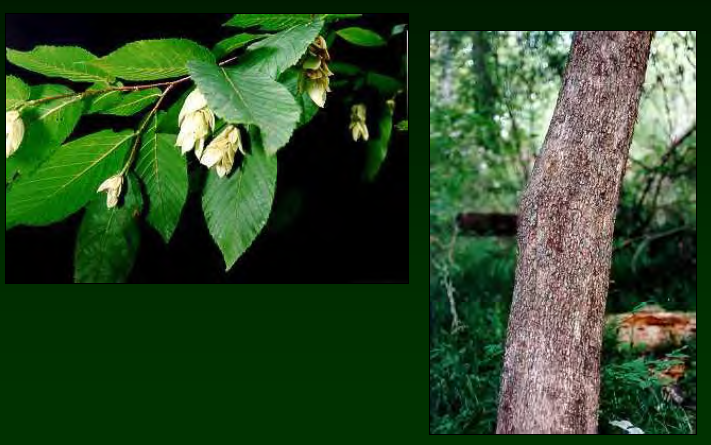
Carpinus caroliniana

Betulaceae

Very similar to Ostrya virginiana

Usually found in bottomlands

Key Characters:

Serrate leaves

Gray, fluted bark

<p>•</p><p>Betulaceae</p><p>•</p><p>Very similar to Ostrya virginiana</p><p>•</p><p>Usually found in bottomlands</p><p>•</p><p>Key Characters:</p><p>•</p><p>Serrate leaves</p><p>•</p><p>Gray, fluted bark</p>
79
New cards

Ostrya virginiana

Betulaceae

Very similar to Carpinus caroliniana

Fruits resemble hops

Mesic forests

Key Characters:

Serrate leaves

Shreddy, reddish brown bark

<p>•</p><p>Betulaceae</p><p>•</p><p>Very similar to Carpinus caroliniana</p><p>•</p><p>Fruits resemble hops</p><p>•</p><p>Mesic forests</p><p>•</p><p>Key Characters:</p><p>•</p><p>Serrate leaves</p><p>•</p><p>Shreddy, reddish brown bark</p>
80
New cards

Ostrya virginiana vs Carpinus caroliniana
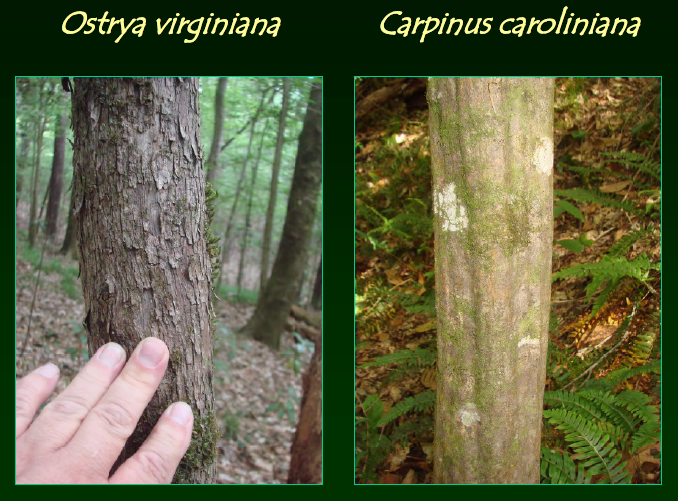
knowt flashcard image
81
New cards

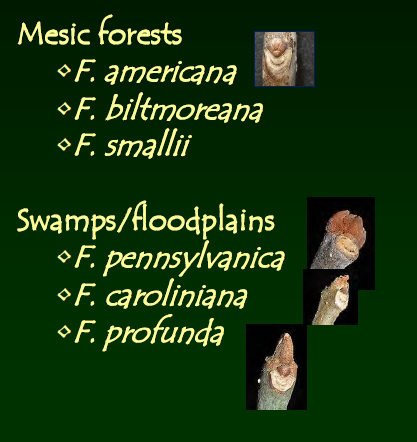
Fraxinus

knowt flashcard image
82
New cards

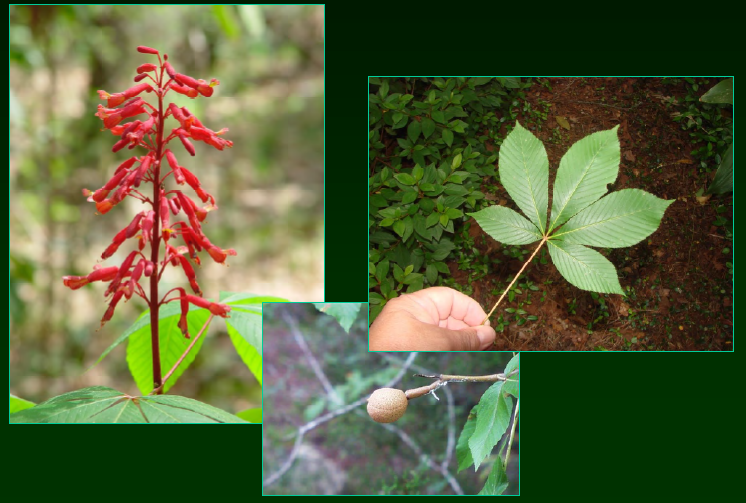
Aesculus pavia

Hippocastanaceae

Seldom over 20’ tall

Key Characters:

Opposite leaves

Palmately compound leaves (5 leaflets)

Red flowers in terminal racemes

<p>•</p><p>Hippocastanaceae</p><p>•</p><p>Seldom over 20’ tall</p><p>•</p><p>Key Characters:</p><p>•</p><p>Opposite leaves</p><p>•</p><p>Palmately compound leaves (5 leaflets)</p><p>•</p><p>Red flowers in terminal racemes</p>
83
New cards

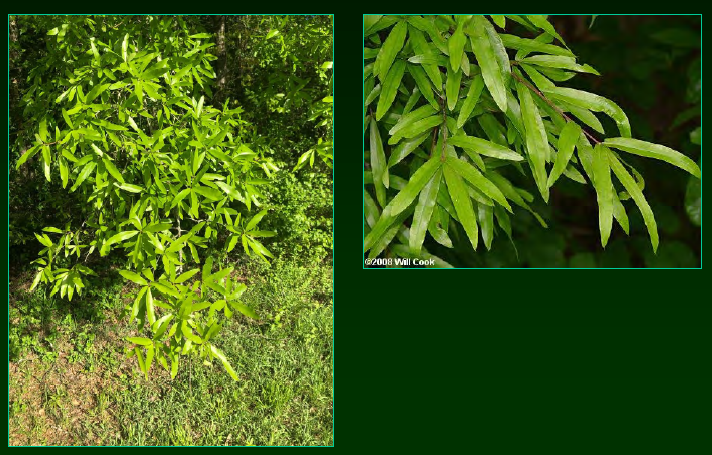
Quercus phellos

Moist habitat

Can be confused with Quercus laurifolia

Popular landscape tree

Key Characters:

Narrow leaves

Dense branching architecture

Smooth bark

<p>•</p><p>Moist habitat</p><p>•</p><p>Can be confused with Quercus laurifolia</p><p>•</p><p>Popular landscape tree</p><p>•</p><p>Key Characters:</p><p>•</p><p>Narrow leaves</p><p>•</p><p>Dense branching architecture</p><p>•</p><p>Smooth bark</p>
84
New cards

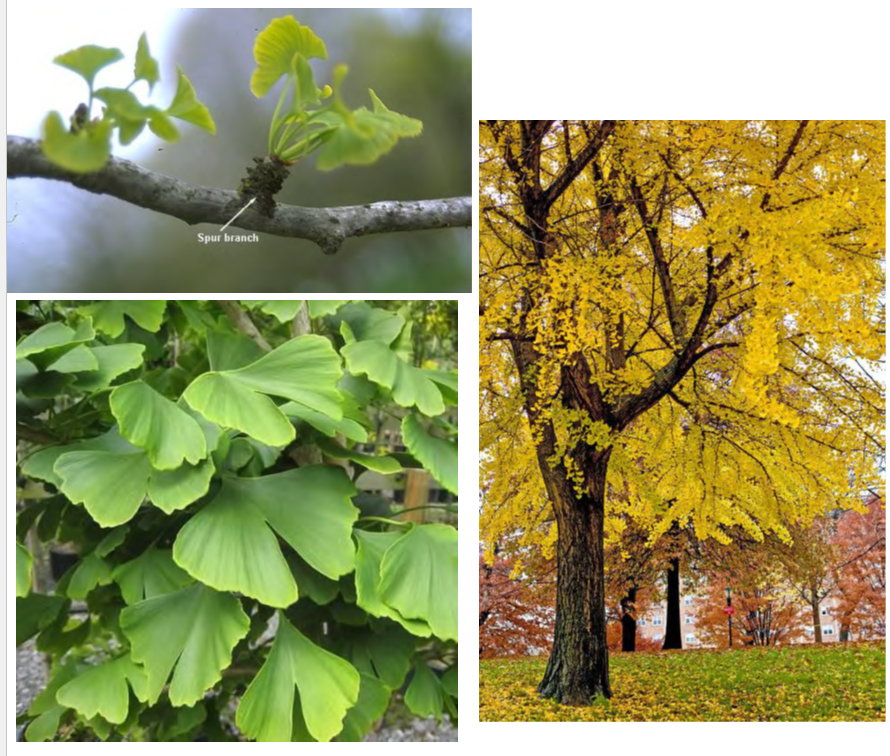
Ginkgo biloba

Ginkgoaceae

Ancient species (> 150 million years)

Dioecious

Females produce fleshy seeds with butyric acid

Key Characters:

Fan-shaped leaves

Dichotomous venation

Spur shoots

<p>•</p><p>Ginkgoaceae</p><p>•</p><p>Ancient species (&gt; 150 million years)</p><p>•</p><p>Dioecious</p><p>•</p><p>Females produce fleshy seeds with butyric acid</p><p>•</p><p>Key Characters:</p><p>•</p><p>Fan-shaped leaves</p><p>•</p><p>Dichotomous venation</p><p>•</p><p>Spur shoots</p>
85
New cards

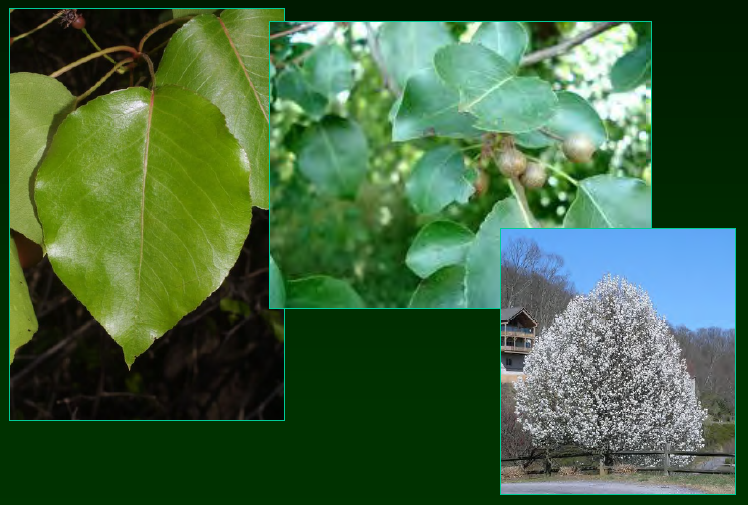
Pyrus calleryana

Rosaceae

Ornamental pear (Bradford)

Native to China

Key Characters:

Ovate, rounded leaves

Tiny pears

Rounded architecture

Thorns!

<p>•</p><p>Rosaceae</p><p>•</p><p>Ornamental pear (Bradford)</p><p>•</p><p>Native to China</p><p>•</p><p>Key Characters:</p><p>•</p><p>Ovate, rounded leaves</p><p>•</p><p>Tiny pears</p><p>•</p><p>Rounded architecture</p><p>•</p><p>Thorns!</p>
86
New cards

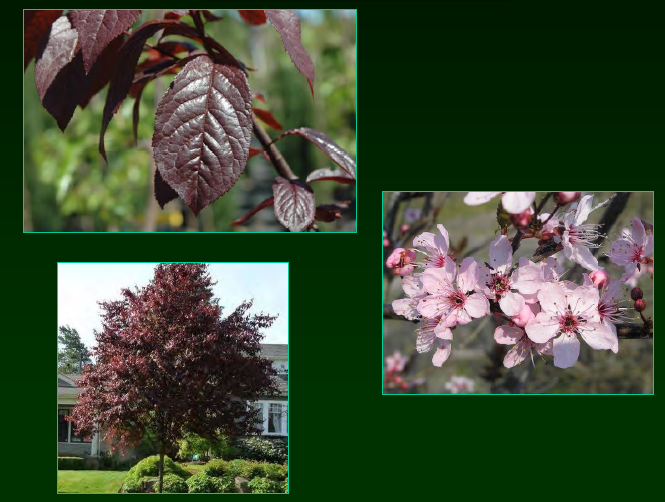
Prunus cerasifera

Not native

Ornamental species

Key Characters:

Dark brown bark

Purple leaves

Pink flowers

<p>•</p><p>Not native</p><p>•</p><p>Ornamental species</p><p>•</p><p>Key Characters:</p><p>•</p><p>Dark brown bark</p><p>•</p><p>Purple leaves</p><p>•</p><p>Pink flowers</p>
87
New cards

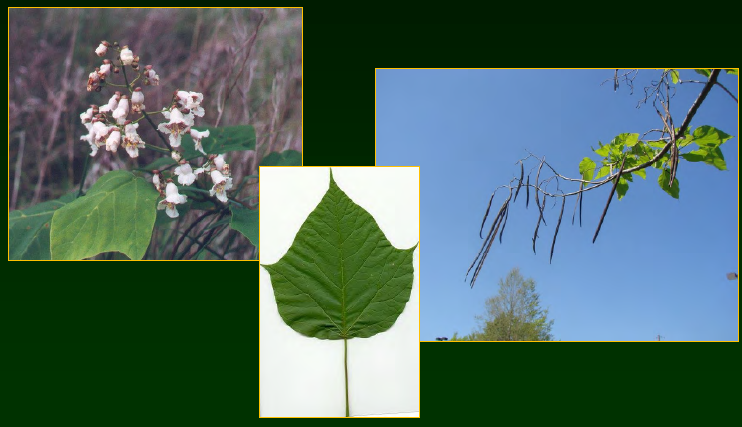
Catalpa bignonioides

Cherokee name is “kutuhlpa”

Host for catawba worms (sphinx moth)

Key Characters:

Whorled leaves

Large leaves

Leguminous seed pods

Large white showy flowers

<p>•</p><p>Cherokee name is “kutuhlpa”</p><p>•</p><p>Host for catawba worms (sphinx moth)</p><p>•</p><p>Key Characters:</p><p>•</p><p>Whorled leaves</p><p>•</p><p>Large leaves</p><p>•</p><p>Leguminous seed pods</p><p>•</p><p>Large white showy flowers</p>
88
New cards

Prunus caroliana

Rosaceae

Native to coastal areas

Weedy/invasive inland

Key Characters:

Evergreen

Serrate leaf margins

Small white flowers

<p>•</p><p>Rosaceae</p><p>•</p><p>Native to coastal areas</p><p>•</p><p>Weedy/invasive inland</p><p>•</p><p>Key Characters:</p><p>•</p><p>Evergreen</p><p>•</p><p>Serrate leaf margins</p><p>•</p><p>Small white flowers</p>
89
New cards

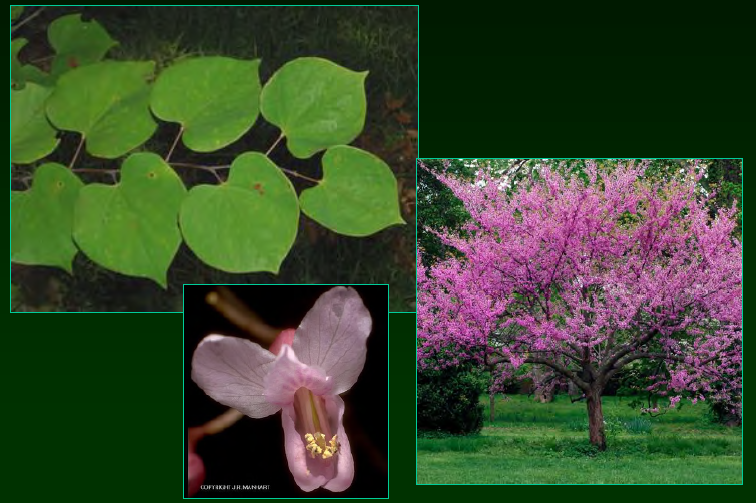
Cercis canadensis

Fabaceae

Key Characters:

Cordate leaves

Two-ranked leaves

Purple flowers

<p>•</p><p>Fabaceae</p><p>•</p><p>Key Characters:</p><p>•</p><p>Cordate leaves</p><p>•</p><p>Two-ranked leaves</p><p>•</p><p>Purple flowers</p>
90
New cards

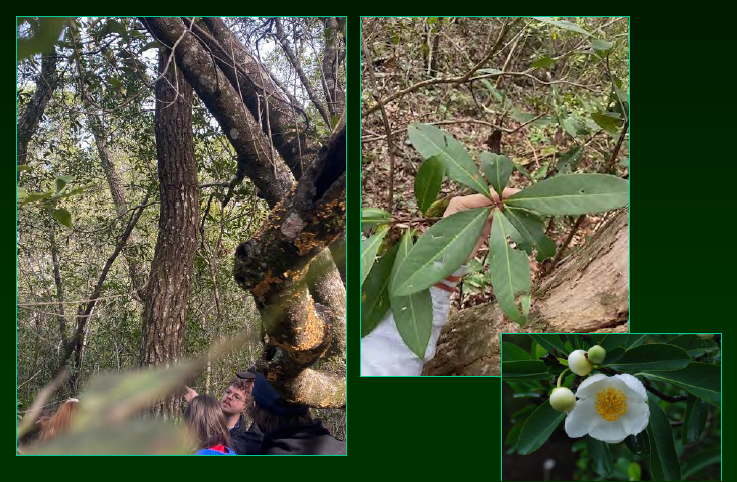
Gordonia lasianthus

Theaceae

Bayheads/baygalls

Key Characters:

Serrate evergreen leaves

Grey, furrowed bark

Dense, narrow crown

<p>•</p><p>Theaceae</p><p>•</p><p>Bayheads/baygalls</p><p>•</p><p>Key Characters:</p><p>•</p><p>Serrate evergreen leaves</p><p>•</p><p>Grey, furrowed bark</p><p>•</p><p>Dense, narrow crown</p>
91
New cards

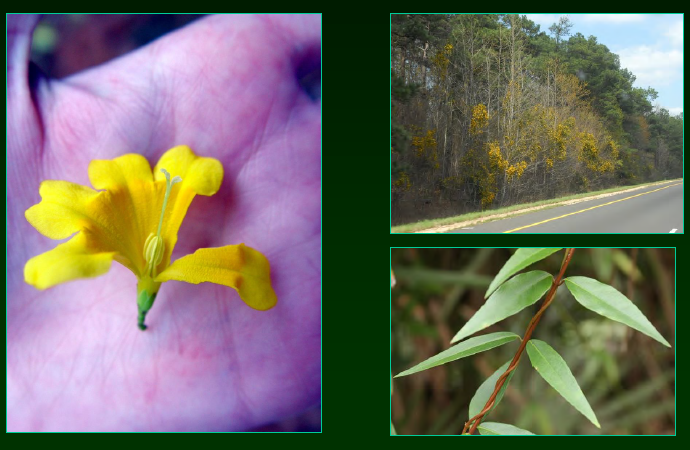
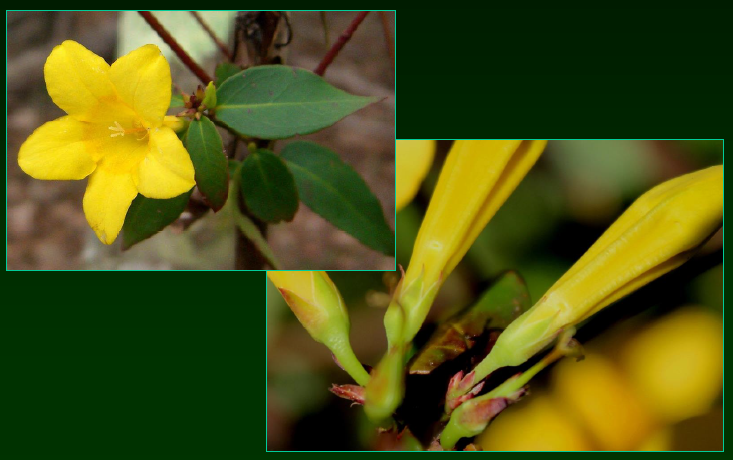
Gelsemium sempervirens

Gelsemiaceae

Distylous

Key Characters:

Vine

Yellow flowers

Opposite, evergreen leaves

<p>•</p><p>Gelsemiaceae</p><p>•</p><p>Distylous</p><p>•</p><p>Key Characters:</p><p>•</p><p>Vine</p><p>•</p><p>Yellow flowers</p><p>•</p><p>Opposite, evergreen leaves</p>
92
New cards

Gelsemium rankinii

Gelsemiaceae

Distylous

Prefers wet habitats

Key Characters:

Vine

Yellow flowers

Opposite, evergreen leaves

Acuminate sepals

<p>•</p><p>Gelsemiaceae</p><p>•</p><p>Distylous</p><p>•</p><p>Prefers wet habitats</p><p>•</p><p>Key Characters:</p><p>•</p><p>Vine</p><p>•</p><p>Yellow flowers</p><p>•</p><p>Opposite, evergreen leaves</p><p>•</p><p>Acuminate sepals</p>
93
New cards

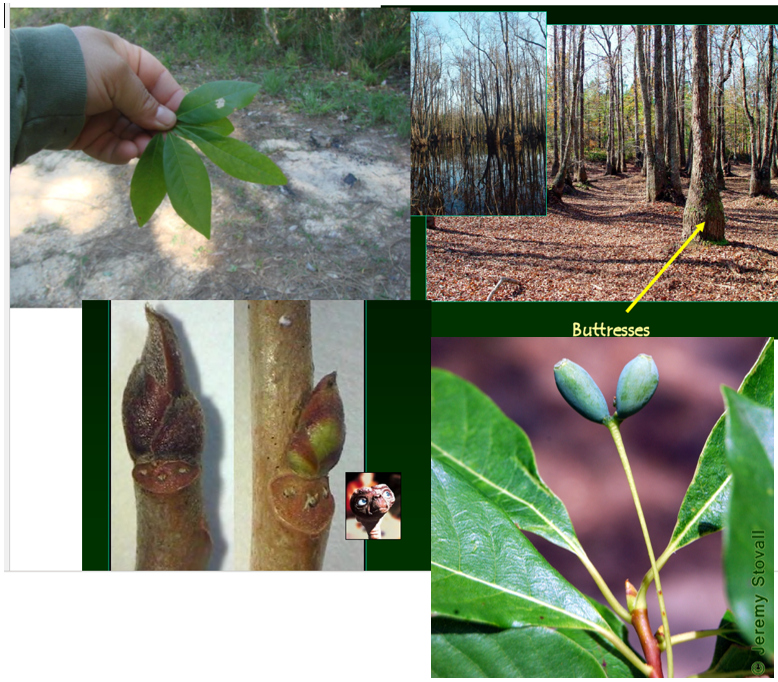
Nyssa biflora

Restricted to wet sites

Key Characters:

Buttressed trunks

Three bundle scars

Drupes in pairs

Smaller leaves than other Nyssa

normally fruits in pairs of 2 (bi) or sometimes 3
<p>•</p><p>Restricted to wet sites</p><p>•</p><p>Key Characters:</p><p>•</p><p>Buttressed trunks</p><p>•</p><p>Three bundle scars</p><p>•</p><p>Drupes in pairs</p><p>•</p><p>Smaller leaves than other Nyssa</p><p>normally fruits in pairs of 2 (bi) or sometimes 3</p>
94
New cards

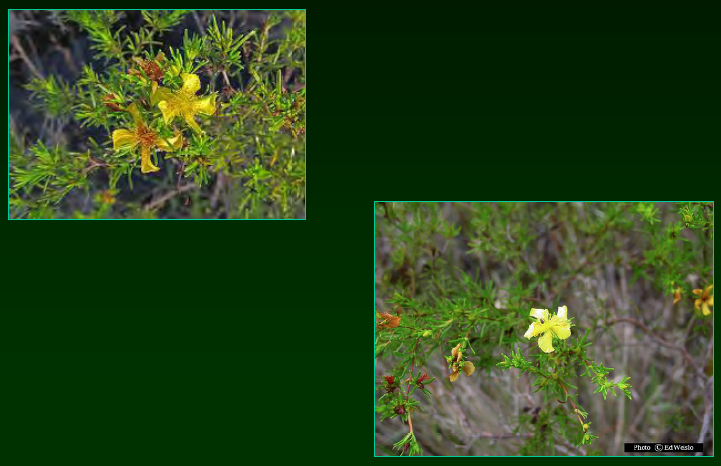
Hypericum brachyphyllum

Hypericaeae

Key Characters:

Wet habitats

Small, needle-like leaves

Yellow flowers

<p>•</p><p>Hypericaeae</p><p>•</p><p>Key Characters:</p><p>•</p><p>Wet habitats</p><p>•</p><p>Small, needle-like leaves</p><p>•</p><p>Yellow flowers</p>
95
New cards

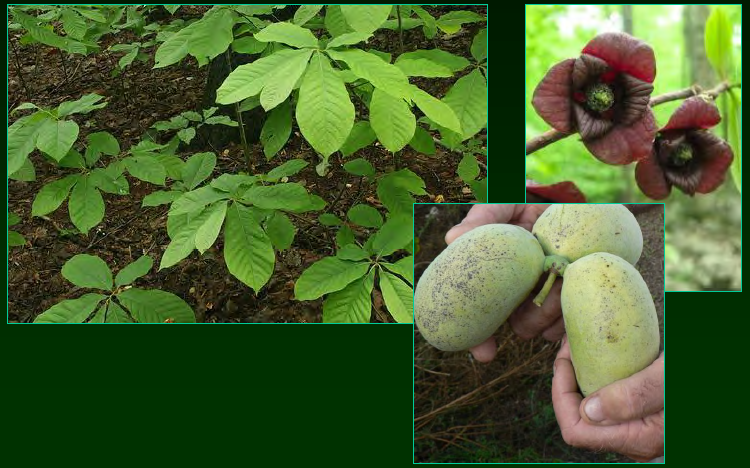
Asimina triloba

Key Characters:

Pepper scent

Clonal

Acuminate leaf tips

Maroon flowers

<p>•</p><p>Key Characters:</p><p>•</p><p>Pepper scent</p><p>•</p><p>Clonal</p><p>•</p><p>Acuminate leaf tips</p><p>•</p><p>Maroon flowers</p>
96
New cards

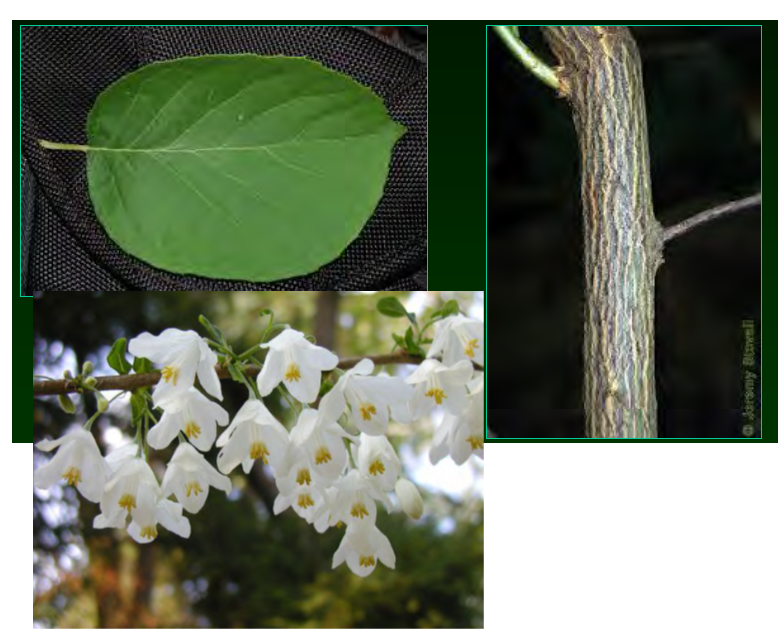
Halesia diptera

Styracaceae

Floodplains, stream banks

Key Characters:

Ovate leaves

Irregular symmetry

Winged fruits

Striped bark

White flowers (4 petals)

<p>•</p><p>Styracaceae</p><p>•</p><p>Floodplains, stream banks</p><p>•</p><p>Key Characters:</p><p>•</p><p>Ovate leaves</p><p>•</p><p>Irregular symmetry</p><p>•</p><p>Winged fruits</p><p>•</p><p>Striped bark</p><p>•</p><p>White flowers (4 petals)</p>
97
New cards

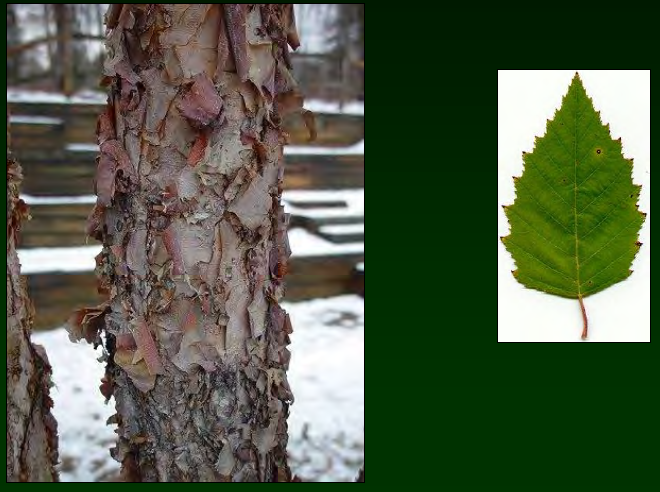
Betula nigra

Stream and river banks

Key Characters:

Arrowhead leaves with doubly serrate

2-ranked leaves

Peeling bark

<p>•</p><p>Stream and river banks</p><p>•</p><p>Key Characters:</p><p>•</p><p>Arrowhead leaves with doubly serrate</p><p>•</p><p>2-ranked leaves</p><p>•</p><p>Peeling bark</p>
98
New cards

Quercus michauxii

Bottomlands

Important wildlife food

Key Characters:

Undulate leaf margins

“White oak” bark

<p>•</p><p>Bottomlands</p><p>•</p><p>Important wildlife food</p><p>•</p><p>Key Characters:</p><p>•</p><p>Undulate leaf margins</p><p>•</p><p>“White oak” bark</p>
99
New cards

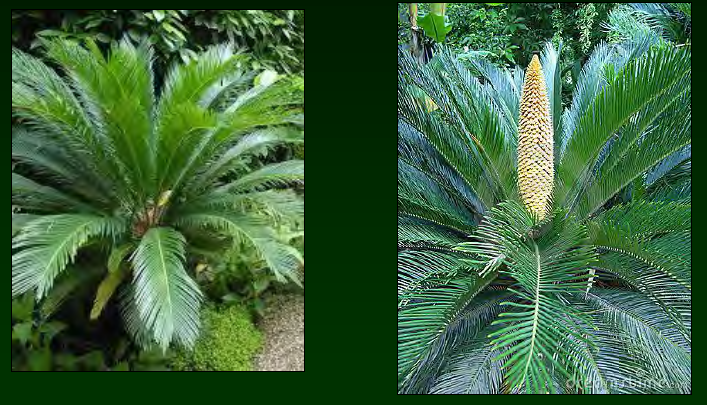
Cycas revoluta

Cycadaceae

Japan

Poisonous!

Key Characters:

Very stiff palm-like leaves

<p>•</p><p>Cycadaceae</p><p>•</p><p>Japan</p><p>•</p><p>Poisonous!</p><p>•</p><p>Key Characters:</p><p>•</p><p>Very stiff palm-like leaves</p>
100
New cards

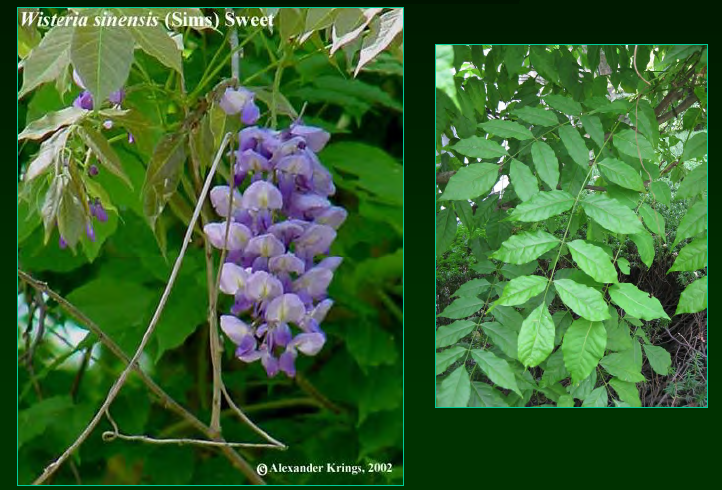
Wisteria sinensis

Fabaceae

Native to Asia

Key Characters:

Vine

Pinnately compound leaves

Large racemes of lavender flowers (occasionally white)

Sweet scent

<p>•</p><p>Fabaceae</p><p>•</p><p>Native to Asia</p><p>•</p><p>Key Characters:</p><p>•</p><p>Vine</p><p>•</p><p>Pinnately compound leaves</p><p>•</p><p>Large racemes of lavender flowers (occasionally white)</p><p>•</p><p>Sweet scent</p>