Surgery - GI (CMPP)
 Call Kai
 Learn
Learn Practice Test
 Spaced Repetition
 Match
Match Flashcards
 Knowt Play
1/140

There's no tags or description
Looks like no tags are added yet.
Name | Mastery | Learn | Test | Matching | Spaced | Call with Kai | Chat |
|---|
No analytics yet
Send a link to your students to track their progress
141 Terms
Acute severe abdominal pain is almost always a symptom of
intra-abdominal disease
How fast does gangrene and perforation take to form in bowels with lack of blood
6 h
Types of Abdominal Pain
Visceral
Somatic/parietal
Referred
Visceral pain
Pain caused by distention, inflammation, or ischemia by stimulating the receptor neurons, or by direct involvement (tumor infiltration) of sensory nerves
What innervates abdominal viscera
autonomic nerve fibers
Characteristics of Visceral Pain
Slower onset,
vague, dull,
nauseating
What innervates parietal peritoneum
somatic nerves
Somatic (parietal) pain
direct irritation of parietal peritoneum by pus, bile, urine, or GI secretions from infectious, chemical, or inflammatory processes
Characteristics of Somatic Pain
More acute
sharp
Well-localized
Referred pain
Pain perceived distant from its source
Why does referred pain occur
convergence of nerve fibers at the spinal cord
Scapular pain can be referred pain from
biliary colic
Groin Pain can be referred pain from
Renal Colic
Shoulder pain can be referred pain from
blood, air, or peritoneal fluid irritating the diaphragm
Peritonitis
any abdominal condition that causes marked inflammation
Common Causes of Peritonitis
Acute perforation,
appendicitis,
diverticulitis,
intestinal obstruction,
pancreatitis,
PID,
acute mesenteric ischemia,
ectopic pregnancy
Infectious
Spontaneous bacterial peritonitis (SBP)
What can cause infectious peritonitis
ascitic fluid
indwelling shunt, drain,
catheter in the peritoneal cavity
Spontaneous bacterial peritonitis (SBP)
peritoneal cavity infected by bloodborne bacteria
How can peritonitis be a life-threat
causing severe dehydration and electrolyte imbalances
ARDS can develop rapidly
Liver failure,
kidney failure,
DIC
What is important HPI features for abdomen pain
Pain location and characteristics
History of similar symptoms
Anorexia
N/V/D
Blood in stools
Known medical conditions
Prior surgeries
Pregnant
prescription and illicit drugs and ETOH
When starting to palpate for abdominal pain, when should you palpate the symptomatic area
Last
What special tests are done in the abdomen exam
Jolt test or cough test for rebound tenderness
Referred rebound
Rovsing's
Murphy’s sign
Iliopsoas and obturator signs
Cutaneous hyperesthesia
Shifting dullness and fluid wave
CVA tenderness
What are red flags for abdominal pain
Severe pain
Signs of shock
Signs of peritonitis
Abdominal distention
A distended abdomen with boroborgymi in rashes often indicates
SBO
What are indicators abodminal pain can be SBO
Distention,
surgical scars,
tympany to percussion,
borborygmi in rushes
Severe abdomen pain, silent abdomen, and patient lying as still as possible is likely
peritonitis
A patient with abdominal pain, shock, and vaginal bleeding is likely to have
ruptured ectopic pregnancy
A patient with abdominal pain with Grey Turner and Cullen Sign is likely
Hemorrhagic pancreatitis
A patient wtih abdomen pain, back pain, and shock is likely
Ruptured AAA
Patient writhing and unable to get comfortable due to abdominal pain is a indicator for
obstructive mechanism (renal or biliary colic)
Patient with previous abdominal surgery is more likely to have
obstruction caused by adhesions
Patient with h/o generalized atherosclerosis and abodmen pain is likely
MI,
AAA,
mesenteric ischemia
Patients with abdominal pain and HIV is more likely to be
infectious cause
What testing should be done for abdominal pain
EKG
CXR in upper quadrant pain
CBC,
CMP,
UA
Lipase
hCG
EGD for UGI bleeding
Consider US
Abdominal Series XR
CAT
When is US done for abdomen pain
suspected biliary tract disease
ectopic pregnancy (transvaginal)
suspected appendicitis in children
Can detect AAA
When is XR done for abdominal pain?
suspected perforation or obstruction
Test of Choice for Abdominal Pain
CAT w/ PO and IV contrast
When is a non-contrast CT done for abdomen pain
Renal Stones
Treatment for Abdominal Pain
moderate doses of IV analgesics for pain
Other treatment depends on cause
Mesenteric ischemia
Interruption of intestinal blood flow by embolism, thrombosis, or low-flow state
What causes abdominal pain in Mesenteric ischemia
mediator release, inflammation, and ultimately infarction
Treatment of Mesenteric ischemia
embolectomy,
revascularization of viable segments,
resection
Sometimes vasodilators helpful
What can occur with acute perforation of the GI
gastric or intestinal contents into the peritoneal space
Presentation of acute perforation of the GI
sudden with severe pain quickly followed by peritonitis and signs of shock
dx for acute GI perforations
imaging showing “free air” in the abdomen
tx for acute GI perforations
Fluid resuscitation,
antibiotics,
surgical repair
Appendicitis
Acute inflammation of the vermiform appendix
Presentation of Appendicitis
abd pain and tenderness, and anorexia
dx of Appendicitis
◦Clinical diagnosis supplemented by CT or US
tx of Appendicitis
surgical removal of the appendix
Most common cause of acute abd pain requiring surgery
Appendicitis
Hernia
Protrusion of abdominal contents through an acquired or congenital area of weakness or defect in the abdominal wall
Incarcerated Hernia
A hernia that cannot be reduced
Presentation of Incarcerated Hernia
Gradually increasing pain
Nausea and vomiting
Tender at hernia site
Overlying skin may be erythematous
Peritonitis
guarding, and rebound
Most Common GI Hernia
Inguinal hernia
Stragulated Hernia
compromised blood supply
Treatment of incarcerated / strangulated hernia
urgent surgical repair
Hesselbach triangle
A triangle made up of rectus abdominus, inferior epigastric vessles, and inguinal ligament
Most common site for direct inguinal hernias
Most common type of inguinal hernia
Indirect inguinal hernia
What causes Indirect inguinal hernia
Most are congenital
Caused by failure of the processus vaginalis to close
Most Common Site for Indirect inguinal hernia
Superior and lateral to epigastric vessels
R > L
What causes Direct inguinal hernia
Caused by weakness in the floor of the inguinal canal
Most Common Site of Direct inguinal hernia
Hesselbach triangle
Risk Factors for Direct inguinal hernia
age,
obesity,
heavy lifting,
coughing (COPD, smoking),
chronic constipation,
straining,
ascites,
pregnancy,
peritoneal dialysis,
poor nutrition
Least Common Abdominal Hernia
Femoral
Femoral Hernia
intra-abdominal tissue, such as a loop of the small intestine or fatty tissue, pushes through a weakened area of the abdominal wall into the narrow femoral canal
Who tends to get femoral hernia
Women
Most Common Type of Abdominal hernia to be incarceration/strangulation
Femoral
Pantaloon hernia
both direct and indirect components
Characteristics of a Pantaloon hernia
Features both a direct sac and an indirect sac on one side.
Separated in the middle by the inferior epigastric artery and vein.
Presents as a combined bulge in the groin area
Treatment of Pantaloon Hernia
surgical repair
Spigelian hernia
Uncommon type of abdominal wall hernia where tissue or part of the intestine pushes through a weak spot in the Spigelian fascia
Spigelian fascia
Band of connective tissue sitting beside the rectus muscle
Lateral border of rectus muscle, adjacent to linea semilunaris
Where do Spigelian hernia tend to form
Below arcuate line
Treatment for Spigelian hernia
Surgically corrected
Cause of epigastric hernia
Weakening of Linea alba
Cause of umbilical hernia
Congenital
Obesity
Abdominal distension,
Pregnancy
Cause of incisional hernia
Infection,
Tension,
Technique
Diastasis Recti
Two rectus muscles are separated by an abnormal distance
Common with pregnancy
Ileus
Temporary arrest of intestinal peristalsis
Cause of Ileus
Abdominal surgery (#1)
peritoneal inflammation,
metabolic disturbances,
drugs
Presentation of Ileus
Nausea, vomiting,
vague abdominal discomfort
Minimal peristalsis and nontender abdomen unless caused by inflammation
dx of Ileus
X-ray diagnosis
May need contrast-enhanced CT to differentiate from obstruction
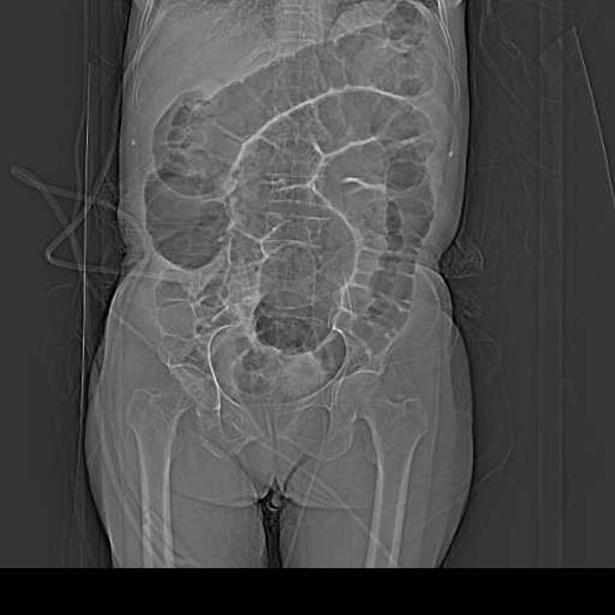
Ileus
tx of Ileus
NGT
IVFs,
NPO,
replace electrolytes
> 1 week, undergo laparoscopy
Intestinal obstruction
Mechanical impairment or complete arrest of passage of intestinal contents
Presentation of Intestinal obstruction
Cramping pain,
vomiting,
obstipation,
not passing flatus
dx of Intestinal obstruction
Clinical diagnosis and confirmed by abdominal x-ray
tx of Intestinal obstruction
NGT,
IVFs,
bowel rest
May need surgery (esp if complete obstruction)
Most Common Causes of Intestinal obstruction
adhesions,
hernias,
tumors
Complications of Bowel Obstruction
volume depletion
bowel ischemia,
infarction,
perforation
Patients with recurrent obstruction from adhesions should get
an NGT trial rather than immediate surgery
SBO without prior abdominal surgery often caused by
tumor
Most likely cause of bowel obstruction without previous surgery
Small bowel = hernia
Larger bowel = cancer
Most likely cause of bowel obstruction with previous surgery
Small bowel = adhesions
Large bowel = cancer
How does bowel obstruction appear on XR
Air-fluid levels
Distended loops of small bowl
Distal decompression
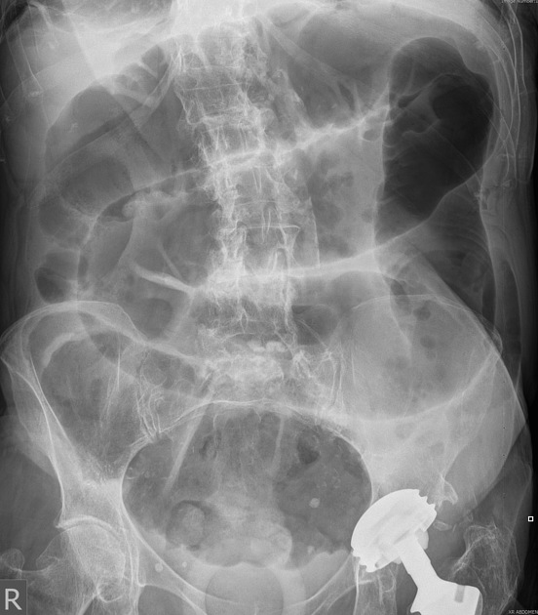
Large bowel obstruction
What is the threshold for dilation on XR
cecum greater than 9 cm
colon greater than 6 cm.
How does LBO appear on XR
peripheral framing with haustra that do not cross the entire lumen.
Shows an empty, gas-free distal colon or rectum
colonic distension with peripheral gas patterns.
primary definitive diagnostic tool for LBO
CT