ACCT 201 Chapter 9 : Flexible Budgets and Performance Analysis
 Studied by 0 people
 Call with Kai
 Learn
Learn Practice Test
 Spaced Repetition
 Match
Match Flashcards
 Knowt Play
1/17

There's no tags or description
Looks like no tags are added yet.
Name | Mastery | Learn | Test | Matching | Spaced | Call with Kai |
|---|
No study sessions yet.
18 Terms
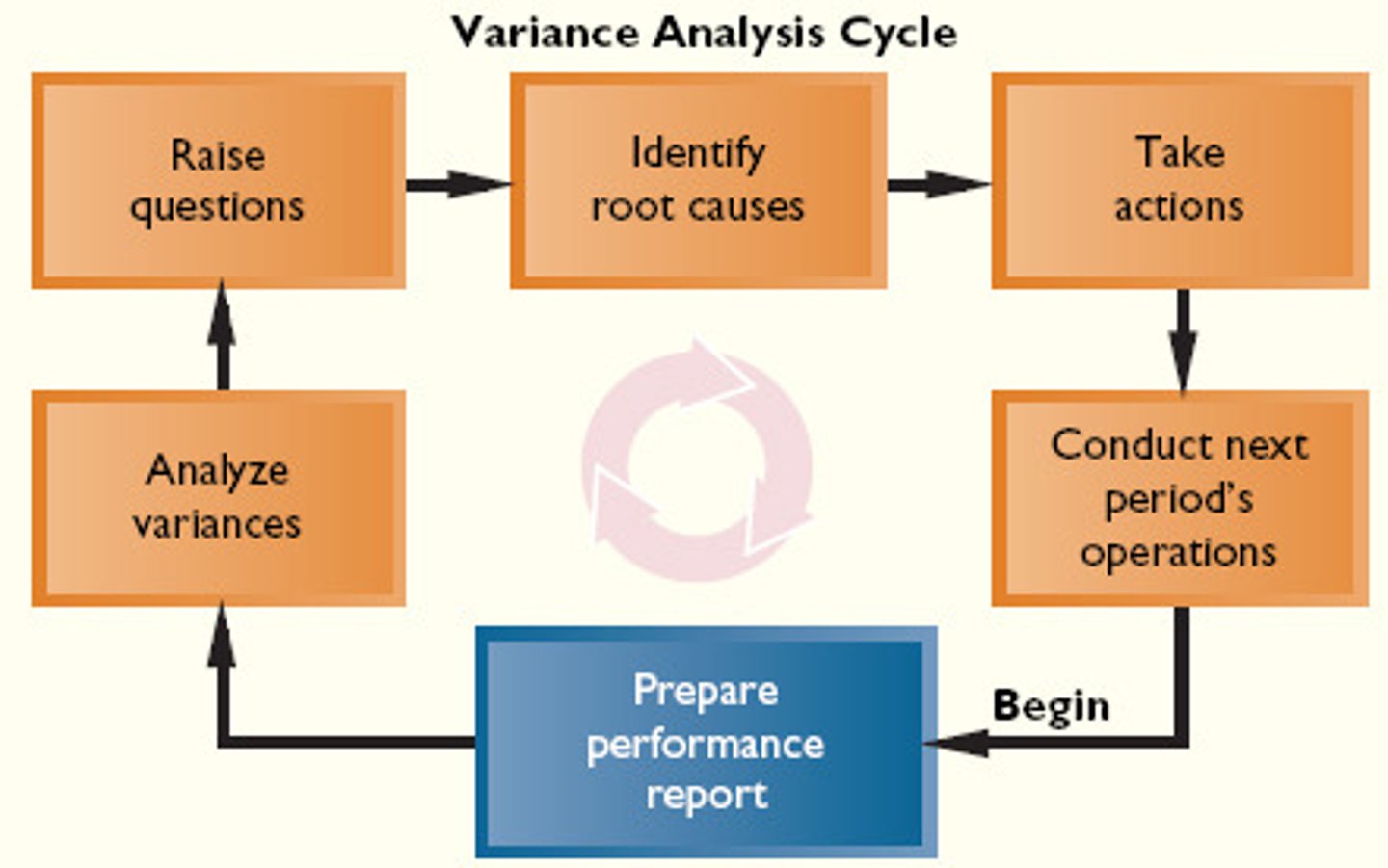
Variance Analysis Cycle
prepare performance report
analyze variances
raise questions
identify root causes
take actions
conduct next period's operations
Characteristics of flexible budget
Planning budgets are prepared for a single, planned level of activity
Performance evaluation
Performance evaluation is difficult when actual activity differs from the planned level of activity
Characteristics of Flexible Budgets Part 2
1.May be prepared for any activity level in the relevant range.
2.Show costs that should have been incurred at the actual level of activity, enabling "apples to apples" cost comparison.
3.Help managers control costs.
4.Improve performance evaluation.
Deficiencies of the Static Planning Budget
The greatest disadvantage of the static budget is its lack of flexibility. If a company establishes a budget based on a certain level of sales volume and that volume increases, it can't allocate additional resources to keep up.
Larry's Lawn Service
The actual level of activity is greater than the planned level of activity. Therefore, actual variable costs are likely to be higher than planned variable costs regardless of Larry's managerial efficiency.
"How much of the cost variances are due to higher activity, and how much are due to cost control?"
we need to flex the planning budget to accommodate the actual level of activity.
Total variable costs change in direct proportion to changes in inactivity.
Total fixed costs remain unchanged within the relevant range.
Activity Variance
difference between planning budget and flexible budget
flexible budget
a projection of budget data for various levels of activity
Actual Revenue and Flexible Budget Revenue
the difference is a revenue variance
actual cost - flexible budget cost
the difference is a spending variance
Revenue Variance
The difference between the actual revenue for the period and how much the revenue should have been, given the actual level of activity. A favorable (unfavorable) revenue variance occurs because the revenue is higher (lower) than expected, given the actual level of activity for the period.
Spending Variance
the difference between the actual amount of the cost and how much a cost should have been, given the actual level of activity
flexible budget and planning budget
Activity variances are found by
Actual budget and flexible budget
Revenue and spending variances
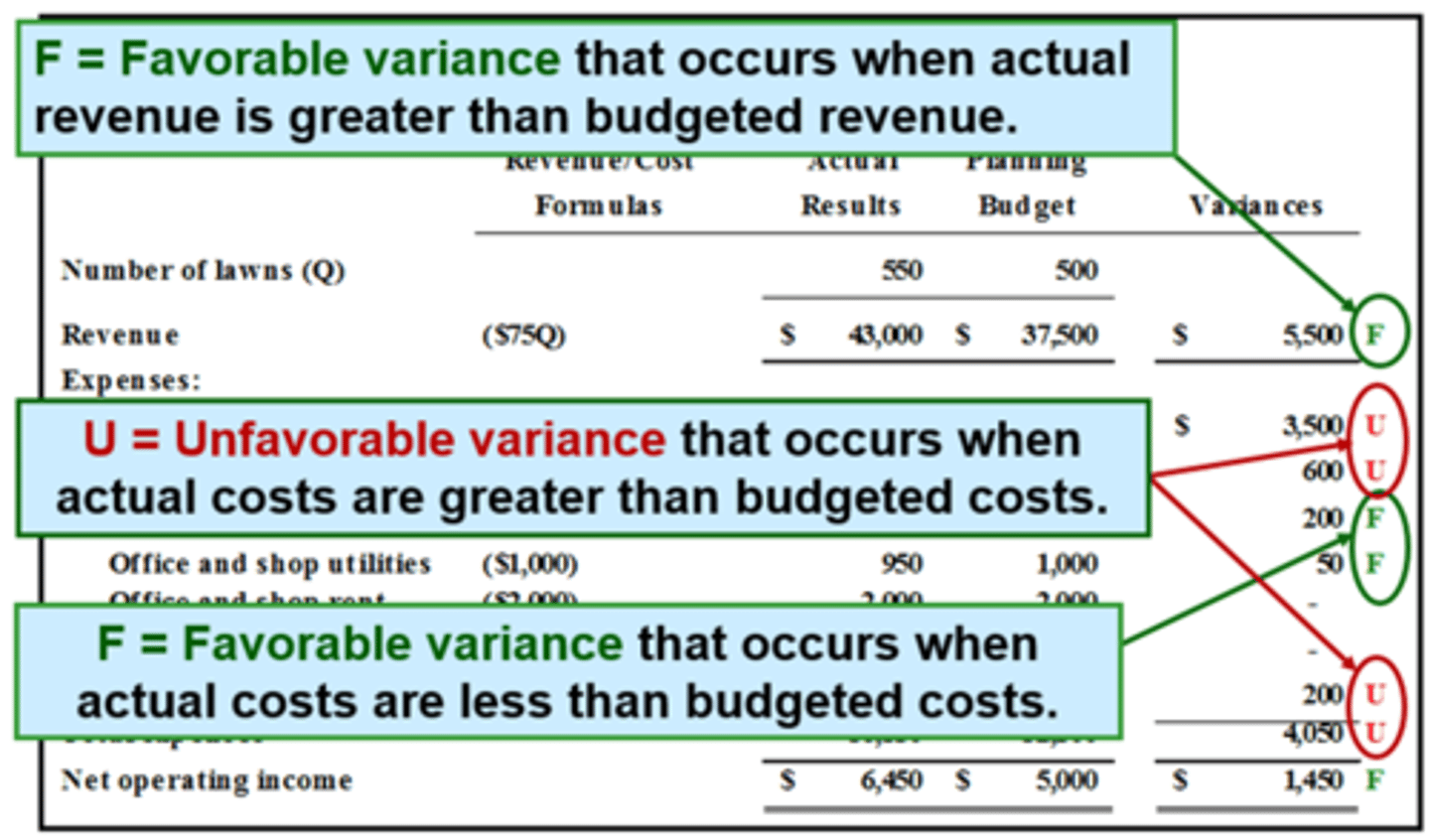
Favorable/Unfavorable Variance
F=higher income, U=lower income when comparing budget and actual results.
*Flexible Revenue can be seen as actual when looking at planning budget.
Planning Budget
a budget created at the beginning of the budgeting period that is valid only for the planned level of activity