Forensic Chemistry
 Call Kai
 Learn
Learn Practice Test
 Spaced Repetition
 Match
Match Flashcards
 Knowt Play
1/30

There's no tags or description
Looks like no tags are added yet.
Name | Mastery | Learn | Test | Matching | Spaced | Call with Kai | Chat |
|---|
No analytics yet
Send a link to your students to track their progress
31 Terms
Forensic Chemistry
Using chemistry to uncover evidence
Sample
What do we have
Blood, hair, urine
Analysis
What is present
Alcohol, Drugs, Poison
Interpret
What does it mean
Concentration, effects, significance
What Does a Forensic Chemist Do
Evidence received —> Examine + document —> Sample prep —> Confirmatory analysis —> interpretation —> Report Findings —> Court testimony
Drug/Powder Evidence Preservation
Prevent contamination and loss
Fire Debris Evidence Preservation
Airtight container
Preserve volatiles
Blood Evidence Preservation
Correct tube and storage conditions
Trace Evidence Preservation
Prevent loss and cross contamination
Laboratory Analysis (Screening To Confirmation)
Unknown —> Presumptive —> Confirmatory Analysis —> Interpretation
Screening
Colour tests
TLC
Immunoassays
Preliminary Spectroscopy
Conformation
GC-MS
LC-MS
FTIR
Raman
Kastle Meyer Test
Tests to see if unknown substance is blood
Collect sample using swap
Apply drop of phenolphalein solution
Apple drop of hydrogen peroxide solution
Pink = Positive
Colourless = Negative
Controlled Drugs and Substance Act (CDSA)
The CDSA regulates activities including possession, trafficking,
production, importation and exportation, with the applicable
provisions depending on the substance and circumstances.
Controlled Substances
Drugs
Cocaine, methamphetamines, cannabis, alcohol
Controlled Substance Analysis
Screen- Presumptive tests —> Colour tests
Separate- Chromatography —> GC / LC
Identify- Confirmatory Analysis —> MS / FTIR / Raman
Controlled Substance Analysis: Presumptive testing
A screening test that suggests
what may be present, but requires confirmatory
testing for identification.
Marquis Test
Tests for Opiated / Amphetamine (Type drugs)
Positive Colour- varies by drug
Scott Test
Tests for cocaine
Positive Colour- Blue
Duquenois–Levine
Tests for Cannabis
Positive Colour- Purple
Fire Debris
Ignitable Liquid
(Used to be called accelerant: an incendiary
material used to intentionally
and deliberately start a fire)
Fire Debris Storage
Required- Glass mason jar with metal cap and ring
(Exception: large items and liquid samples have separate packaging
requirements)
- If alcohols, solvents, or lacquer thinners are suspected → glass mason jars only
Recommended- Fill jar to approximately ¾ full
- Leave headspace for sampling
- Keep the mouth of the jar clean
- Tightly seal the metal lid and ring
- Apply a numbered, tamper-proof security seal
- Place protective netting over the jar
- If there is a noticeable petroleum odor → seal the jar in a nylon bag
- Submit an empty jar for comparison
- Polynet Protective Netting around jar
Fire Debris Analysis
GC-MS (Gas Chromatography Mass Spectrometry)
GC- Separates gas from one another by pushing it through a think tube and using resistance difference in different kinds or gasses
MS- Identifies by ionizing and uses the unique weight and charge to create a unique chemical fingerprint
Trace Evidence
Small Materials transferred during contact
Fiber, glass, paint
Presumptive Tests
A screening test that suggests what may be present but requires conformation
Significance of Paint as Trace Evidence
Paint is often composed of multiple layers
Layers can differ in- Colour
- Thickness
- Sequence
- Chemical Composition
Multiple characteristics can be used to compare questioned and known samples
FTIR (Fourier Transform Infrared Spectroscopy)
Infrared Light is directed at sample
Chemical bonds absorb specific frequencies of IR light
The instrument measures which frequencies were absorbed
An IR spectrum is produced (A chemical fingerprint)
(Large dip = Hardener - Little to no Dip = Paint)
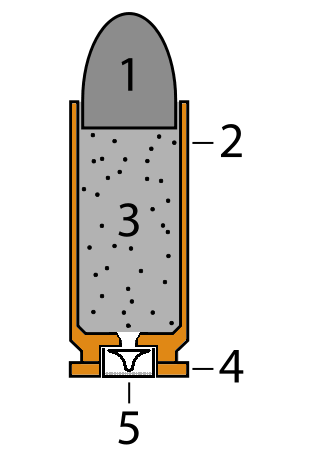
Bullet Components
Bullet- Projectile fired from the firearm
Casing- Holds all components together (Usually made of brass)
Powder- Propellent that ignites to propel bullet (Produces gas pressure)
Primer- Small explosive compartment that ignites the gunpowder
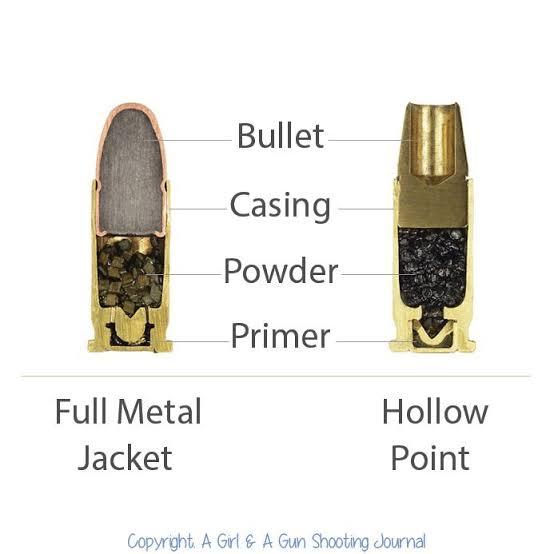
Inorganic Gunshot Residue
Primarily associated with primer residues
Microscopic particles
characterized by elemental composition
Tested with SEM-EDS
Organic Gunshot Residue
Organics compounds associated with propellent and primer
includes compounds from explosives, stabilizers and other additives
Analyzed using GC-MS and LC-MS
SEM-EDS (Scanning Electron Microscopy - Energy Dispersive X-ray Spectroscopy)
SEM- What does the particle look like? (Image)
Magnifies samples hundreds or thousands of times
EDS- What elements are present? (Graph)
Measures X-ray energies to show what elements are present and in what amounts