Ch27 Climate Change
 Call Kai
 Learn
Learn Practice Test
 Spaced Repetition
 Match
Match Flashcards
 Knowt Play
1/20

There's no tags or description
Looks like no tags are added yet.
Name | Mastery | Learn | Test | Matching | Spaced | Call with Kai | Chat |
|---|
No analytics yet
Send a link to your students to track their progress
21 Terms
What historical time period is credited as the start of humans exponentially increasing global warming/climate change?
The Industrial Revolution (way more emissions and the greenhouse gas effect)
Has global warming been equal across Earth’s surface?
No, polar regions have warmed more than anywhere else, especially the Artic
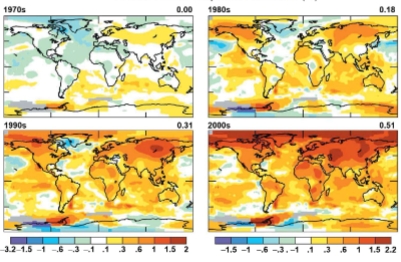
Has climate change been equal across seasons?
No, winter months have showed more warming than other months, diurnal temperature ranges have decreased because the minimums are getting warmer
Has the global ocean temperature increased?
Yes, it has increased down to a depth of at least 3000 feet, warmer waters cause seawater to expand contributing to rising sea levels
Physiological stress as a result of global warming: Endotherms
they maintain a constant temperature but as the climate is shifting to being warmed the body sizes are getting smaller (Bergmann’s rule) to reduce overheating
Physiological stress as a result of global warming: Ectotherms
they rely on external sources of heat, as the temperature rises their metabolic activity increases exponentially, can overheat and kill them if they don’t migrate which means they can also lose food sources
Phenological mismatch
when the timing of life cycle events in interacting species is desynchronized.
Phenological Mismatch: Pollinators
pollinators are emerging earlier in spring than the plants they pollinate, the pollinators don’t get enough nectar and the plants don’t get pollinated
Phenological Mismatch: Birds
birds need to be synchronized with hatching eggs and food availability, but seasonal shifts are causing some to lay their eggs too early. The hatchlings then starve since there isn’t enough food to sustain all of them
Phenological Mismatch: Reptiles
Many reptiles, like sea turtles, have sex ratios controlled by nest temperatures. Since the climate is warming so too are the nests, now about 90% of hatchlings are females
Poleward shifts
to escape the rising temperatures, species are moving in the direction toward colder environments (the poles). They will run out of places to go, food sources may not move with them, they can become invasive toward the species already inhabiting that space, or they may not be able to move at all and die out.
Poleward shifts: Red foxes
red foxes are moving towards the Arctic, creating competition between them and the smaller arctic foxes
Top 5 Threats to Biodiversity:
H- habitat loss
I- invasive species
C- climate change
O- overexploitation
P- pollution
Habitat Loss
loss of habitat, animals no longer have a suitable place to live and can die out or invade other habitats. Deforesting is the biggest example
Habitat degradation
reduction in habitat quality (pollution in the form of chemicals, light, noise, and trash)
habitat fragmentation
a habitat is fragmented into smaller isolated patches (one big pond’s water level decreasing, resulting in smaller pond formations separated by the pond’s floor being elevated in certain areas)
Invasive species
exotic species establishing a large population in a new environment that negatively impacts native species and ecosystems
climate change
temperature and precipitation changes causing more droughts, deep freezes, flooding, heat waves, fires, and other natural disasters
overexploitation
unsustainable removal of organisms from their environment (like overfishing, poaching, or deforestation)
pollution
chemicals are released into the environment and impact both biotic and abiotic factors, trash (especially plastic) is being eaten by or entangling animals which kills them, light and sound pollution drive organisms away from habitats
What can we do about climate change?
protect wildlands
restore degraded ecosystems
fund conservation agencies
support scientific research
increase public education and citizen science
mitigate the effects of climate change