Hydrocarbon
 Call Kai
 Learn
Learn Practice Test
 Spaced Repetition
 Match
Match Flashcards
 Knowt Play
1/17

There's no tags or description
Looks like no tags are added yet.
Name | Mastery | Learn | Test | Matching | Spaced | Call with Kai | Chat |
|---|
No analytics yet
Send a link to your students to track their progress
18 Terms
Hydrogenation
Reagents: H2 (g)
Conditions: Pt/Ni catalyst and heat
alkene + hydrogen gas → alkane

Cracking
Reagents: Longer chain alkane
Conditions: Al2O3 catalyst and heat
decane → octane + ethene
→ Necessary as cracking produce shorter chains hydrocarbon which are more useful and higher in demands
Complete combustion of alkanes
alkane + O2 in excess → CO2 + H2O
Incomplete combustion of alkanes
alkane + O2 in limited → CO + H2O
Free radical substitution
Reagents: Alkanes + X2
Conditions: UV light
Initiation
Cl2 → (in UV light) 2Cl•
Propagation
Cl• + C2H6 → HCl + •C2H5
•C2H5 + Cl2 → C2H5Cl + Cl•
Termination
Cl• + Cl• → Cl2
•C2H5 + Cl• → C2H5Cl
•C2H5 + •C2H5 → C4H10
General unreactivity of alkanes
same electronegative between C and H
strong C-H bond
Consequences of incomplete combustion of hydrocarbons in car exhaust engines
CO is a toxic, binds to haemoglobin so blood cannot transport O2
N2 reacts with O2 to form nitrogen oxides
Nitrogen oxides react with water to form nitric acid → acid rain
Nitrogen oxides react with unburnt hydrocarbon → PAN (photochemical smog)
Eliminition of HX from halogenoalkane
Reagents: NaOH (in ethanol)
Conditions: heat
bromoethane + NaOH (in ethanol) → ethene + water + sodium bromide
Dehydration of an alcohol
Reagents: Alcohol
Conditions: Al2O3 catalyst and heat
ethanol → ethene + water
Electrophilic addition of steam to alkene
Reagents: H2O (g)
Condition: H3PO4 catalyst

Electrophilic addition of hydrogen halide to alkene
Reagents: HX (g)
Conditions: room temp

Electrophilic addition of halogens to alkene
Reagents: X2
Condition: no condition stated
→ produces dihalogenoalkane

oxidation of alkene by cold dilute acidified KMnO4

colour change from pale purple solution of KMnO4 to colourless solution
produces diol
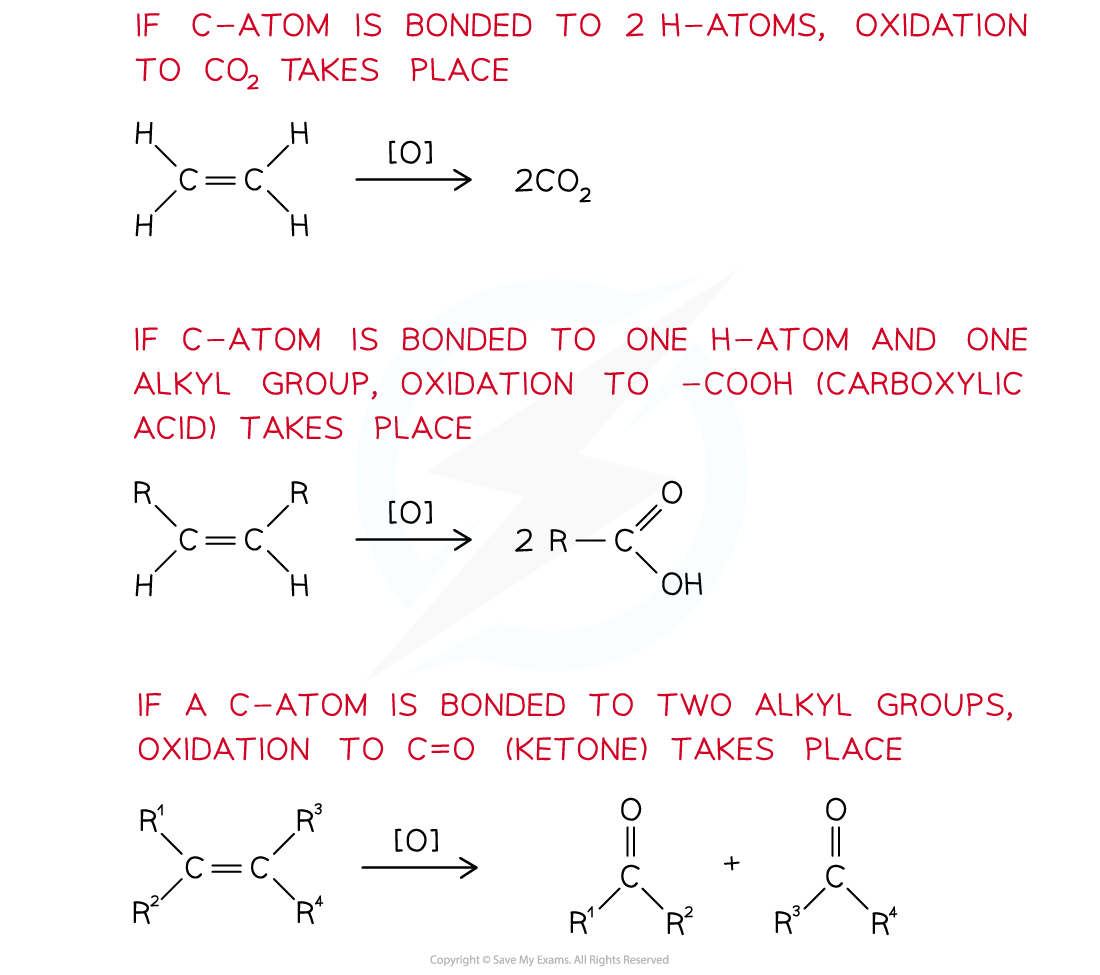
oxidation of alkene by hot concentrated acidified KMnO4
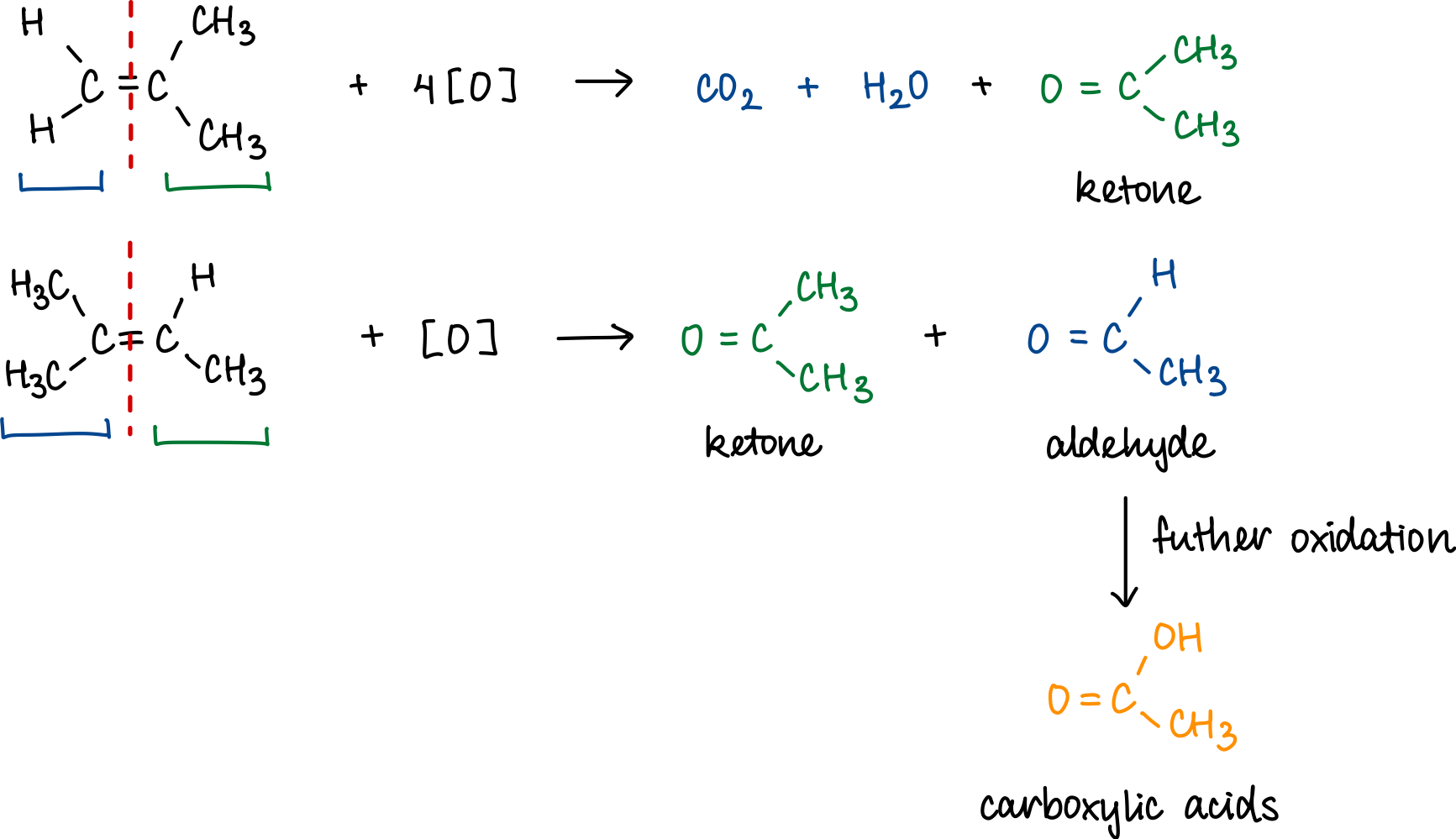
Predicting the position of double bonds formed
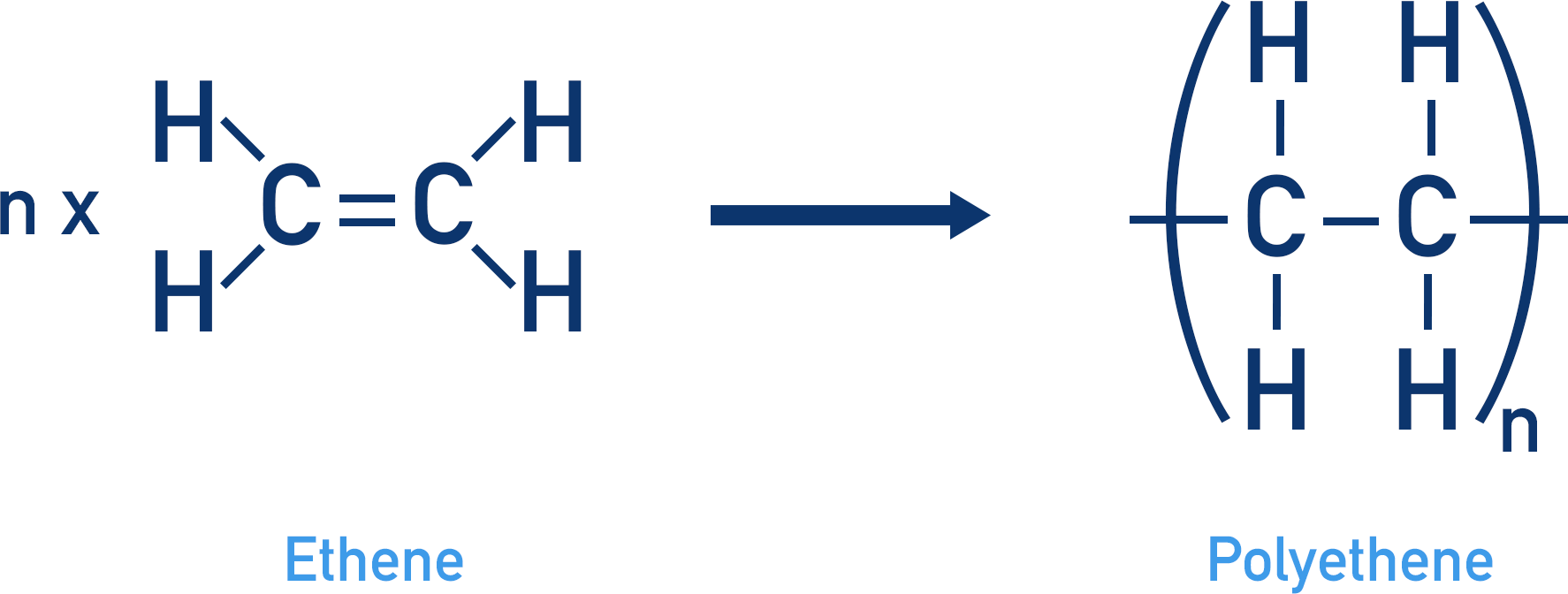
addition polymerisation of alkene
aqueous bromine test
→ shows C=C presence
electrophilic addition of Br2 to alkene
Br2 has brownish colour
when added to alkene, brown → colourless
→ Br2 is decolourised by alkene
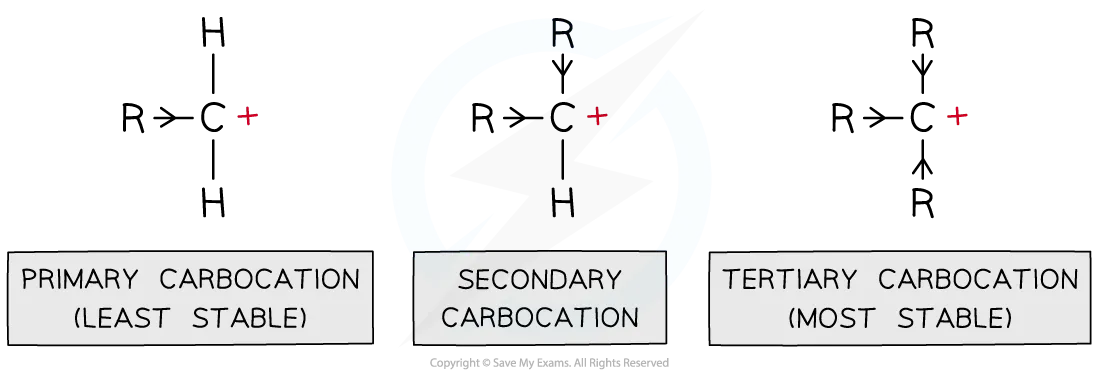
inductive effects of alkyl groups
alkyl groups push e- density towards carbocation making it energentically more stable
more alkyl group → more stable → more likely to form on its own