HCL-PHS 121 Final Exam ch 11-13
 Studied by 12 people
 Call Kai
 Learn
Learn Practice Test
 Spaced Repetition
 Match
Match Flashcards
 Knowt Play
1/82

There's no tags or description
Looks like no tags are added yet.
Name | Mastery | Learn | Test | Matching | Spaced |
|---|
No study sessions yet.
83 Terms
Foodborne illnesses covered in class
e. coli
salmonellosis
botulism
trichinosis
clostridium perfringens
staphylococcus aureus
taeniasis
hepatitis a (HAV)
norovirus
mad cow disease
e. coli
acute disease hemorrhagic colitis
linked to bloody diarrhea
major outbreaks in hamburger chains from uncooked meat
in the US, 73,000 cases and 61 deaths annually
Chipotle outbreak
Salmonellosis
caused by bacterial agent salmonella
raned among the most frequent types of foodborne illnesses in the US
approximately 1 million cases (reported and nonreported) are estimated to occur each year
salmonellosis sources
wild and domestic animal reservoirs
animals used for human consumption
poultry
swine
cattle
pet animals
cats
dogs
turtles
some animals are chronic carriers
animals and birds
salmonellosis is transferred by
environmental surfaces at work and at home from raw meats, poultry, and seafood
animal feces
contaminated water and soil
botulism
caused by infectious agent clostridium botulinum
grows in anaerobic environment
spores are able to survive in foods that have been incorrectly or minimally processed
produces potent toxin that affects the nervous system
Trichinosis
associated with eating meat that contains a roundworm from the genus trichinella
classic agent of trichinosis: Trichinella spiralis
found in many carnivorous and omnivorous animals
about 10,000 cases of trichinosis occur every year
disease is often mistaken for the flu
treatment is steroids and other drugs to be started asap
cook meat to 140-160 F
Clostridium perfringens
about 1 million cases each year in the US
2nd most frequent bacterial cause of foodborne illness
occurs commonly in the environment, especially in areas contaminated with feces
found in the intestines of humans and animals
Staphylococcus aureus
causes a foodborne intoxication with rapid onset
elaborates a toxin that is resistant to cooking at high temperatures
can trhive in an environment that has heavy concentrations of salt and sugar
ham is a frequent vehicle
linked to foods that have not been stored in a safe temperature range
present in the nasal passages and throats and on the hair and skin of 50% or more of healthy individuals
Taeniasis
a parasitic disease caused by tapeworms
organisms may induce human illness following consumption of raw or undercooked, infected beef or pork
hepatitis a (HAV)
common foods
shellfish
salads
common mode for contamination of foods
HAV-infected workers in food processing plants and restaurants
incidence in US: approximately 1,600 cases annually
Norovirus
transmitted easily within closed environments such as a cruise ship
may be brought on board by passengers who fall ill just before embarking on a cruise
crew members and shipboard environmental contamination may act as disease reservoirs
How you can get norovirus
providing care, changing diapers, shaking hands, or touching contaminated surfaces then touching your mouth
then you become ill
mad cow disease
bovine spongiform encephalopathy (BSE)
neurological disease in cattle
ultimately fatal
transmissible among cattle
Different dimensions of solid waste
recycling
landfilling
composting
combustion/incineration
recycling
process of collecting and reprocessing a resource so it can beused again
advantages
reduces greenhouse gas emissions
decreases the amount of materials shipped to landfills
opens up new manufacturing employment opportunities
prevents pollution generated by the use of new materials
preserves natural resources
saves energy
landfilling
dangers associated with landfills
air pollution and groundwater contamination could arise from landfills not being sealed properly
leachates may include
toxic heavy metals
solvents and cleaning agents
gaseous emissions from landfills
methane, volatile organic compounds (VOC) and other gases
methane vented from landfills poses a fire hazard and is a greenhouse has
VOC emissions
potentially carcinogenic
dangers associated with landfills: gaseous emissions
methane, volatile organic compounds (VOC) and other gases
methane vented from landfills poses a fire hazard and is a greenhouse has
VOC emissions
potentially carcinogenic
may cause complaints about odors and symptoms or respiratory irritation
composting
the aerobic biological decomposition of organic materials to produce a stable humus-like product
biodegradation is a natural, ongoing biological process that is a common occurrence in both human-made and natural environments
produces a useful material that resembles soil and that can be used in gardening
combustion/incineration
can be used to generate energy while reducing the volume and weight of waste
no attempt is made to separate trash into components
at high temperatures, glass and aluminum in the trash melt
metals from the residues of combustion can be recycled into scrap metal
removing ash deposited in landfills
Prevention of occupational disease as it relates to OSHA
public health surveillance is defined as “the ongoing systemic collection, analysis, and interpretation of health data essential to the planning, implementation, and evaluation of public health practices, closely integrated with the timely dissemination of these data to those who need to know.”
surveillance systems are essential to enhance safety and health of the workplace and provide the foundation for epidemiologic studies of adverse health outcomes in the workplace
OSHA is one of the US federal agencies collaborating in surveillance programs
What is mad hatter’s disease
back in the day when they used to make fur on hats
people inhaling the fumes of the mercury-containing solutions
neuropsychiatric syndrome is characterized by symptoms that include irritability, personality change, loss of self-confidence, depression, memory loss, and reduced ability to concentrate
Foodborne illness
same as foodborne disease but not the same as food poisoning
illness caused by foods that have been consumed
the major causes include toxins formed bt bacterial growth in the intestines or in food itself and by infections with bacteria and other microbes following the ingestion of contaminated food
Foodborne intoxicants
toxins formed by bacterial growth in the intestines or in food itself
foodborne infections
infections with bacteria and other microbes following the ingestion of contaminated food
outbreak
occurrence of a similar illness among two or more people which an investigation linked to consumption of a common meal or food items; except for botulism (one case is an outbreak)
Preservatives
added to foods to prevent the proliferation of microbes such as bacteria, yeasts, and molds
additives
intentional (direct) additives
incidental (indirect) additives
Malicious additives
Intentional (direct) additives
added to foods to improve quality
Incidental (indirect) additives
may be present in foods as a result of unintentional contamination during packing, storage, handling
malicious additives
substances such as poisons that saboteurs introduce into foods for various reasons
antioxidants
prevent fatty acids from acquiring a rancid taste
prevent some foods from turning brown
reduces the loss of vitamins
purpose of using antimicrobials in meats
for disease prevention and growth enhancement
it is given to an entire collection of animals (like chickens on a poultry farm or fish raised in pens), for the purpose of curing disease among the sick animals and preventing disease among the remainder
regarding the use of antimicrobials for growth enhancement of animals, antimicrobials increase the efficiency of feeds by reducing the amount of feeds that animals require
Be able to explain the purpose of public health surveillance (explain the importance of the pyramid from the bottom up)
INSERT IMAGE
Principle of hazard analysis of critical control points
system for reducing the risk of foodborne illness
using HACCP, foods are monitored from the time of harvest to the time of consumption
Began in the 1950s
hazard analysis of critical control points steps
perform a hazard analysis
decide on the critical control points (CCPs)
Determine the critical limits
establish procedures to monitor the critical control points
Establish correction actions
Establish verification procedures
establish a record keeping system
Delaney Clause and its interpretation
prohibited the use of additives, including pesticides, that had been determined to cause cancer in human beings and animals
Regulation of medical waste, who is responsible
EPA has assumed the primary role od regulating medical wastes by applying guidance acquired from the MWTA (Medical Waste Tracking Act of Congress)
Preferred method of safe disposal of hazardous wastes
incineration
discarding them on the surface of the land
storing them into slurry ponds
dumping them into landfills or into the ocean
Legislation as it relates to hazardous waste sites
The Medical Waste Tracking Act (MWTA) of 1988 expired in 1991. The law was created in response to the public’s concerns about potentially hazardous medical wastes such as used syringes and needles that were washing up on the shorelines of several Eastern states. The MWTA provided a 2-year time period during which the EPA was directed to develop regulations for management of medical wastes. When the MWTA ended, the EPA decided that the risk of medical waste was far greater to medical workers than to the general public
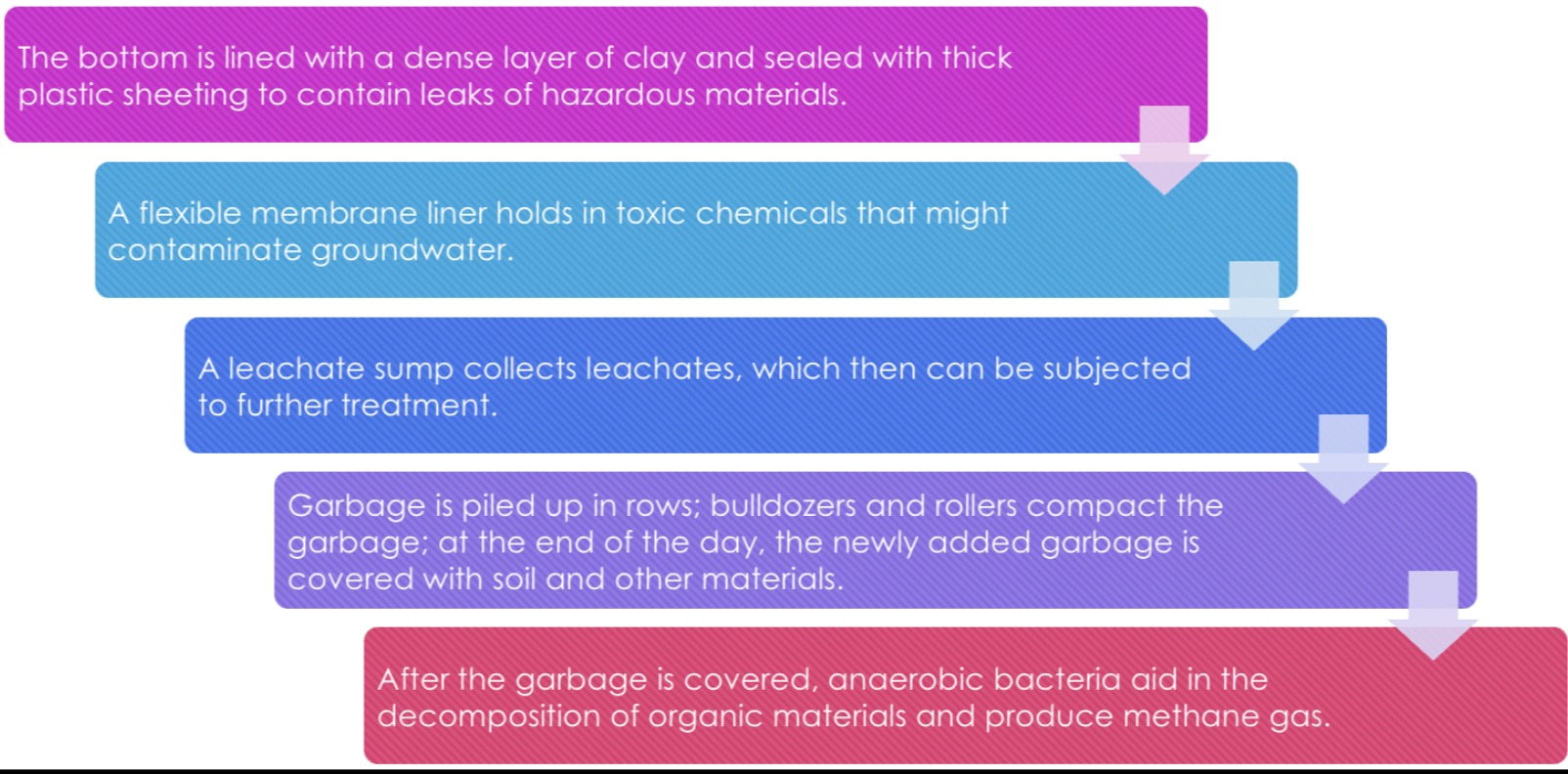
Landfill design and major components
4 major parts:
bottom liner
system for collecting leachates
water that collects contaminants as it trickles through wastes, pesticides, or fertilizers
cover
appropriate location that minimized the contamination of groundwater by materials released by the site
Significance of Love Canal
former site for disposal of toxic wastes
later used for residential construction
identified with hazardous chemical exposures and their possible harmful influences on human health
led to the creation of the superfund
Source reduction and activities involved
number one on the EPA’s hierarchy for management of MSW, most environmentally preferred strategy
reducing waste at the source
components include:
waste reduction
waste recycling
recycling includes
e-waste
plastic
metal
glass
paper
organic
Solid waste management’s 4 main dimensions
recycling
landfilling
composting
combustion/incineration
hierarchy of favored management top to bottom
source reduction and reuse
recycling and composting
energy recovery
treatment and disposal
incineration
can be used to generate waste while reducing the volume and weight of waste
no attempt is made to separate trash into components
at high temperatures, glass and aluminum in the trash melt
metals from the residues of combustion can be recycled into scrap metal
removing ash deposited in landfills
Rhazes connection to occupational medicine
used occupational classifications in medical case descriptions (ca. 850-923)
Paracelsus connection to occupational medicine
wrote a book on occupational diseases (1493-1531)
Bernadino Ramazzini
father of occupational medicine
described manifestations of occupational diseases
publishes his book De Morbis artificum
which highlighted the risks of hazardous chemicals, dusts, and metals used in the workplace
Origin of occupational health
recognition of occupational risks from mining occurred during Greek and Roman times
Triangle Shirtwaist Company fire
occurred on March 25, 1911, in NYC
146 women died within 15 minutes
doors were locked and fire escapes were nonfunctional
Gauley brigde disaster
covered a time span that began in 1931
caused by exposure of unprotected workers to high levels of silica dust
resulted in 1,500 cases of silicosis and 1,000 deaths
Nonfatal Occupational Injuries and Illnesses (Private Industry)
during 2002, 4.7 mil? newly reported cases
since 2002, number has continued to decline
during 2015. 1,153,490 cases were reported
leading cause of injuries: strains and sprains
Prevention of occupational disease and guidelines
engineering controls
modification of work practices
administration controls
personal protective equipment
guidelines
Engineering controls
quieter machinery
installation of protective guards
improved building ventilation
Modification of work practices
safety education and training programs
Administration controls
organization of work shifts and rotation of employees
Personal protective equipment (PPE)
apparatuses designed to protect employees from serious workplace injuries or illnesses resulting from contact with chemical, radiological, physical, electrical, mechanical or other workplace hazards
devices to protect against airborne hazards such as respirators
devices to protect hearing such as ear muffs and plugs
protective eyewear such as goggles, face shields, safety glasses, and full face respitators
guidelines for limitation of exposures
Organizations and government agencies have established guidelines for limitation of exposures. These standards make use of the terms threshold limit values (TLVs), biological exposure indices (BEIs), permissible exposure limits (PELs), and maximum allowable concentrations (MACs)
TLVs
airborne concentrations of substances and represents conditions under which it is believed that nearly all workers may be unaffected. Guidelines for TLVs are published by the American Conference of Governmental Industrial Hygienists (ACGIH) for use by trained industrial hygienists to assist them in decision-making regarding safe exposure levels to chemicals and physical agents in the workplace
BEIs
a measure of the amount of chemical absorbed into the body. Also published annually by the ACGIH
PELs
an OSHA standard that is subject specific and has the supporting documentation for promulgation and enforcement of occupational health regulations. PELs denote an allowable exposure level in the workplace air that is averaged over an eight-hour shift. This type of average is called a time-weighted average (TWA). PEKs refer to airborne concentration of substances, although they may also refer to dermatologic exposures
MACs
define permissible levels of exposure to chemicals
Specific occupationally associated diseases and conditions
allergic and irritant dermatitis (contact dermatitis)
Occupational associated respiratory diseases
COPD
Pneumonoconiosis
Asbestosis
Coal Worker’s Pneumoconiosis (Black Lung Disease)
Silicosis
Fertility and Pregnancy abnormalities
Hearing loss caused by noise
Infectious diseases
Musculoskeletal disorders
Carpal tunnel syndrome
back injuries
Work-related injuries and fatalities
Job stress and associated conditions
COPD
also called chronic lower respiratory disease (CLRD) and includes chronic and unspecified bronchitis, emphysema, asthma, and other chronic lower respiratory diseases
3rd leading cause of death in US in 2014
about 15-19% of cases of COPD and asthma can be linked to occupational exposures
Asthma has become the most frequently diagnosed occupational respiratory disease in occupational medicine clinics
Occupational exposures may exacerbate preexisting asthma
COPD is related to workplace exposure to dust
Pneumonoconiosis
the accumulation of dust in the lungs and the tissue reactions to its presence, where dustis an aerosol composed of solid inanimate particles.
Can result in fibrosis of the lungs
asbestos
cotton dust
silica-containing dusts
coal dust
Asbestosis
a type of pulmonary fibrosis associated with exposure to asbestos, the name assigned to six different fibrous minerals in nature. Asbestosis results from inhalation of large amounts of asbestos fibers over long periods of time.
occurs mainly among workers exposed to asbestos and uncommon among the general population
related to declines in pulmonary function and increased risk of lung cancer, especially among smokers
Coal workers’ pneumoconiosis (black lung disease)
potentially fatal lung disease that is associated with breathing coal dust, which then becomes deposited in the lungs. Over time, the lungs of persons who are afflicted with CWP lose their elasticity, causing respiration to become increasingly difficult
Silicosis
a condition caused by inhaling respirable crystalline silica dust
the three major forms of silicosis are chronic silicosis, accelerated silicosis and acute silicosis
workers encounter this during sandblasting, cutting tiles, and masonry and grinding cement
symptoms include coughing, shortness of breath, weight loss
causes lungs and lymph nodes to swell
may result in pulmonary fibrosis, loss of lung function, and connective tissue disease
persons with silicosis are at high risk of tuberculosis
additional complications are lung cancer and respiratory failure
chronic silicosis
associated with long-term exposures to silica at low levels over a period of more than 20 years
accelerated silicosis
a rapidly progressing form that is associated with exposure to large amounts of silica during short time periods (5-15 years)
acute silicosis
caused by very heavy exposures to silica during short time periods; in this case, onset can be as soon as a year’s time
fertility and pregnancy related abnormalities
include dysfunctions that affect fetuses and infants
birth defects
prematurity
low birth weight
spontaneous abortions
developmental disabilities
4,000 chemicals have been tested for adverse reproductive effects
lead, solvents, ionizing radiation, anti-cancer drugs
hearing loss caused by noise
occurs very commonly and takes a major toll on construction workers such as carpenters, as well as among employees in manufacturing
about 33% of individuals exposed to noise at work had auditory impairment in comparison with 20% of those not exposed
high levels of potentially dangerous job-related noise can impact up to 22 million workers each year in the US
Each year workers’ comp for disability from hearing loss costs an estimated 242 million
a logarithmic scale that uses decibels (dBs) measures the strength of sound. HL are hearing levels and SPL is sound pressure level.
Threshold of hearing is 0 dB/HL
sounds at 85 dB/SPL can produce slight hearing loss
Brief exposure to sounds at 100 dB/SPL can cause severe, permanent hearing loss
Infectious diseases
healthcare workers are at an increased risk of exposure to hepatitis virus and HIV, particularly through accidental needle sticks, direct patient contact, and contact with blood and blood products
public utility workers may be exposed to the hazards of disease carried in raw sewage
agricultural workers are at increased risk of exposure to zoonotic disease agents contained in the soil
social service workers and corrections personnel may be exposed to tuberculosis
clinical laboratory specialists may be exposed to infectious agents from specimens including blood-borne pathogens, viruses, and bacterial agents
mortuary workers are exposed to a range of microbial agents as human bodies are embalmed or exhumed from burial sites
adult film industry workers are at risk from a range of bloodborne and sexually transmitted infections
Musculoskeletal disorders
Musculoskeletal disorder (MSD) refers to an injury or disorder of the muscles, nerves, tendons, joints, cartilage, or spinal discs. These conditions occur widely in the work environment
a total of 356,910 cases if MSDs were reported in 2015 among workers in the private industry
MSDs accounted for 31% of nonfatal occupational injury and illness cases requiring time away from work
Over 300,000 cases of MSDs were reported in 2008
Of this total, 74% were caused by strains, sprains, and tears
Carpal tunnel syndrome and back injuries are examples od MSDs
Carpal tunnel syndrome
condition associated with compression or squeezing of the median nerve, which runs from the forearm to the palm of the hand through the carpal tunnel of the wrist
CTS may produce symptoms of numbness or pain in the wrist and hand
may call for long periods of recuperation and absence from work
related to repetitive work activities with the hand and wrist, one of the work domains with a high frequency of CTS is the meat packing industry
The use of computer keyboards for an extended time periods has also been an identified risk factor for CTS
back injuries
over 200,000 back related injuries or illnesses among private, state, and local government employers. Such injuries resulted in a median of 8 days from work
back injuries accounted for 17% of all the occupational injuries and illnesses that require time away from work in 2015
repetitive movements that affect the back
remaining sedentary for long periods
putting too much strain on the back
nurses at high risk
38% of nurses reported to have sustained back injuries
laborers, carpenters, and drivers also at high risk
work-related injuries and fatalities
cost billions of dollars in medical expenses, reduced productivity, and other costs annually
injuries are defined as the result of energy applied to the human body in such a manner that the energy exceeds the body’s physiological tolerance
nearly 5,000 workplace deaths in 2015
leading causes:
motor vehicles
homicides
machines
falls
electrocutions
falling objects
the National Traumatic Occupational Fatalities (NTOF) Surveillance System was implemented by NIOSH in the 1980s to conduct a census of death certificate-based information in order to perform descriptive and analytic epidemiologic analyses of causes of job-related mortality
Second source of occupational mortality is the BLS Census of Fatal Occupational Injuries (CFOI), which collects information from various state and federal data sources
Job stress
the harmful physical and emotional responses that occur when the requirements of the job do not match the capabilities, resources, or needs of the worker
may lead to poor health or even injury
millennials experience it most and boomers face it moderately
possible contributor to both impaired mental health status and poor physical health status
sources of job stress include
work overload — long hours, high pressure, deadlines
job dissatisfaction
job insecurity due to fear of layoff, changes in the nature of work, global competition, and deregulation of labor
workers lack control over their environment and conditions of employment; i.e. employment insecurity and shift work are associated with work-related stress
assembly line work that involves repetitive tasks
dealing with members of the public who may be abusive
inadequate compensation and lack of benefits such as health insurance
job strain
arises from employment that combines low control over the decision-making process with high physiological demands. The association between job strain and the risk of morbidity and mortality from coronary heart disease and cardiovascular disease is a focus of research on the physical health consequences of stress