Marketing Final Exam Review
 Call Kai
 Learn
Learn Practice Test
 Spaced Repetition
 Match
Match Flashcards
 Knowt Play
1/128

Earn XP
Description and Tags
A comprehensive set of practice flashcards defining key marketing terminology and concepts from Chapters 1 through 13 as outlined in the lecture notes.
Name | Mastery | Learn | Test | Matching | Spaced | Call with Kai | Chat |
|---|
No analytics yet
Send a link to your students to track their progress
129 Terms
Marketing
The process of managing profitable customer relationships where companies create value for customers and build strong customer relationships.
Marketing Myopia
The mistake of focusing more on the specific product than the benefits produced by the product, where the company focuses on R&D without explaining the product's use to consumers.
Satisfaction
A state relative to a consumer's expectations being met.
Consumer generated marketing
A strategy, like the Doritos competition for a Super Bowl ad, where consumers submit content; this results in less cost and work for the company.
4 Ps
The marketing mix consisting of Product, Price, Place, and Promotion.
Marketing Research Objectives
Textbook identifies three types of objectives for marketing research, which utilizes both primary and secondary data.
Maslow’s Hierarchy of Needs
A hierarchy consisting of Physiological needs (hunger, thirst), Safety needs (security, protection), Social needs (belonging, love), Esteem needs (status, recognition), and Self-actualization needs (self-development).
Learning Process
A sequence consisting of Drive, Cues, Response, and Reinforcement.
Buyer Decision Process
The process steps including Need recognition, Information search, Evaluation of alternatives, Purchase decision, and Postpurchase behavior.
Upstream
The set of firms that supply the raw materials, components, parts, information, finances, and expertise needed to create a product or service.
Direct Marketing Channel
A marketing channel that has no intermediary levels.
Indirect Marketing Channel
A marketing channel containing one or more intermediary levels.
Disintermediation
The displacement of traditional resellers or the cutting out of marketing channel intermediaries.
Distribution Strategies
The three available strategies: Intensive distribution, Exclusive distribution, and Selective distribution.
Retailing Location
The most important factor in retailing success; stores must be accessible to the target market and consistent with the retailer's positioning.
Store Location Options
Includes Central business districts, Shopping centers, Power centers, and Lifestyle centers.
Wholesaling
All activities involved in selling goods and services to those buying for resale or business use.
Integrated Marketing Communications (IMC)
A strategy moving from broadcasting to narrowcasting to match today’s targeting strategies.
Public Relations (PR)
A high-credibility tool that impacts awareness at a lower cost than advertising because companies do not pay for media space or time.
Territorial Sales Force Structure
A structure where sales personnel are assigned to an exclusive geographic area to prevent internal competition and build company reputation.
Product Sales Force Structure
A structure where the sales force sells along product lines, such as Xiaomi having different employees responsible for phones and cars.
Customer Sales Force Structure
A sales force organized along customer and industry lines, such as separate employees for Fudan Uni and Tongji University.
Key Sales Talents
The four talents the best salespeople possess: Intrinsic Motivation, Disciplined work style, Ability to close a sale, and Ability to build relationship with customers.
Sales Compensation Plans
The four types: Straight Salary, Commission, Plus bonus, and Plus commission.
Sales Quota
Standards stating the amount a salesperson should sell and how those sales should be divided among the company’s products.
Promotion Clutter
The result of growing sales promotion usage, leading consumers to tune out advertisements.
Samples
Offers of a trial amount of a product.
Trade Promotion
Marketing intended to get retailers to carry new items, increase inventory, buy ahead, or provide more shelf space for a company's products.
Micromarketing
The practice of tailoring products and marketing programs to suit the tastes of specific individuals and locations.
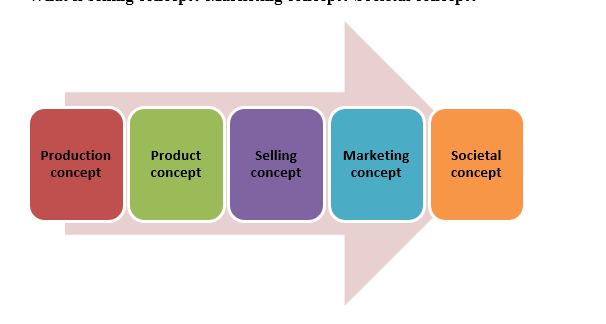
What is selling concept? Marketing concept? Societal concept?
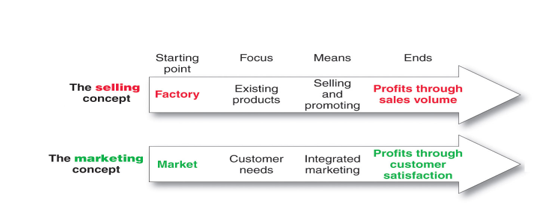
What is the difference between selling concept and marketing concept?
What is Customer lifetime value?
What is Customer equity?
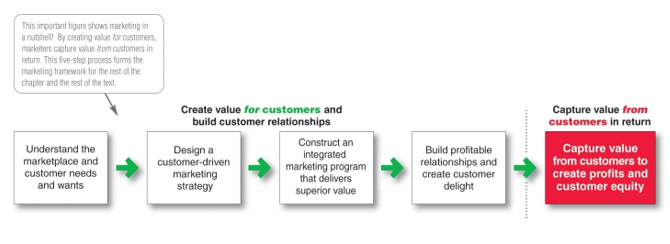
Explain marketing process?