Ch 2 Water: the solvent for biochemical reactions
 Call Kai
 Learn
Learn Practice Test
 Spaced Repetition
 Match
Match Flashcards
 Knowt Play
1/36

There's no tags or description
Looks like no tags are added yet.
Name | Mastery | Learn | Test | Matching | Spaced | Call with Kai | Chat |
|---|
No analytics yet
Send a link to your students to track their progress
37 Terms
electronegativity
tendency of an atom to attract electrons to itself
Polar bonds
-electronegativity differences between atoms lead to partial charges/ two atoms pull on the shared electrons unequally
-two atoms with same electronegativity means electrons are shared equally
nonpolar bonds
electronegativity difference between atoms is so small that its negligible and essentially equal
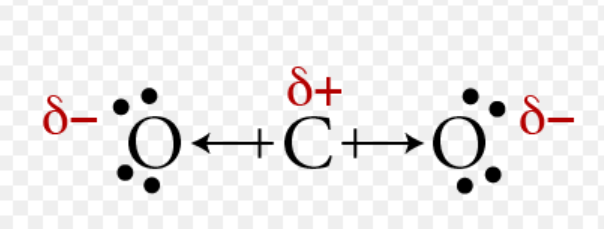
geometry of the molecule, for example CO2 is a linear molecule meaning the partial negative charge of one oxygen cancels the other
explain how a molecule as a whole can be nonpolar but still have polar bonds
Dipoles
bonds with positive and negative ends/ separation of charge creates dipole
Ionic bond
one atom transfers valence electrons to the other
salt bridge
IONIC bond interaction that depends on the attraction of unlike molecules
-Ex) side chain of amino acids COO- and NH3+ are attracted to each other
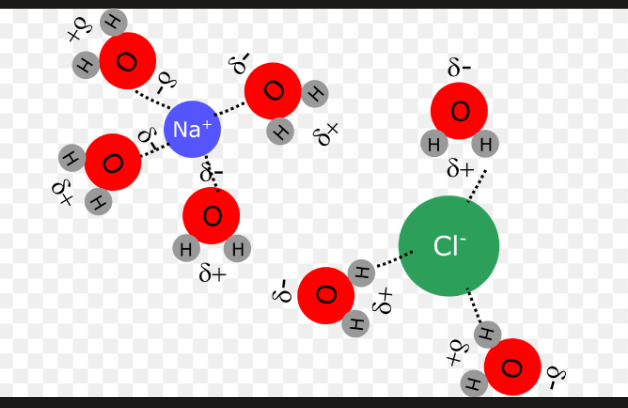
Ion-Dipole interactions
-ions in solution can interact with molecules that have dipoles
-Ex) salt dissolving in water
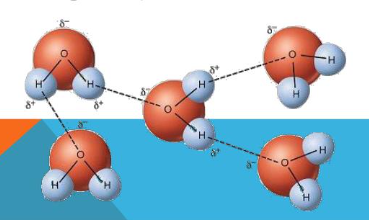
Dipole-Dipole interactions
-occur between molecules that are dipoles with the partial positive
-Ex) hydrogen bonds, especially water molecules interacting with one another
Dipole-induced dipole interactions
a permanent dipole molecule comes in contact with another molecule (even those with no dipoles) and can induce a transient dipole
induce dipole-induced dipole interaction
two molecules lacking dipoles can bump into each other and induce a dipole/ become attracted to one another (by distorting each other’s electron cloud)
-also known as London dispersion force
Vaan der waals forces
noncovalent associations based on the weak attraction of transient dipoles for one another
*dipole-dipole, dipole-induced dipole, induced dipole- induced dipole(london) all part of it
-water easily makes ion-dipole, and dipole-dipole interactions with ionic and polar neutral compounds (compounds have some polar functional groups i.e electronegative atoms that create partial charges)
- if bonds between the dissolving ions/molecules and water are more favorable than the bonds holding the solid together the solid will dissolve (less stable—> more stable)
-Ex) NaCl, with ionic bonds being the strongest we assume the solid will stay whole however the ionic bonds are broken and each ion becomes “hydrated” (surrounded by water molecules) making ion-dipole bonds
—>ionic bonds of NaCl are broken which costs energy to break but the hydration of these ions (all of the ion-dipole bonds formed between the ion and multiple water molecules) releases energy
—>energy released from hydration> energy required to break the bond
—> ion-dipole interactions give back more energy than energy expended to break the ionic bond
what substances tend to dissolve easily in water?
amphipathic
polar and nonpolar end
-hydrocarbons (contain only C and H which is nonpolar)
*The favorable ion–dipole and dipole–dipole interactions responsible for the solubility of ionic and polar compounds do not occur for nonpolar compounds,
what tends to not dissolve in water
hydrogen bonding
a noncovalent association formed between a hydrogen atom covalently bonded to one electronegative atom and a lone pair of electrons on another electronegative atom
linear bonds are stronger than nonlinear
*Form of dipole-dipole interaction
-donor = has a hydrogen to give (H connected to the electronegative atom)
-acceptor= has a lone pair to accept a hydrogen
-Ex) water has 2 donor and 2 acceptor sites, its 104.3 degree bond angle makes it such that the angle between the unshared pair of electrons is similar so it can accept and give all for spots (tetrahedral arrangement)
what’s a hydrogen donor and acceptor
-Ice tends to be more stable and fixed means many more molecules in an ice crystal is compared to the tiny, short‑lived clusters in liquid water.
-water bonds are constantly breaking and forming
describe the differences in H bonding arrays between water and ice
-although methane (CH4) is similar in size the attraction between molecules is much smaller compared to the 20Kj/mol H bond
-#:water can form a greater number of bonds (up to 4 hydrogen bonds) while methane has none
-strength: water’s hydrogen bonding is much stronger than NH3 because oxygen is more electronegative than N
—> the more electronegative= bigger partial charges=stronger bond
Why does water have a large melting and boiling point compared to a molecule like methane or ammonia?
can form both hydrogen and non-specific dipole-dipole bonds due to its polarity
why is water an amazing solvent
hydrogen bonds form between double helix of DNA and RNA
transfer RNA structure
protein folding into beta pleated sheats and a helix
what are some other biologically important hydrogen bonds
acid
acts as a proton (H) donor
base
acts as a proton (H) acceptor
acid strength
amount of H released when a given amount of acid is dissolved in water/conjugate base
acid dissociation constant
a number that characterizes the strength of an acid
each acid constant has a fixed numerical value at a constant temperature
greater the Ka the stronger the acid

ion product constant for water
Kw= [H+][OH-] or Ka* 55.5
in pure water at 25C H and OH are 10^-7 —> 10^-7×10^-7=10^-14
measure of the tendency of water to dissociate and give H+ and OH=
pH formula
pH=-log10[H+]
pKa= -log10*Ka
pKa formula
Henderson-Hasselbalch equation
mathematical relationship between the pKa of an acid and the pH of a solution containing the acid and its conjugate base
pH= pKa + log[A-]/[HA]
what is the Henderson Hasselback equation
titration
base added to an acid
equivalence point
point in titration where the acid is neutralized
inflection point
occurs when .5 mole of base has been added for each mole of acid present
50% of the acid and 50% of the conjugate base exist in solution
pH=pKa
pH< pKa
protonated form dominates
pH> pKa
deprotonated form dominates
Buffer
something that resists change
Low buffering capacity
a molecule of the amount of acid or base that can be absorbed by a given buffer