STM Architecture
 Call Kai
 Learn
Learn Practice Test
 Spaced Repetition
 Match
Match Flashcards
 Knowt Play
1/18

There's no tags or description
Looks like no tags are added yet.
Name | Mastery | Learn | Test | Matching | Spaced | Call with Kai | Chat |
|---|
No analytics yet
Send a link to your students to track their progress
19 Terms
What are the 3 types of registers?
Control registers
Status registers
Data registers
What does a control register do?

What does a status register do?

What does a data register do?


Explain line 7
Creates uint8_t pointer variable called p
Assigns the value of p a memory address
The memory address it assigns is the first element of the array arr
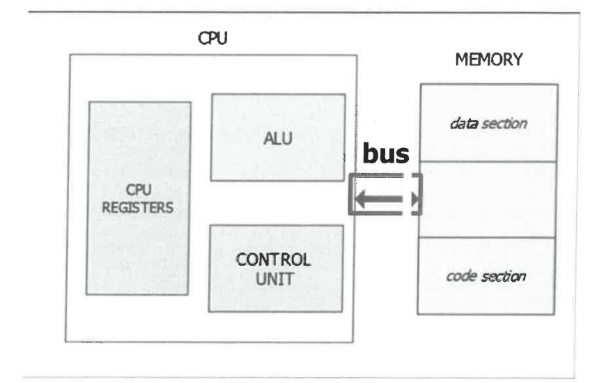
The system above shows two different sections of memory - data (SPAM) and code (flash), There is a blank block indicating a third region of memory. In the context of the STM32F051 microcontroller, what is this third block of memory. What is it used for?
Peripheral Region
Peripheral Registers located in this region
Reading from / writing to peripheral registers lets us control peripherals
The STM32F051 uses a more complex bus structure than the system shown above. Explain how the CPU communicates with different memory regions in the STM32F051, making reference to the role of the bus matrix.
STM32 consists of multiple busses
CPU communicates to bus matrix through single bus
Bus matrix routes communication along correct bus

Creates macro called GPIOA
Expands to a pointer to a GPIO struct
Points to GPIOA peripheral's base memory address
Allows us to access GPIOA peripherals by dereferencing struct pointer
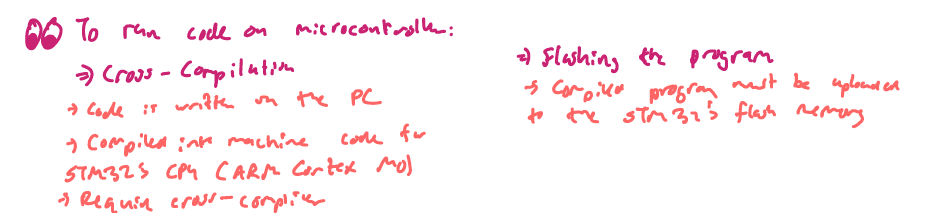
How to run code on microcontroller
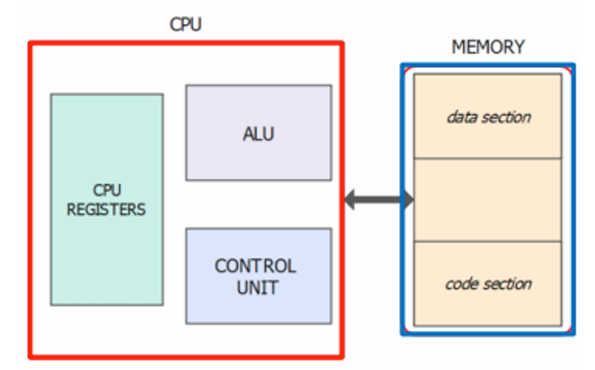
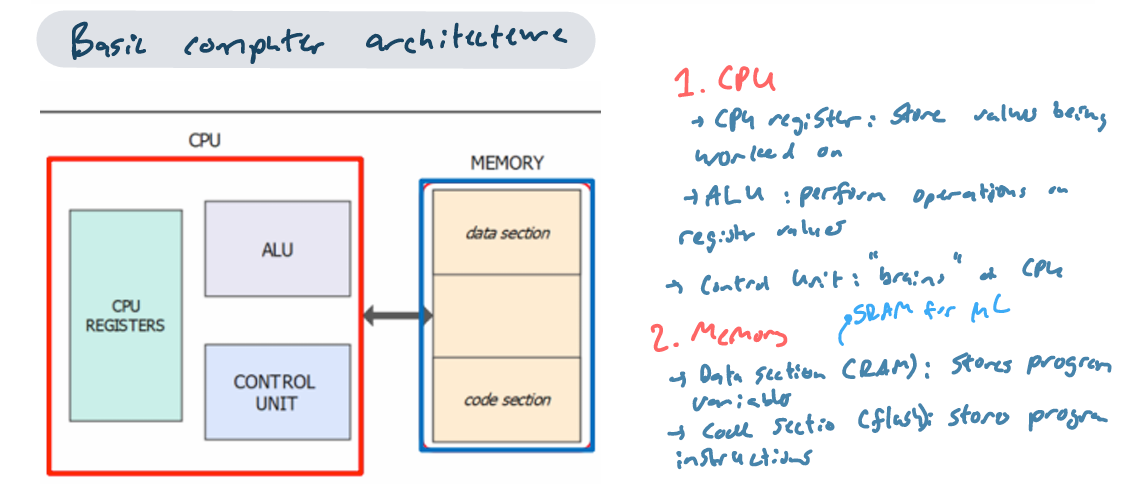
Explain two section of this basic computer structure
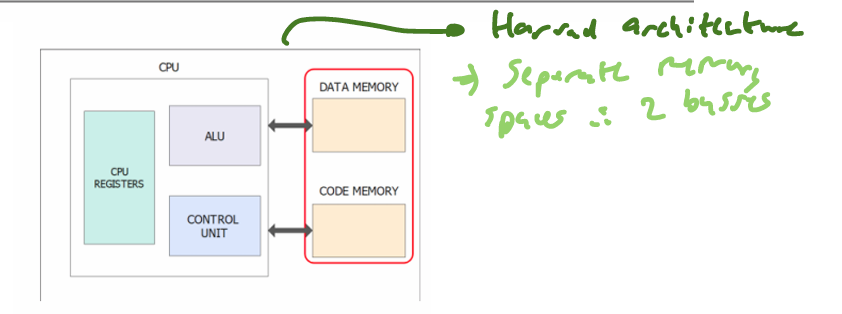
Draw a Harvard architecture
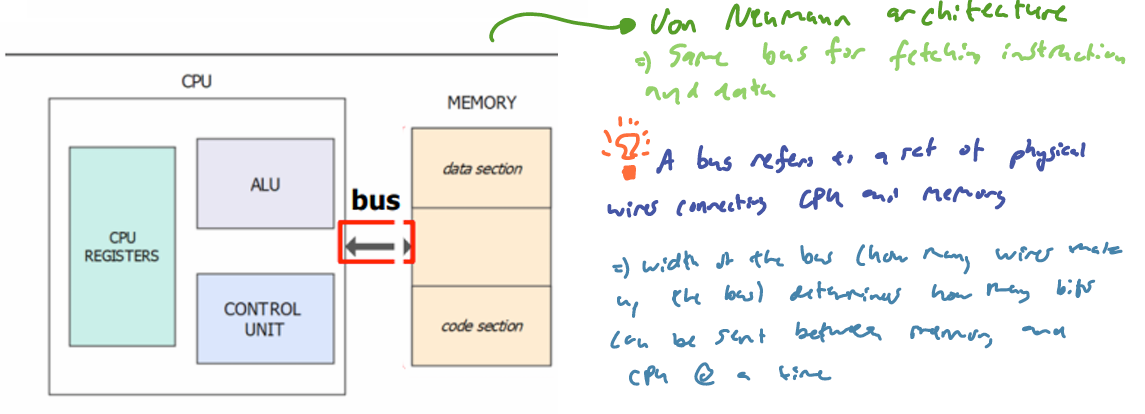
Draw a Von Neuman architecture
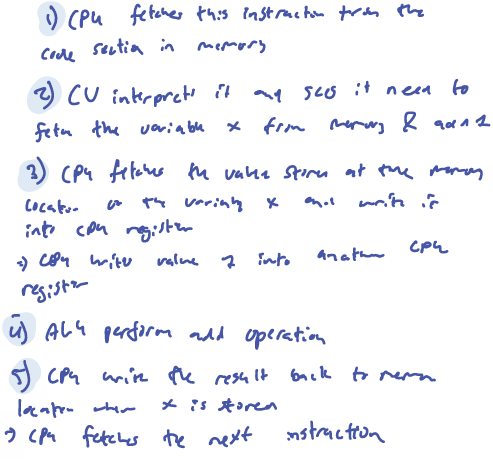
What are the instruction to execute code
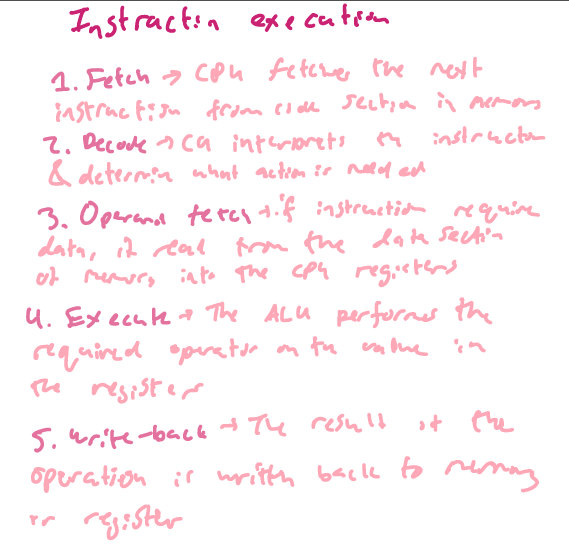
What are the instruction executions for x = x +1?
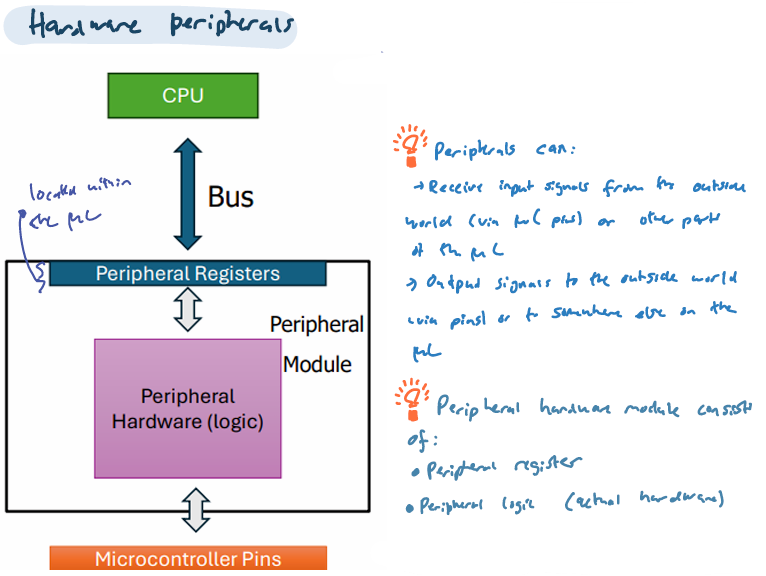
Draw what is inbetween CPU and the microcontroller pins
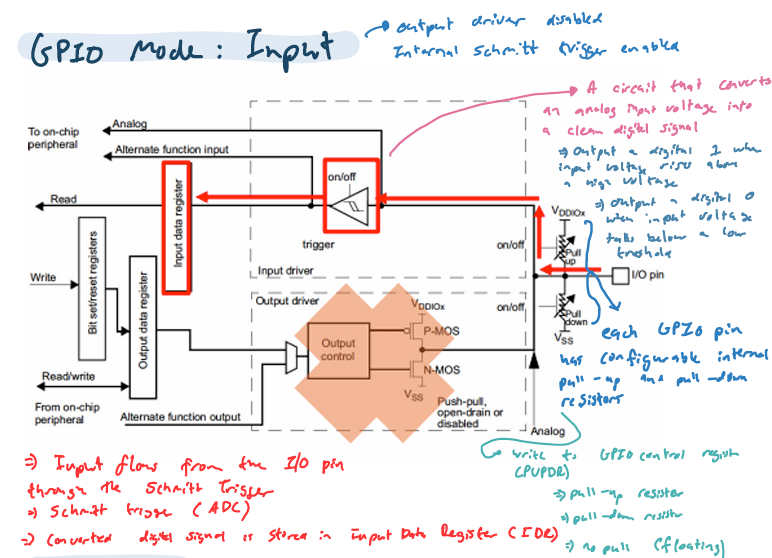
Explain the GPIO input mode
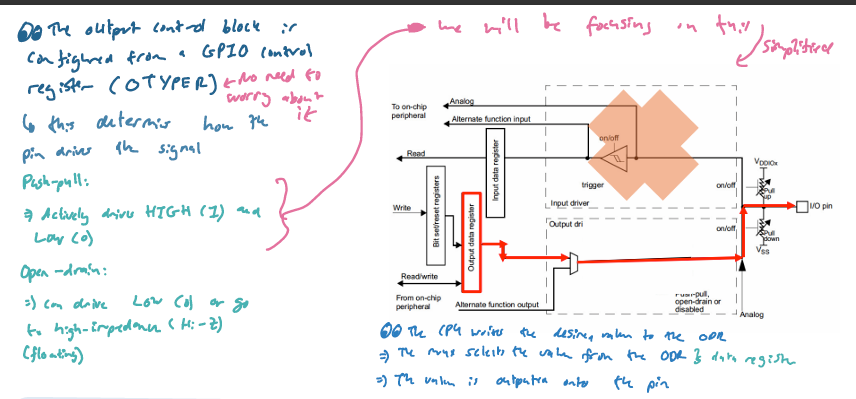
Explain the GPIO output mode
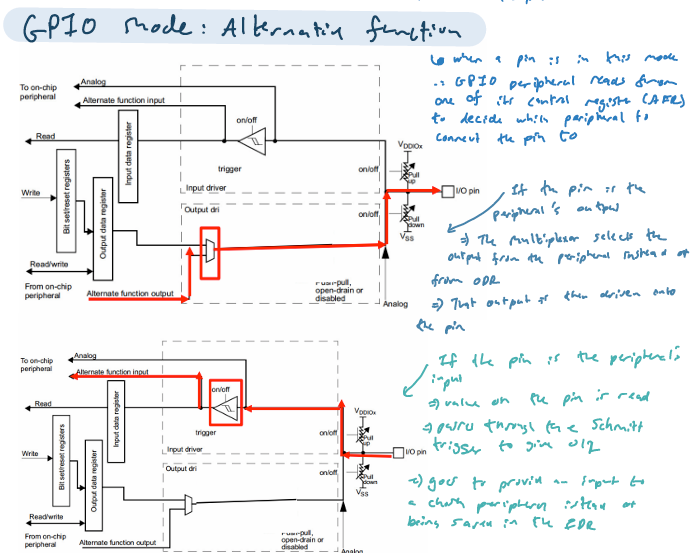
Explain the GPIO alternative function mode
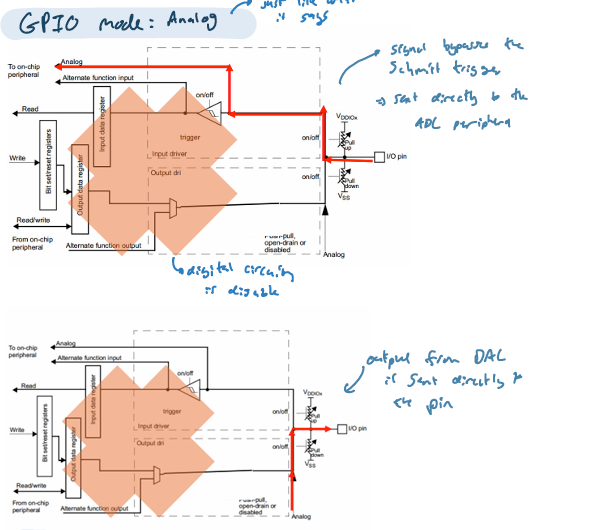
Explain the GPIO analogue mode