FINAL GEPH EXAM😜🌍
 Studied by 0 people
 Call with Kai
 Learn
Learn Practice Test
 Spaced Repetition
 Match
Match Flashcards
 Knowt Play
1/51

Earn XP
Description and Tags
LETS GET THIS A
Name | Mastery | Learn | Test | Matching | Spaced | Call with Kai |
|---|
No study sessions yet.
52 Terms
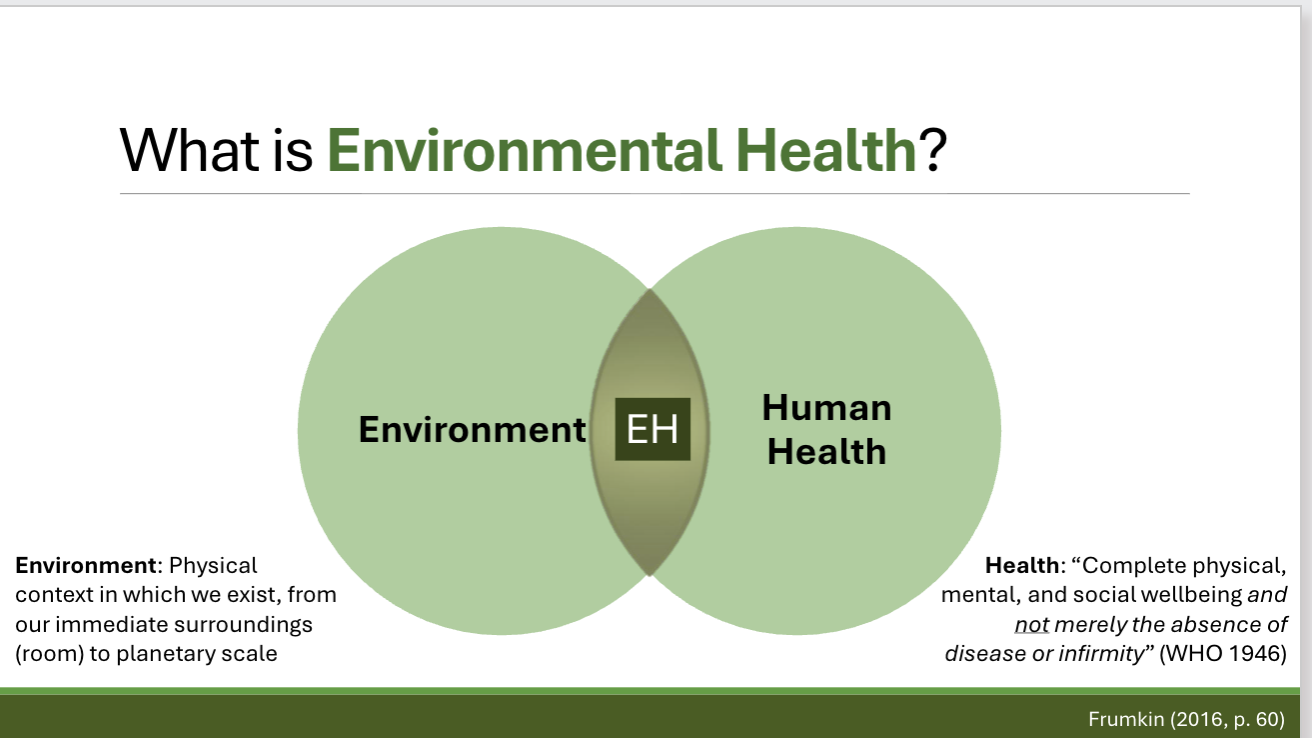
Define what environment and health means in the context of environmental health
Environment: Physical context in which we exist, from our immediate surroundings (room) to the planetary scale
Health: “Complete physical, mental, and social wellbeing and not merely the absence of disease or infirmity”.
EH: An evidence-based framework for minimizing environmental hazards and maximizing environmental benefits
Define biomagnification and explain how it can be harmful to human health
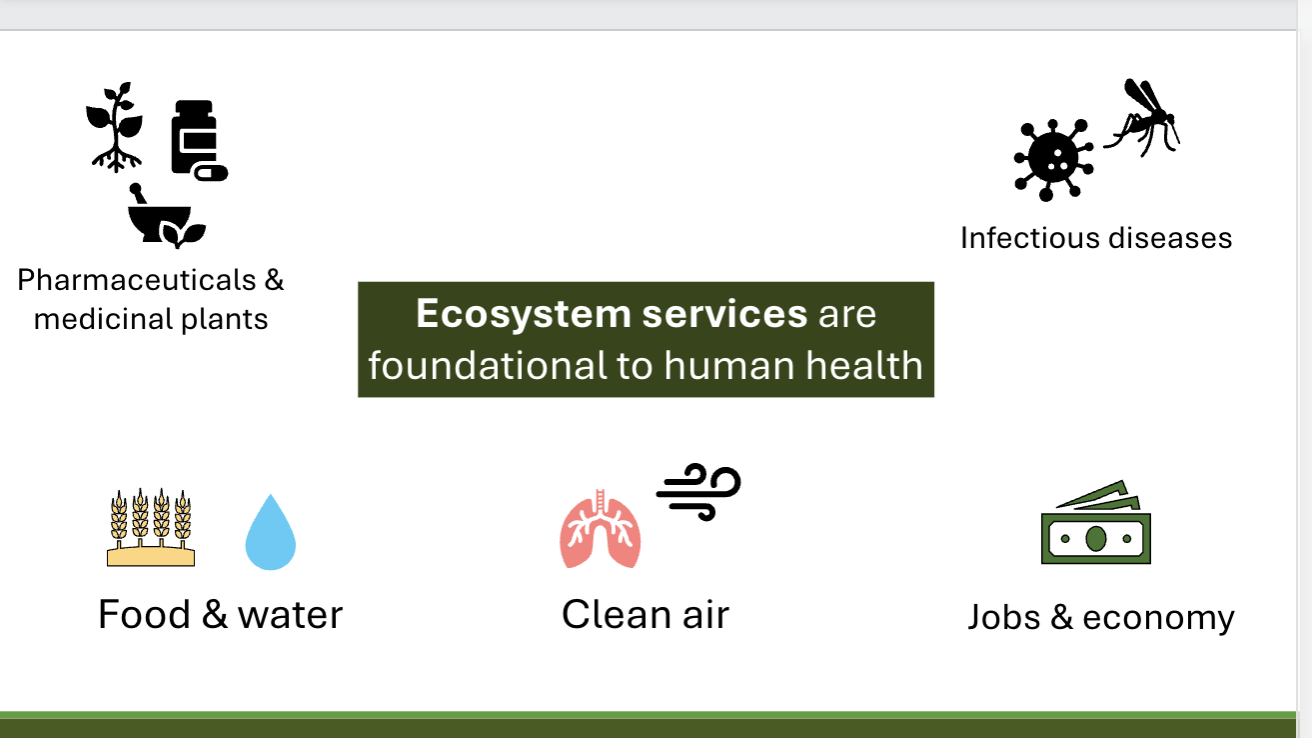
Define ecosystem services and how they benefit human health
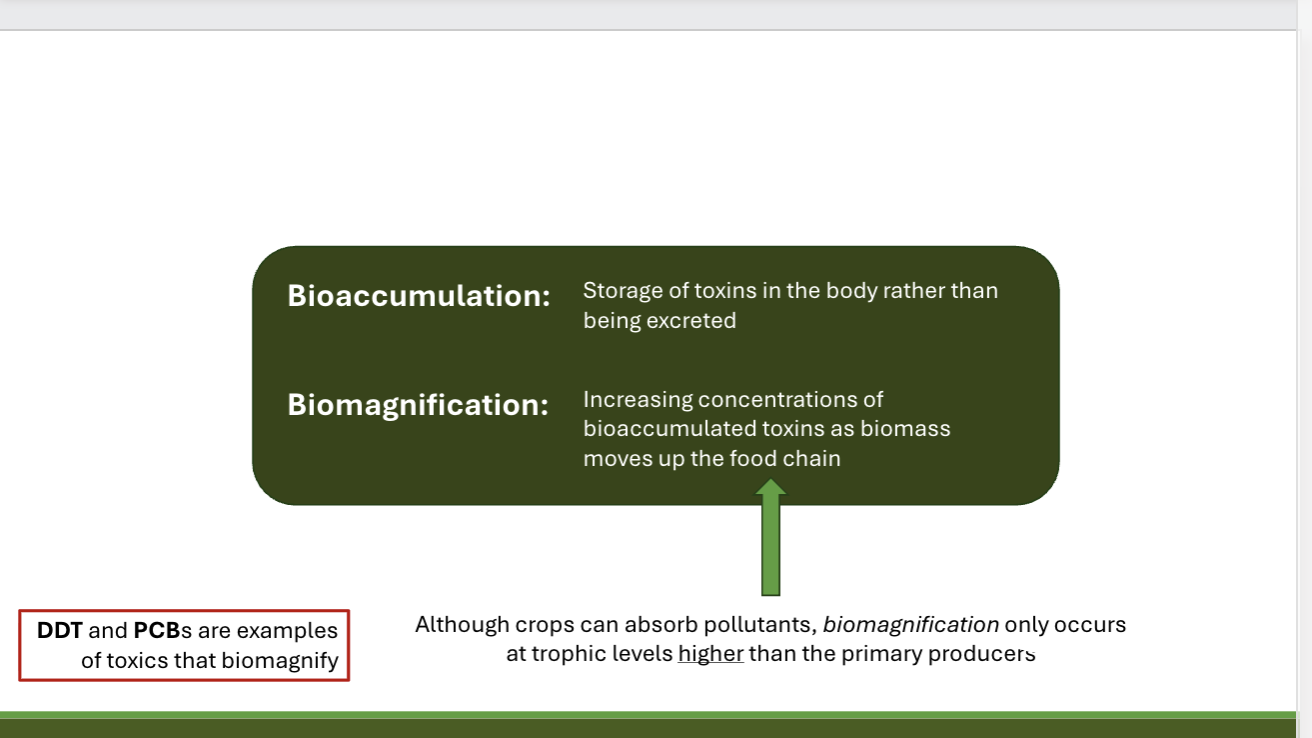
Biomagnification:
increasing concentrations of bioaccumulated toxins as biomass moves up the food chain
Although crops can absorb pollutants, biomagnification only occurs at trophic levels higher than the primary producers such as primary/secondary consumers
ex: DDT and PCBs: A hawk eats multiple squirrels that contains toxins and another animal eats the hawk causing the toxin to become magnified
harmful to human health because it concentrates persistent toxic substances, such as mercury and certain pesticides, in the tissues of top-level predators like humans, potentially causing issues like neurological disorders, infertility, increased cancer risk, and birth defects
Ecosystem Services: benefits and value provided to humans (for free) by nature ex: mangroves and bee pollination
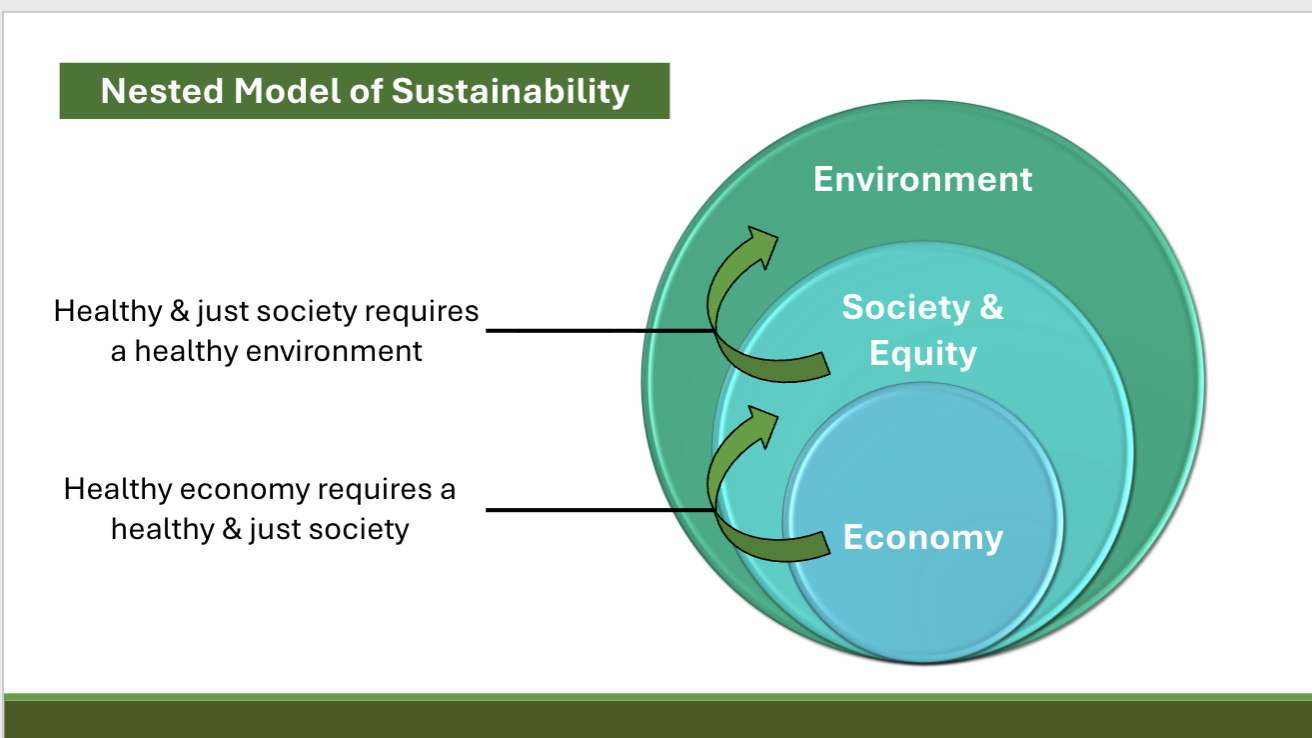
Explain the nested model of sustainability and how environmental protection and economic
growth are not mutually exclusive
Nested model of sustainability:
healthy and just society requires a healthy environment—>healthy economy requires a healthy and just society
environmental protection and economic growth are not mutually exclusive because economic growth depends on a healthy environment
Sustainable development: meeting the needs of the present without compromising the ability of future generations to meet their own needs
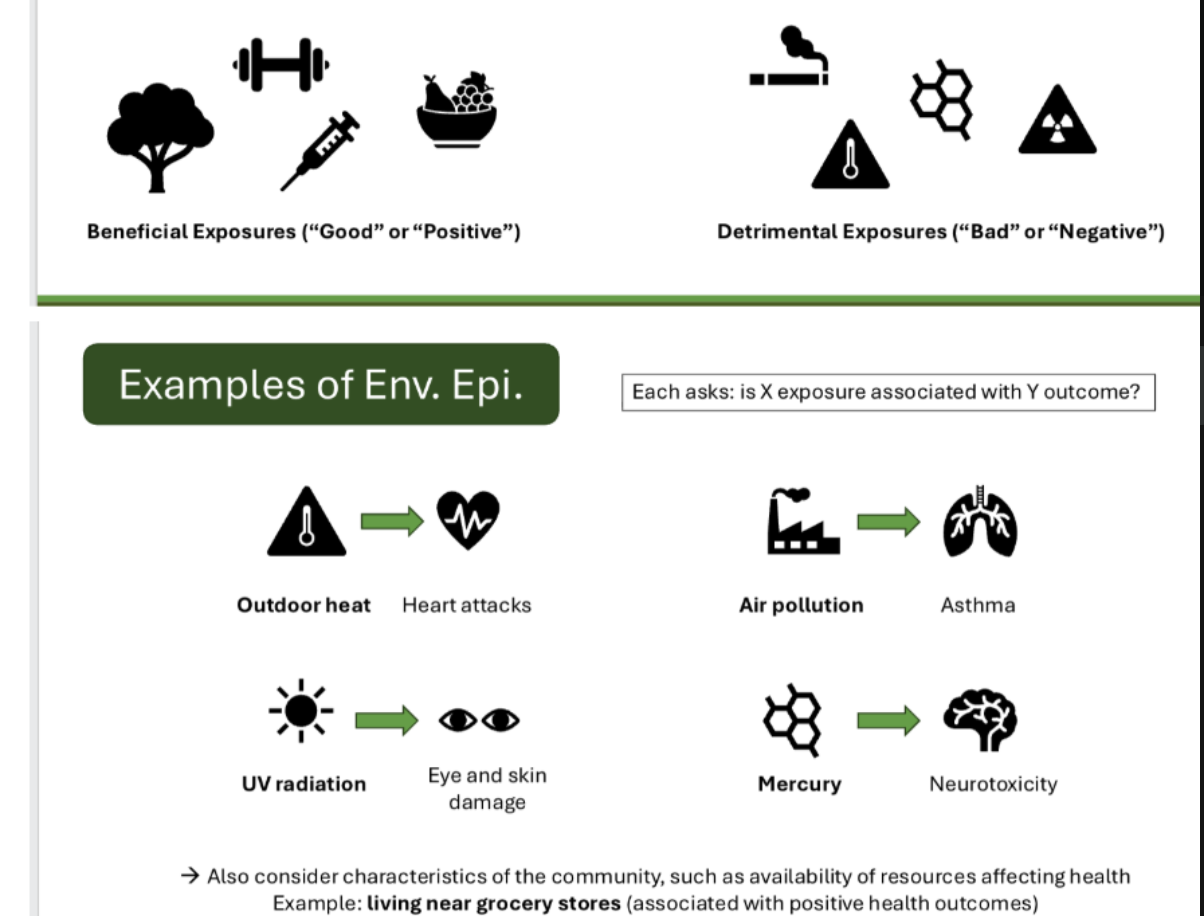
Define exposure and identify examples of environmental exposures from both the natural and built environments
Exposure: anything that people are subjected to that could plausibly affect human health. There can be beneficial exposures and also detrimental exposures.
example of environmental exposures: outdoor heat→heart attacks, UV radiation—>skin and eye damage, mercury—>neurotoxicity, air pollution—>asthma.
Also consider characteristics of the community, such as availability of resources affecting health ex: living near grocery stores is associated with a positive health outcome
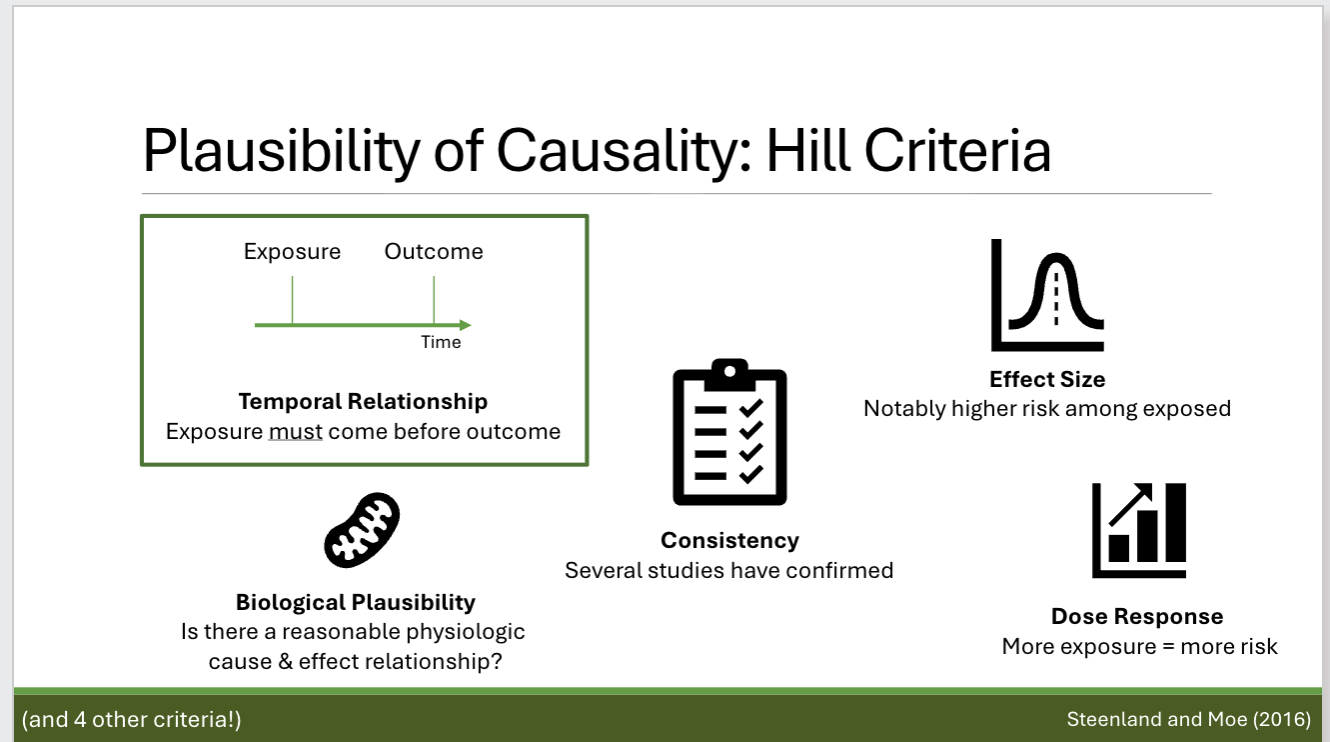
Identify Hill’s criteria for causality and apply it to an example for an environmental exposure
Temporal (time) relationship: exposure must come before outcome
Biological plausibility: is there a reasonable physiologic cause and effect relationship
Consistency: several studies have confirmed
Effect size: notably higher risk among exposed
Dose response: more exposure=more risk
Example of plausibility of causality
Smoking and lung cancer
The observed association between cigarette smoking and lung cancer is plausible because tobacco smoke contains carcinogenic chemicals (like polycyclic aromatic hydrocarbons and nitrosamines) that can damage DNA and promote tumor development. This provides a biological mechanism that makes the causal link reasonable.
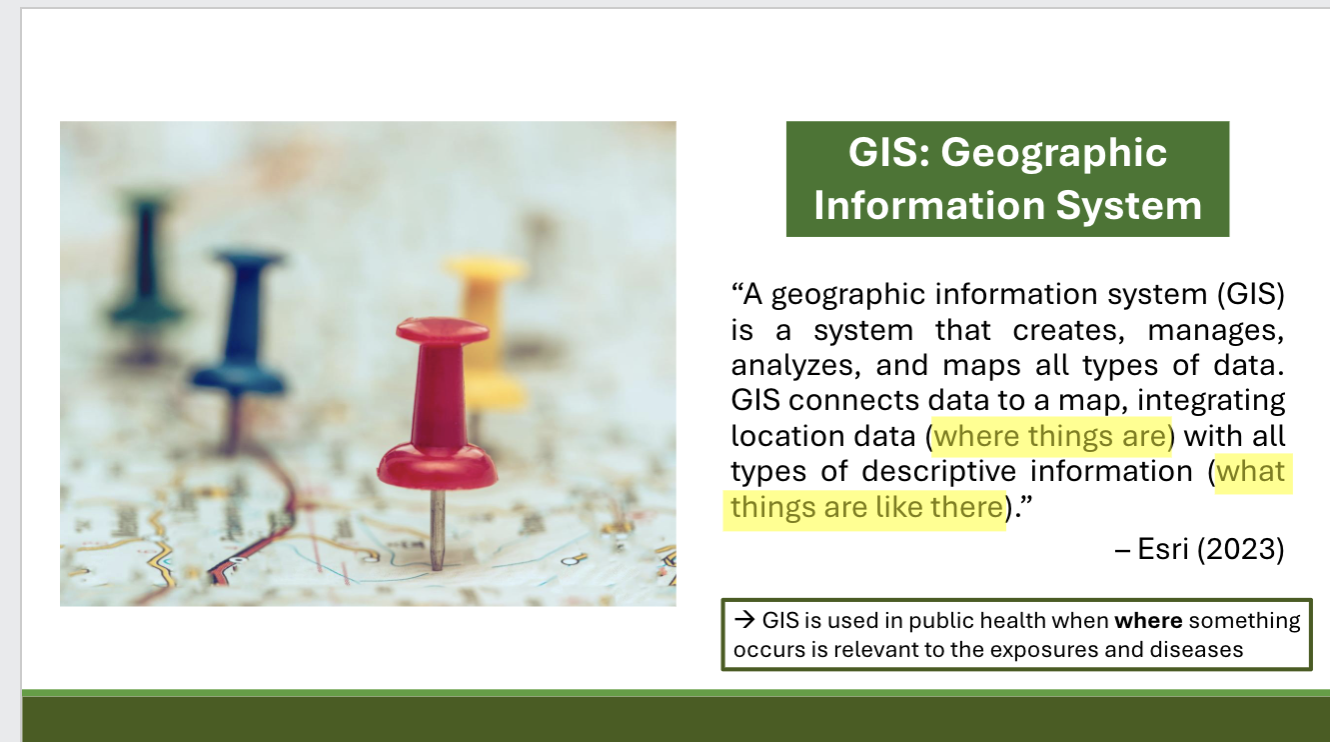
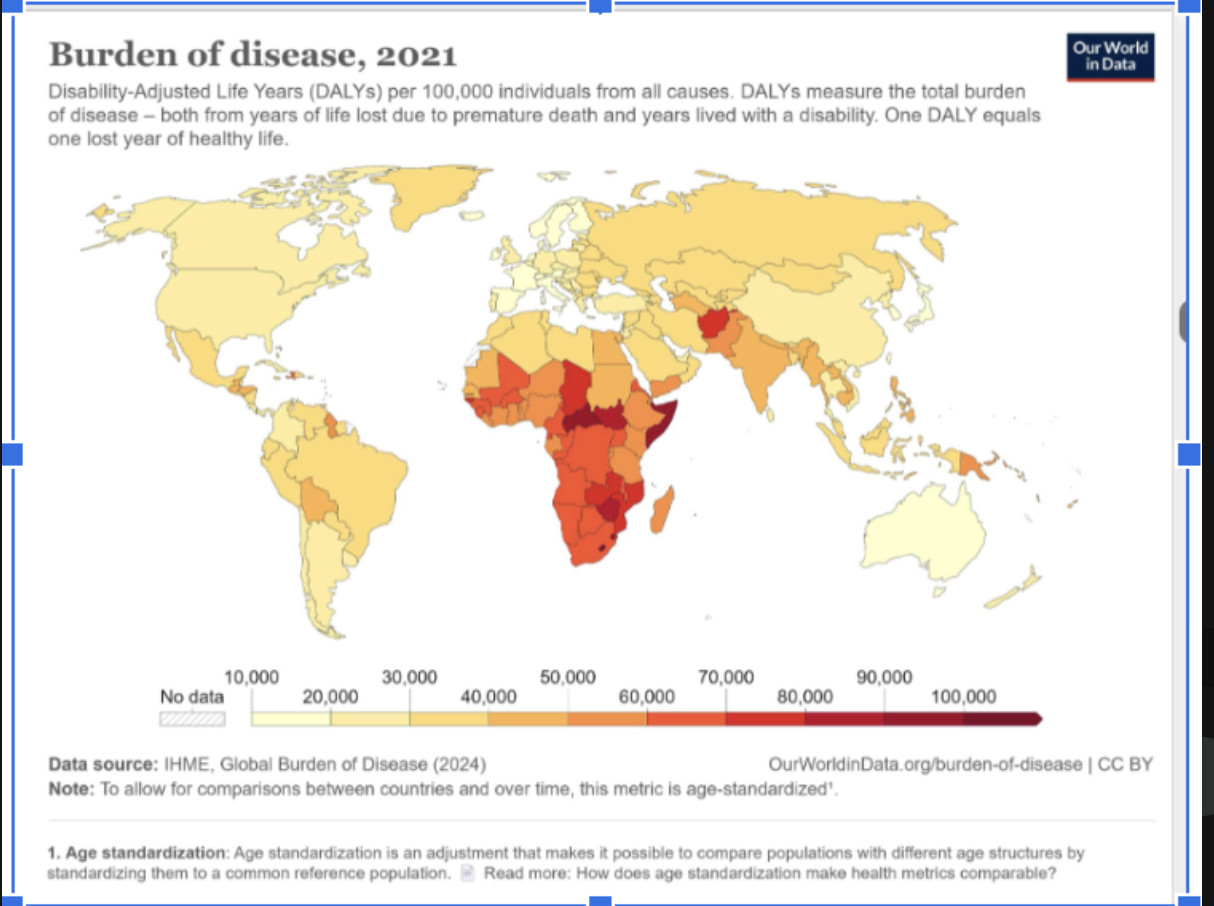
Know what GIS and how it can be used in public health
GIS:
a system that creates, manages, analyzes, and maps all types of data. Gis connects data to a map, integrating location data (where things are) with all types of descriptive information (what things are like there)
used in public health when and where something occurs is relevant to the exposures and diseases
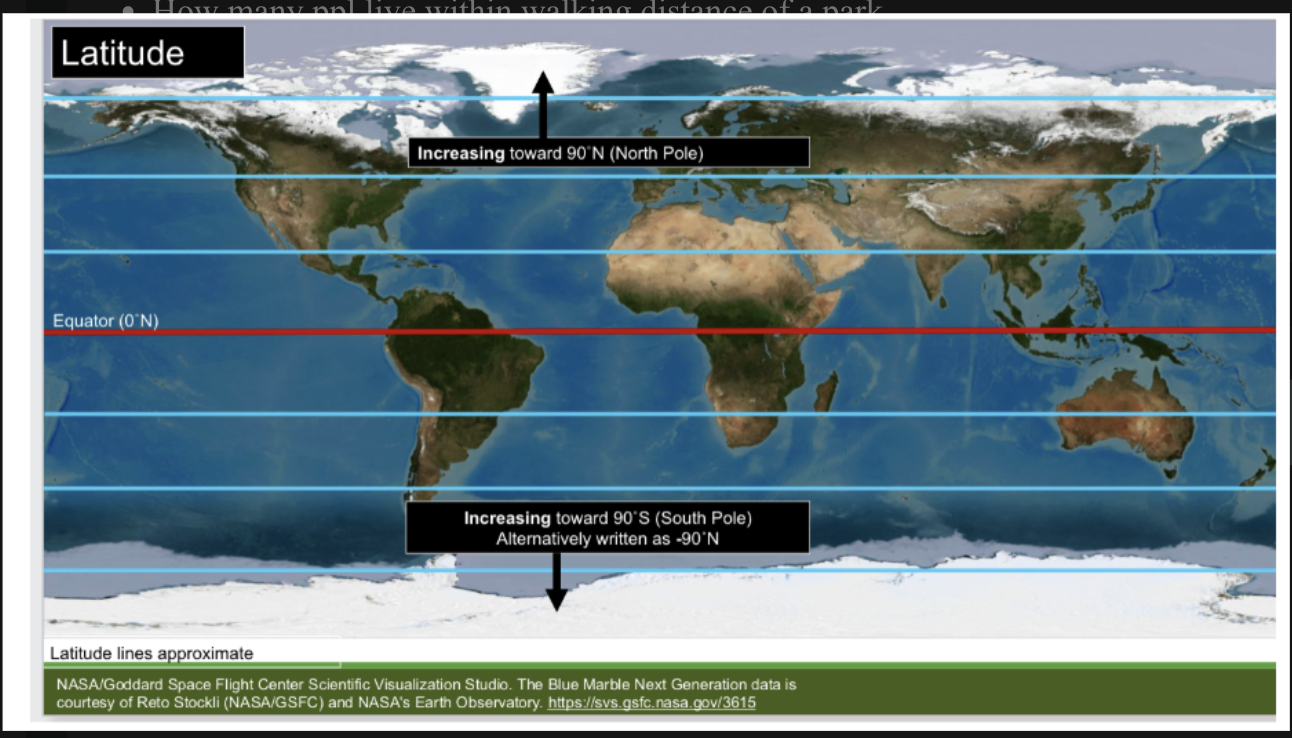
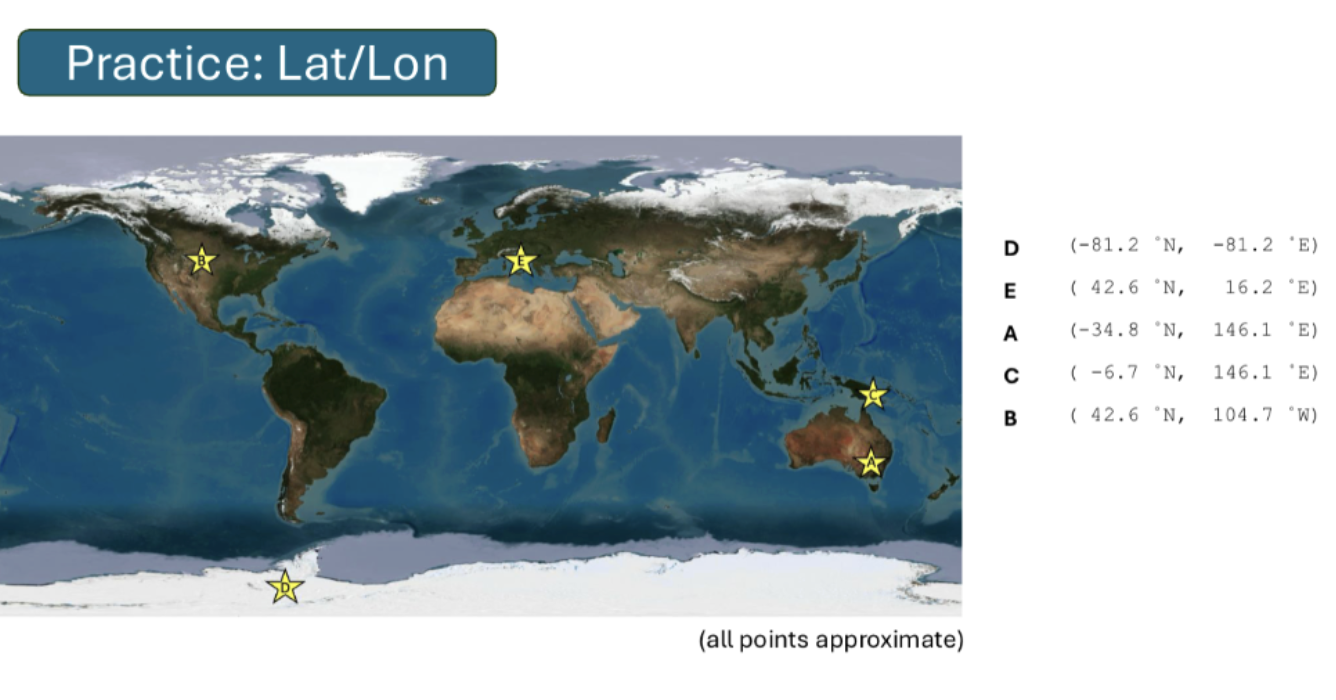
Identify points on a map based on their latitude and longitude coordinates
Latitude and Longitude
Ex: SAR 101 is located approx (42 degrees 20’59”N, -71 degrees 6’7”E) or (42.34987 degrees N, -71.10199 degrees E) or (42.34987 degrees N, 71.10199 degrees W)
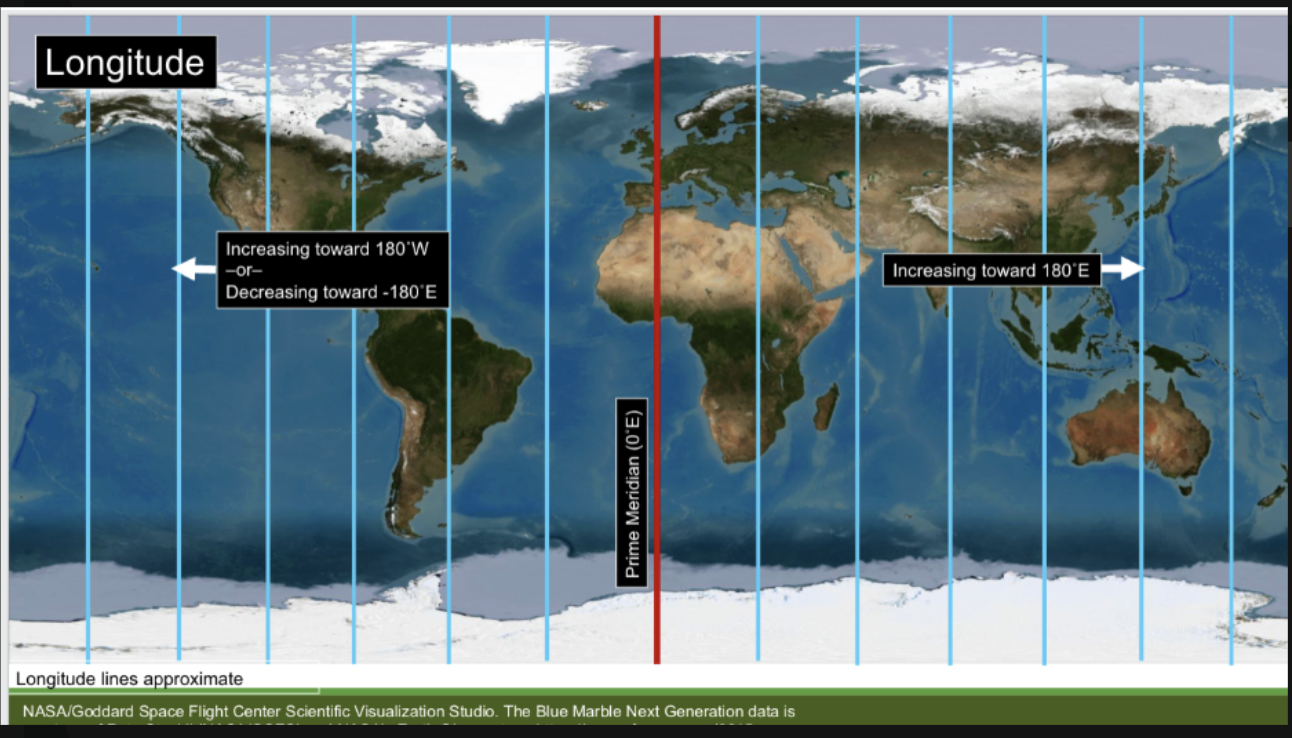
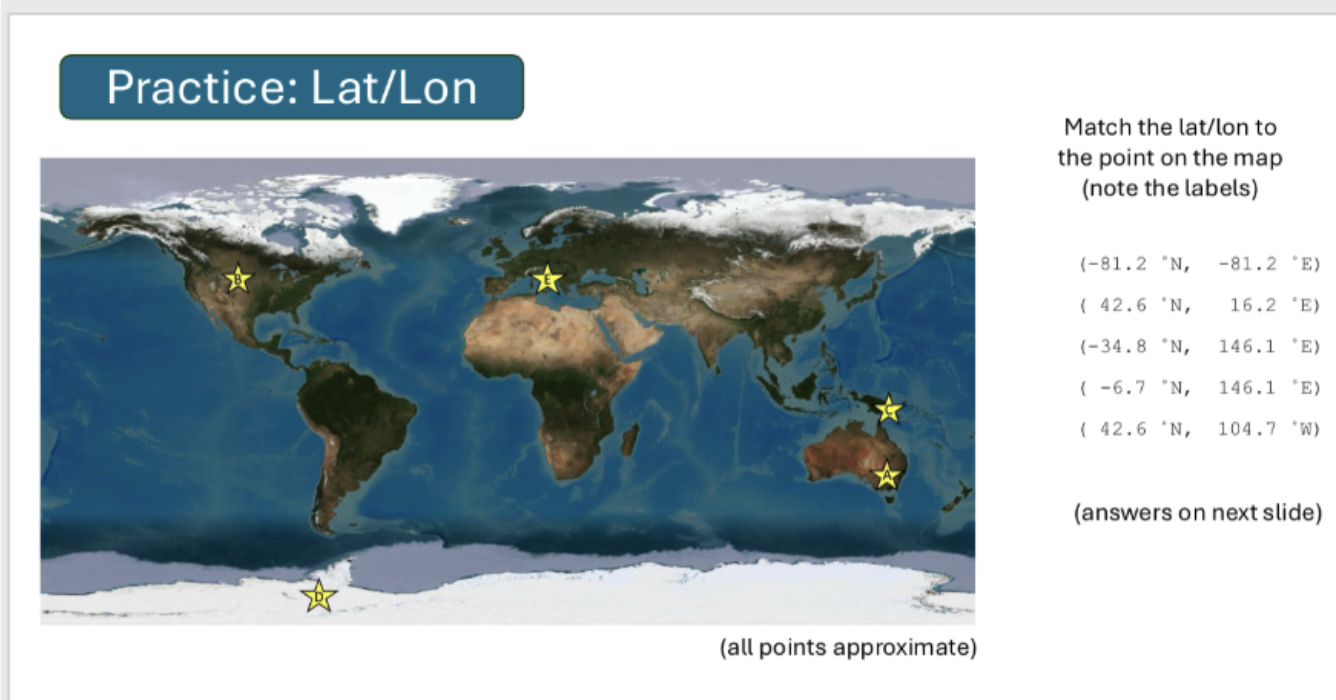
Practice Lat/Lon
Any point on Earth can be precisely
geolocated using a combination of
latitude and longitude coordinates
Expressed as either degrees (˚), minutes (‘), and seconds (“)
– or –
Decimal-degrees
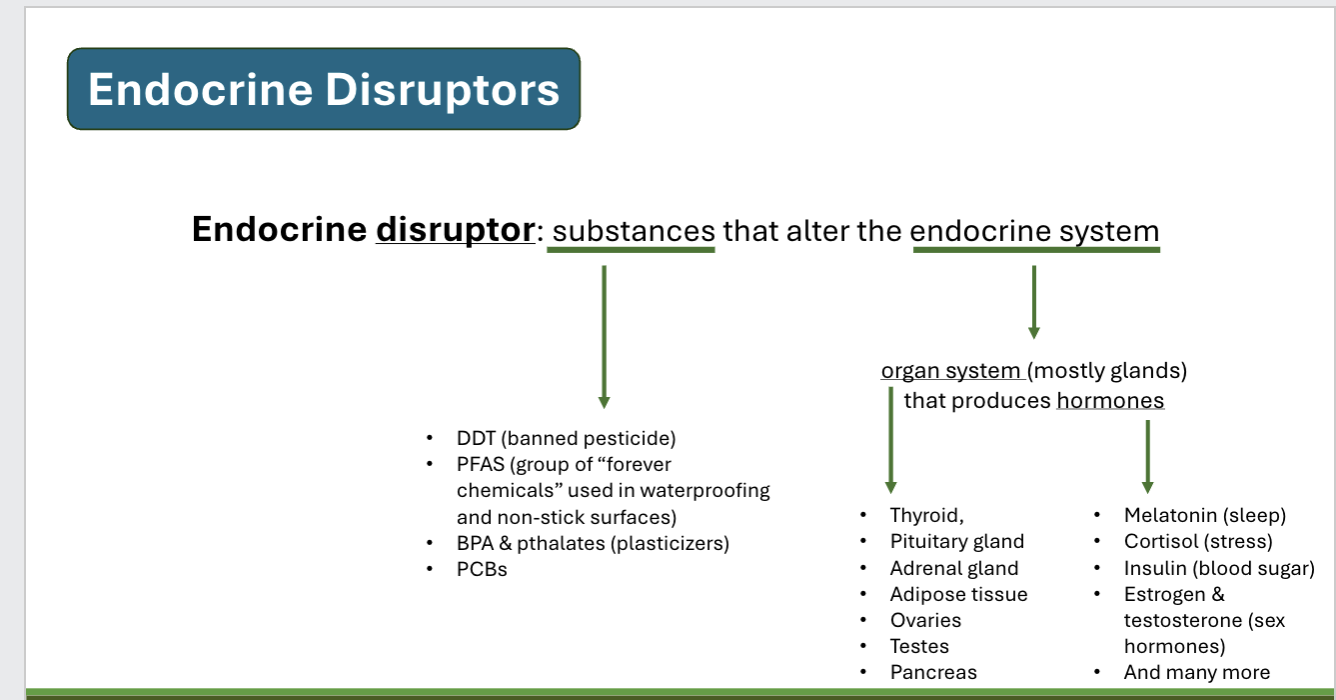
Explain what PFAS are, identify the 2 most-studied types of PFAS, and identify how PFAS are categorized based on health effect
Definition: a class of forever chemicals (never break down) used in numerous consumer (drinking water and floss) and industrial products (food containers, carpet, paint, nonstick pans)
2 most studied types: Perfluorooctanoic Acid (PFOA) and Perfluorooctaneb Sulfonate (PFOS). These have been replaced in the US by other PFAS w/ unknown toxicity
they primarily target the ENDOCRINE system
thyroid, pituitary gland, adrenal gland, adipose tissues, ovaries, melatonin, cortisol
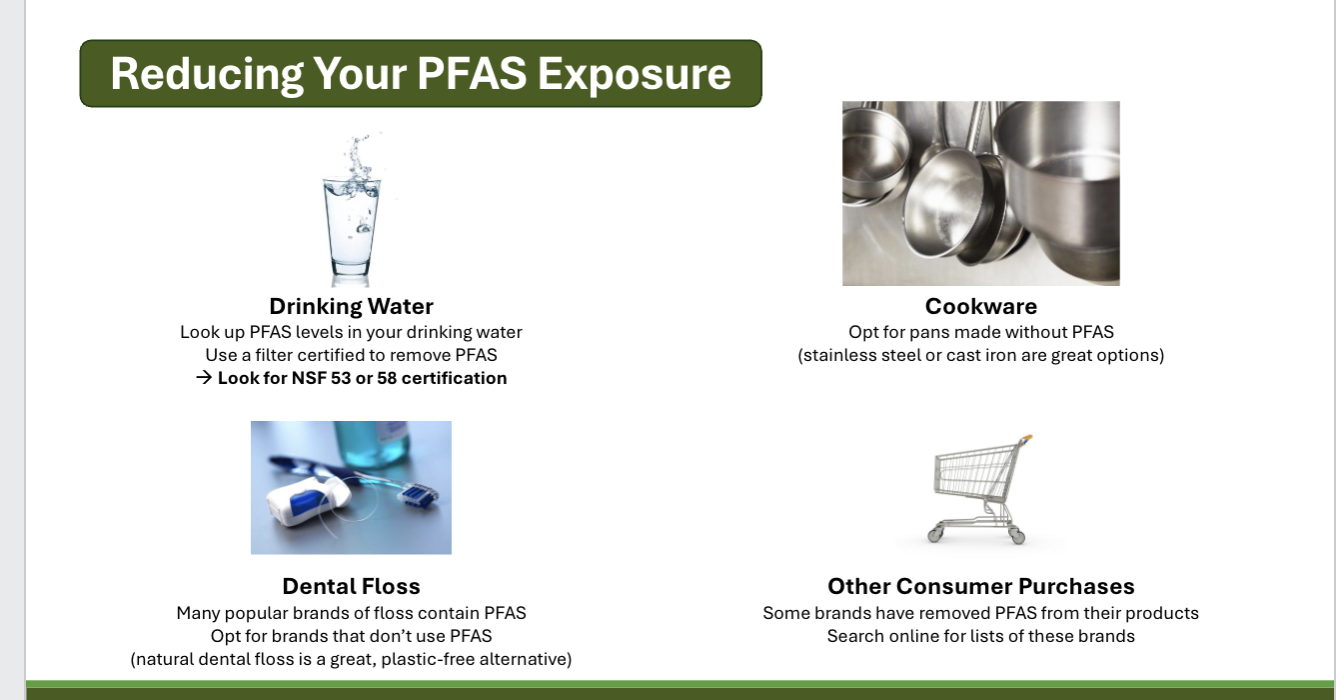

Identify ways to reduce your PFAS exposure and which is most effective
Drinking water: Look up PFAS levels in your drinking water. Use a filter certified to remove PFAS (ones that remove lead) look for NSF53 or 58 certification
Cookware: opt for pans made w/o PFAS (stainless steel or cast iron are great options)
Dental floss: many popular brands of floss contain PFAS, opt for brands that don’t use PFAS (natural dental floss is a great, plastic-free alternative)
Other consumer purchases: some brands have removed PFAS from their products, search online for lists of these brands
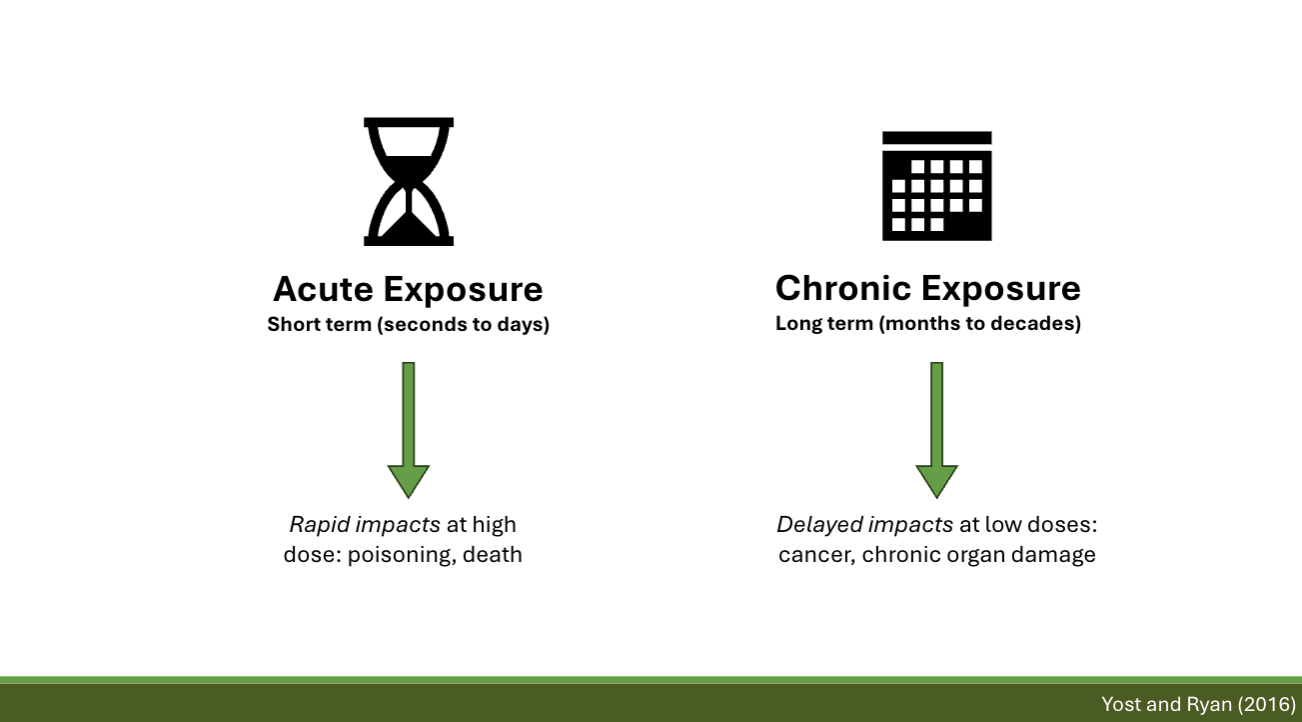
Differentiate between acute vs chronic exposures and give several examples of each
Acute Exposure: short term, seconds to days, rapid impacts at high dose ex: poisoning, death
Chronic Exposure: long term, months to decades, delayed impacts at low doses ex: cancer, chronic organ damage
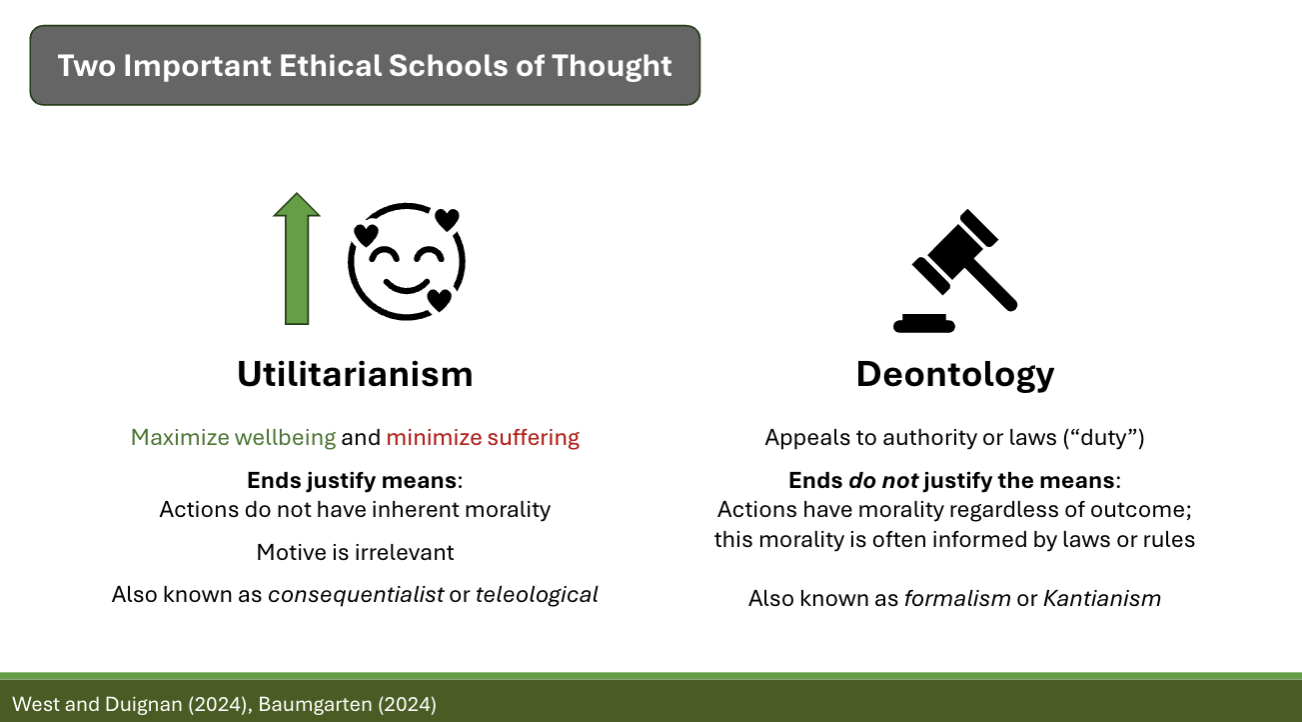
Define utilitarianism and deontology and recognize actions that would be considered morally acceptable/unacceptable in each of these paradigms
Utilitarianism:
maxamize wellbeing and minimize suffering
ends justify means: actions do not have inherent mortality, motive is irrelevant, aka consequntialist or telelogical
ex: buying an EV
Deontology (Kant):
appeals to authority or laws (duty)
Ends do NOT justify the means: actions have morality regardless of outcome: this morality is often informed by laws of rules
aka formalism or Kantianism
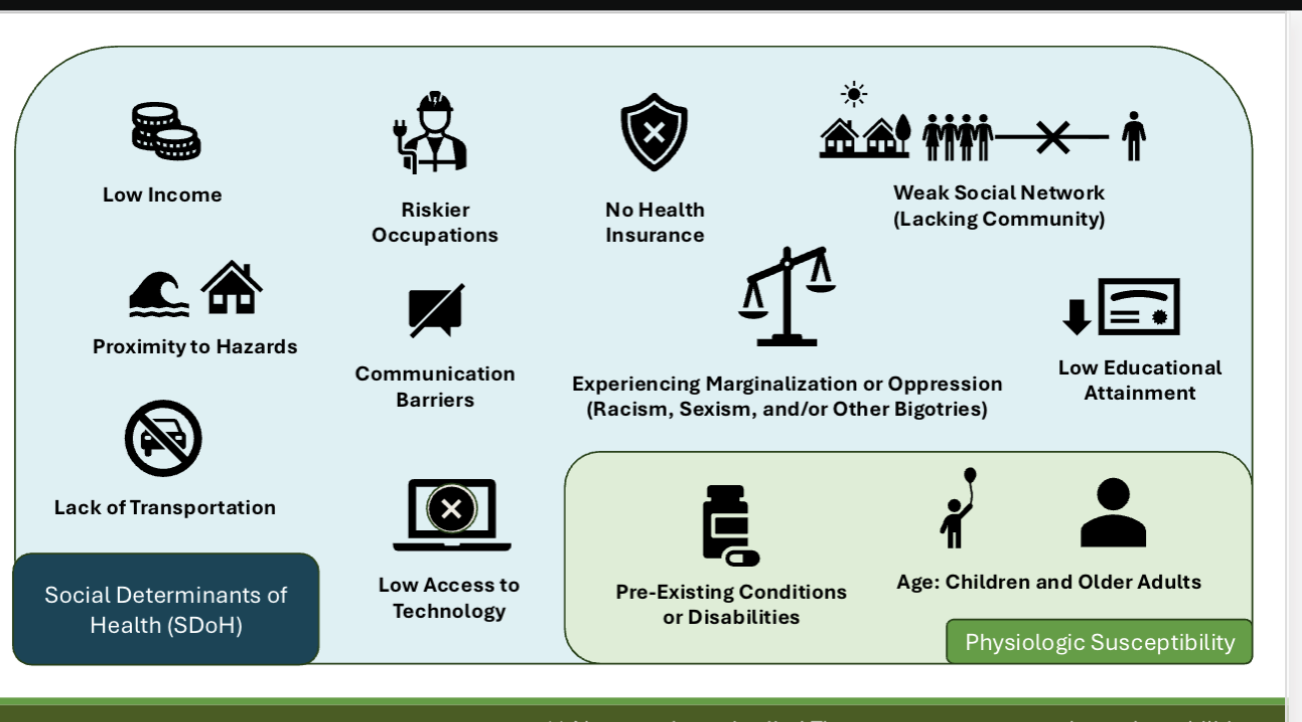
Define vulnerability and the questions that this concept answers
Characteristics or conditions that make
exposures more likely and/or the health
impacts of those exposures more likely
or more severe. Answers why some ppl r more exposed to environmental hazards and among the exposed, why do some ppl experience worse health outcomesMyriad factors make some people more vulnerable to environmental health risks than others
higher likelihood of exposure
primarily social determinants of health
worsened health impacts
social determinants of health and physiological susceptibility
Examples: low income, risky occupations, no health insurance, age (children/older adults), pre-existing conditions/disabilities, low education attainment, proximity to hazards, weak social network, marginalization/oppression, low access to tech, lack of transportation, communication barriers
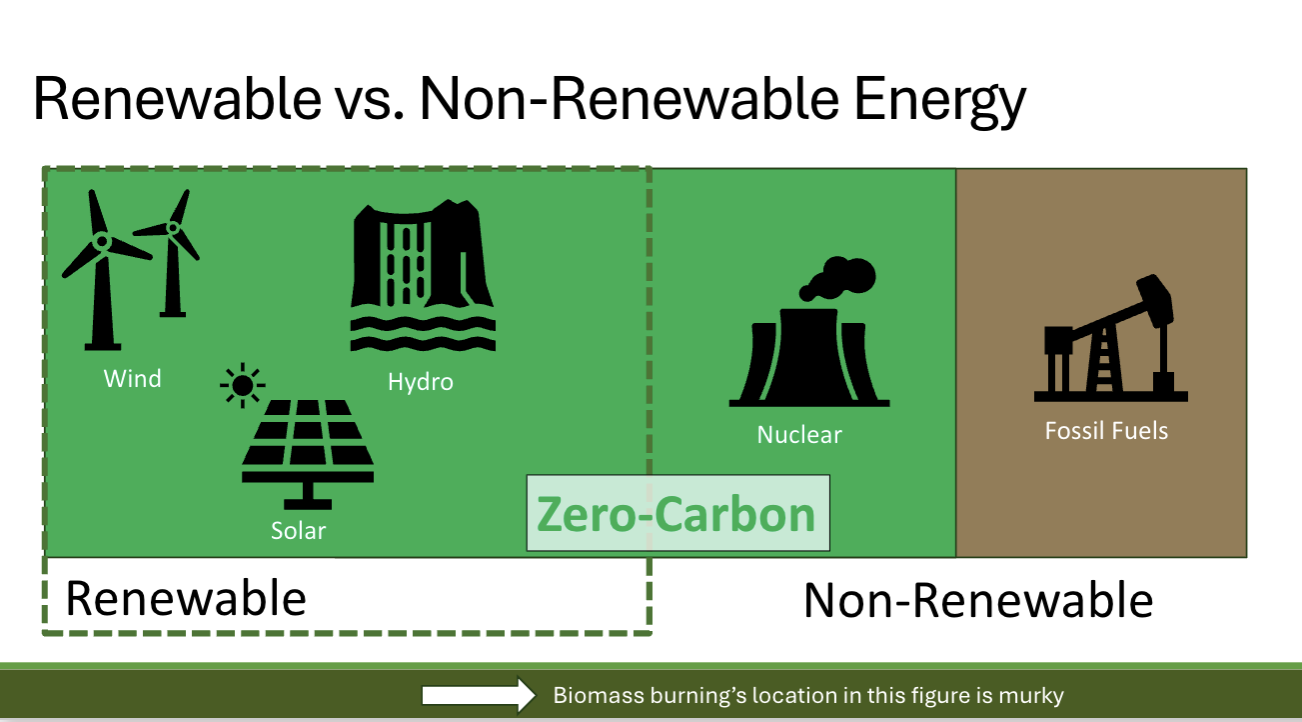
renewable vs non-renewable / zero carbon vs carbon-based
Renewable Energy: wind, hydro, solar, biomasss
main types of biomass used as fuel: animal dung, crop residue, wood, charcoal
a 1/3 of the population uses biomass burning for cooking which can lead to direct inhalation of air pollution
Non-renewable: nuclear, fossil fuels
types of fossil fuels: coal, petroleum (crude oil), natural gas (methane)
uranium is non-renewable, carbon free enery source from nuclear energy
coal ash is a byproduct of coal combustion. It contains many toxic substances that can leach into groundwater
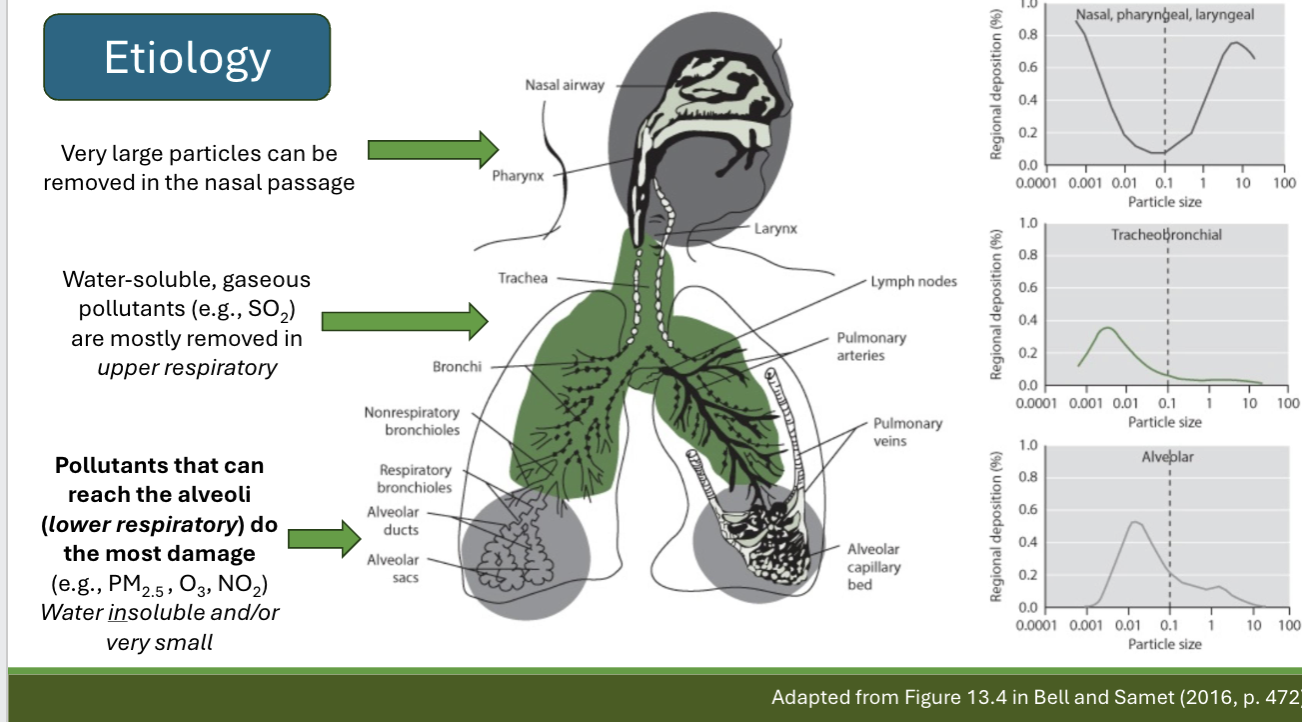
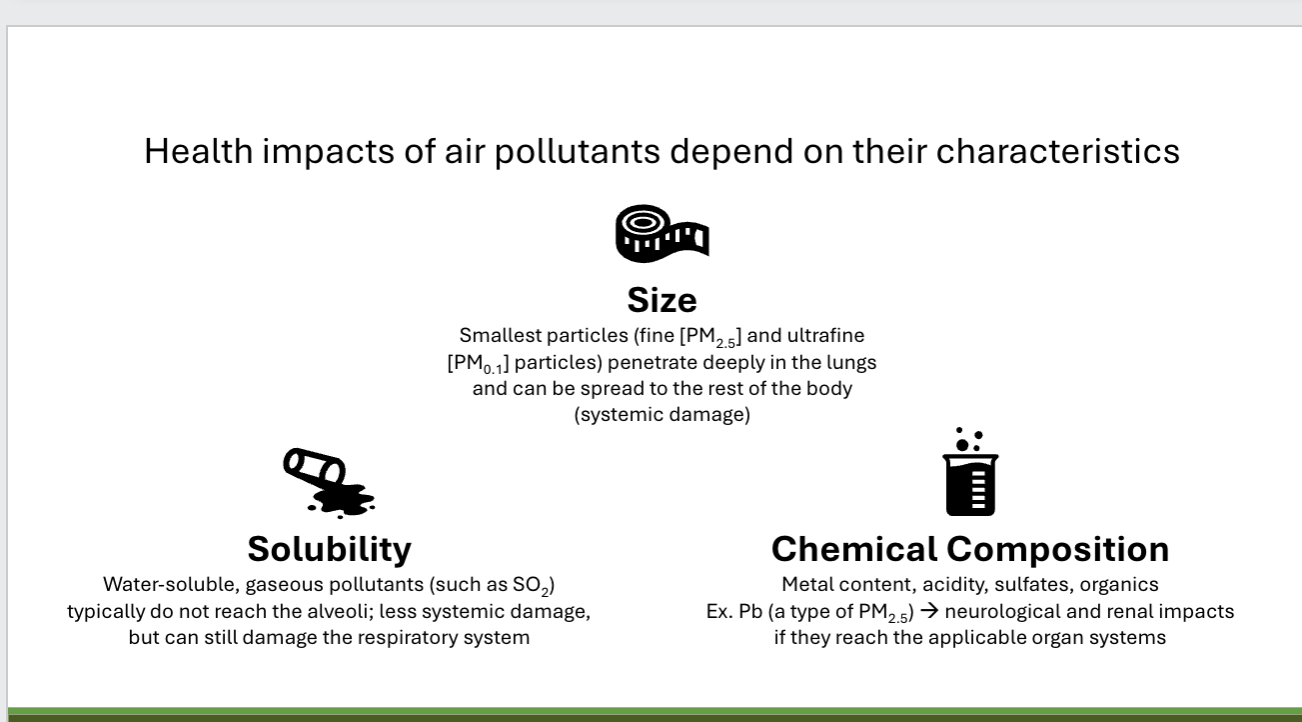
describe the characteristics of air pollutants that make them more hazardous to health and why
size: smallest particles (fine PM2.5) and ultrafine (PM0.1) particles penetrate deeply in the lungs and can be spread to the rest of the body (systemic damage)
solubility: water-soluble, gaseous pollutants (such as SO2) typically do not reach the alveoli; less systemic damage, but can still damage the respiratory system
chemical composition: metal content, acidity, sulfates, organics ex: PB( a type of PM2.5)—> neurological and renal impacts if reached applicable systems
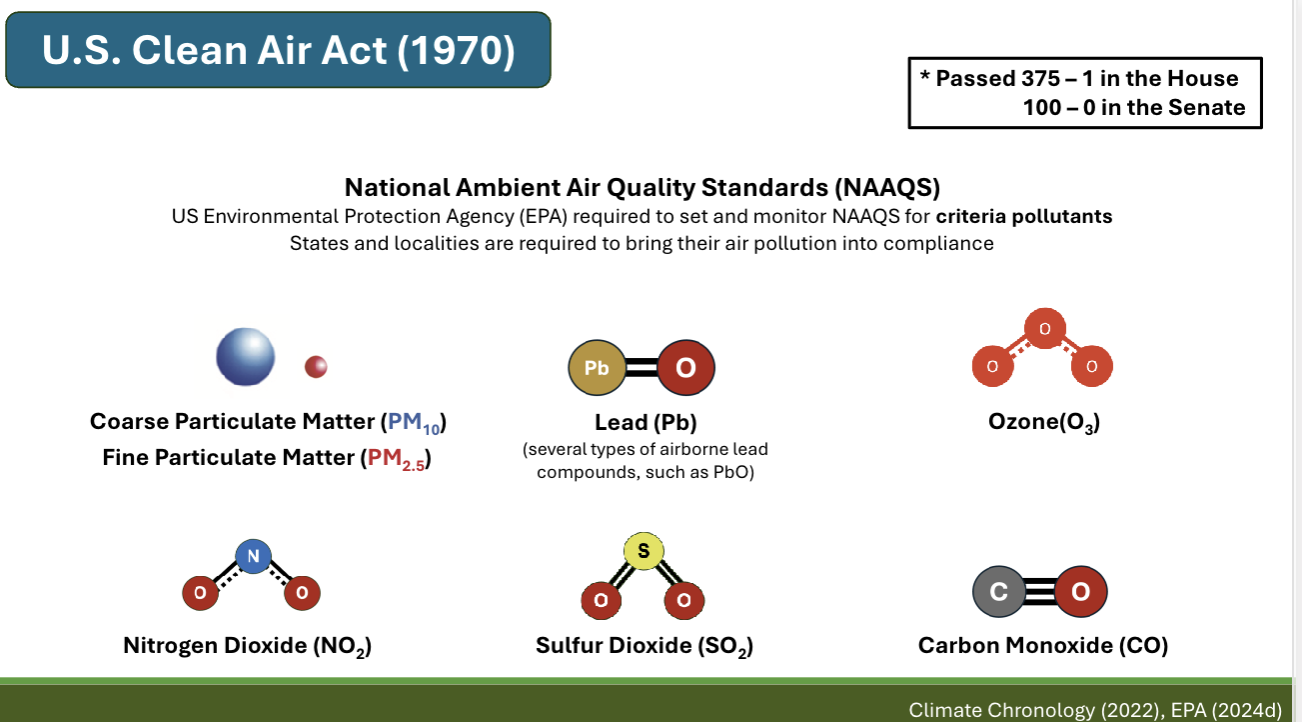
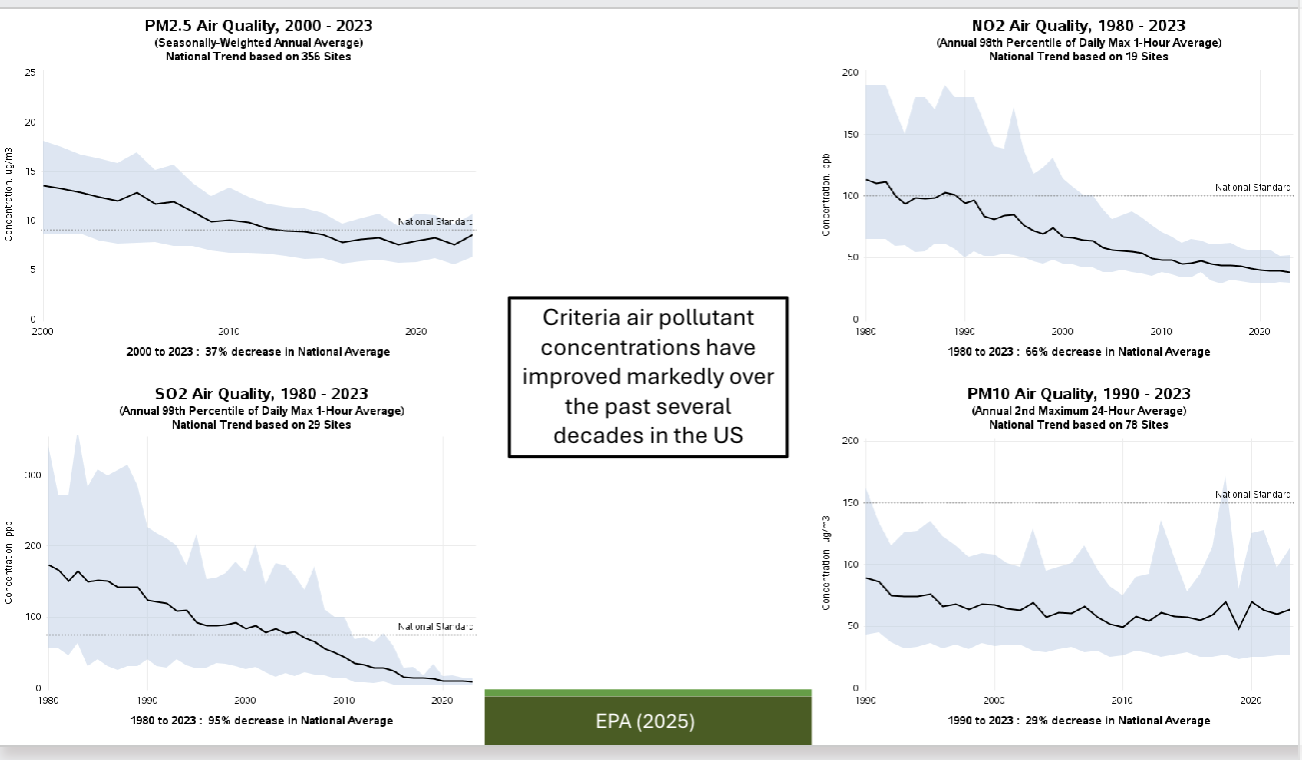
Identify the general trend of criteria air pollutants (NAAQS) in the US and for particulate pollution globally over the past few decades
criteria pollutants that states and localities are required to control: particulate matter, ozone, sulfur dioxide, nitrogen oxides, and Lead
Criteria air pollutant concentrations have been improved markedly over the past several decades in the US
Improvements in global air pollution-related deaths are mostly driven by reductions in indoor air pollution; not much progress globally on outdoor air pollution
Global South has higher health burdens from air pollution—> coal and biomass burning, less-stringent regulations, higher social vulnerability
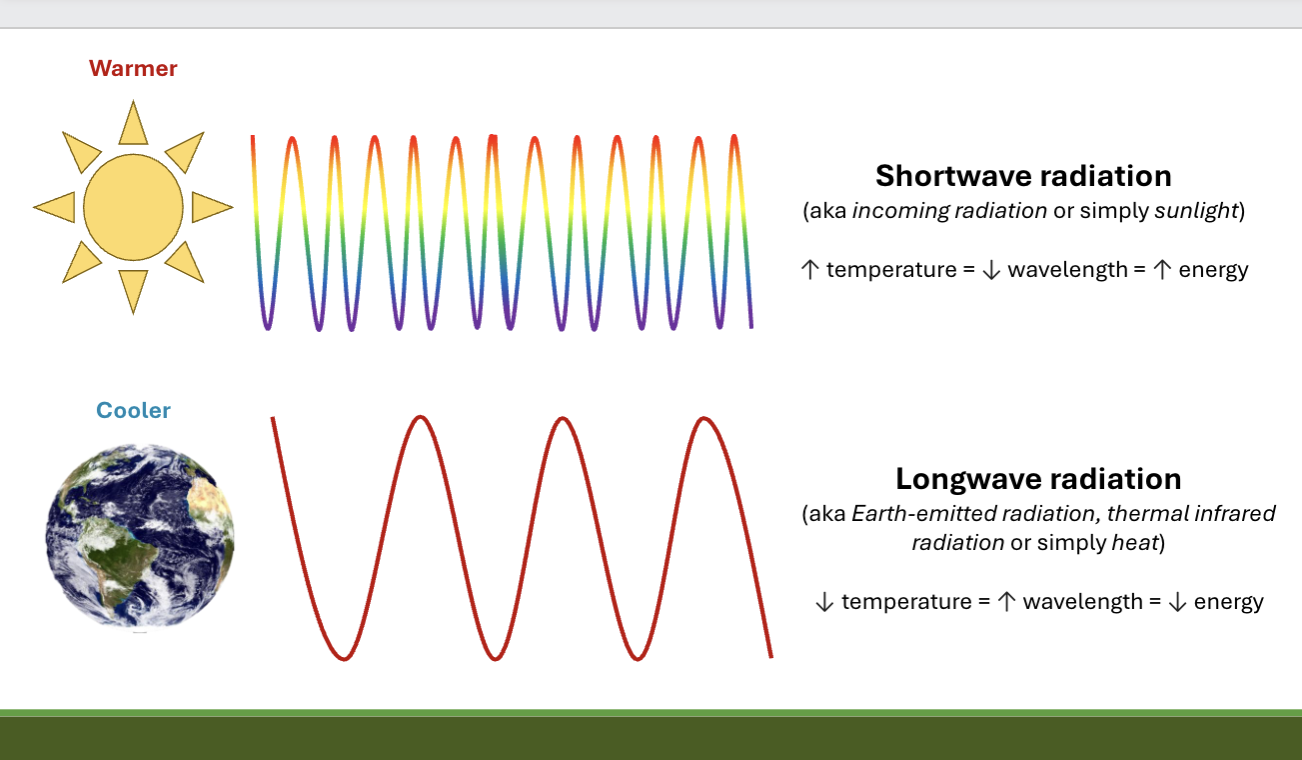
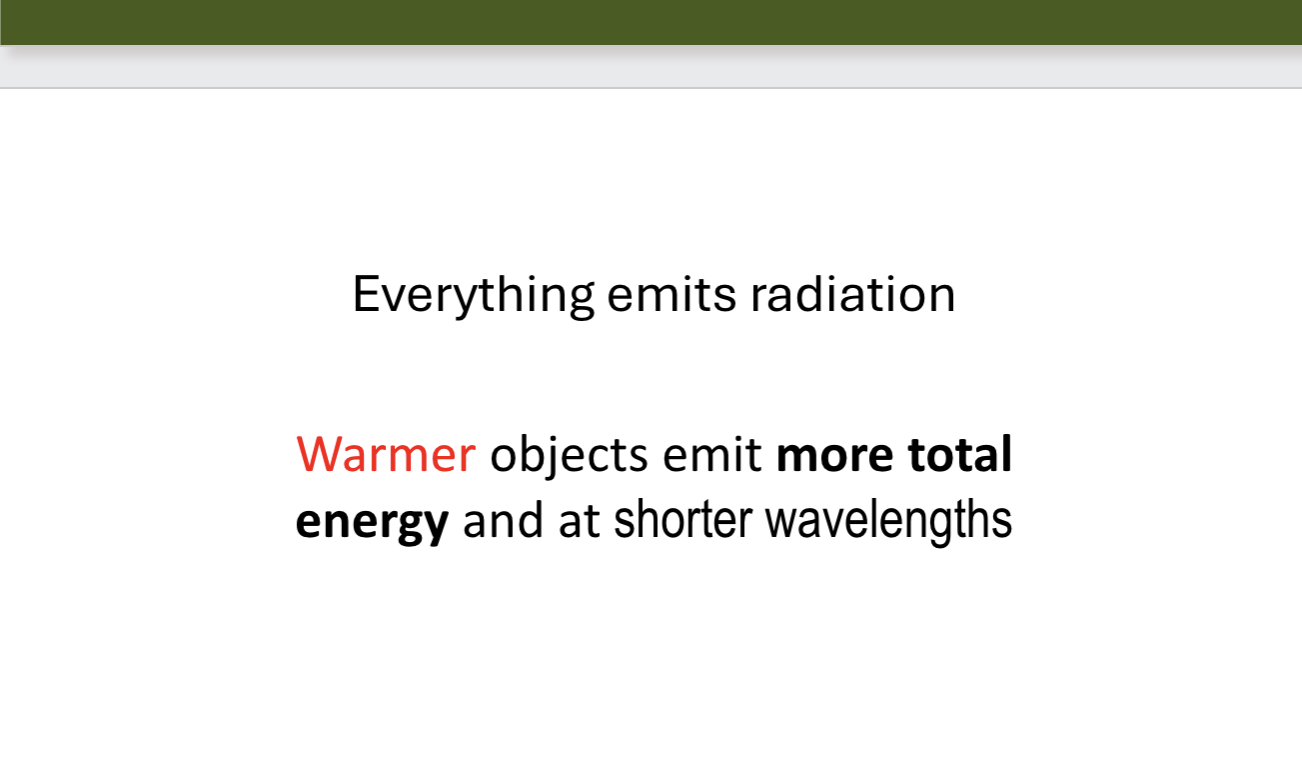
Explain the relationship between the temperature of an object and both the total energy and peak wavelength of the electromagnetic radiation that is emitted from it
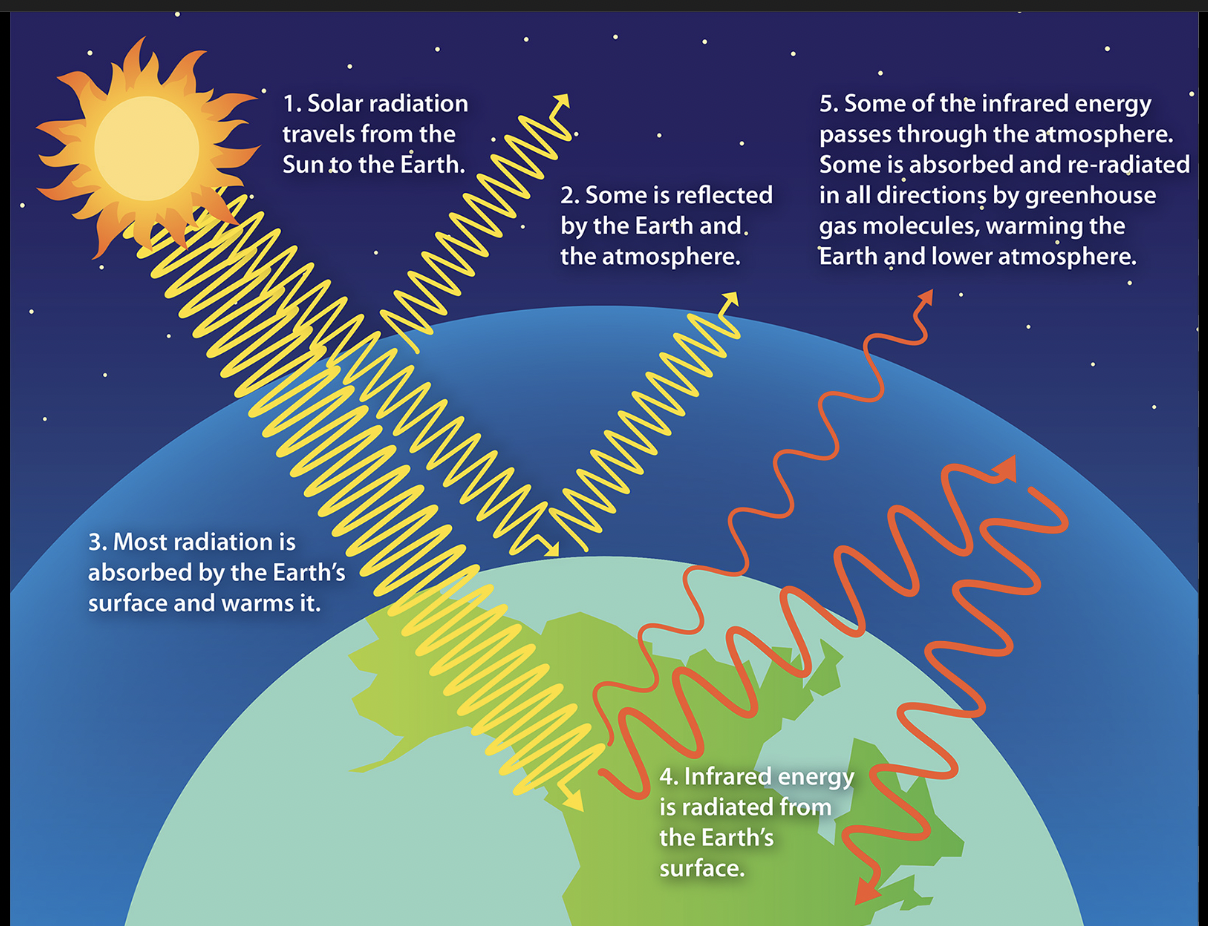
warmer objects: emit more total energy and at shorter wavelengths ex: shortwave radiation aka incoming radiation/sunlight
cooler objects: emit less total energy and at a longer wavelength ex: longwave radiation aka Earth-emitted radiation, thermal infrared radiation/heat
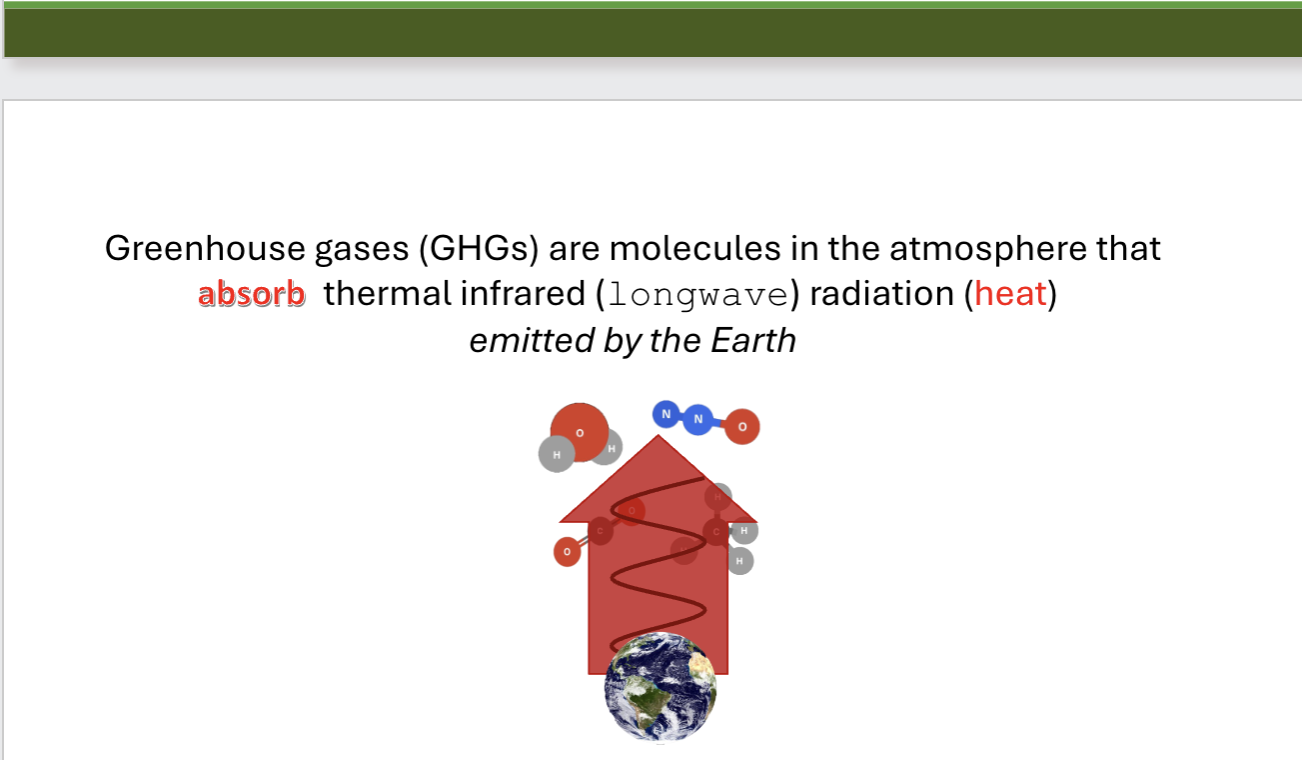
Identify the property of a molecule that is required for it to be considered a greenhouse gas
GHGs are molecules in the atmosphere that absorb thermal infrared (longwave) radiation (heat) emitted by the Earth
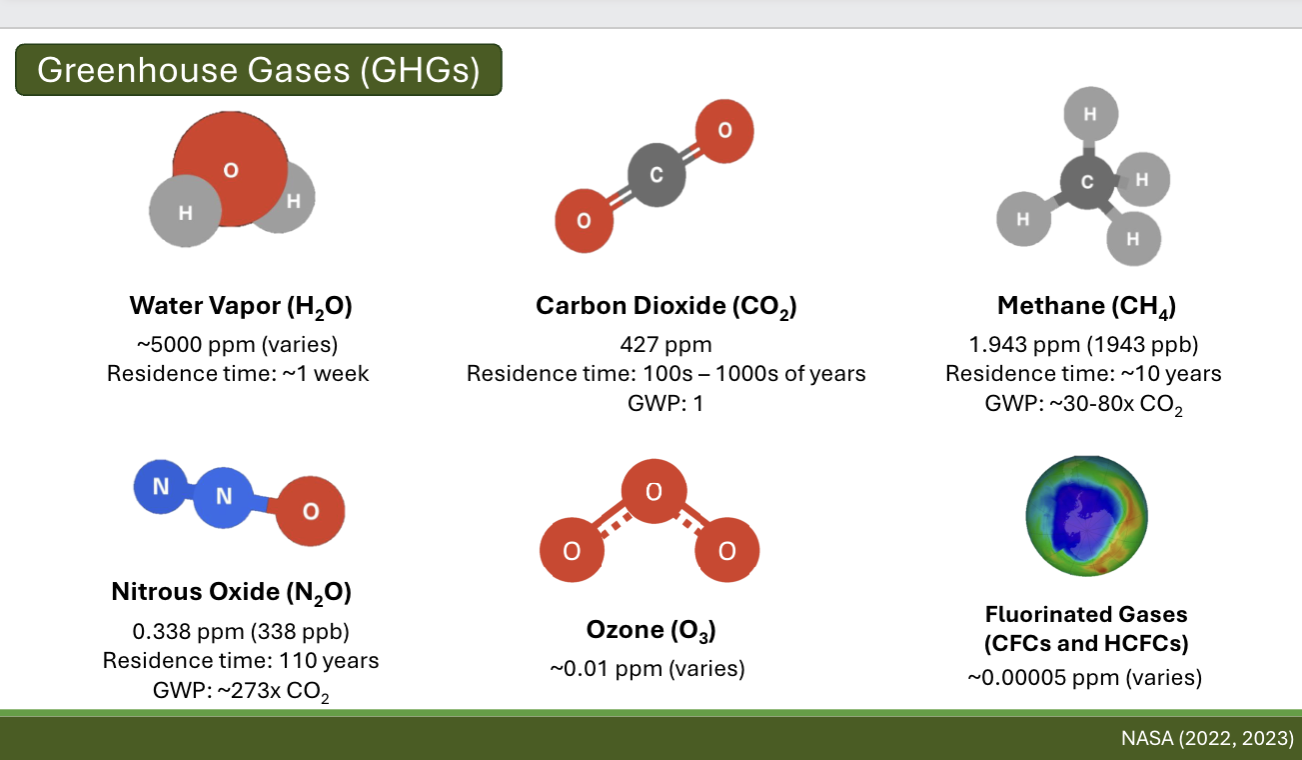
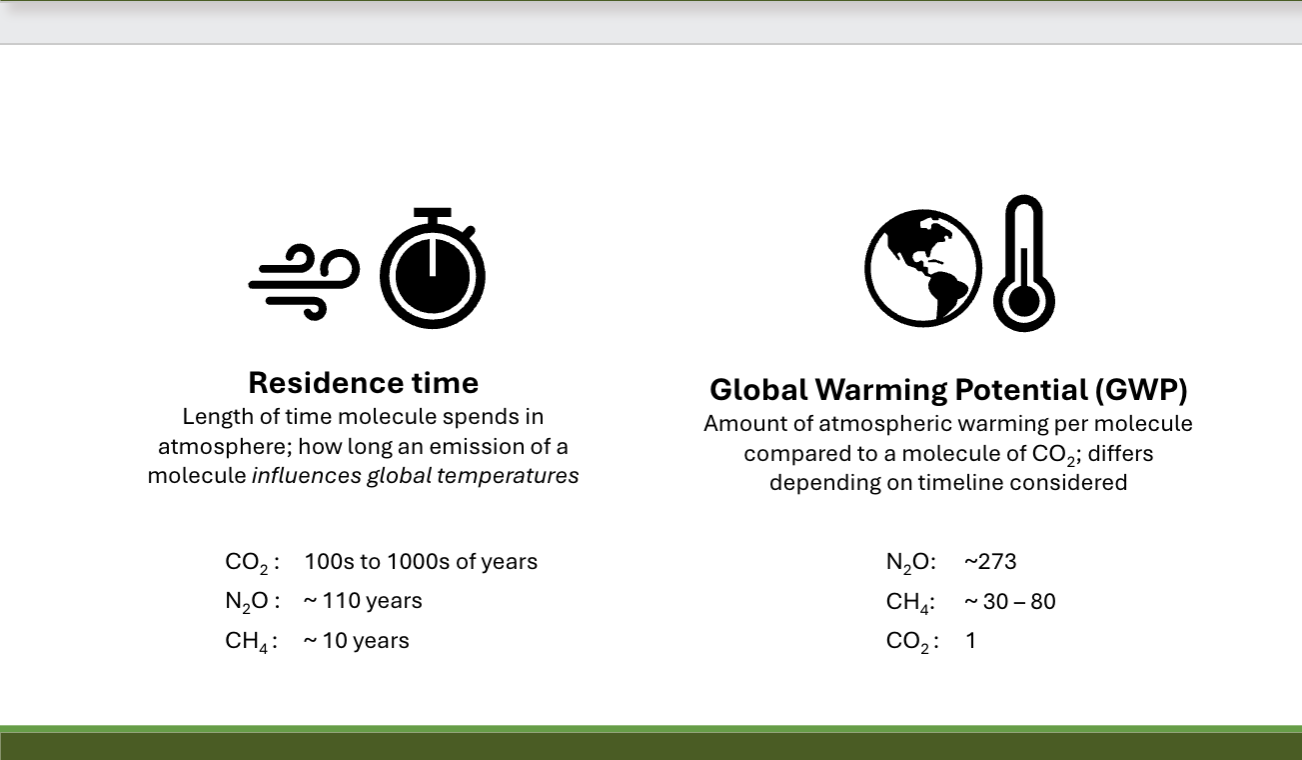
Define global warming potential (GWP) and residence time, and know the approximate/relative GWPs and residence times of the major greenhouse gases
GWP: amount of atmospheric warming per molecule compared to a molecule of CO2; differs depending on the timeline considered
CO2: 1
N2O: ~273
CH4: ~30-80
H20: negligible
Residence time: length of time molecules spend in the atmosphere; how long an emission of a molecule influences global temps
CO2: 100s to 1000s of yrs
N2O: ~110 yrs
CH4: ~10 yrs
H2O: ~7-10 days
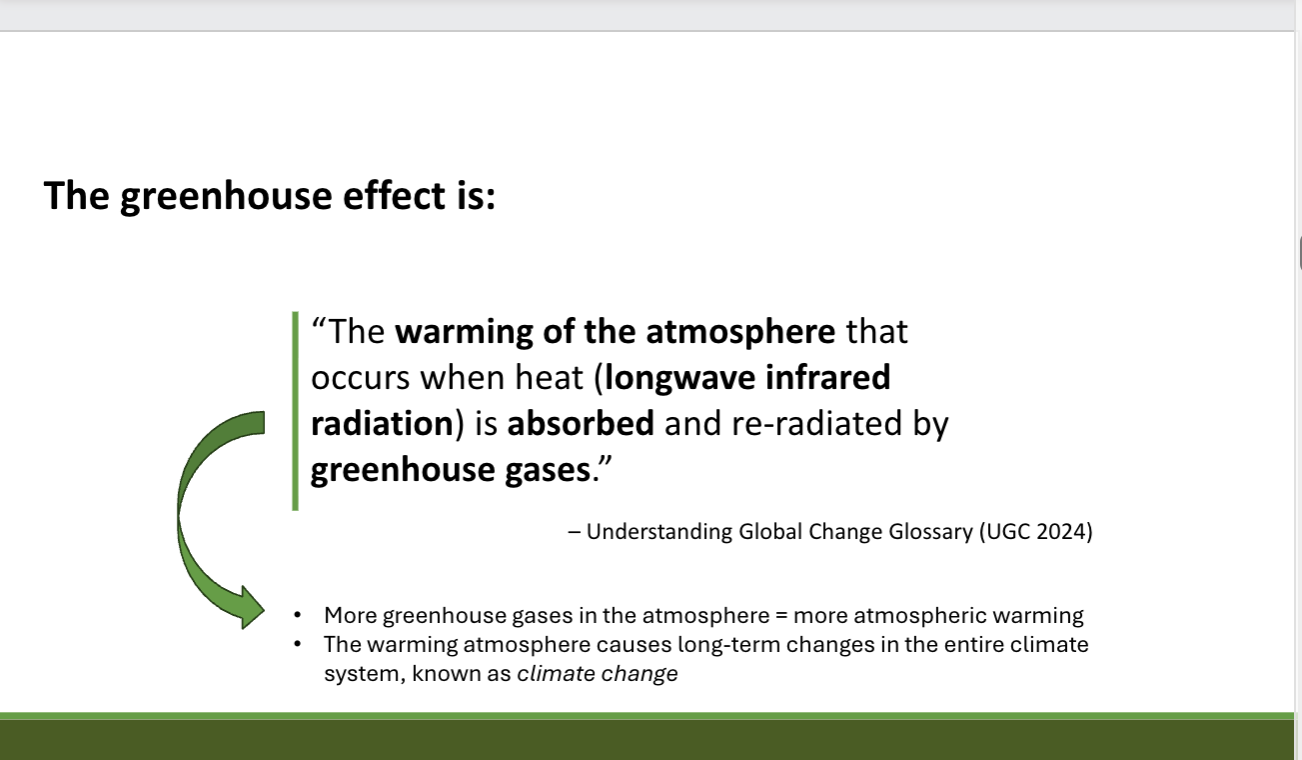
Explain why the scientific community is confident that increased greenhouse gas concentrations
are the main cause of present-day global warming (anthropogenic attribution)
the greenhouse effect: the warming of the atmosphere that occurs when heat (longwave infrared radiation) is absorbed and re-radiated by greenhouse gases
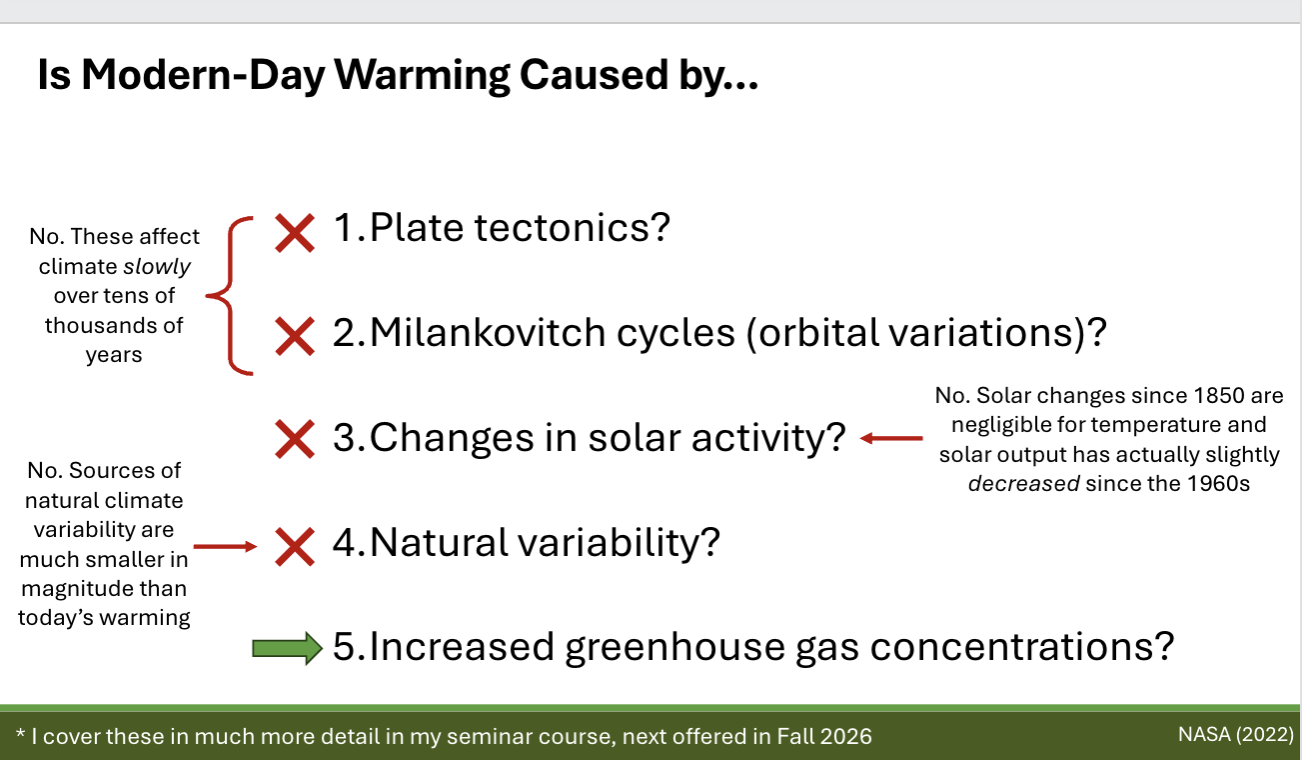
Is modern-day warming caused by:
plate tectonics + Milankovitch cycles (orbital variations): no, these affect climate slowly over tens of thousands of yrs
changes in solar activity: no, solar changes since 1850 are negligible for temp and solar output has actually slightly decreased since the 1960s
natural variability: no, sources of natural climate variability are much smaller in magnitude than today’s warming
greenhouse gases: yes, robust physical concepts and theories, the geologic record, and sophisticated computer simulations all conclude..yes
Scientists have understood the physics of the greenhouse effect since the 19th Century, and it has been demonstrated in countless experimental studies since then
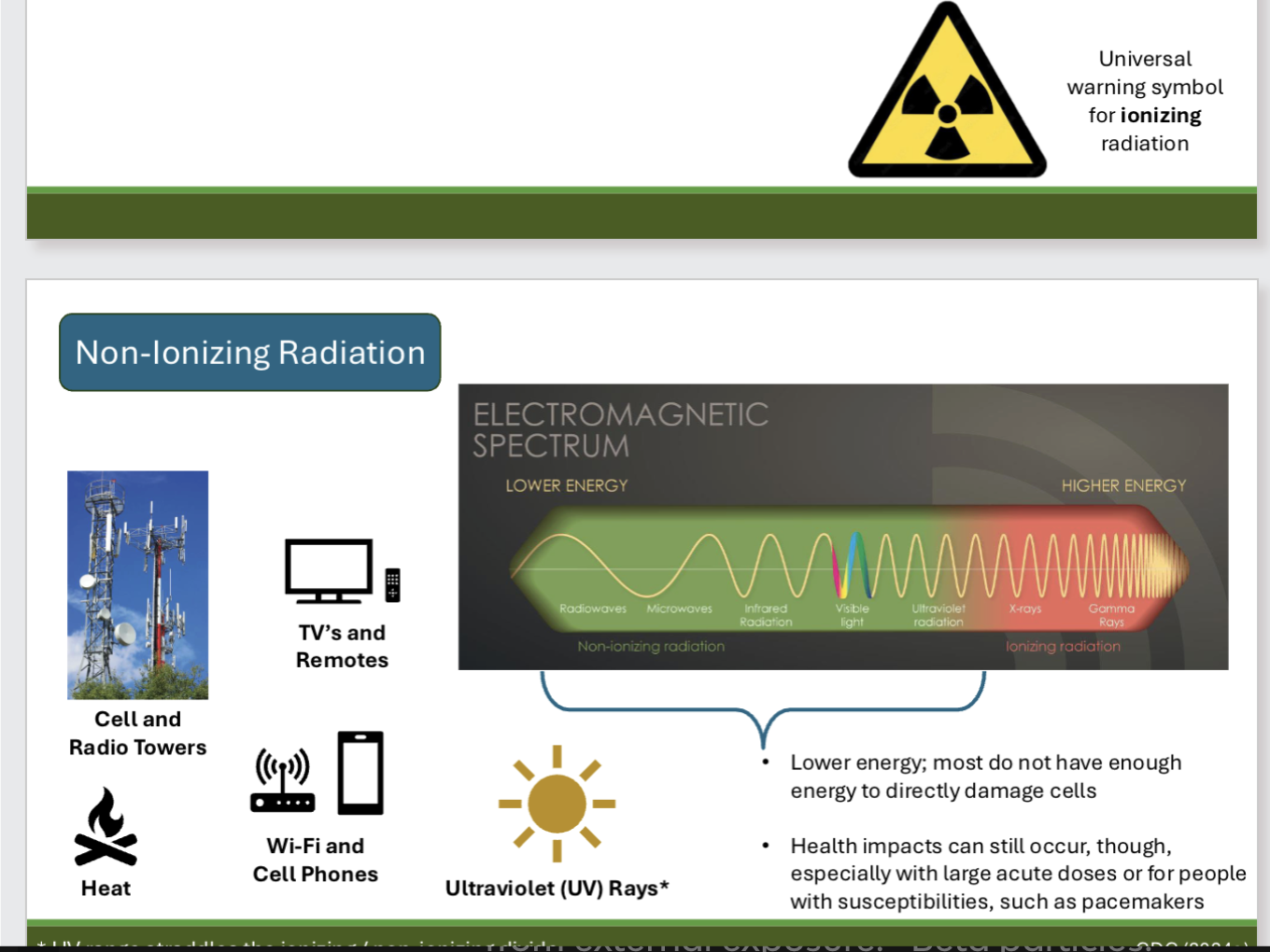
differentiate between ionizing and non-ionizing radiation and provide examples
Identify sources of both ionizing and non-ionizing radiation in healthcare
Non-ionizing Radiation:
radiation w/ sufficient energy to cause atoms to vibrate, but not enough to remove electrons. Lower energy; most do not have enough energy to directly damage cells. Health impacts can occur though, especially w/ large acute doses or for ppl w/ susceptibilities, such as pacemakers
Ex: cell and radio towers, heat, TVs and remotes, Wi-Fi and cell phones, UV rays Ultrasound: reflects acoustic radiation (sound waves)
Magnetic Resonance Imaging (MRI): uses magnetic fields and radio waves to create images inside the body
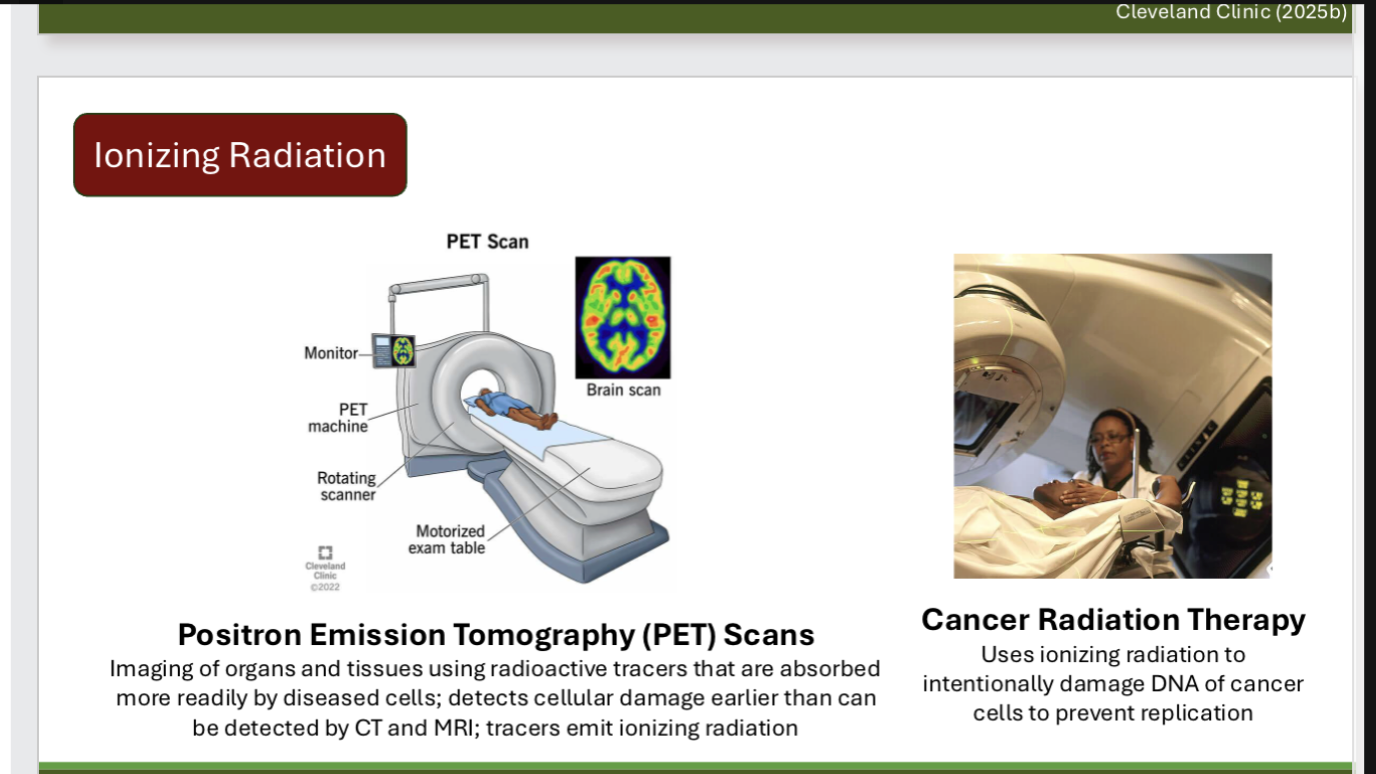
Ionizing Radiation:
radiation w/ sufficient energy to remove electrons from atoms and molecules, hence creating an ion
Ex: Electromagnetic Radiation: X-rays penetrate soft tissue but not bones. Gamma rays penetrate all body parts. X-rays: 2D medical imaging to identify fractures, tumors, and objects
Computed Tomography (CT) scan: Essentially a 3D X-ray; sometimes called CAT scan
Positron Emission Tomography (PET) scans: imaging of organs and tissues using tracers that are absorbed more readily by diseased cells; detects cellular damage earlier than CT/ MRI
Cancer Radiation Therapy: intentionally damages DNA of cancer cells to prevent replication
Explain the mechanisms through which climate change affects human health and identify several health impacts of climate change
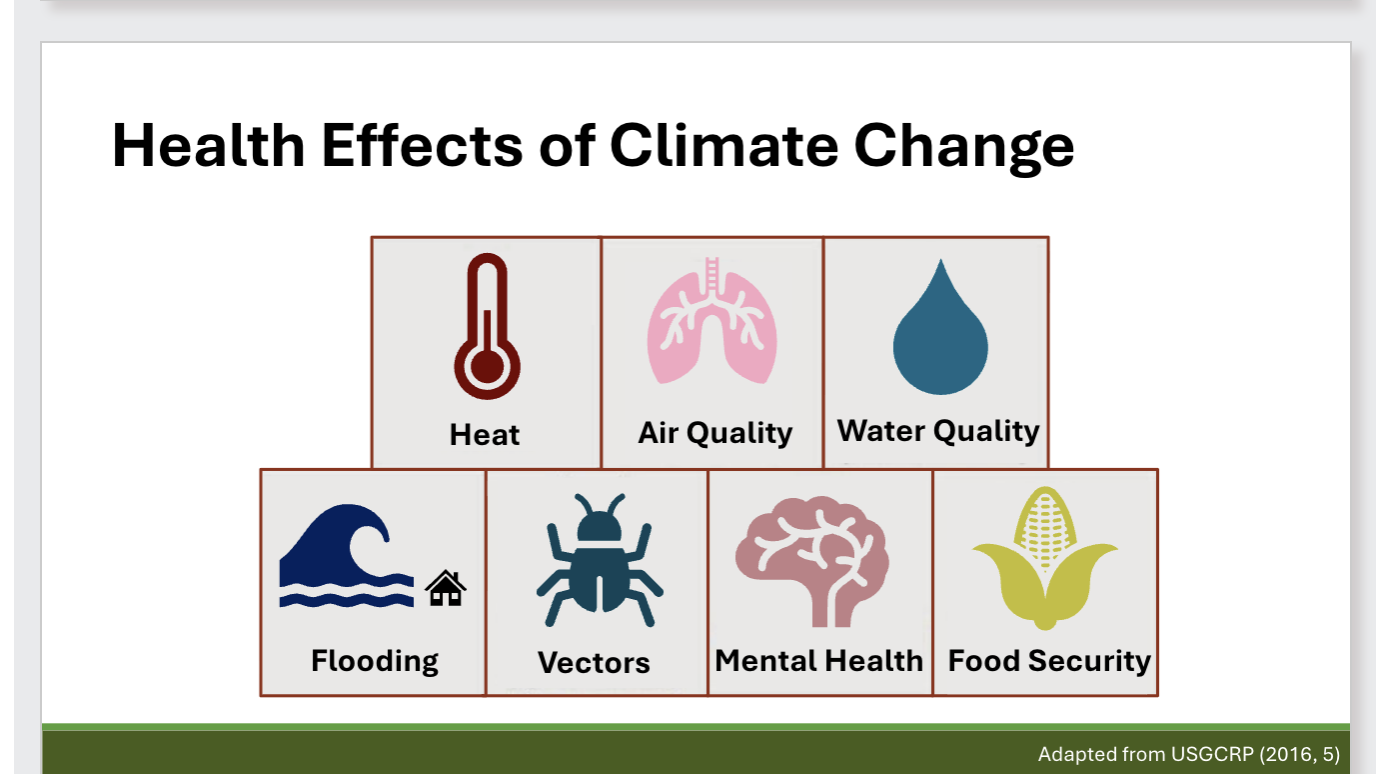
Health effects of climate change:
heat: heat waves are the deadliest extreme weather event//wildfires emit huge amounts of PM2.5, VOCs, and NOx
air quality: inversion layers: when colder air is wedged under warmer air and traps air pollutants closer to the ground
water quality: Combined Sewer Overflow (CSO) from heavy rain or snowmelt event
flooding: climate change increases likelihood of flooding due to precipitation, snowmelt, sea-level rise, and hurricanes
vectors: Lyme disease(ticks) because warmer temps → increase range of mosquito/tick habitats→ more rainfall→more breeding grounds→more outdoor activities→greater human exposure
mental health: loss of livelihood and/or job causes stress, anxiety, depression, grief, strains on social relationships, and PTSD
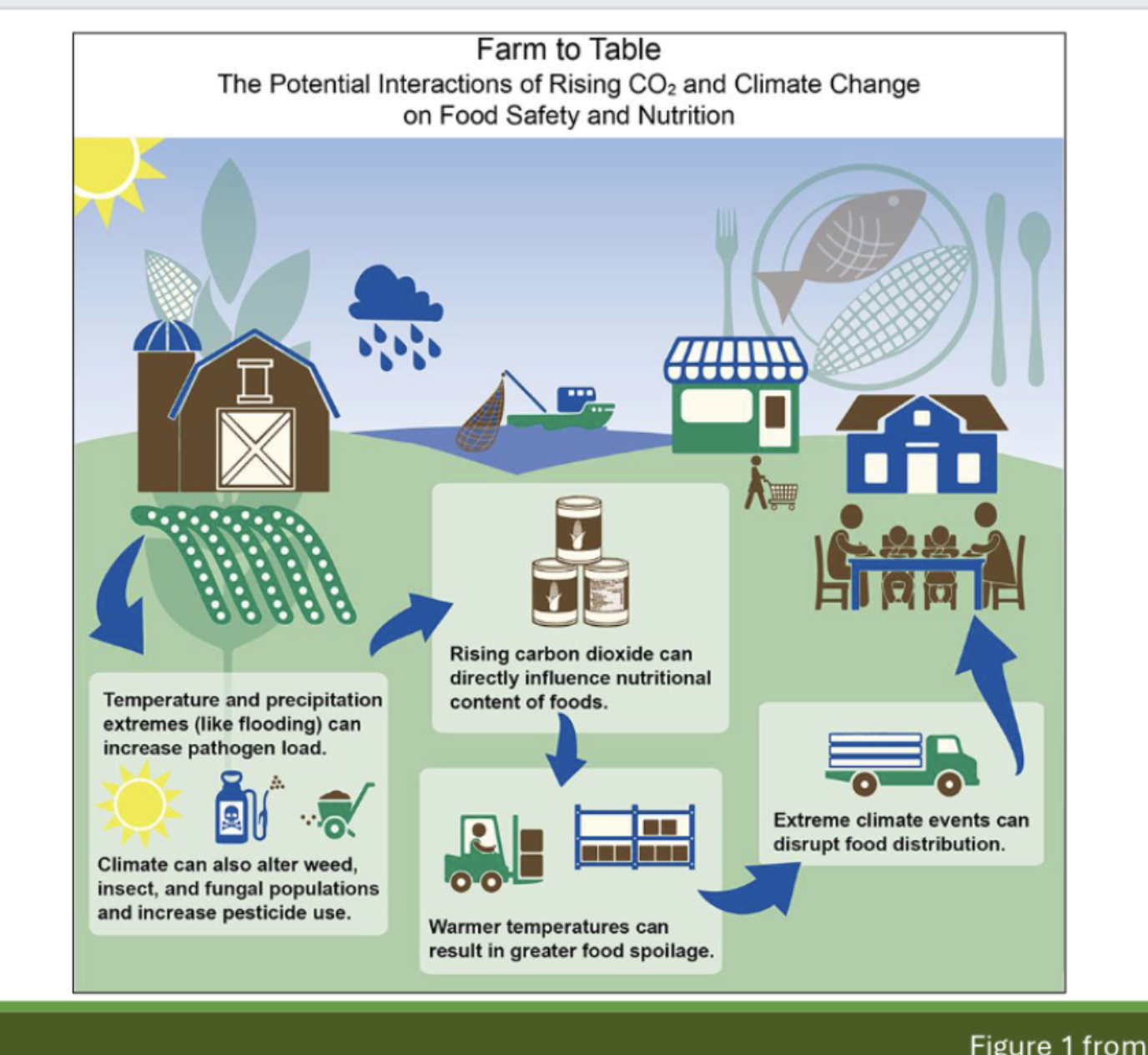
food security: disrupts food distribution, increase pathogen load, increase pesticide use by altering weed/insect/ and fungal populations
Define adaptation and mitigation, and give examples of each
Explain why planting more trees mitigates climate change but is unlikely to be a feasible, short-term solution
Mitigation (primary prevention): reducing the flow of heat-trapping greenhouse gases into the atmosphere aka reduces global warming
ex: reducing things w/ warming impacts such as cutting GHG emissions or increasing things with cooling impacts such as removing CO2 from the atmosphere
reducing GHG emissions: phasing out fossil fuel combustion, zero-carbon energy sources (wind, solar, hydro, nuclear), reducing deforestation, sustainable agriculture, energy efficiency
geoengineering: actively manipulating the climate system in order to stop the climate from changing
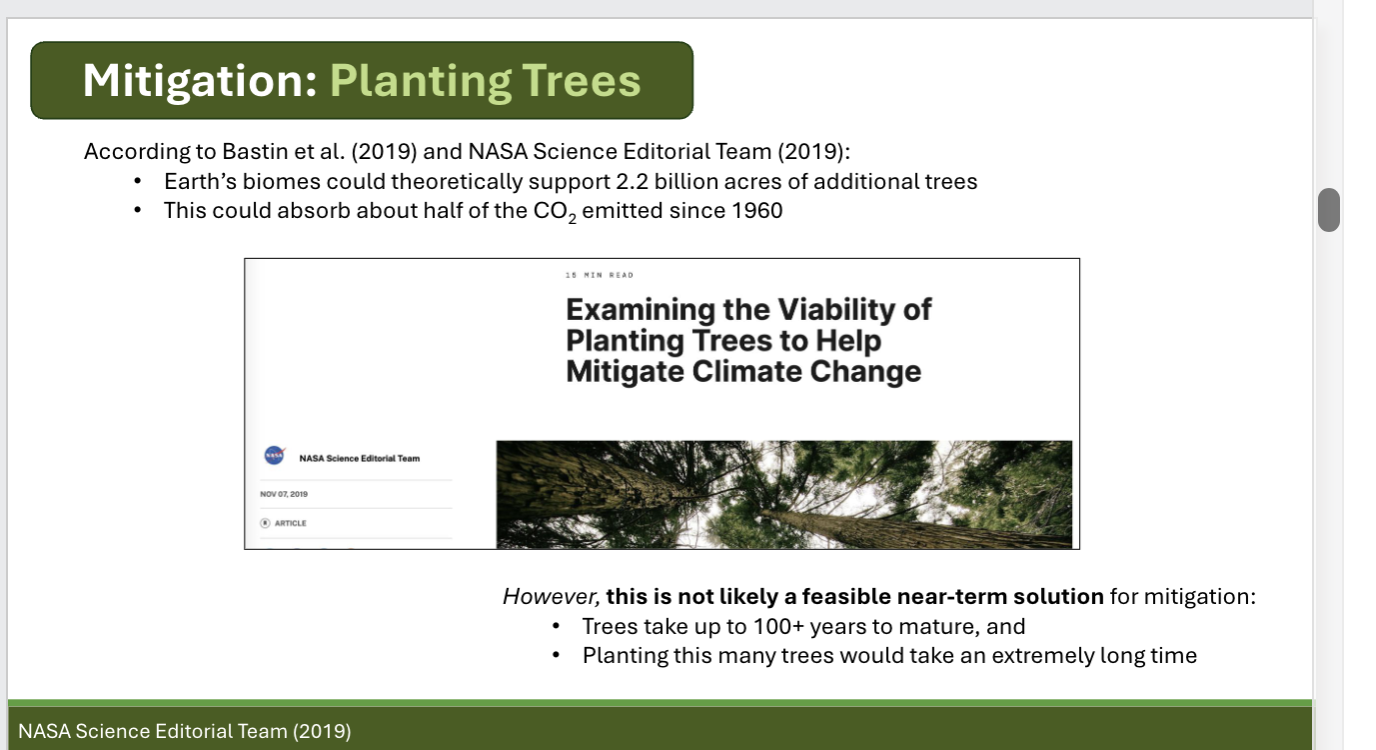
planting trees: more photosynthesis, which draws down atmospheric CO2; however, this is not a feasible near-term solution
Adaptation (secondary prevention): adjusting to actual or expected future climate. Includes behavioral, infastructural/tech, and physiological changes that help ppl and societies become resilient to a changing climate
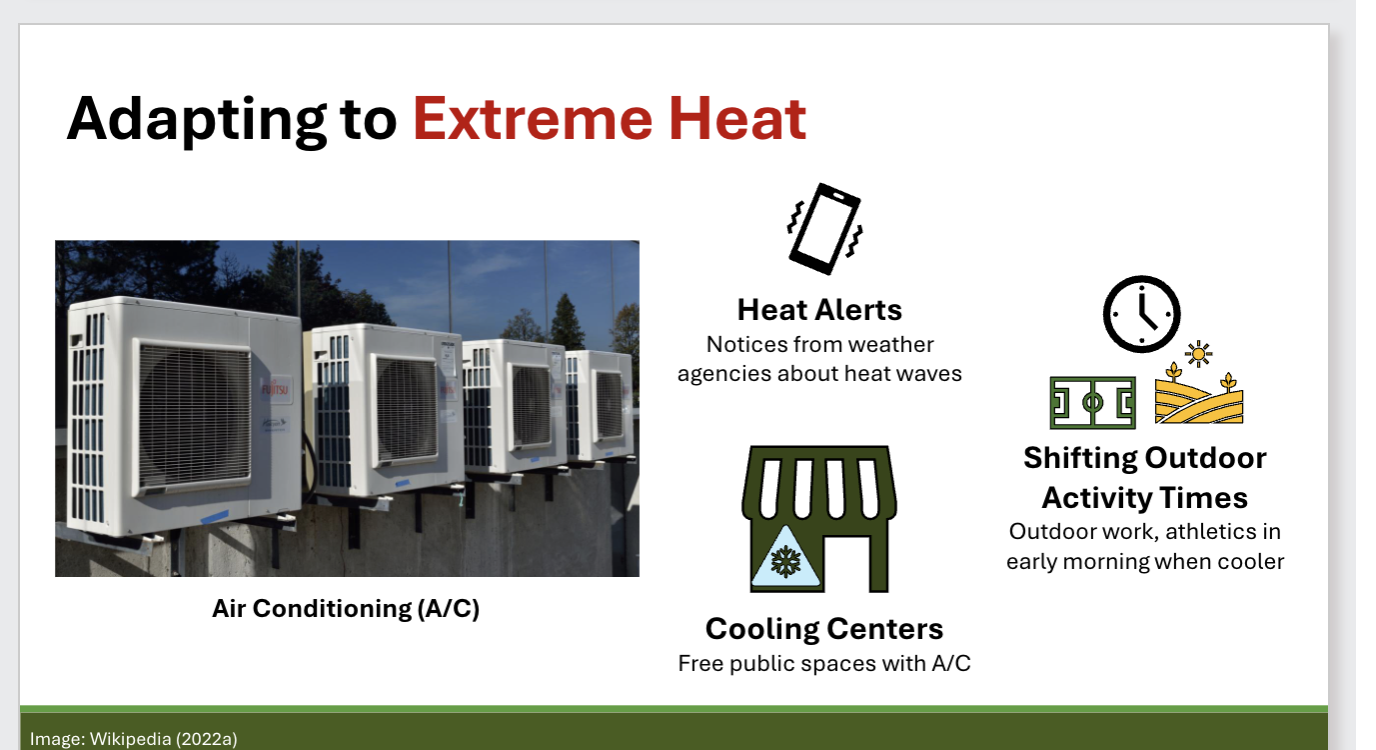
ex: heat alerts, shifting outdoor activity times, cooling centers, and A/C
both of these are used to address climate change
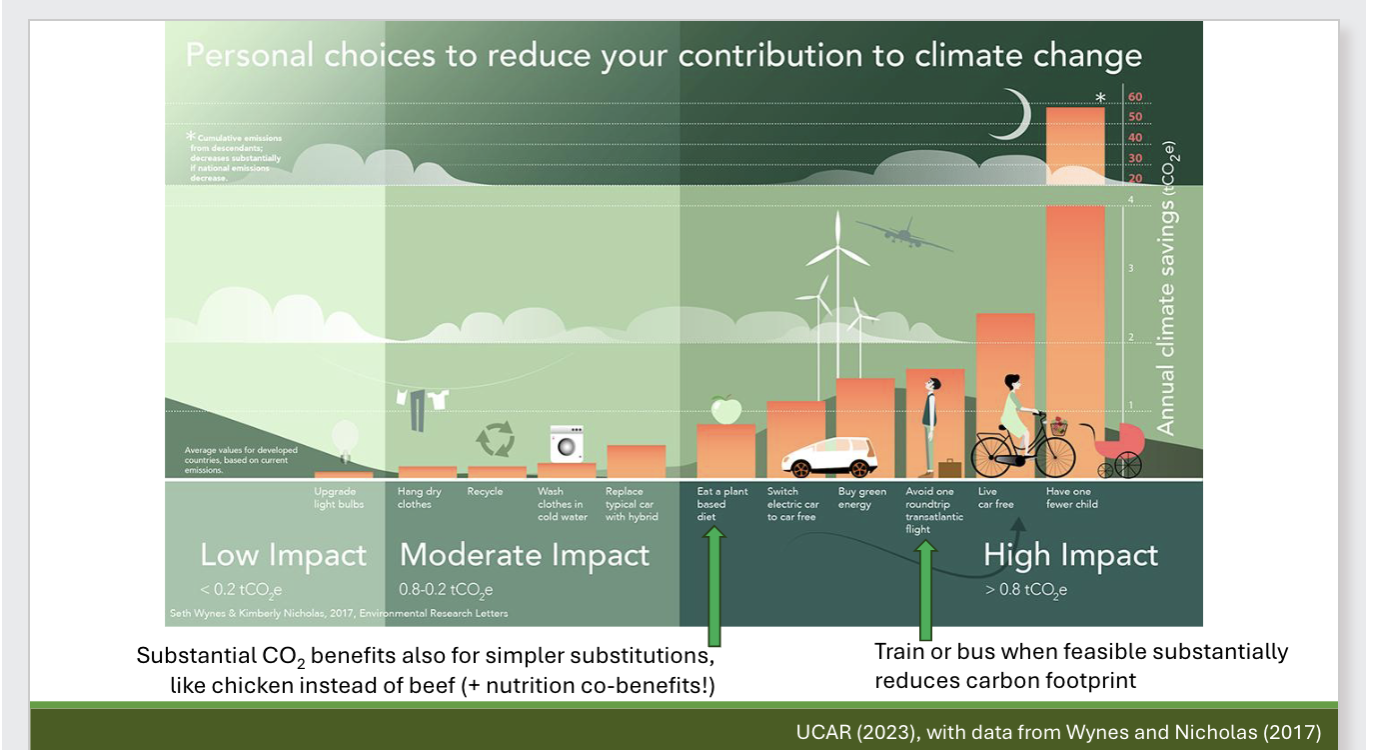
Identify climate actions that have health co-benfits
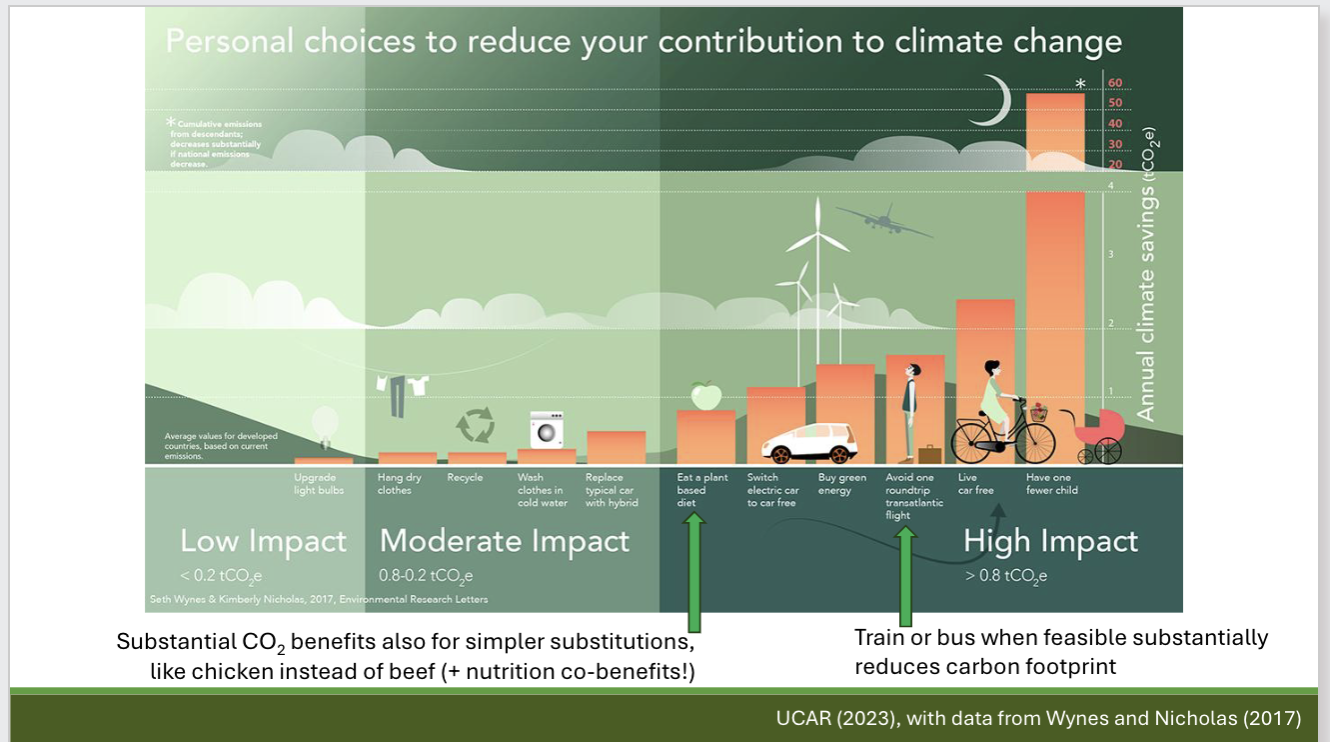
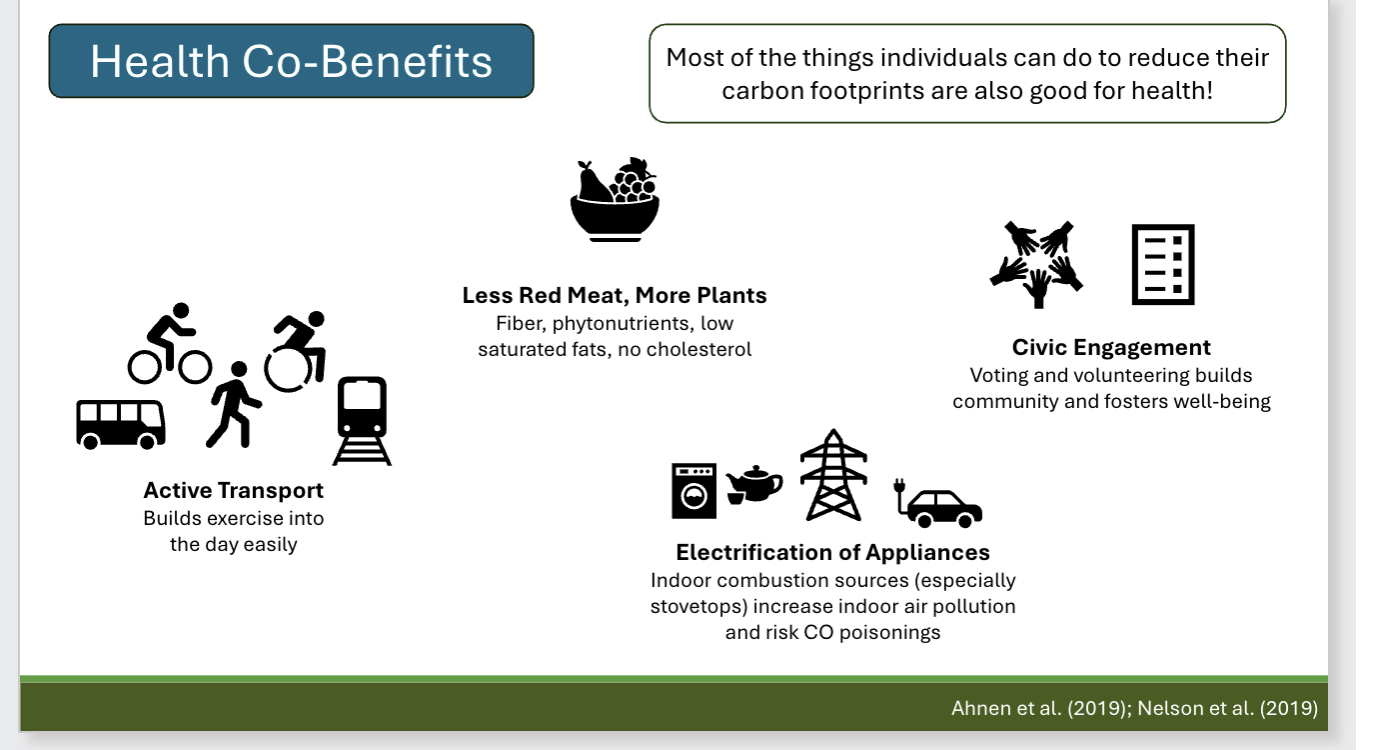
Active transport: builds exercise into the day easily
less red meat, more plants: fiber, phytonutrients, low saturated fats, no cholesterol
electrification of appliances (electric stove rather than gas): indoor combustion sources (especially stovetops) increase indoor air pollution and risk CO poisonings
Civic engagement: voting and volunteering builds community and fosters well-being
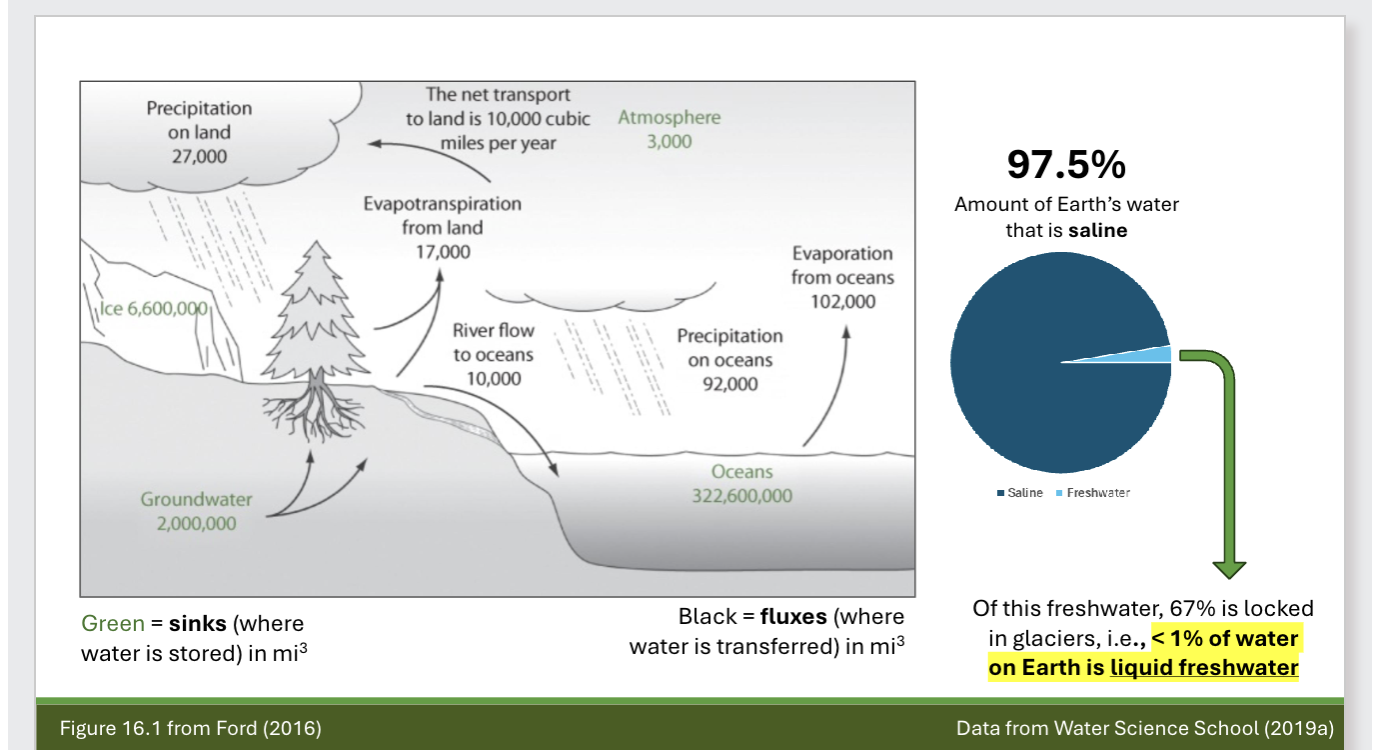
Identify the approximate % of Earth’s water that is liquid freshwater
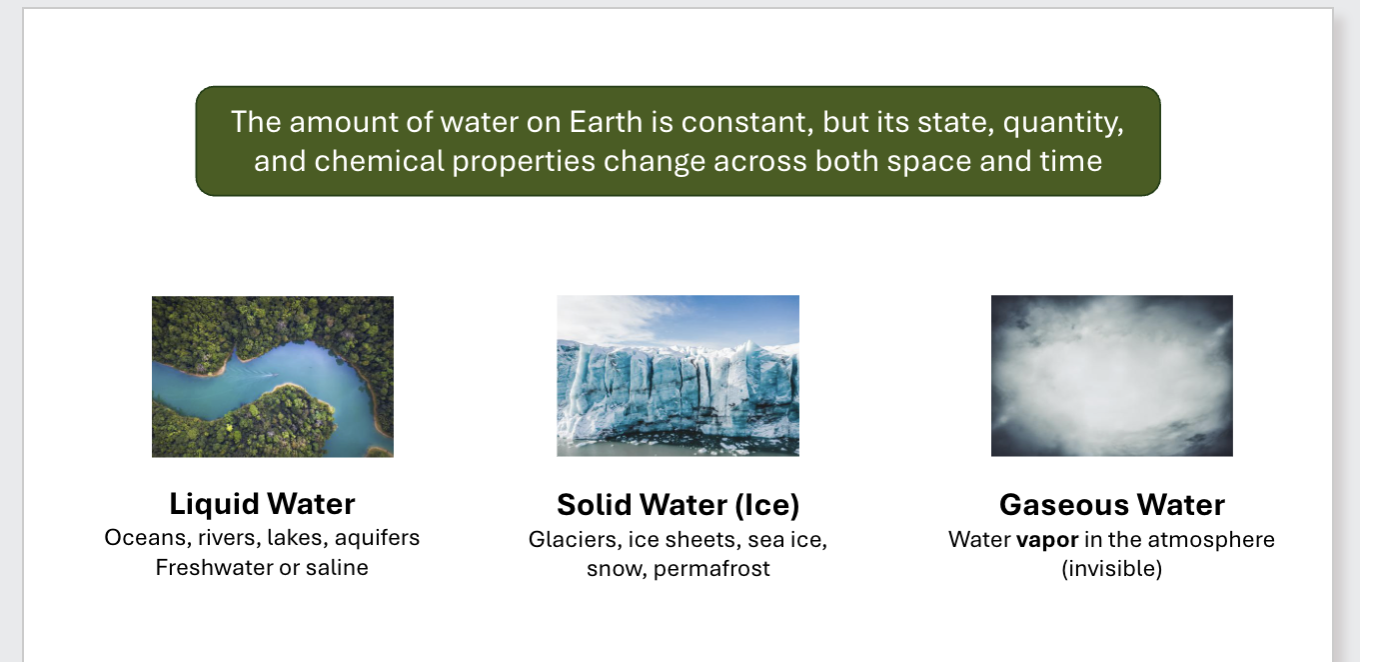
Liquid water: oceans, rivers, lakes, aquifers Freshwater or saline
97.5% of Earth’s water is saline. The remaining 2.5% is freshwater. 67% is locked in glaciers, ie., < 1% of water on Earth is liquid freshwater
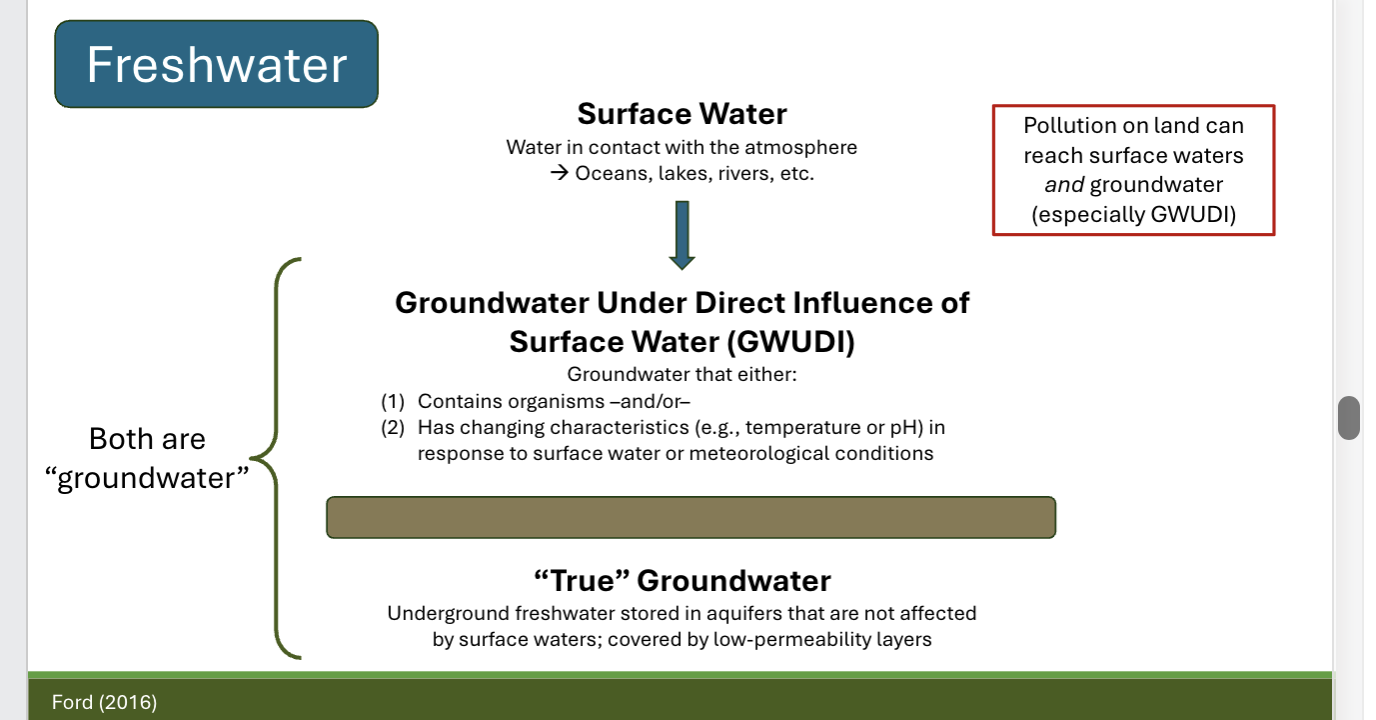
Differentiate between surface waters, groundwater under direct influence of surface water
(GWUDI), and “true” groundwater, and how they are affected by pollution
Surface Water: Water in contact w/ the atmosphere→ oceans, lakes, rivers etc
Groundwater under direct influence of surface water (GWUDI): groundwater that either A contains organisms and/or B has changing characteristics (ex: temperature or pH) in response to surface water or meteorological conditions
True groundwater: underground freshwater stored in aquifers that are not affected by surface waters; covered by low-permeability layers
Pollution on land can reach surface waters and groundwater (especially GWUDI)
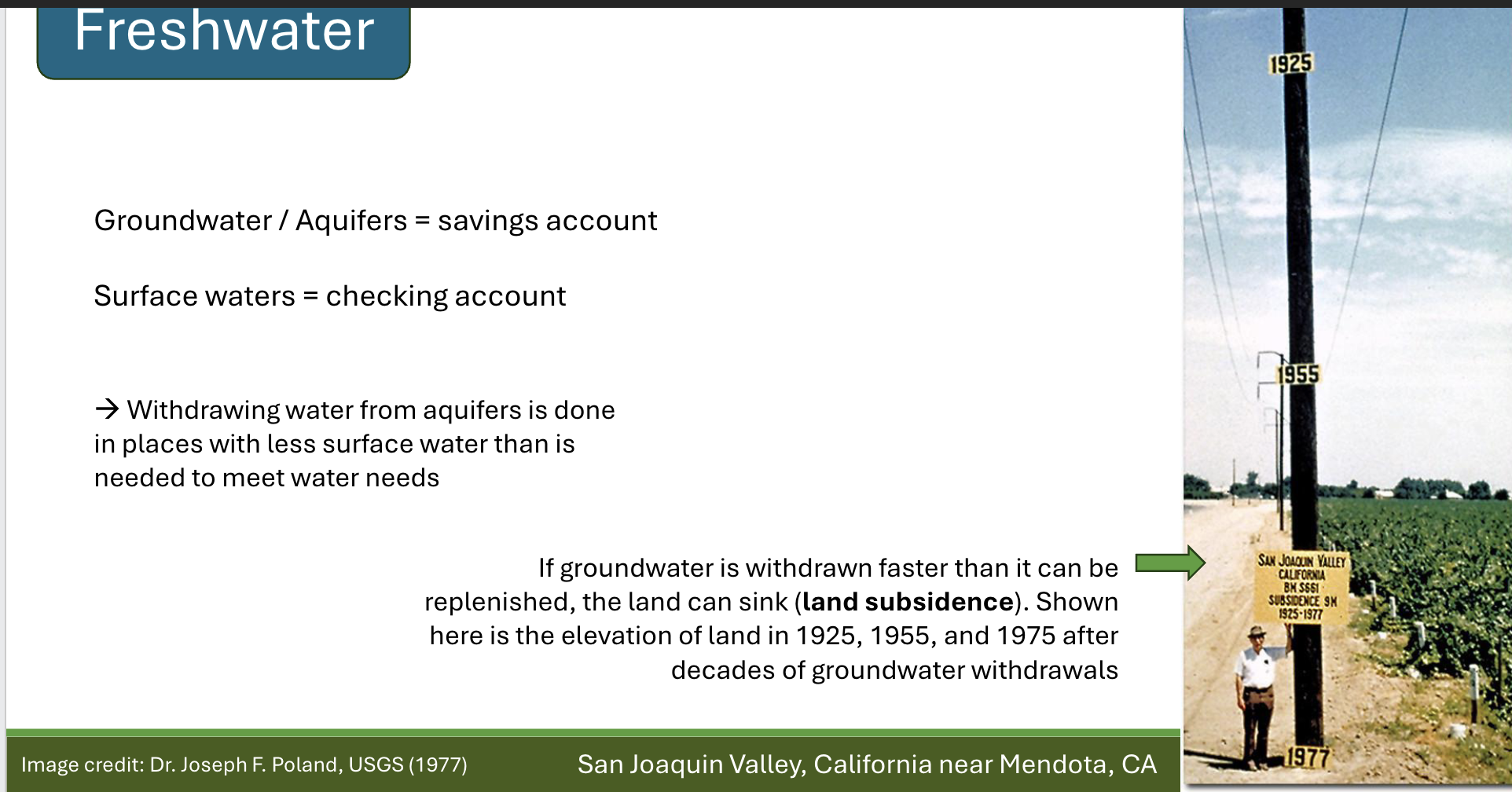
Define land subsidence and its relationship to groundwater
Land subsidence: if groundwater is withdrawn faster than it can be replenished, the land can sink
It is related to groundwater because:
groundwater/aquifers = savings account
surface waters = checking account
→ withdrawing water from aquifers is done in places with less surface water than is needed to meet water needs
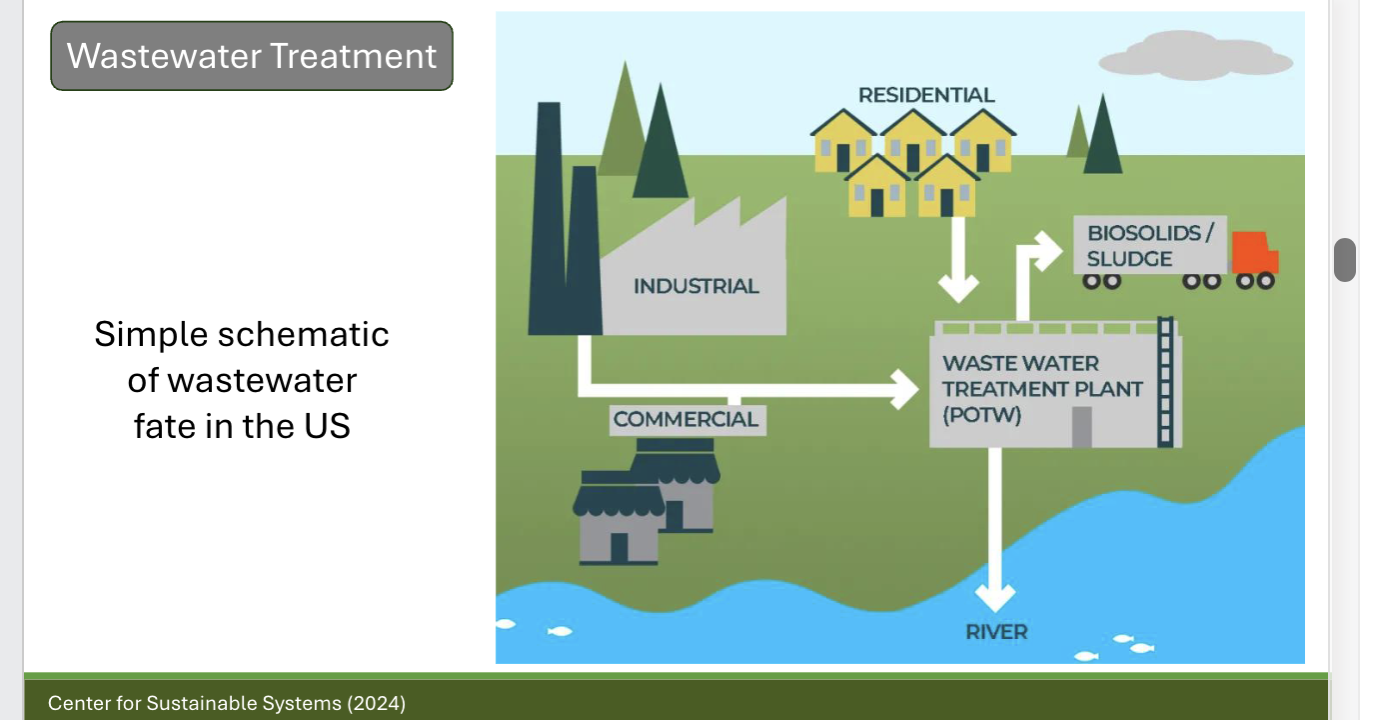
Describe the benefits of wastewater treatment
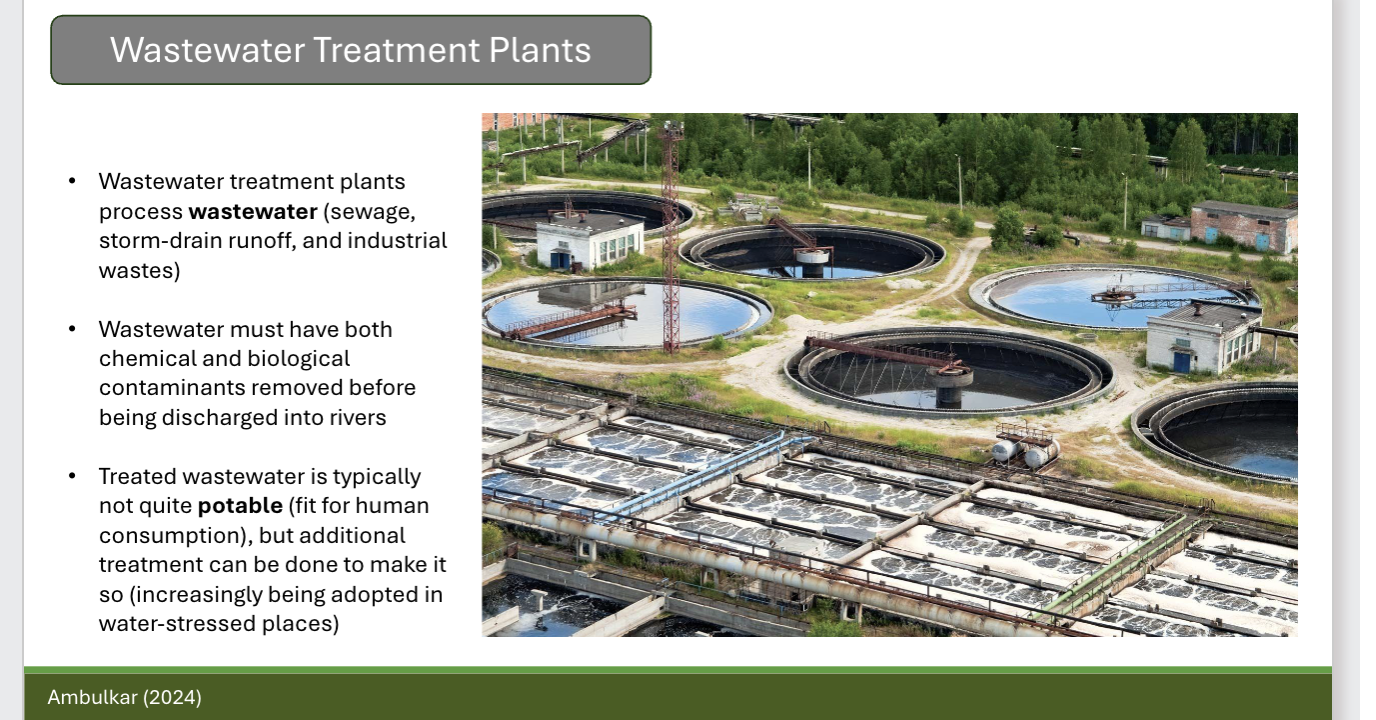
Wastewater treatment plants process wastewater (sewage, storm-drain runoff, and industrial wastes)
Wastewater must have both chem and biological contaminants removed before being discharged into rivers. Treated wastewater is typically not quite potable (fit for human consumption), but additional treatment can be done to make it so
Benefits of this treatment:
human health:
wastewater contains pathogens and toxicants that can make humans sicks (waterborne illnesses)
wastewater will end up in rivers and eventually back into aquifers, so it must be fit for consumption
Ecosystem health
these same toxicants are damaging to wildlife
contaminants can biomagnify and harm humans and humans rely on health ecosystems
Wastewater treatment and drinking water treatment are crucial to preventing waterborne diseases and ecological damages
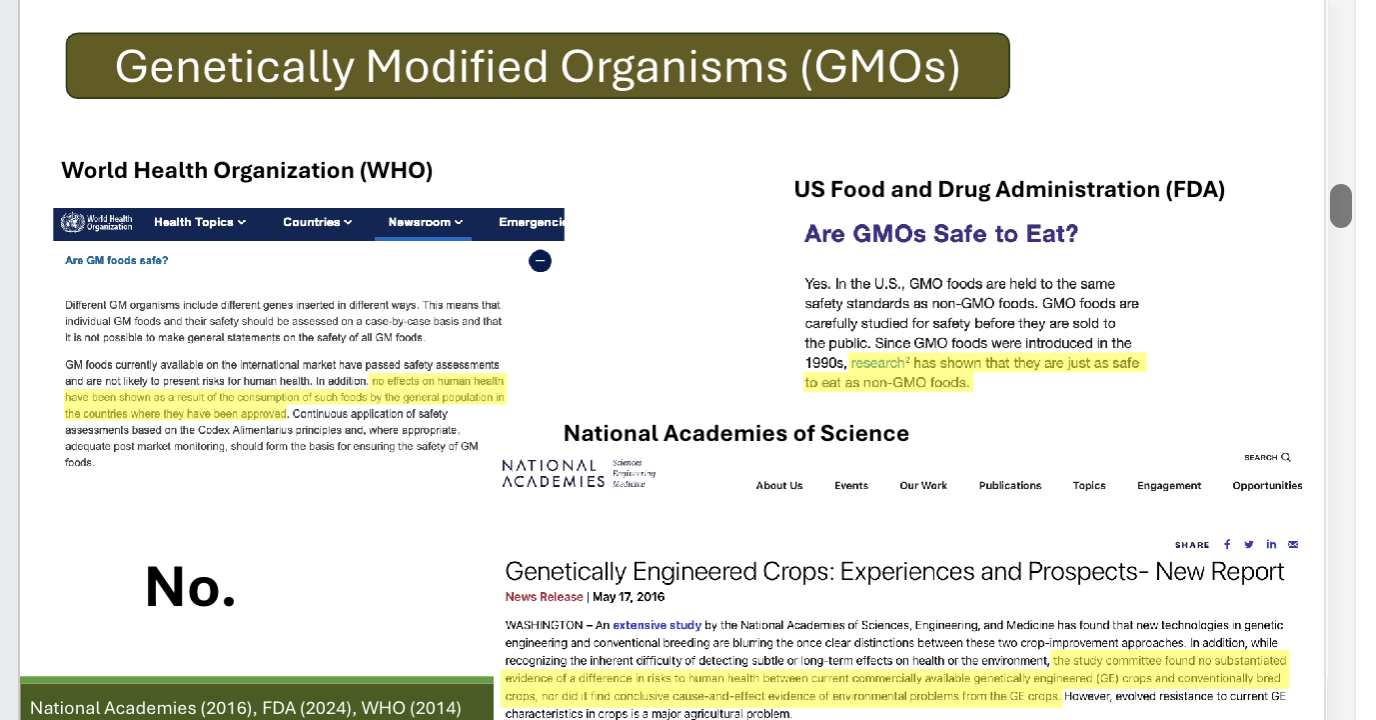
Define genetically modified organisms (GMOs) and identify whether there is epidemiologic evidence to suggest that they are harmful to human health
GMOs are crop varieties genetically engineered to be more resilient (ex: pesticide resistant, drought resistant). This has many benefits, such as increased yield and greater climate resilience
There has NOT been epidemiologic evidence suggesting a need for this. There has not been shown any human health effects as a result of eating these foods. Insecticides and herbicides are considered the greater public health concern.
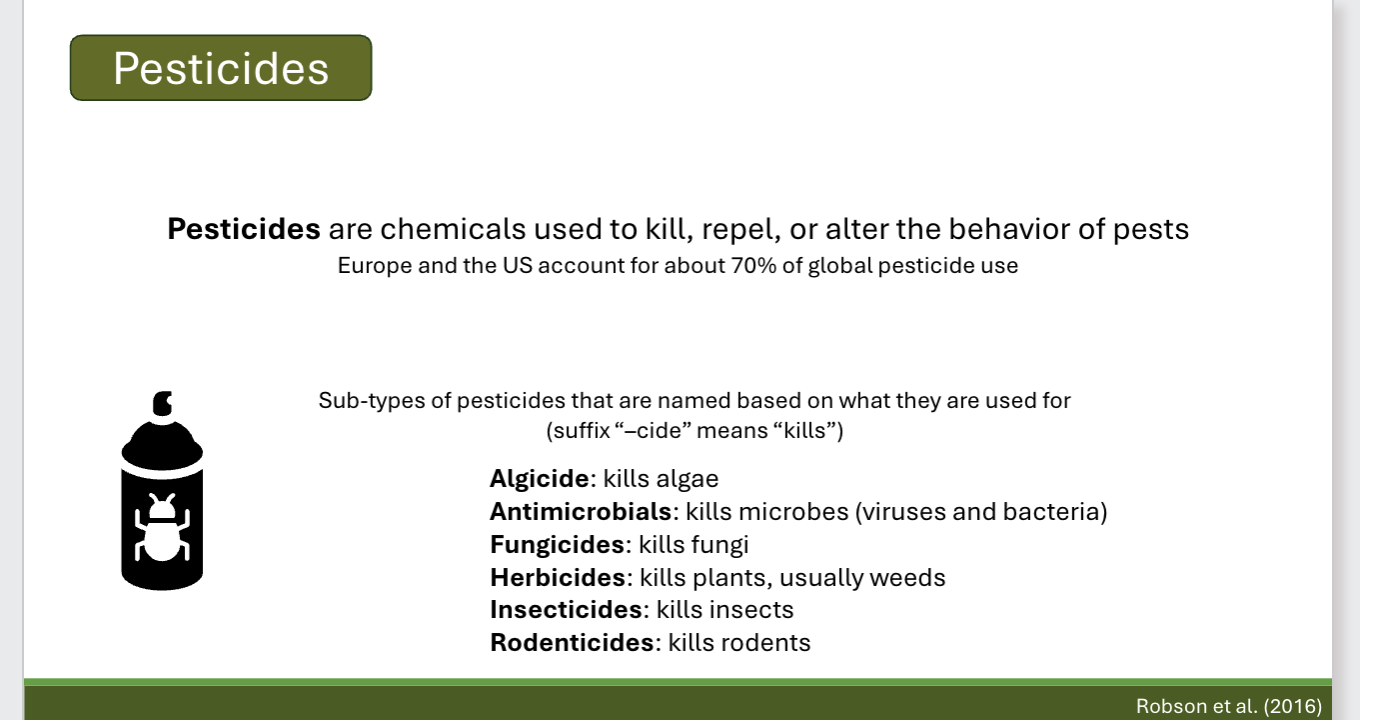
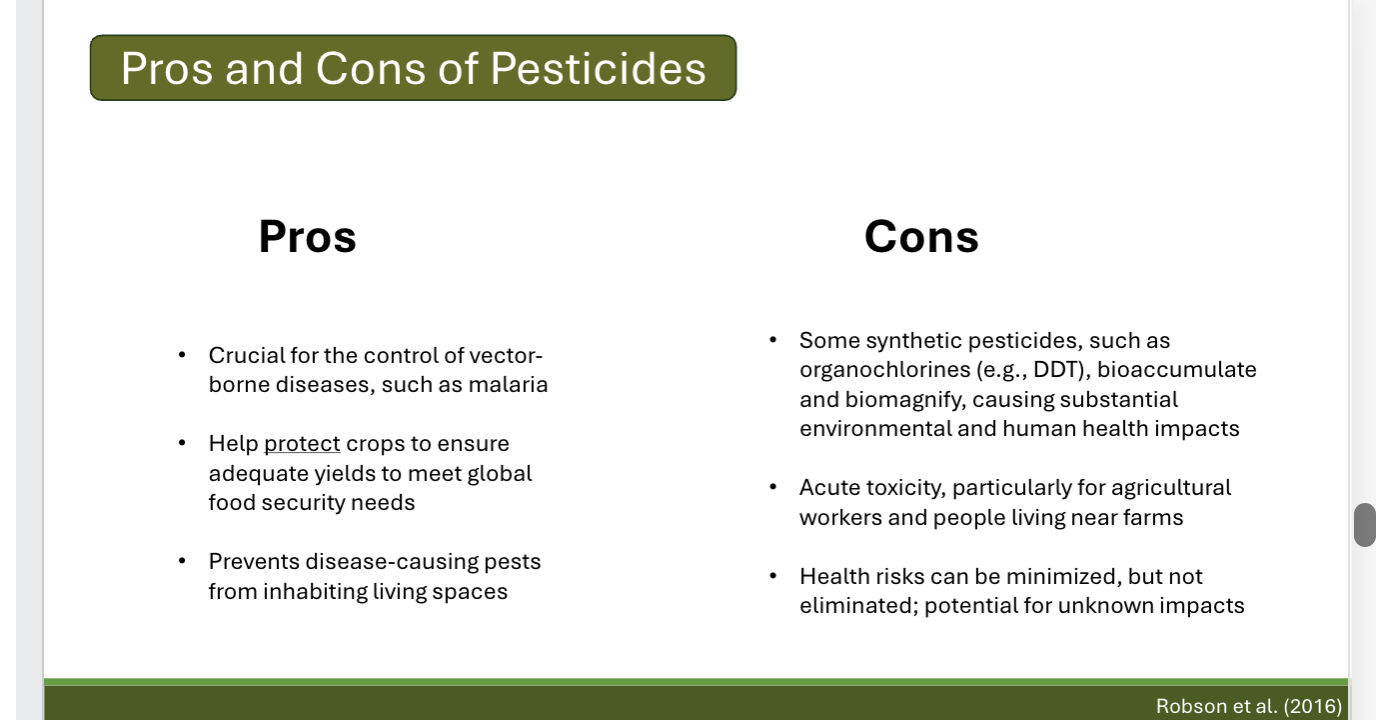
Describe the pros and cons of pesticides
Pesticides: chemicals used to kill, repel, or alter the behavior of pests. Europe and the US account for about 70% of global pesticide use.
Pros:
crucial for the control of vector-borne diseases, such as malaria
help protect crops to ensure adequate yields to meet global food security needs
prevents disease-causing pests from inhabiting living spaces
Cons:
some synthetic pesticides, such as organochlorines (ex: DDT), bioaccumulate and biomagnify, causing substantial environmental and human health impacts
acute toxicity, particularly for agricultural workers and people living near farms
health risks can be minimized, but not eliminated; potential for unknown impacts
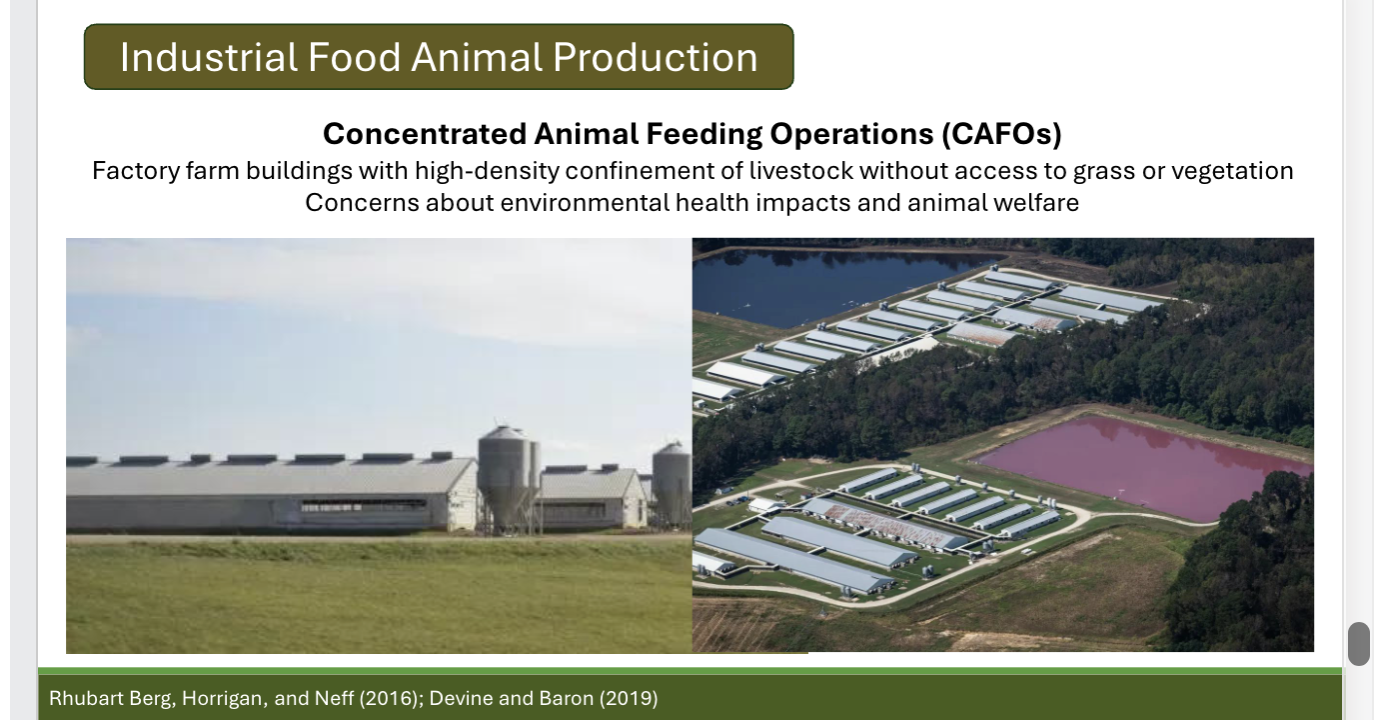
Define concentrated animal feeding operations (CAFOs) and the impacts that they have
CAFOs: factory farm buildings with high-density confinement of livestock w/o access to grass or vegetation. Concerns about environmental health impacts and animal welfare
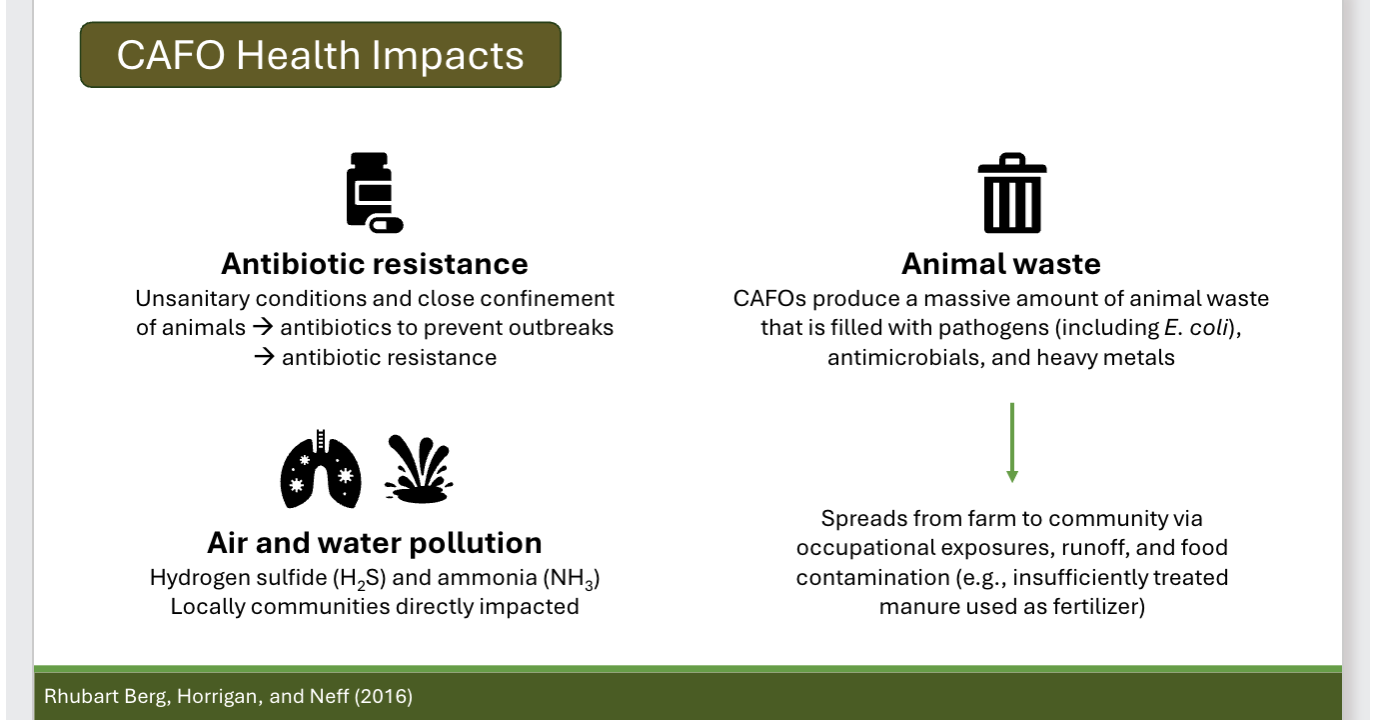
CAFOs health impacts:
antibiotic resistance: unsanitary conditions and close confinement of animals→ antibiotics to prevent outbreaks→antibiotic resistance
air and water pollution: hydrogen sulfide (H2S) and ammonia (NH3). locally communities are directly impacted
animal waste: CAFOs produce a massive amount of animal waste that is filled with pathogens (including E coli), antimicrobials, and heavy metals
animal waste→spreads from farm to community via occupational exposures, runoff, and food contamination (ex: insufficiently treated manure used as fertilizer)
Explain the main idea of the Grummon et al. (2024) assigned reading
Simple dietary substitutions can reduce carbon footprints and improve dietary quality across diverse segments of the US populations
Ex: According to Grummon et al. (2024), making simple substitutions in meals (such as swapping beef for chicken in a burrito) can substantially reduce one's dietary carbon footprint (i.e., the amount of greenhouse gases emitted that are attributable to the foods that one eats).
According to Grummon et al. (2024), small changes to reduce one's dietary carbon footprint (such as replacing beef with chicken or a plant-based protein) can have the additional side-benefit of improving overall dietary quality, as measured by the Healthy Eating Index.
Describe ways to prevent getting bed bugs and preventing mice in the home
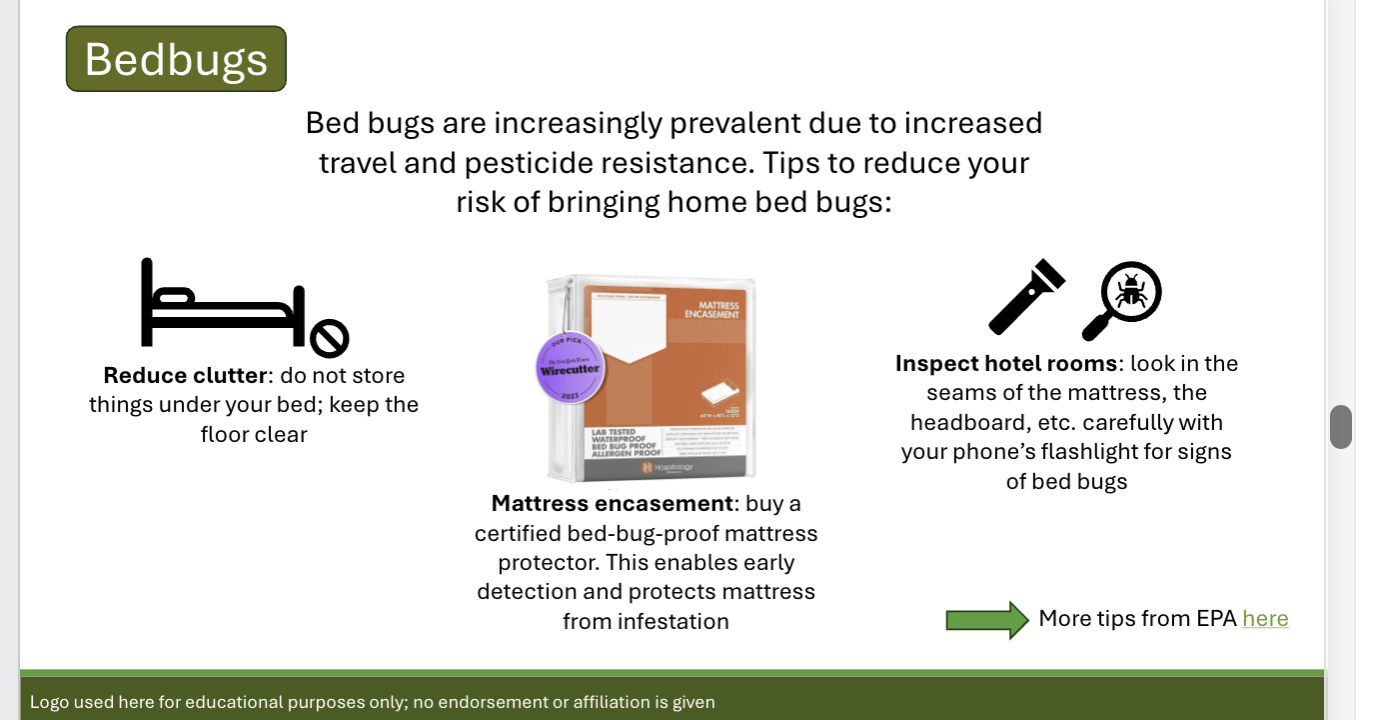
Bed Bugs:
Reduce clutter: do not store things under your bed; keep the floor clear
Mattress encasement: buy a certified bed-bug proof mattress protector. This enables early detection and protects mattress from infestation
Inspect hotel rooms: look in the seams of the mattress, the headboard etc carefully with your phone’s flashlight for signs of bedbugs
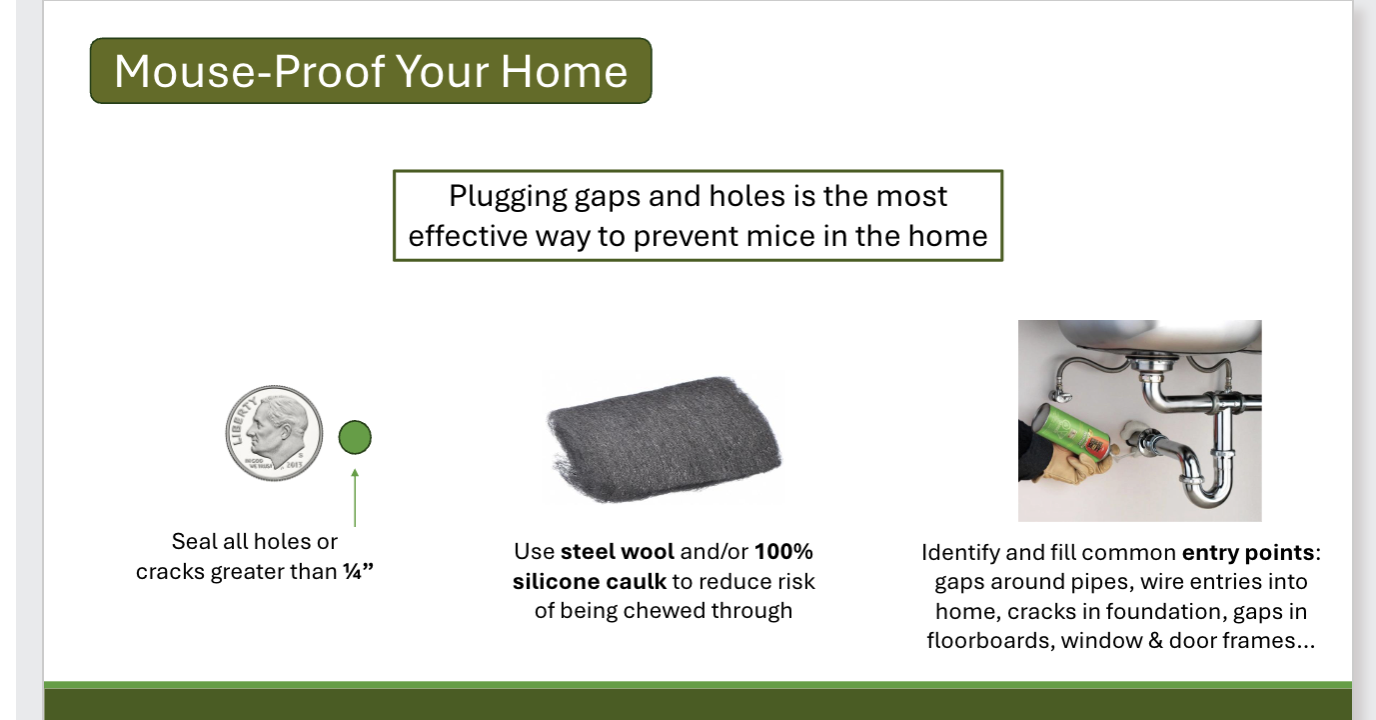
Mice:
plugging gaps/holes is the most effective way to prevent mice in the home; seal all holes or cracks greater than 1/4”
use steel wool and/or 100% silicone caulk to reduce risk of being chewed through
identify and fill common entry points: gaps around pipes, wire entries into home, cracks in foundation, gaps in floorboards, window and door frames
Identify ways to reduce your personal exposure to pesticides
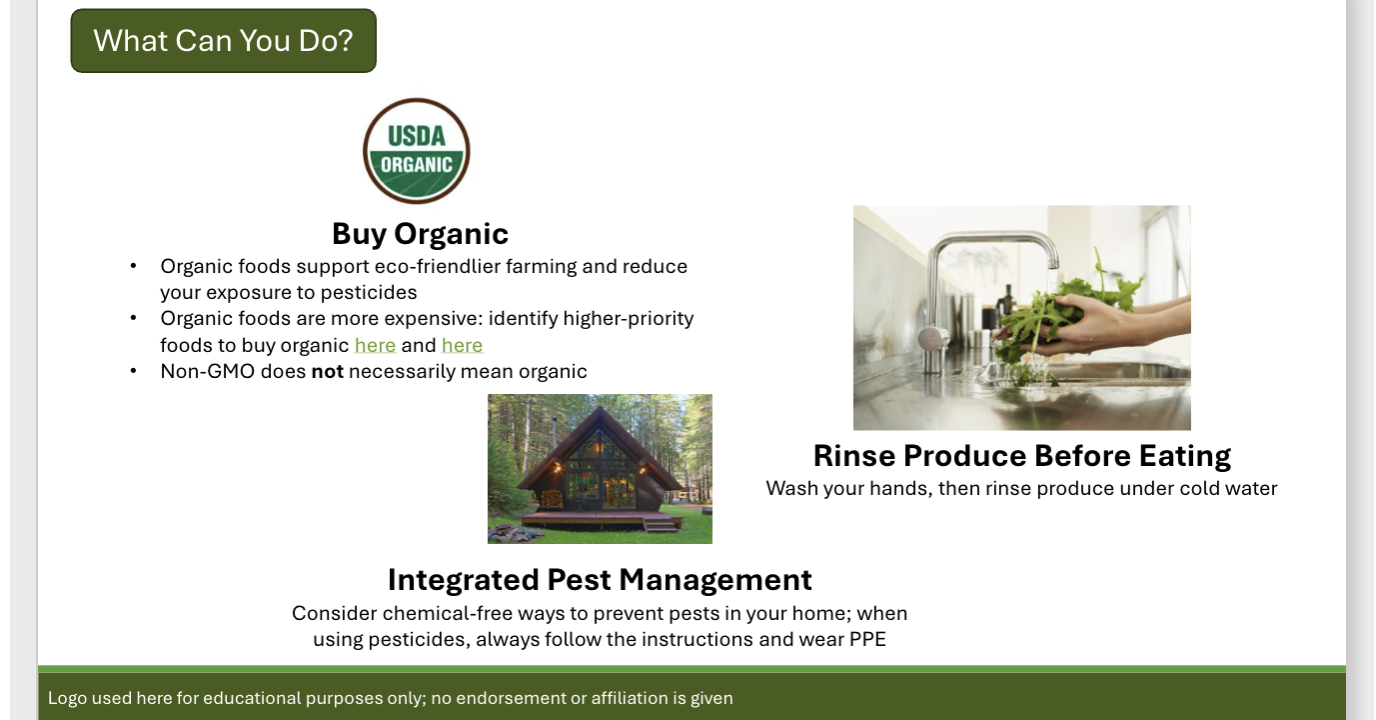
Buy organic:
organic food support eco-friendlier farming and reduce your exposure to pesticides
organic foods are more expensive: identify higher-priority foods to buy organic: beef and pork
Rinse produce before eating:
wash your hands, then rinse produce under cold water
Integrated pest management:
consider chemical-free ways to prevent pests in your home; when using pesticides, always follow the instructions and wear PPE
Describe the health benefits of nature contact
“just 3-5 mins spent looking at views dominated by trees, flowers, or water can begin to reduce anger, anxiety and pain and to induce relaxation”
Lowers cortisol, BP, and HR
Reduced stress and anxiety, improved attention span, enhanced cognition and memory
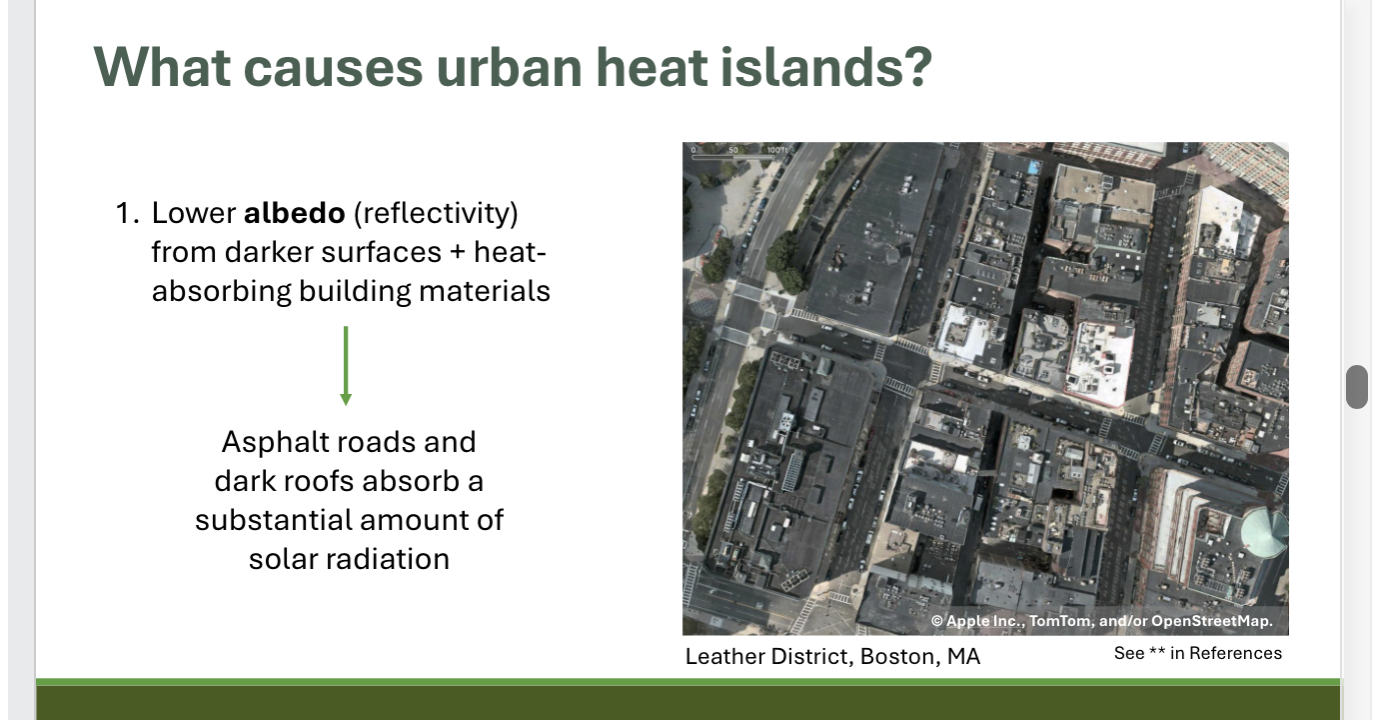
Explain what the urban heat island effect is and the characteristics that cause it
UHI effect: the phenomenon in which cities or parts of cities are warmer than surrounding suburbs and rural areas
What causes it?
lower albedo (reflectivity) from darker surfaces + heat-absorbing building materials→ asphalt roads and dark roofs absorb a substantial amount of solar radiation
tall, compact buildings trap heat→ tall buildings create “canyons” that allow radiation to bounce back and forth rather than being emitted outward
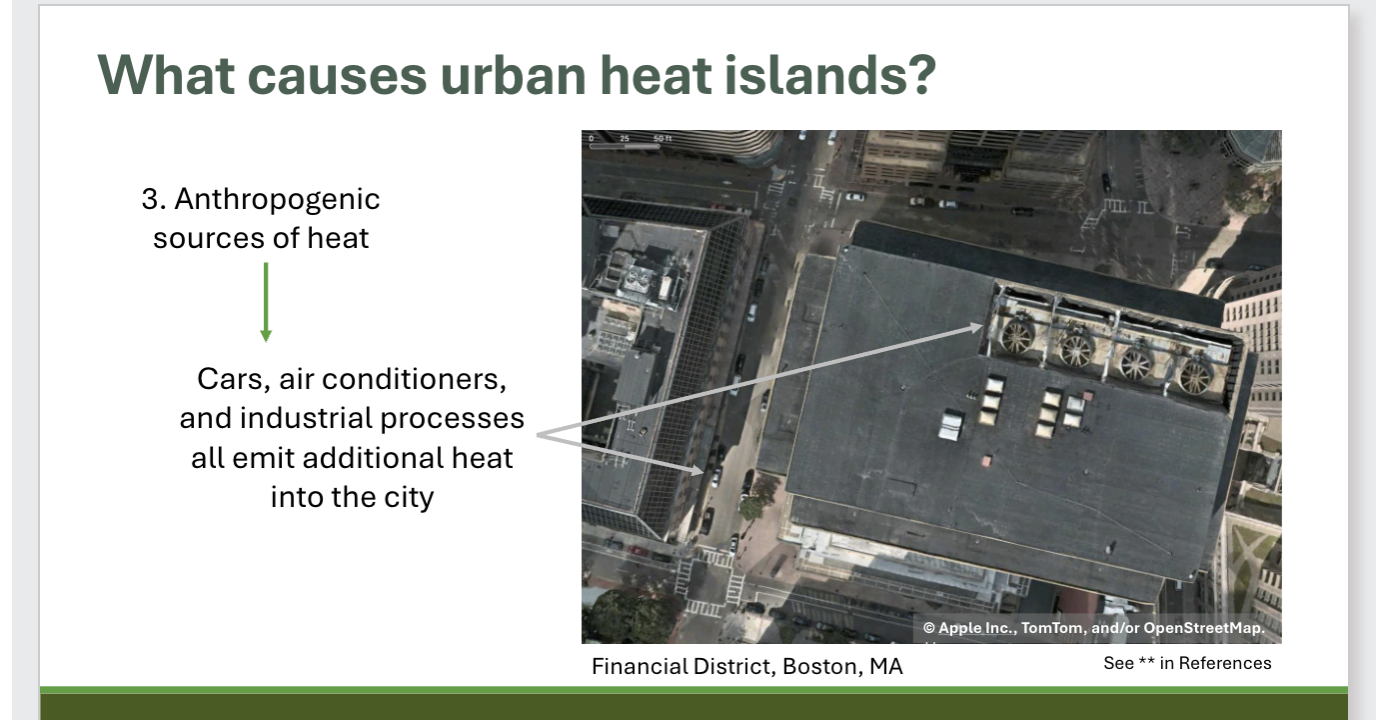
anthropogenic sources of heat→ cars, air conditioners, and industrial processes all emit additional heat into the city
lack of trees and plants (low greenness), which cool surrounding air via evapotranspiration (the process by which water evaporates from land and is released into the air by plants)
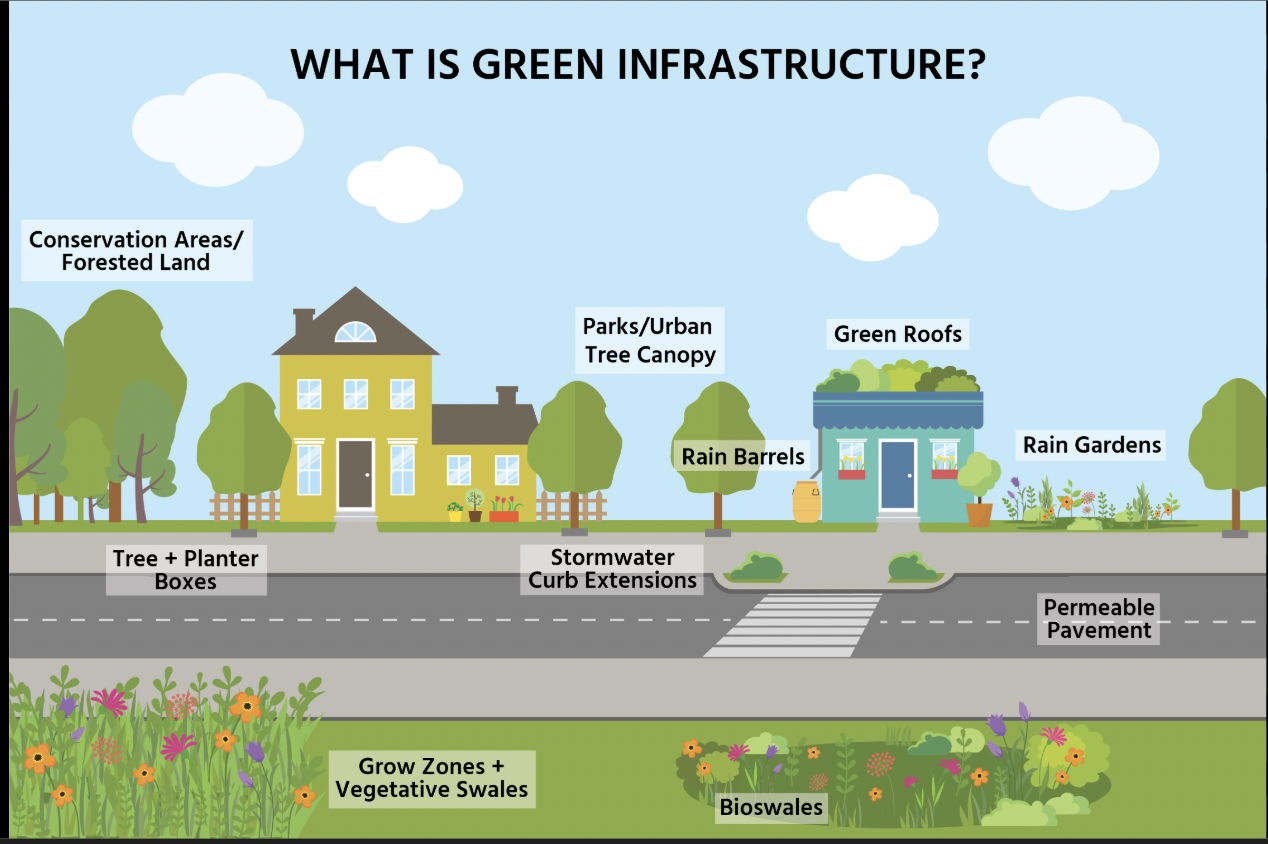
Identify several benefits of planting trees in urban areas
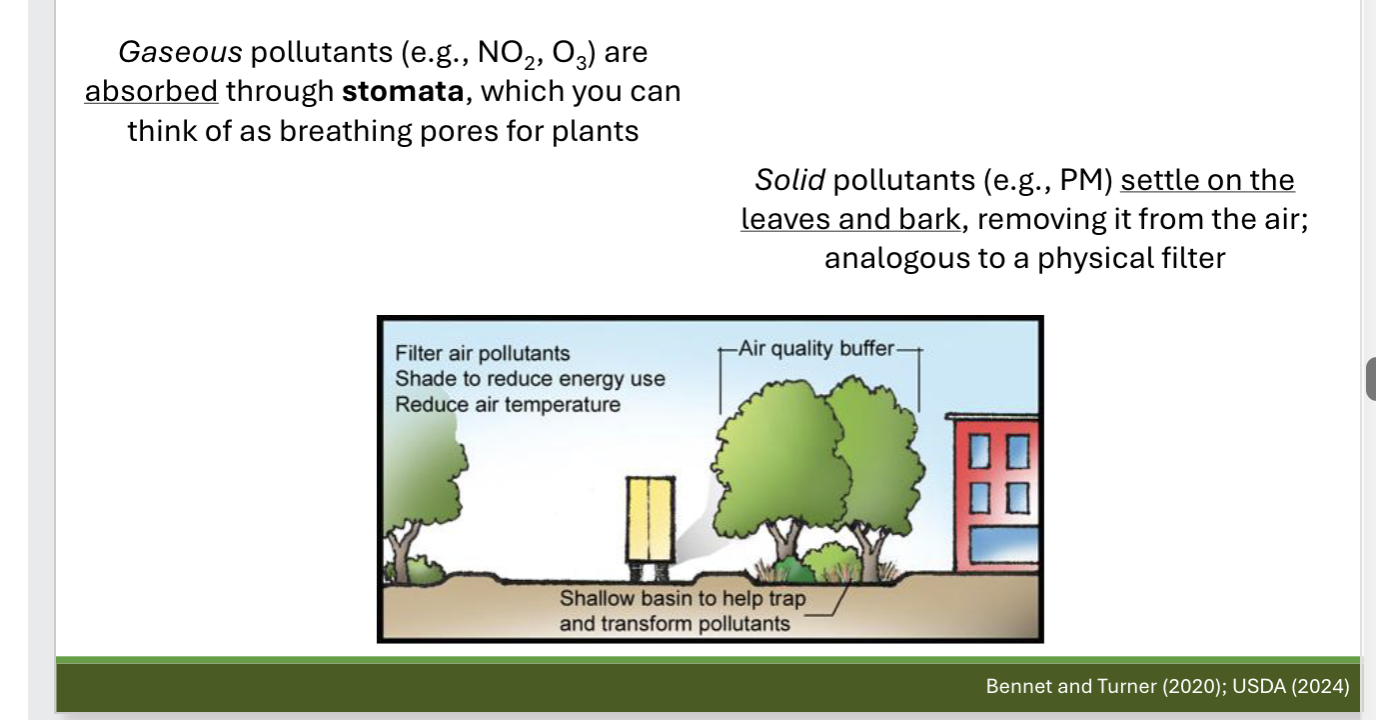
Gaseous pollutants (NO2, O3) are absorbed through stomata, which you can think of as breathing pores for plants
Solid pollutants (PM) settle on the leaves and bark, thereby removing it from the air; analogous to a physical filter
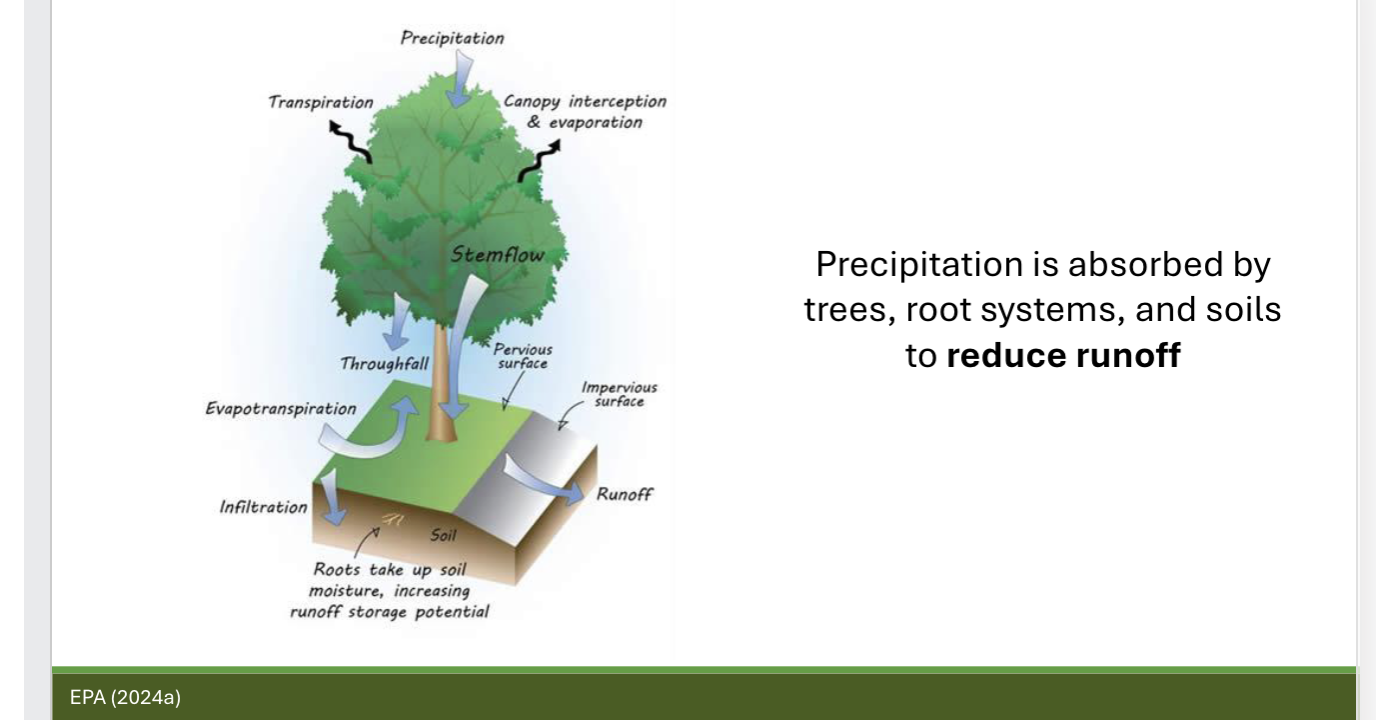
Precipitation is absorbed by trees, root systems, and soils to reduce runoff
Planting trees near stormwater drains reduce runoff to wastewater treatment plants→ improves water quality while also reducing localized flooding
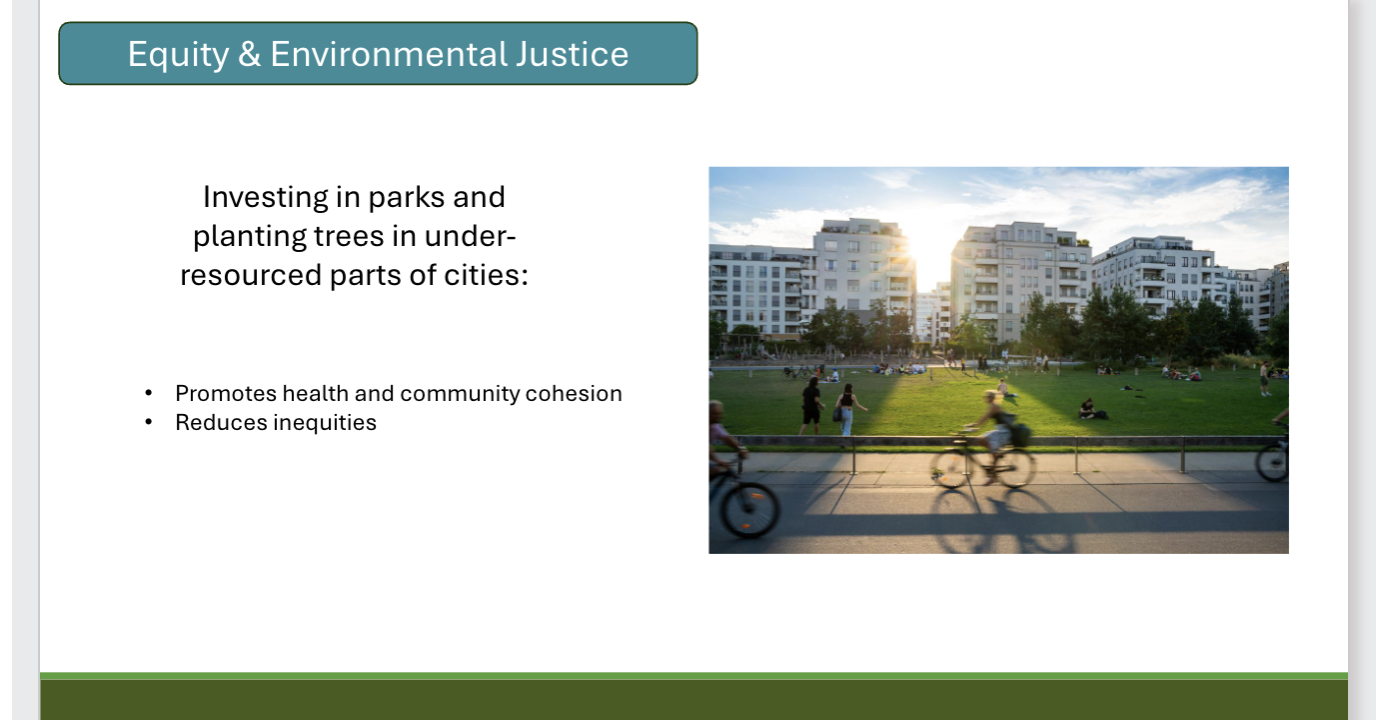
Describe how to promote environmental justice when planting trees in a city
Investing in parks and planting trees in under resourced parts of cities: promotes health and community cohesion and reduces inequities

Define environmental gentrification
Environmental gentrification (or green gentrification) is when environmental improvements, like new parks, pollution cleanups, or green infrastructure, make a neighborhood more desirable, which raises property values and rents, pushing out low-income residents who can no longer afford to live there and replacing them with wealthier newcomers.
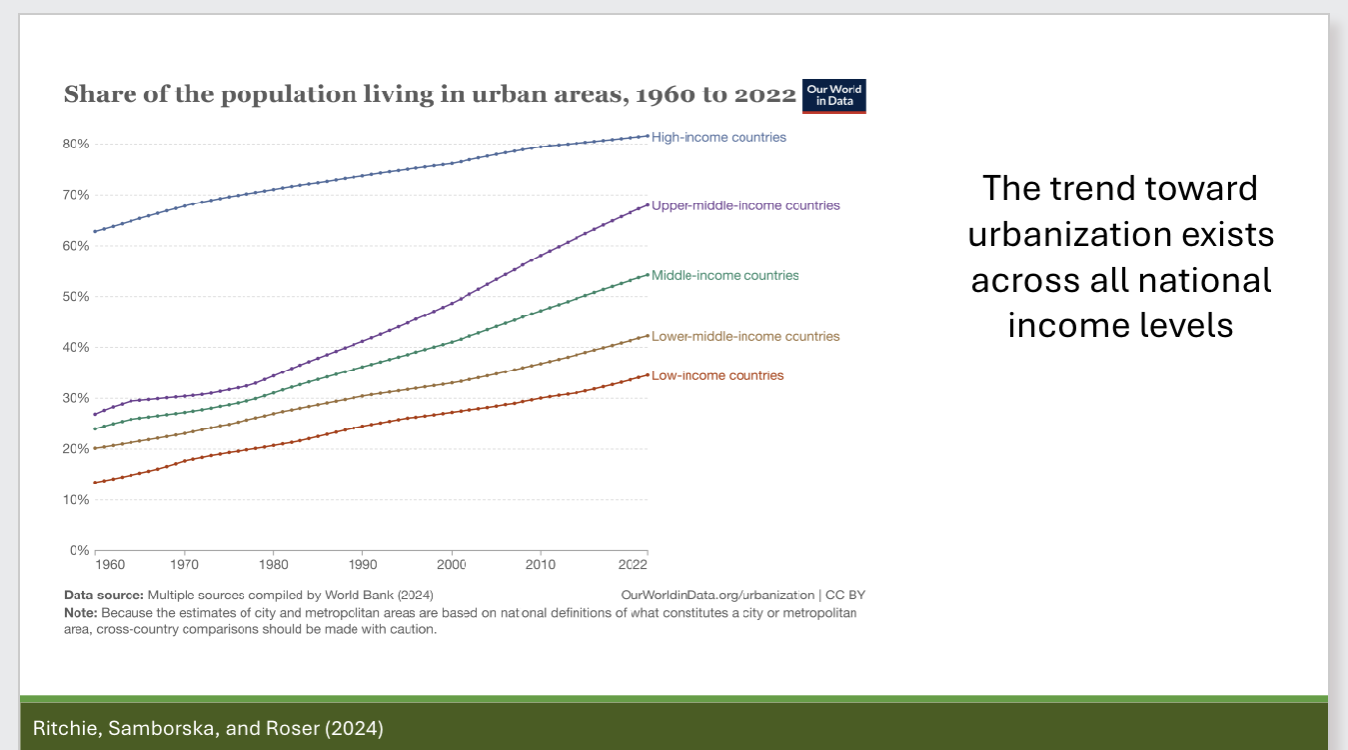
Describe the trend of urbanization amongst high, middle, and low-income countries
Percentage of share of the population living in urban areas, 1960-2022:
high-income countries: 60%
upper-middle-income countries: 30%
Middle-income countries: 25%
Lower-middle income countries: 20%
Low-income countries: 11%
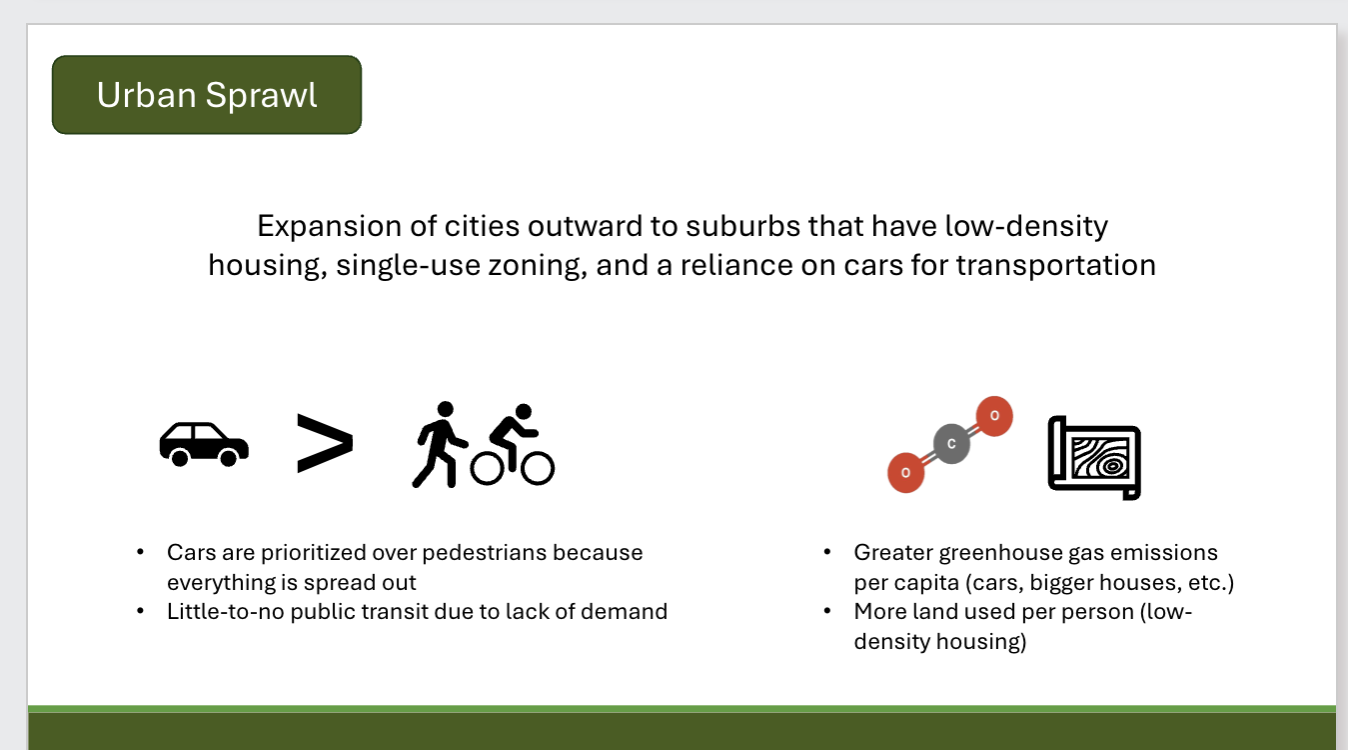
Identify ways that urban sprawl has negative environmental impacts
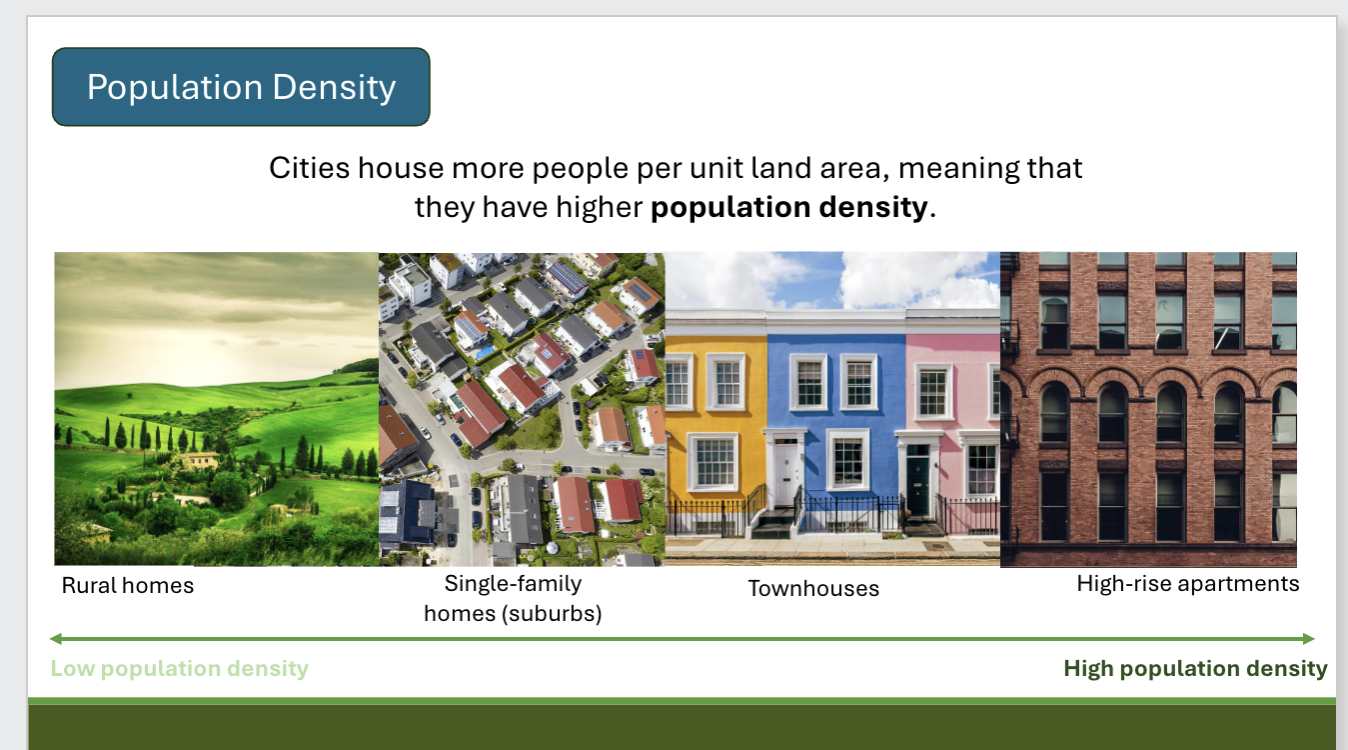
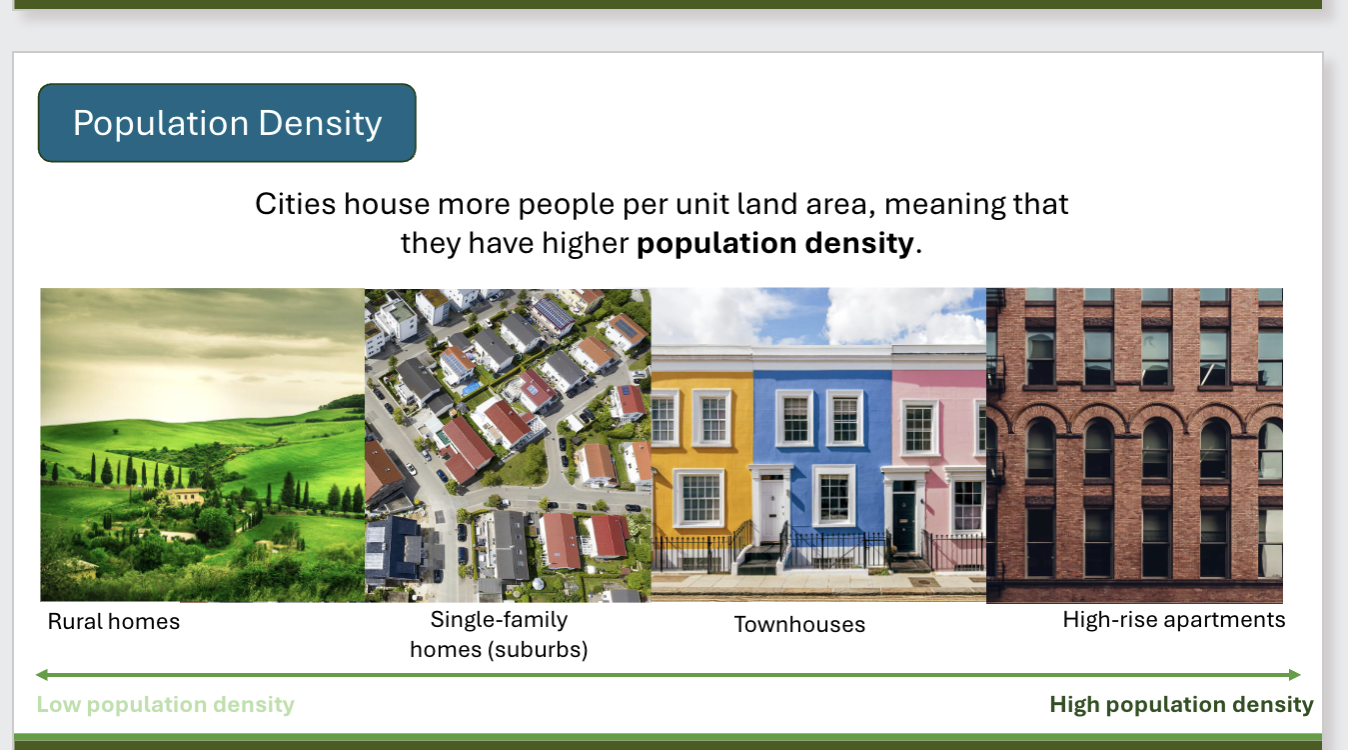
Urban areas are densely populated with extensive infrastructure and services, while rural areas have low population density, more open land, and fewer services.
Urban Sprawl: expansion of cities outward to suburbs that have low-density housing, single-use zoning, and a reliance on cars for transportation
Cars are prioritized over pedestrians because everything is spread out. Little-to-no public transit due to lack of demand.
Urban sprawl negatively impacts the environment in several key ways:
Loss of natural habitats and farmland due to land clearing and development
Higher energy and water use from larger homes and longer infrastructure networks
Increased stormwater runoff and water pollution from roads and parking lots
Fragmentation of ecosystems, which harms biodiversity
Greater greenhouse gas emissions per capita (cars, bigger houses, etc.). More land used per person (low-density housing)
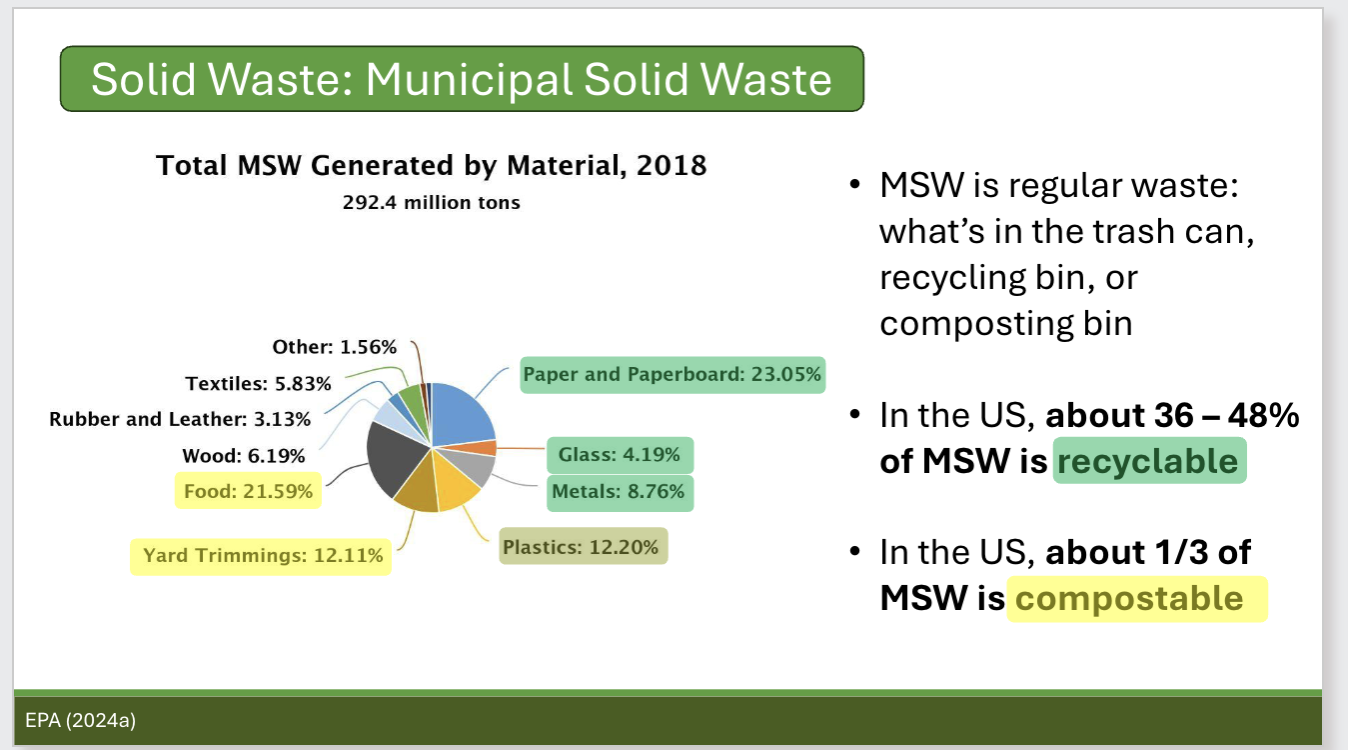
Describe the composition of municipal solid waste in the US, ie., how much is compostable, how much is recyclable, etc
Municipal Solid Waste is regular waste: what’s in the trash bin, recycling bin, or composting bin
In the US, about 36-48% of MSW is recyclable
In the US, about 1/3 of MSW is compostable
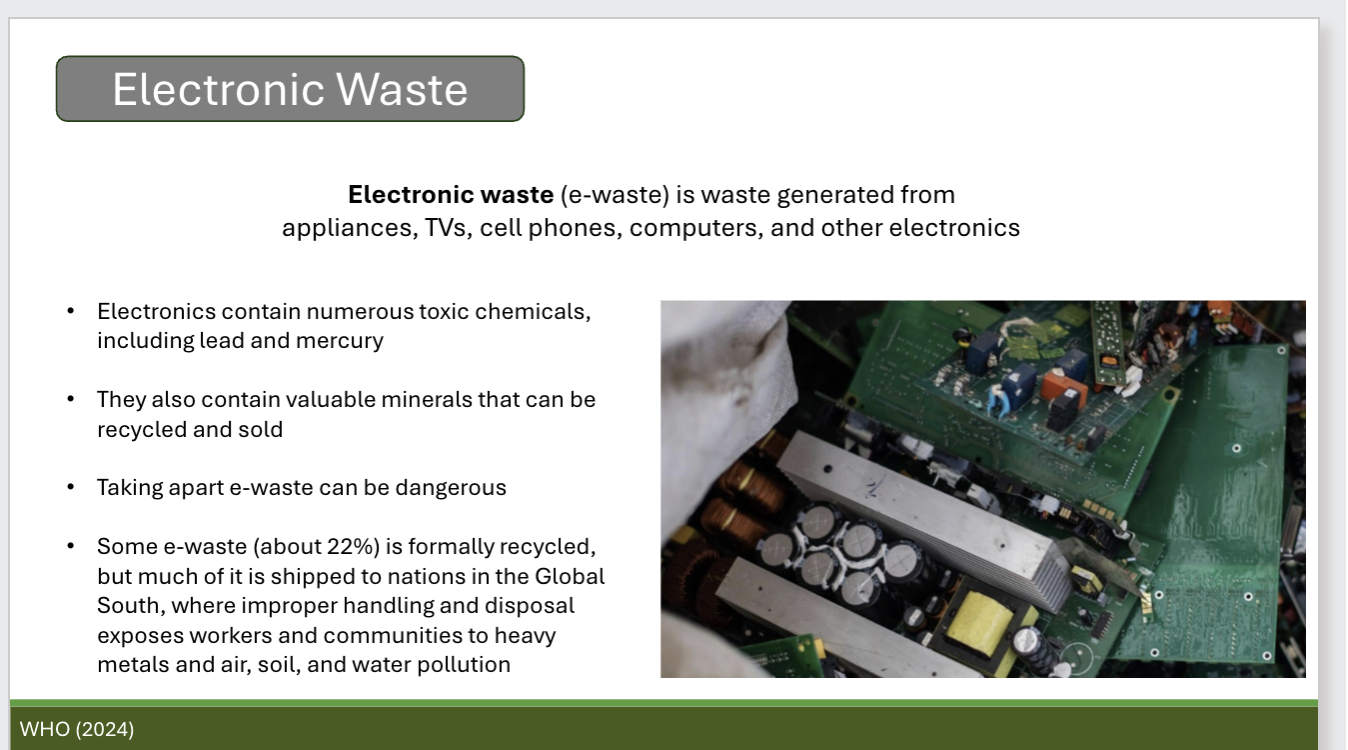
Explain how electronic waste is hazardous to human health
electronic waste is waste-generated from appliances, TVs, cell phones, computers, and other electronics
electronics contain numerous toxic chemicals, including lead (PM2.5 or 10) and mercury
Taking apart e-waste can also be dangerous
improper handling and disposal expose workers and communities to heavy metals and air, soil, and water pollution
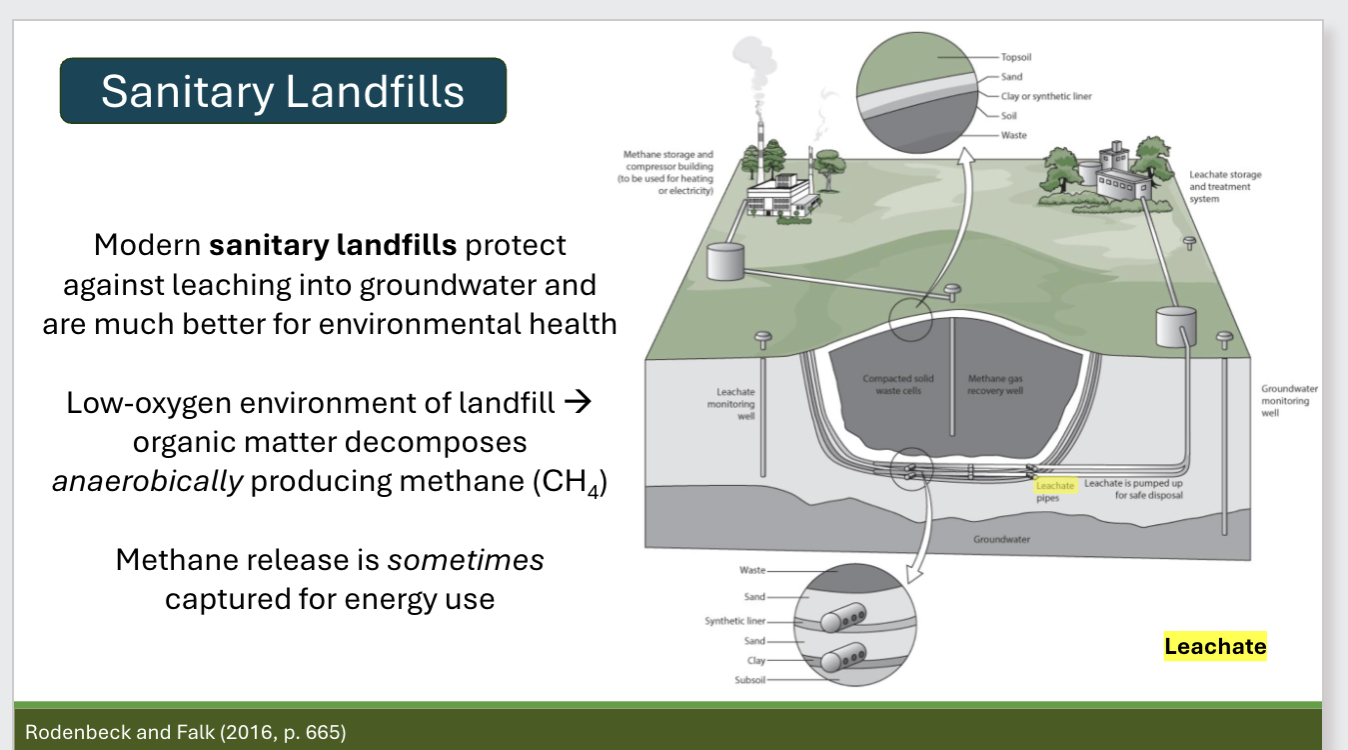
Explains what happens to organic matter (such as food waste) when it is in a landfill
landfills refer to the storage of wastes in the ground
health risks from leaching chemicals into soil and groundwater and rats and other disease vectors
low-oxygen environment of landfill→ organic matter decomposes anaerobically, producing methane (CH4) a potent GHG and toxic sludge. Methane release is sometimes captured for energy use
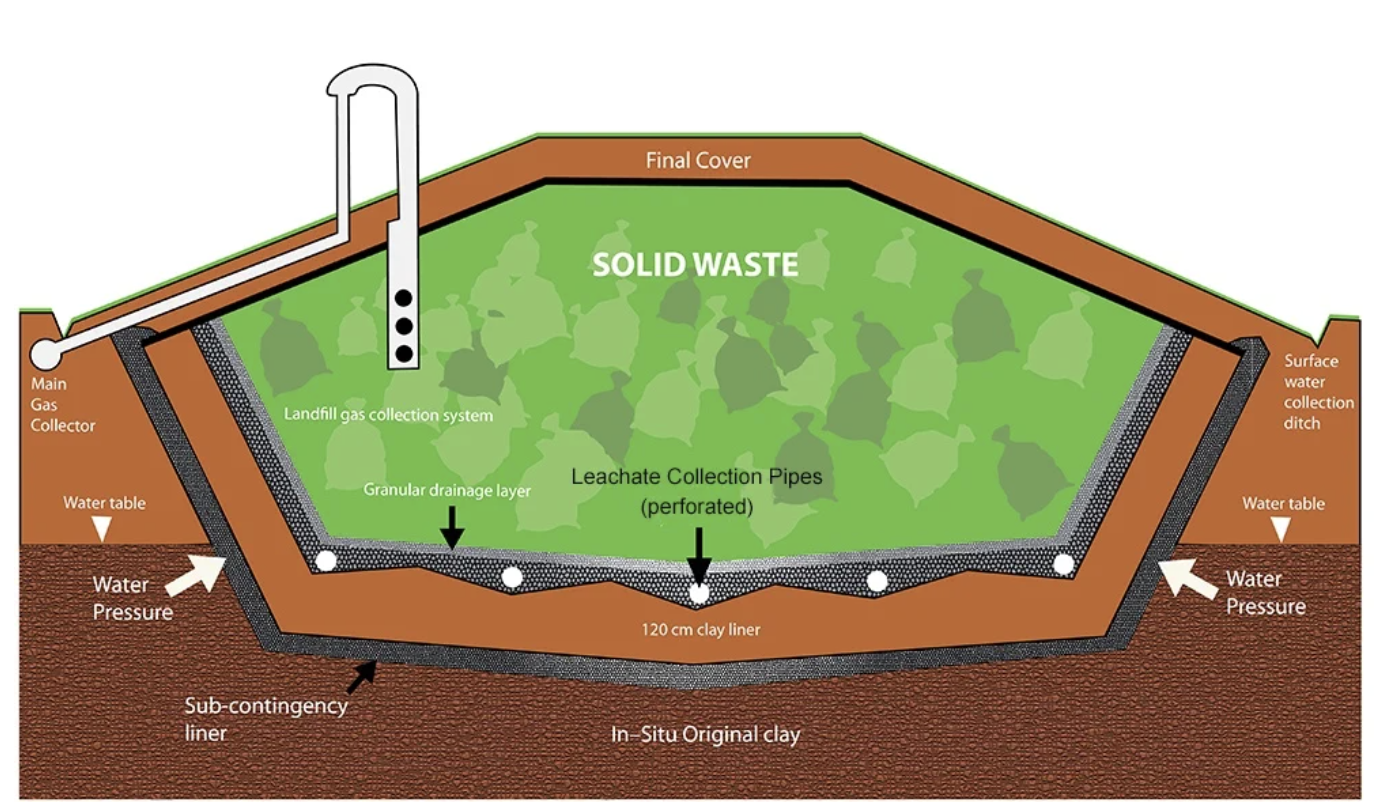
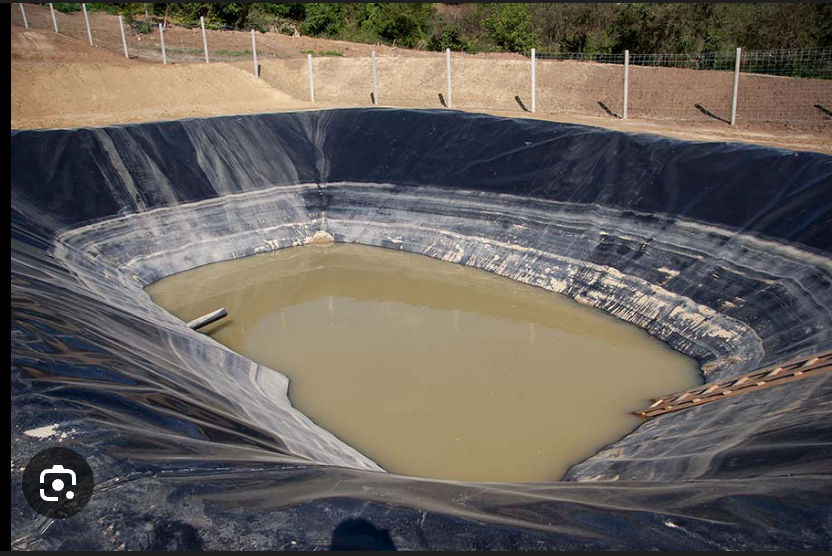
Define leachate
Leachate: a contaminated liquid formed when water percolates through solid materials, like rain soaking into a landfill, picking up dissolved and suspended substances (heavy metals, organic pollutants, microbes)
Identify ways that you can reduce the amount of waste you produce
Recycle properly: E-waste recycling and take hard-to-recycle items to Staples
Food: do not toss out food if composting is an option because it is wasteful, creates CH4, and makes a smelly trash can. You should compost items because u will have free fertilizer for your garden, and u can reduce ur carbon footprint
Dining: Try not to use single-use plastics(to-go coffee/food) because it is wasteful, leaches plastic chemicals, and is more expensive. Instead dine-in and utilize cloth bags because it supports servers and does not use plastic chemicals
Donate your gently used things you no longer want or need(Goodwill)
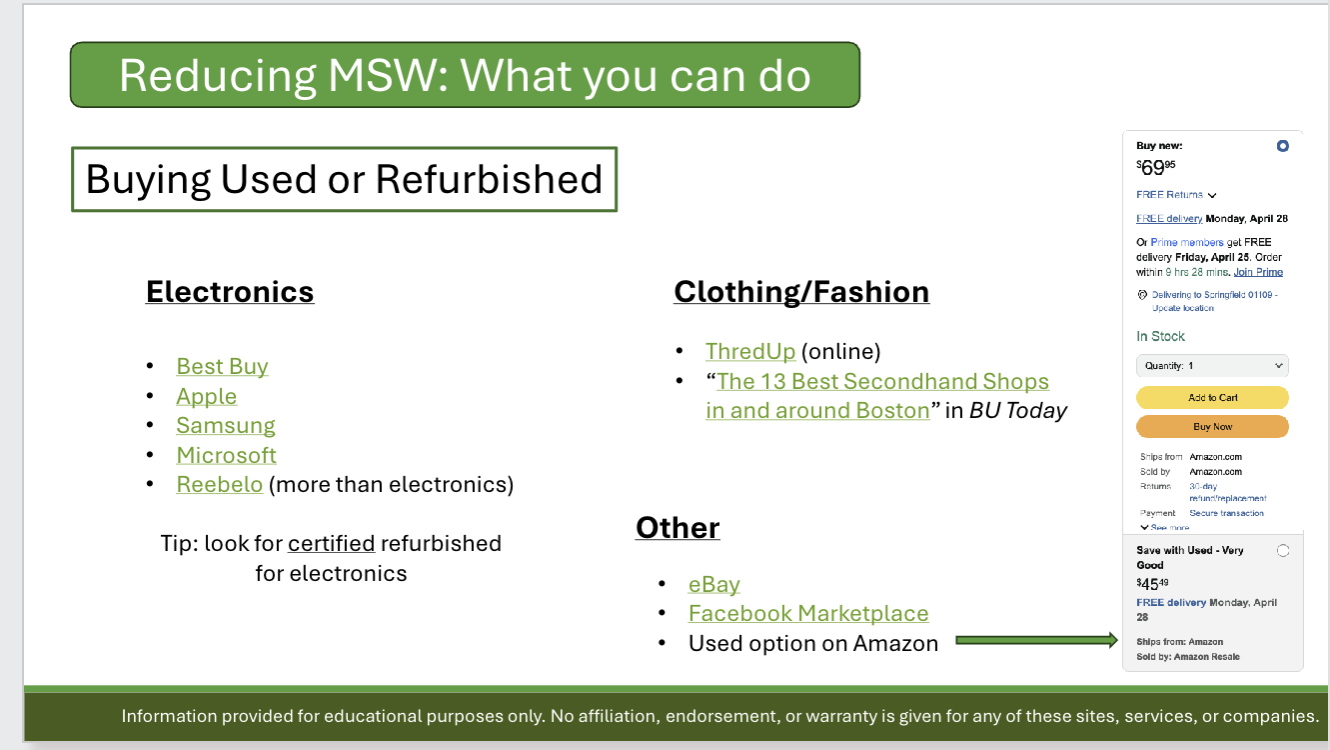
Buy used/refurbished electronics and clothing
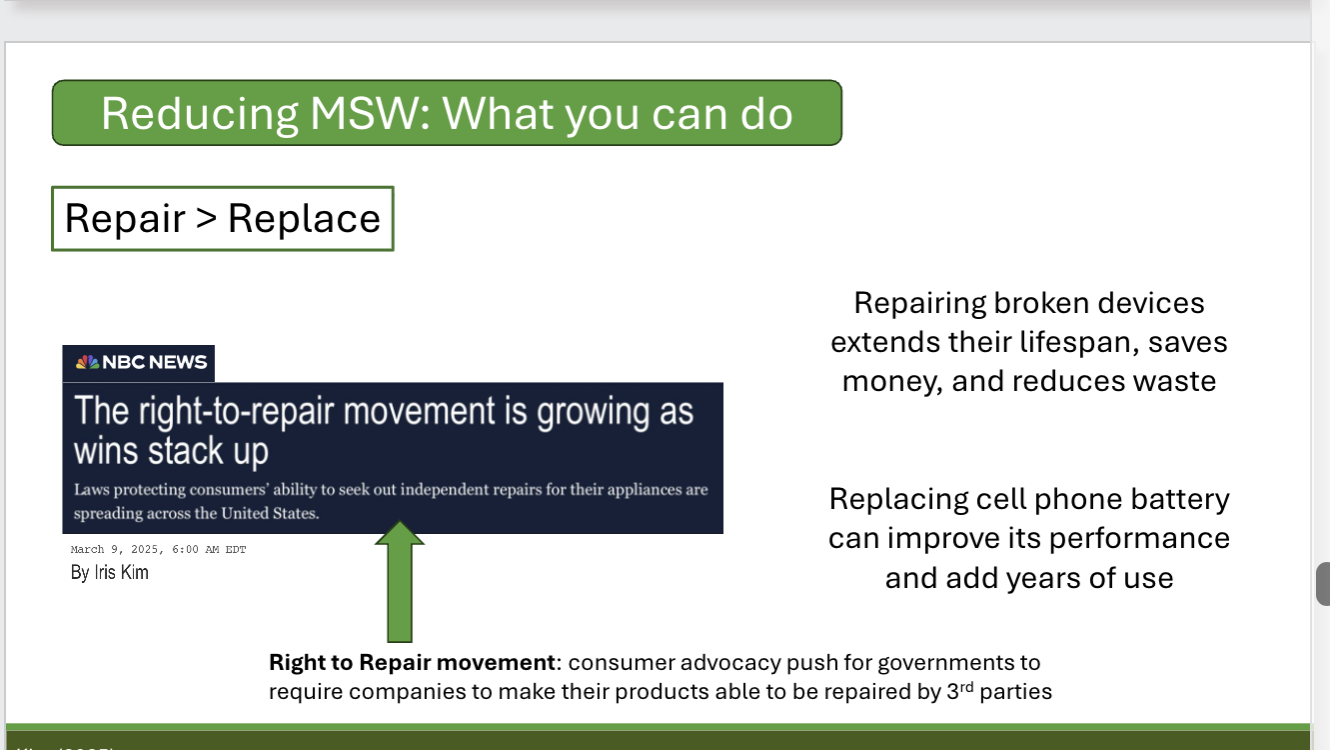
Repair broken devices extends their lifespan, saves money, and reduces waste. Replacing cell phone battery can improve its performance and add years of use
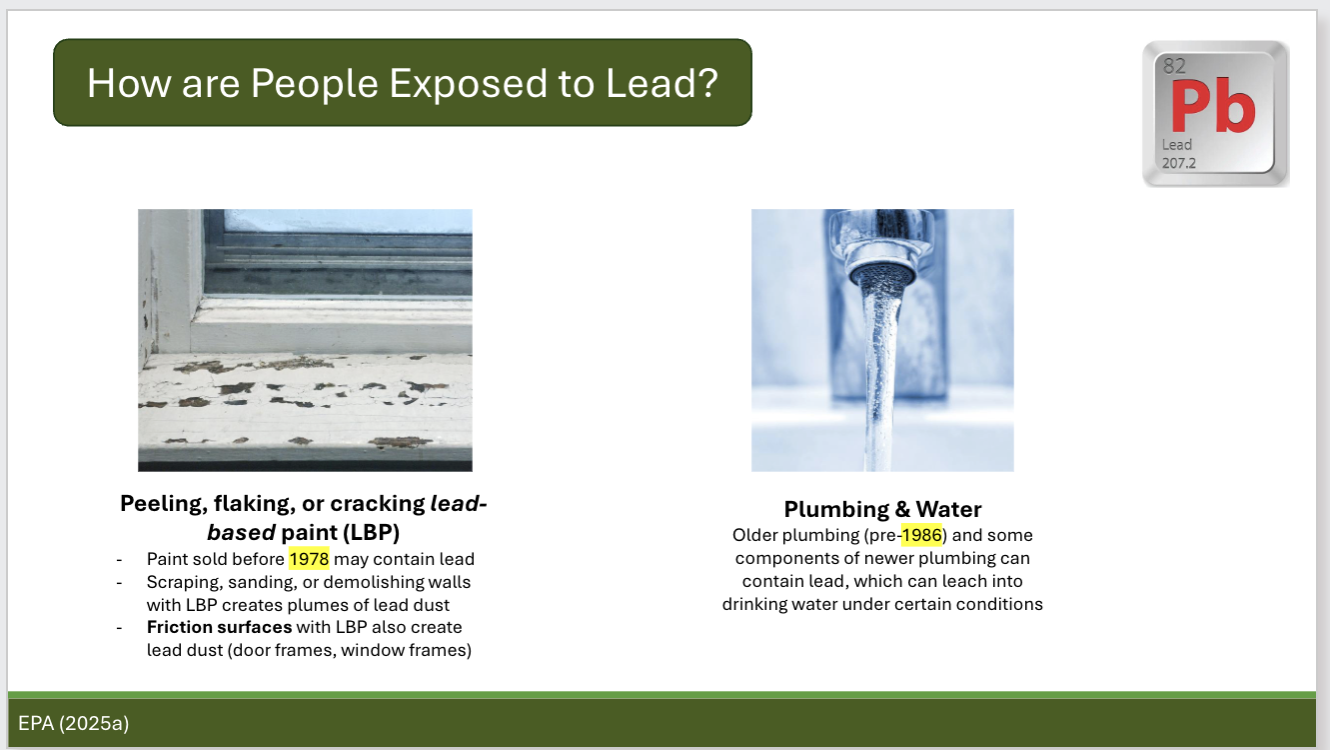
Identify the year that lead paint was banned from household paint and the year that lead pipes were banned from household plumbing (they are diff years)
Peeling, flaking, or cracking lead-
based paint (LBP)
- Paint sold before 1978 may contain lead
- Scraping, sanding, or demolishing walls
with LBP creates plumes of lead dust
- Friction surfaces with LBP also create
lead dust (door frames, window frames)
Plumbing & Water
-Older plumbing (pre-1986) and some
components of newer plumbing can
contain lead, which can leach into
drinking water under certain conditions
EPA (2025a)
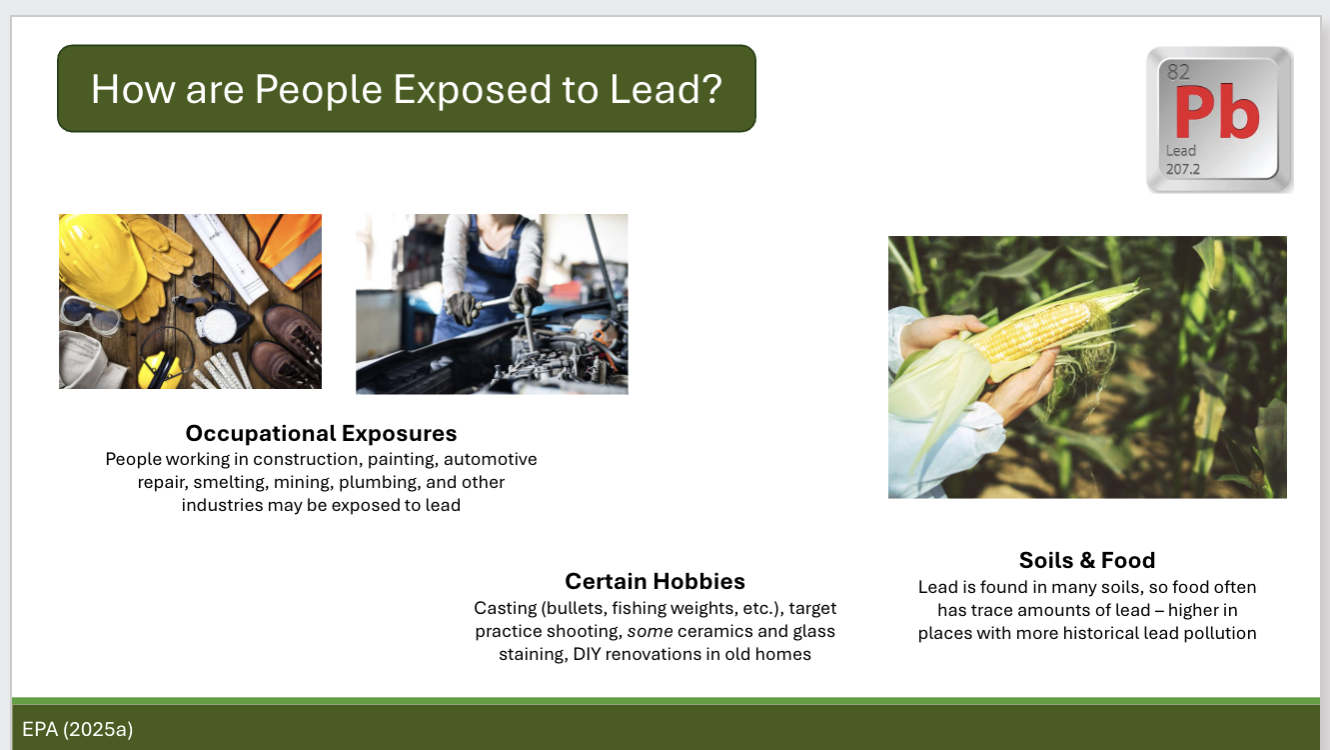
Describe how people are exposed to lead (Pb)
Occupational exposures: people working in construction, painting, automotive repair, smelting, mining, plumbing, and other industries may be exposed to lead
Certain hobbies: casting (bullets, fishing, weights) target practice shooting, some ceramics and glass staining, DIY renovations in old homes
Soils and food: lead is found in many soils, so food often has trace amounts of lead-higher in places with more historical lead pollution
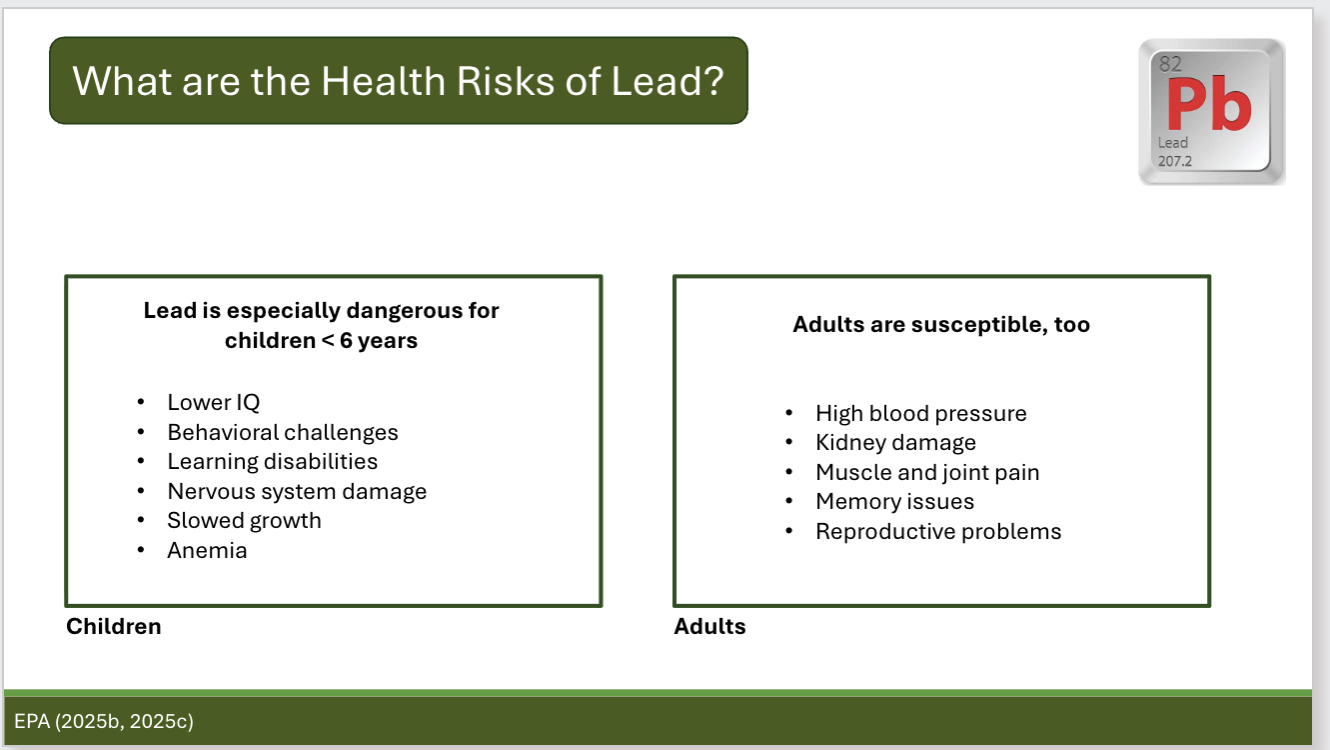
Differentiate the health impacts of lead for young children and adults
Lead is especially dangerous for children < 6 yrs:
lower IQ
behavioral challenges
learning disabilities
nervous system damage
slowed growth
anemia
Adults are susceptible, too
high blood pressure
kidney damage
muscle and joint pain
memory issues
reproductive problems
Identify the major tenets of the Mass Lead Law, including the ages that children are required to have their blood lead levels tested
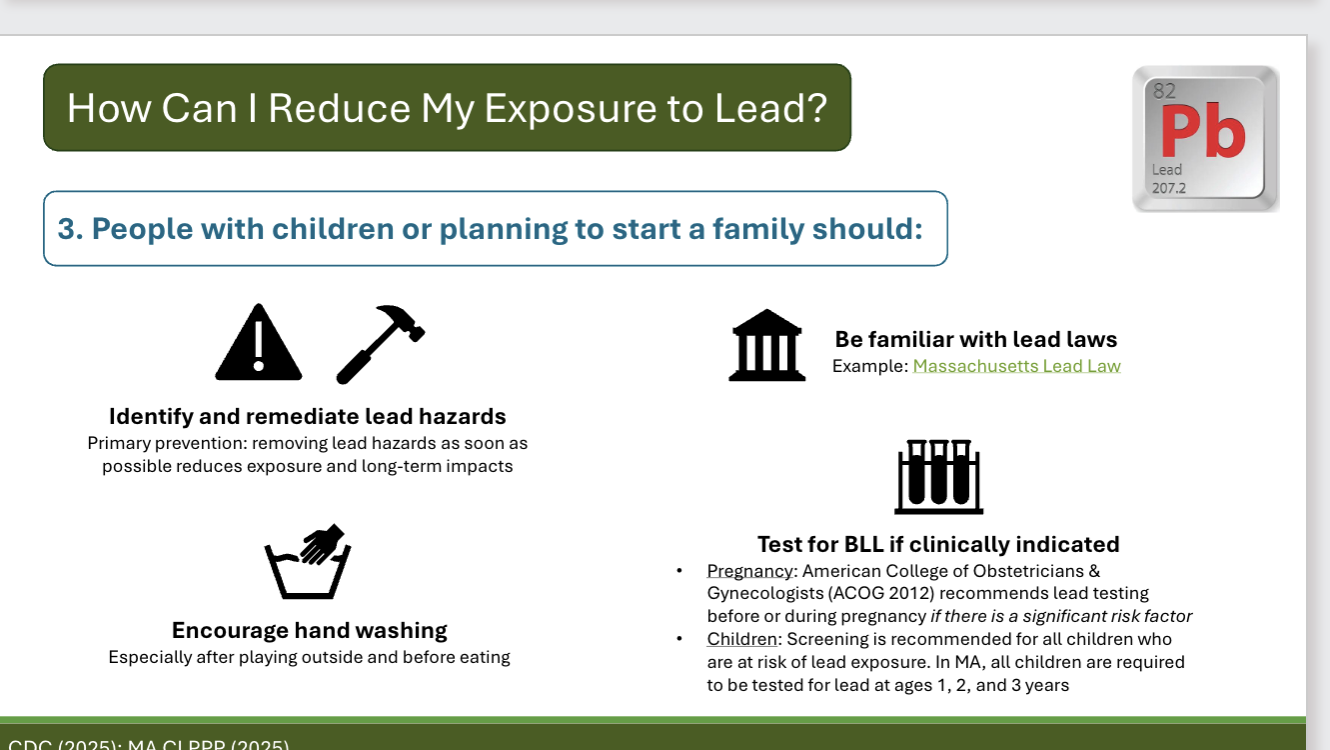
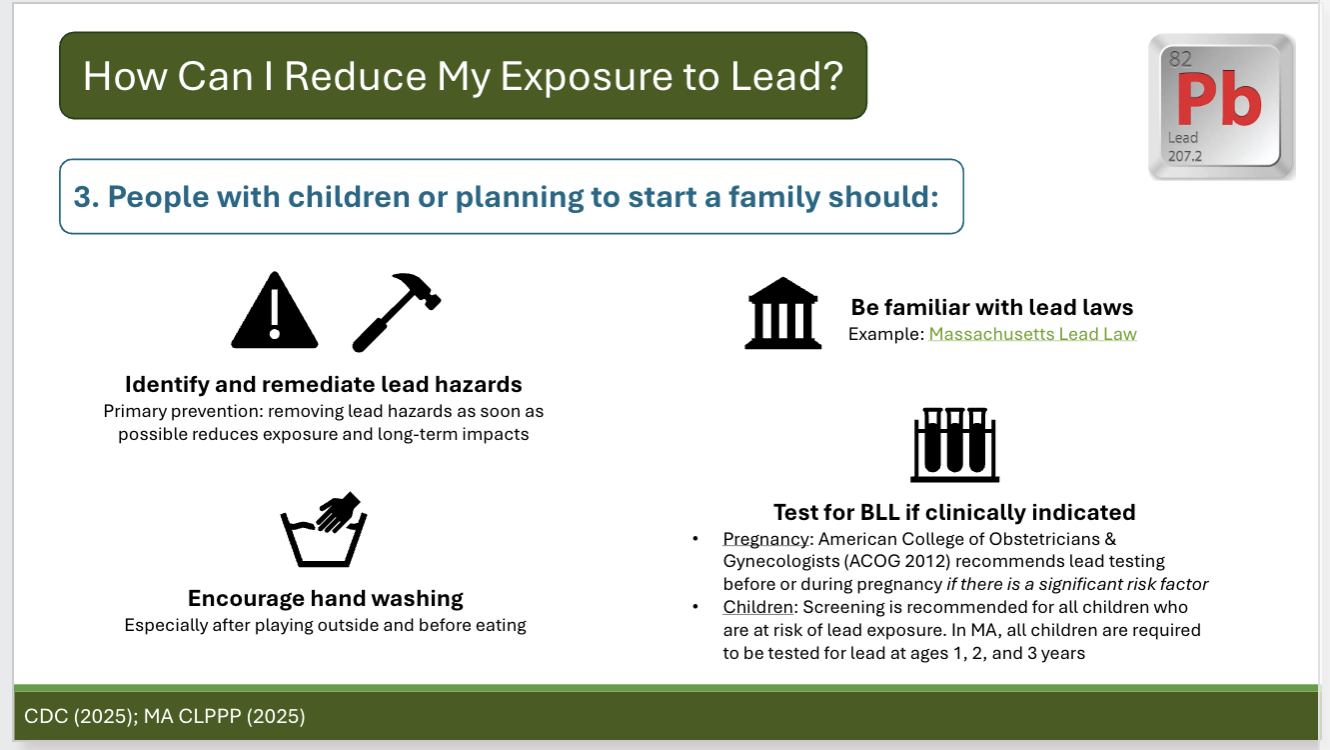
Major tenets of the Mass Lead Law: Homes built before 1978 may contain lead. The Lead Law protects a child's right to a lead-safe home. It requires the removal or control of lead paint in houses with children under 6. If houses built before 1978 are being sold or rented, sellers, real estate agents, and owners who rent their homes are required to notify their buyers and tenants of lead risks.
Test for BLL if clinically indicated:
pregnancy: American college of obstetricians and gynecologists recommends lead testing before or during pregnancy if there is a significant risk factor
children: screening is recommended for all children who are at risk of lead exposure. In MA, all children are required to be tested for lead at ages 1, 2, and 3
Describe different strategies that people can use to reduce their exposure to lead, specific to their circumstances, such as their occupation or the age of their home
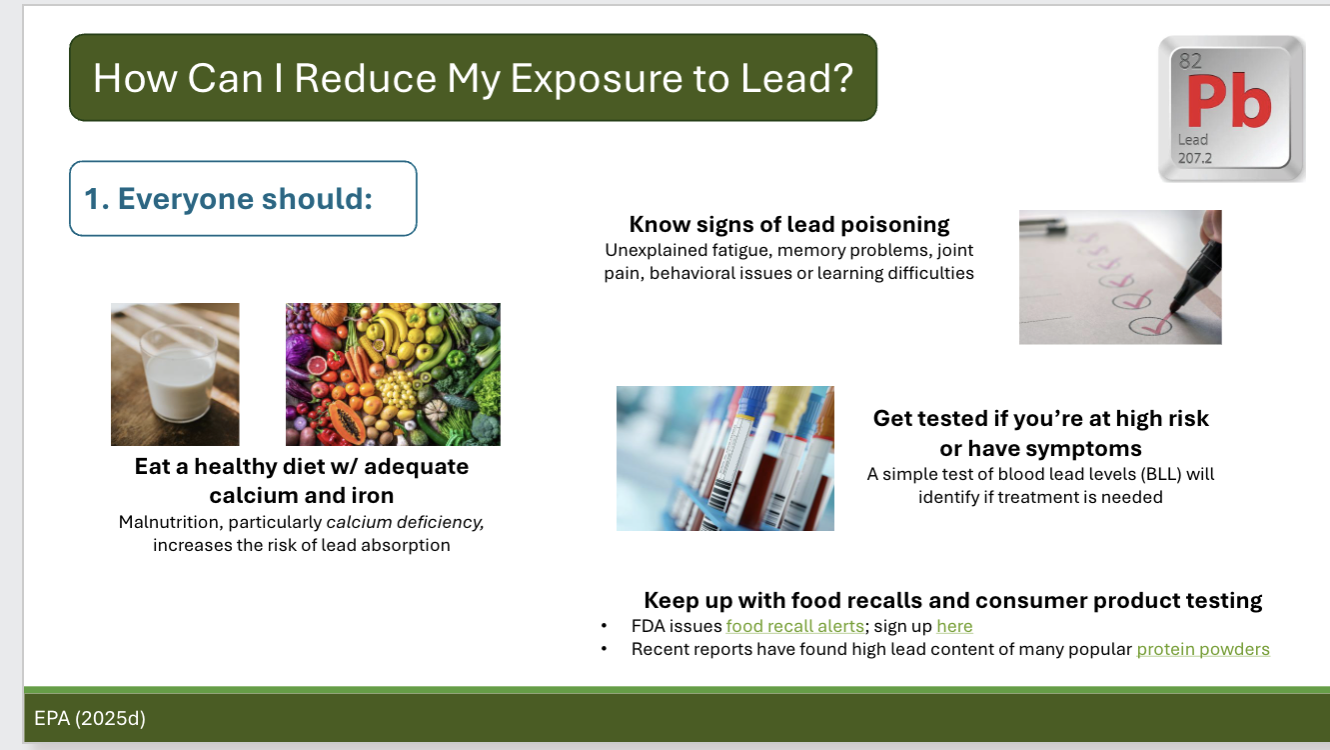
Eat a healthy diet w/ adequate calcium and iron because malnutrition, particularly calcium deficiency, increases the risk of lead absorption
Keep up with food recalls and consumer product testing
know signs of lead poisoning such as unexplained fatigue, memory problems, joint pain, behavioral issues
get tested if your’re at high risk or have symptoms: a simple test of blood lead levels will suffice
People in homes built before 1986 should check their home’s lead inspection history and maintain their house by keeping painted surfaces in good condition; keep home clean and wipe up dust; use filters (NSF/ANSI 53 or 58) and run the tap for 1 min in the morning
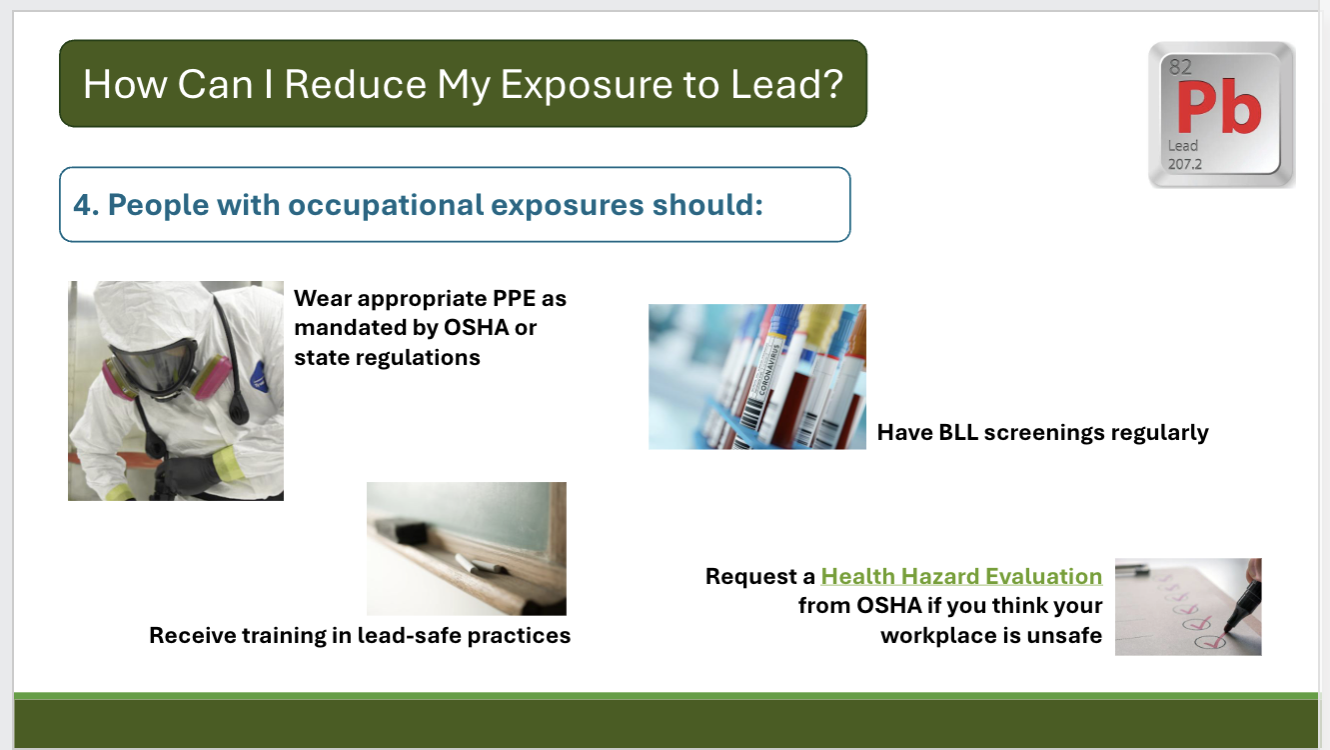
People with occupational exposures should:
wear PPE as mandated by OSHA or state regulations
receive training in lead-safe practices
have BLL screenings regularly
request a health hazard evalutation from OSHA if you think your workplace is not safe
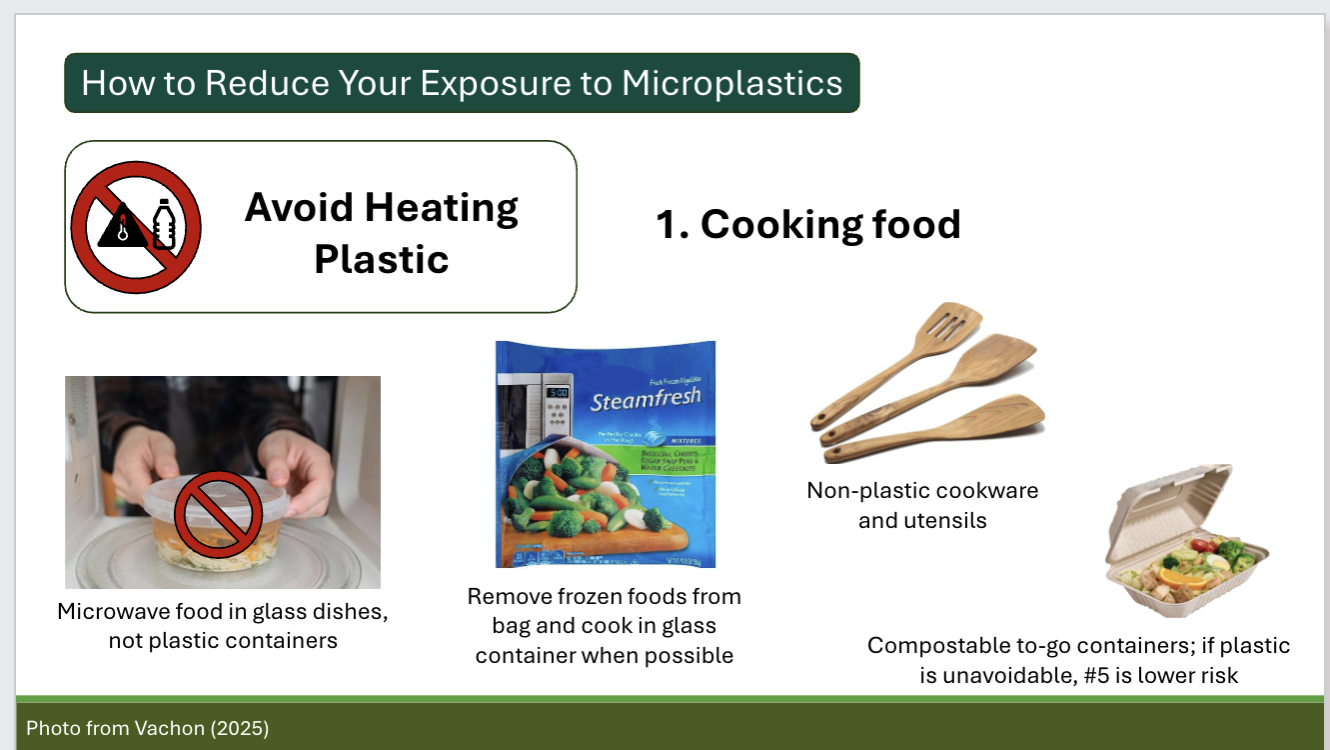
Identify ways people can reduce their exposure to microplastics
Food:
microwave food in glass dishes, not plastic containers, remove frozen foods from bag and cook in glass container when possible, non-plastic cookware and utensils, compostable to-go containers; if plastic is unavoidable, #5 is lower risk
Hot beverages:
Tea: loose-leaf tea in stainless-steel strainer or check for plastic-free tea bag brands/ Coffee: stainless-steel percolator or glass pour over rather than single-use coffee pods or plastic drip brewers
Clothes:
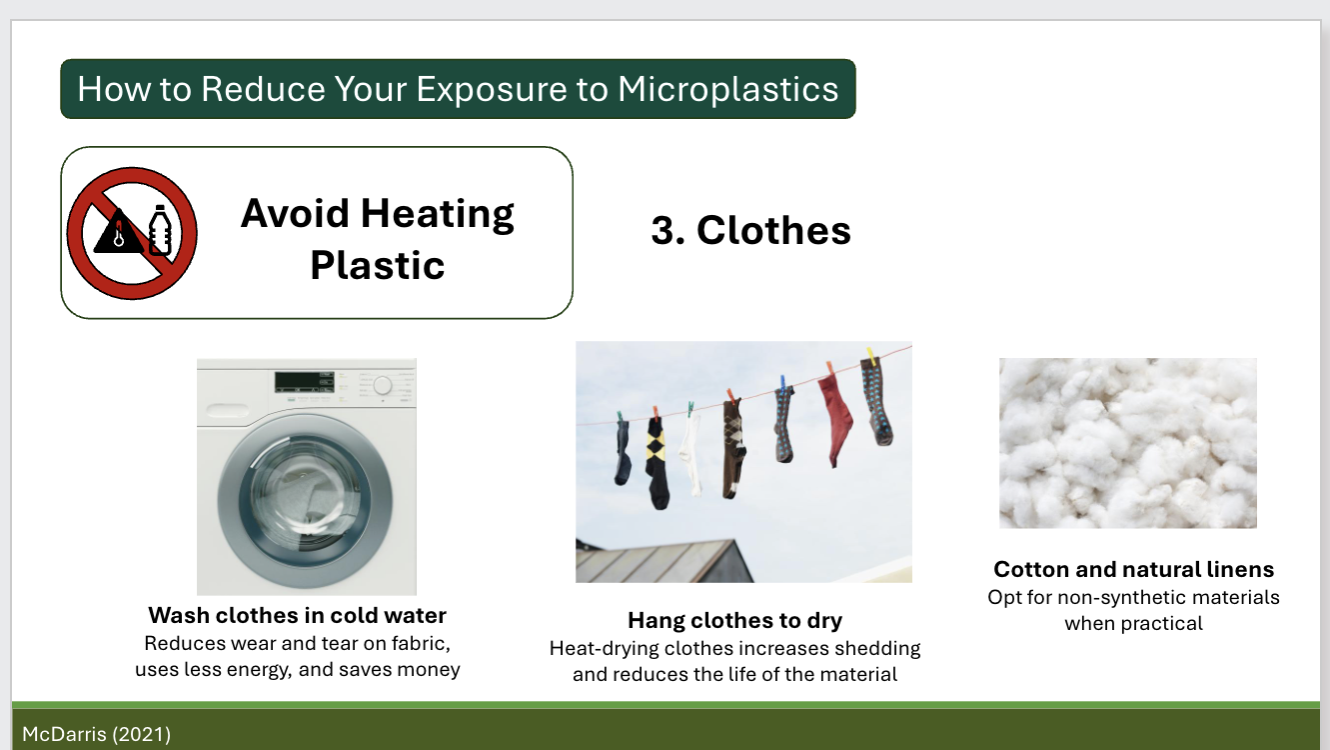
wash clothes in cold water because it reduces wear and tear on fabric and uses less energy and saves money, hang clothes to dry, and opt for non-synthetic materials when practical (try to use cotton and natural linens)
Home:
microplastics are in household dust so wipe down surfaces regularly, especailly when you prepare food. Carpets made with synthetic fibers can shed microplastics. Use a vacuum with a HEPA filter regularly