unit 12 - carbohydrates metabolism
 Studied by 0 people
 Call with Kai
 Learn
Learn Practice Test
 Spaced Repetition
 Match
Match Flashcards
 Knowt Play
1/167

There's no tags or description
Looks like no tags are added yet.
Name | Mastery | Learn | Test | Matching | Spaced | Call with Kai |
|---|
No study sessions yet.
168 Terms
we classify carbohydrates into 2 types
digestible
non-digestible
digestible carbohydrates polyysaccharides are
starch
glycogen
digestible carbohydrate starch is a
polysaccharide
glucose stored in plants
digestible carbohydrate glycogen is a
polysaccharide
glucose stored in animal
digestible carbohydrate, are also disaccharides such as
sucrose
lactose
sucrose =
glucose + fructose
lactose
glucose + galactose
digestible carbohydrates - what type of bond
what bond is called a digestible bond
alpha bonds
digestible bond means what
we are able to produce energy from the bond
main function of digestible carbohydrates
production of ATP (energy)
nondigestible carbohydrates contain what type of polysaccharides
complex polysaccharides
nondigestible carbohydrates are complex polysaccharides such as
cellulose
inulin
agar
what are the bonds in nondigestible carbohydrates
beta bonds
can we break beta bonds
no
if we have 1KG of cellulose how many ATPs are produced
0
from beta bonds can we produce energy
no atp production
nondigestible carbohydrates are also called
fibre
from the digestible carbohydrates we can spilt the process into 2
degradation to monosaccharides
absorption of monosaccharides by specific transportes at the intestinal level
step 1 of digestible carbohydrates
degradation
(to form monosaccharides)
step 2 of digestible carbohydrates
absorption of the monosaccharides
digestible carbohydrates - example with STARCH
step 1 what happens
starch is degraded into glucose (monosaccharide)
digestible carbohydrates - example with STARCH
step 2
glucose is absorbed
digestible carbohydrates - example with STARCH
why do we need to degrade starch?
we cannot absorb starch because its a polysaccharide

starch digestion full - read
done
glycolysis is the
degradation of glucose
Glycolysis is the degradation of glucose - what pathway is it?
catabolic pathway
glycolysis
is the …… way to get energy
fastest
glycolsis
fundamental way of producing energy for many tissues: (3)
muscles with low O2
red blood cells (no mitochondria)
brain (glucose is the main fuel)
glycolysis
how many reactions are there in total
10
glycolysis
what is the total amount of ATP produced from the 10 reactions
2
glycolysis
if we produce 2 ATPs with 10 reactions how many ATPs is produced per 1 reaction
0.2
glycolysis
even though the system is fast is it efficient
no
(not the best way to produce ATP as you only get 2 )
glycolysis
from the 10 reactions they are divided into 2 phases - what are the 2 phases and which reactions in each
Preparatory phase = reactions 1-5
Payoff phase = reactions 6-10
glycolysis
where does glycolysis happen
cytoplasm (of the cell)
glycolysis
is it aerobic or anaerobic pathway?
it doesn’t matter because oxygen is not relevant (can be performed in both conditions)
glycolysis
out of the 10 reactions how many are are reversible and how many are irreversible
3 reactions are irreversible
7 are reversable
glycolysis
which 3 out of the 10 reactions are irreversible
1
3
10
glycolysis
which 7 reactions out of the 10 are reversable
2
4
5
6
7
8
9

glycolysis reactions 1-4 - READ
done
glycolysis
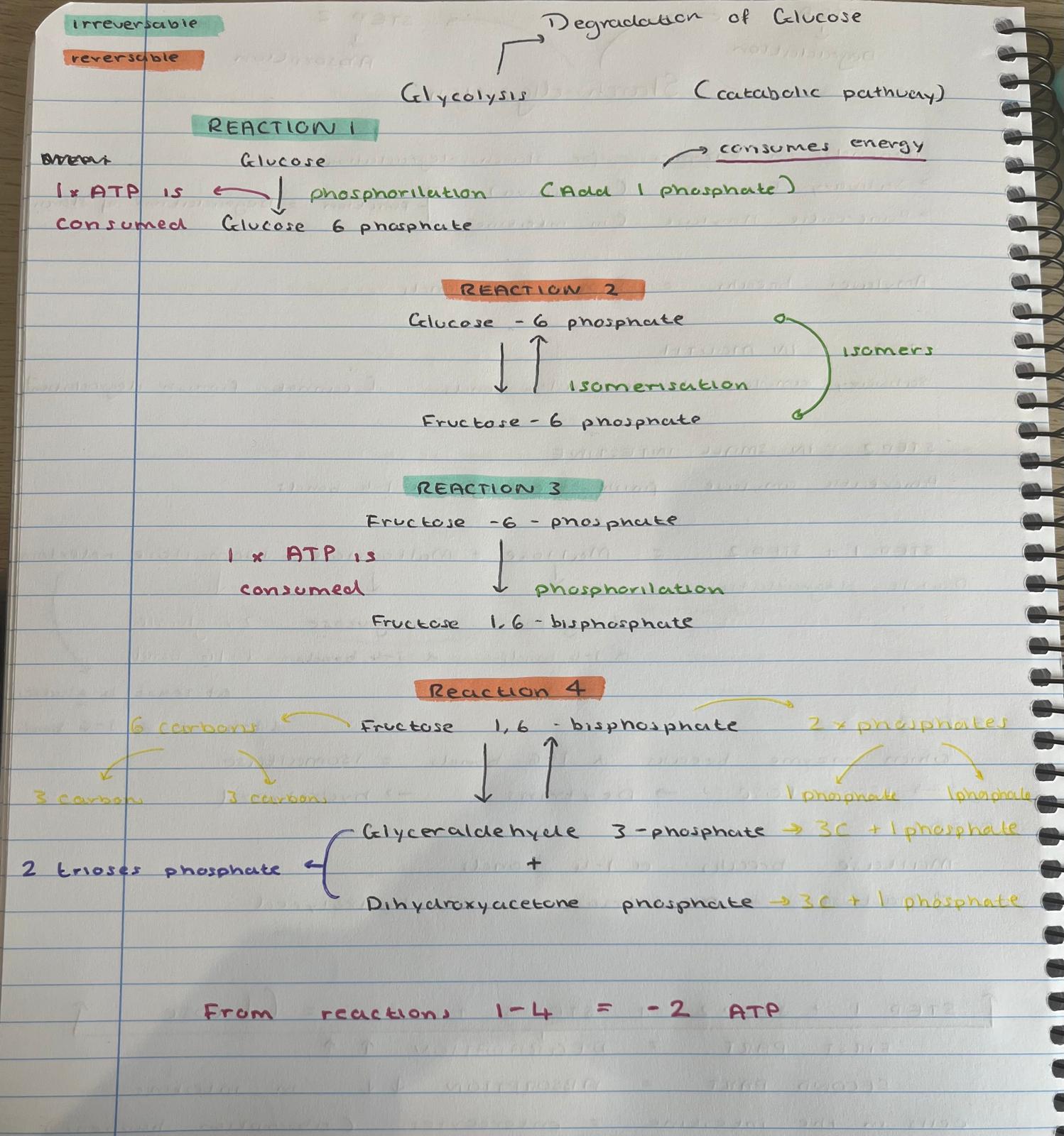
reaction 1
glucose —> glucose 6 phosphate
what is this reaction
any ATP consumes?
phosphorylation
1xATP consumes
glycolysis
reaction 2
glucose 6 phosphate → ← fructose- 6 phosphate
what is this reaction
any ATP consumes?
isomerisation
no ATP consumed
glycolysis
reaction 3
fructose- 6 phosphate → fructose 1.6 biphosphate
what is this reaction
any ATP consumes?
phosphorylation
ATP is consumed
glycolysis
reaction 4
fructose 1.6 biphosphate →← glyceraldehyde 3 phosphate and Dihydroxycetone phosphate
what is this reaction
any ATP consumes?
fructose 1.6 biphosphate is split into 2 × 3 carbons and 2 × 1 phosphate
to make 2 trioses phosphate
no atp is consumed
1-4 glycolysis read again
done
glycolysis
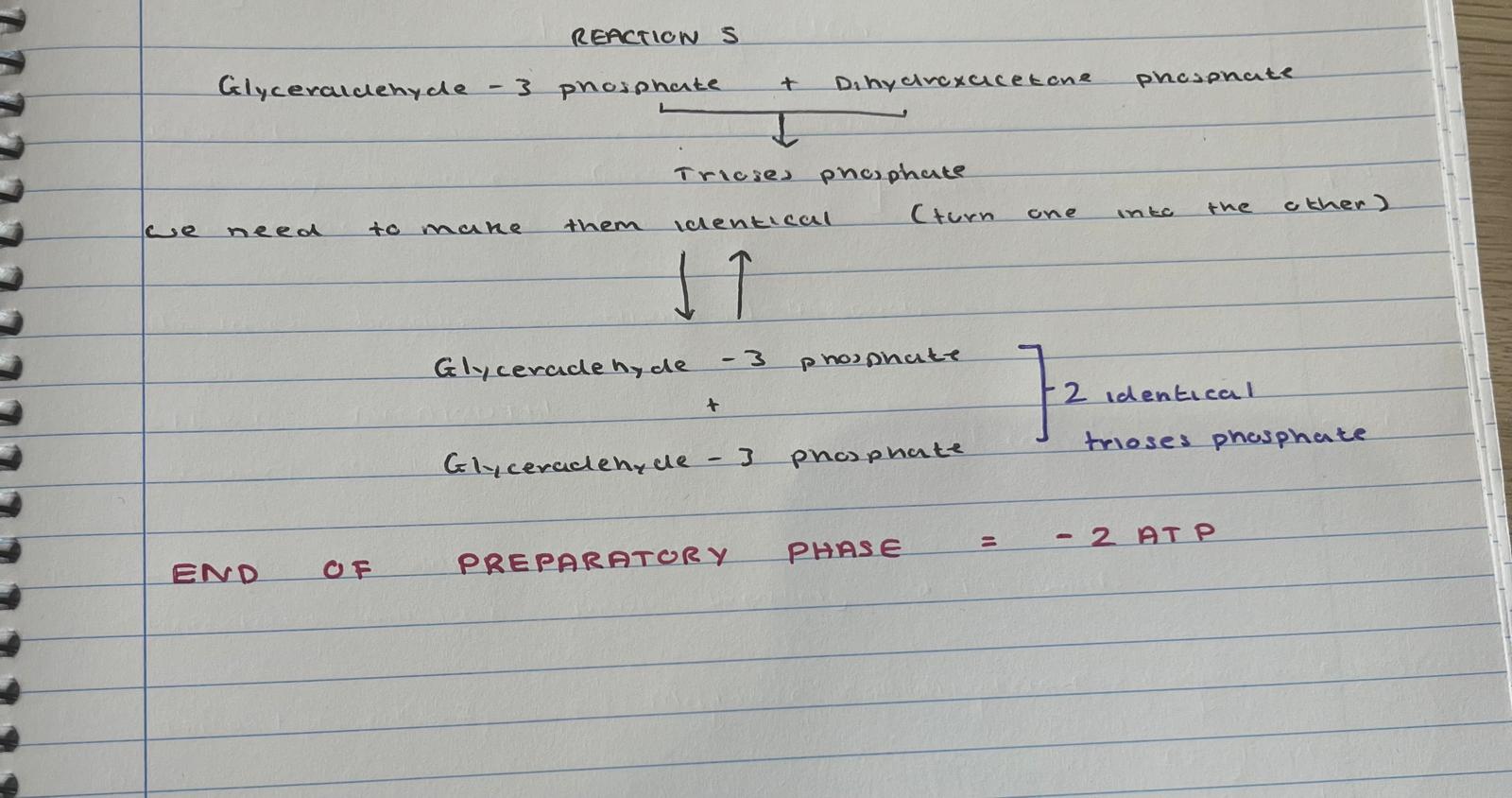
what is the goal of reaction 5
to get 2 identical triose phosphate
what is the balance of the Preparatory phase
no ATPs produced
2 ATPs consumes
= -2 ATPs
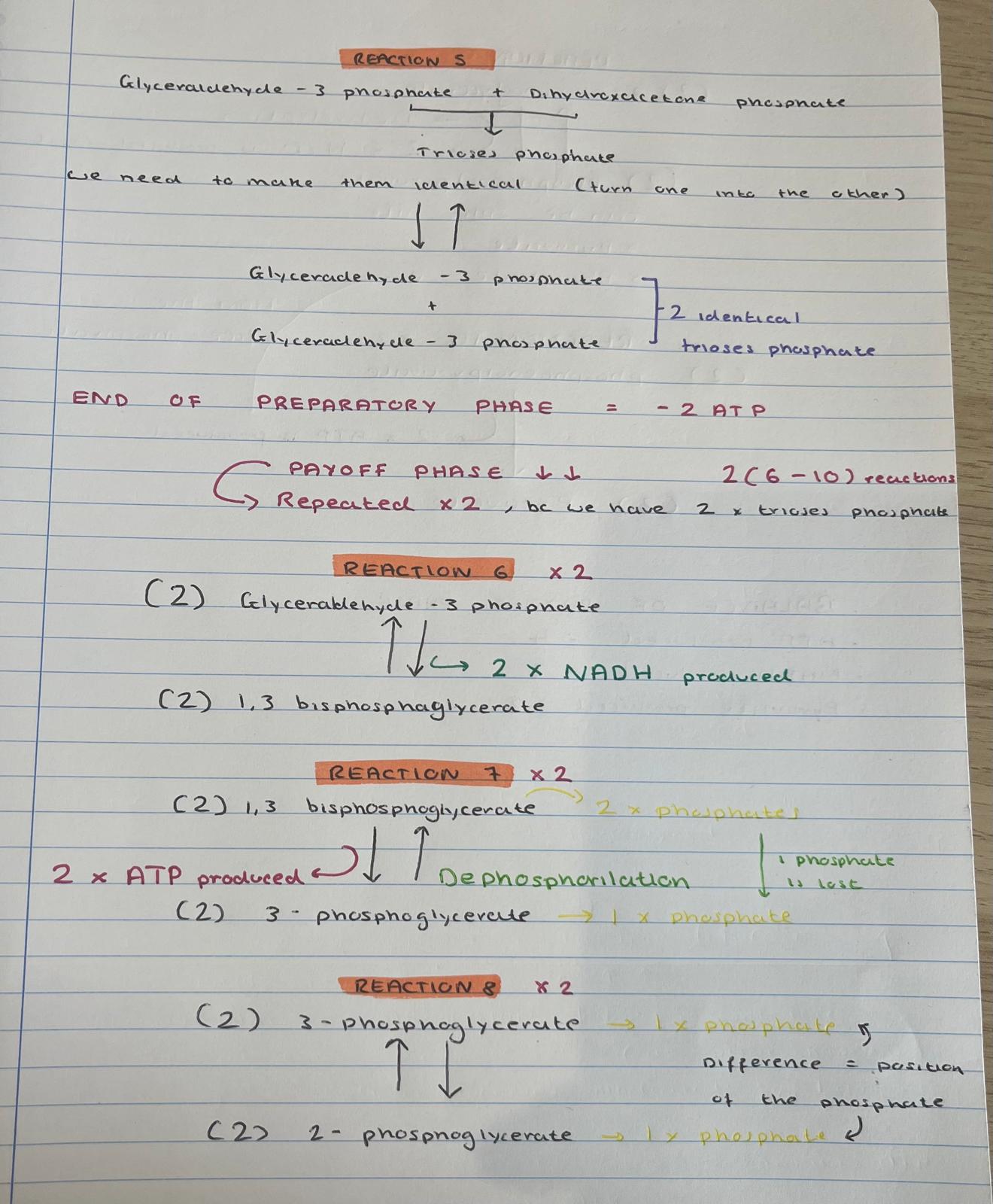
how many times is the payoff phase repeated
2
why is the payoff phase repeated twice
because we have 2 trioses phosphate
reactions 6-8 read
done
reactions 9 and 10 read - i’ve added the enzymes to the OG so read the paper
done
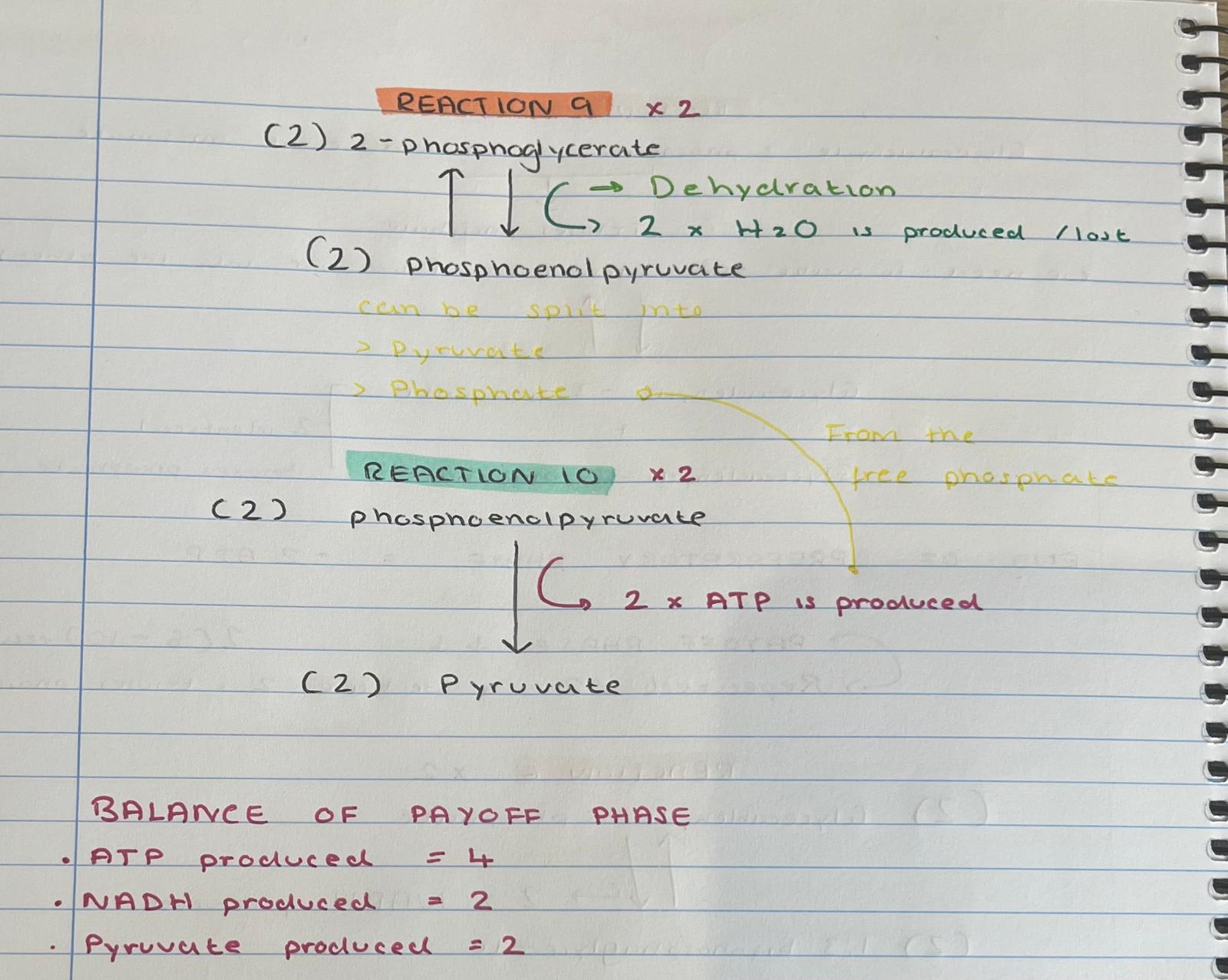
what is the balance of the payoff phase
ATP PRODUCED = 4
NADH PRODUCED = 2
PYRUVATE PRODUCED = 2
what enzyme catalyses reaction 1
hexokinase
what enzyme catalyses reaction 3
phospho-fructokinase-1
what enzyme catalyses reaction 10
pyruvate kinase
what reactions have enzymes in glycolysis? why reactions 1, 3 and 10
they are irreversible
what is the overall balance of glycolysis (preparatory phase and payoff phase)
full equation
glucose → 2 x pyruvate + 2 x ATP + 2 x NADH
if glucose comes from starch how many ATP is produced at the end of Glycolysis
2
if glucose comes from Glycogen how many ATPs are produced at the end of Glycolysis
3
what is the difference between starch and glycogen ?
in glycogen reaction 1 is not produced so its doesn’t consume that ATP
(glycogen has 9 reactions, starch has 10)
destinations of pyruvate
there are 3, what are they
kreb cycle
homolactic fermentation
alcoholic fermentation
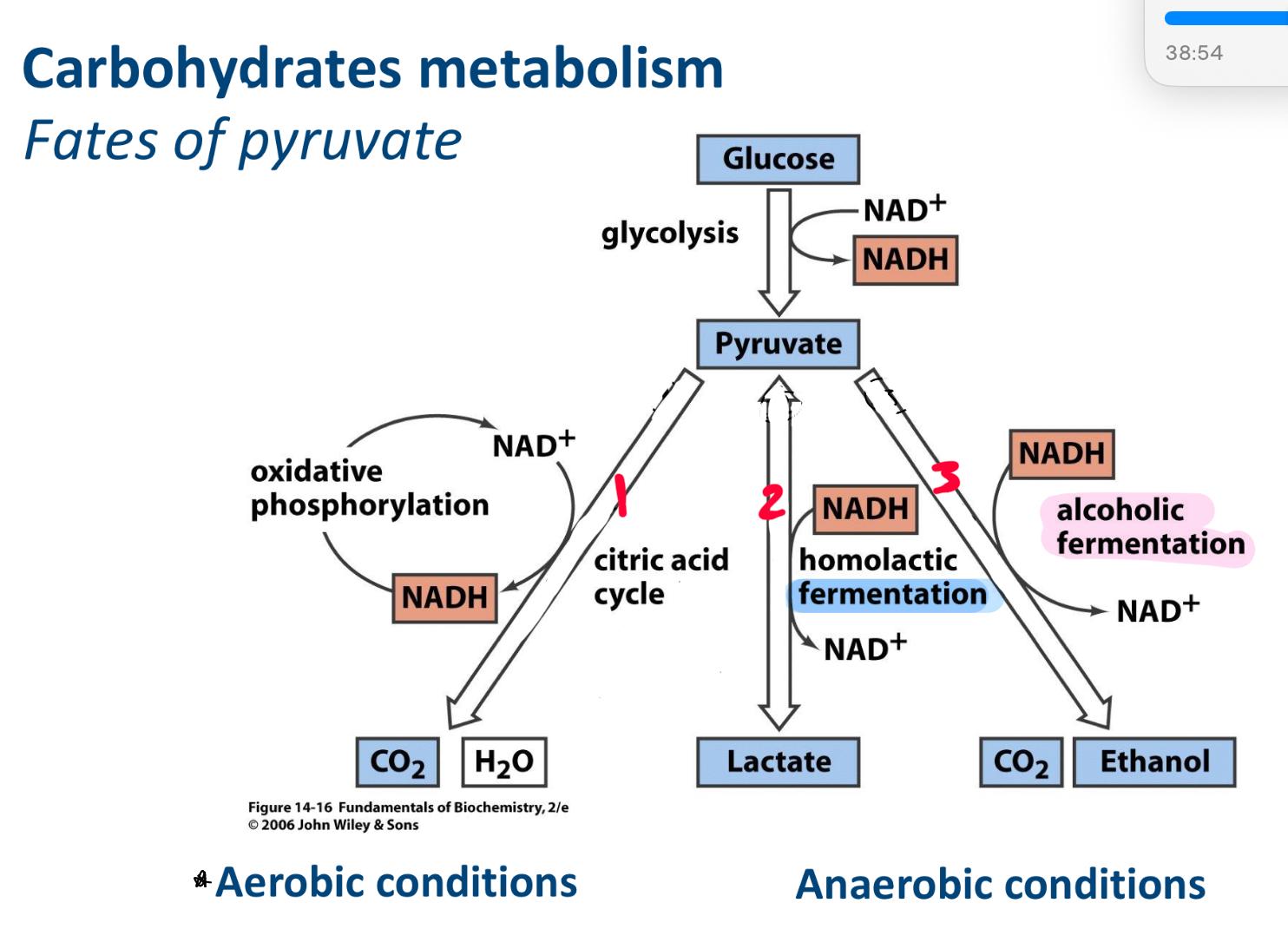
destinations of pyruvate
if perform the first process (kreb cycle) under aerobic conditions we would get
energy
co2
h20
Kreb cycle takes place where
mitochondria
(which is why we need aerobic conditions)
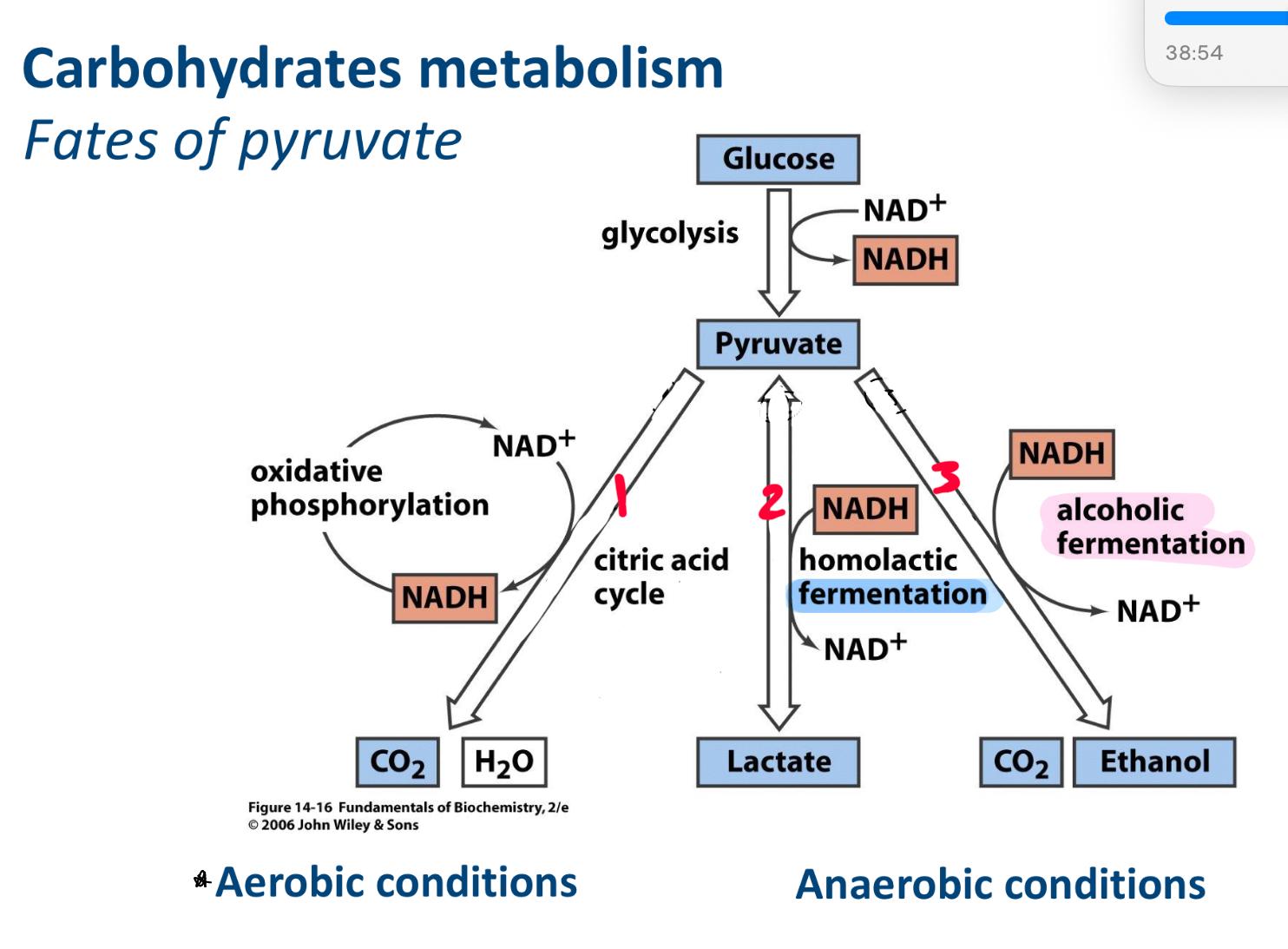
destinations of pyruvate
in process 2 we get lactate what type of reaction is this
reversable
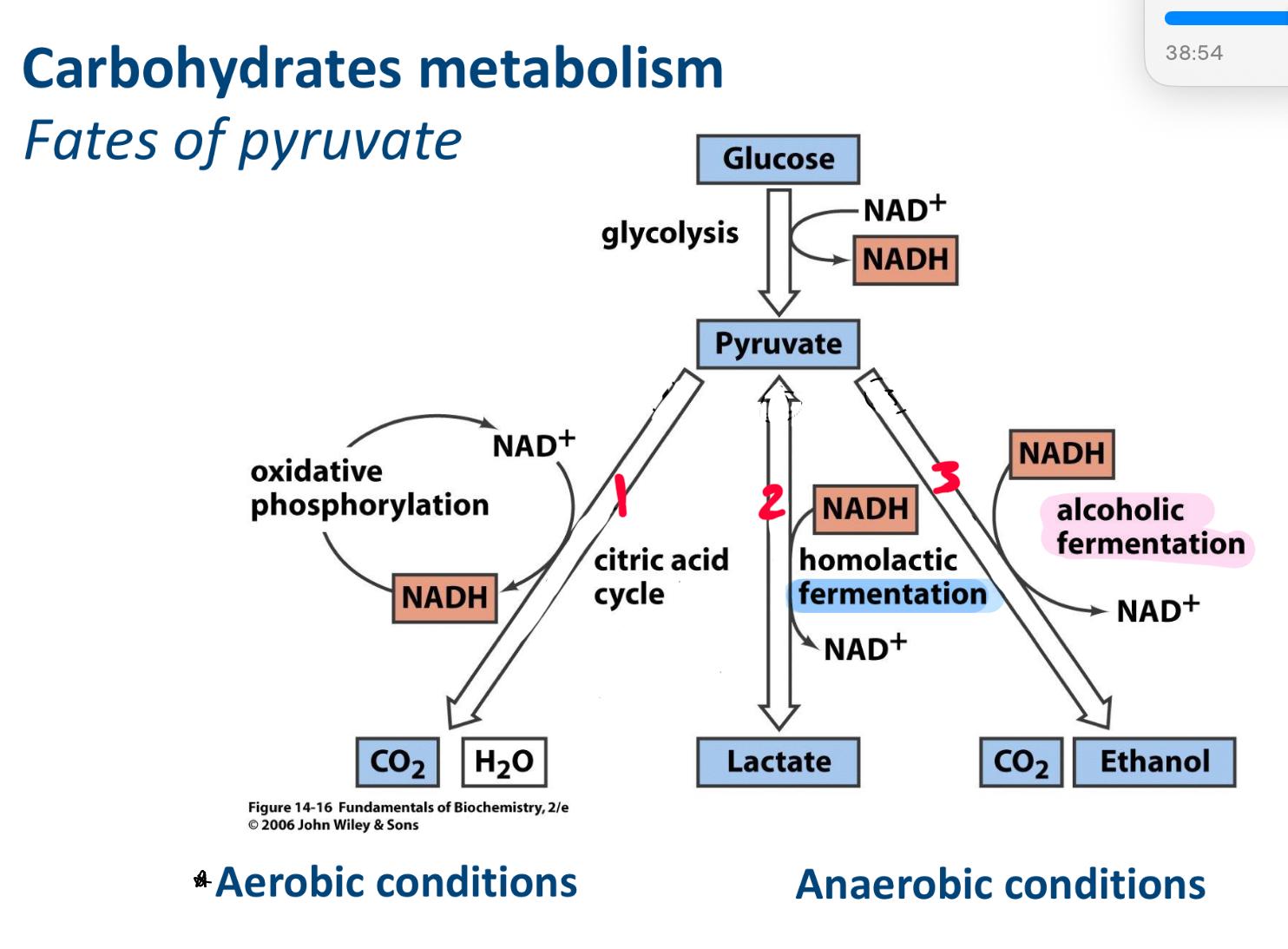
destinations of pyruvate
we get lactate through a reversable reaction because of
lactic fermentation
fermentation requirements
we don’t use oxygen
so use anaerobic conditions
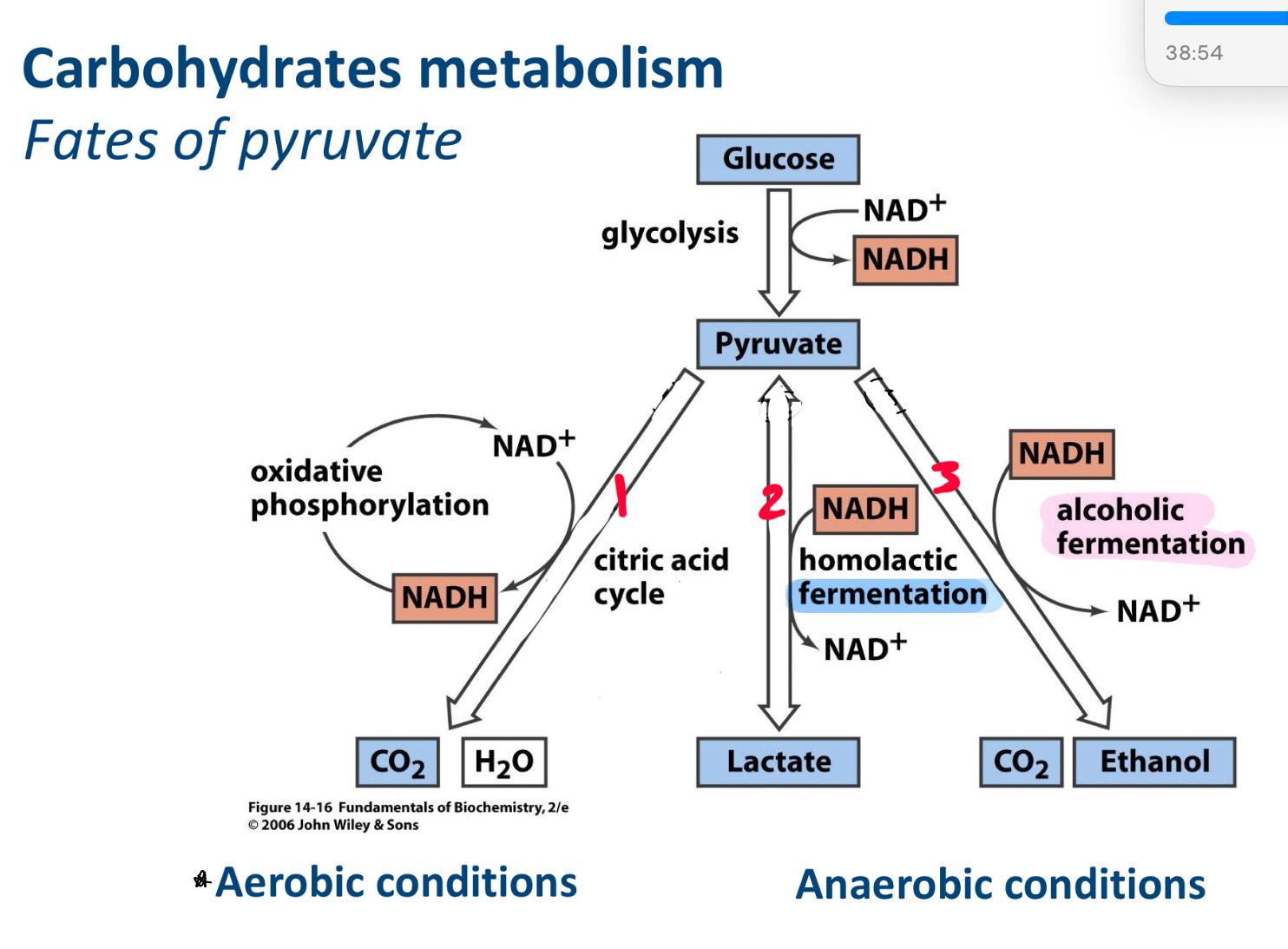
from pyruvate to ethanol this is called
alcoholic fermentation
is the processes of getting ethanol from pyruvate via alcohol fermentation, irreversible or reversable
irreversible
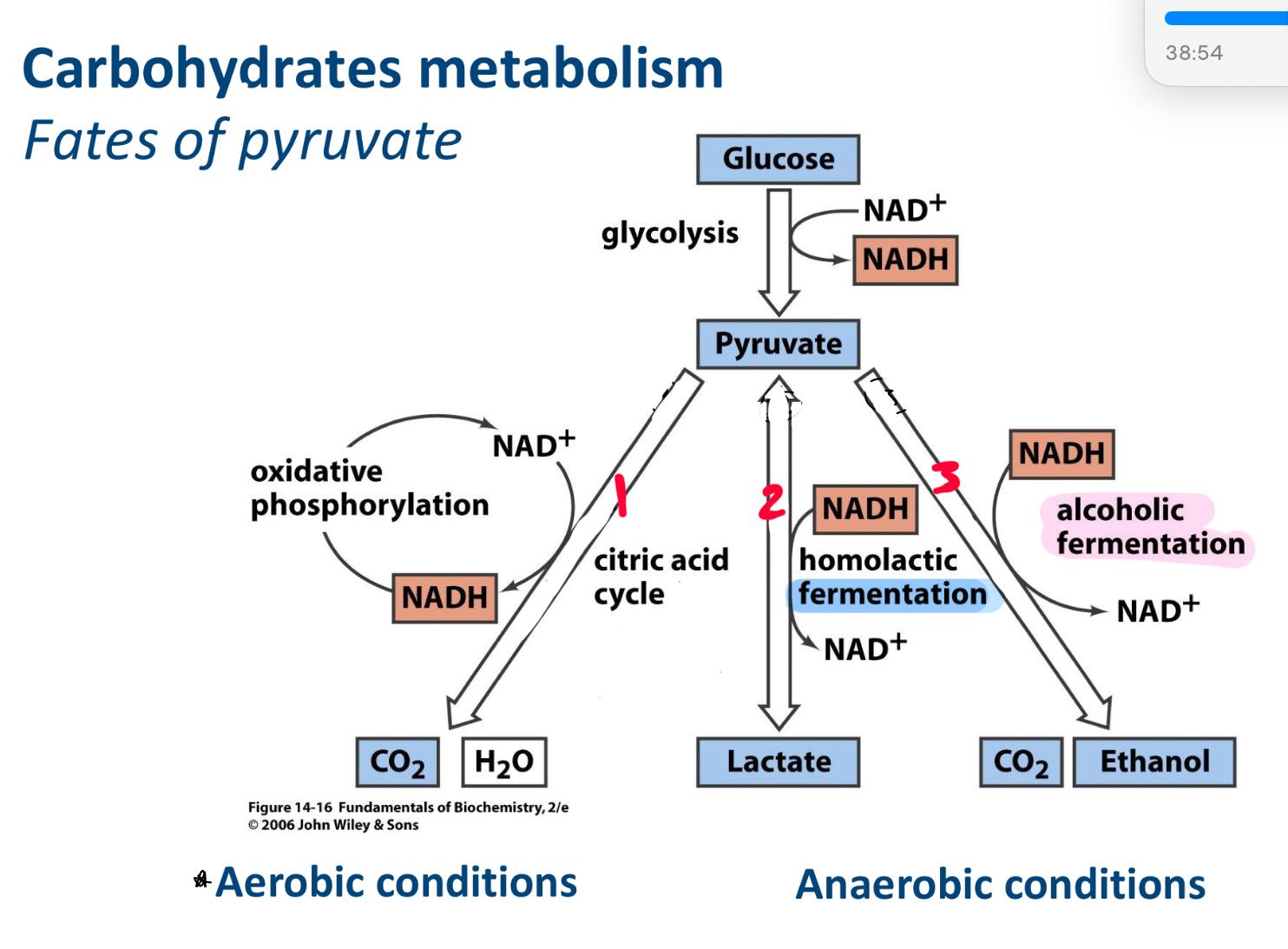
can out cells perform Kreb cycle
yes
can out cells perform Lactic permentation
yes
can our cells perform alcoholic fermentation
no
which organisms can transform pyruvate into alcohol (ethanol)
yeast and bacteria
glycolysis regulation
reaction 1 = hexokinase
reaction 3 = phosphofructokinase-1
reaction 10 = pyruvate kinase
(irreversible reactions)
what type of enzymes are these
allosteric enzymes
glycolysis regulation
if they are allosteric enzymes the regulation is based off of
effectors
glycolysis regulation
we balance the speed of glycolysis according to
effectors that are bound to the 3 enzymes
glycolysis regulation
high energy compounds = ATP and Citrate
why is citrate a high energy compound
because it is part of kreb cycle
glycolysis regulation
high energy compounds = ATP and Citrate
if the level of ATP and Citrate is high do we need to continue performing glycolysis
no
glycolysis regulation
high energy compounds = ATP and Citrate
when the level of ATP and Citrate are HIGH both are
negative effectors
glycolysis regulation
high energy compounds = ATP and Citrate
when ATP and Citrate are high - this is a way to slow down Glycolysis? true or false
true
glycolysis regulation
Low energy compounds = ADP and AMP
if the level of ADP and AMP is high do we need to produce ATP?
yes
glycolysis regulation
Low energy compounds = ADP and AMP
if the level of ADP and AMP is high do we need to produce ATP? - yes
if we need to produce ATP we will perform glycolysis yes or no?
yes
glycolysis regulation
Low energy compounds = ADP and AMP
when the level of AMP and ADP are high they are both
positive effectors of glycolysis
high energy compounds vs low energy compounds and when
high energy compounds = negative effectors
low energy compounds = positive effectors
when the concentration is high
fructose 2,6-biohosphate is part of glycolysis - true of false
false
fructose 2,6-biohosphate is what
the most powerful activator of glycolysis
fructose 2,6-biohosphate
specifically activates which 2 enzymes
phosphofructokinase-1 (reaction 3)
pyruvate kinase (reaction 10)
the control/regulation provided by hormones
which hormones
insulin and glucagon
insulin and glucagon are produced where
pancreases
(islets of Langerhans)
insulin and glucagon control the level of
glucose
what is the function of insulin
to transfers glucose inside the cell
(reduces the level of glucose in blood)
what happens when one glucose is transferred into the cell by insulin
it is immediately phosphorylated and we get glucose-6 phosphate
(reaction 1 )
is insulin an activator of glycolysis
yes
glycogen function
increases the level of glucose in the blood stream
releases glucose from the liver cells (as glycogen)
if we release glucose to the blood stream - do we enhance glycolysis or stop glycolysis
stop glycolysis
(bc glucose is in the blood not cells)
is glucagon and activator or an inhibitor of glycolysis
inhibitor
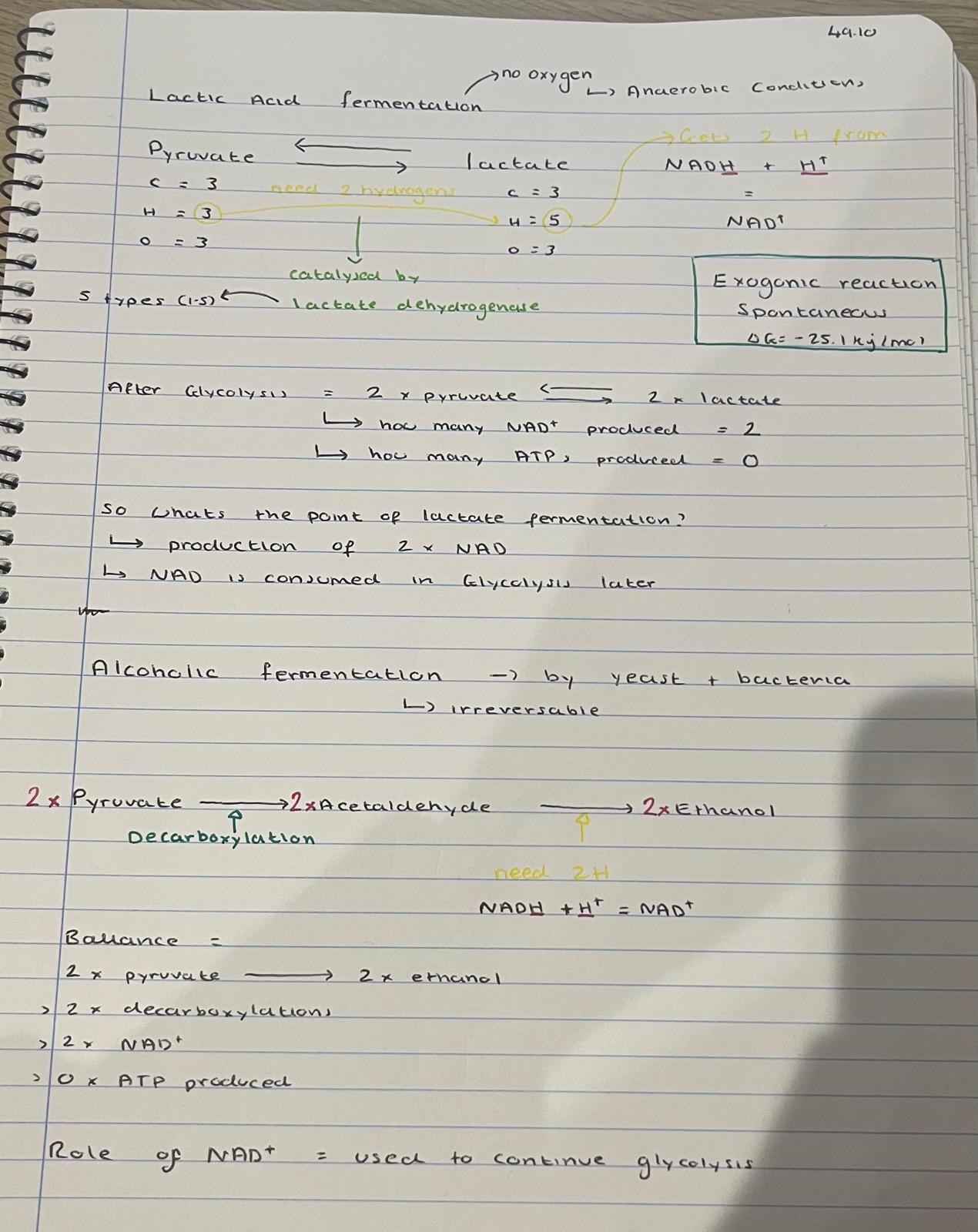
read
done
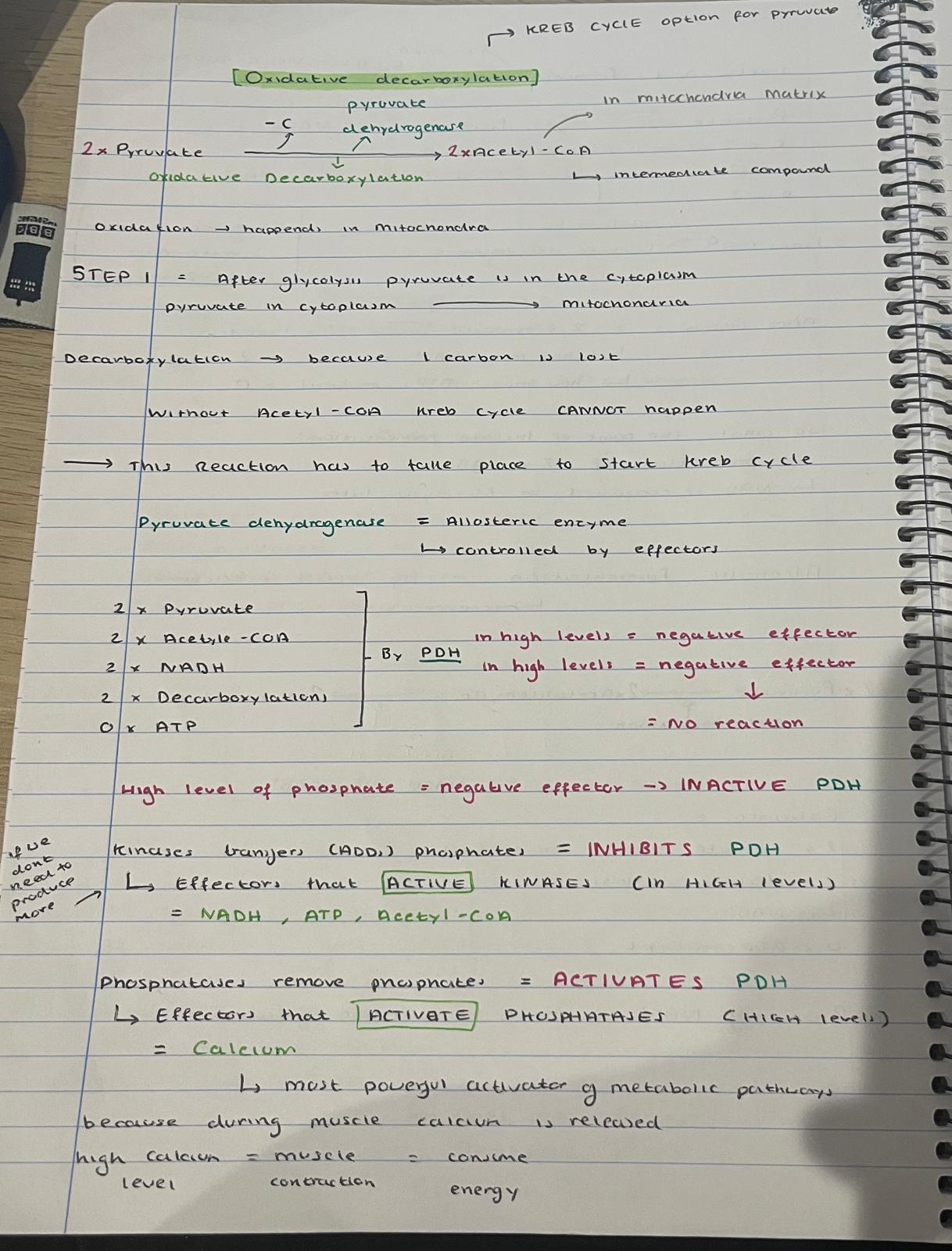
read
done
gluconeogenesis
the production/synthesis of glucose
what pathway is gluconeogenesis
anabolic pathway
gluconeogenesis
is the production of glucose from
non-glucidic precursors
gluconeogenesis
we have 3 main molecules in our body to produce glucose and what are they
glycerol - a lipid
lactate - from fermentation
1 amino acid - alanine