Hellenistic and Roman Art CL C 3223
 Studied by 1 person
 Call with Kai
 Learn
Learn Practice Test
 Spaced Repetition
 Match
Match Flashcards
 Knowt Play
1/19

Earn XP
Description and Tags
Final Exam Study Guide, Identitfications
Name | Mastery | Learn | Test | Matching | Spaced | Call with Kai |
|---|
No study sessions yet.
20 Terms
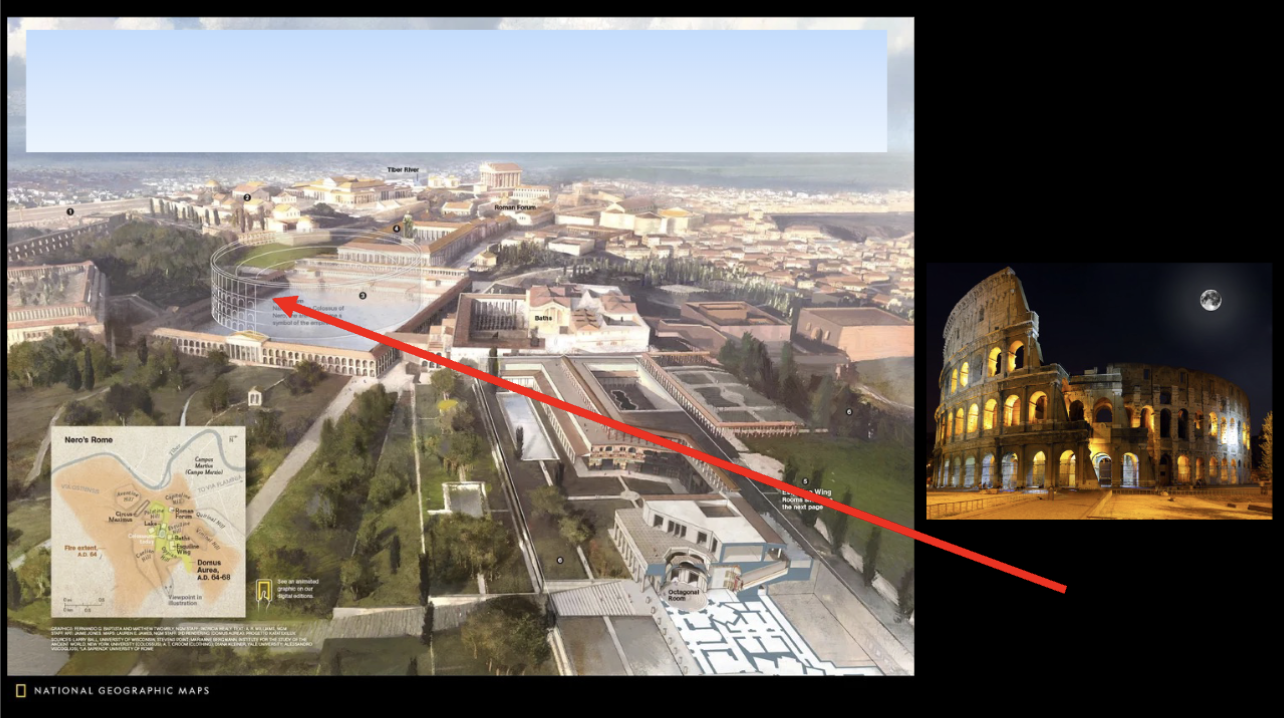
Flavian Amphitheater (The Colosseum)
72-80 CE
“Amphi” means on both sides
elipitical, 76 numbered entrances/exits, made of concrete and travertine, Cavea (seating)
Built on top of Nero’s artificial lake, “Nero destroys, Flavian builds”, Reclamation of space for the people,
Largest amphitheater (50-80,000 seats), Empire on display, emperor controlled what was on view
Seating order: Podium = lowest tier reserved for emperor and other higher ups, then equestrian order, ordinary citizens, lastly women and lowest classes
Hypogeum: workshops animal cells, and storage area
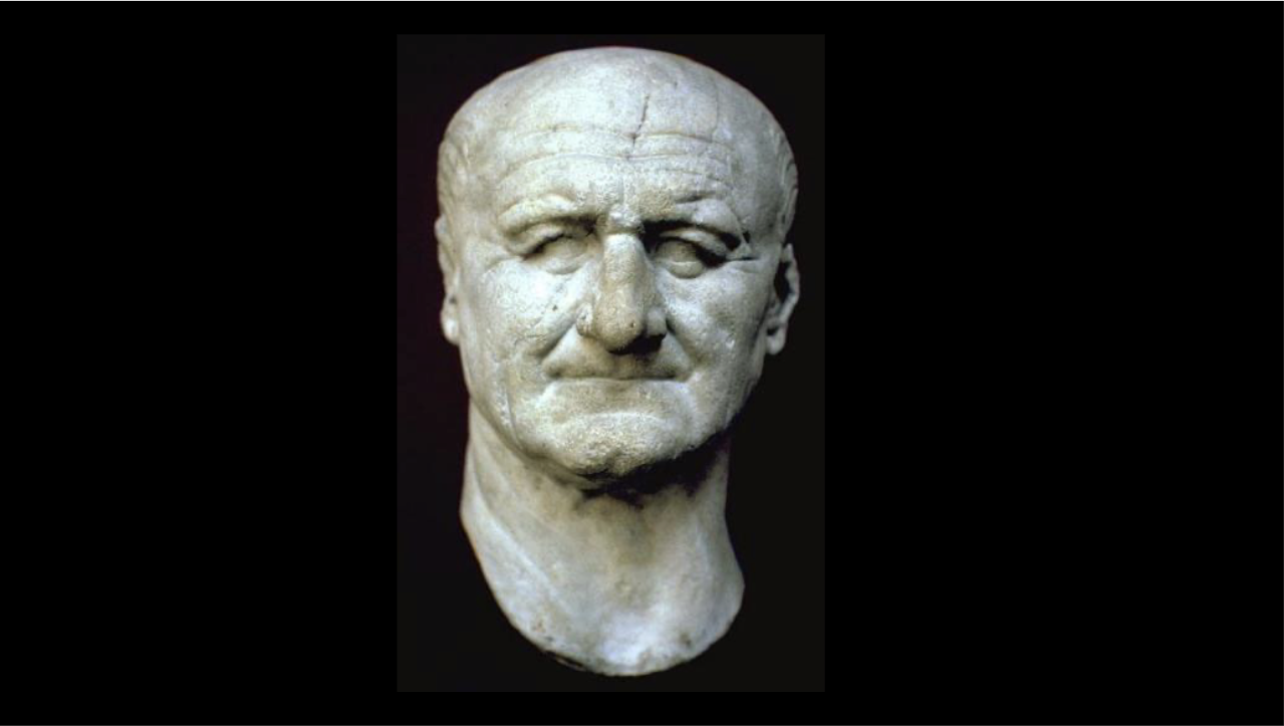
Vespasian (r. 69-79 CE)
Vespasian made emperor by the army while successfully subduing the First Jewish Rebellion in Judaea (66–73 CE)
Although he claimed the title of emperor, Vespasian
lacked auctoritas (authority) and maiestas (majesty)
Problems: Not rich, no big ancestry (no Venus in his
background), Had to establish his legitimacy to rule, He had to distance himself from Nero
More veristic look, famously frugal, plain man, real soldier
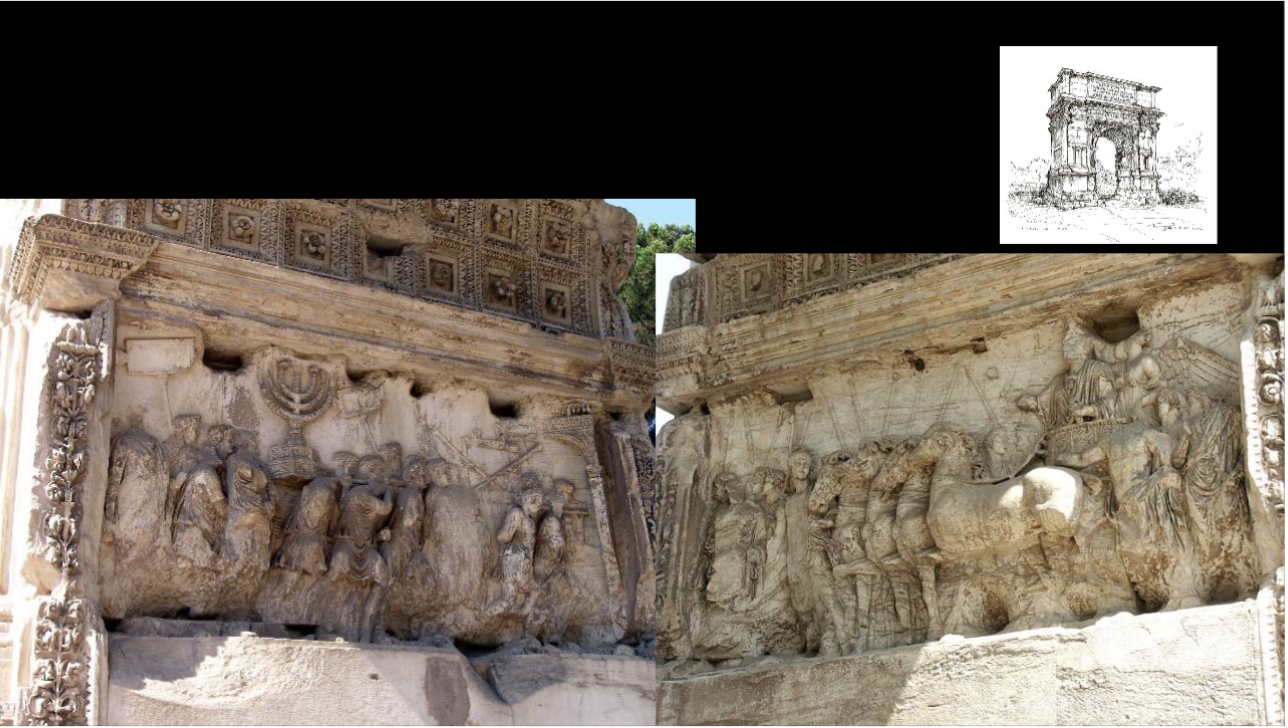
Arch of Titus (81 CE)
Interior relief panels, triumphal procession to forum, paid for by spoils from sack of Jerusalem, dedicated to son of Vespasian, new visual axis in Rome
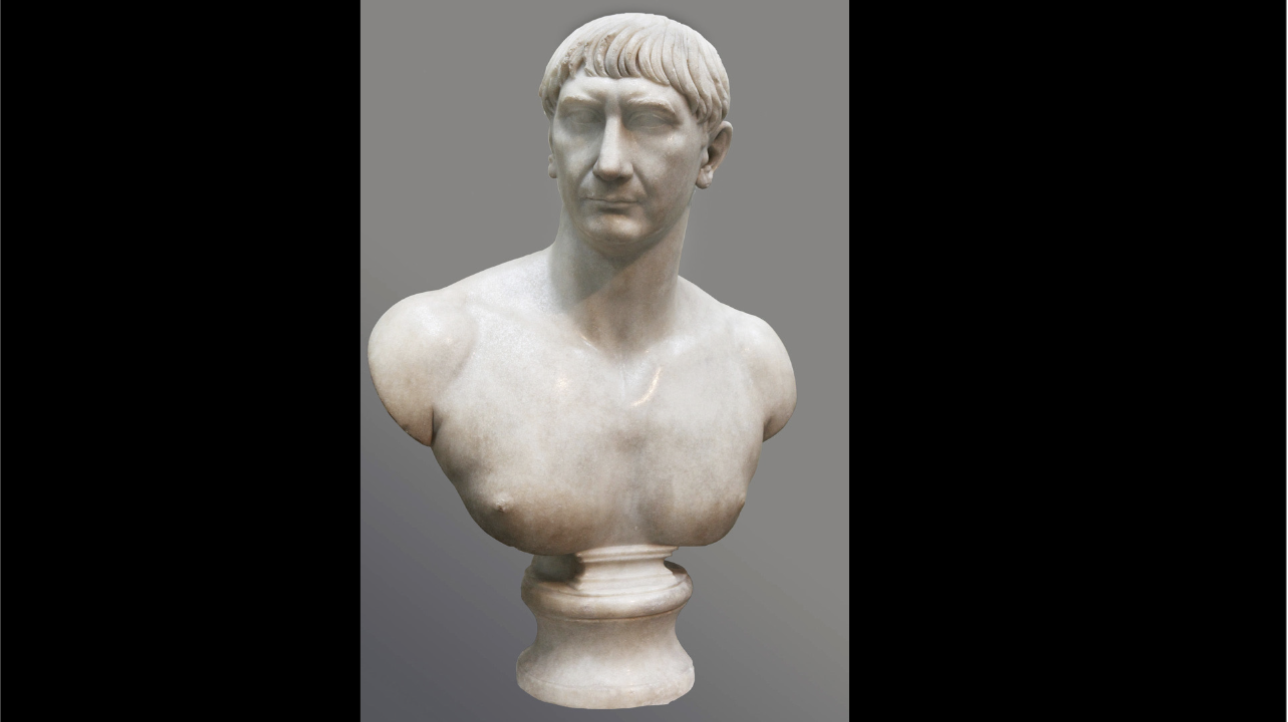
Trajan Optimus Princeps (r. 98-117 CE)
Popular general under Domition, first non-italic emperor
Legitimized his rule by presenting as Optimus Princeps: omnipotent victor, soldier emperor, conquered Pacia and Porthia, empire at max territorial extent at time of death
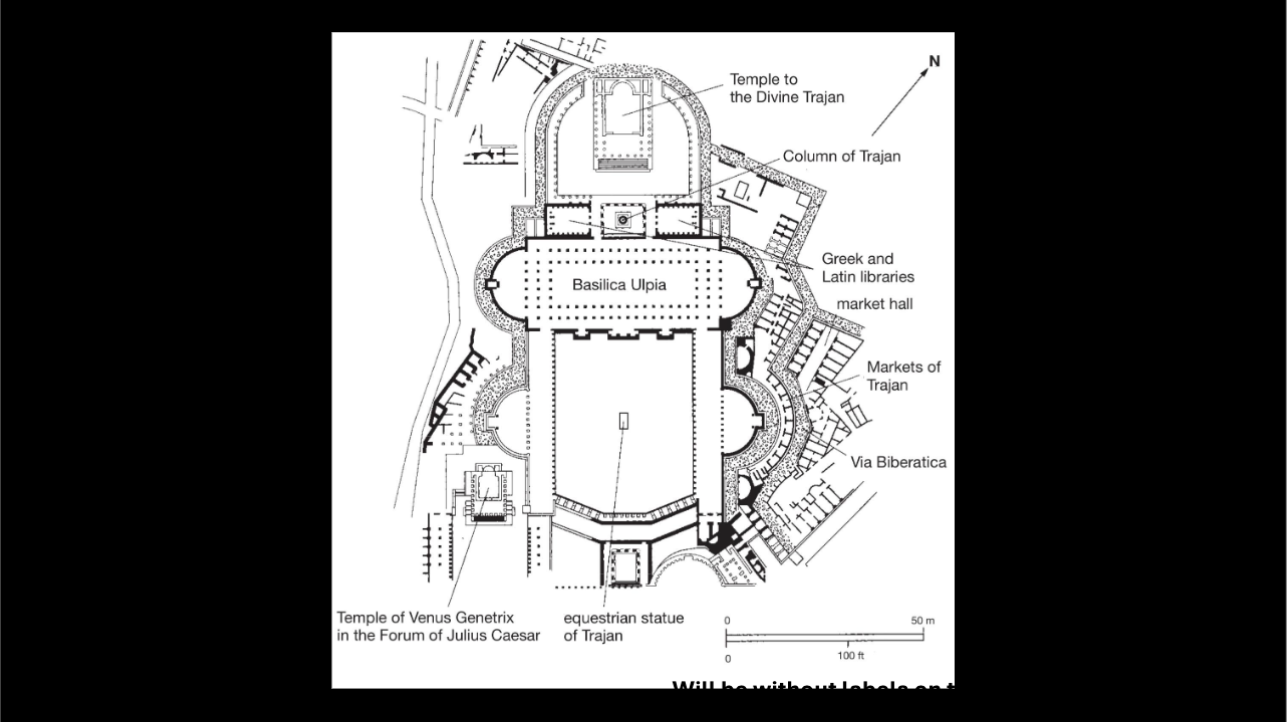
Trajan’s Forum (Inaugurated 112/113 CE)
composed of simple geometric elements (circles and squares) appeared complex, architecture “secrets” revealed themselves “surprising” viewers as they move throughout, “Triumphant Climax”
Architect: Apollodorus of Damascus/Familiar roman forum style/Equestrian statue also found in Julius Caesar Forum
Funded with loot from Dacian campaigns
MASSIVE Structure
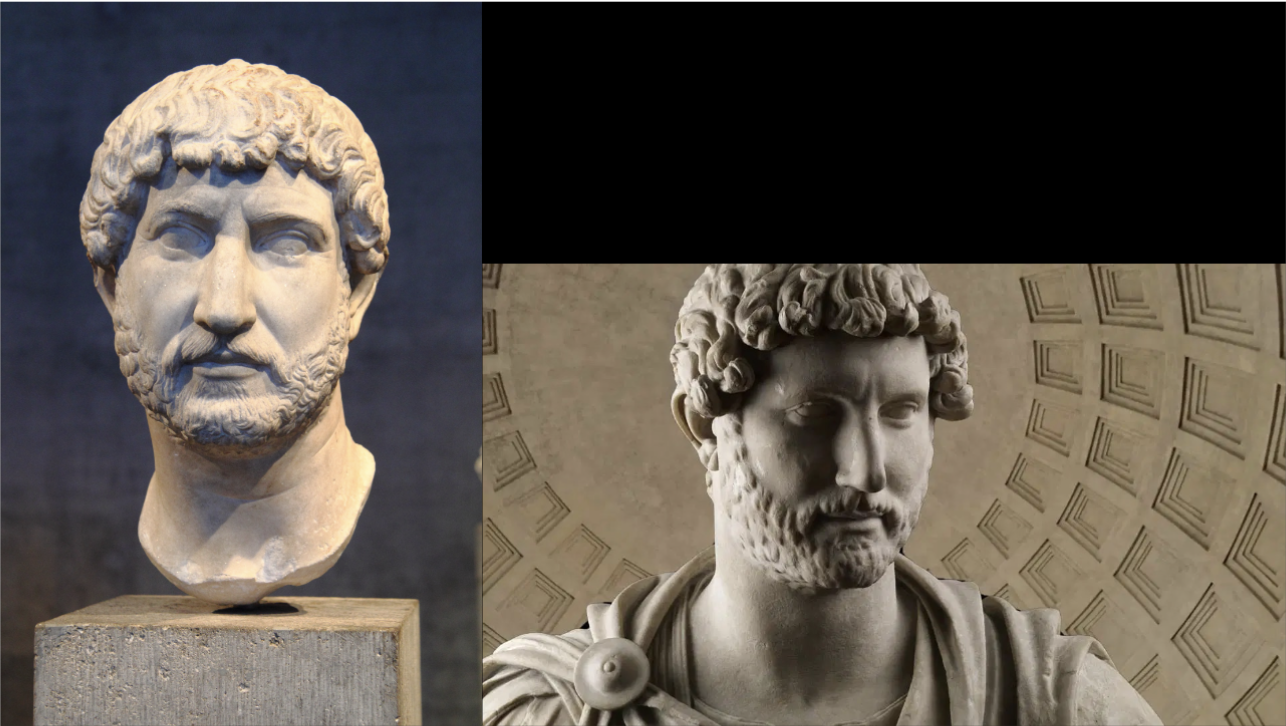
Hadrian (r. 117-138 CE)
From Spain, Trajan’s cousin, married Trajan’s grand-niece, served under Trajan in the Dacian Wars, governed Antioch when Trajan died
Depicted with a BEARD after 400 years of clean shaven romans, pupils caved in/highlighted
travled extensively/architect
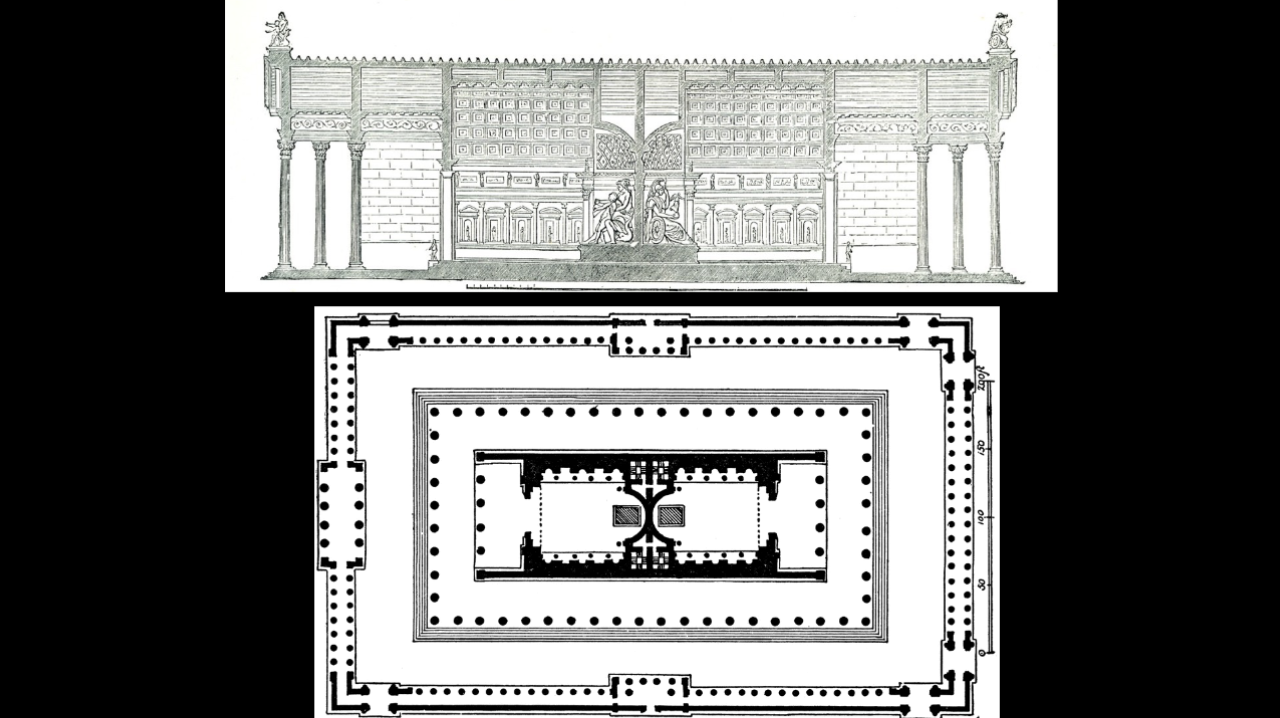
Temple of Venus and Rome (dedicated around 135 CE) Hadrian
“greek-style” temple, not raised off the ground (no stairs going up to entrance)
Peripteral: columns all around, dual aspes back to back
Venus: AMOR Rome: ROMA = AMOROMA (palindrome)
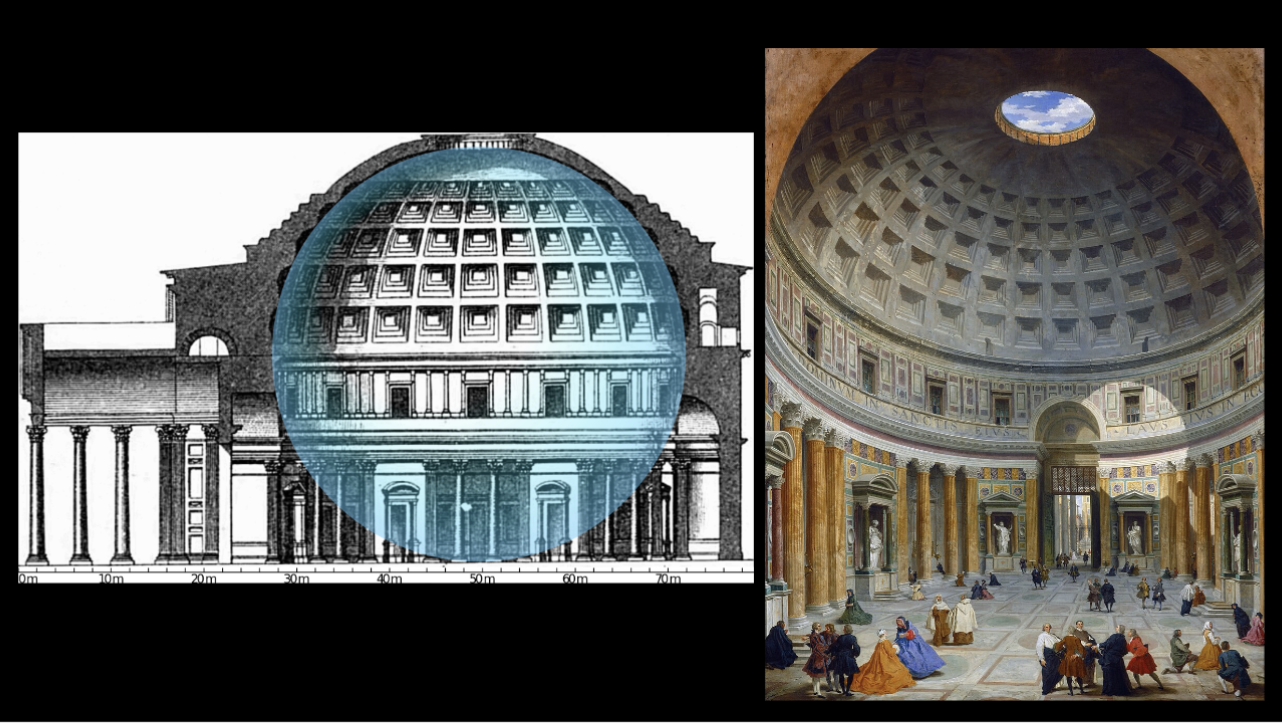
The Pantheon (~27 BCE) ‘to all the gods’
in Campus Martinus, built by Agrippa, destroyed by fire (except front part), Trajan “restored” it in 126 CE
Hadrian experimented within traditional bounds
Traditional: Pronaos (arch), corinthian columns, 40ft tall granite, Corinthian order, visual quotes of Temple of Jupiter Optimus Maximus and Mars Ultor (ties Hadrian to origins of Rome), Maintenance of Agrippa’s section ties Hadrian to Augustus
Innovation: Geometrically inventive interior space (hemisphere + circle), Vaulted concrete = largest unsupported dome in history, perfect circular shape, 148 ft high, 7.3-1.5 M thickness, circles and squares everywhere
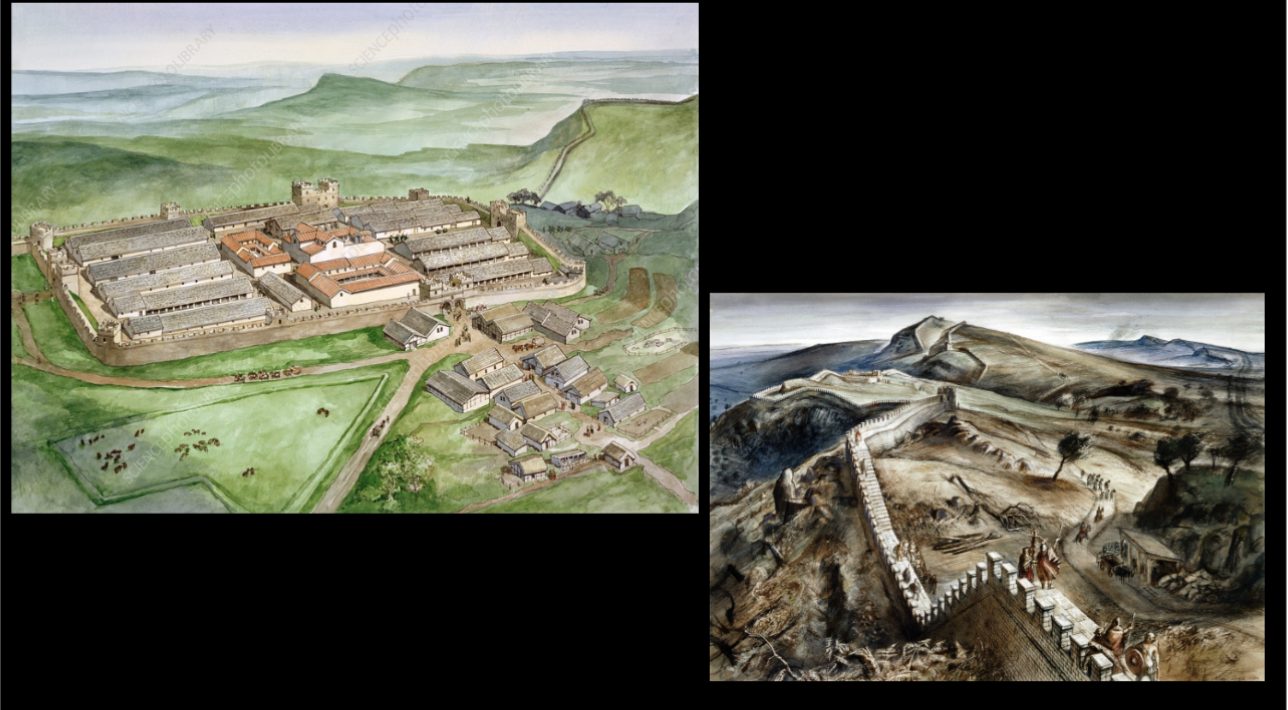
Hadrians Wall, UK, 122-128 CE
Lime Britannicus, 13.5 ft tall, 70 miles long, defensive but not impenetrable, acted more as border control, monitored tax trade and movement in and out
Roman Fort and Viscus: Civilian settlement outside of a roman fort to supply soldiers with goods and services the army couldn’t (traders, craftsman, wine shops, common law wives, families, etc), playing card shape
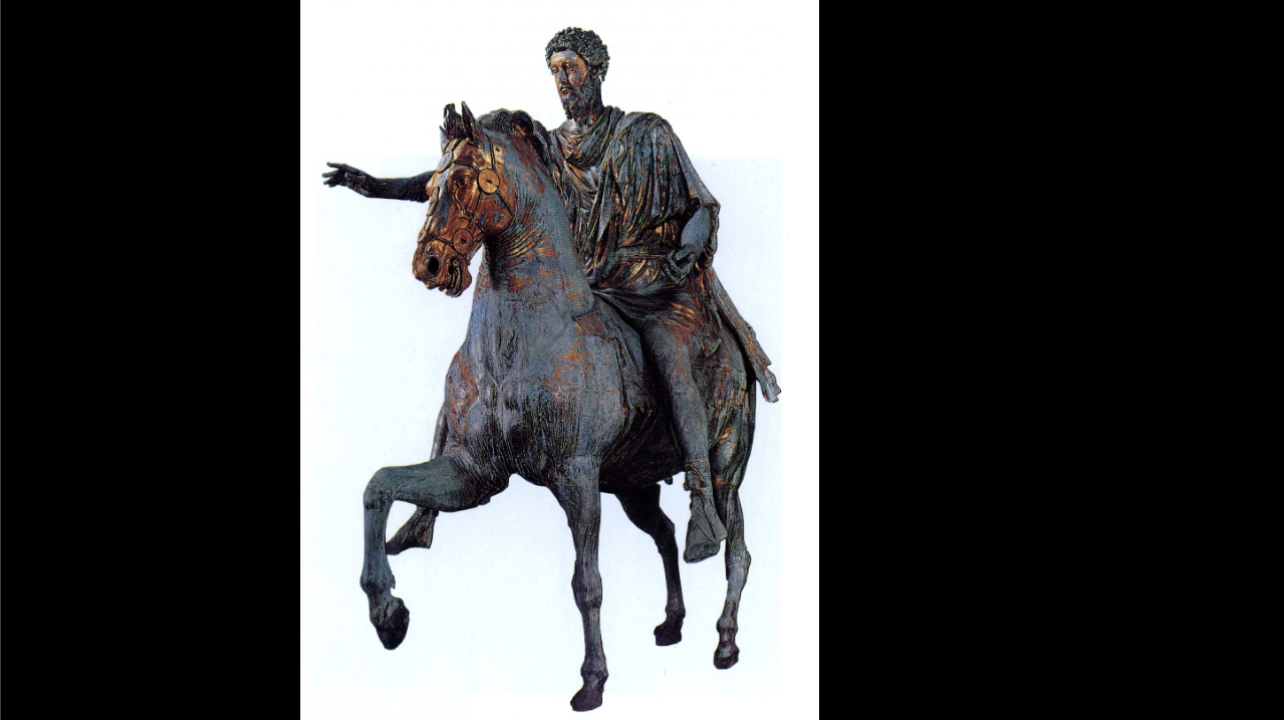
Equestrian Statue of Marcus Aurelias, 175 CE, Bronze
bigger than life-sized, gesture=pride of horse, very rare survival of bronze statue of emperor (most-likely survived because they thought is was Constantine)
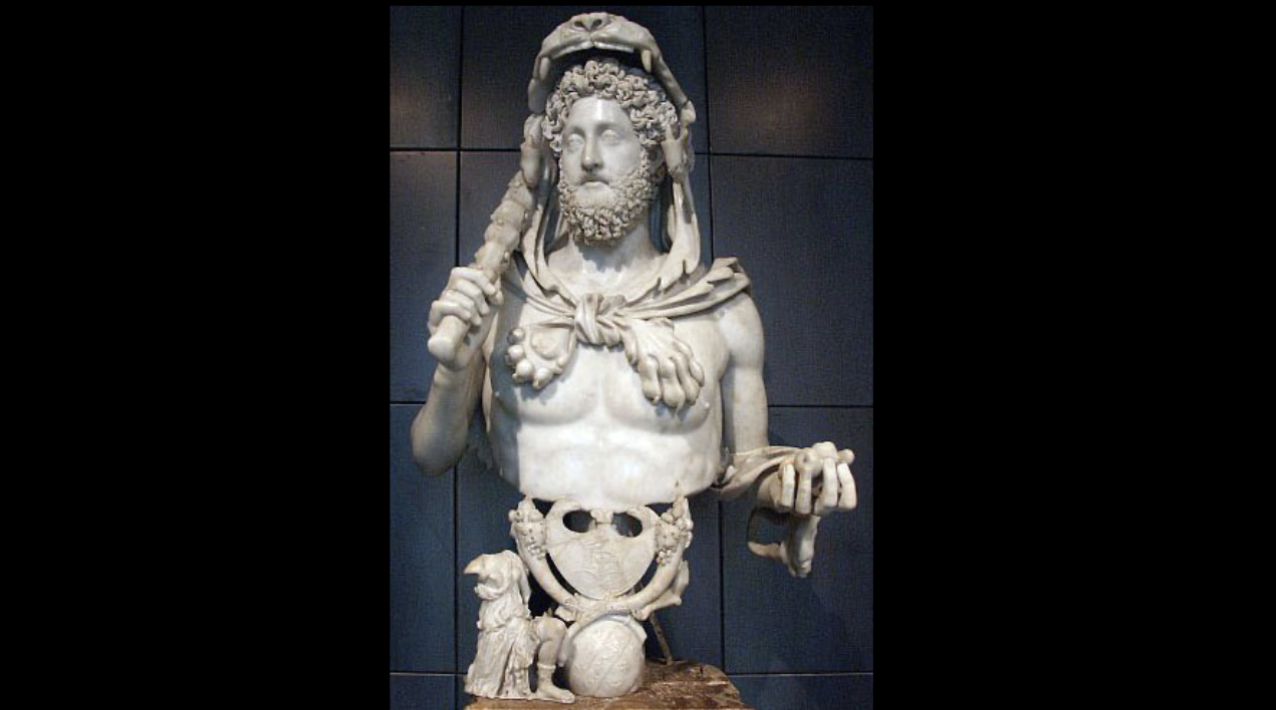
Commodus as Hercules, 190-192 CE
Lion-skin head dress, claiming divinity while alive (big no no), going back to ‘mad emperor’ days, assassinated, his death marked the end of the Golden Age and the beginning of the ‘year of 5 emperors’
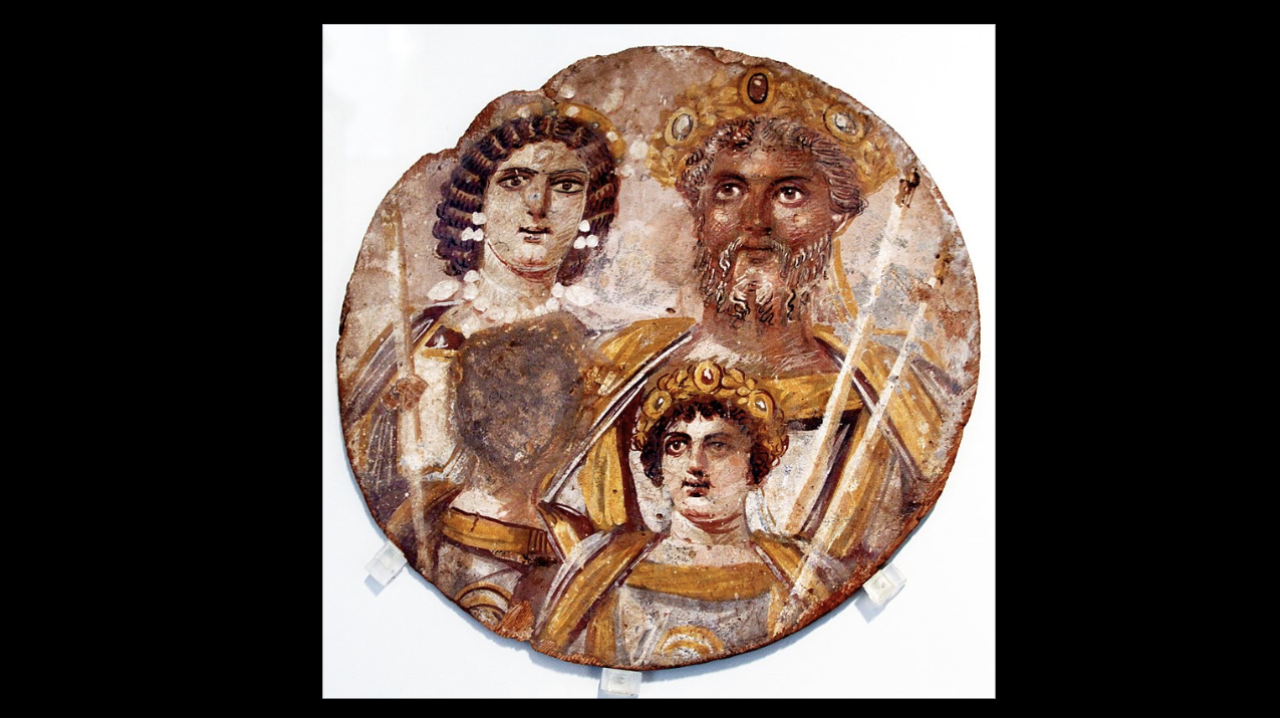
The Severan Tondo (circular painting/relief), 200 CE
one of few preserved panel paintings from ancient times
depicts first two generations of imperial Servian Dynasty (193-235 CE)
Septimius Severus was the final survivor of the year of 5 emperors
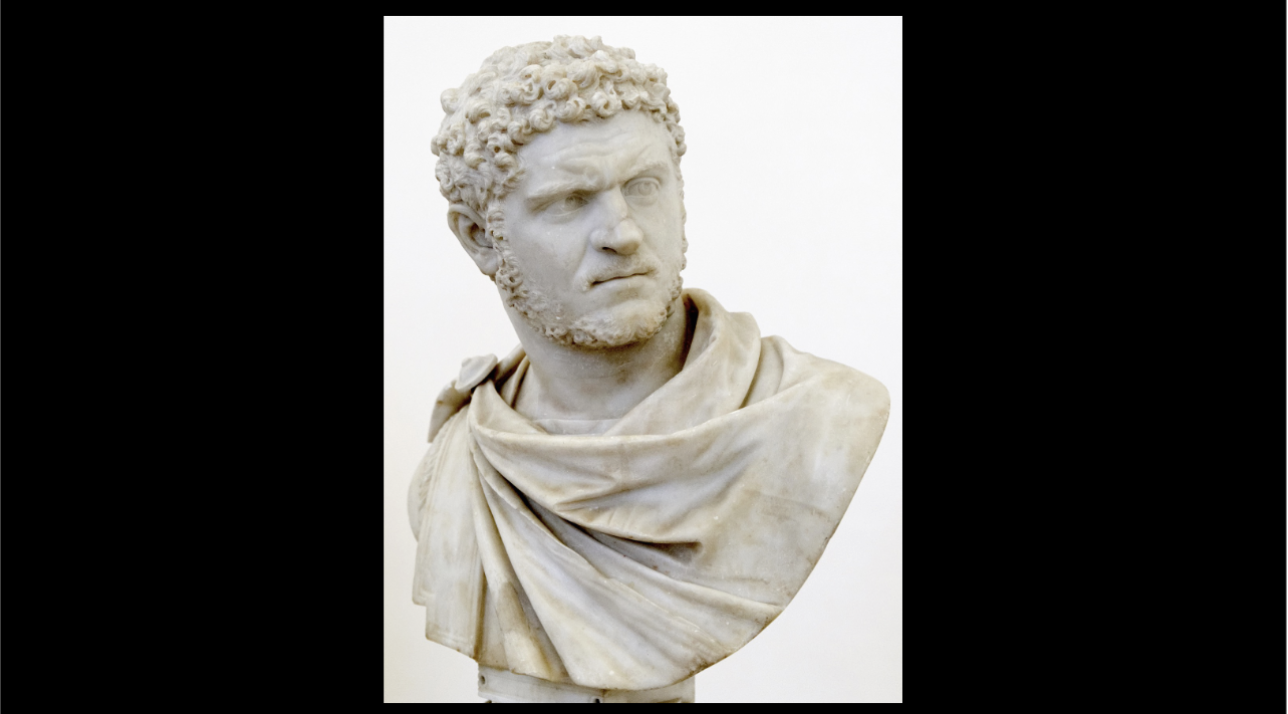
Caracalla, 212 CE
assassinated by soldiers at a meeting arranged by his mother
Very different depiction from predecessors, does not look cool calm or collected, not an unwavering timeless expression, closed/cropped hair and beard (military haircut?), stripped down look, scowl/visible expression, ‘in the moment’ head turn reaction shot
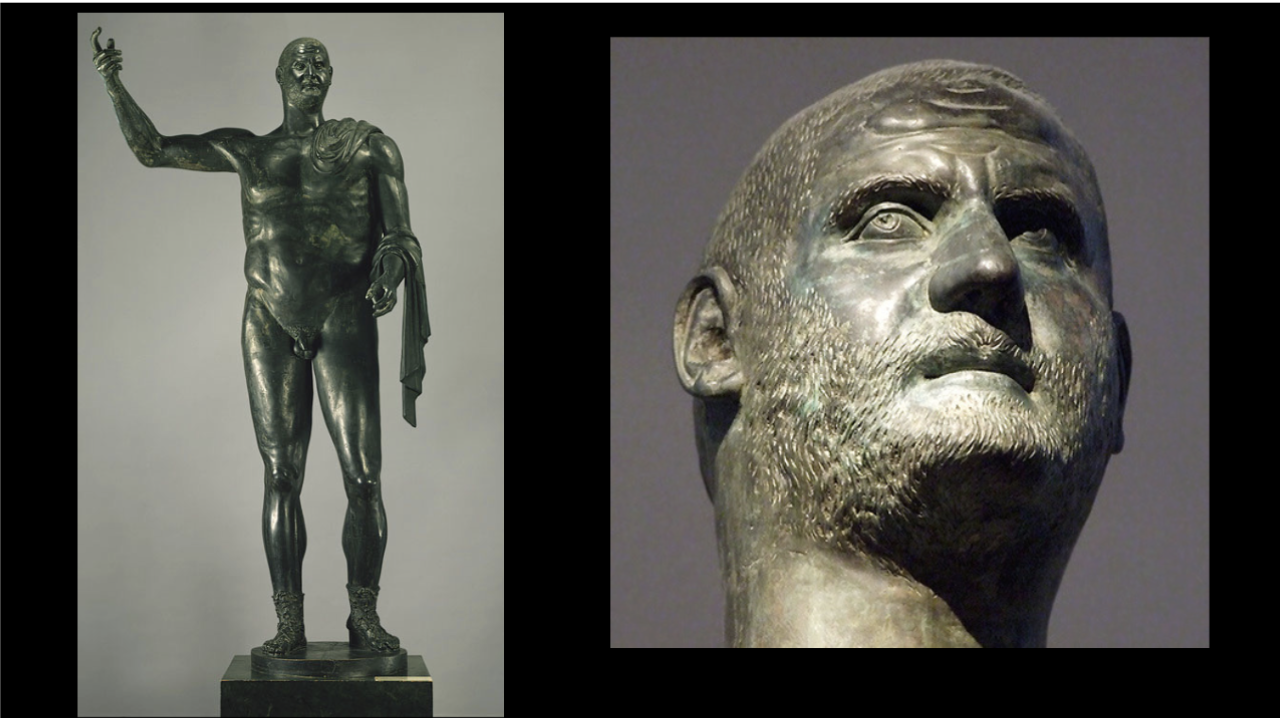
Trebonianus Gallus, 251-253 CE, Bronze, Over 8ft tall
Soldier emperor, military cut, beard stubble ‘pecked’ into statue not drilled, prominent expressive eyes, ‘in the moment’ vibe, wrinkles/sense of concern (verism?)
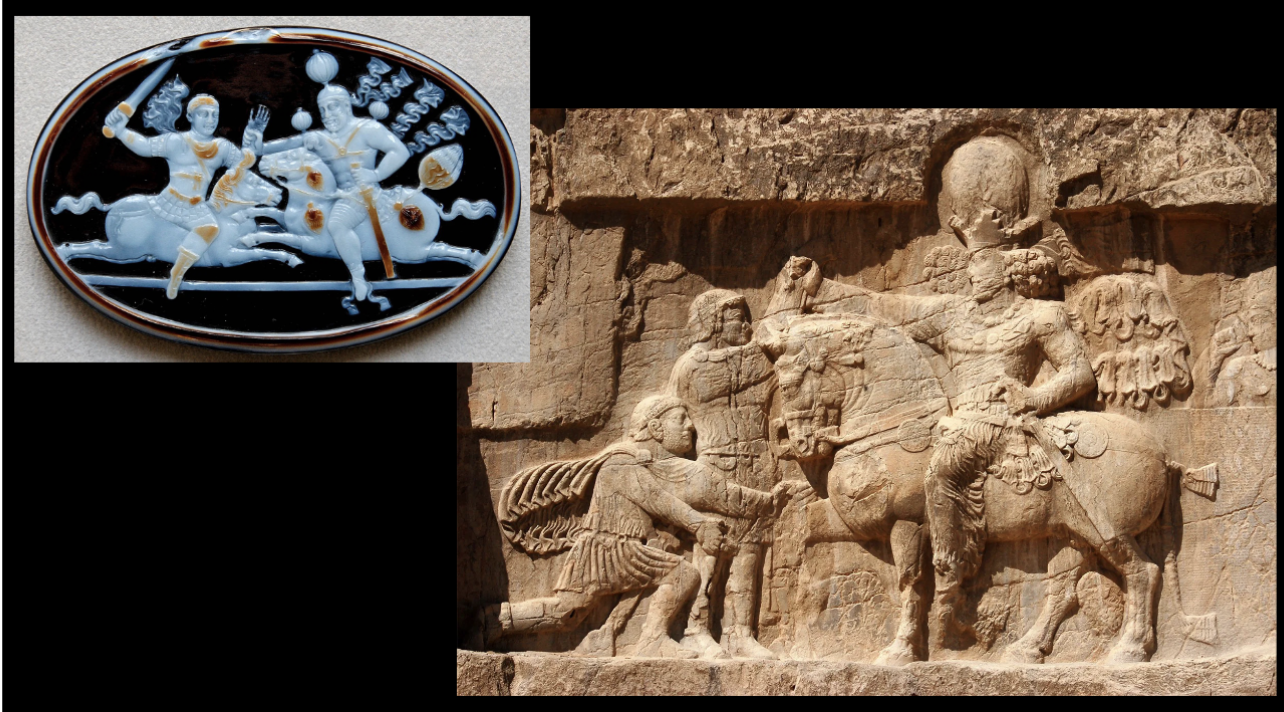
Valerian, 253-260 CE
First roman emperor to be taken captive (by persian emperor Shapur 1)
image depiction of Valerian and Shapur fighting
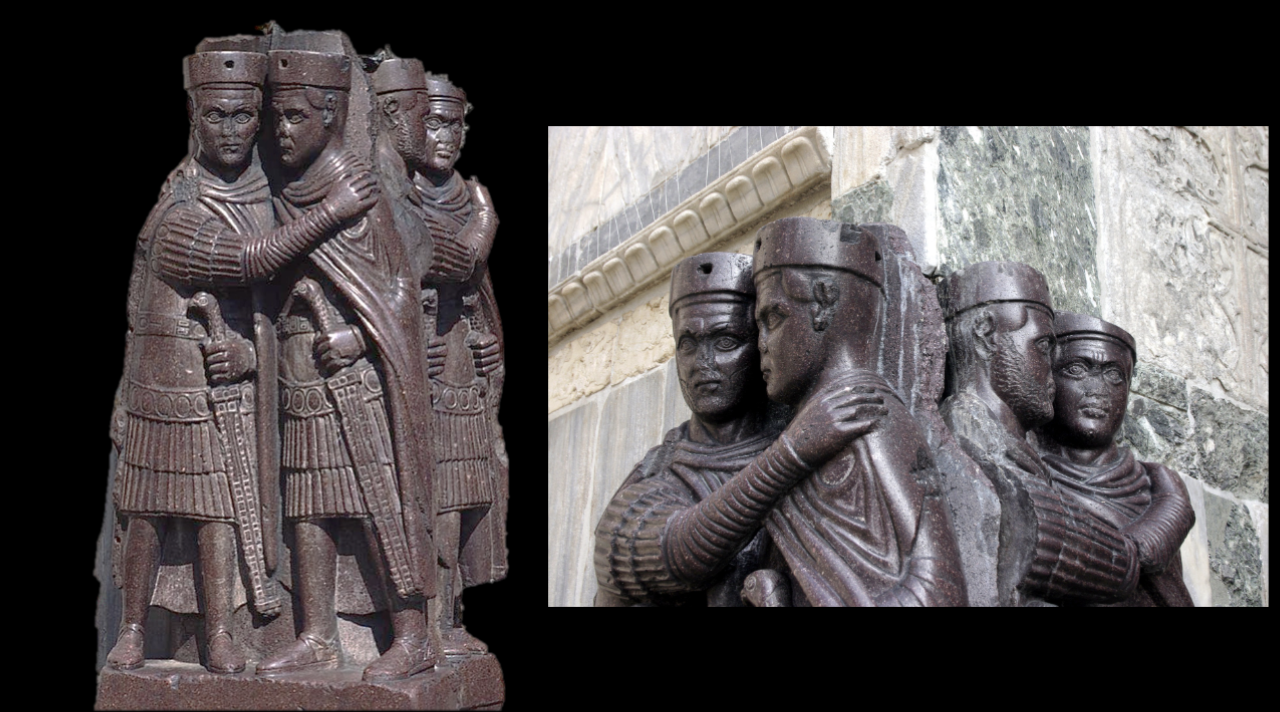
Portrait of the Four Tetrarchs, 300 CE
Porphyry Sculpture, group of 4 emperors, fixed to corner of St. Marks Basilica facade in Venice since the Middle Ages (1204 CE)
Short hair, bearded, simplified look, pecked not drilled, eyes even more prominent, non-naturalistic representation, 2 Augustus 2 Caesar, Bearded ve unbearded represented age and youth
Compare to Augusta Prima Porta, both imperial representations
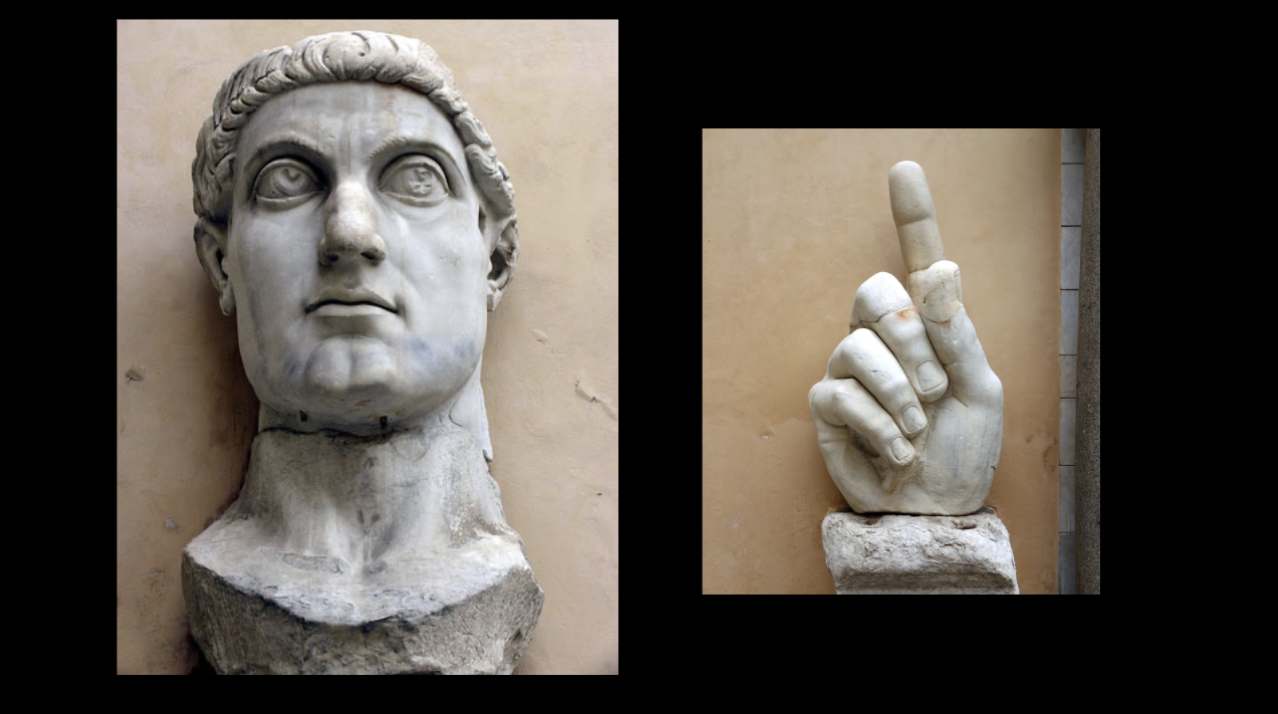
Colossus of Constantine, Head/Body Parts, 312-315 CE
Originally in Basilica of Constantine (after Constantine defeated Maxentius), now in Capitoline Museum Rome, replaced Maxentius’ Colossal portrait with his own
42 ft tall total, head alone is 8 ft tall, LARGE eyes, gazing upwards, clean shaven
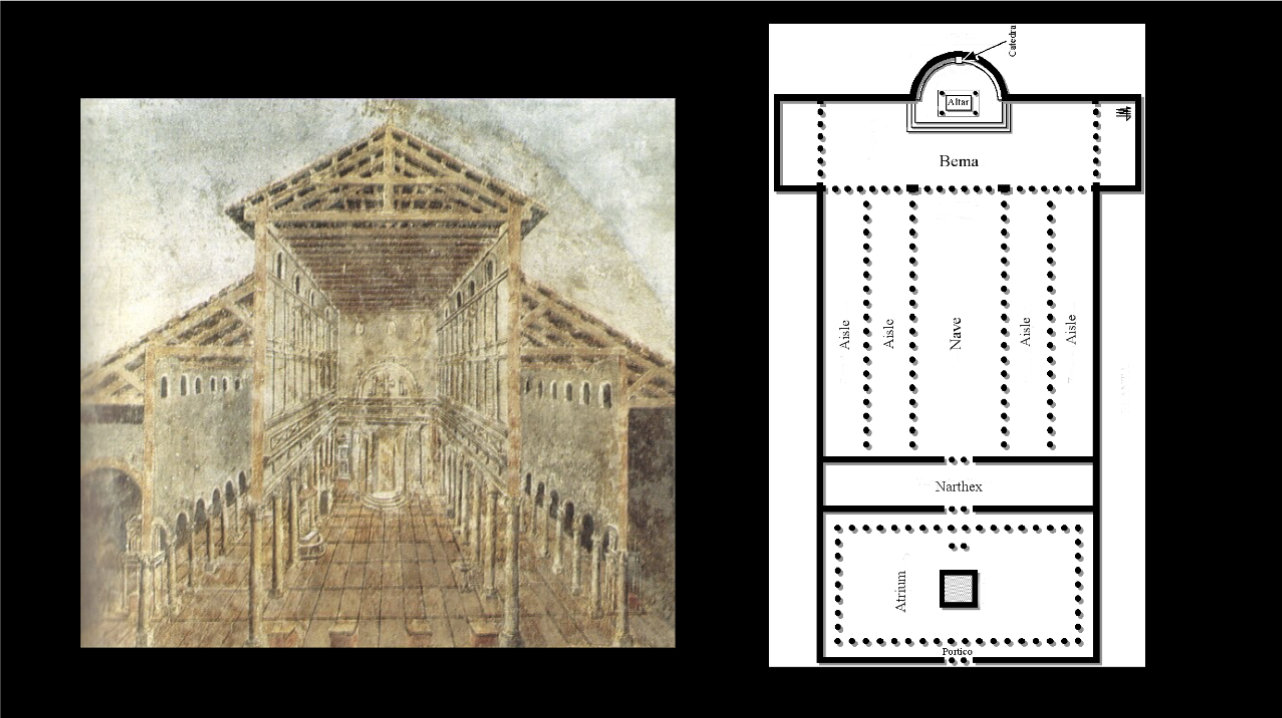
Old St. Peters, consecrated, 326 CE
First built by Constantine
typical basilica form, plan and elevation resembling Roman basilicas and audience halls
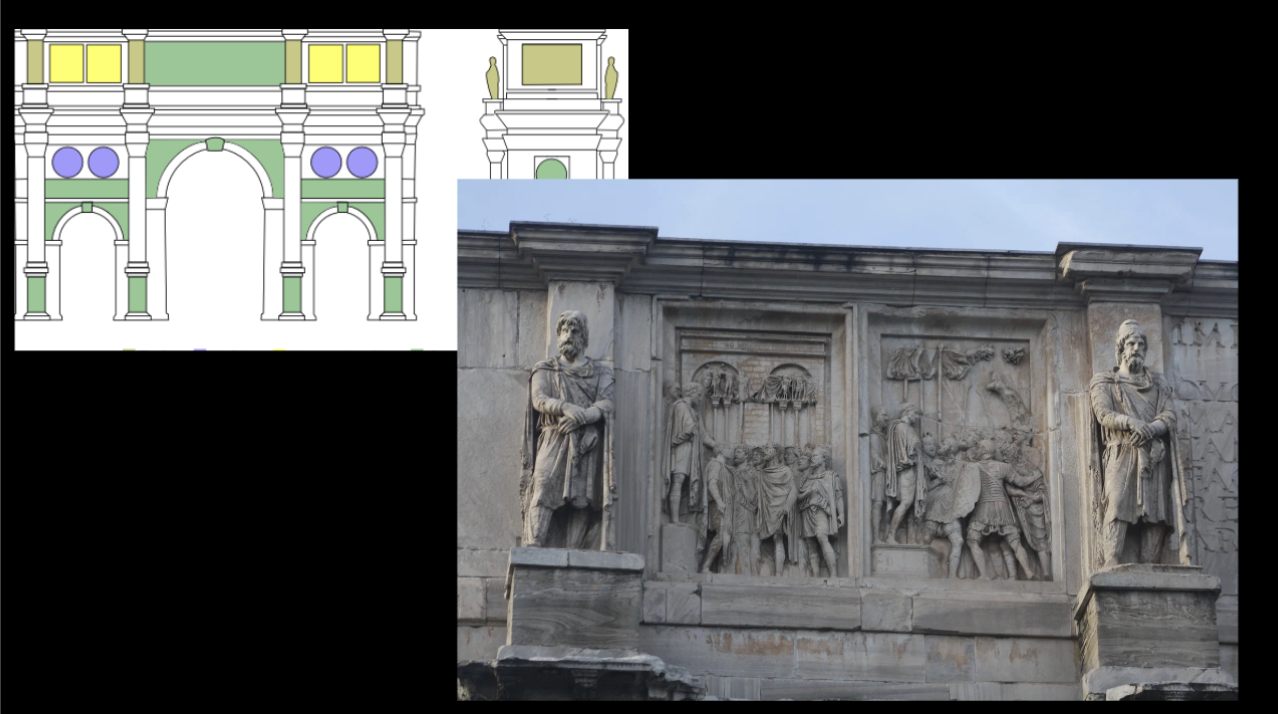
Arch of Constantine, 312-315 CE, Rome
old bits used on new monument, Spolia = reuse of architecture and decorative elements from one building to another
Why?: Cheaper to recycle, associates Constantine with ‘good’ emperors, continues Roman identity, long tradition of mixing and matching
Familiar imperial actions and symbols, captives = signs of victory
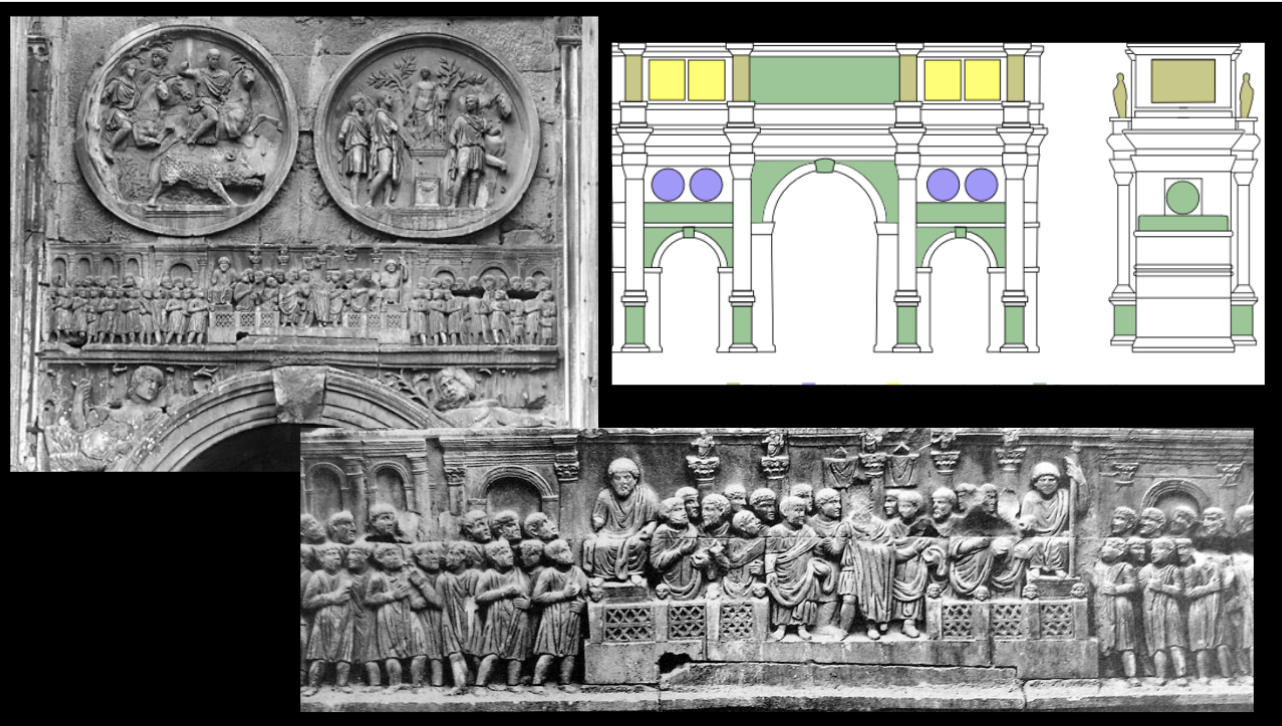
Arch of Constantine, 312-315 CE, Rome
Hadrianic ‘roundels’: faces that were bearded were ‘unbearded’ to make them look more like Constantine, hunting/sacrificing depicted
Oratio: emperor speaking to his people
Emperor shown front and center, shown on Rostrum in Forum (seated statues on each side), surrounded by immediate ‘court’
Representation of people: stubby, uniform, cookie cutter, little detail Why?: bad artists, social changes, create distance between emperor and normal people