Foundations of Communication
 Call Kai
 Learn
Learn Practice Test
 Spaced Repetition
 Match
Match Flashcards
 Knowt Play
1/13

Earn XP
Description and Tags
Chapter 1
Name | Mastery | Learn | Test | Matching | Spaced | Call with Kai | Chat |
|---|
No analytics yet
Send a link to your students to track their progress
14 Terms
communication
the process of using symbols to exchange meaning,
communication study
focuses on how people use messages to generate meanings within and across various contexts, cultures, channels and media.
channel
the method a sender uses to send a message to a receiver
linear model of communication
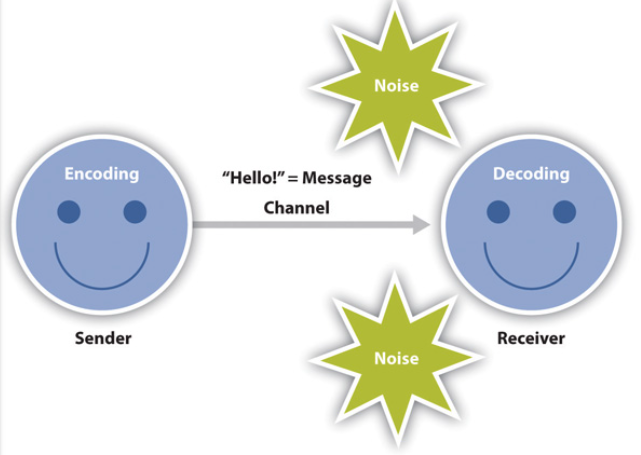
a model that suggests communication moves only in one direction. The sender encodes a message, then uses a certain channel (verbal/nonverbal communication) to send it to a receiver who decodes (interprets) the message. Noise is anything that interferes with, or changes, the original encoded message.
transactional model of communication
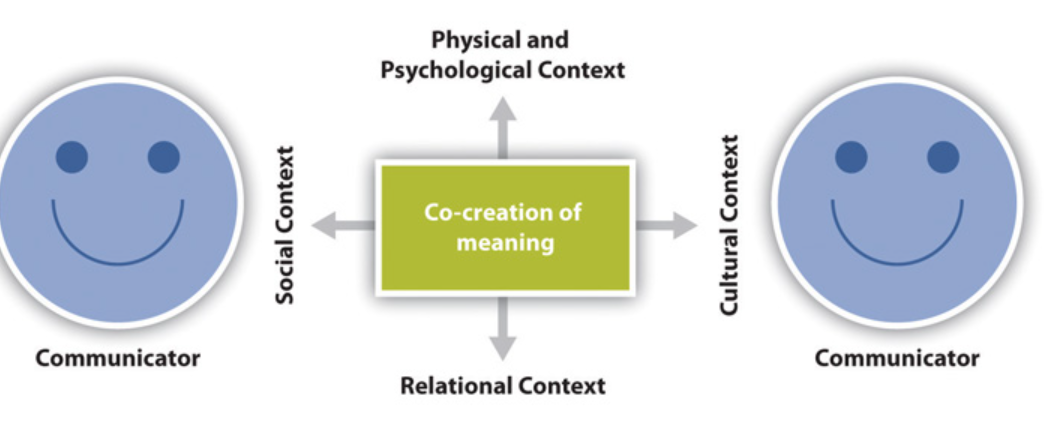
adds to the Linear Model by suggesting that both parties in a communication exchange act as both sender and receiver simultaneously, encoding and decoding messages to and from each other at the same time.
message
the particular meaning or content the sender wishes the receiver to understand. The message can be intentional or unintentional, written or spoken, verbal or nonverbal, or any combination of these.
noise
anything that interferes with the sending or receiving of a message, can be external or internal.
receiver
the recipient of a message. Receivers must decode (interpret) messages in ways that are meaningful for them.
sender
someone who encodes and sends a message to a receiver through a particular channel, the initiator of communication
verbal communication
relies on language and includes speaking, writing, and sign language
nonverbal communication
includes gestures, facial expressions, paralanguage, and touch
how is communication different from anthropology, sociology, psychology etc?
Communication studies focus strictly on the creation, exchange, and effects of messages. Other social sciences study broader human behavior, culture, or the mind.
internal noise
physical pain, psychological stress, or nervousness about an upcoming test, anything that isn’t an outside source
external noise
interferences from an external source, examples include a jack hammer outside your apartment window or loud music in a nightclub.