CH. 1 - The Human Body: An Orientation
 Call Kai
 Learn
Learn Practice Test
 Spaced Repetition
 Match
Match Flashcards
 Knowt Play
1/101

There's no tags or description
Looks like no tags are added yet.
Name | Mastery | Learn | Test | Matching | Spaced | Call with Kai | Chat |
|---|
No analytics yet
Send a link to your students to track their progress
102 Terms
Structural organization from smallest to largest (separate each with …<… without spaces)
chemical<cellular<tissue<organ<organ system<organism
Forms external body covering, protects deeper tissues from injury, synthesizes vitamin D, site of cutaneous receptors
(Pain, pressure, etc.) and sweat and oil glands
integumentary system
Protects and supports body organs, provides a framework for muscles, blood cells formed within bones, stores minerals
skeletal system
Allows manipulation of environment, locomotion, facial expression, maintains posture, produces heat
muscular system
Fast-acting control system, responds to internal and external changes, activates muscles and glands
nervous system
Glands secrete hormones that regulate:
Growth
Reproduction
Nutrient use
endocrine system
Blood vessels transport blood
Blood carries oxygen and carbon dioxide
It also carries nutrients and wastes
Heart pumps blood through blood vessels
cardiovascular system
Picks up fluid leaked from blood vessels, returns fluid to blood, disposes of debris in the ____ _____, houses white blood cells, mounts attack against foreign substances in the body
lymphatic system
Keeps blood supplied with oxygen, removes carbon dioxide, gas exchange occurs through walls of air sacs in the lungs
respiratory system
Breaks down food into absorbable units, indigestible foodstuffs eliminated as feces
digestive system
Eliminates nitrogenous wastes, regulates water, electrolyte, and acid-base balance of the blood
urinary system
Overall function is to produce offspring, testes produce sperm and male sex hormones, male ducts and glands aid in delivery of sperm to the female reproductive tract, ovaries produce eggs and female sex hormones, female structures serve as sites for fertilization and development of the fetus, mammary glands produce milk
reproductive system

What position is this?
anatomical position

What region is this?
appendicular region
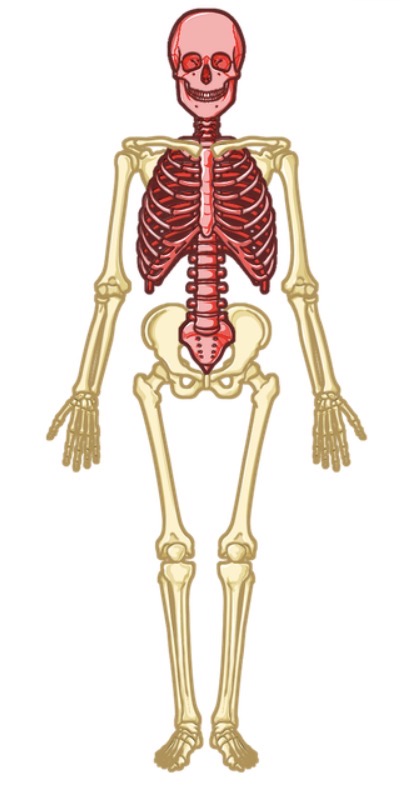
What region is this?
axial region
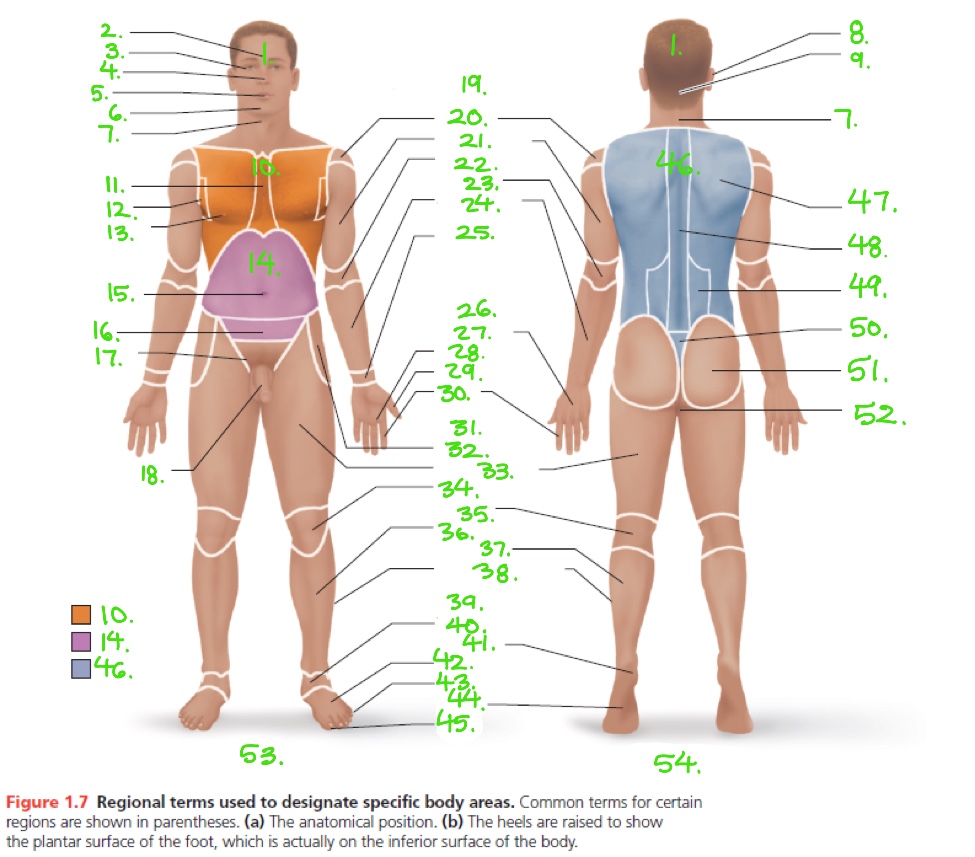
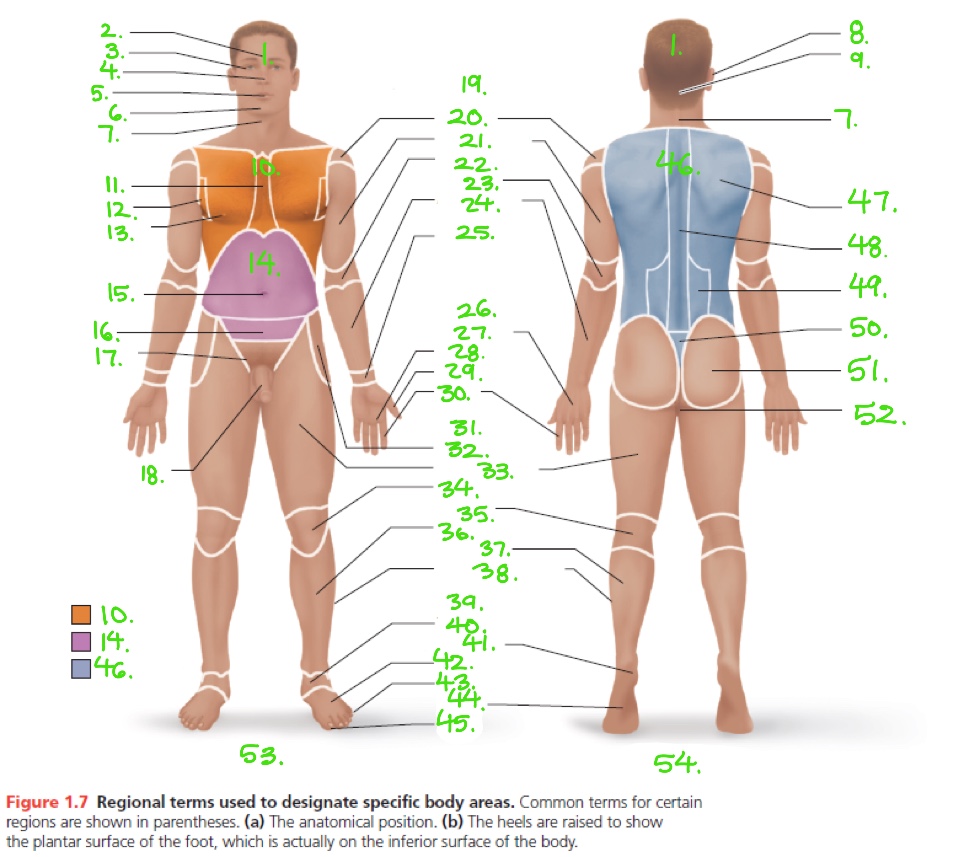
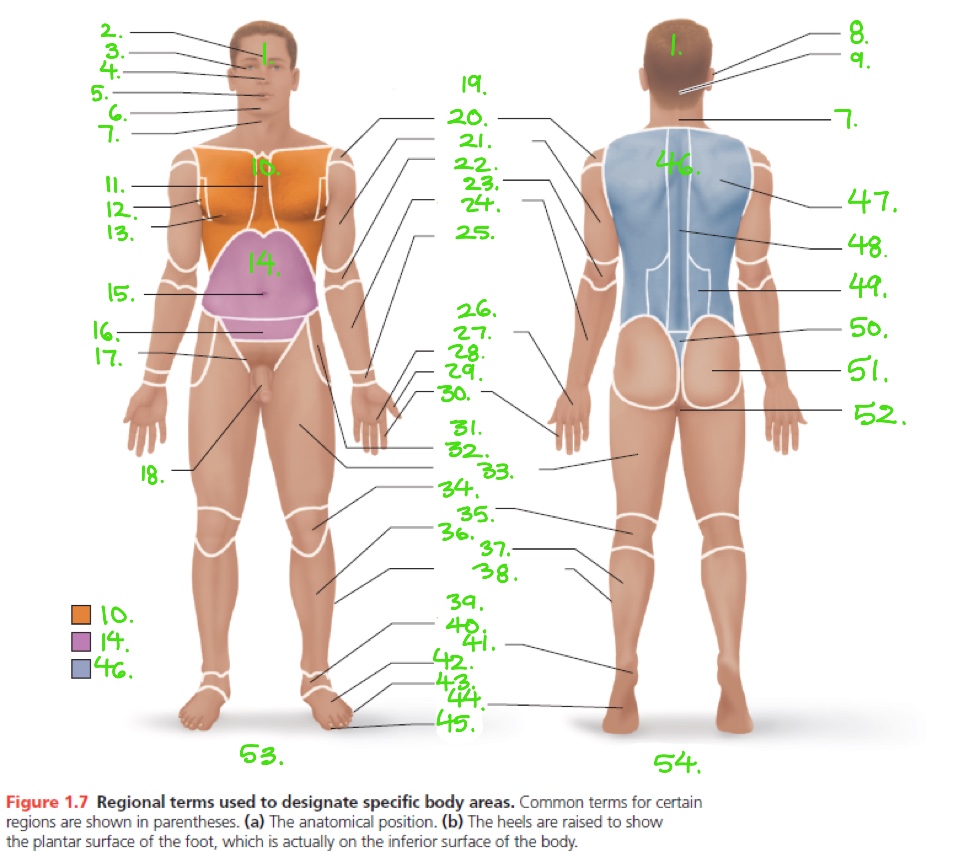
1
cephalic

2
frontal

3
orbital
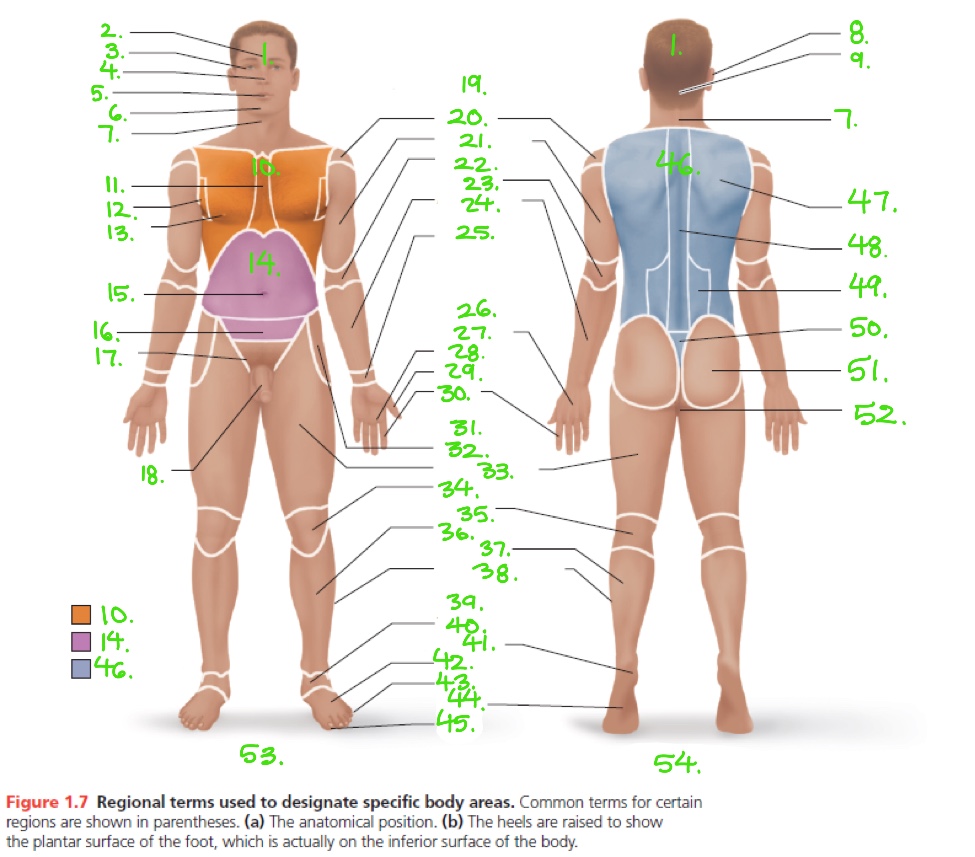
4
nasal

5
oral

6
mental

7
cervical

8
otic

9
occipital

10
thorax

11
sternal

12
axillary

13
mammary

14
abdomen

15
umbilical
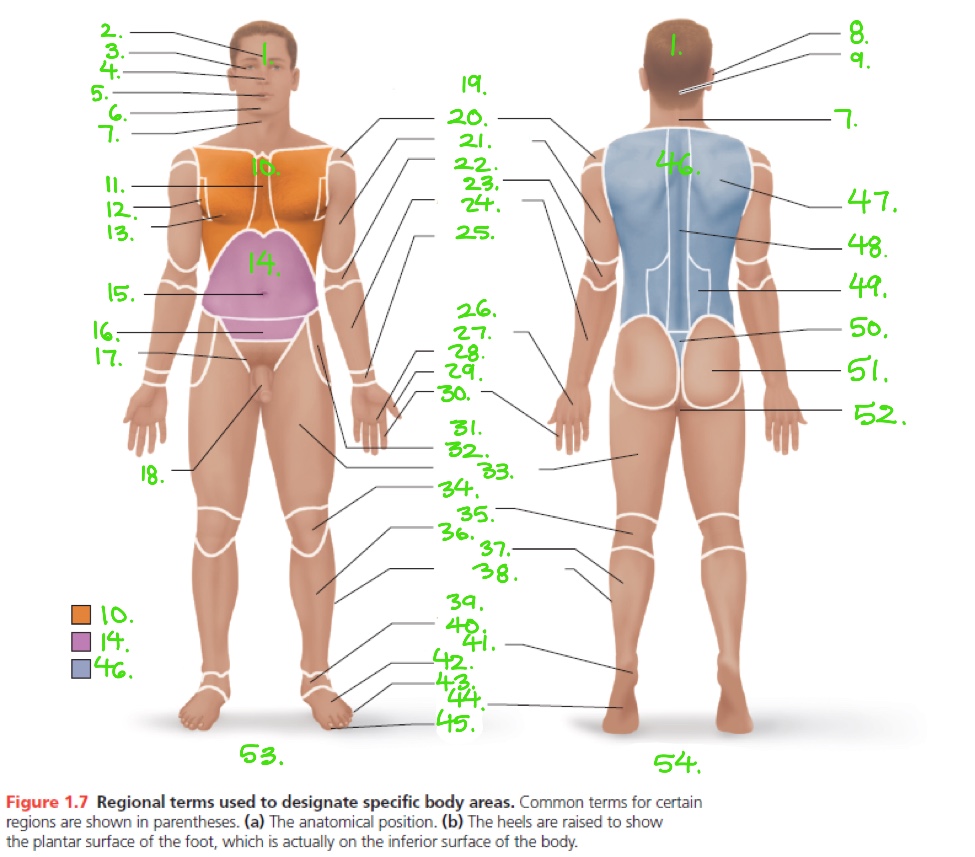
16
pelvic

17
inguinal

18
pubic

19
upper limb
20
acromial
21
brachial
22
antecubital
23
olecranal
24
antebrachial
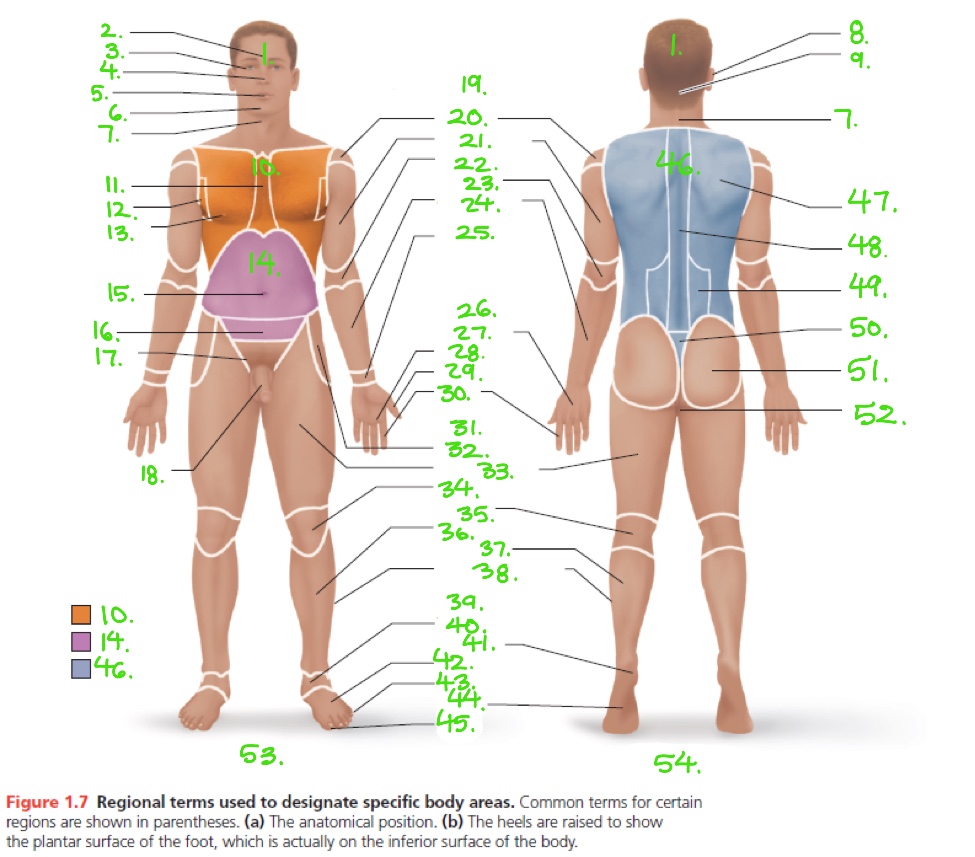
25
carpal
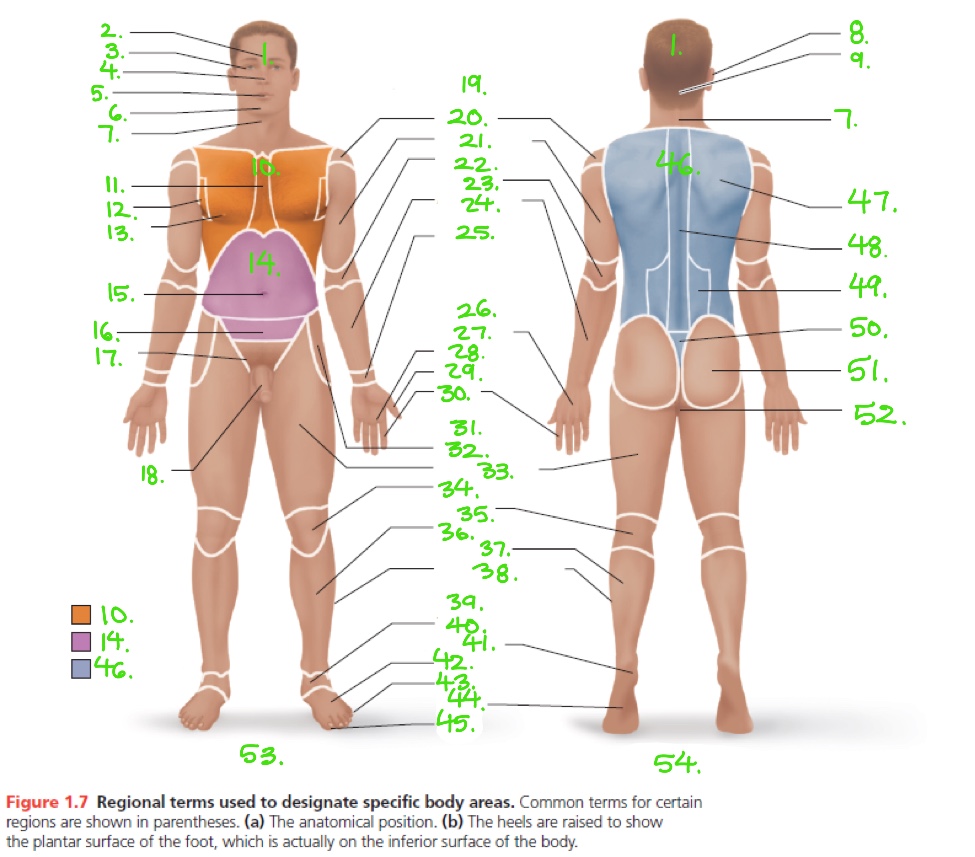
26
manus
27
metacarpal
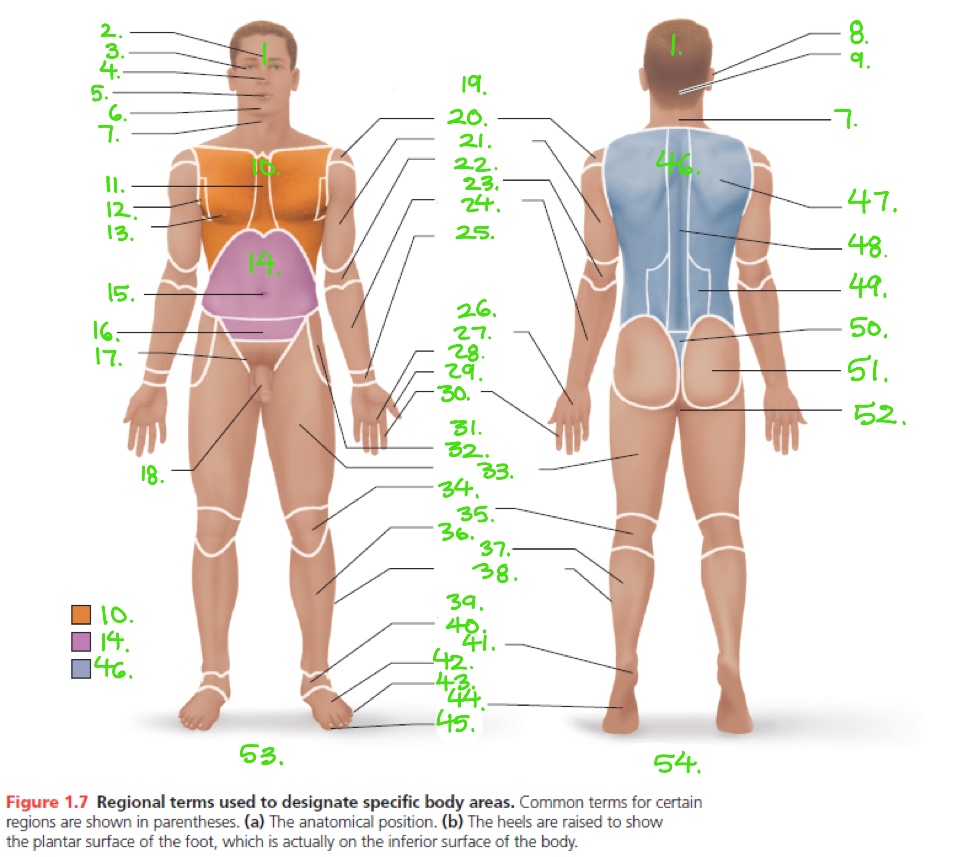
28
palmar
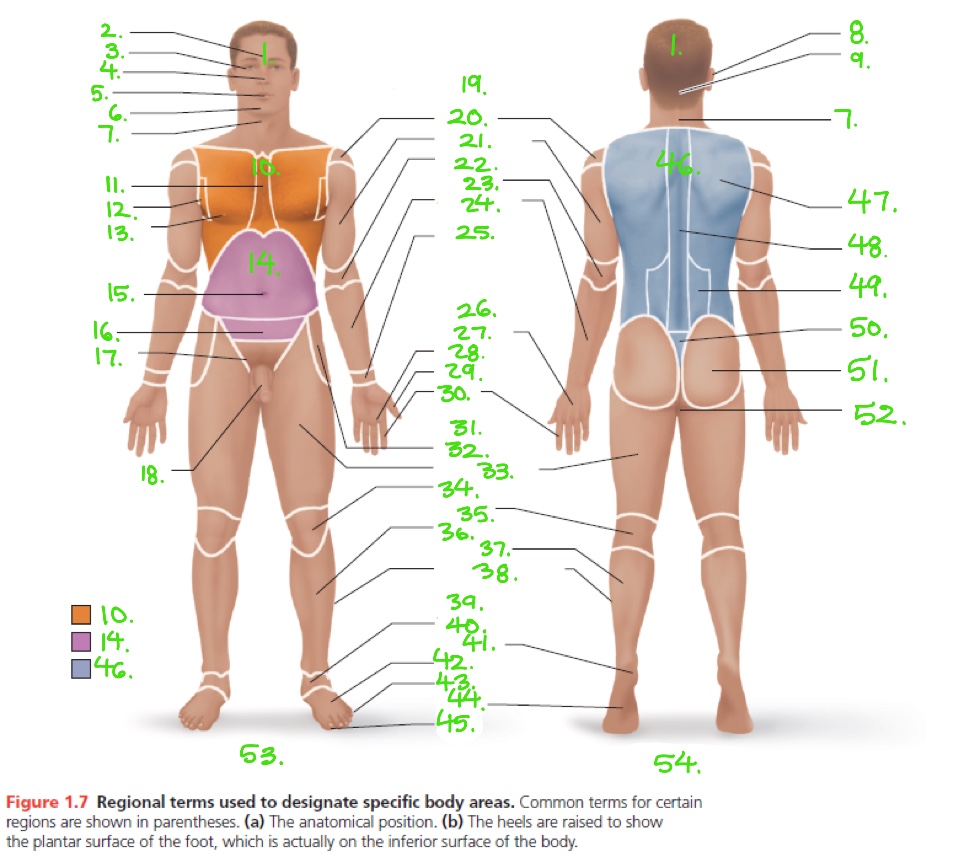
29
pollex

30
digital
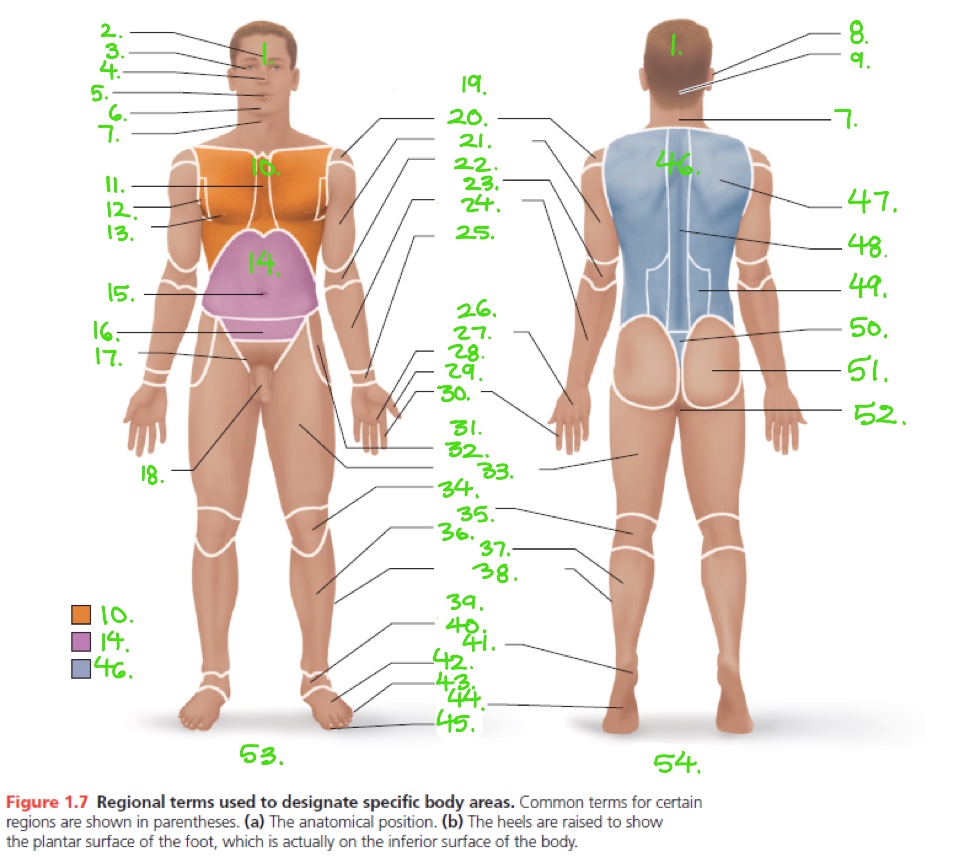
31
lower limb

32
coxal
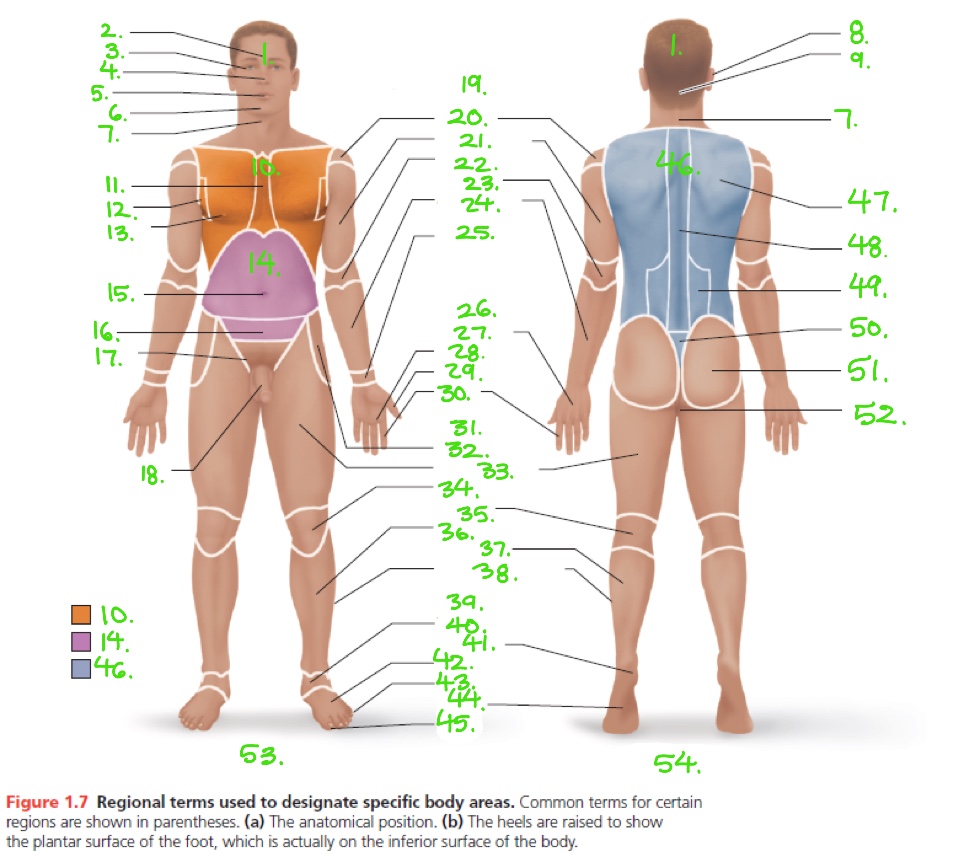
33
femoral
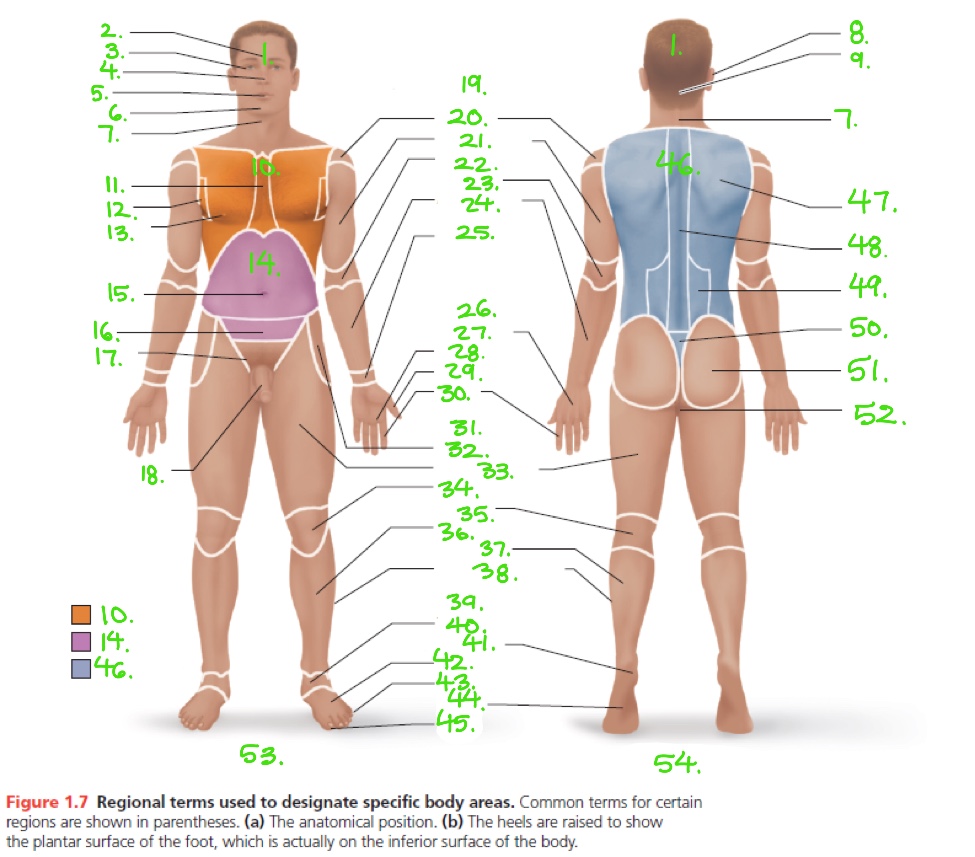
34
patellar
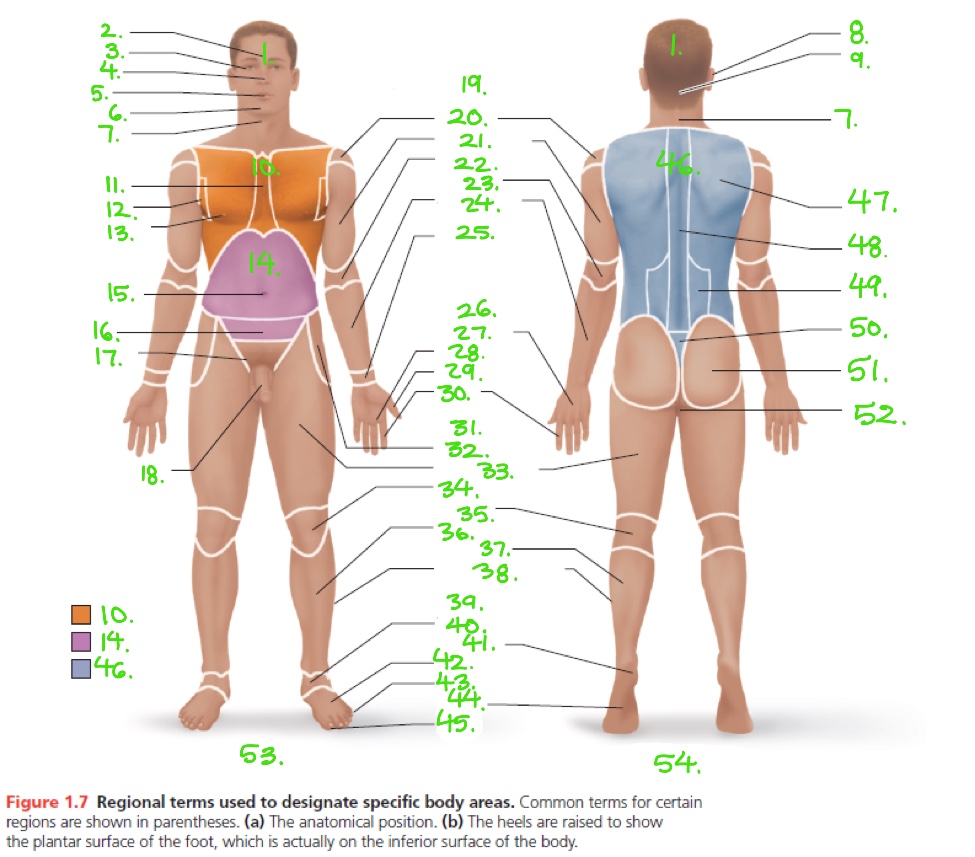
35
popliteal

36
crural
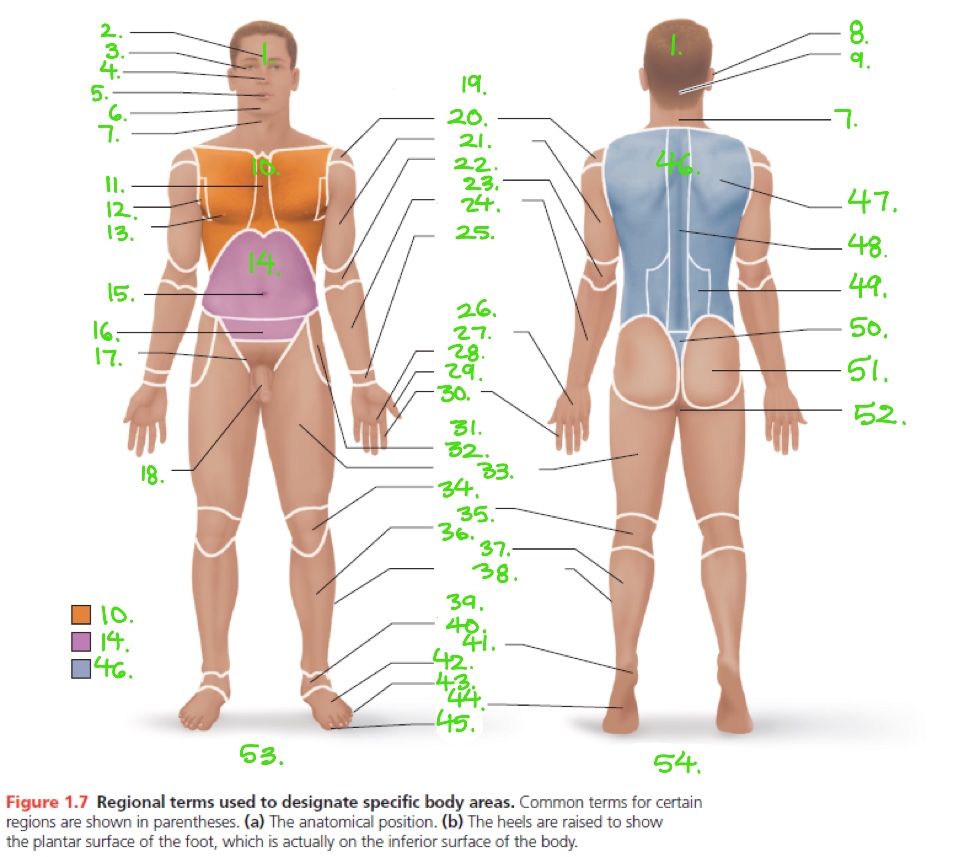
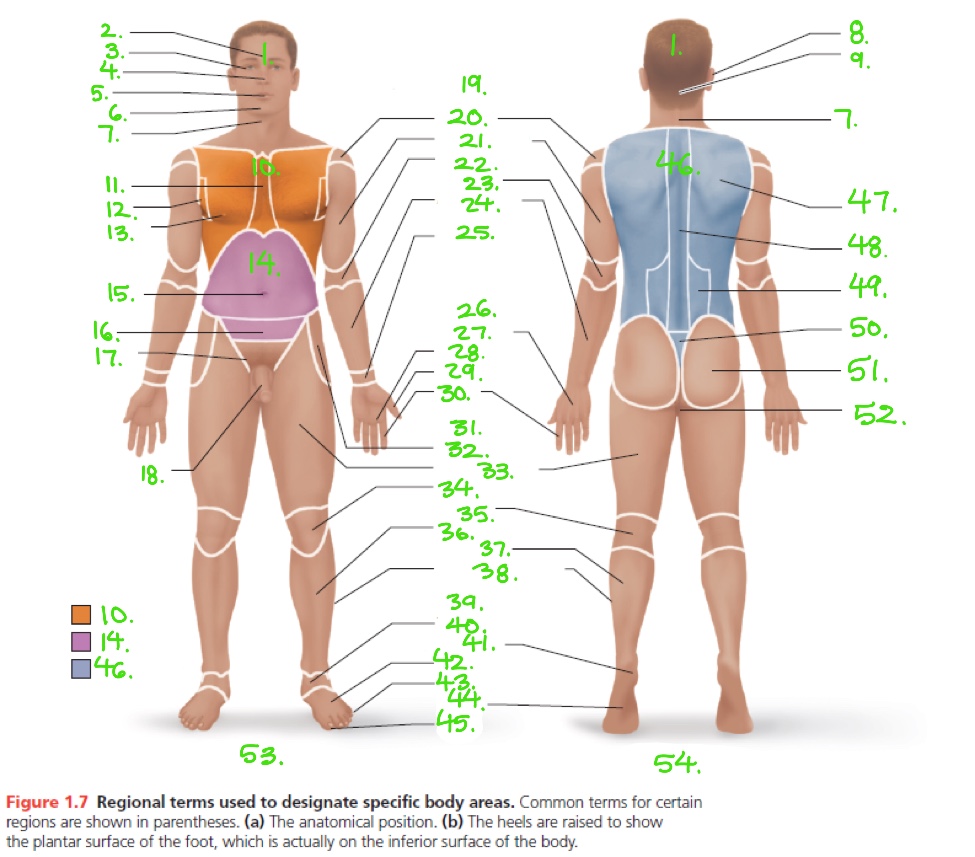
37
sural
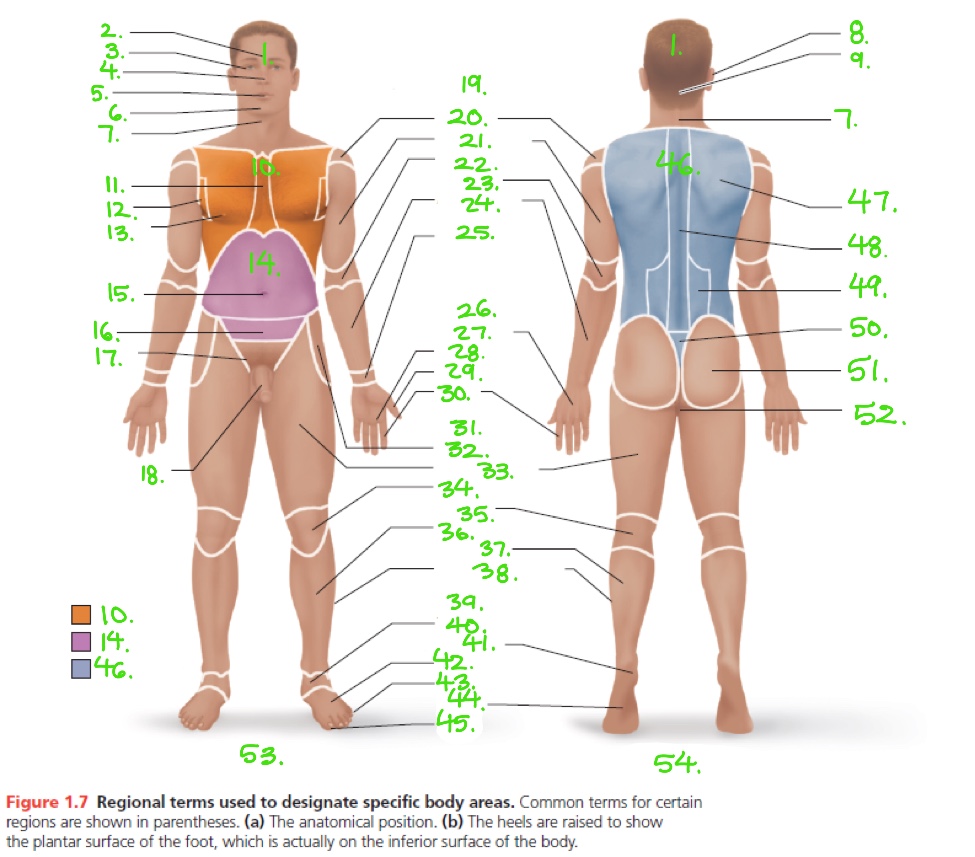
38
fibular/peroneal

39
pedal

40
tarsal
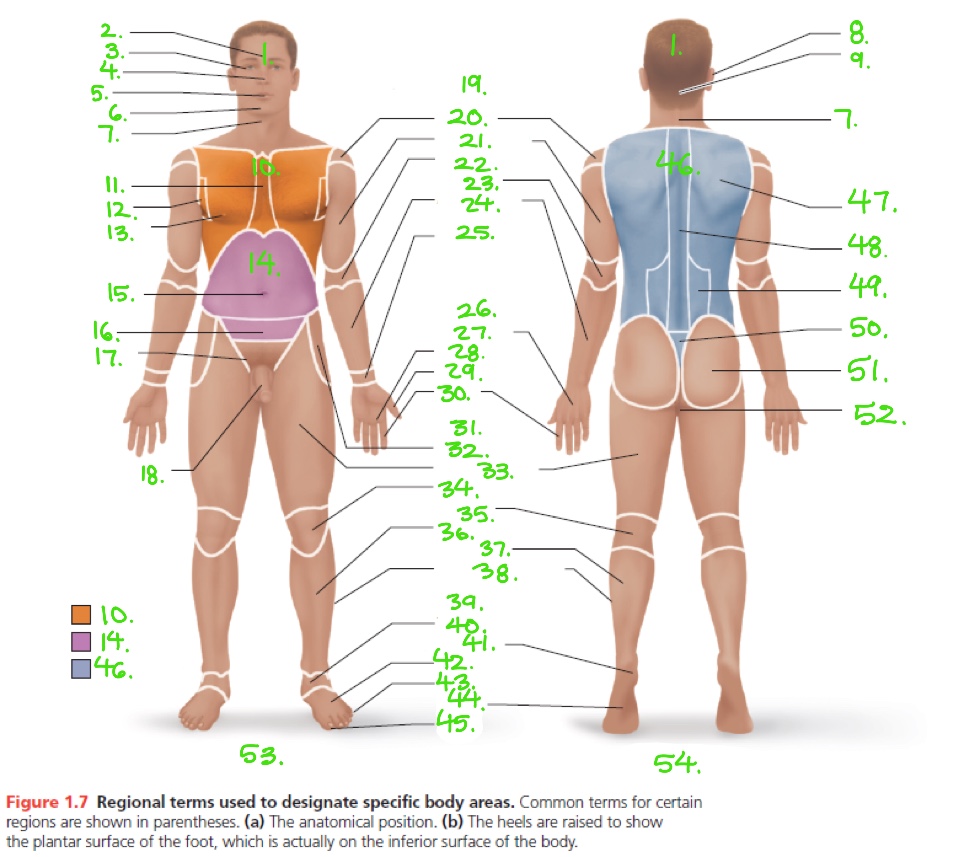
41
calcaneal
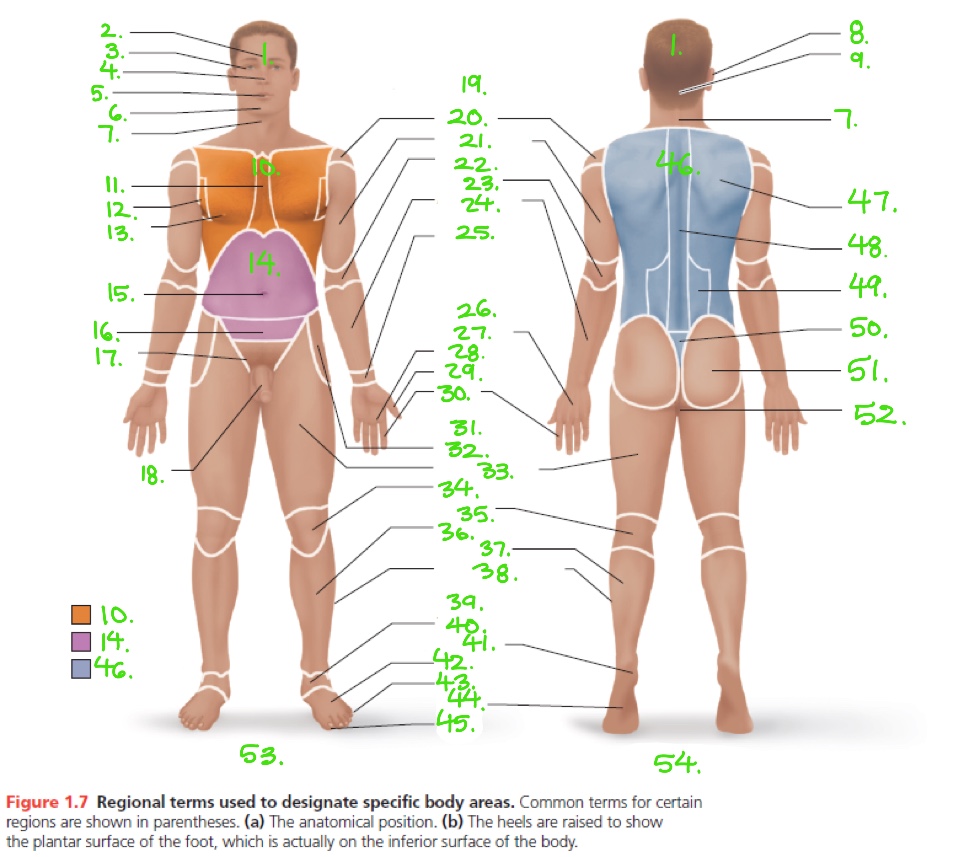
42
metatarsal
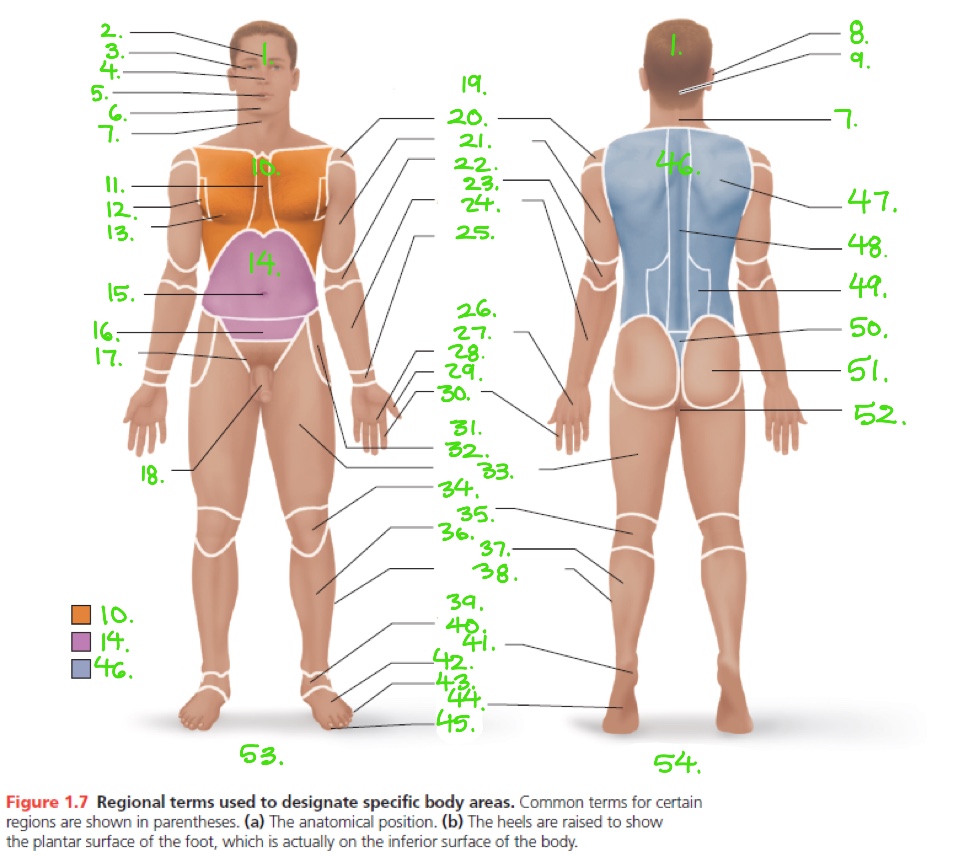
43
digital

44
plantar
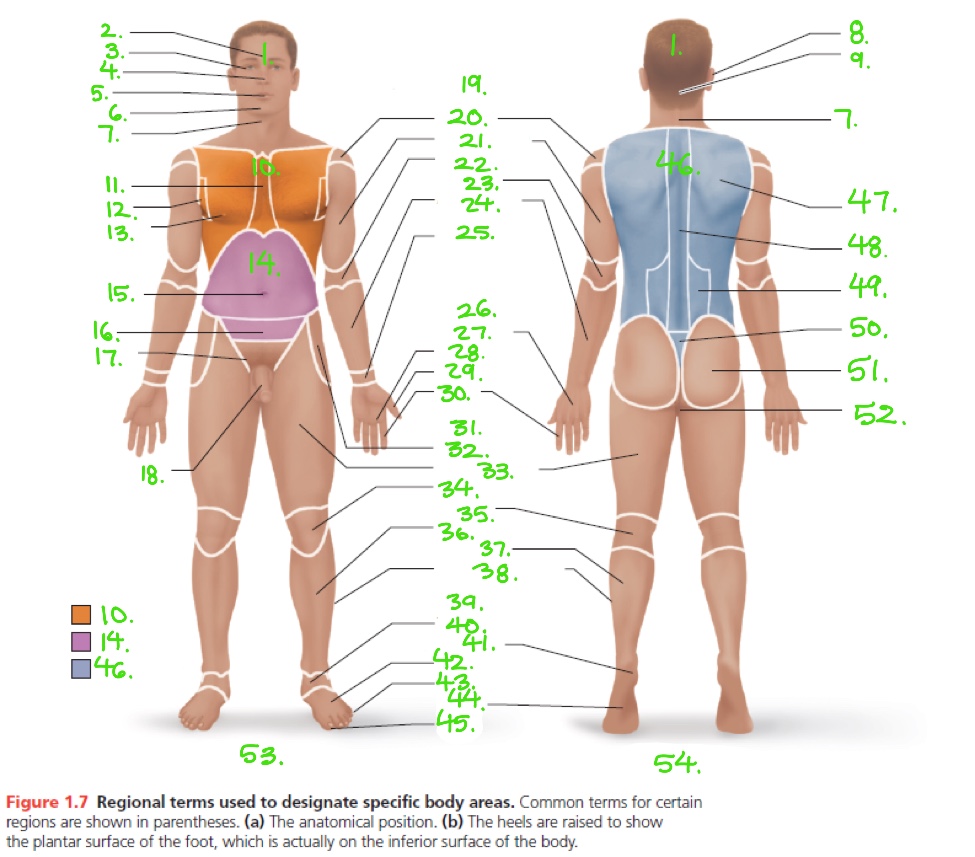
45
hallux
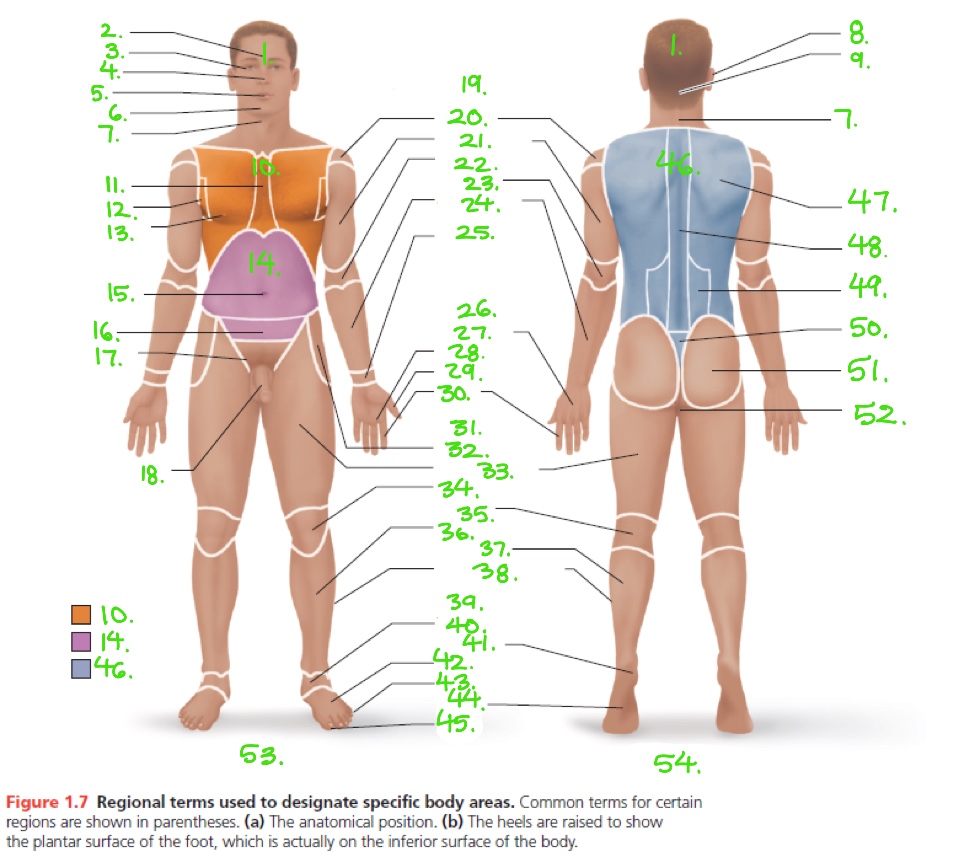
46
dorsum

47
scapular
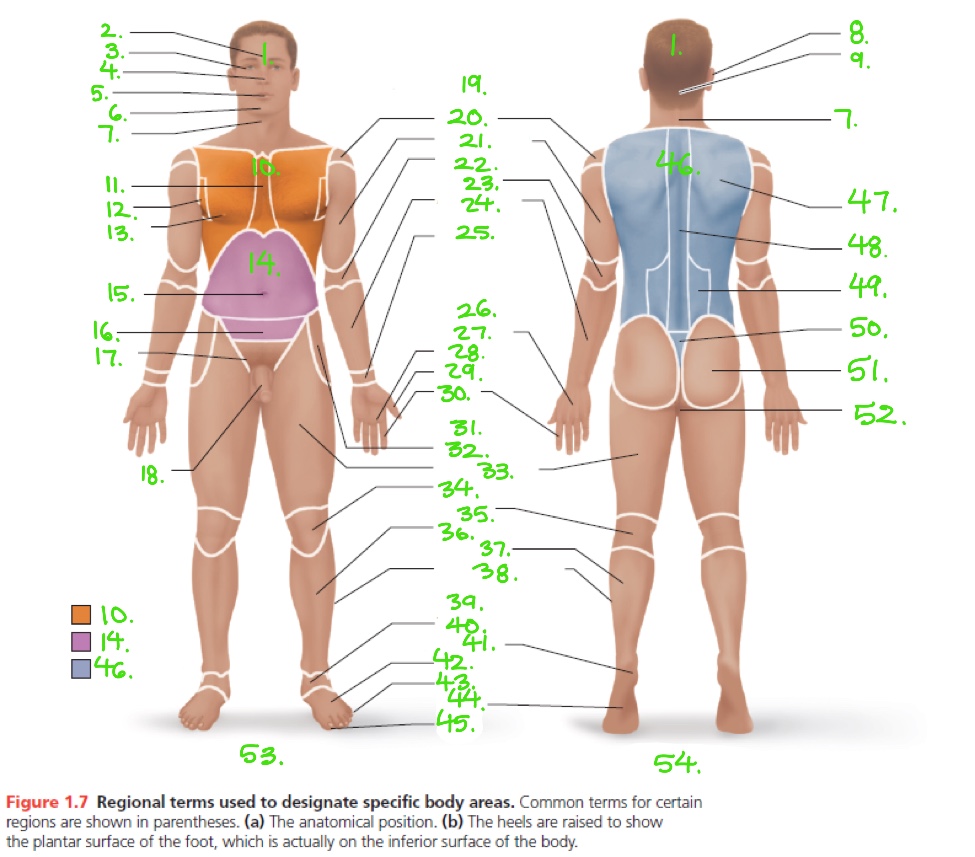
48
vertebral
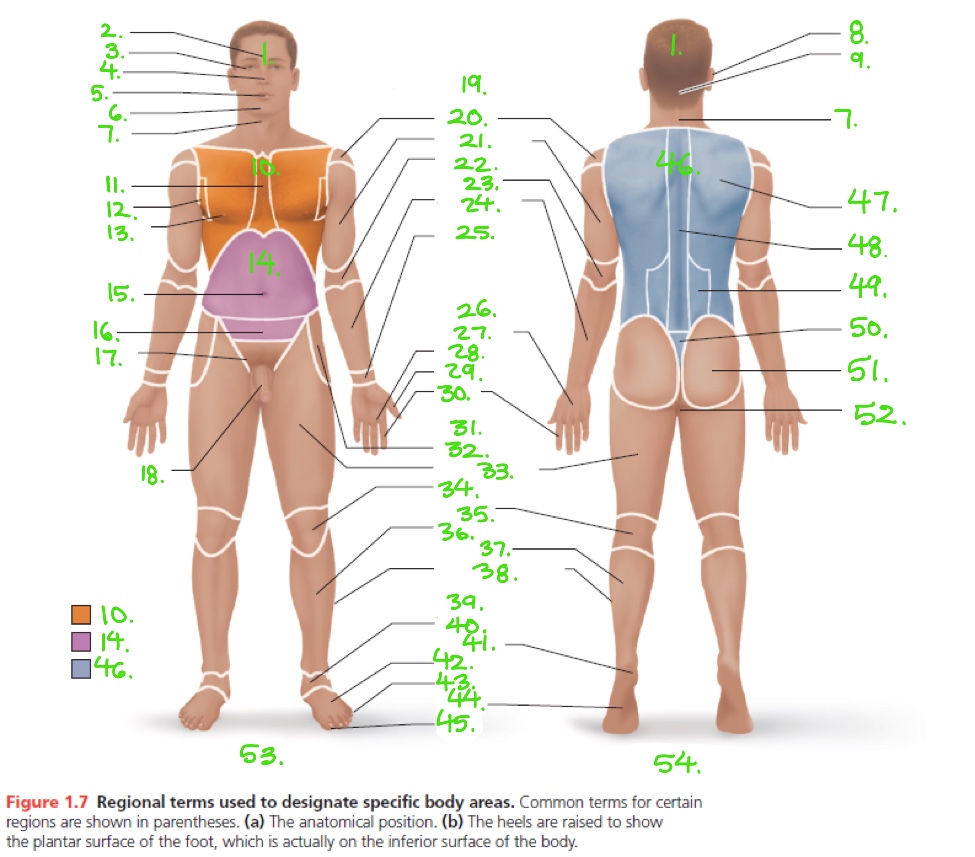
49
lumbar
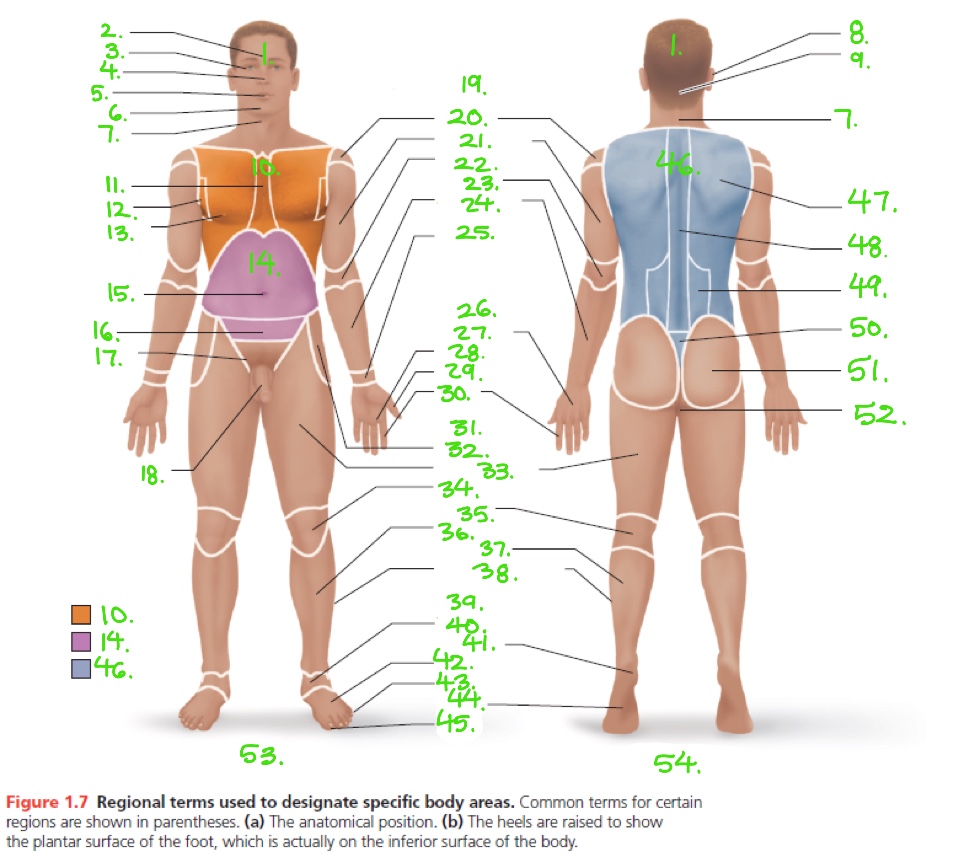
50
sacral
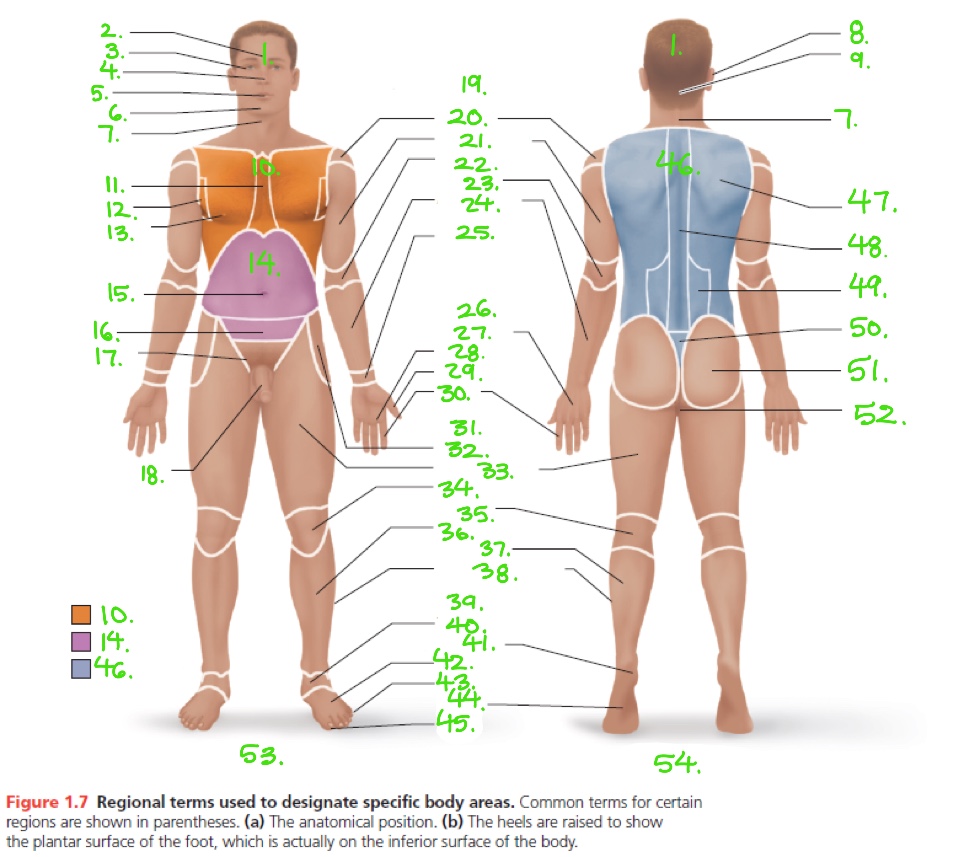
51
gluteal

52
perineal
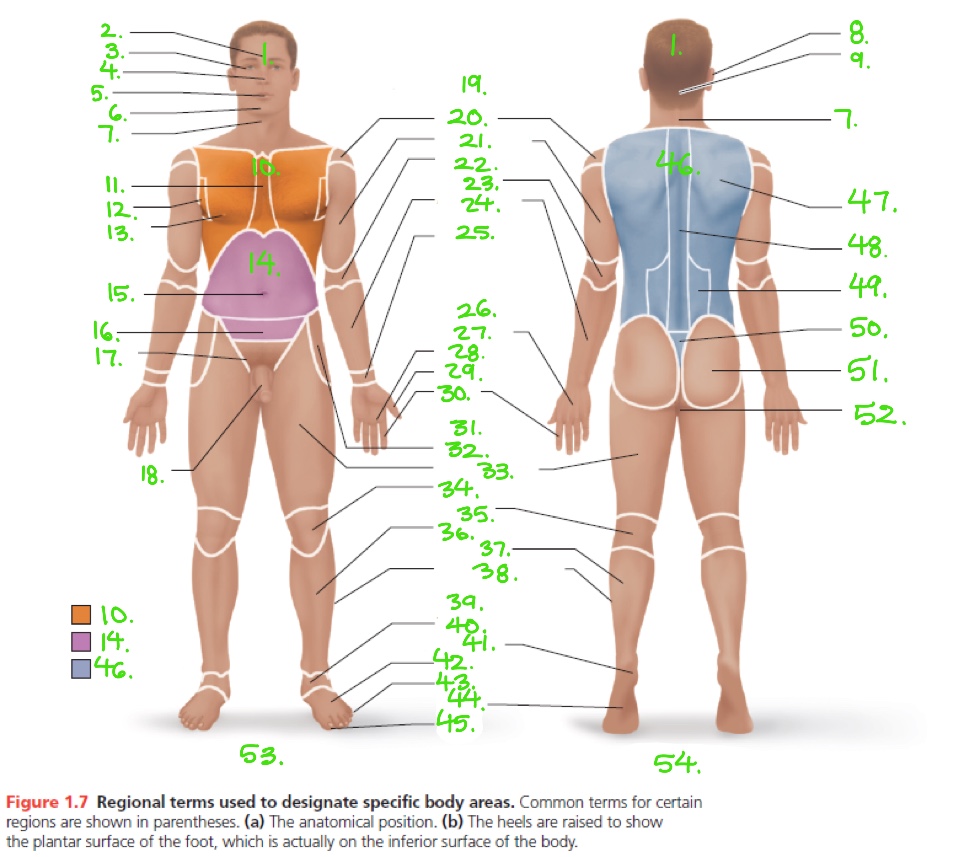
53
anterior/ventral

54
posterior/dorsal
above
superior
below
inferior
toward the midline of the body/on the inner side of
medial
away from the midline of the body/on the outer side of
lateral
closer to origin of body part/point of attachment of a limb to the body trunk
proximal
farther from the origin of the body part/point of attachment of a limb to the body trunk
distal
on the same side
ipsilateral
toward or at the front of the body/in front of
anterior/ventral
toward or at the back of the body/behind
posterior/dorsal
toward or at the body surface
superficial/external
away from the body surface/more internal
deep/internal
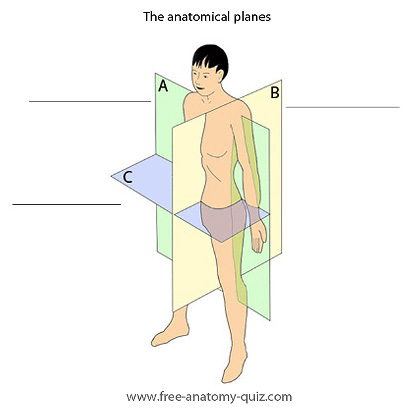
A
frontal plane
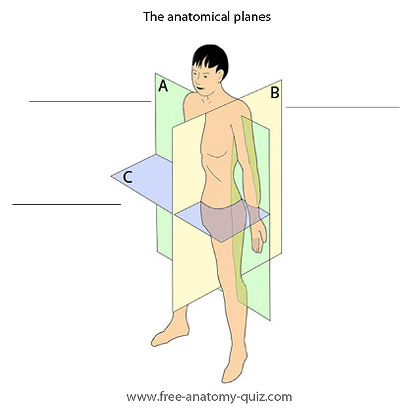
B
sagittal plane
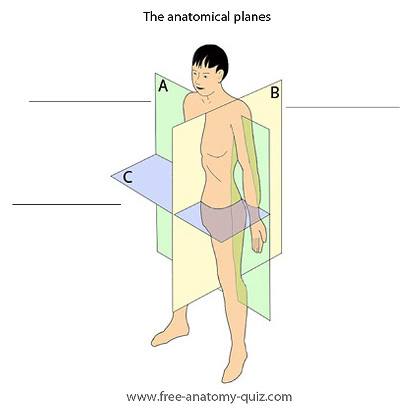
C
transverse plane
Sagittal plane that runs along the midline
midsagittal plane
A sagittal plane offset from the midline
parasagittal plane
6 features of the human body plan: inner tube from mouth to anus; outer tube with axial skeleton
tube-within-a-tube body plan
6 features of the human body plan: mirror image
bilateral symmetry
6 features of the human body plan: hollow nerve cord that develops into brain and spinal cord
dorsal hollow nerve cord
6 features of the human body plan: stiffening rod that is replaced by backbone (___ and ___)
notochord and vertebrae
6 features of the human body plan: repeating units of similar structure from the head along the full length of the trunk
segmentation
6 features of the human body plan: pouches in pharynx during embryonic stage that gives rise to some structures in the head and neck, such as the middle ear cavity
pharyngeal pouches
back cavity subdivided into 2 cavities: cranial and vertebral
dorsal cavity
lies in the skull and contains the brain
cranial cavity
runs through the vertebral column to enclose the spinal cord
vertebral cavity
frontal body cavity that contains the lungs, heart, intestines, and kidneys (visceral organs); subdivided into 2 cavities: thoracic cavity and abdominopelvic cavity (which is further subdivided into 2 other categories, abdominal cavity and pelvic cavity)
ventral body cavity
cavity with liver, stomach, kidneys, and other organs
abdominal cavity
cavity with the bladder, some reproductive organs, and rectum
pelvic cavity
The _____ _____ of the ventral body cavity is comprised of 3 parts: two lateral parts, each containing a lung surrounded by a pleural cavity, and (b) a central band of organs called the mediastinum. The mediastinum contains the heart surrounded by a pericardial cavity and other major thoracic organs, such as the esophagus and trachea (windpipe).
Thoracic cavity
a slitlike space lined by a serous membrane
serous cavity
outer wall of serous cavity
parietal serosa