Electricity Flashcards
 Call Kai
 Learn
Learn Practice Test
 Spaced Repetition
 Match
Match Flashcards
 Knowt Play
1/109

Earn XP
Description and Tags
excluding Mains Electricity, & go over Static Electricity
Name | Mastery | Learn | Test | Matching | Spaced | Call with Kai | Chat |
|---|
No analytics yet
Send a link to your students to track their progress
110 Terms
Name the type of circuit that has only one path for current to flow.
series circuit
Name the component that is used to measure current.
Ammeter
Define current.
The rate of flow of charge.
State the unit of charge.
Coulomb
Explain an electric circuit
Electrical charge flows through the wires.
The battery supplies the charges with energy, pushing the charges around the circuit.
The lamp receives energy from the electrical charges.
This energy is transferred to the surroundings
The electrical charges return to the battery after they flow around the circuit, completing the loop.
charges purpose
Charges transfer energy from the power source to the components.
current equations
I = Q/t
current = charge ÷ time
I= V/R, V=IR
Current = potential difference ÷ resistance
When we measure the current, we always place the ammeter in…
series
In a series circuit, the current is…
the same in every part of the circuit
In a parallel circuit, the current is…
not the same in every part of the circuit.
It splits at the junctions, and then comes back together.
Potential difference is supplied by…
the battery or cell
Potential difference is
the work done per unit charge. It is a measure of how much energy the battery gives to the moving charges or how much energy the charges give to a component.
what is potential difference measured in ?
volts (V), using a voltmeter
Potential Difference in Series Circuits
Adding another cell means…
The potential difference across the cell is equal to the sum of the potential difference across all of the other components.
… there is more energy supplied. The potential difference increases.
This increases the brightness of the bulbs.
Potential Difference in Parallel Circuits
The potential difference across the cell is equal to the potential difference across each branch of a parallel circuit.
The current splits at junctions but each charge still transfers the same amount of energy.
Describe how a voltmeter should be connected to a circuit
in parallel
Resistance
anything that can decrease the current in a circuit.
The higher the resistance, the lower the…
current.
Resistance is measured in…
Ohms (Ω)
resistor
a component that adds resistance to a circuit
resistor symbol

variable resistor
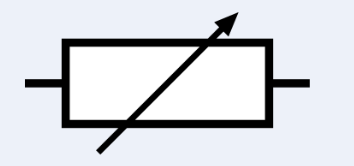
calculating resistance in series
add the resistance of each resistor
Resistance in parallel
In parallel circuits, current does not flow through all components because there are multiple paths to take.
It is easier for current to flow in two paths instead of one, so the overall resistance is lower.
In parallel, the total resistance is less than the smallest individual resistor.
Describe the relationship between current and resistance.
Current and resistance are inversely proportional. As resistance increases (by a factor), current decreases (by the same factor).
Investigating Resistance of a Wire practical
Set up the circuit: Connect the ammeter in series with the wire and the voltmeter in parallel with the wire. Connect a length of wire in series and tape the wire along a ruler to accurately measure its length. Connect the ammeter to the power supply
Use crocodile clips to adjust the length of the wire and record the current & voltage for increasing lengths.
Calculate resistance: Use the equation R=V/I to calculate the resistance of the wire at each length.
Risk of Investigating Resistance of a Wire
the exposed resistance wire will get hot when current travels through it
To reduce the risk:
you must not touch the resistance wire
you must turn off the power supply when you are not taking readings
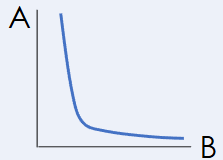
Describe the relationship shown between variables A and B.
They are inversely proportional.
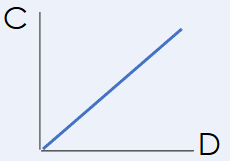
Describe the relationship shown between variables C and D.
They are directly proportional.
as the length of wire increases, resistance…
increases - directly proportional
Explain the relationship between the length of a wire and its resistance.
Resistance is anything that decreases the current.
All components add resistance to a circuit, even wires.
Increasing the length of a wire has the same effect as adding a component.
This means that the longer the length of a wire, the greater its resistance.
Ohm’s Law states that…
at a constant temperature, the current through a component is directly proportional to the potential difference across it.
Ohmic conductor
a component that allows current to flow through it easily and obeys Ohm’s law.
non-Ohmic conductor
a component that does not obey Ohm’s law.
Examples of ohmic and non-ohmic conductors
ohmic:
resistors
non-ohmic:
filament lamp
diode
filament lamp symbol
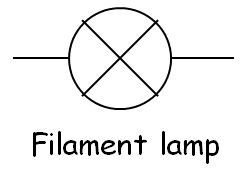
diode symbol
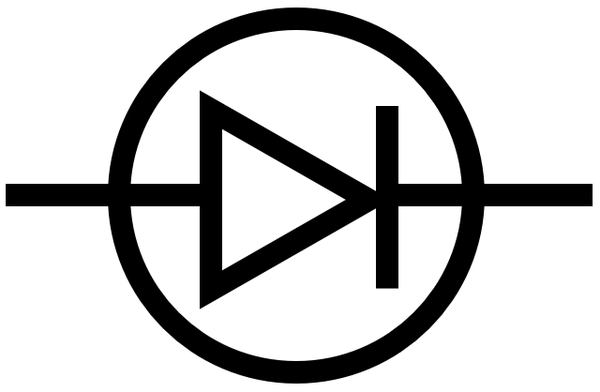
LED symbol
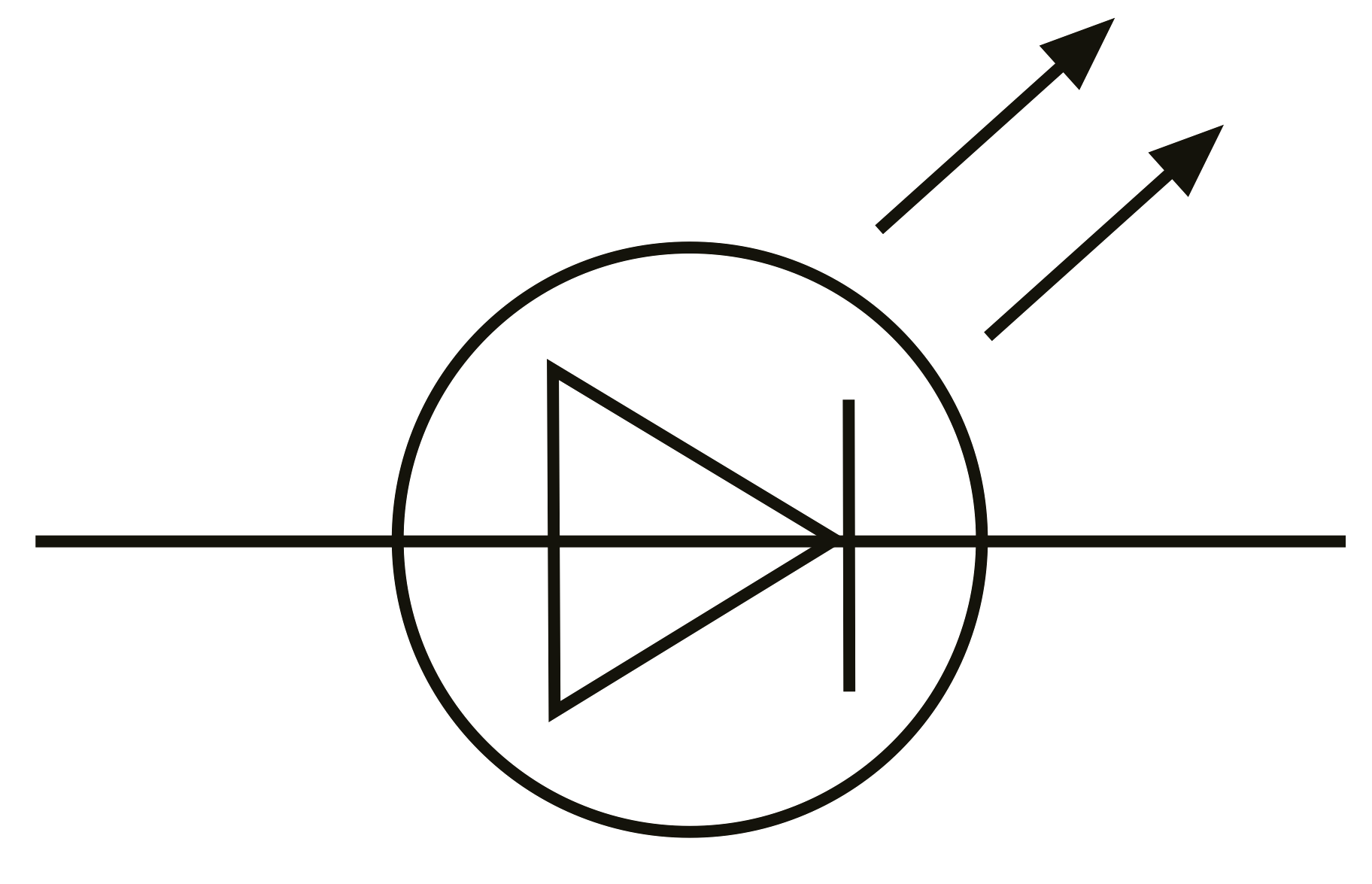
diode use
to convert alternating current into direct current, or as lights (LEDs)
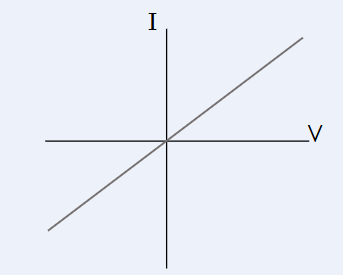
current-potential difference graph for a resistor & why
Fixed resistor:
Current and potential difference are directly proportional.
current-potential difference graph for a filament lamp & why
Resistance increases as the filament gets hotter (when more energy is supplied to it), so current can no longer increase.
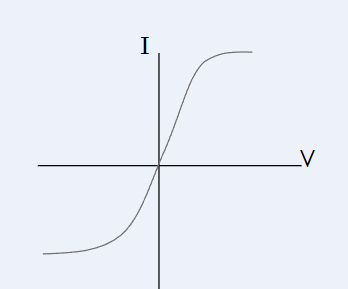
current-potential difference graph for a diode & why
Current is only able to flow in one direction through a diode
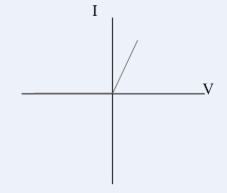
Why does the resistance of a filament lamp not remain constant?
As the temperature of the filament increases, its resistance increases.
It is more difficult for the current to flow, so current is not directly proportional to resistance.
resistance of diodes
Diodes have an extremely high resistance in one direction.
This means they only allow current to flow in one direction.
What are thermistors?
Thermistors are a type of resistor whose resistance changes with the temperature of their surroundings.
Thermistor symbol
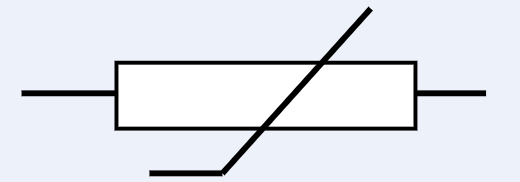
Thermistor uses
Thermistors are used to control the flow of current when the temperature changes.
Thermistors are used in fire alarms, ovens, refrigerators and electronic thermostats.
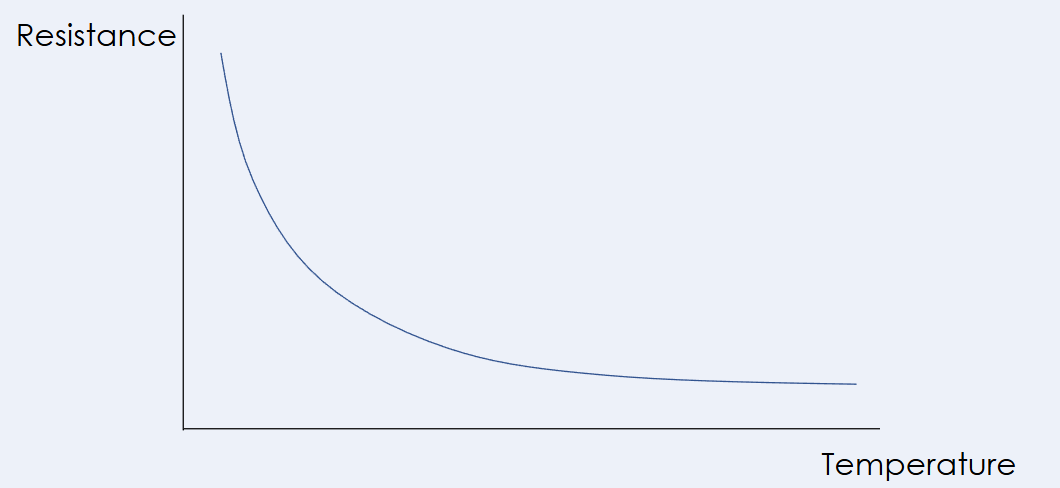
Thermistor resistance/temperature graph and why
The resistance of a thermistor decreases as temperature increases.
Light-dependent resistors (LDRs)
a type of resistor whose resistance changes with the light intensity of their surroundings
LDRs uses
LDRs are used to control the flow of current when the amount of light changes.
LDRs are used in street lights, burglar alarms and alarm clocks.
LDR symbol
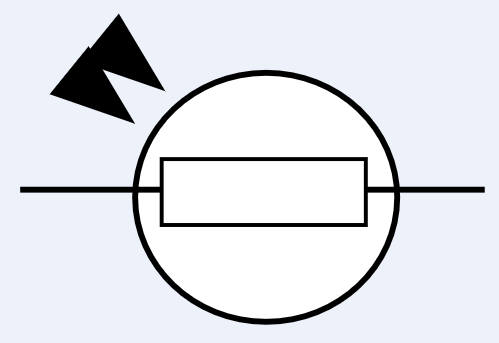
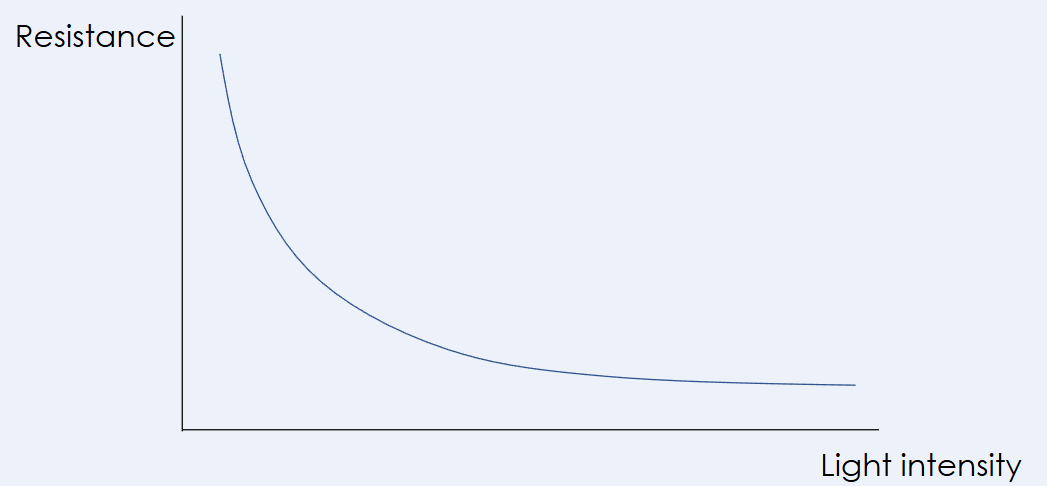
LDRs on a resistance/light intensity graph & why
The resistance of a light-dependent resistor decreases as light-intensity increases.
Describe two ways of increasing the current in a circuit
Decreasing the resistance
Increasing the potential difference (of the power supply)
What would happen to the current through the filament lamp in a circuit if the temperature increased?
If temperature increased, the resistance of the filament lamp would increase, so current through it would decrease. The metal ions in the filament would vibrate more, making it more difficult for current to flow.
What does electrical power tell you?
how much energy an electrical component transfers each second
Power
the rate at which energy is transferred or work is done
Power equations
Power = Current x Potential Difference
Power = Current2 x Resistance
Power = Energy/time
Efficiency equation
efficiency = useful power output / total power output x 100
Why is the moon described as accelerating even though its speed remains constant?
Acceleration is the rate of change of velocity and the Moon is constantly changing direction, so is changing velocity.
State the different energy stores.
Kinetic, gravitational, elastic, chemical and thermal, magnetic, electrostatic, nuclear
Explain what is meant by efficiency.
a measure of how much useful energy is transferred compared to wasted energy.
The Cost of Electricity
Electricity is expensive to generate and transport from power stations, which means that we need to pay to use it.
What is electricity?
a pathway by which energy is transferred, so when we use electricity in appliances they are transferring energy
What do electricity meters do?
measure the number of units of electricity (energy) used in a home or other building. The more units used, the greater the cost.
Energy transferred equation
Energy transferred = Power x Time
Total cost equation
number of units × cost per unit
equation linking energy, potential difference & charge
E = VQ
Energy = potential difference x charge
Investigating Resistance of Components Method
Set up your circuit with an ammeter, voltmeter, variable resistor, cell and a lamp / resistor / diode
use the ammeter and voltmeter to take readings and record these in a table
change the settings on the resistor and take new pairs of reading
reverse the direction of electrical current in the circuit by swapping the connections on the power supply
take further readings from this new set up
you can plot a graph of current against potential difference.
State the definition of current.
The rate of flow of electrical charge.
Live wire
The live wire goes from the power source to the appliance
230V
Neutral wire
0V
The neutral wire goes from the appliance back to the power source to complete the circuit.
fuse
a safety device that prevents a high current from flowing through the circuit
Direct Current (D.C.)
Direct current (d.c.) travels in one direction only.
Cells and batteries supply direct current.
Potential difference stays the same
Current flows in one direction continuously.
Alternating Current (A.C.)
The domestic electricity supply has an alternating potential difference of 230 V and a frequency of 50Hz. A frequency of 50 Hz means the direction of the current changes back and forth 50 times every second
This means it continuously reverses direction 50 times every second.
This alternating potential difference drives an alternating current (AC).
Provided by mains electricity
State the role of the live wire.
To carry current from the power source to the appliance
Explain the role of the neutral wire.
It goes back from the appliance to the power source, to complete the circuit (so current can flow)
State the main difference between a circuit breaker and a fuse.
A circuit breaker can be reset
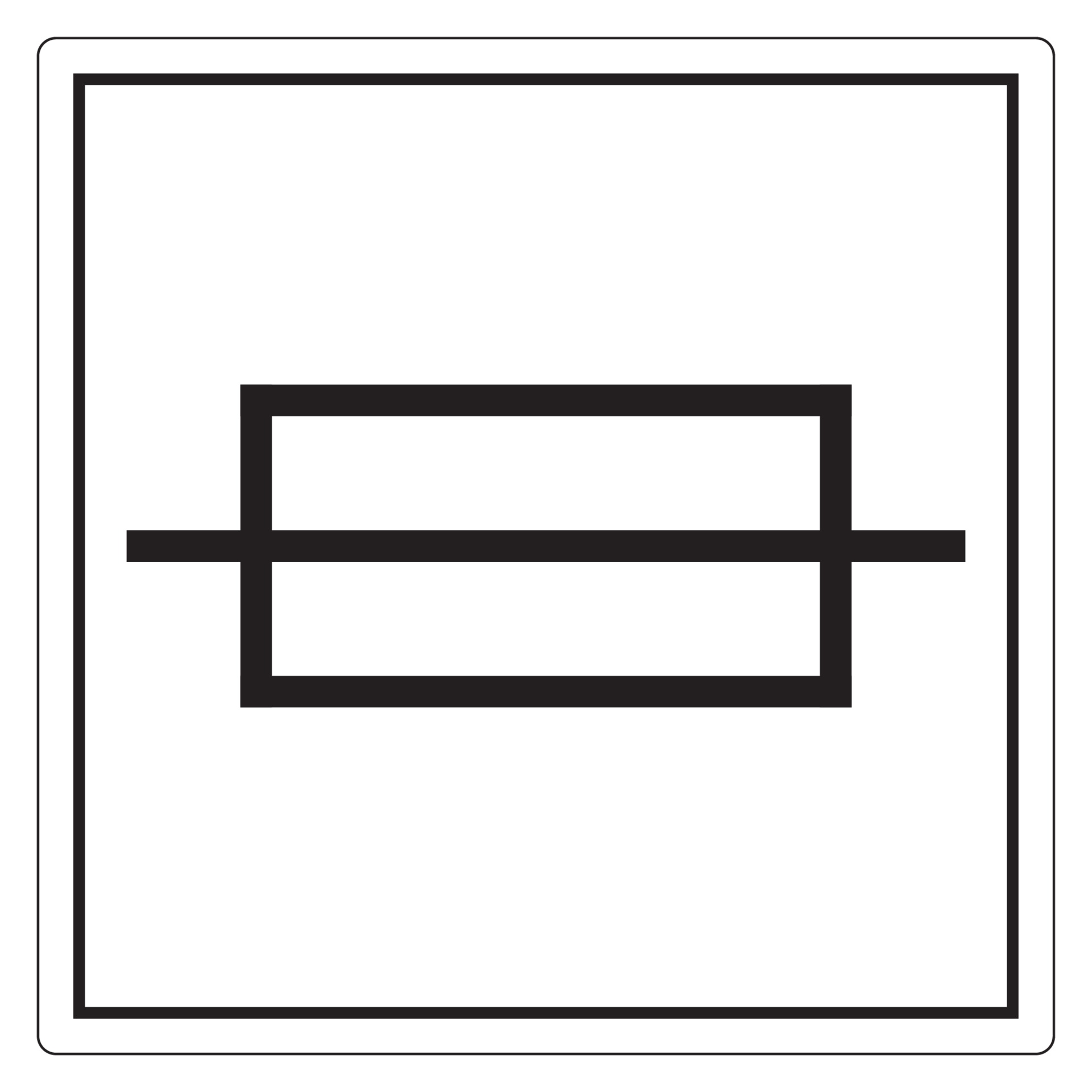
fuse symbol
Explain why the electrical circuit in a torch uses DC from a battery.
A torch has an electrical circuit in it. This means that it needs a power source to make the current flow.
A torch needs to be carried about so cannot be plugged in to the mains supply.
A torch does not need a high potential difference which means that an AC supply from mains electricity would be too high at 230V.
Explain why the electrical circuit in a hairdryer uses AC from the mains electricity supply.
A hairdryer has an electrical circuit in it. This means that it needs a power source to make the current flow.
A hairdryer is used in one place so can be plugged in and AC mains electricity is suitable.
A hairdryer needs a high potential difference which means that AC mains electricity is the right supply to use.
Explain why the electrical circuit in a kettle uses AC from the mains electricity supply.
A kettle has an electrical circuit in it. This means that it needs a power source to make the current flow.
A kettle is used in one place so can be plugged in and AC mains electricity is suitable.
A kettle needs a high potential difference which means that AC mains electricity is the right supply to use.
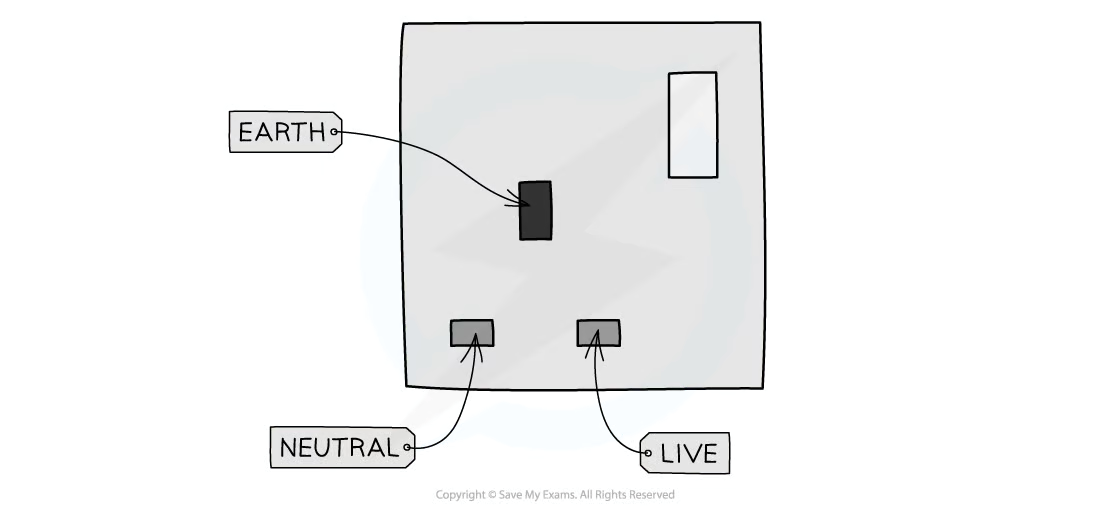
main, earth & live wire diagram example
Why may a live wire be dangerous even when a switch in the mains circuit is open?
Current may still be flowing through it
Due to the presence of potential difference - can cause electric shocks if the live wire comes into contact with the body; even when the wire is switched off, the live wire may still hold a potential difference that can lead to a shock.
The danger of providing any connection between the live wire and earth
You’ll get a serious electric shock if you touch it, as current flows through you to the ground
The national grid
a system of cables, pylons and transformers which transfers electrical power from power stations to people’s homes
The national grid does not include power stations or people’s homes, only the things in between that are used to transfer the electrical power
What does the national grid contain?
Pylons hold the cables up
Step up transformers increase the potential difference from the power station to the transmission cables to make electricity cheap to transfer - So as the power is constant (𝑷 = IV) current decreases so less energy is lost.
Step down transformers decrease the potential difference to make electricity safe to use for domestic use.
Why is the National Grid system an efficient way to transfer energy?
Step-up Transformers: Step-up transformers at power stations increase the voltage of the generated electricity for transmission. Raising the voltage reduces the current flowing through the transmission cables, further minimising resistive losses during transmission.
Step-down Transformers: At substations, step-down transformers reduce the voltage to lower levels for distribution to consumers. This step ensures that the electrical energy is delivered to homes, businesses, and industries at safe and practical voltage levels, ready for consumption.
High-Voltage Transmission: One of the key features of the National Grid system is the use of high-voltage transmission lines. High-voltage electricity has significantly lower current for the same power compared to low-voltage electricity. According to Ohm's law (V = I × R), lower current results in lower resistive losses (I²R losses) during transmission. Therefore, by increasing the voltage, the system reduces energy losses in the form of heat, making long-distance energy transfer more efficient.
PD & Current in Primary & Secondary Coils Equation (transformers)
Potential difference across primary coil x Current in primary coil
Potential difference across secondary coil x Current in secondary coil
A basic transformer consists of…
a primary coil and a secondary coil wound on an iron core.
Iron is used as it is easily magnetised.
What are the differences between the alternating and direct supply?
An alternating supply produces a potential difference (and therefore a current) that constantly changes direction, whereas a direct supply is only one direction.
An alternating supply changes magnitude, a direct supply does not.
Describe the function of the National Grid.
To transfer electrical power from power stations to people’s homes and other buildings.
Describe what happens to power through a transformer.
Power is conserved.
Explain the function of transformers in the National Grid.
Transformers are used to increase or decrease the potential difference while conserving power
Conserving power while changing the potential difference changes the current
Increasing the potential difference means that the current decreases, making it more efficient to transfer energy because less energy is wasted as heat
Decreasing the potential difference means that it is safe for consumers to use
Explain why two electrons repel each other.
Electrons repel each other because each electron has the same charge (-1) and objects with the same charge repel each other.
Name the force acting between the electrons and protons.
Electrostatic force
Which subatomic particles can be transferred by friction?
Electrons. Friction causes electrons to be transferred from one surface to another, so one has a net positive charge and one has a net negative charge, so they attract
Why would (the balloon and jumper static electricity experiment) not work with a conductor?
conductors allow electrons to pass freely through them - when two insulating materials are rubbed together, electrons are removed from one and given to the other, leaving one with a positive charge and one with a negative charge.
Static electricity is a non-contact force. True or False?
TRue!

What is happening in this image?
The child’s clothes and the slide are both insulators.
Moving down the slide causes friction to transfer electrons from the slide to the clothes.
The child now has a build-up of electrons on his body.
His hair stands on end because like charges repel.
If the child touched a conducting material, the charge would be able to flow, giving the child a shock.
Explain why conductors cannot become charged.
Because charges can flow