Definitions of Abnormality
 Studied by 0 people
 Call Kai
 Learn
Learn Practice Test
 Spaced Repetition
 Match
Match Flashcards
 Knowt Play
1/24

There's no tags or description
Looks like no tags are added yet.
Name | Mastery | Learn | Test | Matching | Spaced |
|---|
No study sessions yet.
25 Terms
Why are there four different definitions of abnormality?
Psychology aims to support all people with their wellbeing and daily living.
What is statistical infrequency?
defines abnormal behaviour using statistical measures
A behaviour is regarded as abnormal if it is statistically uncommon/rare in that it is not present often or regularly per society
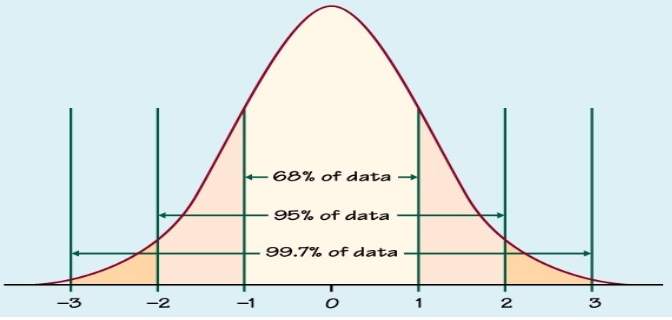
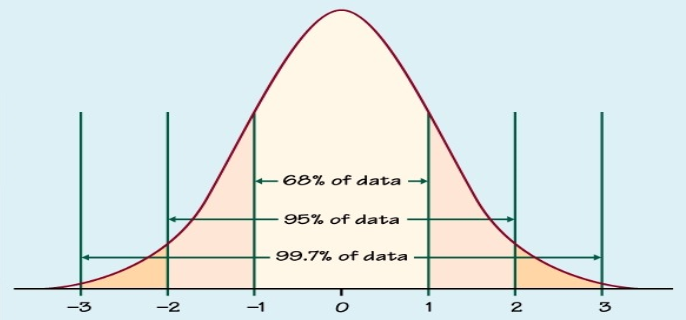
Many human characteristics can be measured and plotted on a normal distribution
A person whose measured characteristic falls at either end of the distribution (2 S.D. above or below the mean) can be considered abnormal
What are some examples of statistical infrequency?
IQ
mood
height
weight
All can be lower or higher than the ‘average’ range.
Evaluation of statistical infrequency: Does not recognise many known disorders
where behaviours and symptoms are noticeable, but not measurable (e.g. delusions or hallucinations).
Statistical infrequency would not recognise depression as abnormal behaviour
Depression is estimated to affect around 280 million people across the world at any given time
the high prevalence rate of depression means that it is not statistically deviant
if depression is not statistically deviant then SI is not a fully valid measure of abnormality
Evaluation of statistical infrequency: standardised tool
applying statistical infrequency as a measure includes the use of a standardised tool which means that the measure has built-in reliability
Standardised measures are replicable i.e. they can be applied repeatedly to analyse data sets
Replicability means that large data sets can be included in the calculation
The larger the data set, the less likely it is to be affected by outliers/anomalous results thus consistent patterns/trends are highlighted and consistency = reliability
Evaluationof statistical infrequency: : cultural relativism
Characteristics of behaviour are specific to each culture.
- Defining abnormal characteristics and generalising across cultures could cause an ethnocentric bias (by imposing an etic). This could misrepresent other cultures. This is a weakness of all of the definitions. - Defining abnormality would be best left as culturally relative.
- E.g. Statistics (average heights)
- E.g Social norms
- E.g. daily living activities
- E.g. mental health characteristic
Independence is seen as abnormal in collectivist societies (so *this definition cannot be generalised to these cultures).
Also mental health criteria vary across cultures –certain phobias are only recognised in certain cultures, e.g. Koro phobia (in S.E. Asia)
What is Deviation from Social Norms?
Society sets norms and values (both written and unwritten)
Any behaviour that deviates from these norms is considered abnormal
What are examples of Deviation from Social Norms?
Cannibalism
crying all day
Evaluation: Deviation from Social Norms: real world application
DIMH is a positive measure of abnormality and has useful real world application
This measure can be used as the basis for therapy and treatments with its emphasis on the whole person and on positive mental health and wellbeing
can be used in clinical practice e.g. to define characteristics of antisocial personality disorder (e.g. failing to conform to culturally normal ethical behaviour e.g. recklessness, deceitfulness), depression, anxiety, eating disorders, OCD, schizotypal personality disorders, tourettes, etc.
Evaluation: Deviation from Social Norms: change over time
Although this definition allows for age and situation dependent behaviour, the changes in legislation mean that norms vary dependent on the time. This is sometimes hard to judge and means that there is a lack of consensus between generations. For example, homosexuality was regarded as a mental illness into the 1970s, whereas nowadays that is no longer the case.
What is the issue/ debate for deviation from social norms?
Characteristics of behaviour are specific to each culture.
- Defining abnormal characteristics and generalising across cultures could cause an ethnocentric bias (by imposing an etic). This could misrepresent other cultures. This is a weakness of all of the definitions. - Defining abnormality would be best left as culturally relative.
- E.g. Statistics (average heights)
- E.g Social norms
- E.g. daily living activities
- E.g. mental health characteristic
Independence is seen as abnormal in collectivist societies (so *this definition cannot be generalised to these cultures).
Also mental health criteria vary across cultures –certain phobias are only recognised in certain cultures, e.g. Koro phobia (in S.E. Asia)
What is the Failure to Function (Adequately)?
When a person is unable to live a ‘normal’ day-to-day life
Does not possess a ‘normal’ range of physical abilities, emotions or behaviours
Engages in behaviours which disrupt their ability to work & form/maintain relationships
What characteristics are assessed to see if mental health is good?
good personal hygiene
regular eating habits
attending work or school
socialising with others
What is Rosenhan and Seligmans checklist of Dysfunction?
1. Personal distress
2. Maladaptive behaviour (stops you achieving goals)
3. Unpredictable behaviour (doesn’t suit
circumstances)
4. Irrational behaviour (unexplainable)
5. Cause observer discomfort
6. Deviation from social norms and values
What is an example of personal distress?
Anxiety or depression
What’s is an example of maladaptive behaviour?
Evaluation of failure to function: abnormality is not always accompanied by obvious dysfunction.
E – Evidence:
Some individuals show severely abnormal behaviour yet appear to function normally in everyday life. For example, psychopathic offenders such as Harold Shipman or Fred and Rose West were able to maintain jobs, relationships and a seemingly typical lifestyle while secretly engaging in highly abnormal and harmful behaviours.
E – Explain:
This shows that people can present as outwardly “functional” despite having extreme psychological disturbances. Because of this, the definition may fail to identify individuals who are in fact abnormal, simply because they do not display the expected signs of dysfunction.
L – Link:
Therefore, the failure to function adequately definition lacks validity, as it cannot reliably distinguish between normal and abnormal behaviour in all cases, limiting its usefulness in diagnosing abnormality.
What is deviation from ideal mental health?
Jahoda defines ‘normal’ mental health
characteristics.
Abnormality is seen as anything which deviates from these characteristics.
What is an example of deviations from ideal mental health?
Depression, hallucinations and anxiety
What is jahodas checklist of ideal mental health?
No symptoms of distress
2. Rational and accurate perception of the self
3. Can self actualise
4. Can cope with stress
5. Realistic view of the world
6. Good self-esteem
7. Independent of other people
8. Can successfully work, love and enjoy leisure
Evaluation of the deviation form ideal mental health definition: unrealistic
Over-demanding (unrealistic) criteria – most people can’t meet the demands of Jahoda’s checklist.
Plus it’s Jahoda’s subjective criteria