(updated) Phylum Echinodermata
 Call Kai
 Learn
Learn Practice Test
 Spaced Repetition
 Match
Match Flashcards
 Knowt Play
1/12

There's no tags or description
Looks like no tags are added yet.
Name | Mastery | Learn | Test | Matching | Spaced | Call with Kai | Chat |
|---|
No analytics yet
Send a link to your students to track their progress
13 Terms
class Ophiuroidea
Brittle stars, tube feet do not have suckers, madreporite is on the oral surface. passive suspension feeders
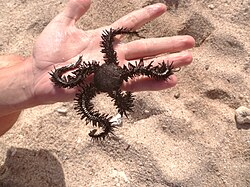
passive suspension feeding
animal hides in a crevice and feed by extending their arm, their tube feet aided by mucus trap food particles suspended in the water and pass the food to their mouth
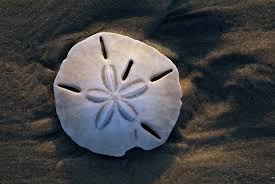
class Echinoidea
sea urchins and sand dollars. aristotle’s lantern and test. sea urchins are herbivories that mainly eat kep and sand dollars are deposit feeders
Aristotle’s lantern
the 5-sided jaw inside the mouths of class Echinoidea
Test (class Echinoidea)
enlarged ossicles that are fused together to form a continuous exoskeleton, has tiny holes to allow for tube feet extension
deposit feeders
sand is passed over small spines on the aboral surface, food particles drop through the spines and become trapped in mucus cilia transport the food filled mucus to the edge of the body and into food groves on the oral surface that is then carried to the mouth by by the tube feet.
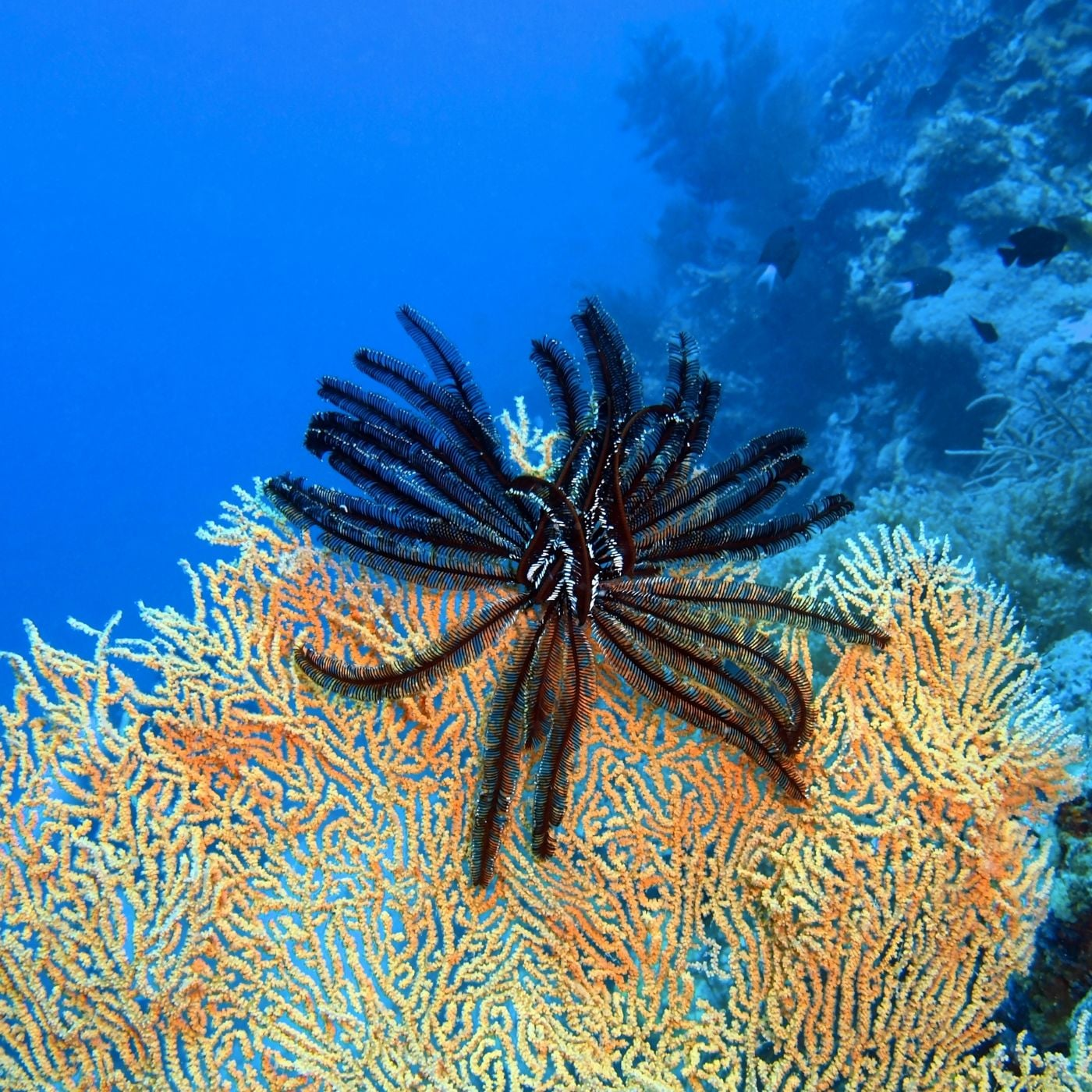
class Crinoidea
Sea lilies and feather stars, passive suspension feeders
class Holothuroidea
Sea cucumber, bilateral symmetry, eviscerate to distract their predetor.cuverian tubules that come out their anus and onto predators to deter predation. detritivores
detritivores
eat tiny organic particles (decaying algae and animal feces
class Asteroidea
Sea stars: feed by using their tube feet to grasp their prey(bivalves) and pry their shells open. Then everts its cardiac stomach and release enzymes to start externally digesting its prey
sea star wasting disease
caused by a bacteria infection of the skin and interfering with the body’s gas exchange capacity. often causing limbs to twist and break of the body.
Phylum Echinodermata
deuterostome development, pentaradial symmetry, non cephalized, oral and aboral surfaces. echinoderm larva retain ancestral bilateral symmetry characteristics
deuterostome development
bilateral symmetry, blastopore becomes the anus during embryonic development