NR 304 Exam 2 questions and answer with detailed rationales
 Call Kai
 Learn
Learn Practice Test
 Spaced Repetition
 Match
Match Flashcards
 Knowt Play
1/108

There's no tags or description
Looks like no tags are added yet.
Name | Mastery | Learn | Test | Matching | Spaced | Call with Kai | Chat |
|---|
No analytics yet
Send a link to your students to track their progress
109 Terms
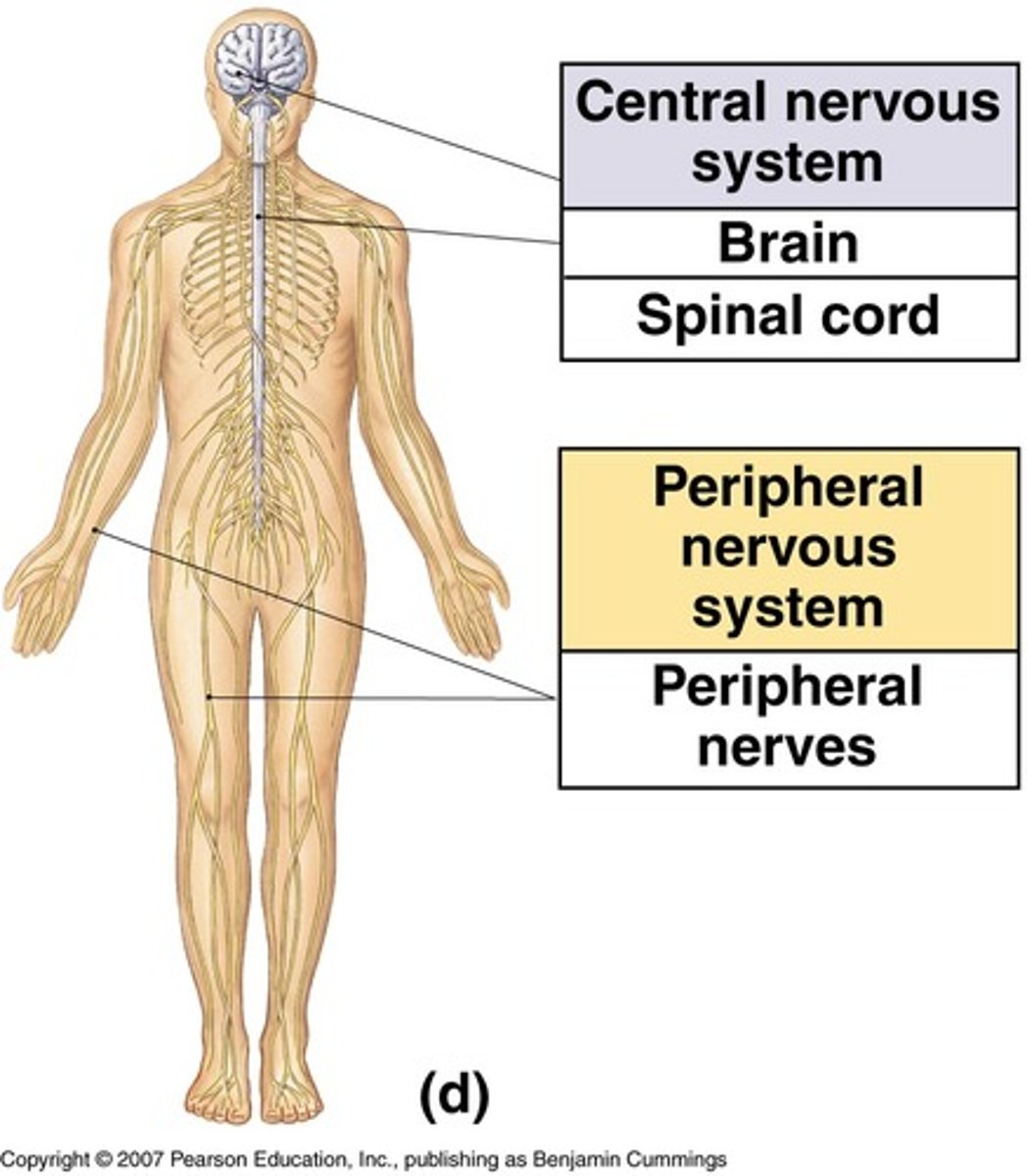
central nervous system (CNS)
brain, spinal cord
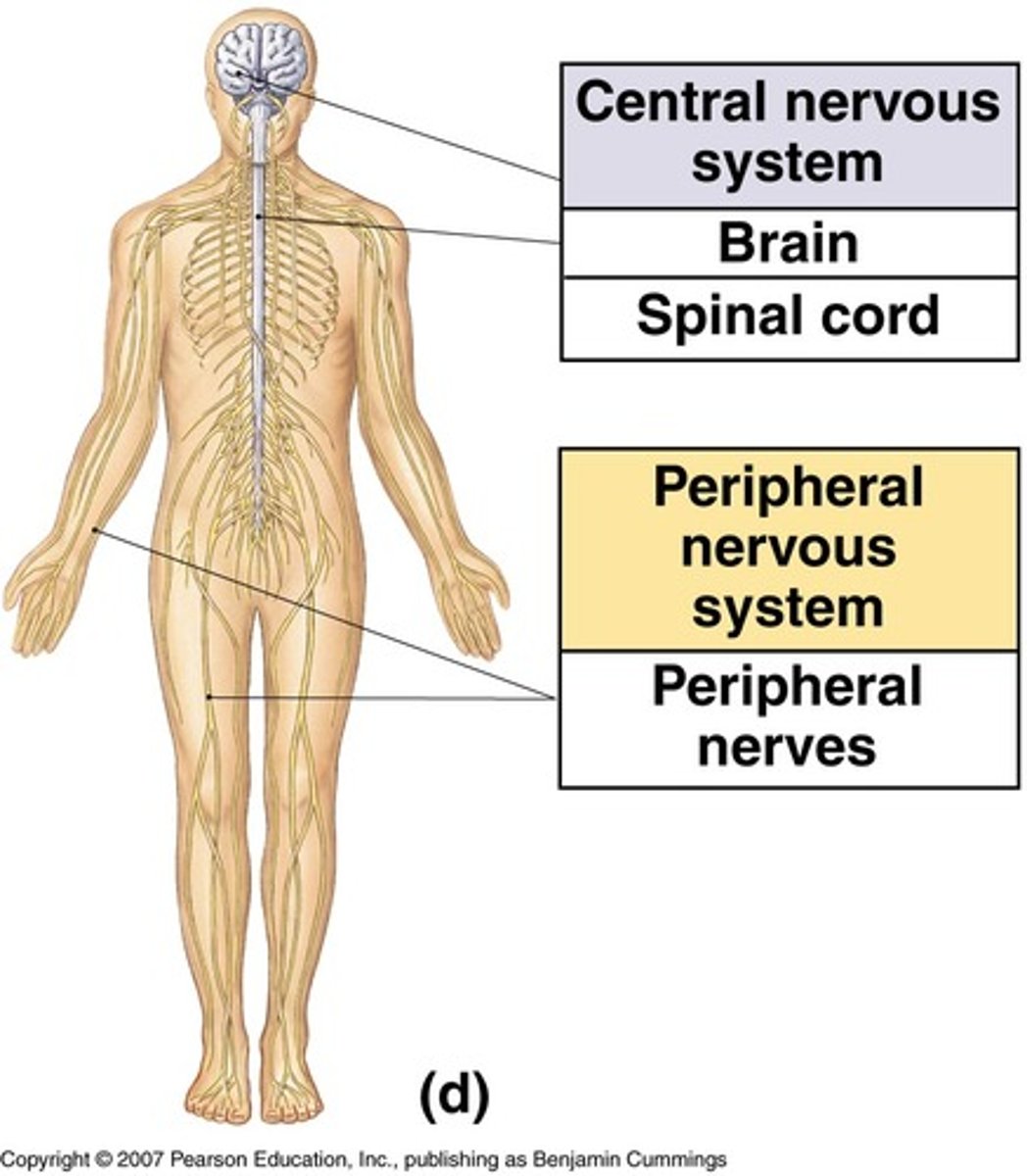
peripheral nervous system (PNS)
everything but brain and spinal cord, 12 cranial nerves
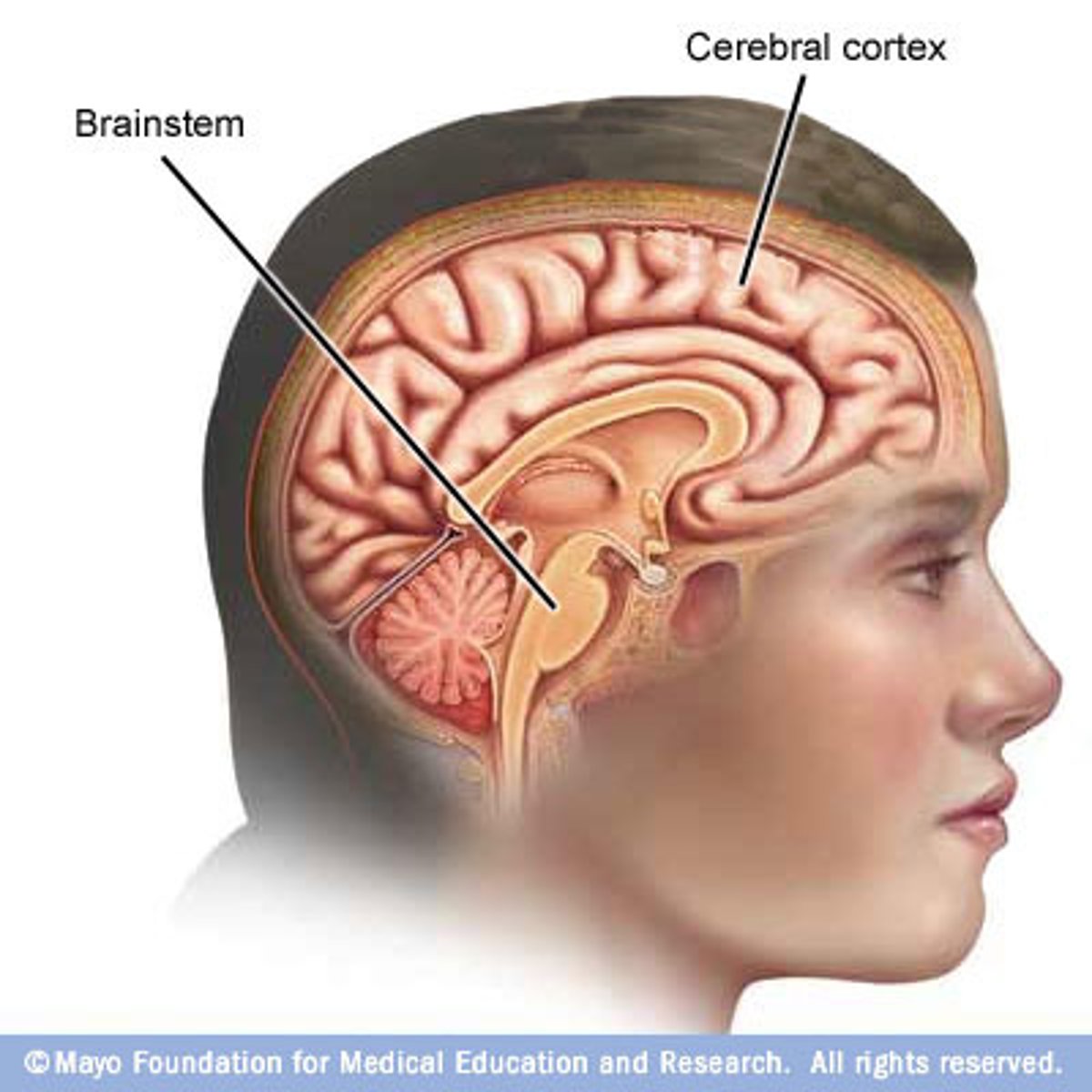
cerebral cortex
2 hemispheres, 4 lobes per hemisphere
can get approximation or where a stroke happened
frontal lobe
personality, behavior, emotions, intellectual function
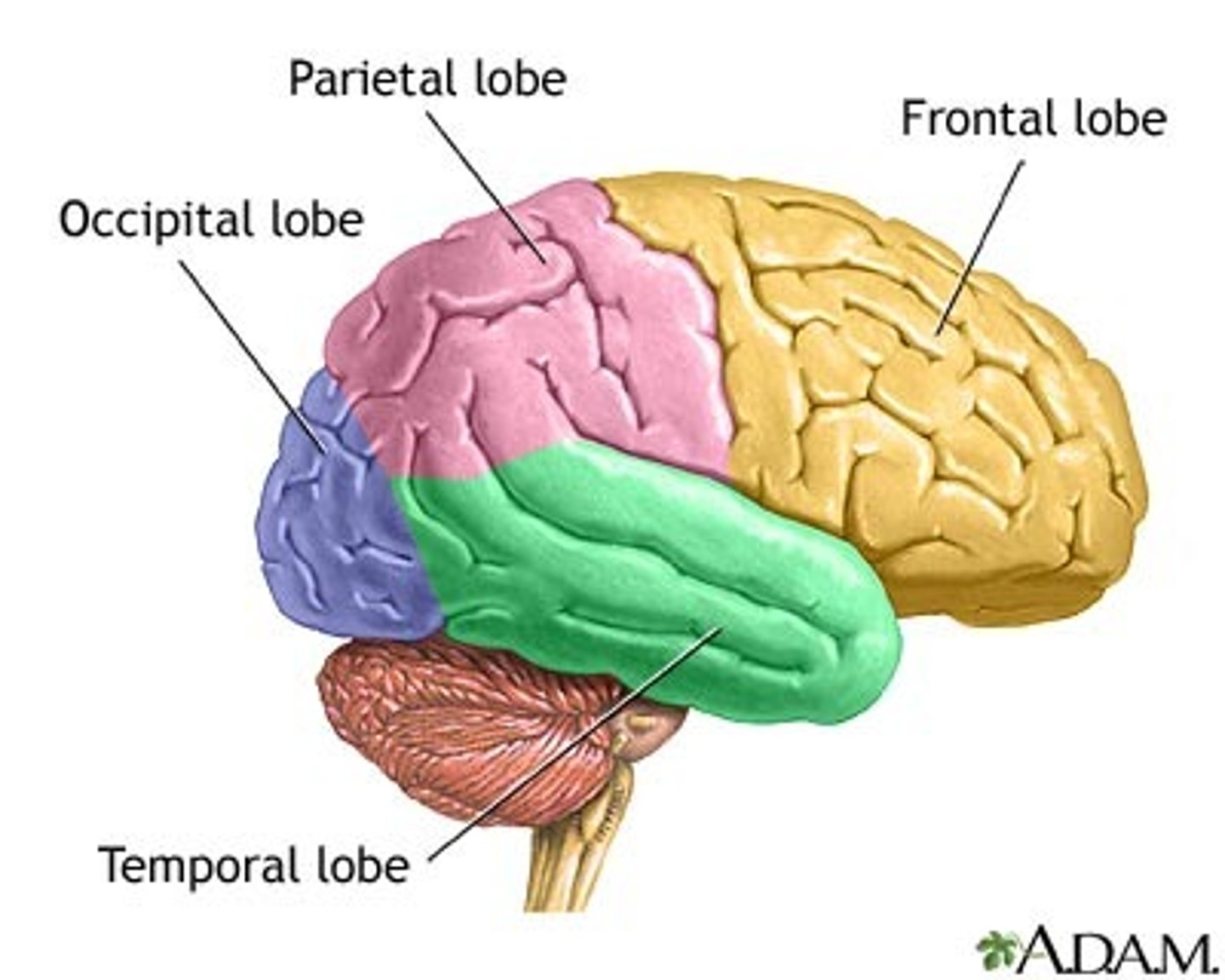
parietal lobe
primary center for sensation
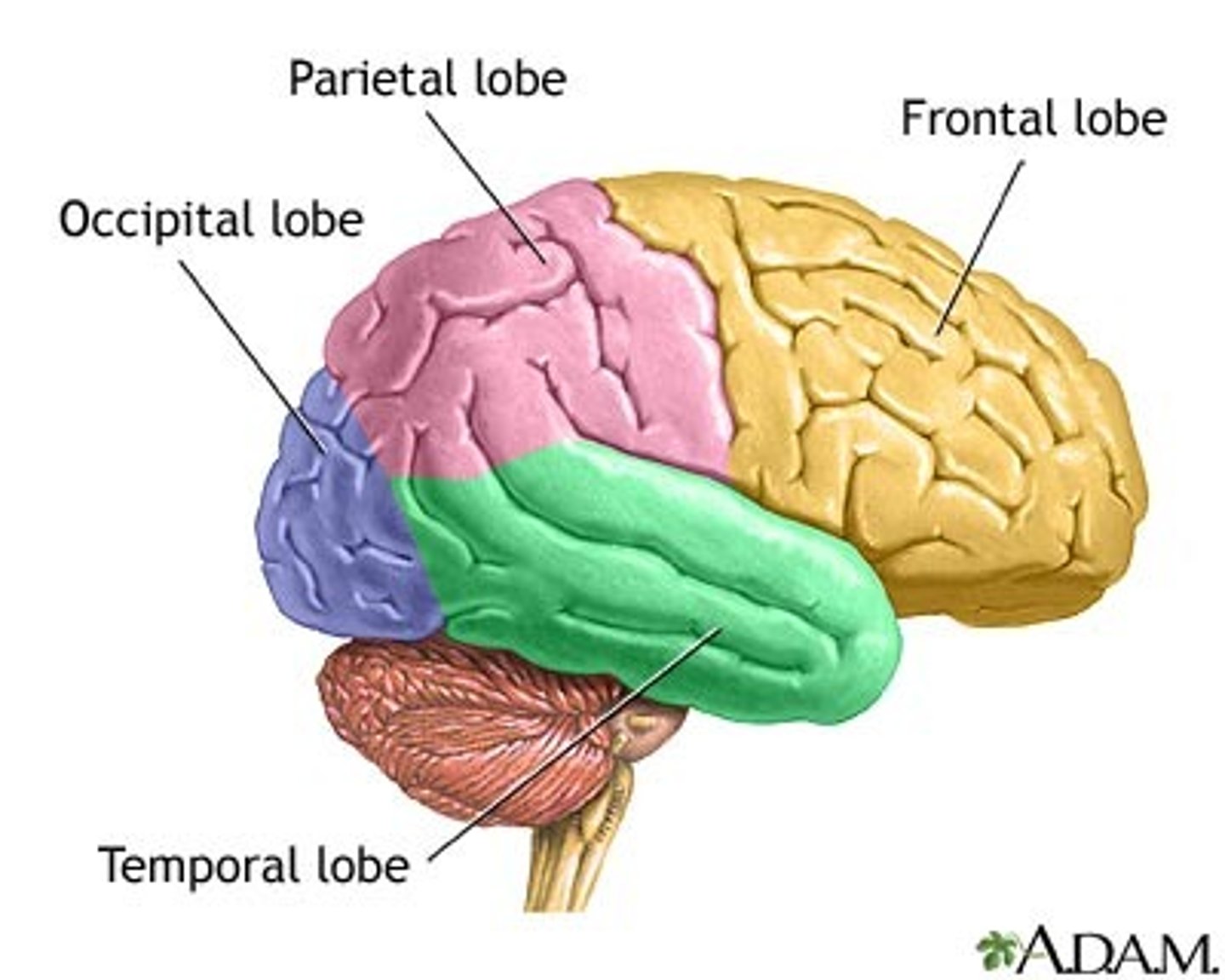
occipital lobe
primary visual receptor center (back of head)
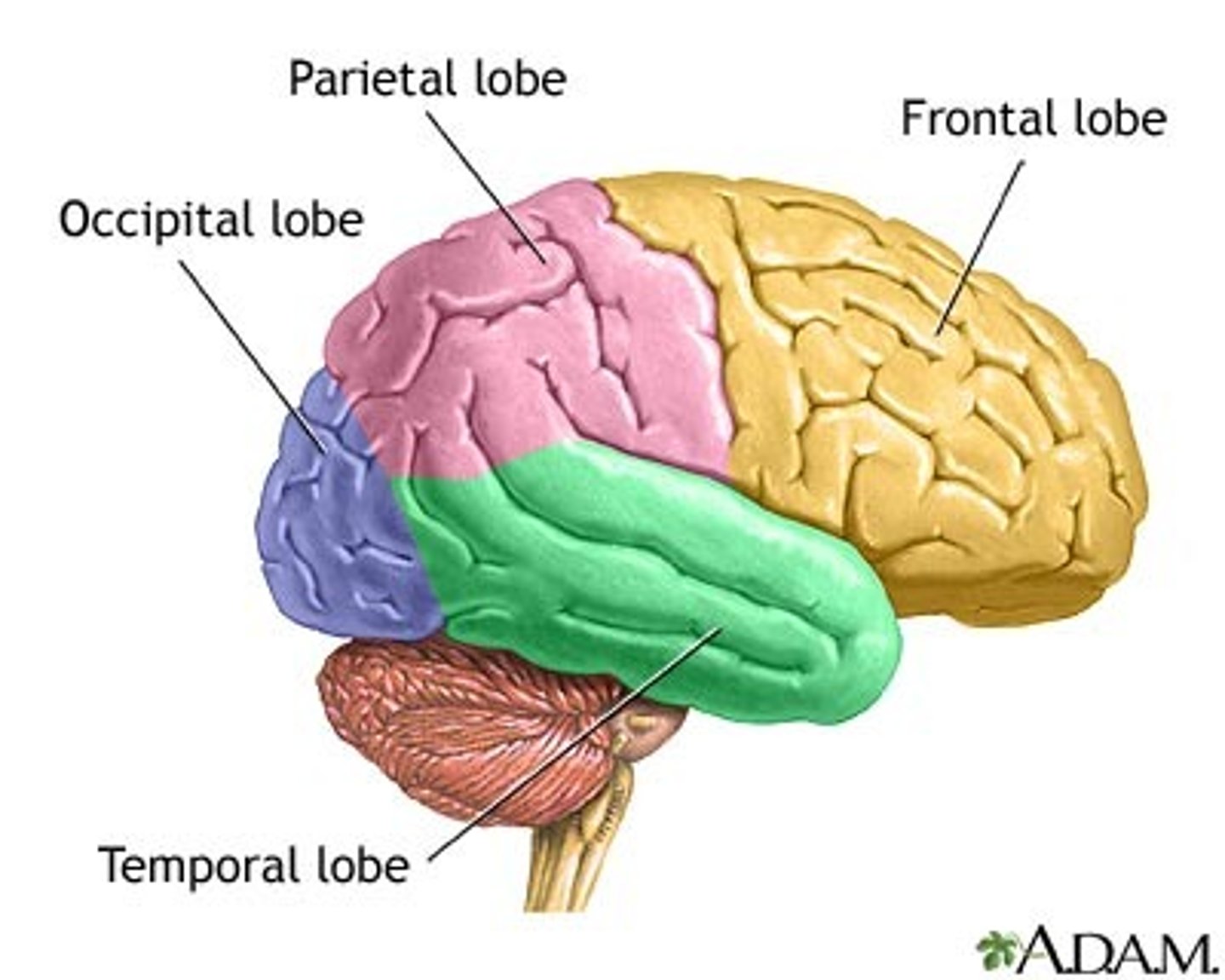
temporal lobe
auditory reception center, taste, smell
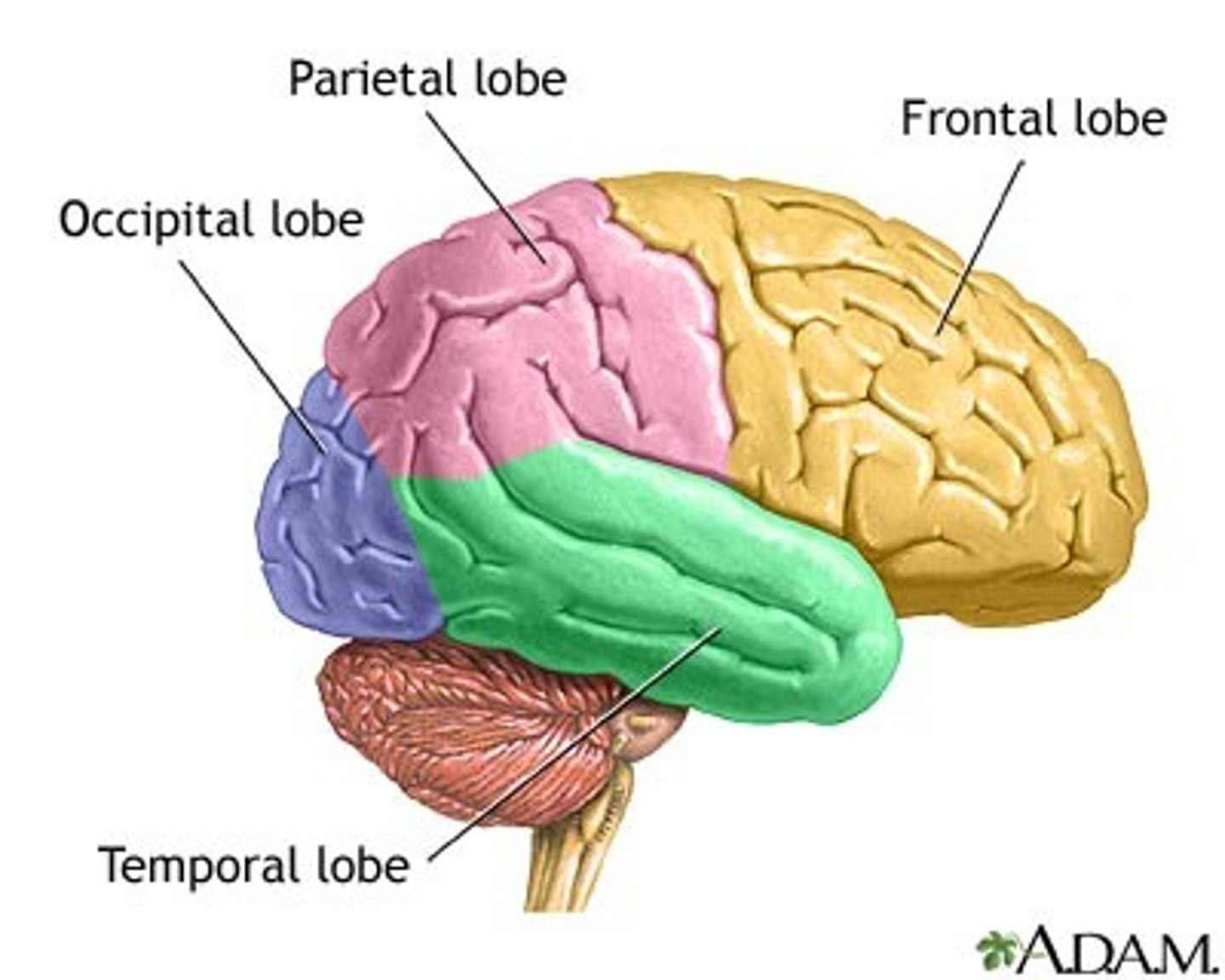
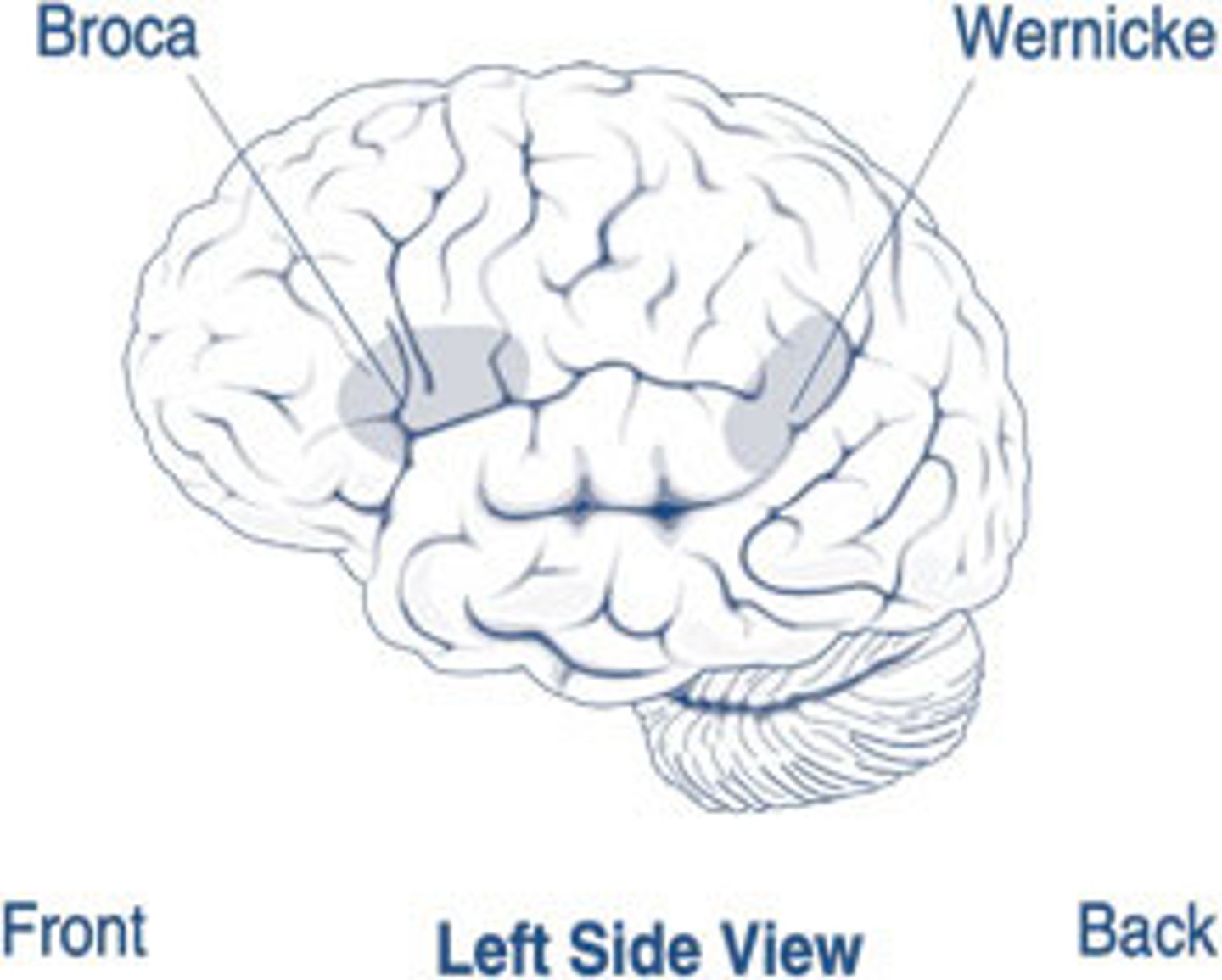
Wernicke's area
language comprehension
temporal lobe
receptive aphasia (hear sound, but it has no meaning)
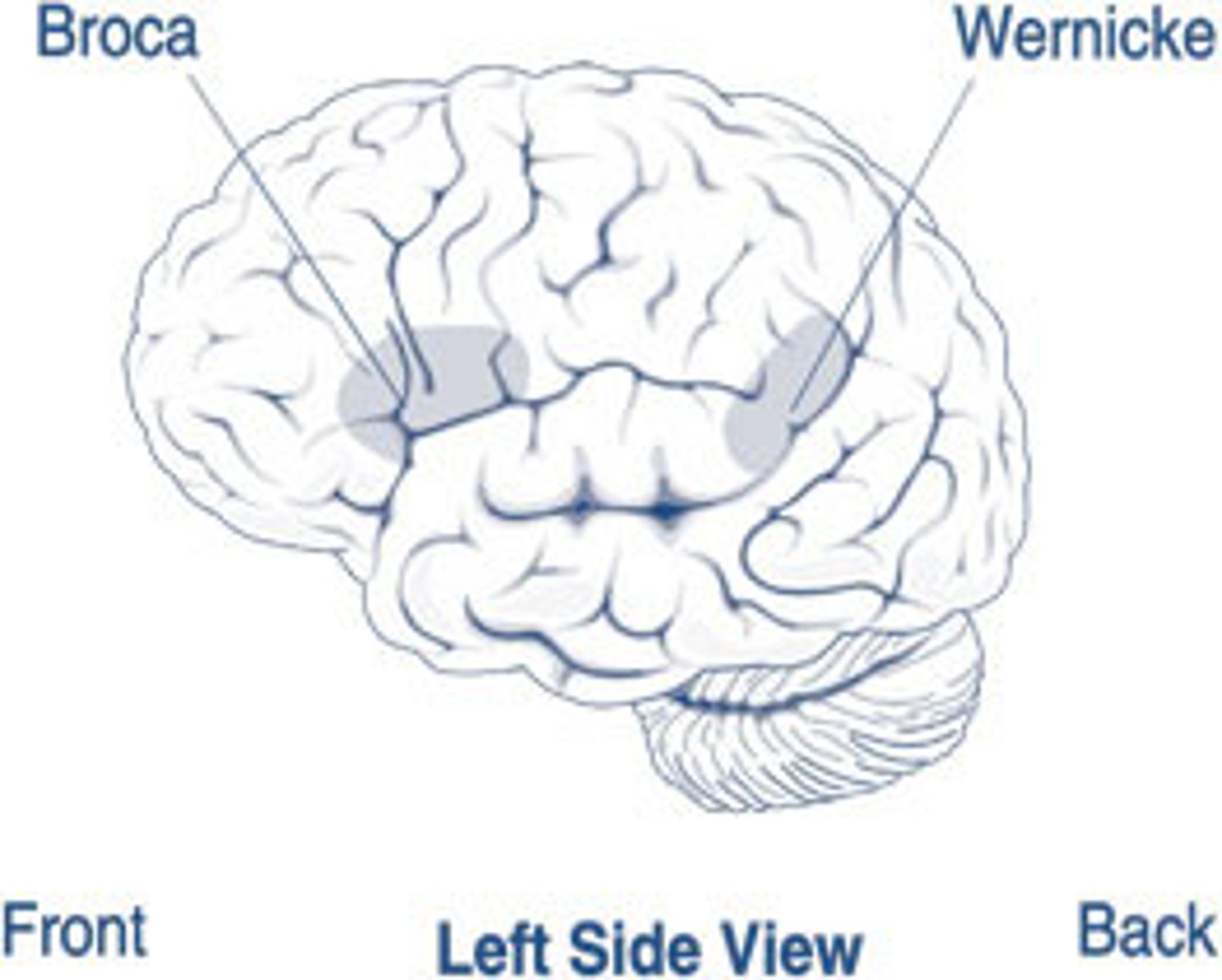
Broca's area
mediates motor speech
frontal lobe
expressive aphasia (comprehends, but only garbled sounds comes out when try to speak)
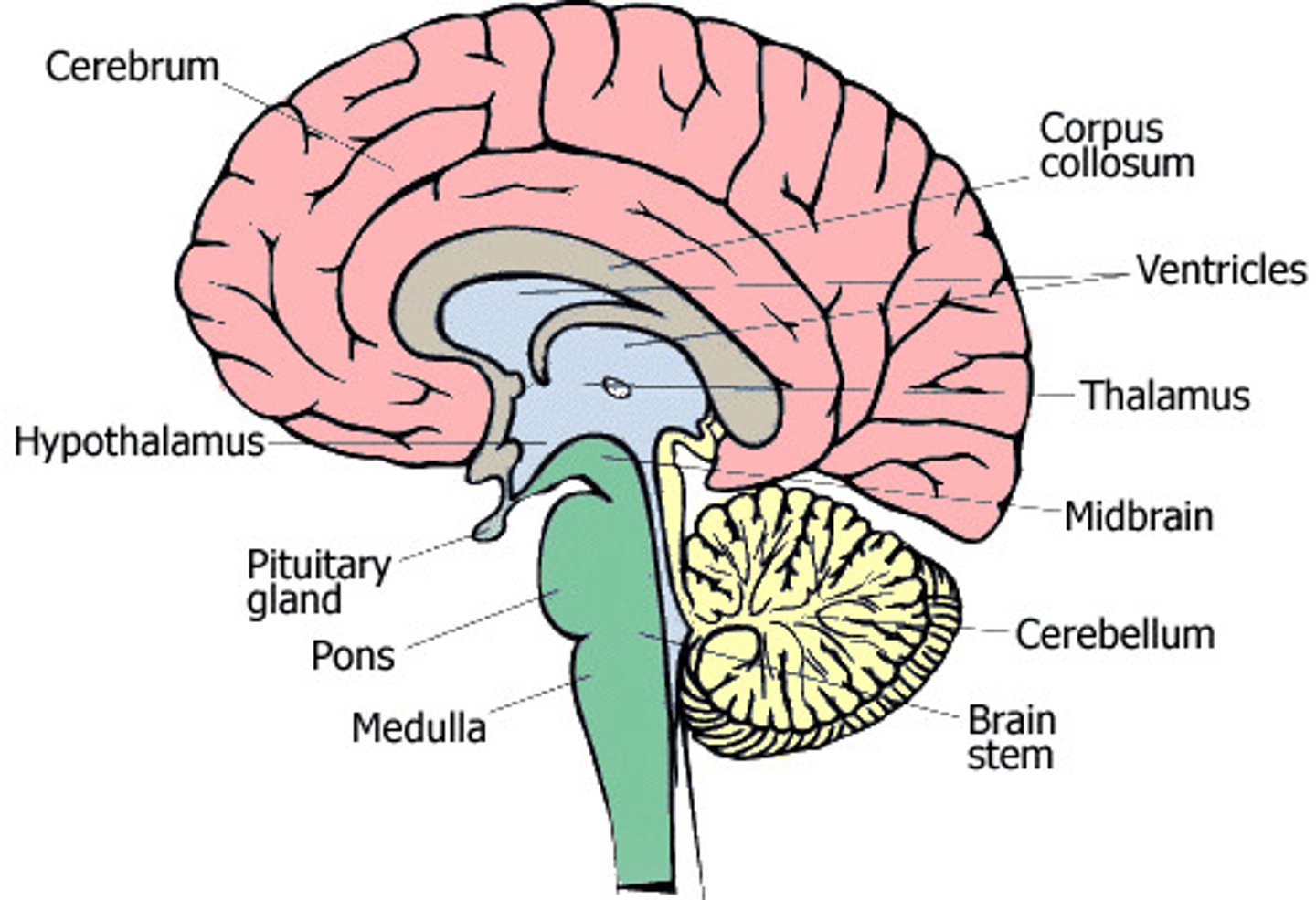
hypothalamus
appetite, sex drive, temperature, heart rate, BP, sleep, anterior/posterior pituitary gland regulation, coordination of autonomic nervous system (ANS), stress response, emotional status
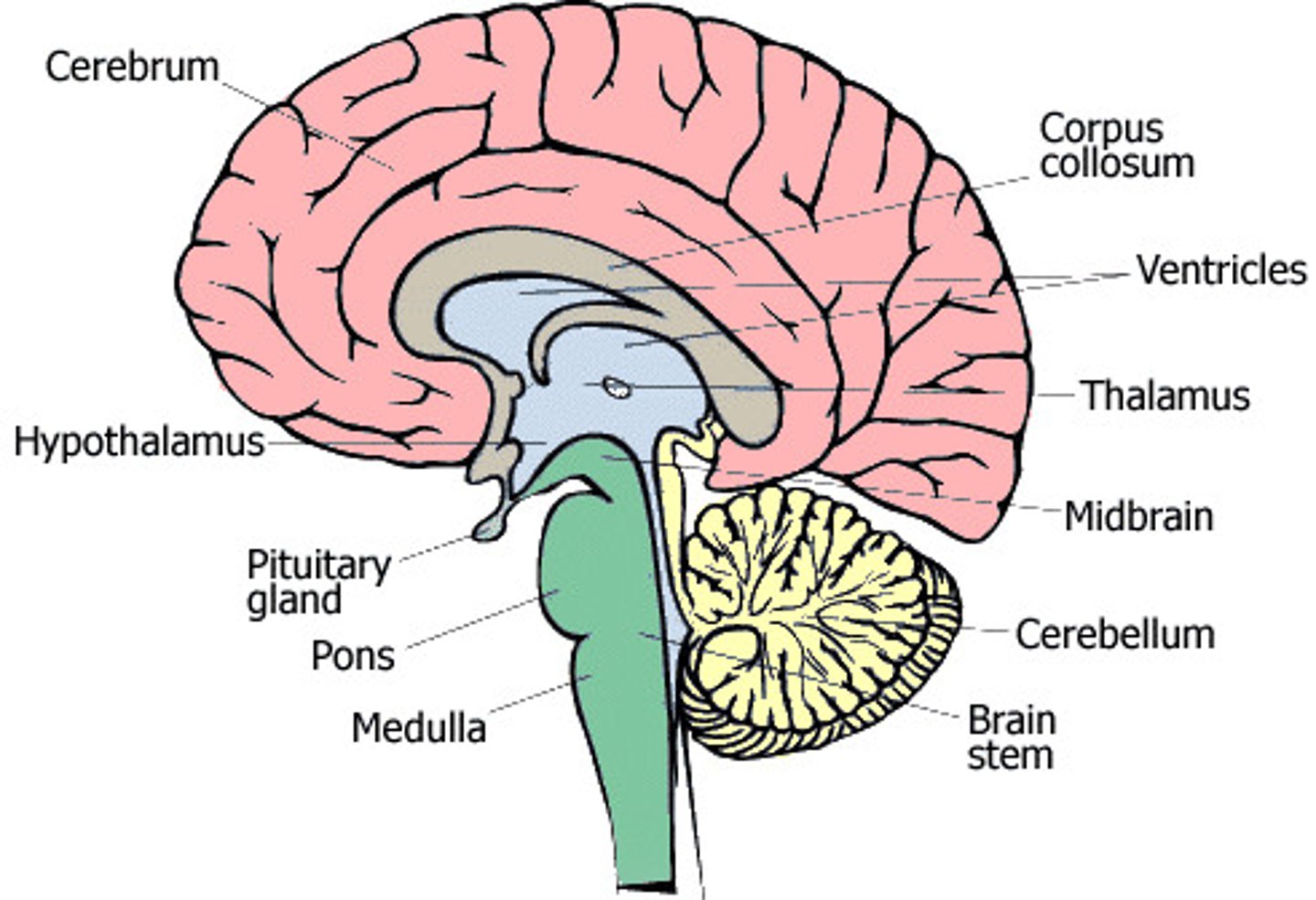
cerebellum
under occipital lobe
coordination of voluntary movements, equilibrium, muscle tone (does not initiate movements)
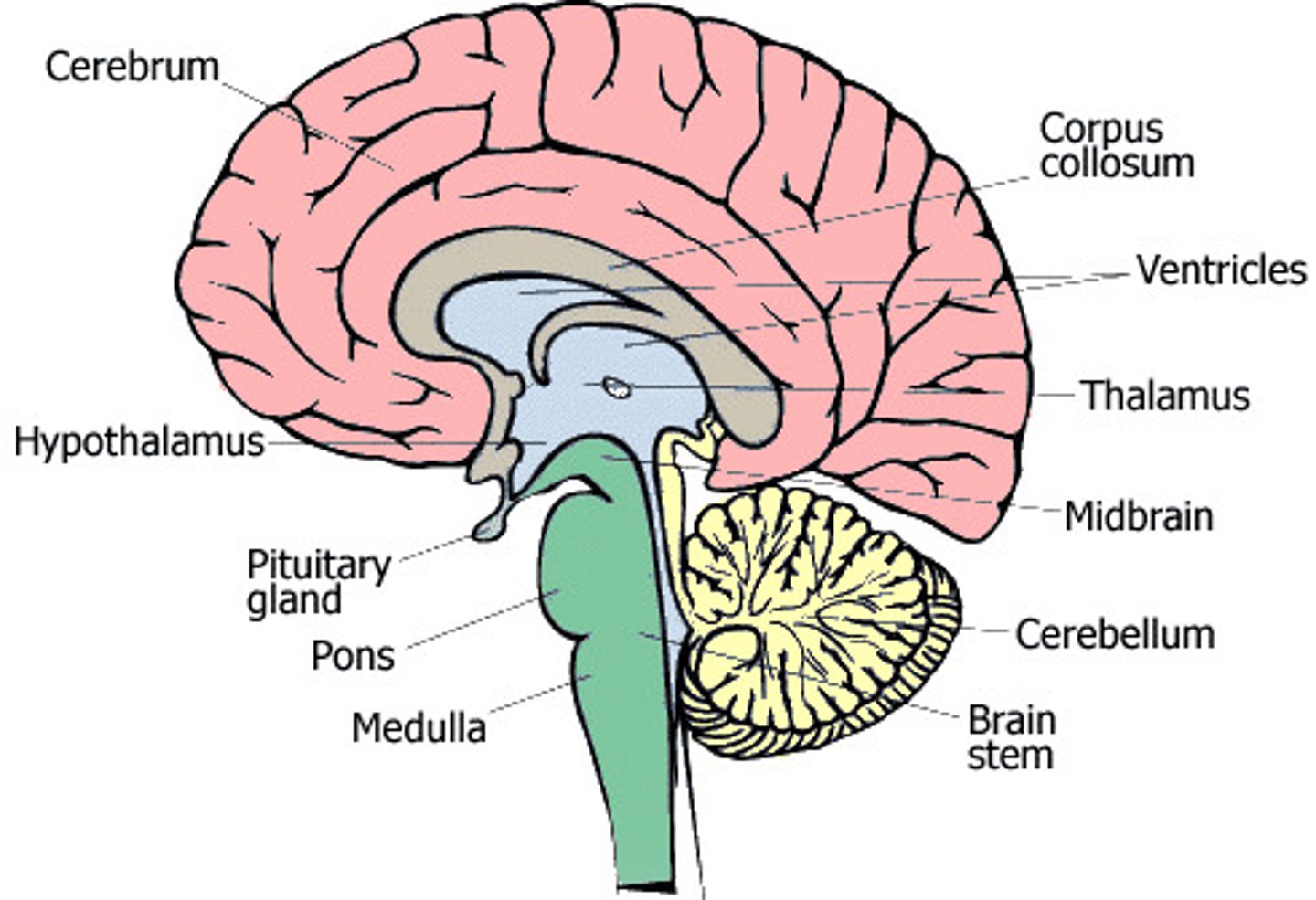
brainstem
automatic survival functions
cranial nerve (CN) III-XII originate here
pons (ascending sensory and descending motor tracts)
medulla (continuation of spinal cord in brain; contains all fiber tracts connecting brain and spinal cord)
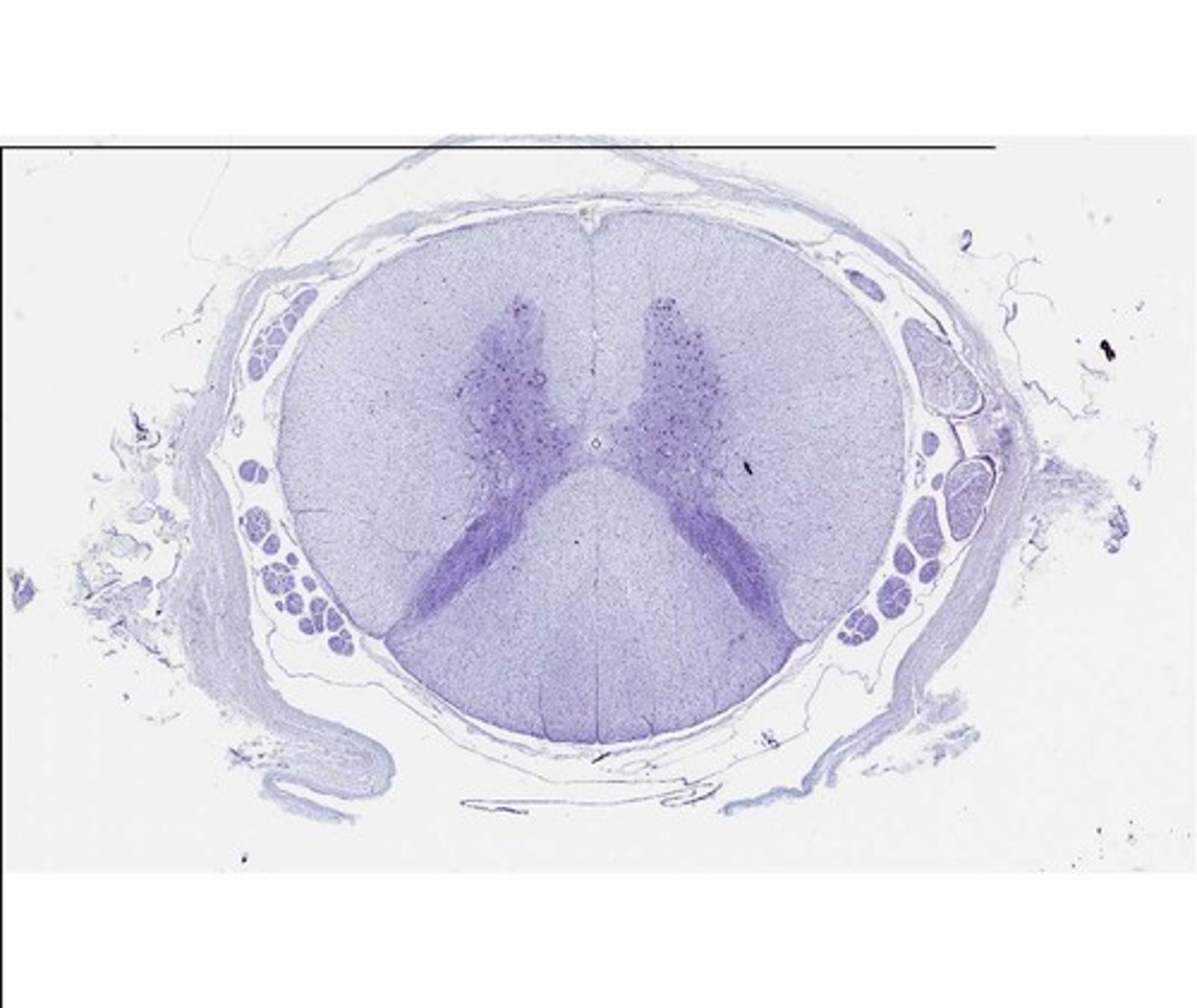
spinal cord
mediates reflexes
butterfly shape with posterior/anterior horns
(ugh, the slide in the photo is beautiful<3)
upper motor neurons
located completely within CNS
diseases (cerebrovascular accident, cerebral palsy, multiple sclerosis, etc.)
lower motor neurons
final contact with muscles
in anterior gray column of spinal cord
movement must be translated into action by these:
-cranial nerves and spinal nerves of PNS
diseases (spinal cord lesions, poliomyelitis, amytrophic lateral sclerosis)
reflexes
basic defense mechanisms of NS
involuntary
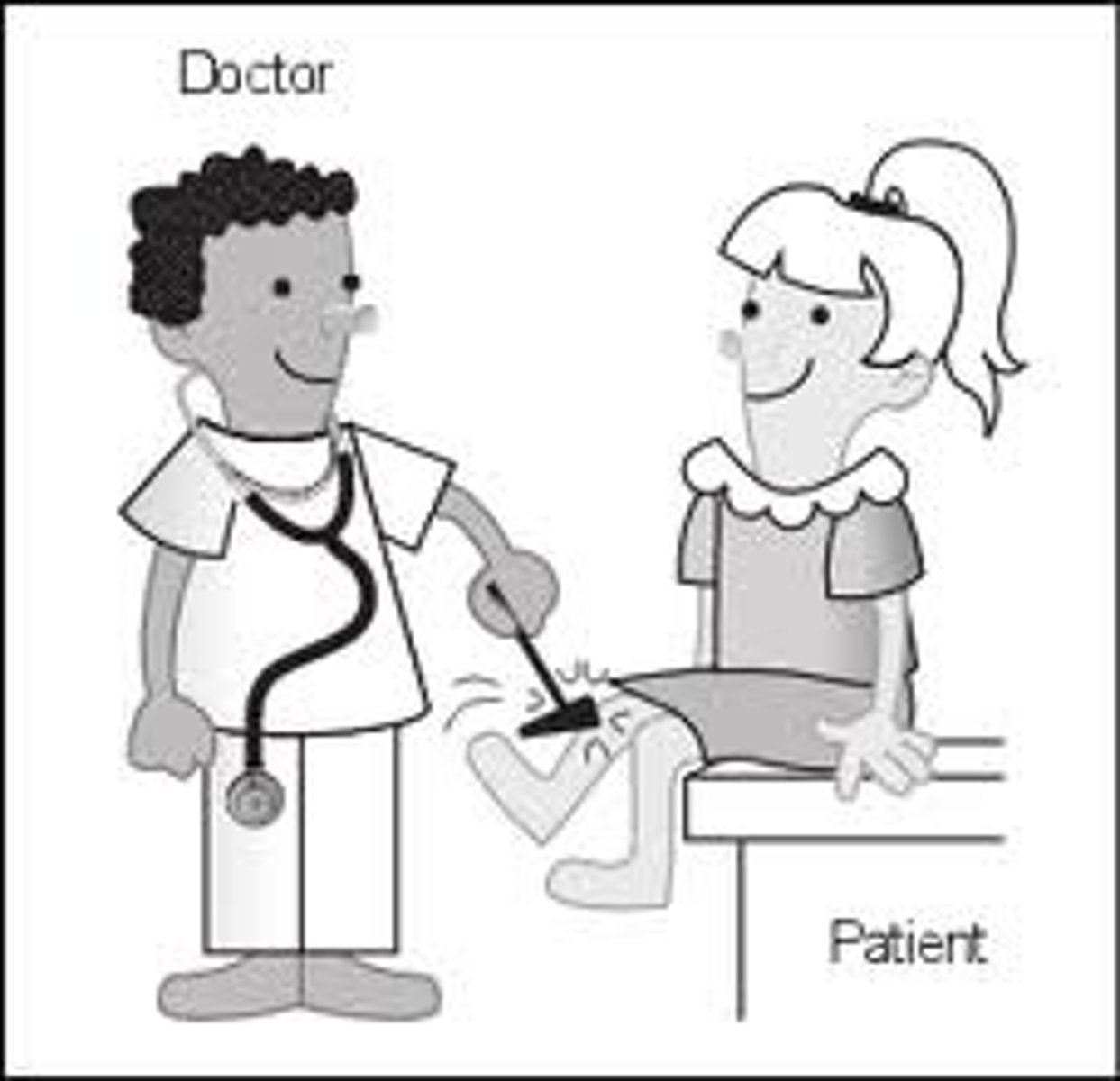
What are the 4 types of reflexes?
1. deep tendon "myotatic" (ex: knee jerk)
2. visceral (ex: pupillary response to light)
3. superficial (ex: corneal, abdominal)
4. pathologic (ex: Babinski's, extensor plantar)
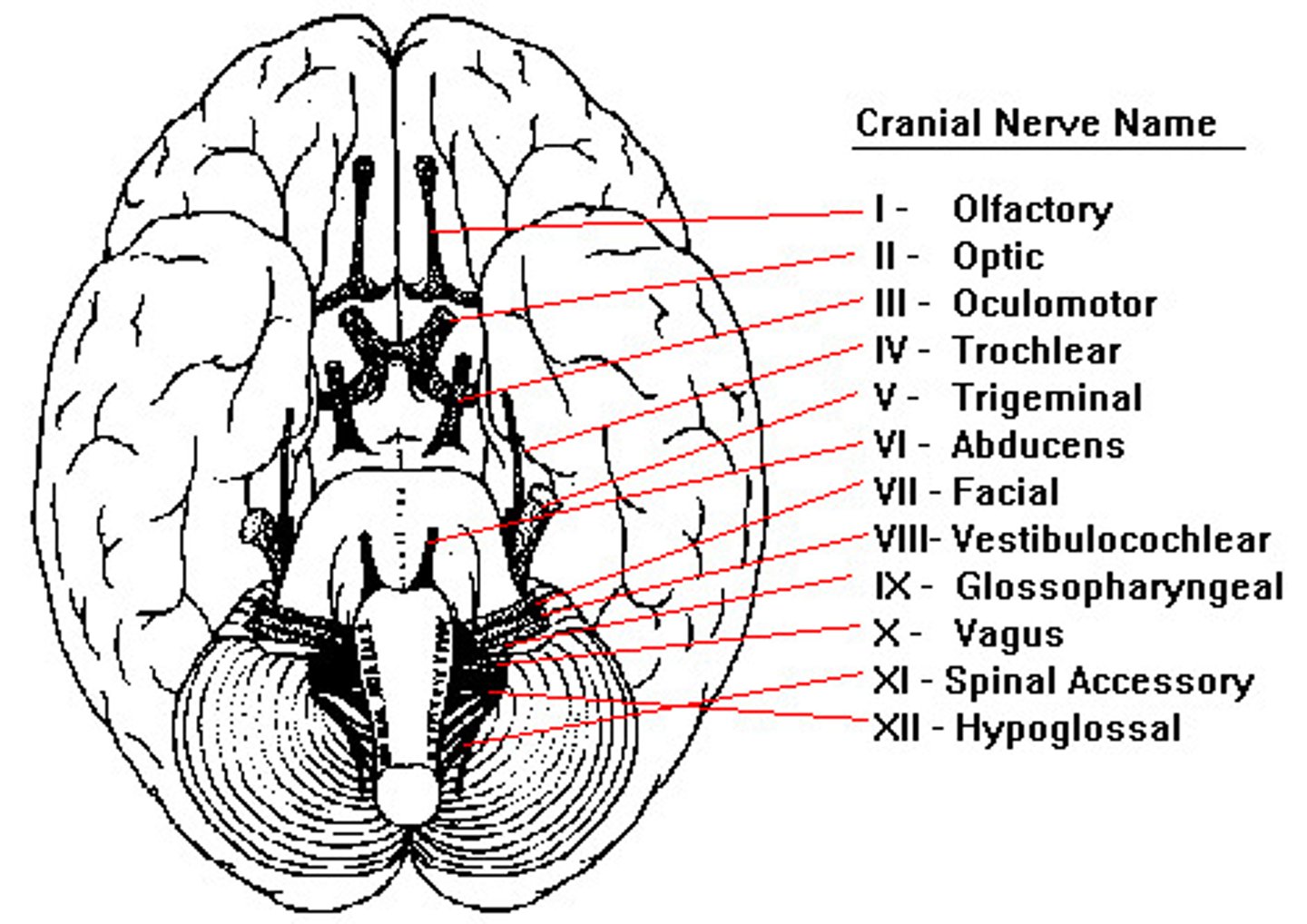
cranial nerves
enter/exit the brain
CN1 & CN2 extend from cerebrum,CN3-CN11 extend from lower diencephalon and brainstem
12 pairs CN's supply head/neck except vagus (travels to heart, respiratory muscles, stomach, gallbladder)
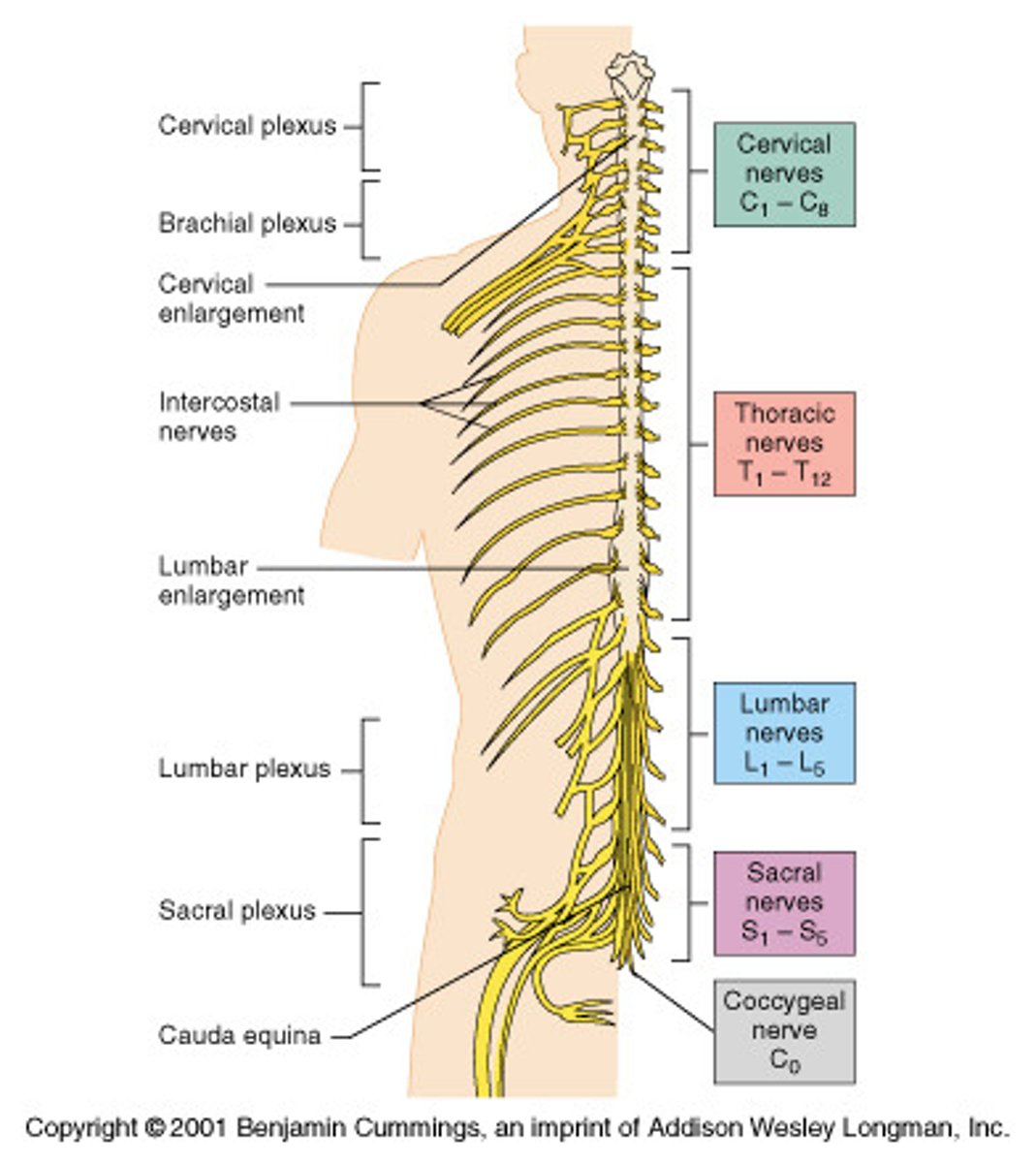
spinal nerves
31 pairs named for where exit:
8 cervical (C1-C8)
12 thoracic (T1-T12)
5 lumbar (L1-5)
5 sacral (S1-S5)
1 coccygeal (C0)
autonomic nervous system (ANS)
mediates unconscious activity
carry fibers divided into two parts:
-somatic fibers innervate skeletal (voluntary) muscles
-autonomic fibers innervate smooth (involuntary) muscles, cardiac muscle, and glands
infants and neurologic system
neurologic system not completely developed at birth
sensory and motor development proceed with gradual acquisition of myelin needed to conduct most impulses
aging adult and neurologic system
decreased muscle strength, impaired fine coordination/agility, loss of vibratory sense at ankle, decreased/absent Achilles reflex, pupillary miosis, irregular pupil shape, decreased pupillary reflexes, decreased velocity of nerve conduction (slow reaction time), increased delay at synapse (decreased sensation touch, pain, taste, smell), motor system delay (slowing down of movement, muscle strength, agility decreases), progressive decrease in cerebral blood flow and O2 consumption may cause dizziness and loss of balance
there is a lot here, but it's more a review than anything
race/ethnicity and strokes
4% of african americans have had stroke
6% of american indians/alaska natives have had stroke
2.5% of hispanics have had stroke
nationwide burden of stroke higher for african american and hispanic populations
stroke belt (KNOW)
11 states (southeast corner of the country except Florida)
What does FAST stand for?
acronym about strokes
1. Face (look for symmetry)
2. Arms (look for symmetry)
3. Speech (have repeat 3 easy words back)
4. Time (3 hours)
At what temperature are children at risk for seizures?
104F
tremors
three types:
-start at rest and go away once start moving (sign of Parkinson's, KNOW)
-start w/ intention (movement)
-anxiety induced
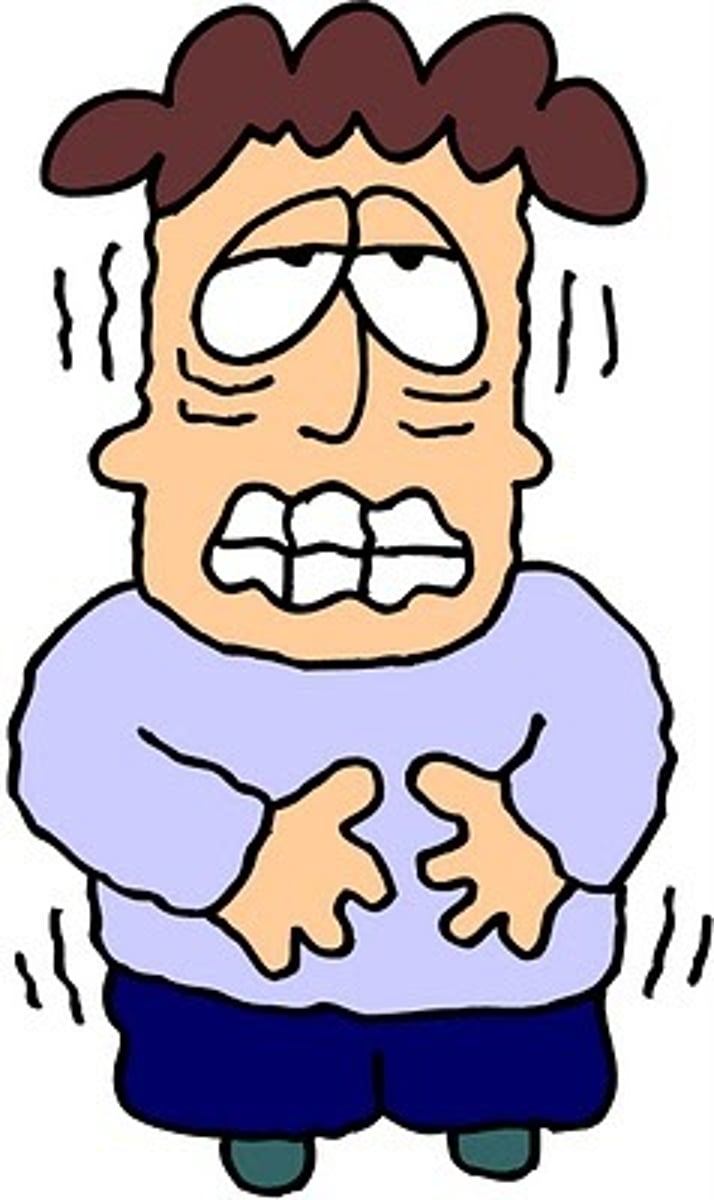
sequence for complete neurologic exam
1. mental status
2. CN's
3. motor system
4. sensory system
5. reflexes
CN I
olfactory - sense of smell
test pt. w/ loss of smell, head trauma, abnormal mental status, or when presence of intracranial lesion suspected
abnormality - anosmia (loss of sense of smell)
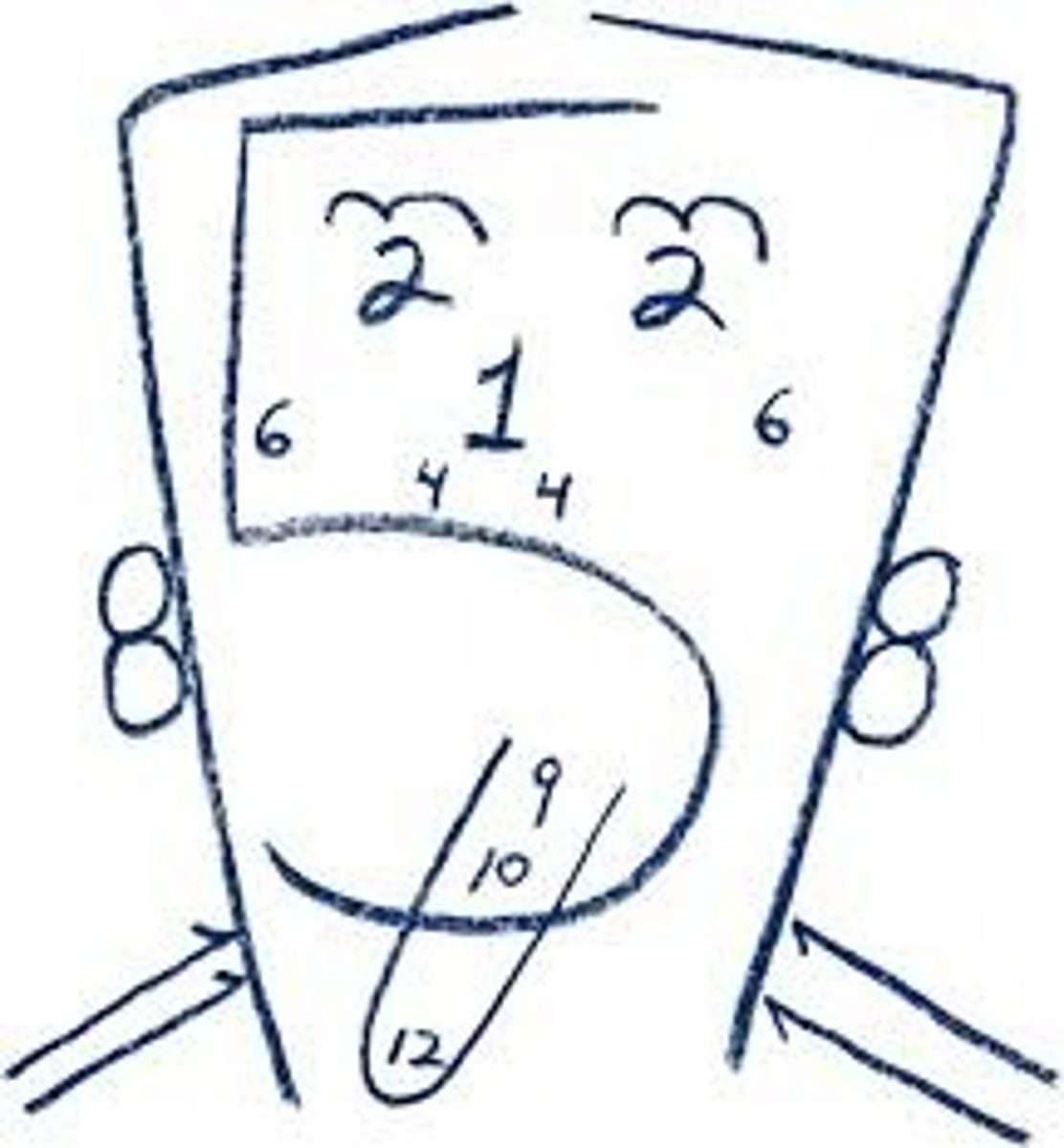
CN II
optic - sense of vision
confrontation, examine ocular fundus
abnormalities - defect or absent central vision, defect in peripheral vision/hemianopsia, absent light reflex, papilledema, optic atrophy, retinal lesions
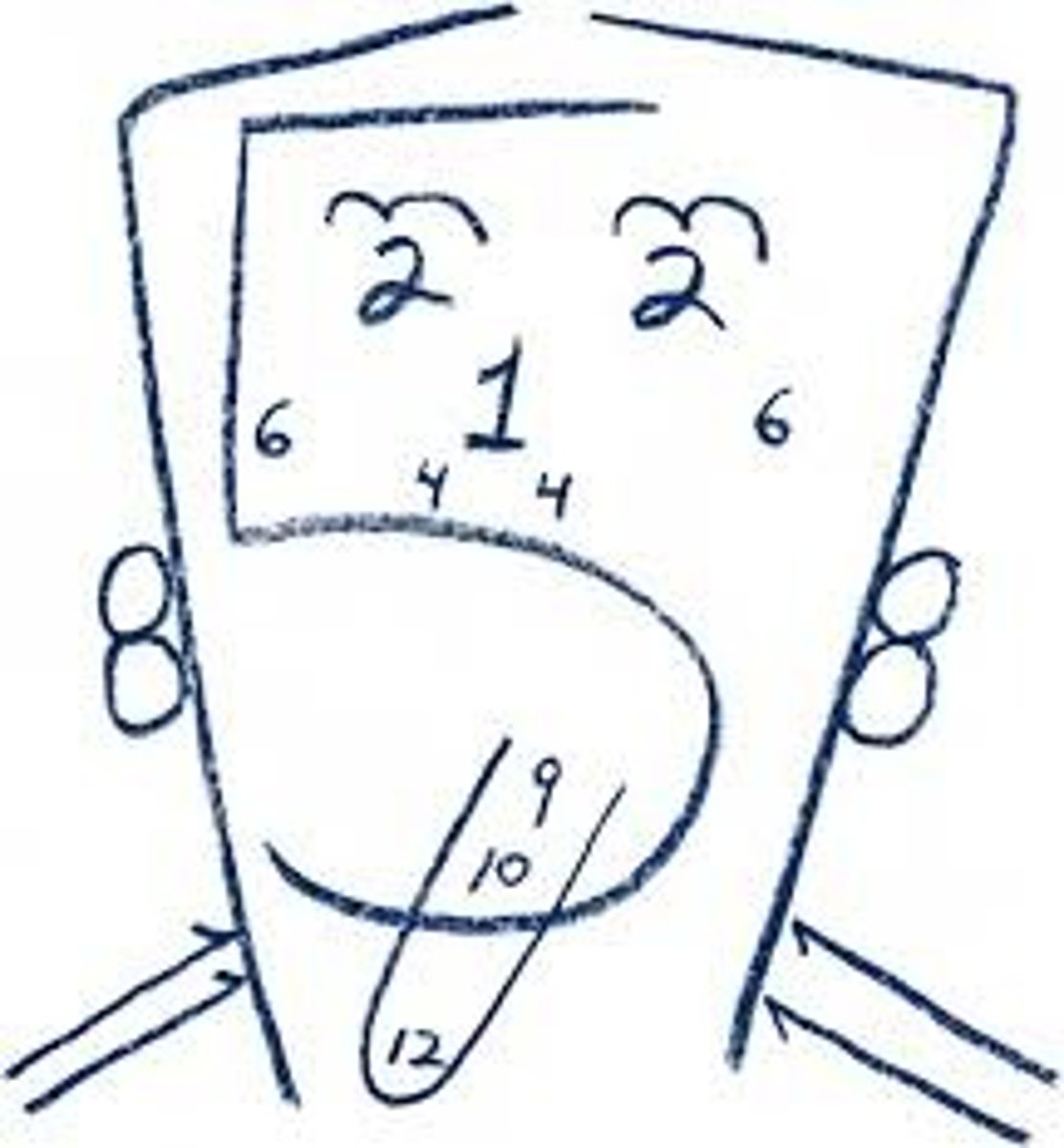
CN III
oculomotor - eye movement
abnormalities - dilated pupil/ptosis (drooping of upper eyelid)/eye turns out and slightly down, failure to move eye up/in/down, absent light reflex
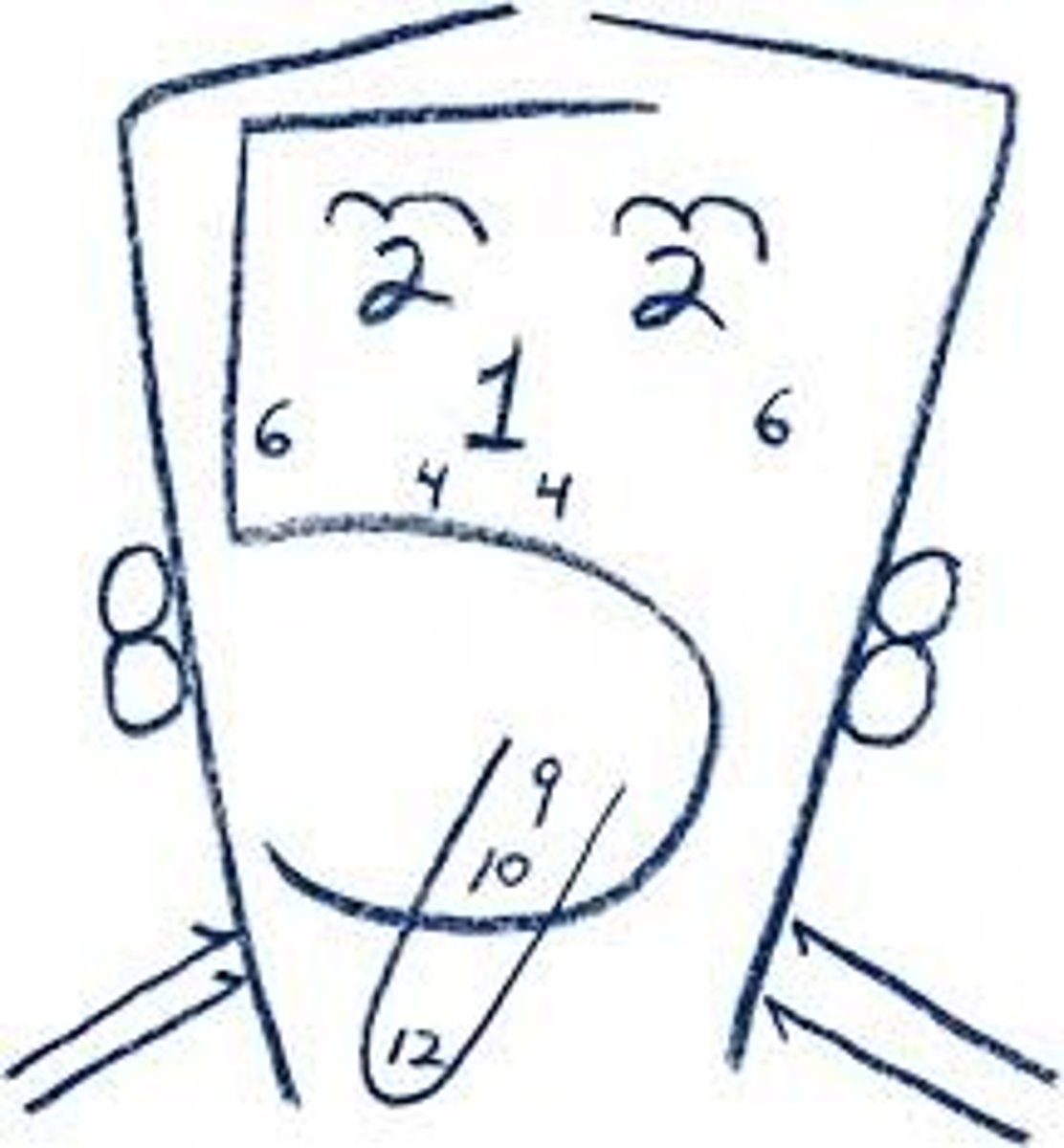
CN IV
trochlear - downward/inward eye movement
abnormalities - failure to turn eye down/out
CN V
trigeminal - sensation of skin on face and motor movement of jaw
motor (palpate temporal and masseter muscles while grinds teeth)
sensory (test light touch w/ cotton on forehead, cheeks, chin)
abnormalities - absent touch and pain sensation/paresthesias (abnormal sensation, normally tingling or pricking), no blink, weakness of masseter or temporalis muscle
CN VI
abducens - abduction of eyes
abnormalities - failure to move laterally/diplopia (double-vision) on lateral gaze
CN VII
facial - sensory and motor facial expressions
abnormalities - absent or asymmetric facial movement, loss of taste
CN VIII
auditory (vestibulocochlear) - sense of hearing
abnormalities - reduced/loss of hearing
CN IX
glossopharyngeal - sensation of taste and movement of swallowing
abnormalities - no gag reflex
CN X
vagus - sensation of pharynx and movement of vocal chords
abnormalities - uvula deviates to side, no gag reflex, voice quality (hoarse or brassy, nasal twang or husky), dysphagia/fluids regurgitate through nose
CN XI
accessory - movement of head and shoulders
abnormalities - absent movement of sternomastoid or trapezius muscles
CN XII
hypoglossal - position of tongue (motor)
abnormalities - tongue deviates to side, slowed rate of tongue movement
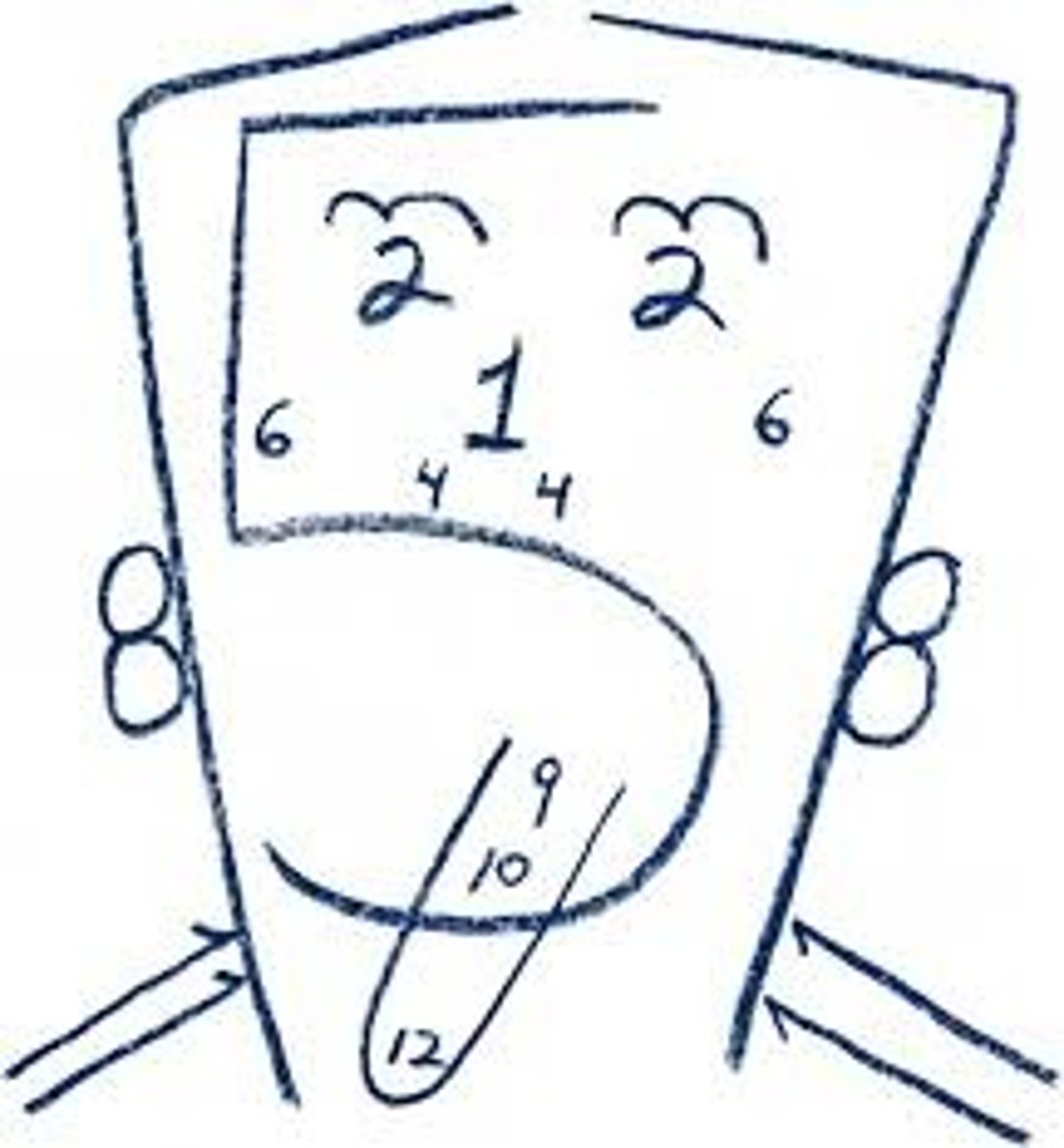
inspecting and palpating the motor system
size (difference of 1 cm or less = not significant)
strength (extremities, neck, trunk)
tone (normal tension in relaxed muscles)
involuntary movements (note if can control at will)
balance tests
gait, heel-to-toe, have walk on toes then heels, Romberg (close eyes see if sway), shallow knee bend or hop in place on one leg then other leg
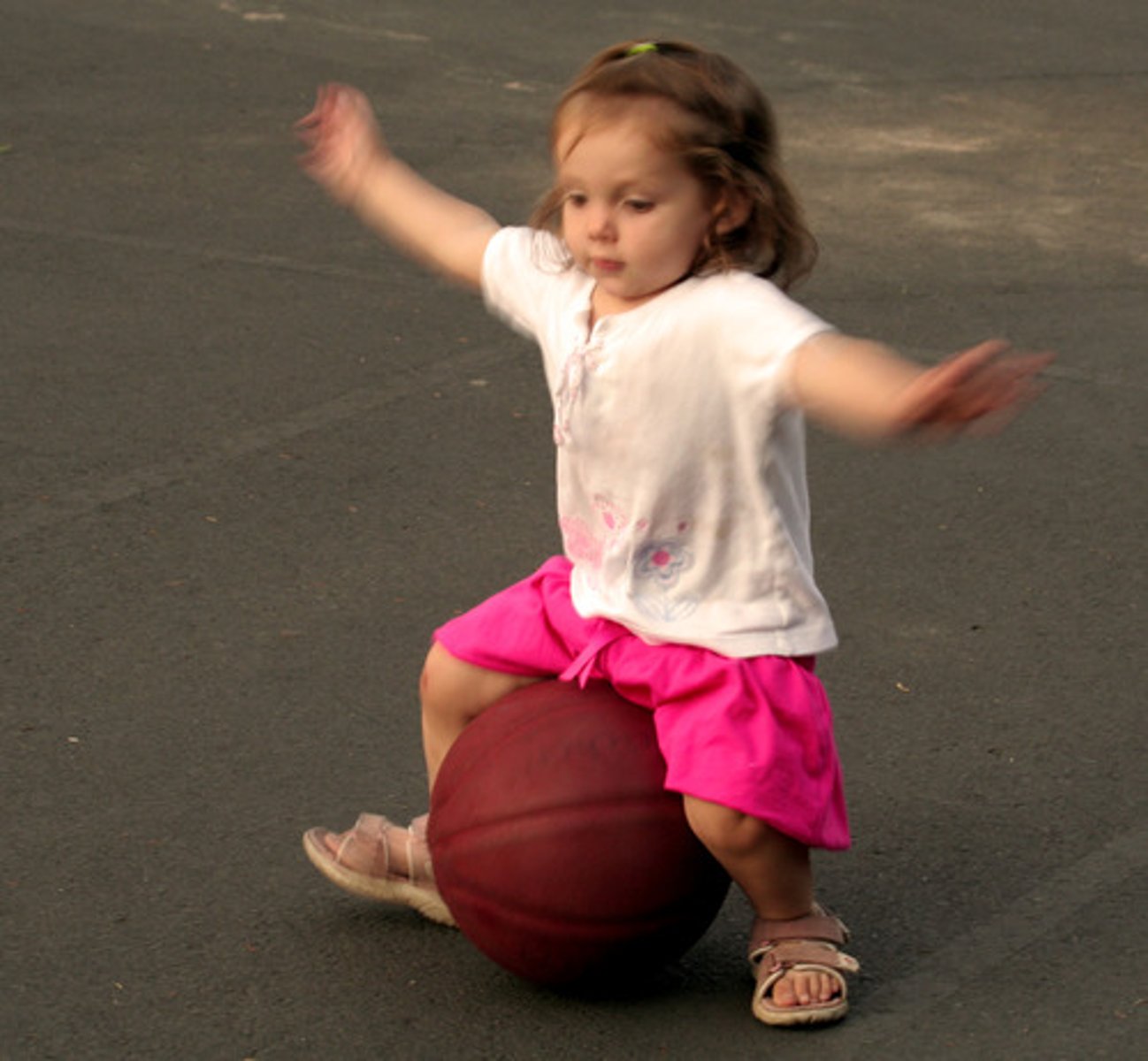
rapid alternating movement (RAM) tests
that knee patting hand flipping test Monica really liked, touch thumb to each finger, finger-to-finger, finger-to-nose, heel-to-shin (while supine)
spinothalamic tests
pain (test with tip of pen, etc.), temperature, light touch (wisp of cotton)
post column tract tests
vibration (tuning fork)
position (kinesthesia)
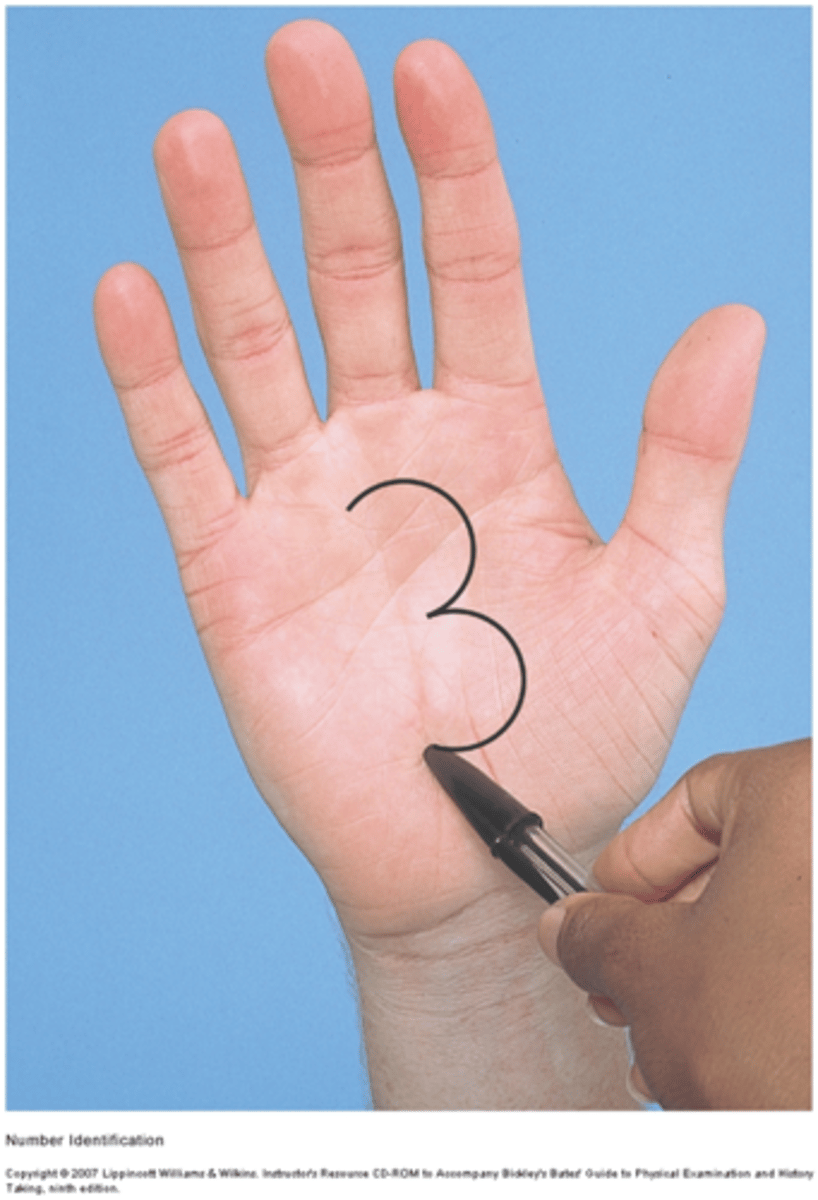
tactile discrimination (fine touch, also sensory cortex)(stereognosis-define by feeling object w/ eyes closed, extinction-test if able to sense both sides of body being touched at same time, point location-touch and withdraw quickly ask where touched, graphesthesia-read # drawn on skin)
Know the abnormalities of the CN's!
There will be two questions like: "Pt. is exhibiting no gag reflex. Which cranial nerve is this related to?"
deep tendon reflexes (DTRs)
involuntary muscle contraction in response to striking muscle tendon with reflex hammer
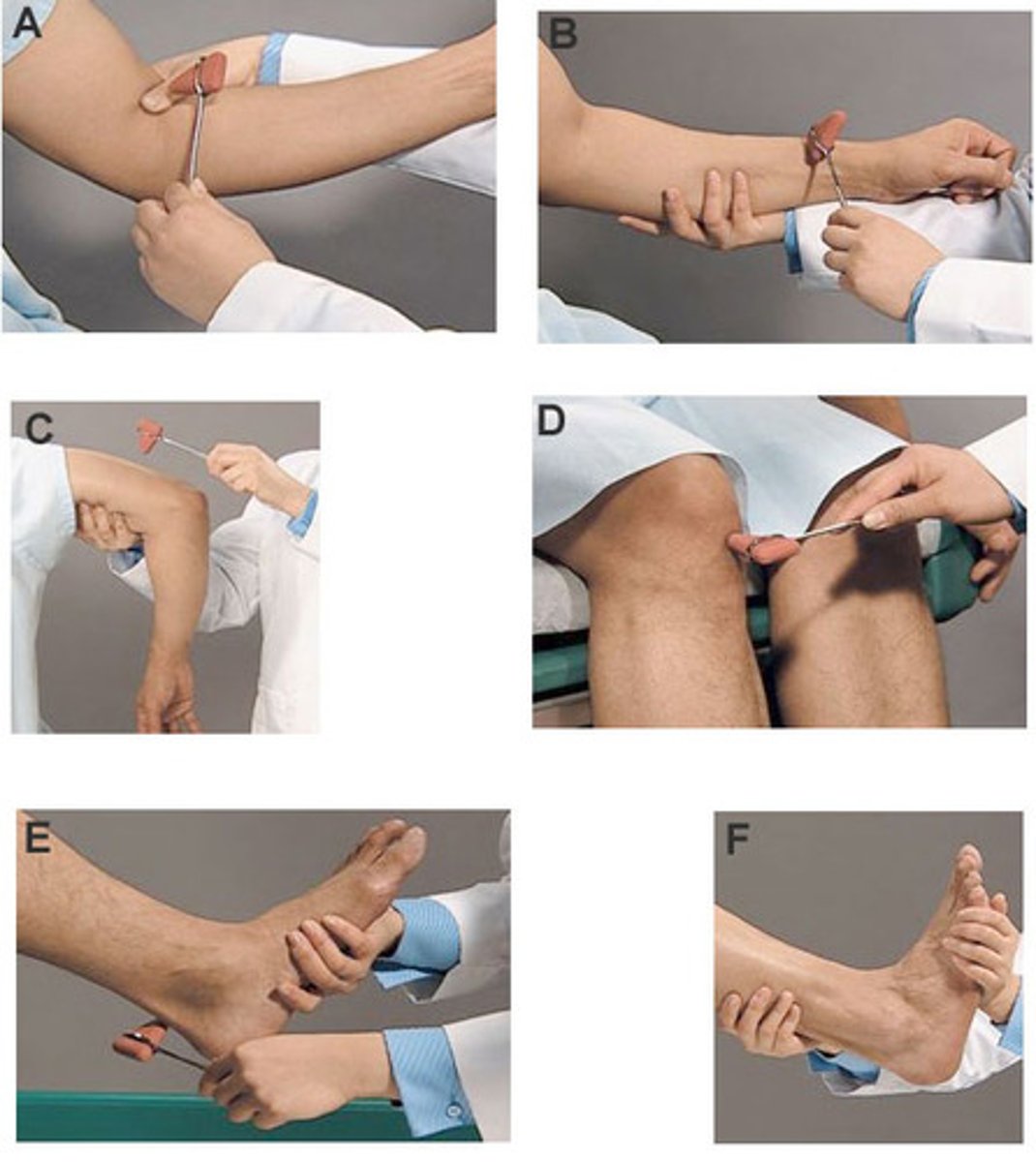
DTRs 4 point scale
this is subjective!
4=very brisk, hyperactive w/clonus, indicative of disease
3=brisker than average, may indicate disease
2=average, normal
1=diminished, low normal, or occurs w/reinforcement
0=no response
abnormalities in muscle movement (KNOW)
paralysis, tics, seizure disorder, tremor, rest tremor, intention tremor
abnormal gaits (KNOW)
spastic hemiparesis (see photo), parkinson's, foot drop
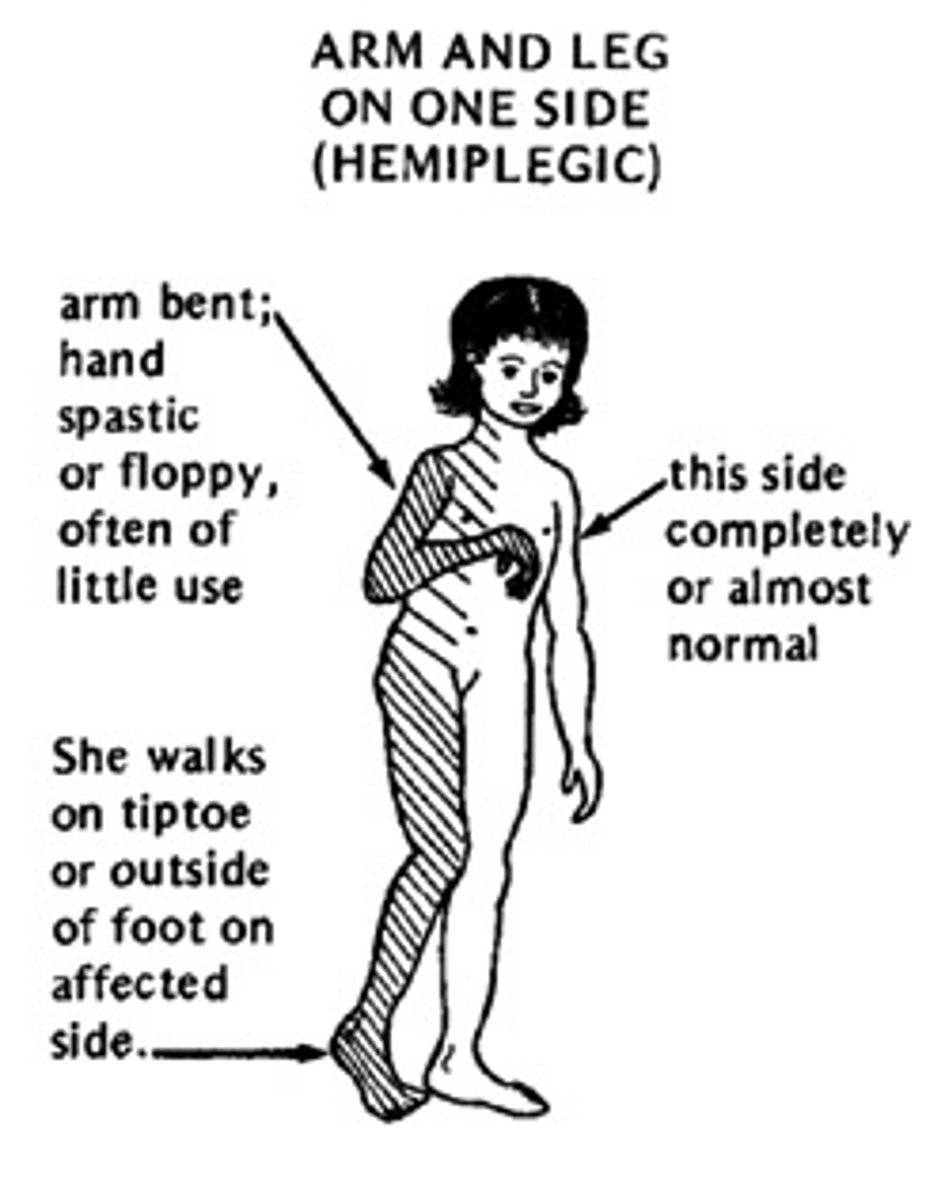
common patterns of motor system dysfunction
cerebral palsy, muscular dystrophy, hemiplegia, parkinsonism, cerebellar, paraplegia, multiple sclerosis
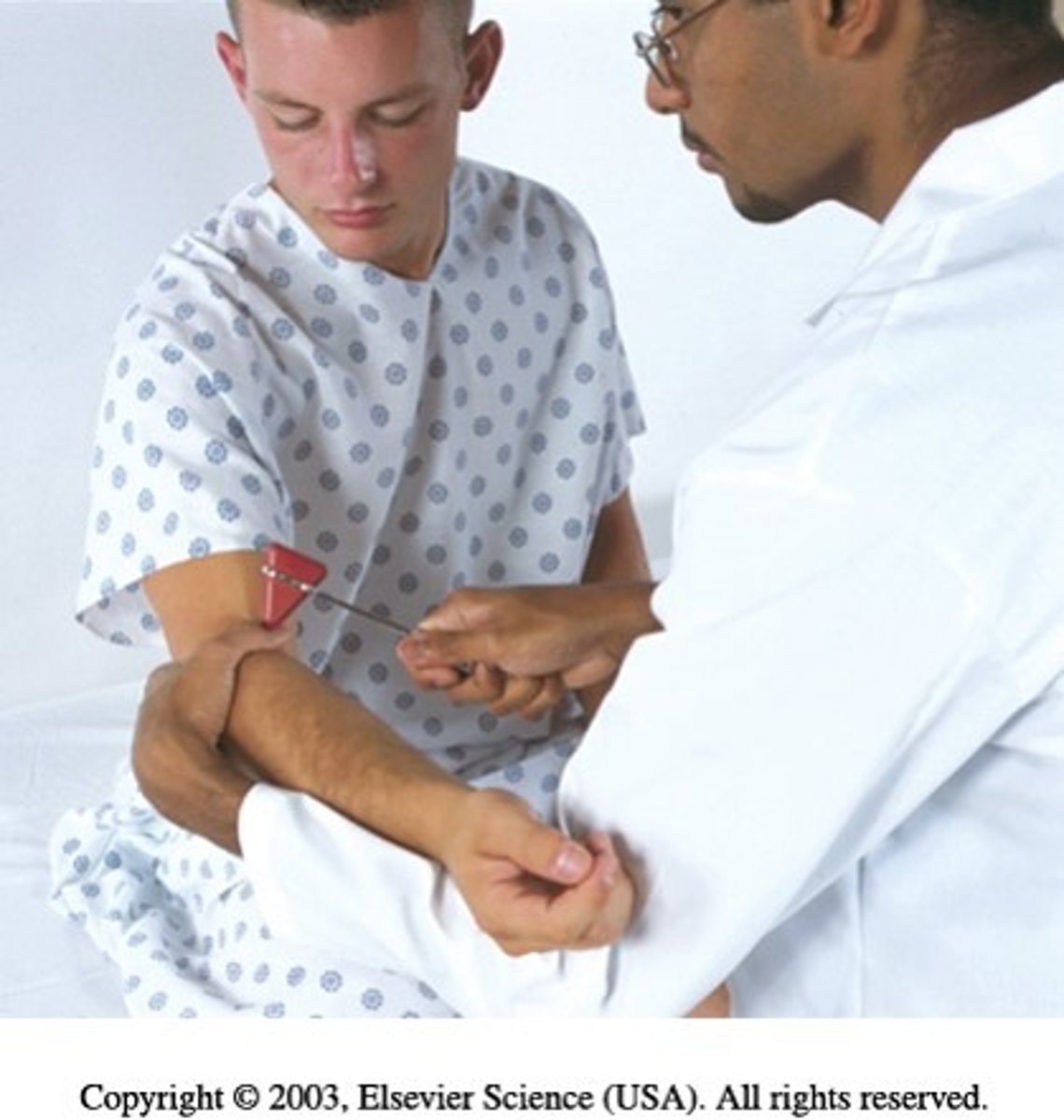
biceps reflex
support pt.'s forearm on yours, place your thumb on biceps tendon and strike blow on your thumb
normally bicep contracts, forearm flexes
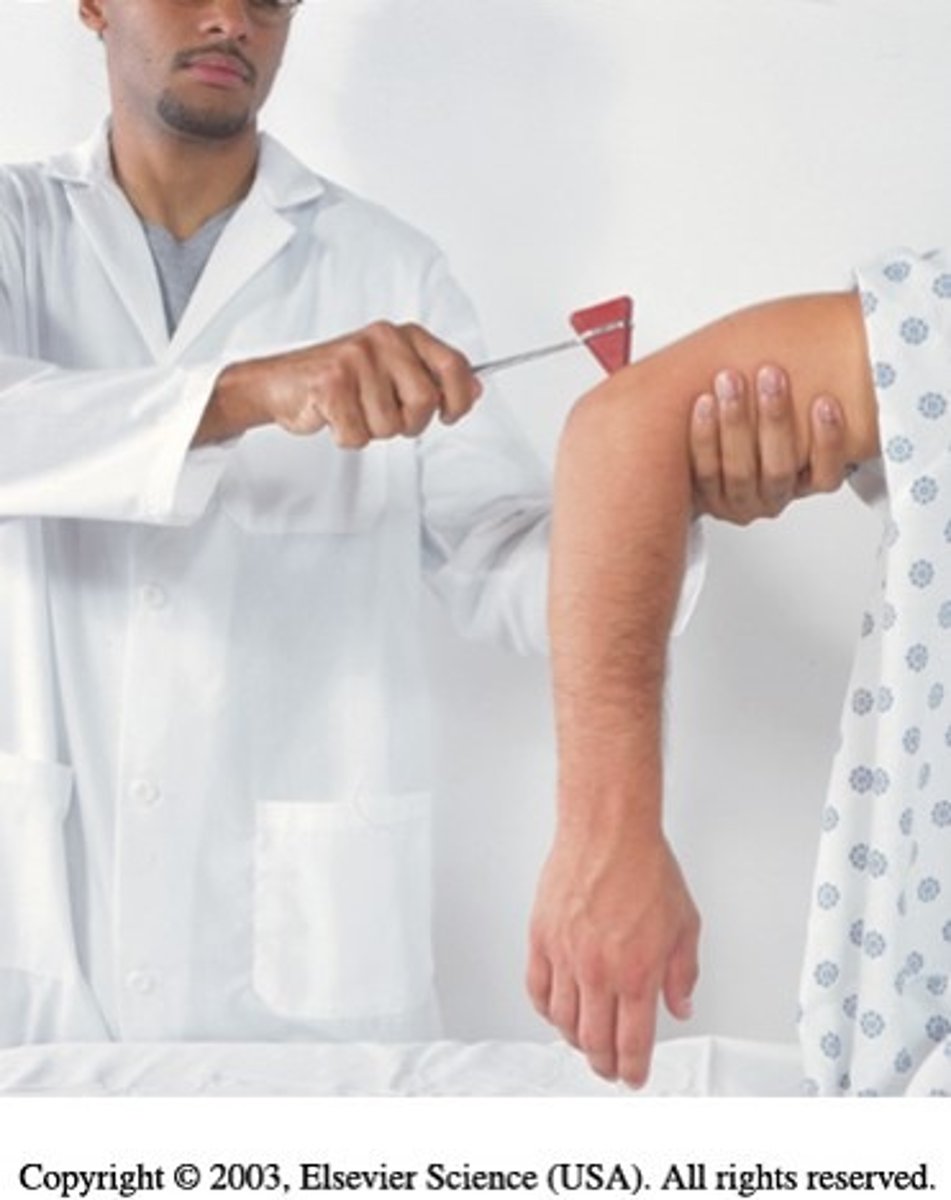
triceps reflex
tell pt. to let arm "go dead" as you strike triceps tendon just above elbow
normally forearm extends
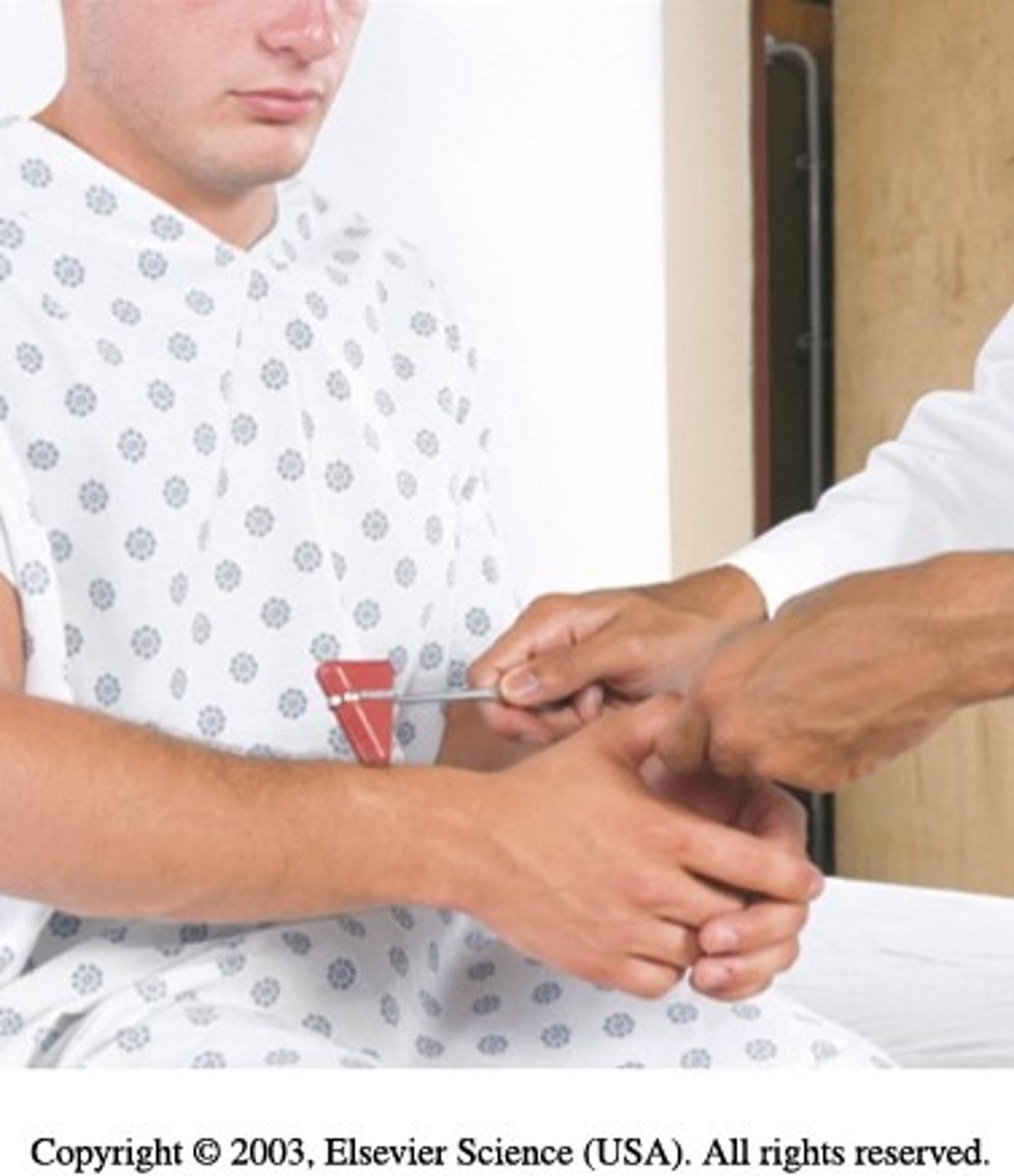
brachioradialis reflex
hold pt.'s thumbs to suspend forearm in relaxation and strike forearm directly approximately 2-3 cm above radial styloid process
normally flexion, forearm supinates
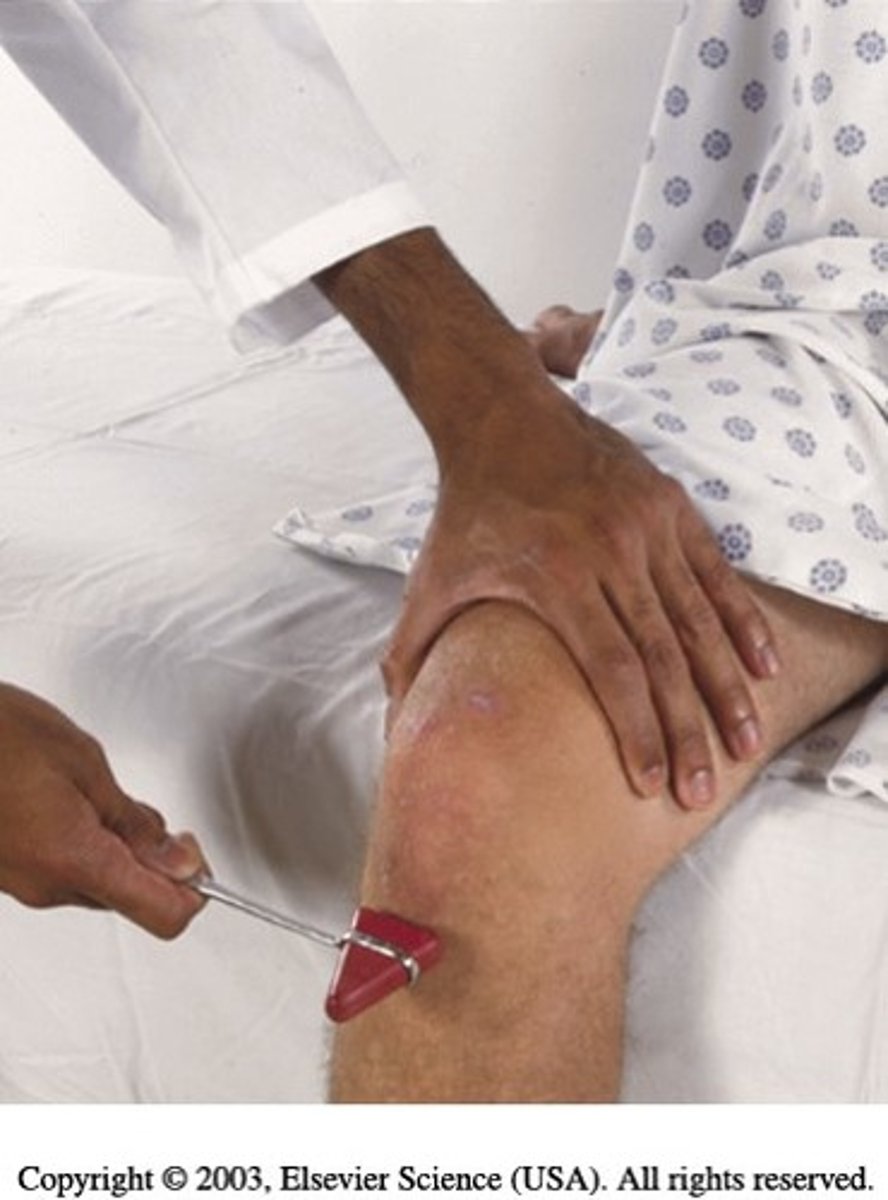
quadriceps reflex (knee jerk)
let lower legs dangle to flex knee/stretch tendons, strike tendon directly just below patella
normally lower leg extends
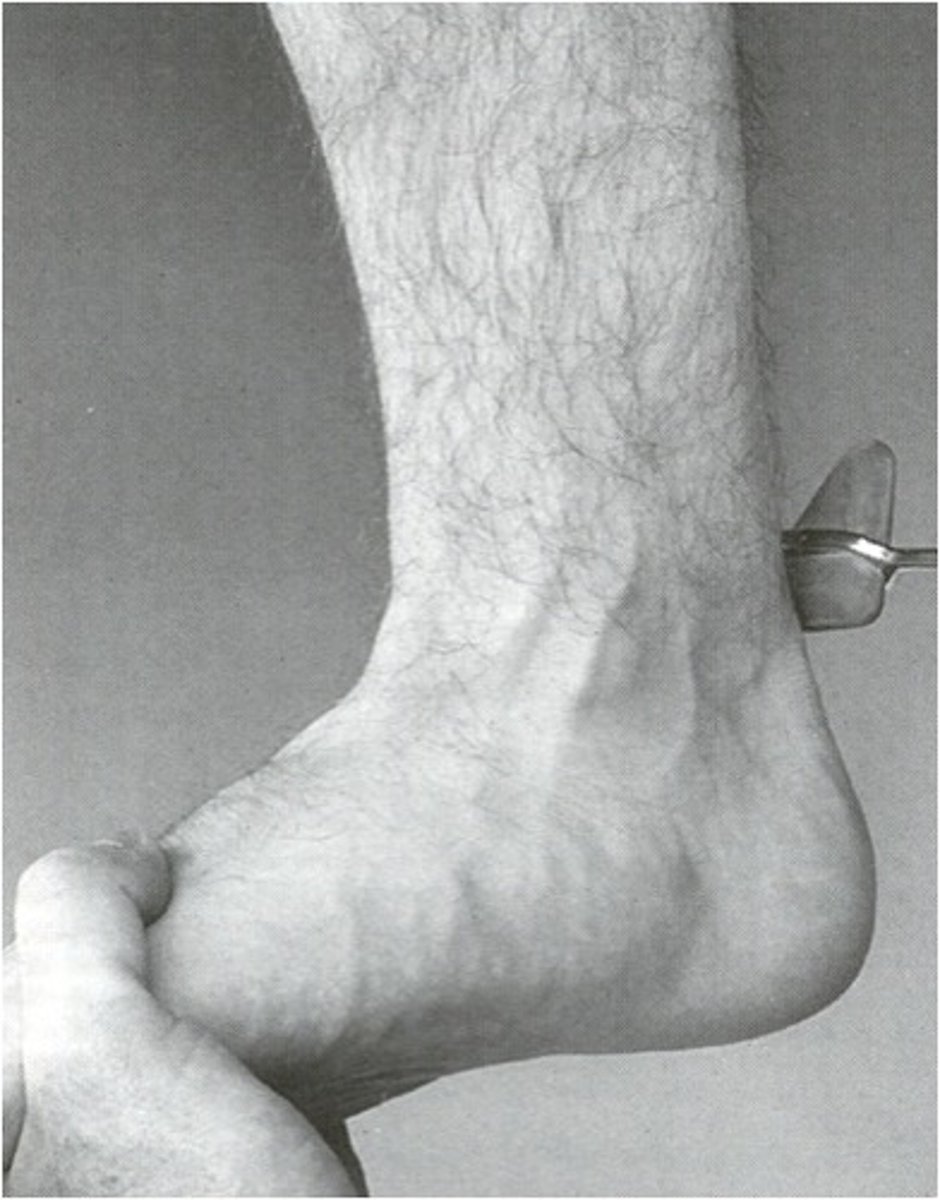
achilles reflex (ankle jerk)
position pt. w/ knee flexed, hold foot in dorsiflexion and strike achilles tendon directly
normally foot plantar flexes against your hand
infantile automatisms
reflexes that have predictable timetable of appearance and departure
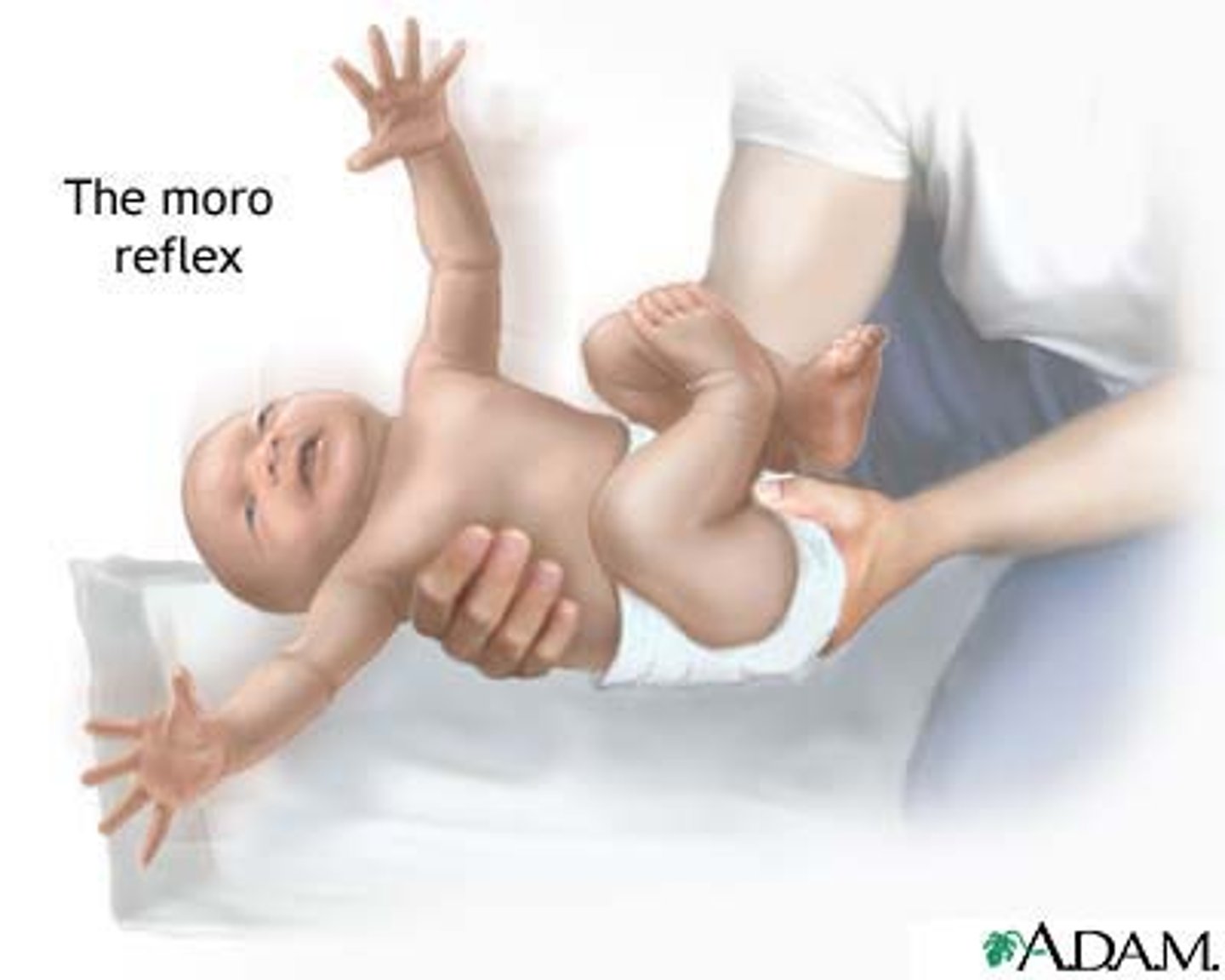
infant reflexes
rooting (run finger across cheek, baby turns face towards finger looking to suck)
grasp
tonic neck ("fencing" position)
Moro (see photo, surprised kitty??)
children reflexes
use finger, not reflex hammer
knee jerk present at birth, ankle jerk and brachial reflex appear, triceps reflex at 6 months
dyskinesias
repetitive stereotyped movements in jaw, lips, or tongue
may accompany senile tremors
abnormalities in muscle tone
flaccidity
spasticity
rigidity
cogwheel rigidity
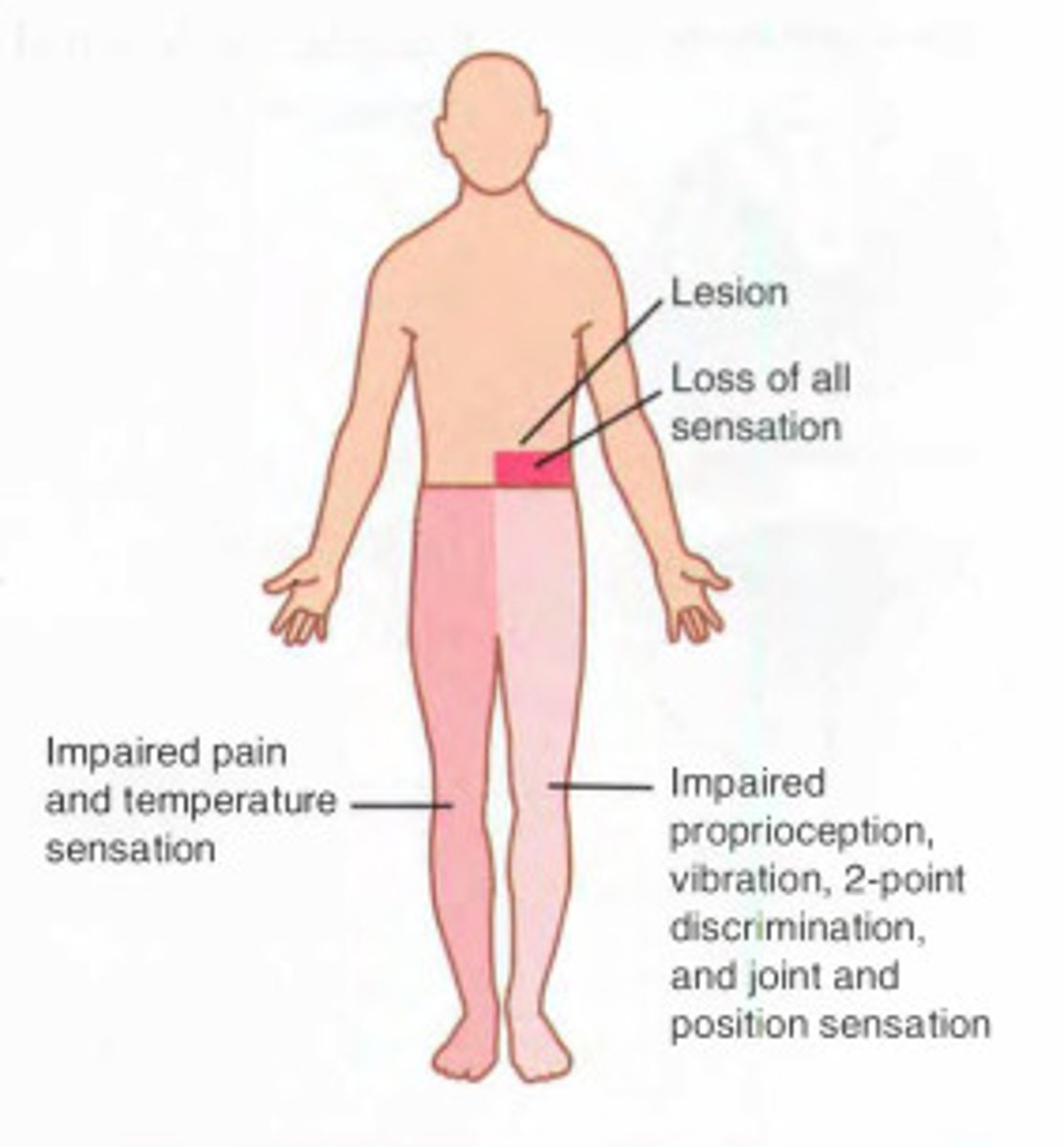
spinal cord hemisection (Brown-Sequard Syndrome)
loss of pain and temperature, contralateral side, loss of vibration and position discrimination on ipsilateral side
flaccid quadriplegia
complete loss of muscle tone and paralysis of all four extremities
indicates nonfunctional brainstem
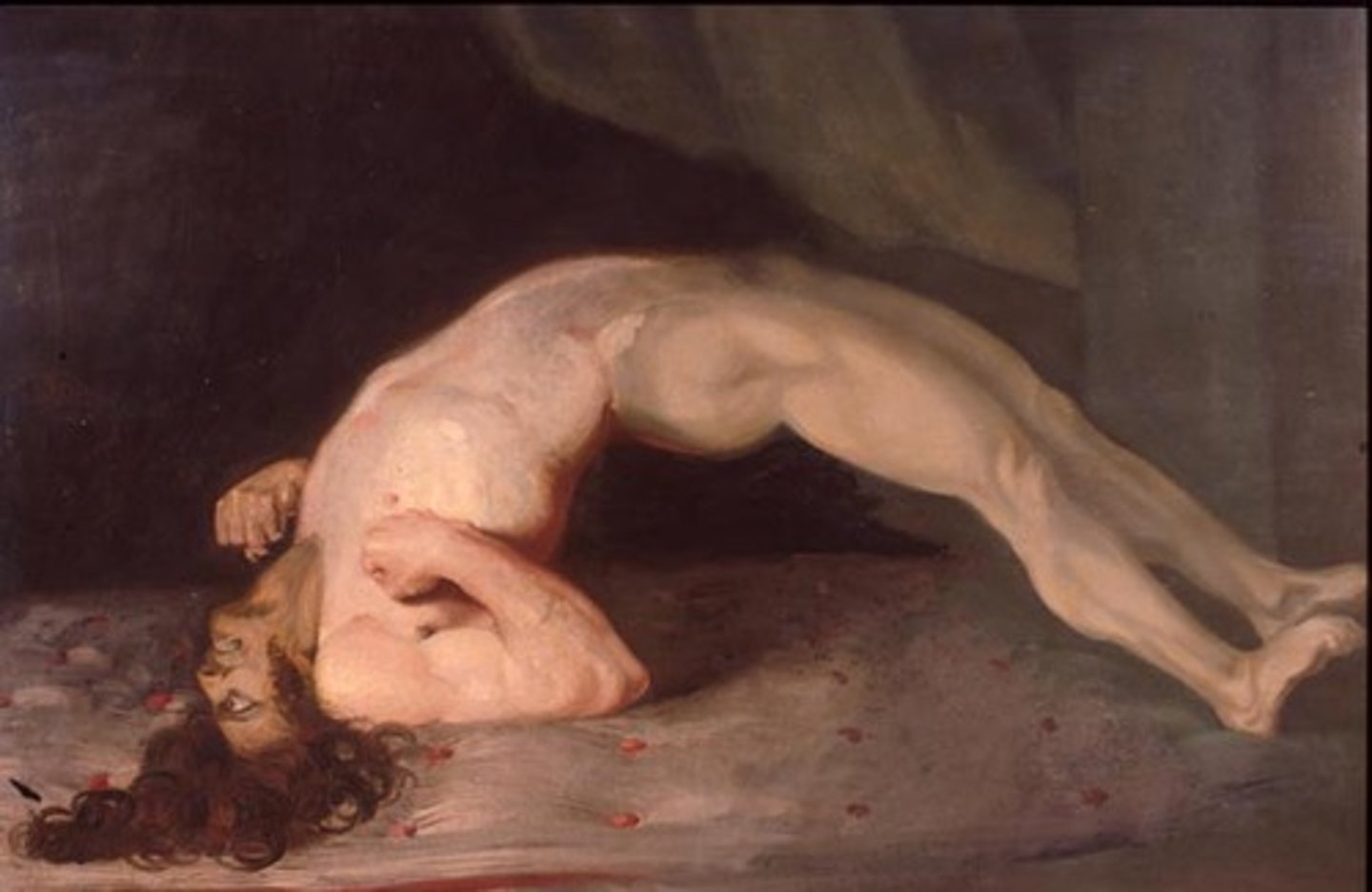
opisthotonos
prolonged arching of back with head and heels bent backward (looks like half-wheel pose if you ask me??)
indicates meningeal irritation
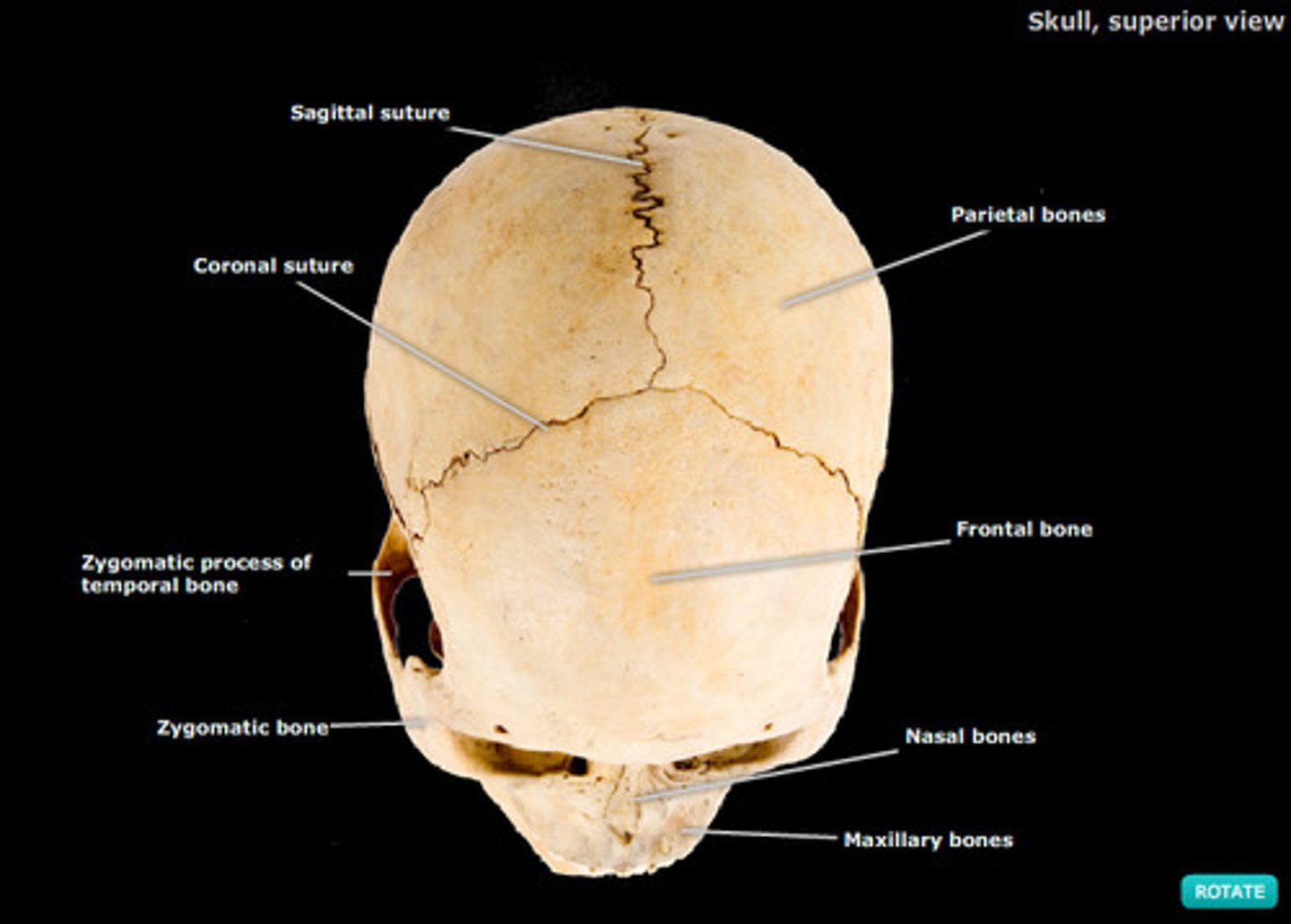
nonsynovial joints
bones united by fibrous tissue or cartilage
immoveable (sutures in skull) or slightly moveable (vertebrae)
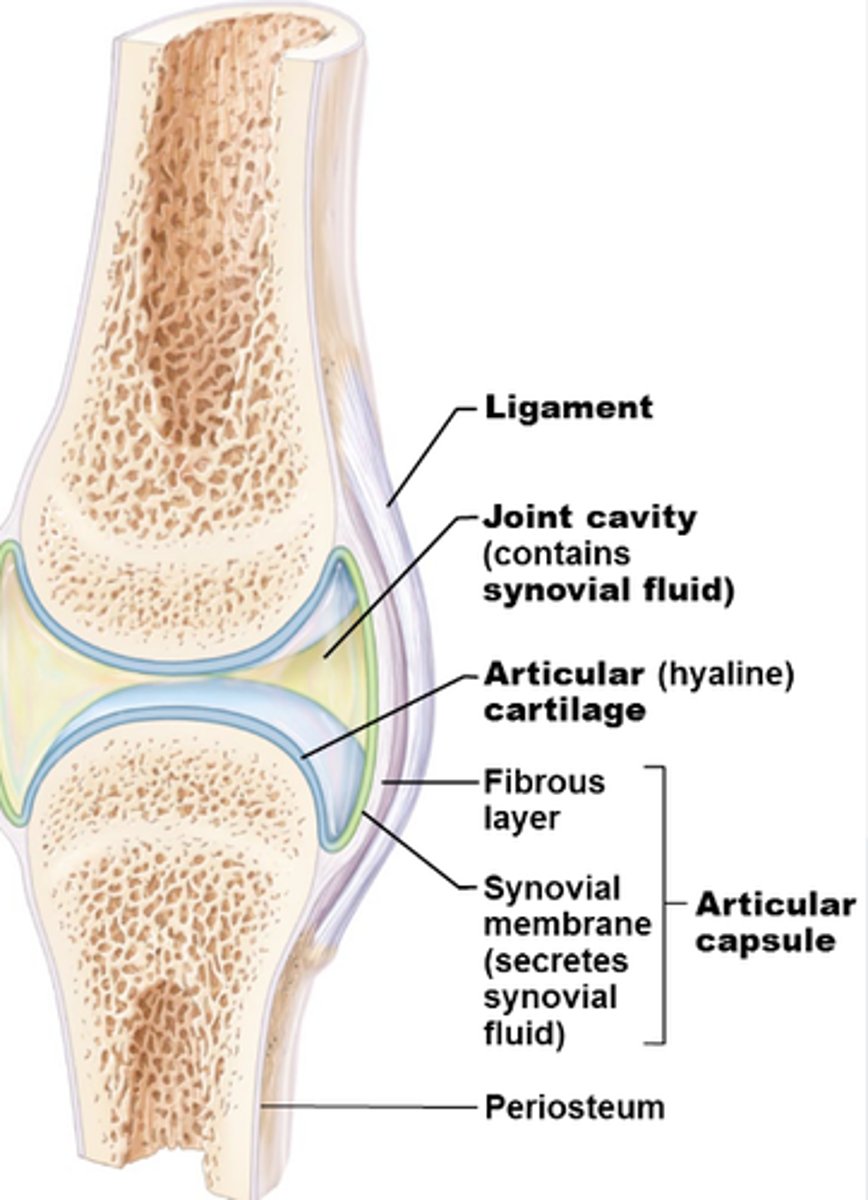
synovial joints
move freely because bones separated and enclosed in joint cavity, cartilage cushions bone
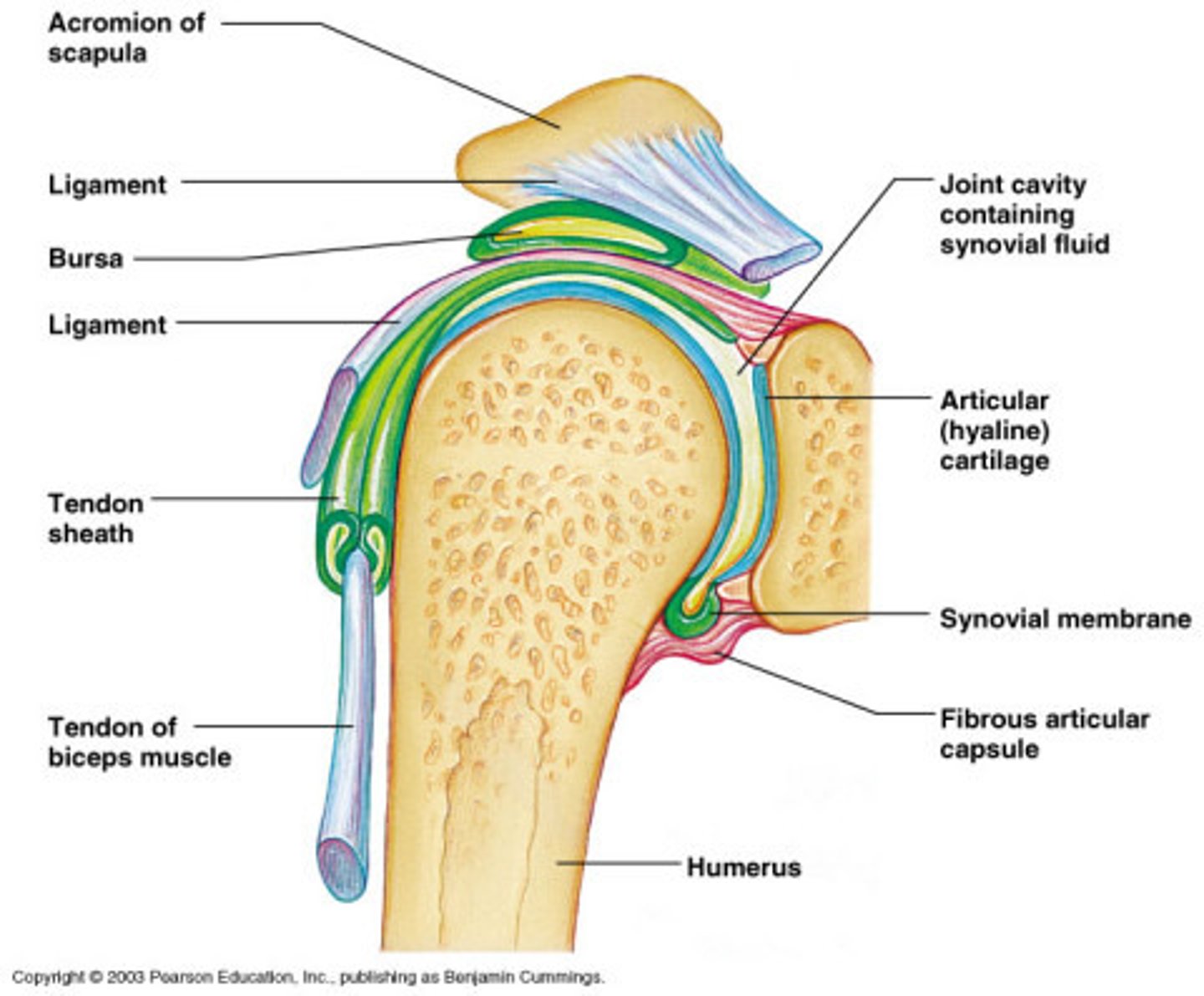
bursa
enclosed sac filled w/ synovial fluid (normal)
What are the three types of muscle?
1. skeletal
2. smooth
3. cardiac
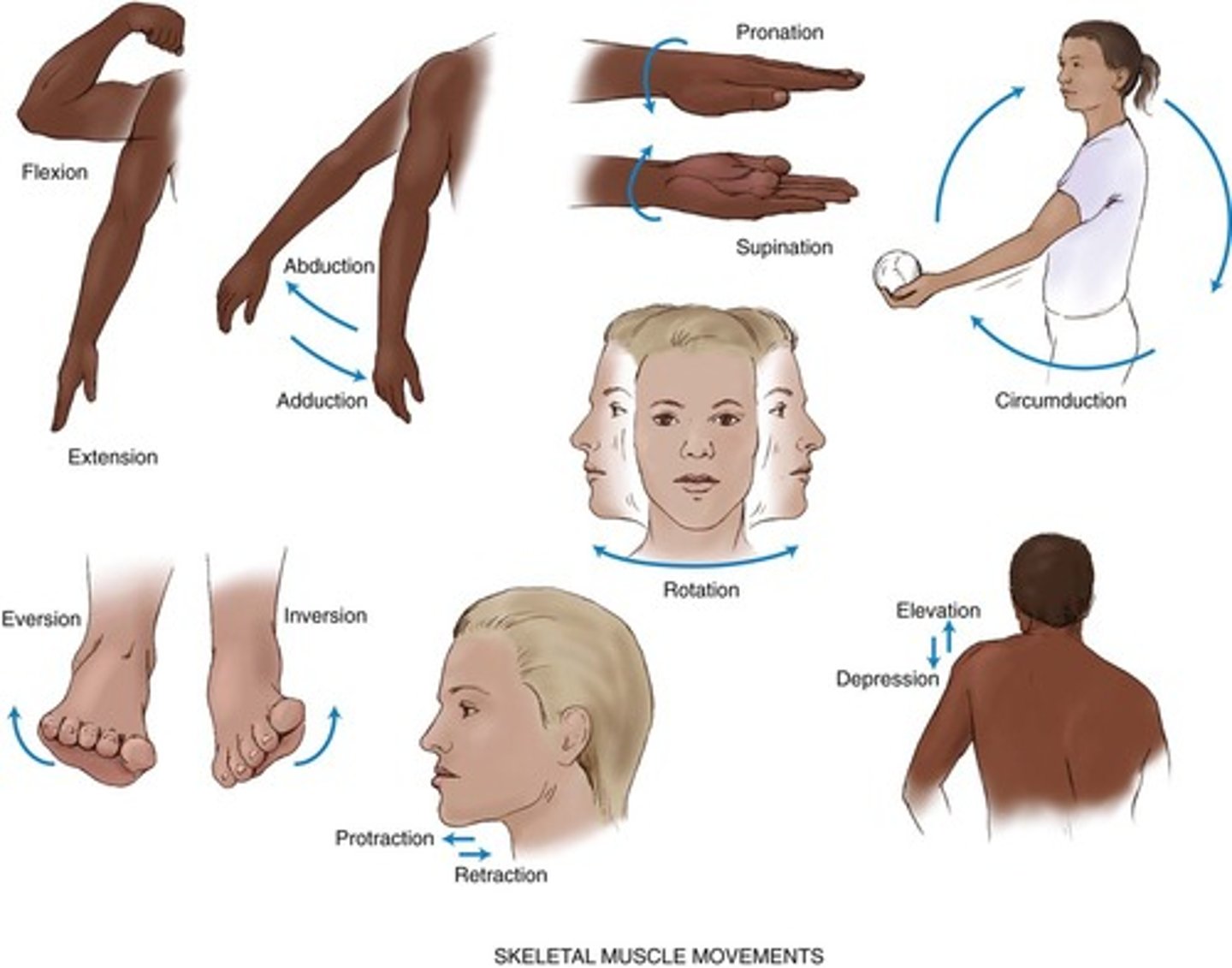
skeletal muscle movements
flexion (bend limb at joint)
extension (straightening limb at joint)
abduction (move body part away from midline)
adduction (move body part towards midline)
pronation (turn forearm so palm is down)
supination (turn forearms to palm is up)
circumduction (move arm in circle around shoulder)
inversion (move sole of foot inward at ankle)
eversion (move sole of foot outward at ankle)
rotation (move head around central axis)
protaction (move body part forward, parallel 2 ground)
retraction (move body part backward, parallel 2 ground)
elevation (raising body part)
depression (lowering body part)
temporomandibular joint (TMJ)
allows eating/talking with hinge action to open/close jaws, gliding action for protrusion and retraction, gliding for side-to-side movement of lower jaw
How many vertebrae are there in the spine and how many are there of each type?
33 total vertebrae:
7 cervical
12 thoracic
5 lumbar
5 sacral
3 or 4 coccygeal
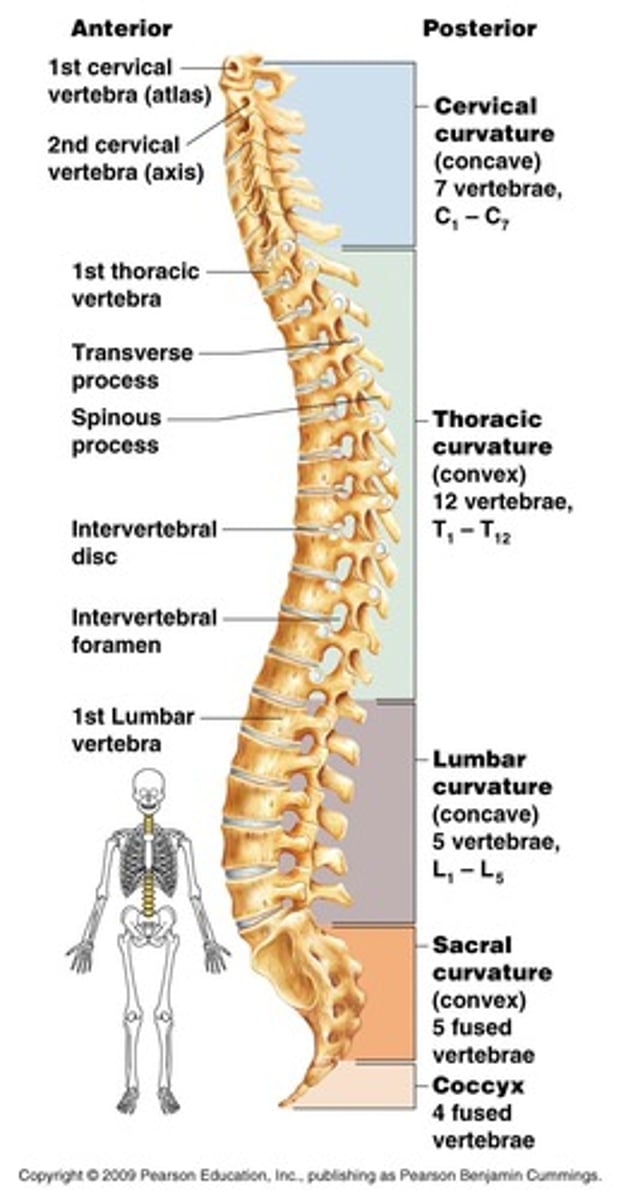
spine
cervical/lumbar curve = concave
thoracic/sacro. curves = convex
absorbs shock
flexion, extension, abduction, rotation
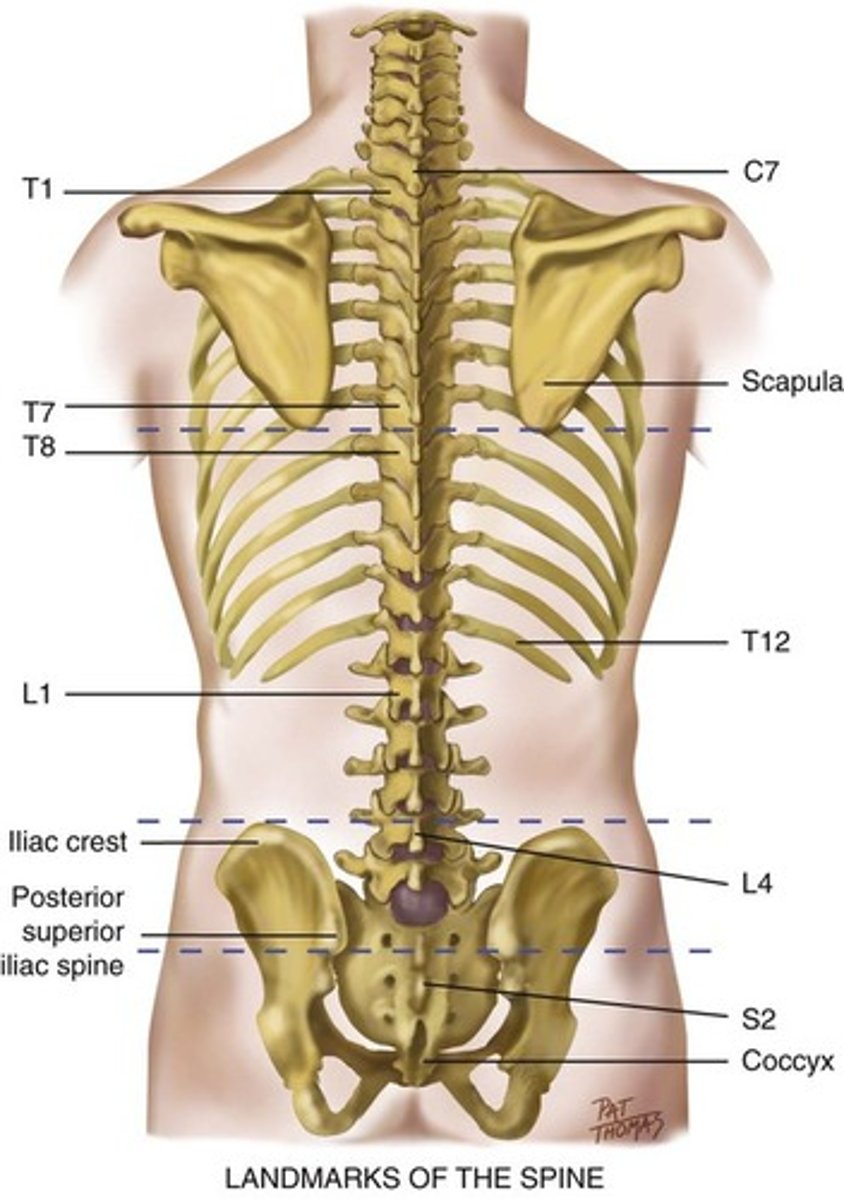
What is the best position to have the pt. in to check ROM?
supine
Over half of the 206 bones in the human body are in the ________ and _______.
hands, feet
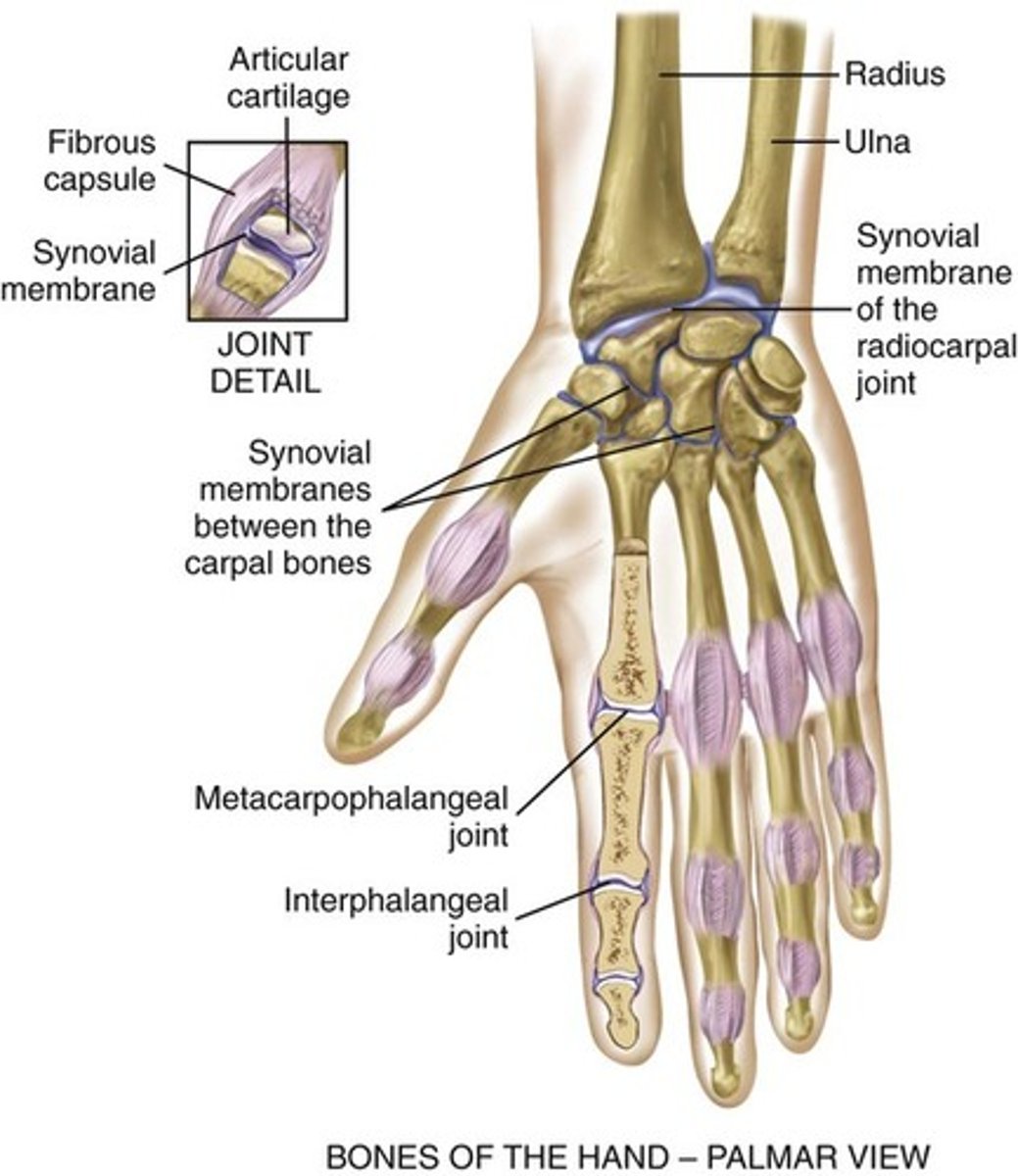
wrists and carpals
condyloid permits movement in two planes at right angles (flexion and extension, side-to-side deviation)
midcarpal joint (articulation allows flexion, extension, some rotation)
metacarpophalangeal and interphalangeal joints permit finger flexion and extension
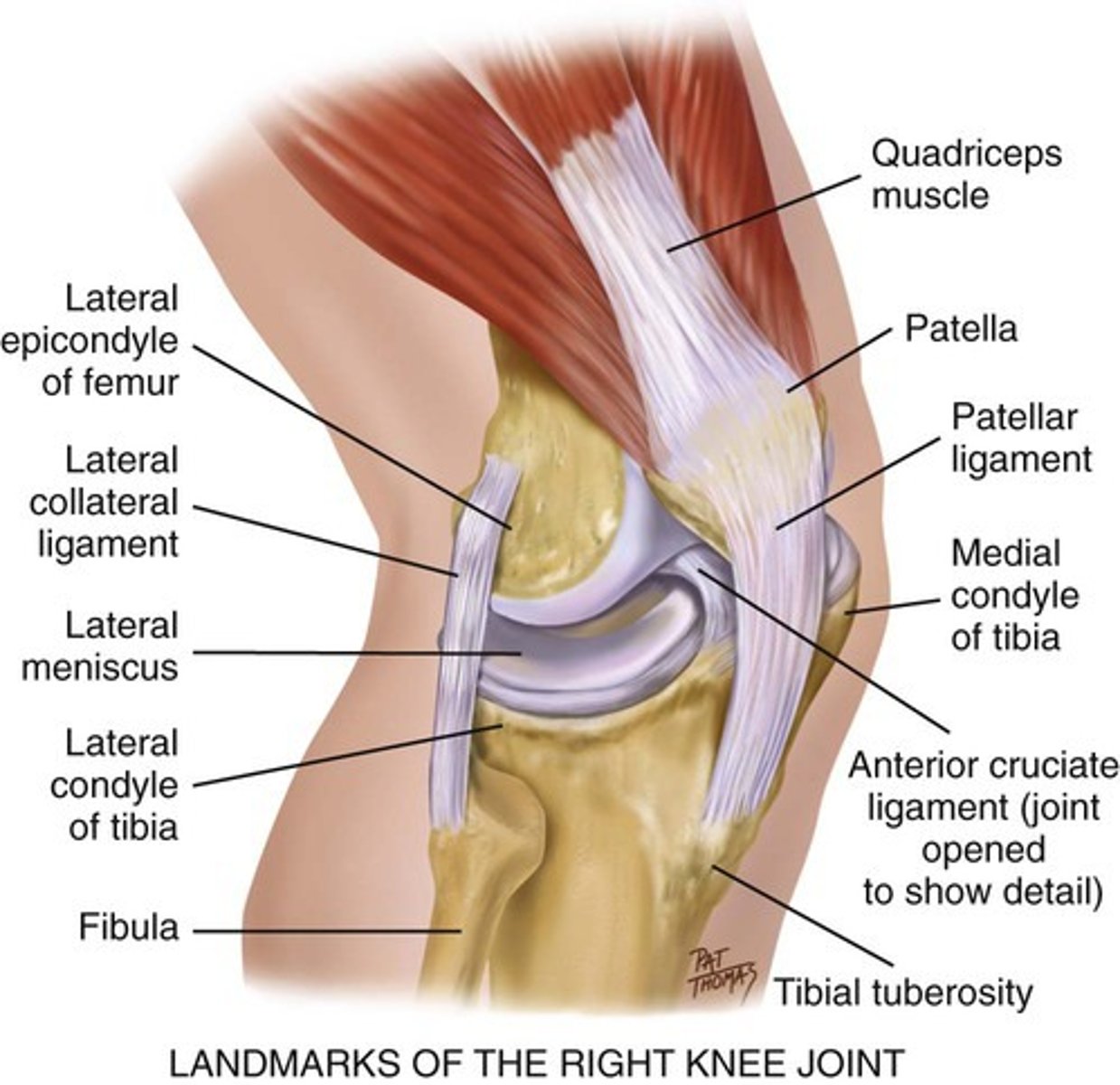
knee
largest joint in the body/hinge joint/permits flexion and extension
kids and musculoskeletal development
by 3 months fetus forms skeleton of cartilage
longitudinal growth continues until closure of epiphyses and last closure at approx. 20 years
if kid has joint injury, check growth plate (damage can cause bone to stop growing)
pregnant women and musculoskeletal stuff
increased levels of circulating hormones cause increased mobility in joints
increased mobility in sacroiliac, sacrococcygeal, and symphysis pubis joints in pelvis (posture changes)
KNOW: progressive lordosis causes lower back pain, especially in 3rd trimester
aging adults and musculoskeletal stuff
in bone remodeling after 40 resorption occurs more rapidly than depression
kyphosis, backward head tilt, slight flexion of hips/knees
decrease in height, especially in 8th and 9th decades
they look up a lot and don't see what's on the floor (safety!)
bone remodeling
recycling of bone tissue
Calcium --> bones --> bloodstream
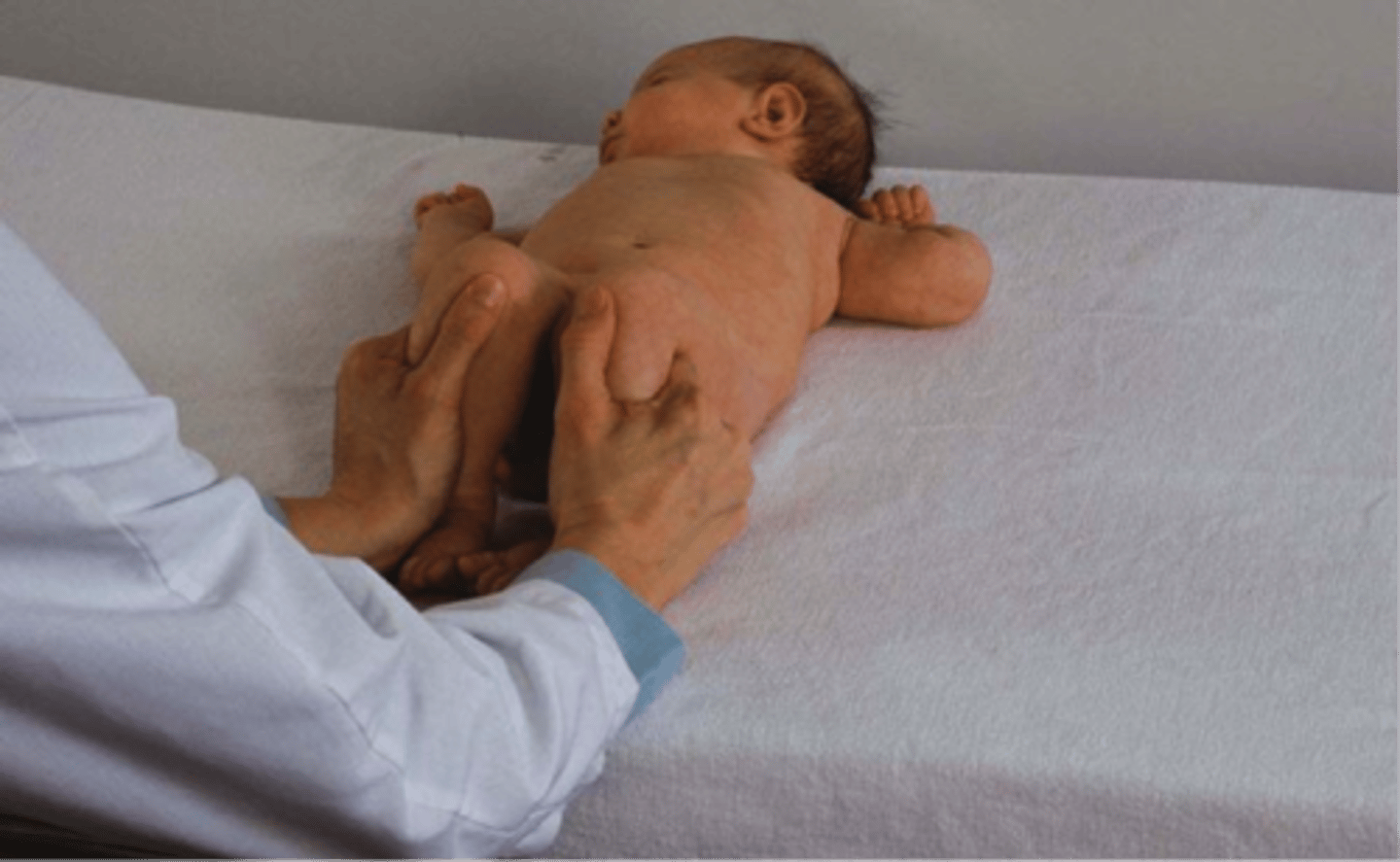
Ortolani's sign
infants, check for congenital hip problems (if clicking, then problem)
perform every visit until 1 year old
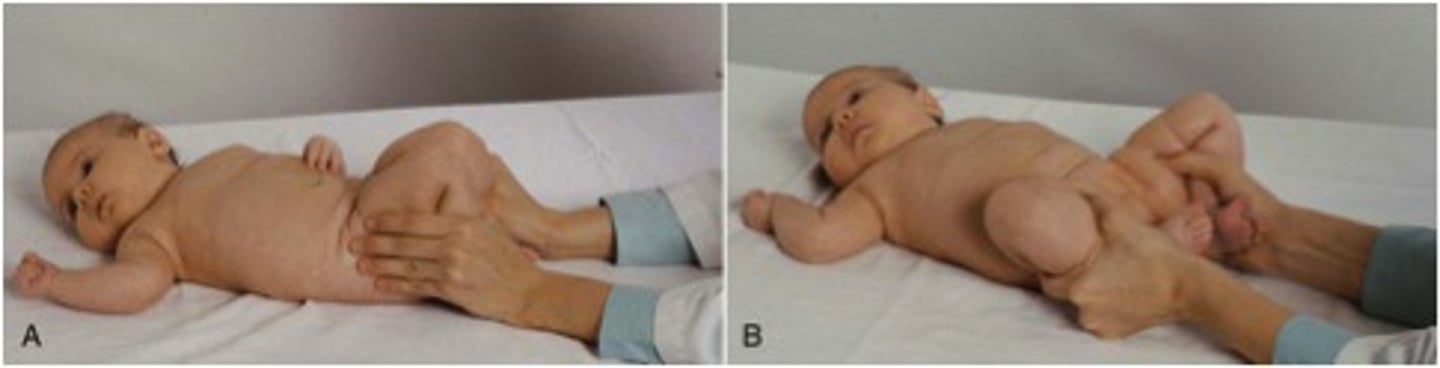
Allis test
infants, hip dislocation
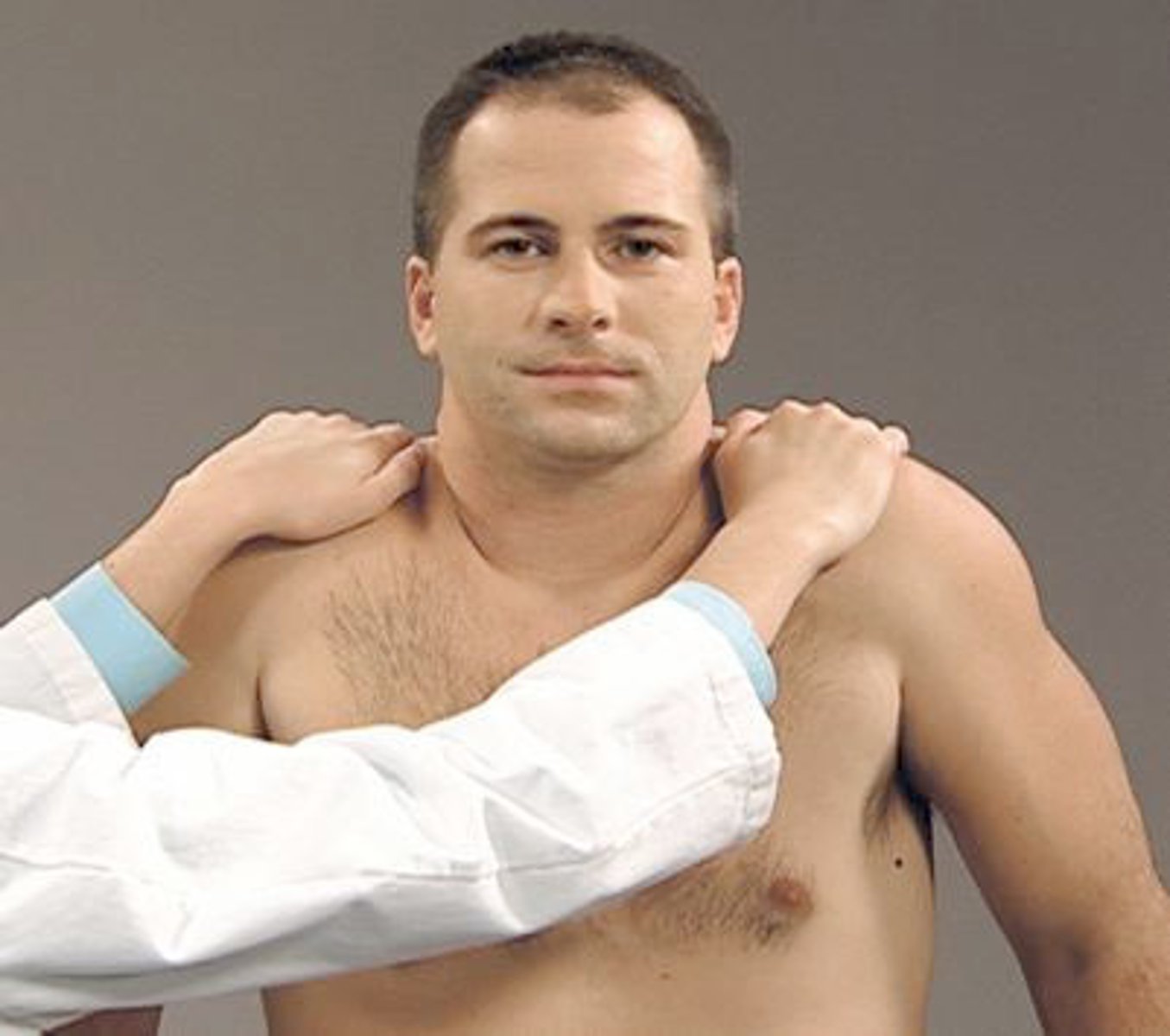
shoulder
shrug against resistance
shoulder shrug tests CN XI
elbow
palpate flexed arm at about 70 degrees
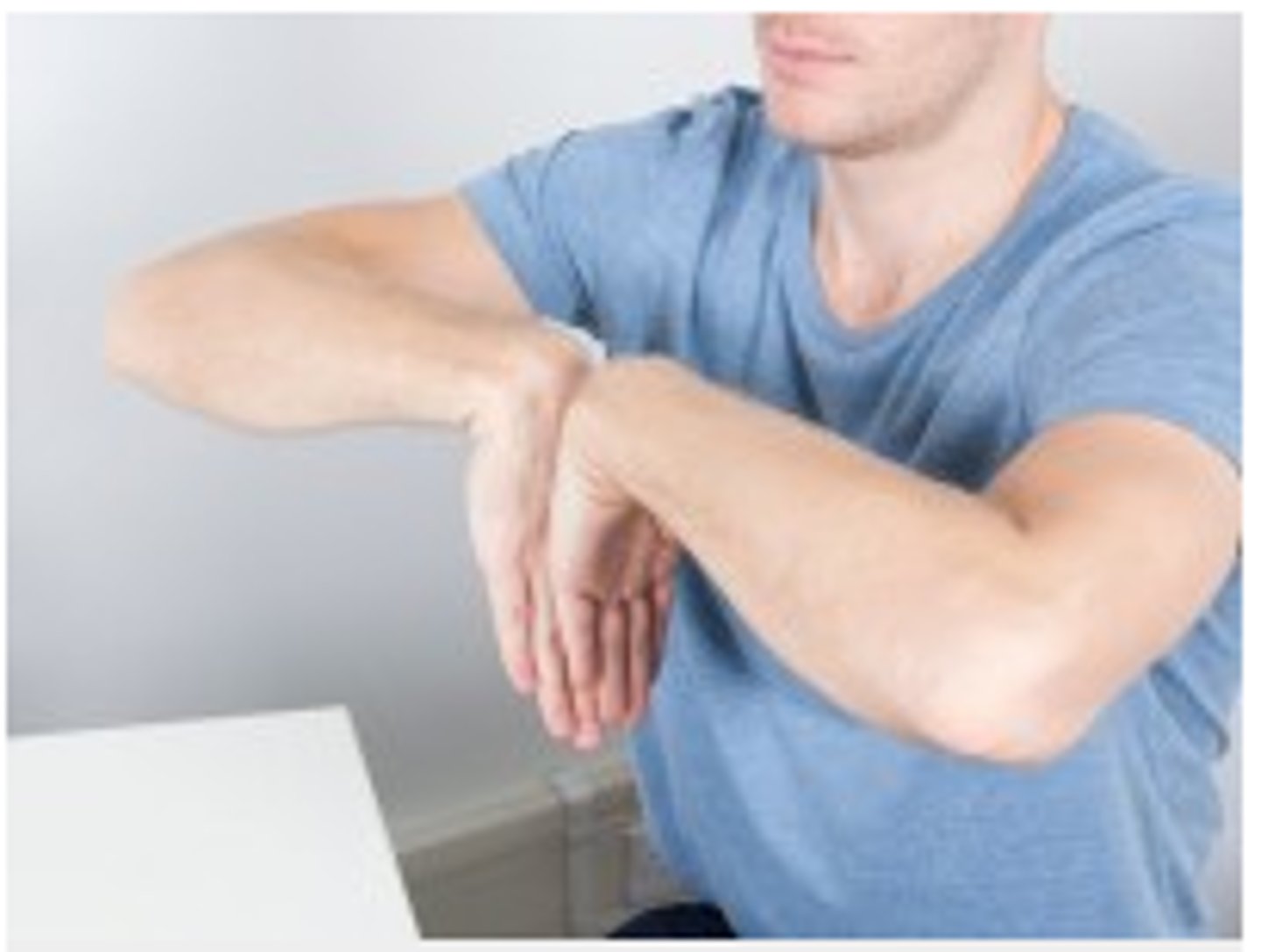
Phalen's test
ask pt. to hold both hands back-to-back while flexing wrists 90 degrees
acute flexion of wrist for 60s produces numbness and burning in a positive test
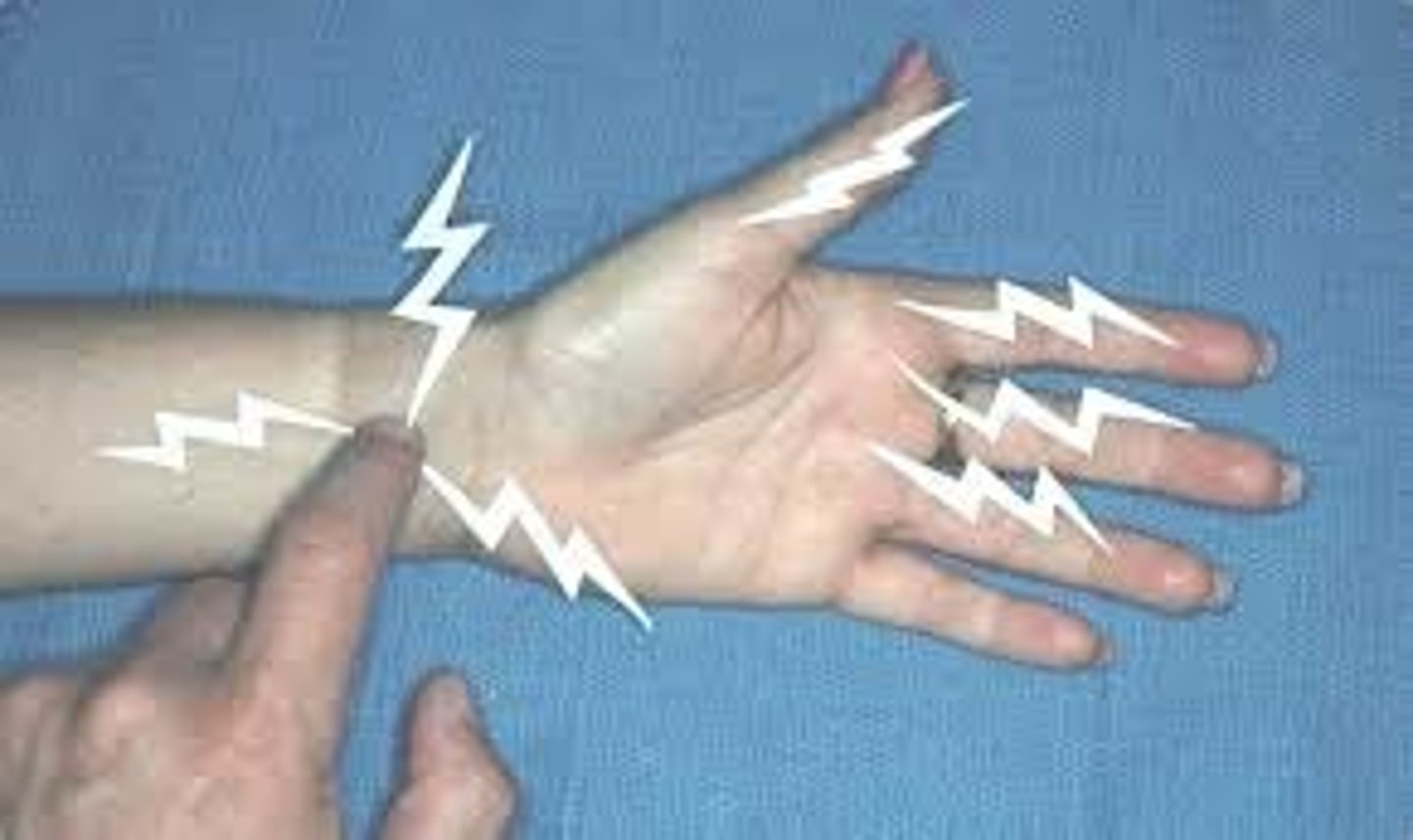
Tinel's sign
direct percussion of location of median nerve at wrist produces burning and tingling along its distribution in a positive test
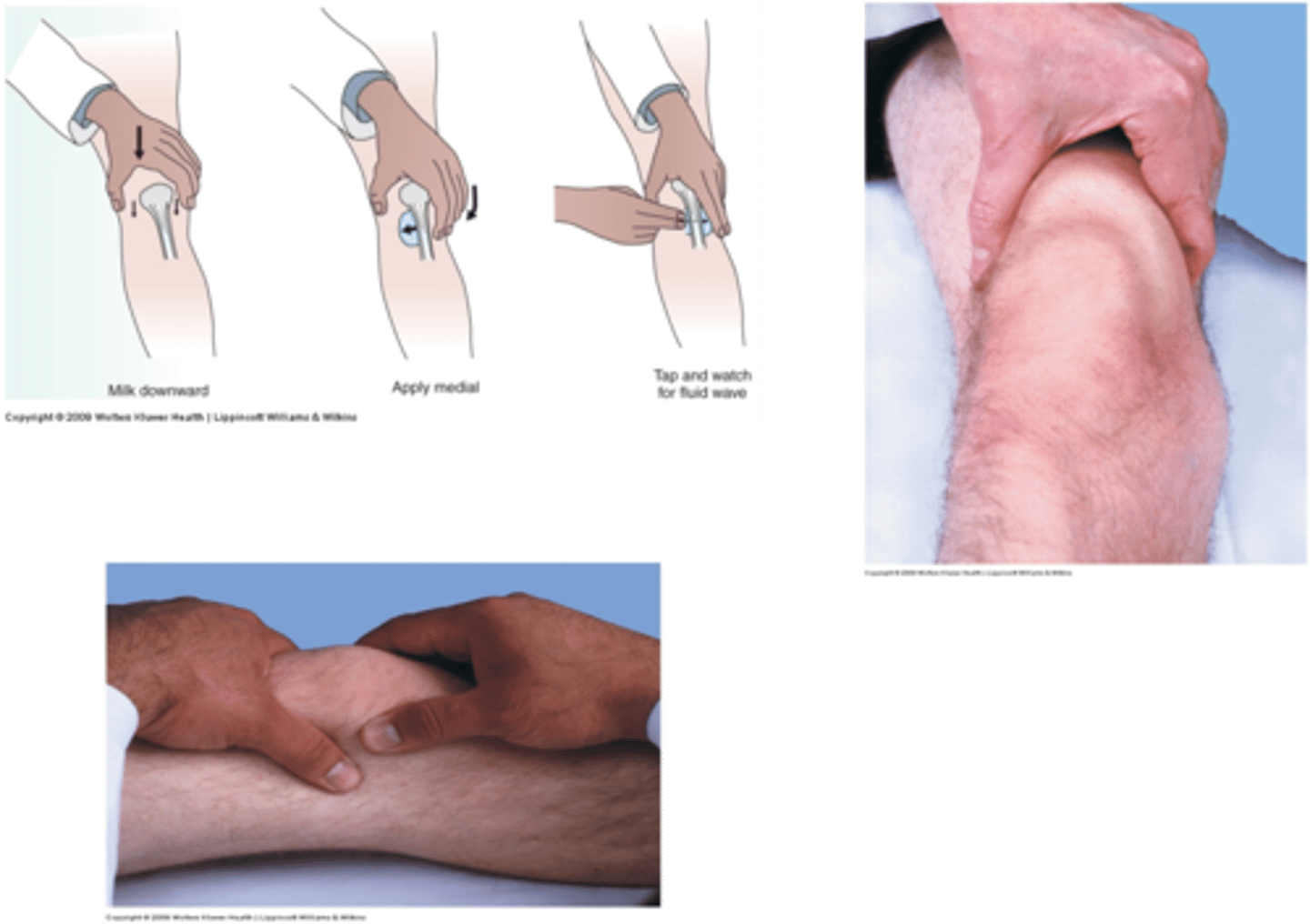
bulge sign/ballottement
tests for increased fluid in joint
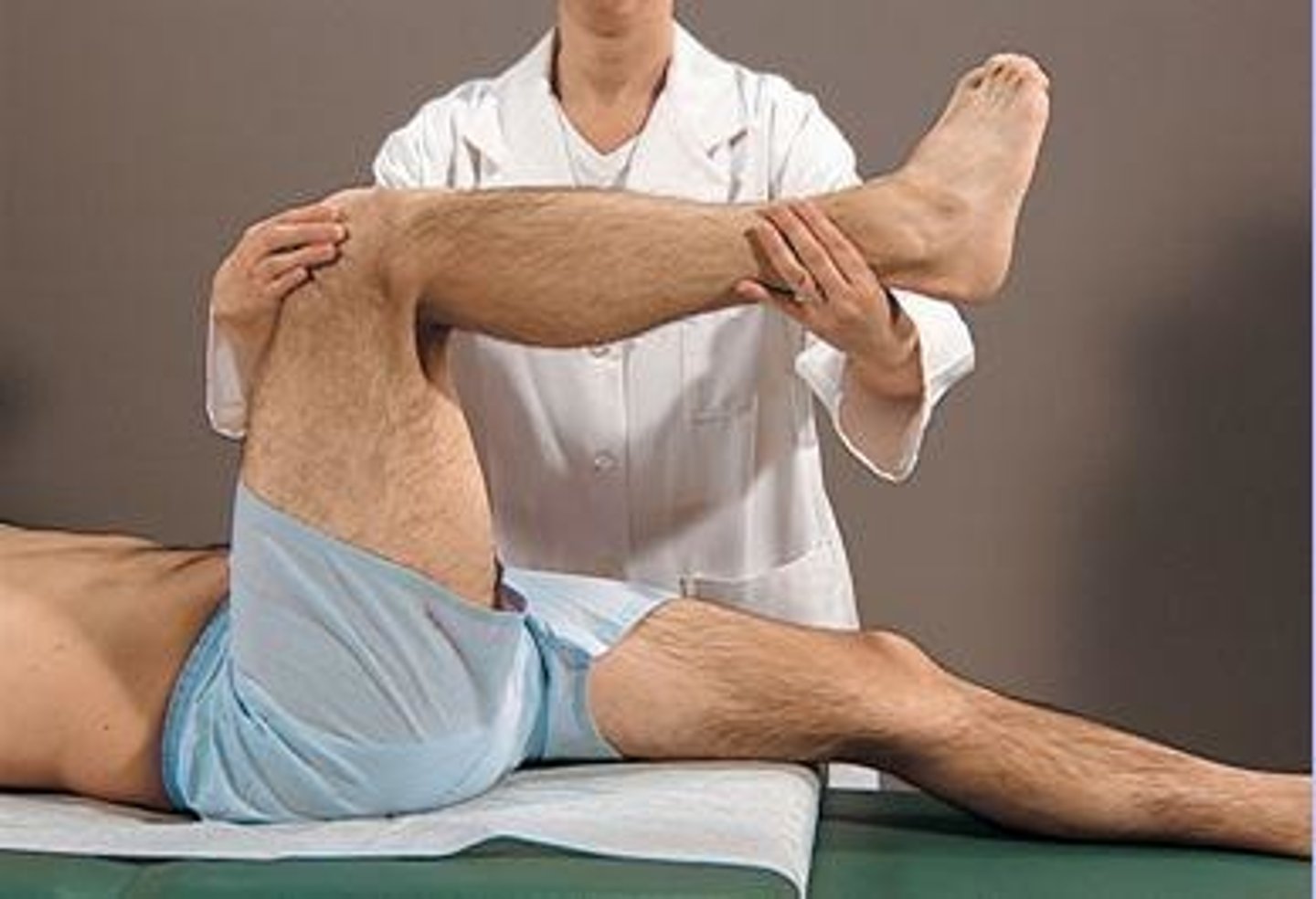
McMurray test
tests for meniscal tears
perform if hx of trauma followed by locking, giving way, or local pain in knee
pt. supine, stand on affected side, rotate leg in and out
positive test if hear/feel "click"
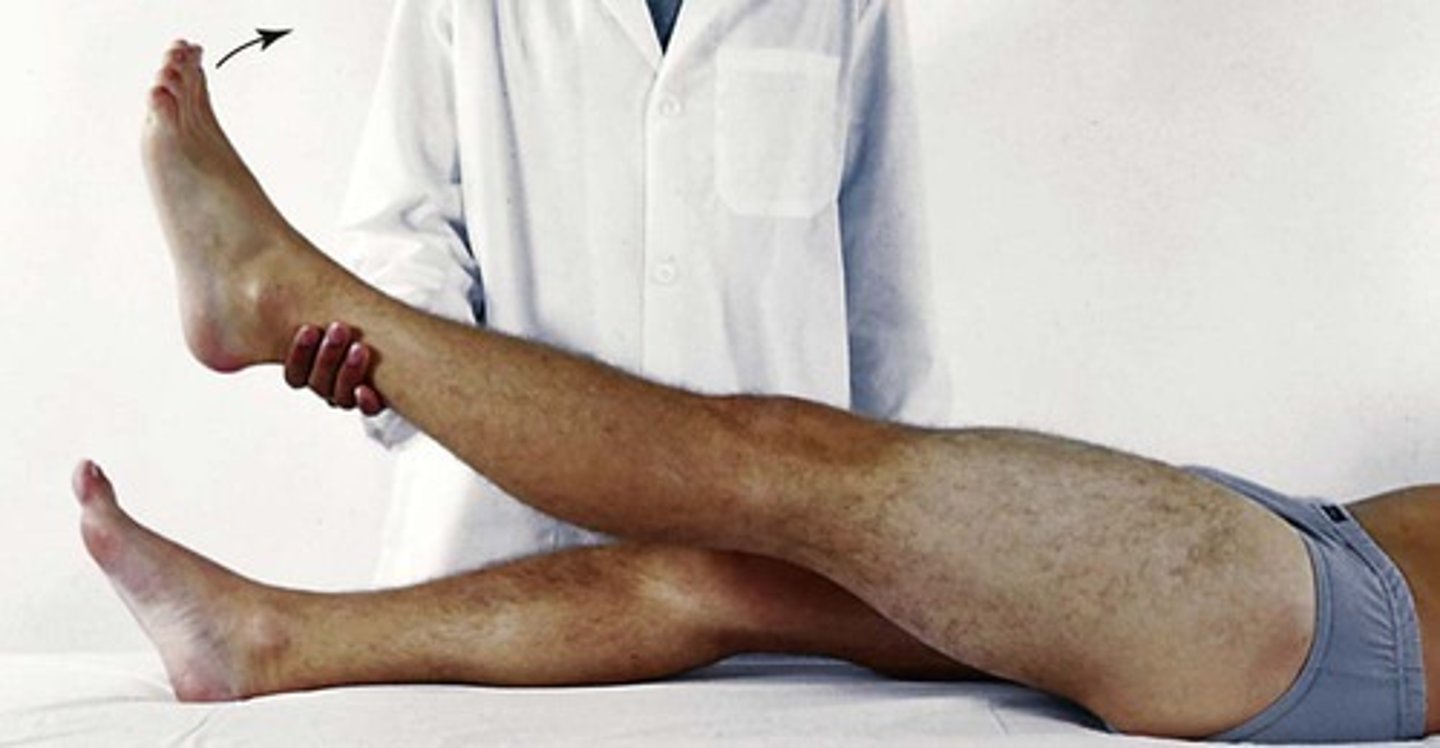
straight leg raise test
"Lasègue test"
tests for herniated disc
raise affected leg just short of where produces pain, then dorsiflex foot
produces sciatic pain in a positive test
Which adolescents need extra attention regarding the spine?
tall, female adolescents
they have a tendency to slouch
abnormalities affecting multiple joints
inflammatory (rheumatoid arthritis, ankylosing spondylitis)
degenerative (osteoarthritis, osteoporosis)
abnormalities of the shoulder
atrophy, dislocation, joint effusion, tear of rotator cuff, frozen shoulder, adhesive capsulitis, subacromial bursitis
abnormalities of the elbow
olecranon bursitis, gouty arthritis, subcutaneous nodules, epicondylitis (tennis elbow)
abnormalities of the wrist/hand
ganglion cyst, colles' fracture, carpal tunnel syndrome, ankylosis, dupuytren's contracture
conditions caused by chronic rheumatoid arthritis:
swan neck and boutonniere deformities, ulnar deviation or drift, degenerative joint disease (osteoarthritis), acute rheumatoid arthritis, syndactyly, polydactyly
abnormalities of the knee
mild synovitis, prepatellar bursitis, swelling of menisci, post polio, osgood-schlatter disease, chondromalacia patellae
abnormalities of ankle/foot
achilles tenosynosynovitis, chronic/acute gout, hallux vagus with bunion and hammer toes, callus, plantar wart, ingrown toenail
abnormalities of spine
scoliosis, herniated nucleus pulposus (aka "herniated disc," test with straight leg raising)
pediatric abnormalities
congenital dislocated hip, talipes equinovarus (club-foot), spina bifida
anosmia
loss of sense of smelll
What time of day is rheumatoid arthritis the worst? Osteoarthritis?
RA = morning when arising
osteoarthritis = later in the day