LEARNING, MEMORY, AND AMNESIА

0.0(0)
Studied by 0 people
call kaiCall Kai
Locked
learnLearn
examPractice Test
spaced repetitionSpaced Repetition
heart puzzleMatch
flashcardsFlashcards
GameKnowt Play
Card Sorting

1/31

encourage image

There's no tags or description

Looks like no tags are added yet.

Last updated 3:20 PM on 8/26/26
Name
Mastery
Learn
Test
Matching
Spaced
Call with Kai
Chat

No analytics yet

Send a link to your students to track their progress

32 Terms

1
New cards

Learning

A process through which experience produces relatively lasting changes in behavior or knowledge.

2
New cards

Memory

The ability to retain and use information acquied through learning.
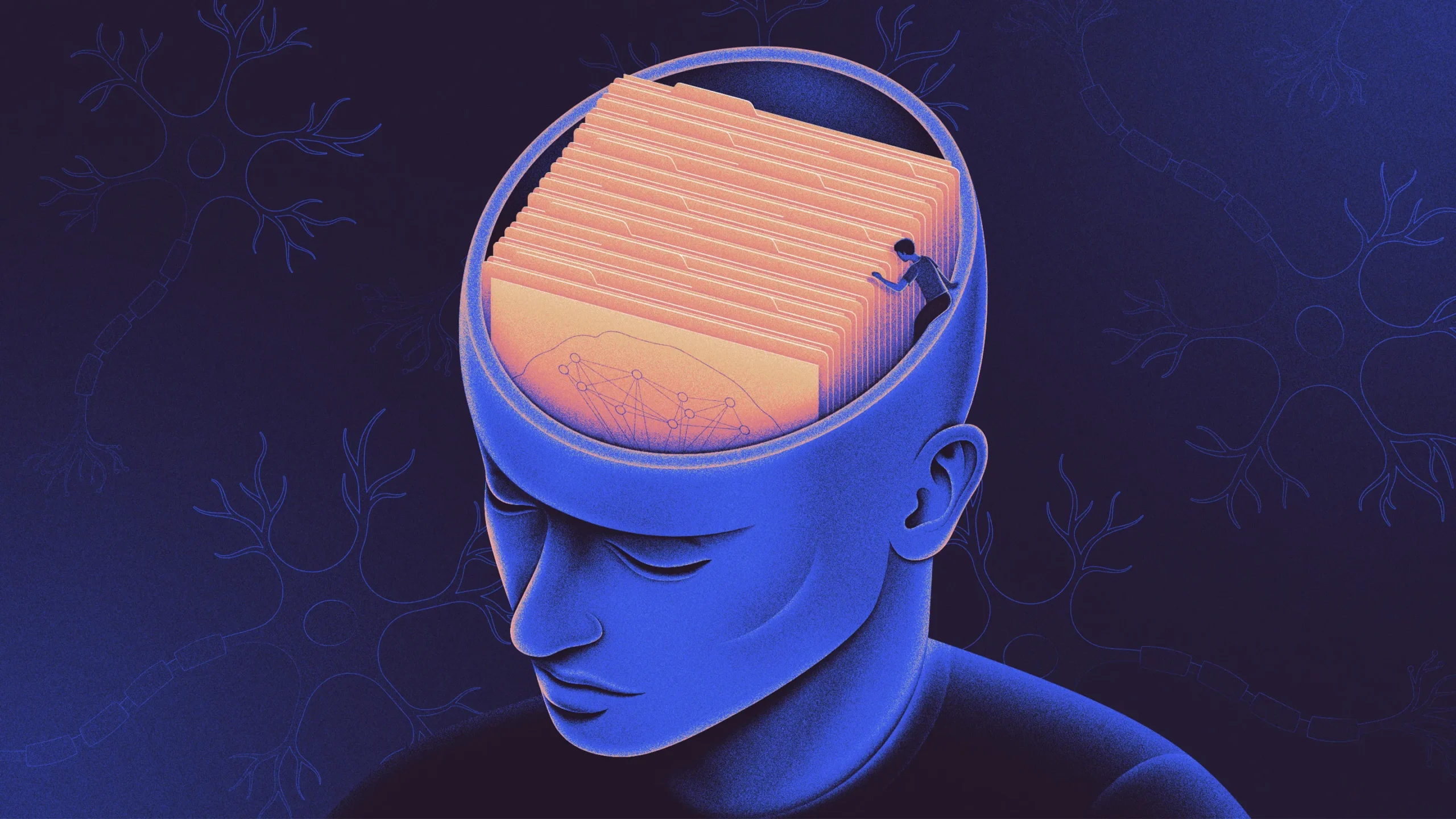
<p>The <u><mark data-color="#edf9e1" style="background-color: rgb(237, 249, 225); color: inherit;">ability to retain and use information </mark></u>acquied through learning.</p>
3
New cards

Amnesia

Significant disruption or loss of memory.

<p>Significant <u><mark data-color="yellow" style="background-color: yellow; color: inherit;">disruption or loss of memory</mark></u>.</p>
4
New cards

H.M.

- Underwent surgery involving the medial temporal lobes to treat severe epilepsy.

- Proved that memory involves specific brain structures, is not a single unified ability, and different types of memory can be affected independently.

- demonstrated that memory involves different systems.

<p>- Underwent <u><mark data-color="yellow" style="background-color: yellow; color: inherit;">surgery involving the medial temporal lobes </mark></u>to treat severe epilepsy.</p><p>- Proved that memory involves specific brain structures, is not a single unified ability, and different types of memory can be affected independently.</p><p>- demonstrated that memory involves different systems.</p>
5
New cards

The Deficit

After surgery, he developed serious difficulty forming certain new long-term memories.

6
New cards

The Preservation

- Intellectual functioning remained relatively intact.

- He could still demonstrate some forms of learning without consciously remembering the learning experience.

7
New cards

Explicit Memory

→ Conscious long-term memory

conscious memory.

8
New cards

Implicit Memory

- Long-term memory that does not require conscious awareness

- Conscious memory.

Examples: Learned skills, habits, and conditioned responses.

9
New cards

Episodic memory

Memory for specific personal experiences.

Example: Remembering what happened during your first day of college.

<p>Memory for <u><mark data-color="green" style="background-color: green; color: inherit;">specific personal experiences.</mark></u></p><p><strong>Example:</strong> Remembering what happened during your first day of college.</p>
10
New cards

Semantic memory

Memory for facts and general knowledge.
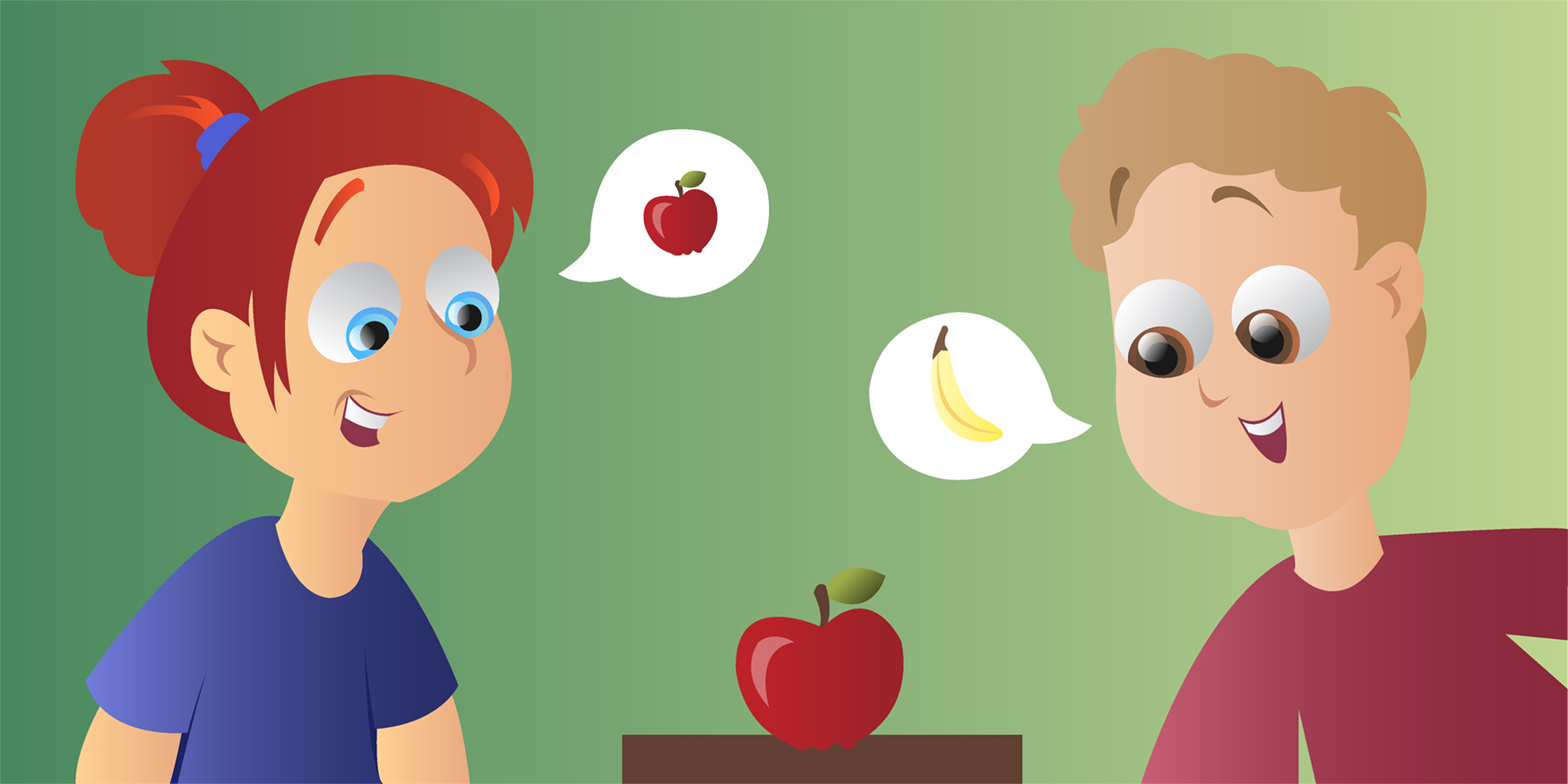
<p>Memory for <u><mark data-color="#f2f6d5" style="background-color: rgb(242, 246, 213); color: inherit;">facts and general knowledge.</mark></u></p>
11
New cards

Post-traumatic Amnesia

Memory disruption following a head injury or concussion.
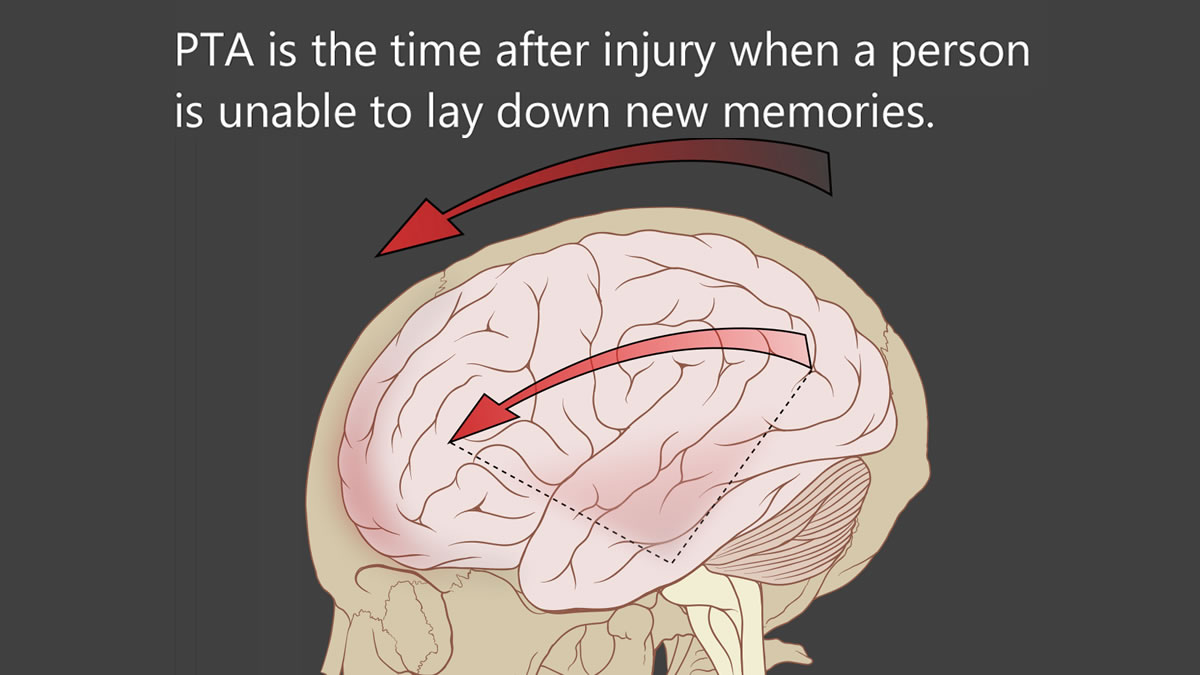
<p>Memory <strong>disruption </strong>following a <u><mark data-color="#d4dff2" style="background-color: rgb(212, 223, 242); color: inherit;">head injury or concussion.</mark></u></p>
12
New cards

Retrograde Amnesia

- Loss of memories formed before an injury or neurological event

- Recent memories are often more vulnerable than older memories.

- Loss of previously formed memories.
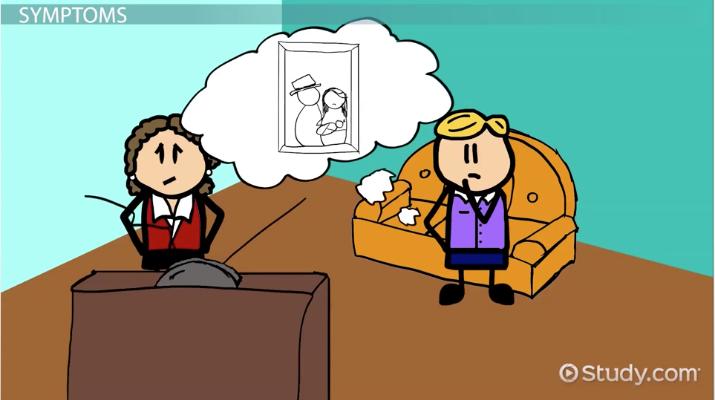
<p>- Loss of memories formed <strong>before </strong>an injury or neurological event</p><p>- Recent memories are often more vulnerable than older memories.</p><p>- <u><mark data-color="#dbf1da" style="background-color: rgb(219, 241, 218); color: inherit;">Loss of previously formed memories.</mark></u></p>
13
New cards

Anterograde Amnesia

- Difficulty forming new memories after an injury or neurological event

- difficulty forming new memories.
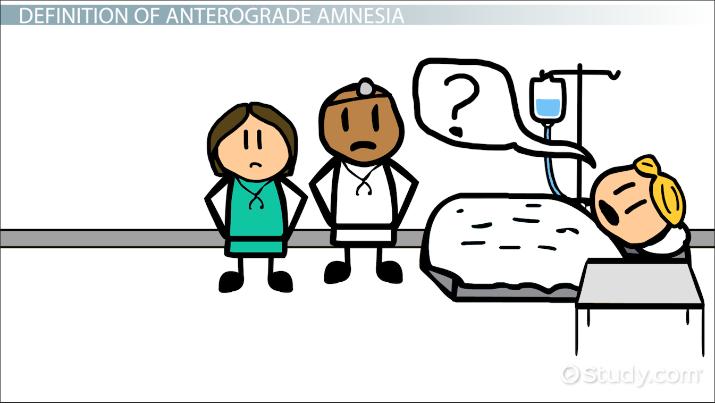
<p>- <u><mark data-color="green" style="background-color: green; color: inherit;">Difficulty forming new memories</mark></u> <strong>after an injury</strong> or <strong>neurological event</strong></p><p>- difficulty forming new memories.</p>
14
New cards

Korsakoff's Syndrome

- A memory disorder associated with brain damage related to thiamine deficiency.

- Often associated with heavy alcohol consumption.

- Particularly affects the formation of explicit episodic memories.

<p>- A <strong>memory disorder </strong>associated with brain damage<u><mark data-color="#e4fcf8" style="background-color: rgb(228, 252, 248); color: inherit;"> related to thiamine deficiency.</mark></u></p><p>- Often associated with <u><mark data-color="#d6f4de" style="background-color: rgb(214, 244, 222); color: inherit;">heavy alcohol consumption.</mark></u></p><p>- Particularly affects the formation of explicit episodic memories.</p>
15
New cards

Alzheimer's Disease

- A progressive neurological disorder.

- Memory deterioration is often an early sign.

- The condition can eventually progress to dementia.

- Associated with degeneration of the basal forebrain and reduced acetylcholine.

example: person who repeatedly asks the same questions, forgets recent conversations, and gets lost in familiar places
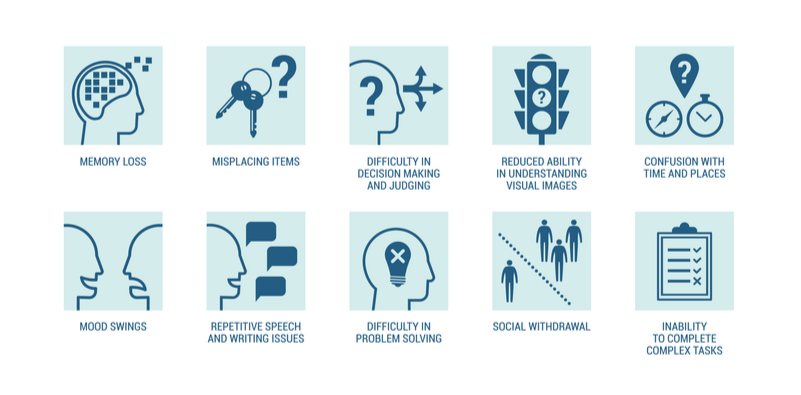
<p>- A <strong>progressive neurological disorder.</strong></p><p>- Memory deterioration is often an early sign.</p><p>- The condition can eventually<u><mark data-color="#f5dfee" style="background-color: rgb(245, 223, 238); color: inherit;"> progress to dementia.</mark></u></p><p>- Associated with <u><mark data-color="purple" style="background-color: purple; color: inherit;">degeneration of the basal forebrain and reduced acetylcholine.</mark></u></p><p><strong>example:</strong> person who repeatedly asks the same questions, forgets recent conversations, and gets lost in familiar places</p>
16
New cards

Infantile Amnesia

- Adults generally remember very little from infancy.

- Demonstrates that early-life learning and later conscious remembering are not necessarily the same thing.

example: “My parents talk about our family trip to the beach when I was two, but I have no mental picture of it.”

<p>- Adults generally<u><mark data-color="#f1e3da" style="background-color: rgb(241, 227, 218); color: inherit;"> remember very little from infancy.</mark></u></p><p>- Demonstrates that <u><mark data-color="#e0f2d1" style="background-color: rgb(224, 242, 209); color: inherit;">early-life learning and later conscious remembering are not necessarily the same thing.</mark></u></p><p><strong>example:</strong> “My parents talk about our family trip to the beach when I was two, but I have no mental picture of it.”</p>
17
New cards

hippocampus

amygdala

cerebellum

perirhinal cortex

prefrontal cortex

striatum

6 The distributed neurological network of memory

18
New cards

Hippocampus

- New memories and spatial memory.

- Particularly important for forming new memories, spatial memory, navigation, and remembering locations and environments.

- New memories and spatial memory.

<p>- <strong>New memories </strong>and<strong> spatial memory.</strong></p><p>- Particularly important for<u><mark data-color="red" style="background-color: red; color: inherit;"> forming new memories</mark></u>, spatial memory, navigation, and remembering locations and environments.</p><p>- <u><mark data-color="#fde3f2" style="background-color: rgb(253, 227, 242); color: inherit;">New memories and spatial memory.</mark></u></p>
19
New cards

Amygdala

- Emotional and fear-related memory.

- Emotional memory.

<p>- <u><mark data-color="blue" style="background-color: blue; color: inherit;">Emotional and fear-related </mark></u>memory.</p><p>- Emotional memory.</p>
20
New cards

Cerebellum

Learned sensorimotor skills.
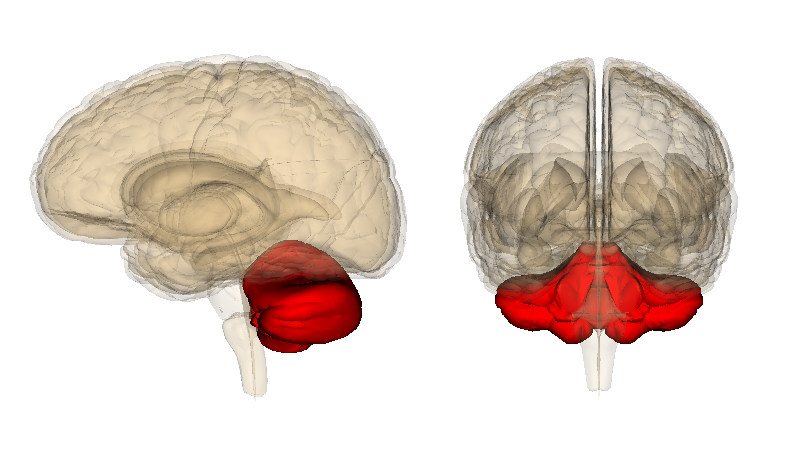
<p>Learned <strong>sensorimotor skills</strong>.</p>
21
New cards

Perirhinal cortex

Object-recognition memory.
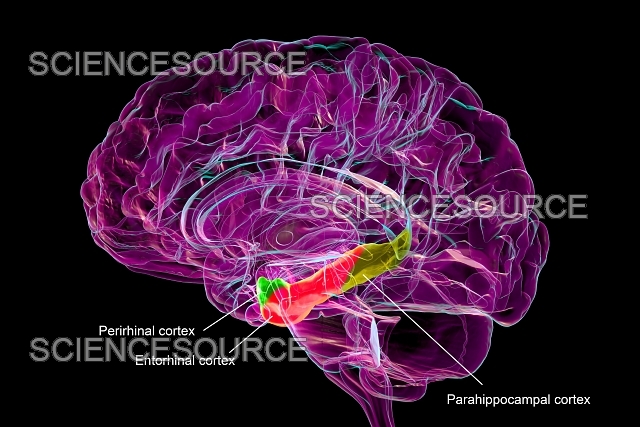
<p><strong>Object-recognition</strong> memory.</p>
22
New cards

Prefrontal cortex

Working memory and organization.

<p><strong>Working memory </strong>and <strong>organization</strong>.</p>
23
New cards

Striatum

Habits and procedural memory.

<p><strong>Habits </strong>and<strong> procedural memory.</strong></p>
24
New cards

Grid Cells

- Located in the entorhinal cortex.

- They provide fundamental spatial coordinate information.

<p>- <u><mark data-color="#dddef6" style="background-color: rgb(221, 222, 246); color: inherit;">Located in the entorhinal cortex.</mark></u></p><p>- They <u><mark data-color="#fcdffb" style="background-color: rgb(252, 223, 251); color: inherit;">provide fundamental spatial coordinate information.</mark></u></p>
25
New cards

Spatial Information

Transmitted from the entorhinal cortex.

<p>Transmitted from the<strong> entorhinal cortex.</strong></p>
26
New cards

Place Cells

Neurons in the hippocampus that become active when an individual is in a particular location.
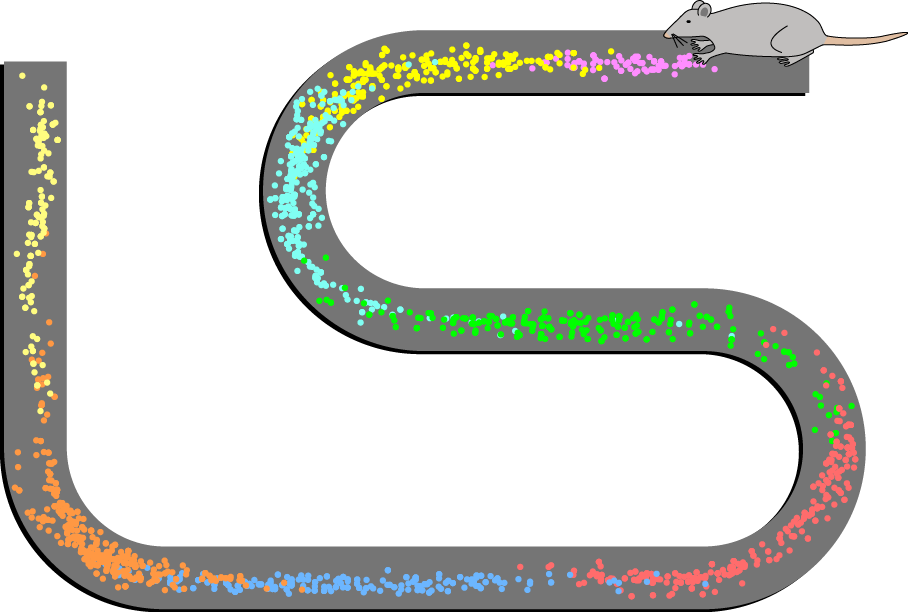
<p><strong>Neurons </strong>in the hippocampus that <u><mark data-color="red" style="background-color: red; color: inherit;">become active when an individual is in a particular location.</mark></u></p>
27
New cards

Place Representation

They help represent the spatial layout of an environment.
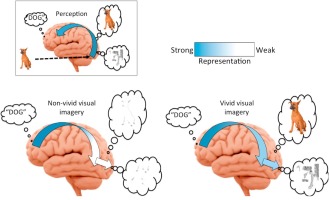
<p>They help represent the<u><mark data-color="#efe3fd" style="background-color: rgb(239, 227, 253); color: inherit;"> spatial layout of an environment.</mark></u></p>
28
New cards

Memory Consolidation

The process through which newly formed memories become more stable and resistant to disruption. (New memory → Consolidation → More stable memory)
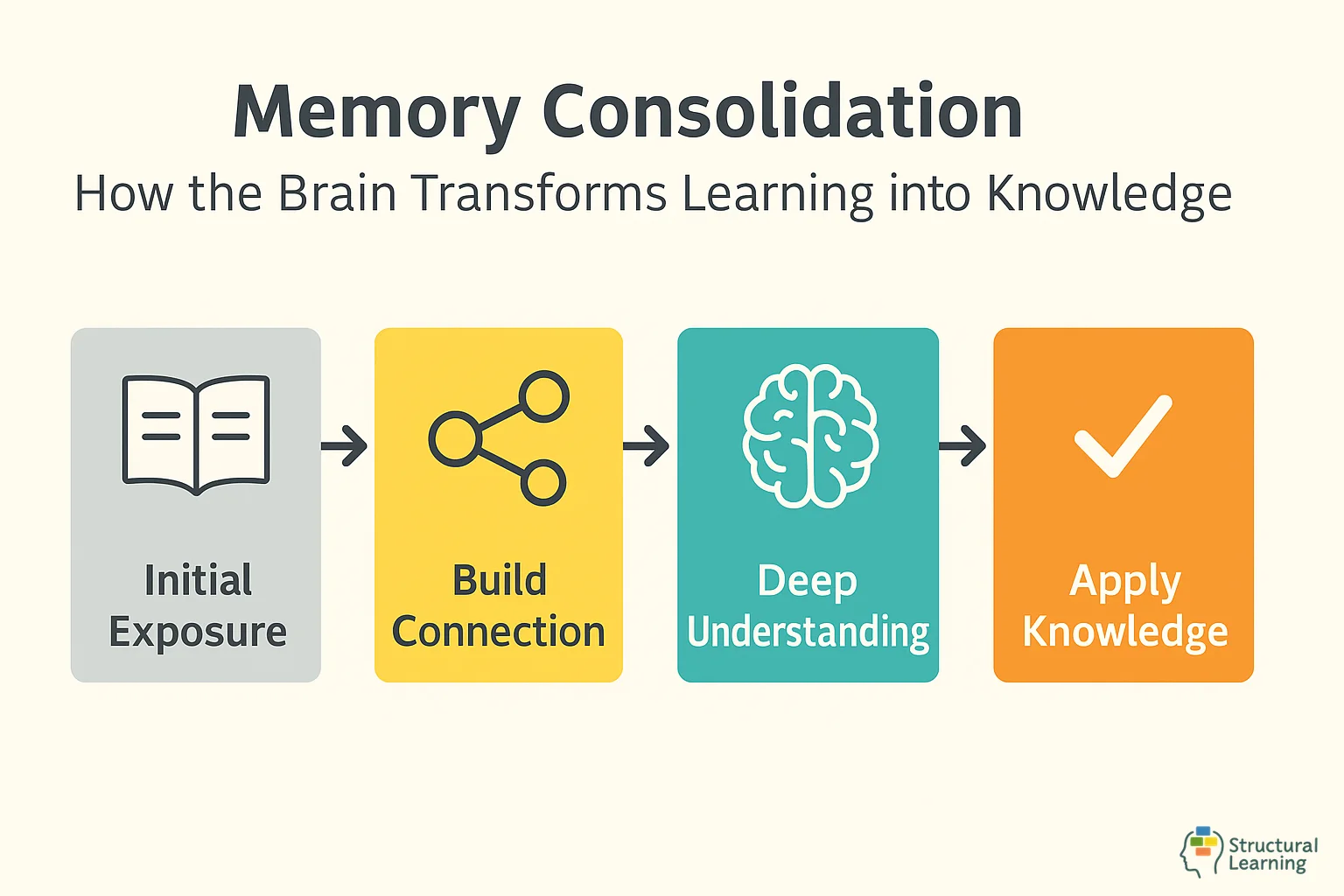
<p>The process through which<u><mark data-color="#eafce3" style="background-color: rgb(234, 252, 227); color: inherit;"> newly formed memories become more stable and resistant to disruption.</mark></u><strong> (New memory → Consolidation → More stable memory)</strong></p>
29
New cards

Standard Consolidation Theory

- New memories initially depend strongly on the hippocampus.

- Over time, memories become increasingly represented in the cortex.

- Older memories become less vulnerable to hippocampal damage.

- stabilizes new memories.
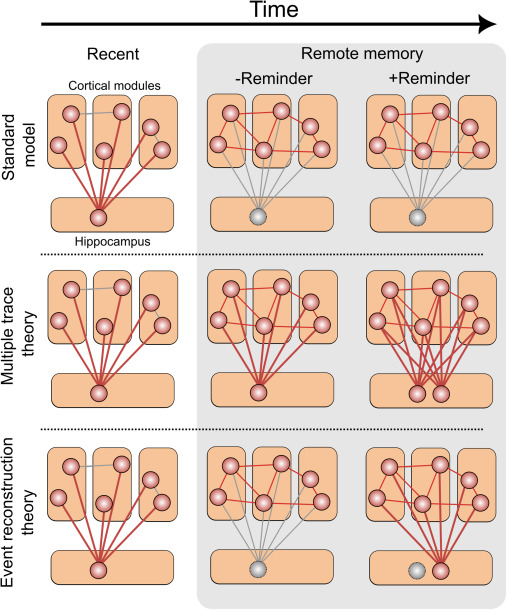
<p>- New memories initially <strong>depend strongly</strong> on the hippocampus.</p><p>- Over time, memories become increasingly represented in the cortex.</p><p>- <u><mark data-color="#e3e8fc" style="background-color: rgb(227, 232, 252); color: inherit;">Older memories become less vulnerable </mark></u>to hippocampal damage.</p><p>- stabilizes new memories.</p>
30
New cards

Reconsolidation

- When a stored memory is retrieved, it temporarily becomes unstable and is then stored again.

- During this period, the memory may be susceptible to disruption or modification.

- retrieved memories become temporarily unstable before being stored again.
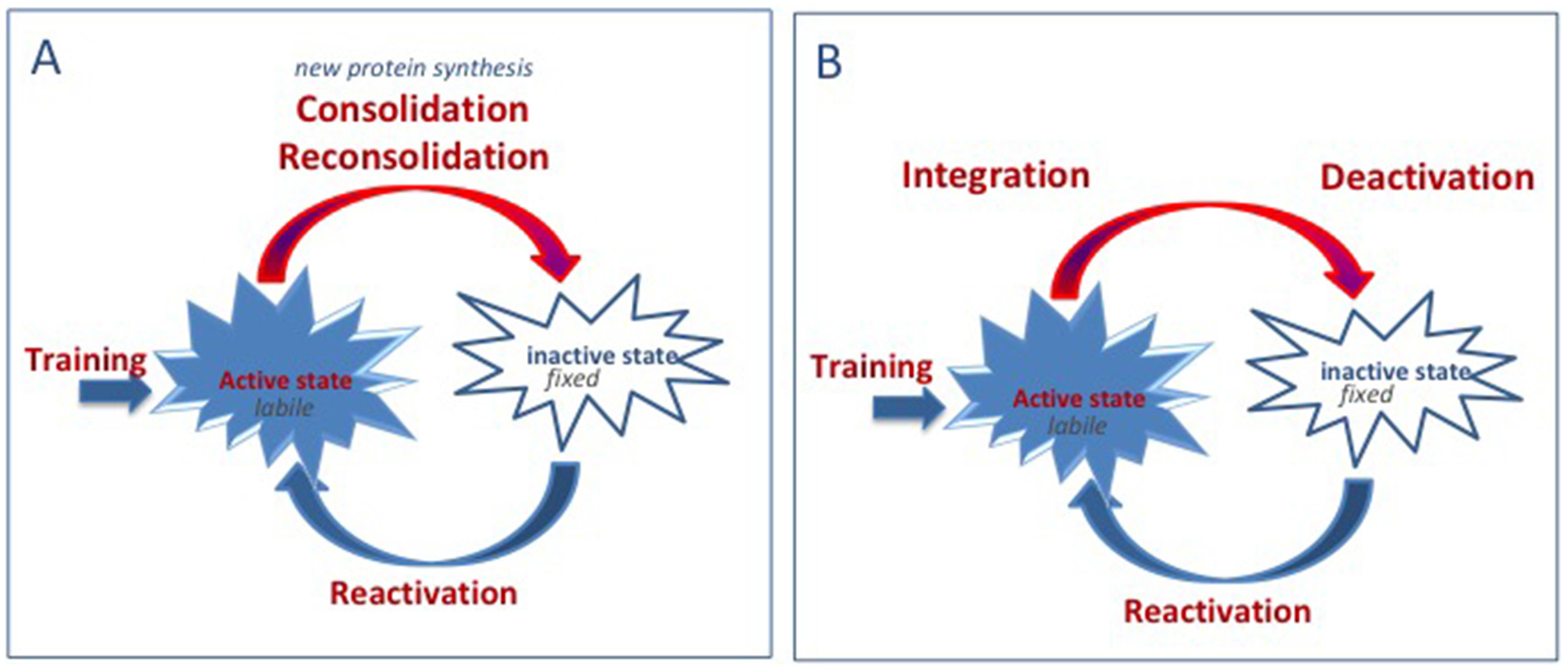
<p>- When a stored memory is retrieved, it <u><mark data-color="green" style="background-color: green; color: inherit;">temporarily becomes unstable and is then stored again.</mark></u></p><p>- During this period, the <u><mark data-color="#e2f6d7" style="background-color: rgb(226, 246, 215); color: inherit;">memory may be susceptible to disruption or modification.</mark></u></p><p>- retrieved memories become temporarily unstable before being stored again.</p>
31
New cards

Long-Term Potentiation (LTP)

- A long-lasting strengthening of communication between neurons.

- It provides an important model for understanding how learning can produce lasting changes in the nervous system.

- It illustrates how neural connections can strengthen during learning and memory.

<p>- A <u><mark data-color="#fce5f5" style="background-color: rgb(252, 229, 245); color: inherit;">long-lasting strengthening of communication</mark></u> between neurons.</p><p>- It provides an important model for <u><mark data-color="#f7ecfb" style="background-color: rgb(247, 236, 251); color: inherit;">understanding how learning can produce lasting changes in the nervous system.</mark></u></p><p>- It illustrates how neural connections can strengthen during learning and memory.</p>
32
New cards

Hebbian Principle

Neurons that are repeatedly active together can develop stronger connections.
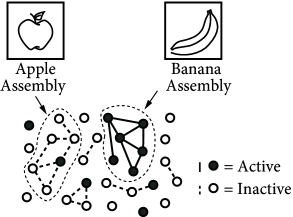
<p>Neurons that are <u><mark data-color="#f7f7de" style="background-color: rgb(247, 247, 222); color: inherit;">repeatedly active together can develop stronger connections.</mark></u></p>



