Procedures and Airport Operations
0.0(0)
Studied by 0 people Call Kai
 Learn
Learn Practice Test
 Spaced Repetition
 Match
Match Flashcards
 Knowt Play
Card Sorting
1/50

Earn XP
Description and Tags
Last updated 12:58 PM on 7/7/23
Name | Mastery | Learn | Test | Matching | Spaced | Call with Kai | Chat |
|---|
No analytics yet
Send a link to your students to track their progress
51 Terms
1
New cards
What is the maximum visibility for a pilot to receive a land and hold short clearance?
3 statue miles
2
New cards
During a night flight, you observe steady red and green lights ahead and at the same altitude. What is the general direction of the other aircraft?
The other aircraft is approaching head-on
3
New cards
A lighted heliport may be identified by a
green, yellow, and white rotating beacon
4
New cards
Who should not participate in the LAHSO program?
Student Pilots
5
New cards
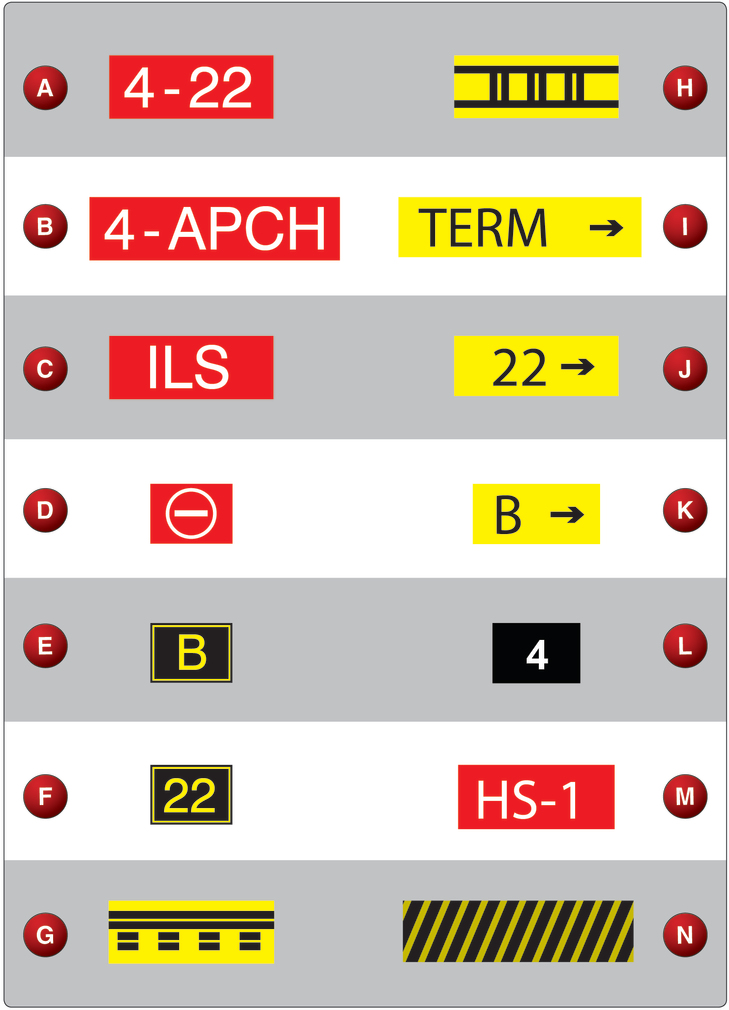
Marking G confirms the aircraft to be
on a runway about to clear
6
New cards
When approaching to land on a runway served by a visual approach slope indicator, the pilot shall maintain an attitude…
at or above the glide slope until a lower altitude is necessary for a safe landing
7
New cards
When operating in Class D airspace, each pilot of an aircraft approaching to land on a runway served by a visual approach slope indicator shall maintain an attitude…
at or above the glide slope until a lower altitude is necessary for a safe landing
8
New cards
Unless each occupant is provided with supplemental oxygen, no person may operate a civil aircraft in the US registry above a maximum cabin pressure altitude of
15,000 ft MSL
9
New cards
The yellow demarcation bar marking indicates
a runway with a displaced threshold that precedes the runway
10
New cards
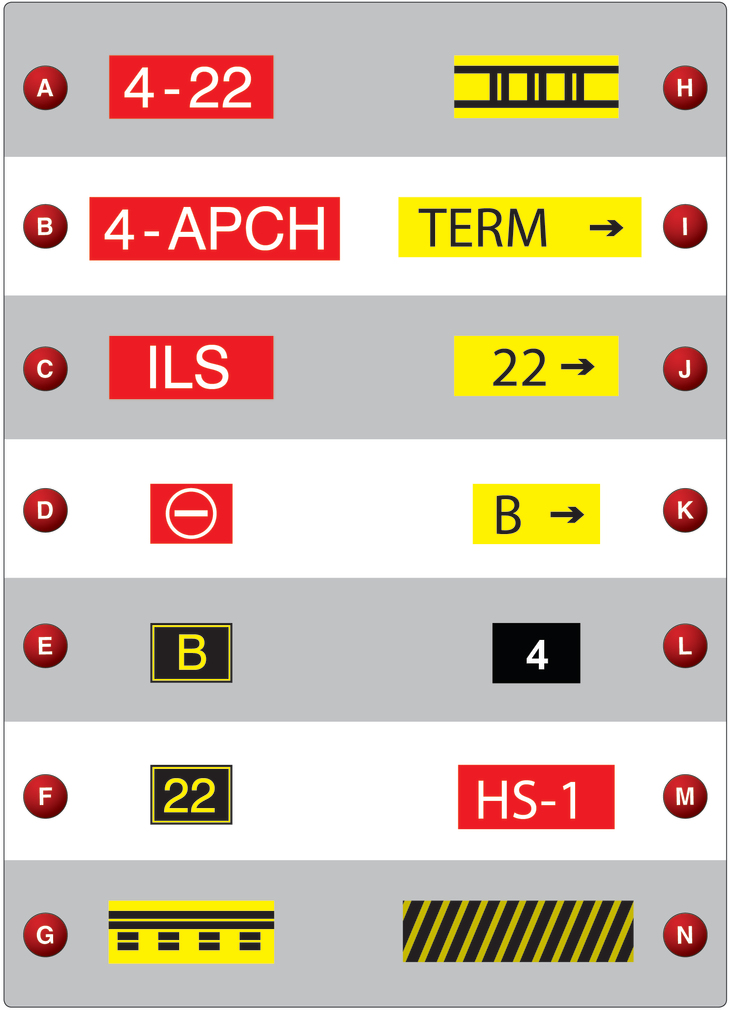
Which airport marking is a runway safety area/obstacle free zone boundary?
G
11
New cards
If a pilot experiences spatial disorientation during a flight in a restricted visibility condition, the best way to overcome the effect is to
rely upon the aircraft instrument indications
12
New cards
The numbers 8 and 26 on the approach ends of the runway indicate that the runway is oriented approximately
080 and 260 degrees magnetic
13
New cards
When approaching taxiway holding lines from the side with the continuous lines, the pilot should
not cross the lines without ATC clearance
14
New cards
The danger of spatial disorientation during flight in poor visual conditions may be reduced by
having faith in the instruments rather than taking a chance on the sensory organs
15
New cards
What is the most effective way to use the eyes during night flights?
Scan slowly to permit offcenter viewing
16
New cards
Except in Alaska, during what time period should lighted position lights be displayed on an aircraft?
Sunset to sunrise
17
New cards
What is the purpose of the no entry sign?
Identifies a paved area where aircraft are prohibited from entering
18
New cards
What is the one common factor which effects most preventable accidents?
Human error
19
New cards
Susceptibility to carbon monoxide poisoning increases as
altitude increases
20
New cards
During a night flight, you observe a steady white light and a flashing red light ahead and at the same altitude What is the general direction of the movement of the other aircraft?
The other aircraft is flying away from you
21
New cards
Most midair collision accidents occur during
clear days
22
New cards
Large accumulations of carbon monoxide result in
loss of muscular power
23
New cards
A military air station can be identified by a rotating beacon that emits
two quick white flashes between green flashes
24
New cards
When should pilots decline a land and hold short clearance?
When it will compromise safety
25
New cards
To minimize the side loads placed on the landing gear during touchdown, the pilots should keep the
longitudinal axis of the aircraft parallel to the direction of its motion
26
New cards
Information concerning parachute jumping sites may be found in the
Chart Supplements U.S.
27
New cards
Who has final authority to accept or decline any land and hold short clearance?
Pilot-in-command
28
New cards
Airport taxiway edge lights are identified at night by
blue omnidirectional lights
29
New cards
The recommended entry position to an airport traffic pattern is
to enter 45 degrees at the midpoint of the downwind leg at the traffic pattern altitude
30
New cards
How can you determine if another aircraft is on a collision course with your aircraft?
There will be no apparent relative motion between your aircraft and the other aircraft
31
New cards
When operating an aircraft at cabin pressure altitudes above 12,500 feet MSL and up to and including 14,000 feet MSL, supplemental oxygen shall be used during
that flight time in excess of 30 minutes at those altitudes
32
New cards
A lack of orientation with regard to the position, attitude, or movement of the aircraft in space is defined as
spatial disorientation
33
New cards
What is the purpose of the runway/runway hold position sign?
Denotes intersecting runways
34
New cards
When turning onto a taxiway from another taxiway, what is the purpose of the taxiway directional sign?
Indicates designation and direction of taxiway leading out of an intersection
35
New cards
When taxiing with strong quartering tailwinds, which aileron positions should be used?
Aileron down on the side from which the wind in blowing
36
New cards
To set the high intensity runway lights on medium intensity, the pilot should click the microphone seven times, and then click it
five times within five seconds
37
New cards
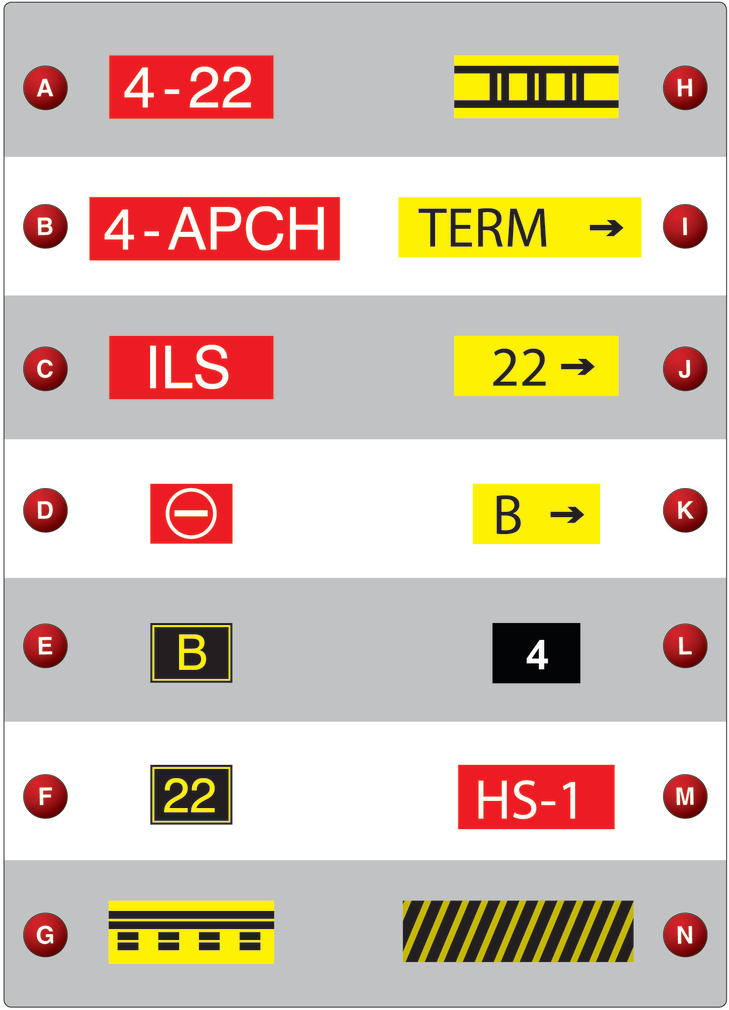
A left turn at the intersection depicting sign A would place the aircraft
ready for Runway 22 intersection takeoff
38
New cards
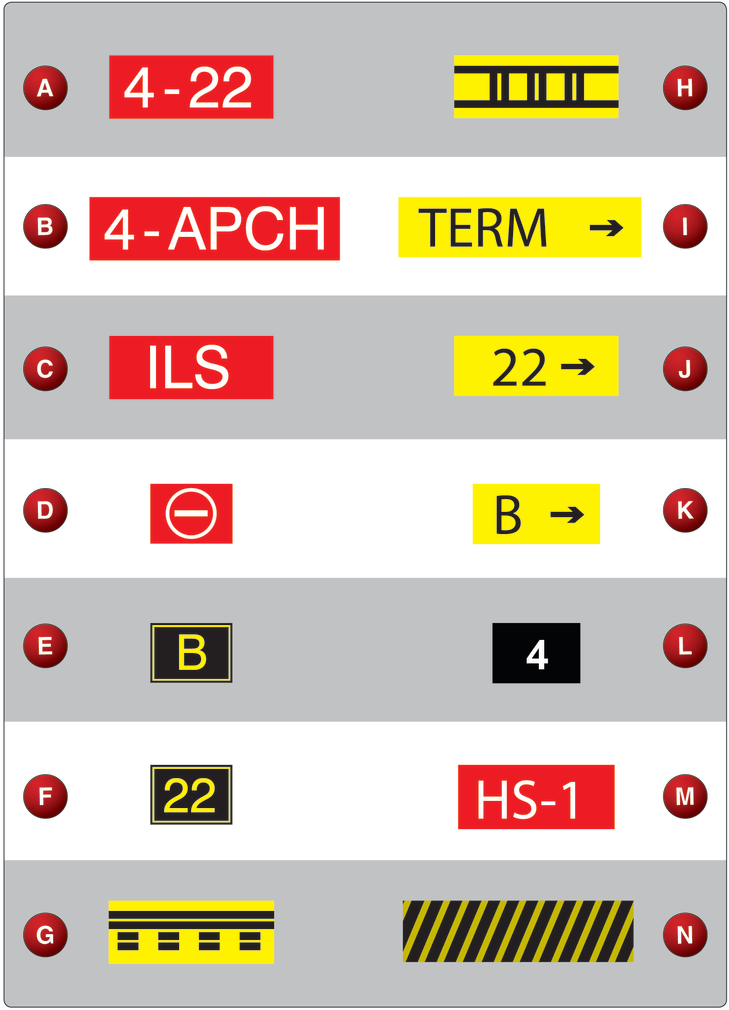
Sign F confirms your position on
Runway 22
39
New cards
How can a military airport be identified at night?
Dual peaked (two quick) white flashes between green flashes
40
New cards
Prior to starting each maneuver, pilots should
visually scan the entire area for collision avoidance
41
New cards
An airport’s rotating beacon operated during daylight hours indicates
that weather at the airport located in Class D airspace is below basic VFR weather minimums
42
New cards
Pilots are encouraged to turn on their landing lights when operating below 10,000 feet, day or night, and when operating within
10 miles of any airport
43
New cards
What is it often called when a pilot pushes his or her capabilities and the aircraft’s limits by trying to maintain visual contact with the terrain in low visibility and ceiling
Scud running
44
New cards
What effect does haze have on the ability to see traffic or terrain features during flight?
All traffic or terrain features appear to be farther away than their actual distance
45
New cards
During a night flight, you observe a steady red light and a flashing red light ahead and at the same altitude. What is the general direction of movement of the other aircraft?
The other aircraft is crossing to the left
46
New cards
A slightly high glide slope indication from a precision approach path indicator is
three white lights and one red light
47
New cards
What does the outbound destination sign identify?
Identifies direction to take-off runways
48
New cards
The Aeronautical Information Manual (AIM) specifically encourages pilots to turn on their landing lights when operating below 10,000 feet, day or night, and especially when operating
in conditions of reduced visibility
49
New cards
A below glide slope indication from a pulsating approach slope indicator is a
pulsating red light
50
New cards
Which aileron positions should a pilot generally use when taxiing in strong quartering headwinds?
Aileron up on the side from which the wind is blowing
51
New cards
Where is the Available Landing Distance data published for an airport that utilizes Land and Hold Short Operations?
Special Notices section of the Chart Supplements U.S.