Y7 - Science - Chemistry
 Call Kai
 Learn
Learn Practice Test
 Spaced Repetition
 Match
Match Flashcards
 Knowt Play
1/60

Name | Mastery | Learn | Test | Matching | Spaced | Call with Kai | Chat |
|---|
No analytics yet
Send a link to your students to track their progress
61 Terms
Matter
The material from which things are made up from. Takes up space. Can exist as a solid, liquid, or gas
Solid
Have a fixed volume and cannot be compressed.
Liquid
Has a fixed volume, but doesn’t have a fixed shape
Gas
No fixed volume or shape.
Particle Model
All matter is made up of tiny particles.
The particles of matter are always moving.
The particles have spaces between them.
Adding heat to matter makes the particles move faster.
Evaporation
Liquid turns into a gas. Increase in temperature.
Condensation
Gas turns into liquid. Decrease in temperature.
Melting
Solid turns into liquid. Increase in temperature.
Freezing
Liquid turns into solid. Decrease in temperature.
Density
The measurement of quantity or mass per unit of volume in a particular substance.
Mass ➗ Volume
Melting Point
The temperature at which a given solid will melt
Compressibility
The capacity of something to be flattened or reduced in size by pressure.
Boiling point
The temperature at which a liquid changes into a gas
Pure substance
Made from only one chemical element or one compound.
Sublimation
When a solid turns into a gas
Deposition
When a gas turns into a solid
Atom
The basic building blocks of matter that retains its properties
Element
Any substance that cannot be decomposed into simpler substances by ordinary chemical processes. The fundamental materials of which all matter is composed.
Compound
A material formed by chemically bonding two or more different chemical elements
Impure Substance
A substance made from more than one element or one compound
Pure substance
Made up of only one type of particle (atom, molecule, or compound)
Proton
A subatomic particle. Has a positive electric charge. Found in the nucleus.
Neutron
A subatomic particle. A neutral (no charge) electric charge. Found in the nucleus of all atoms except Hydrogen.
Nucleus (of an atom)
Consisting of protons and neutrons at the center of an atom.
The nucleus is positively charged, due to the fact that there are no electrons in it.
Electron
Subatomic particle. Negative electric charge. Found orbiting the nucleus in shells. Add very little mass to the atom.
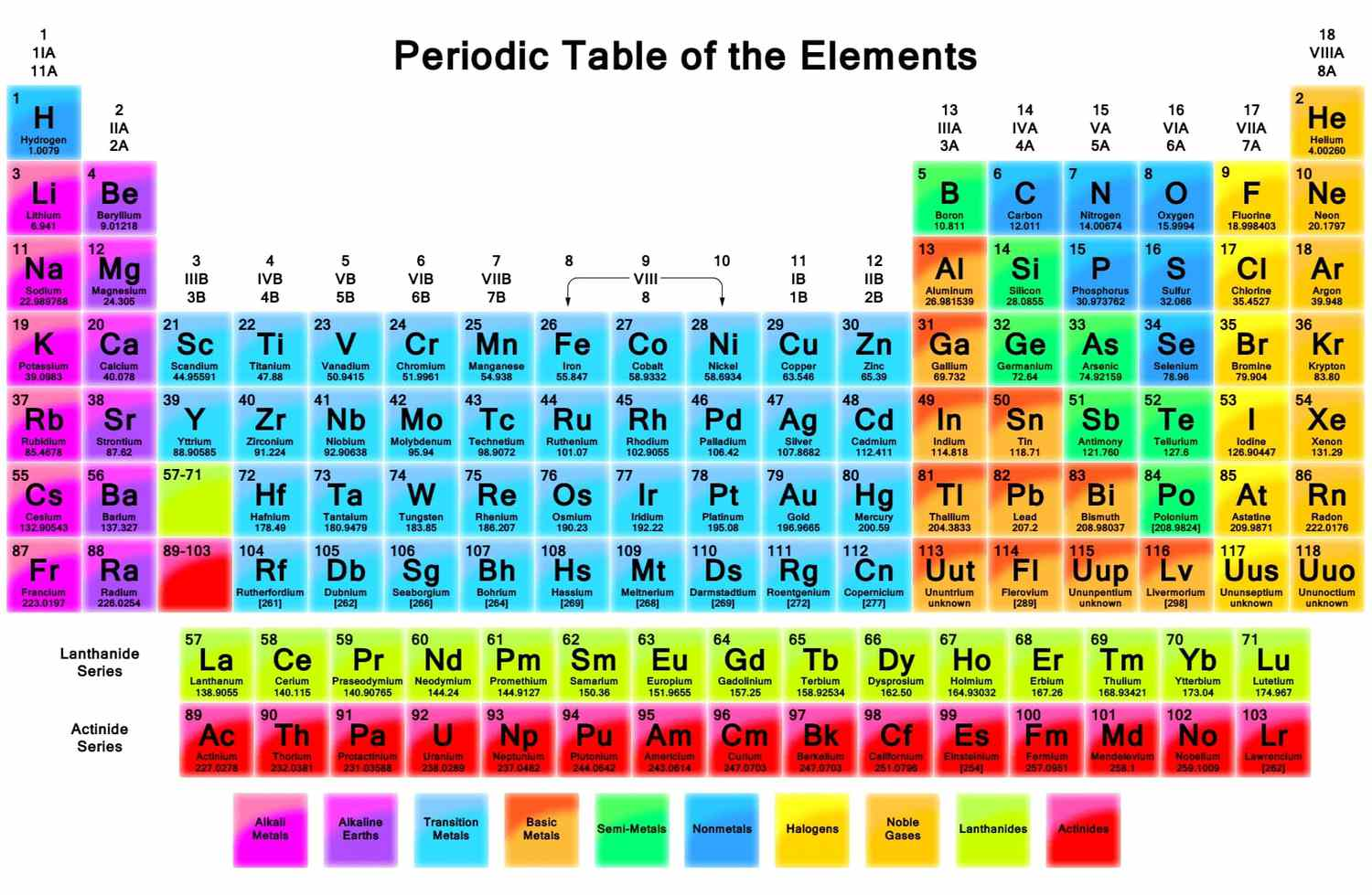
The Periodic Table
A display of elements ordered according to their atomic number. It orders elements into rows and columns based on their properties.
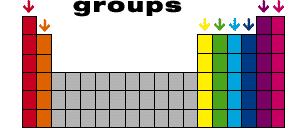
Groups
Vertical columns numbered 1-18 of the periodic table. Helps to determine the number of valence electrons of an element’s atom.
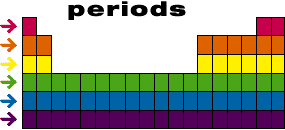
Periods
The horizontal rows of elements. Represent the number of electron shells an atom has.
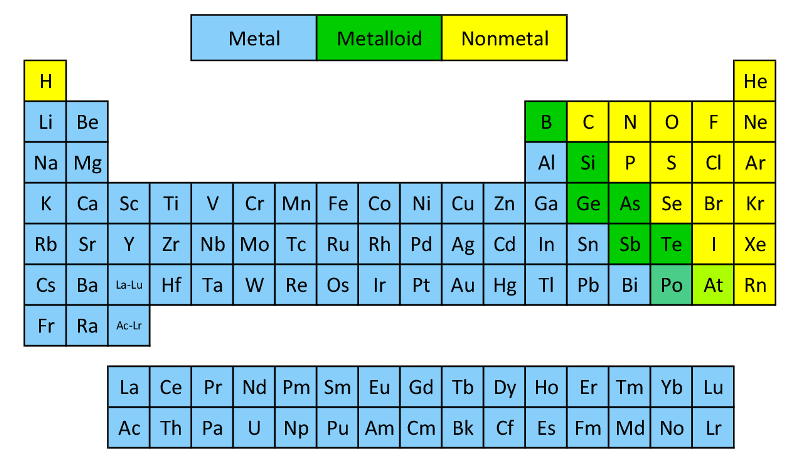
Metals
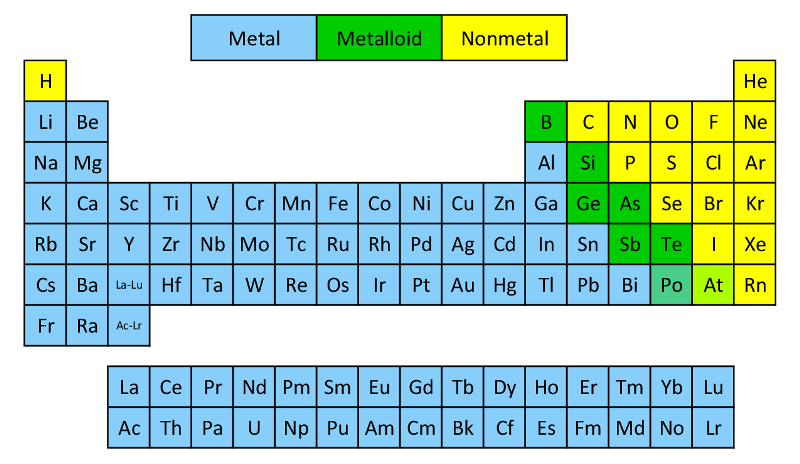
Found on the left-hand side of the Periodic table and account for the majority of the known elements.
Having a luster (shiny).
Being malleable in their solid state. In other words they can be bent into shape. Gold is the most malleable of all the metals
Ductile – can be drawn into a wire. Silver is one of the most ductile metals
Able to conduct heat and electricity
Most metal’s have high boiling points
Usually more dense than non-metals
(Most are) Silvery in colour, although some like gold, cesium and copper are coloured.
Non-Metals
Found on the far right side of the Periodic table. Most are either gases or solid, with the exception of bromine, which is a liquid.
They are:
Dull (not shiny)
Brittle (therefore can’t bend and will break instead)
Poor conductors of heat and electricity
Lower melting and boiling points than metals
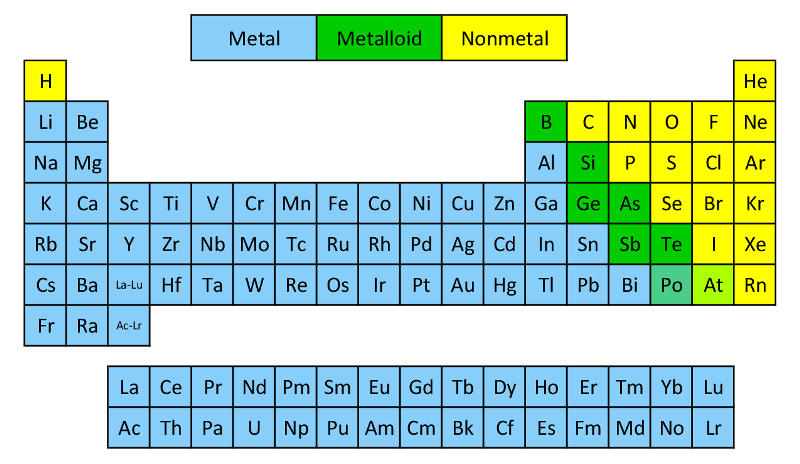
Metalloids
Small group of elements that are found in between the metals and non-metals.
Dull or lustrous
Semiconductors of electricity
Brittle
They are Silicon and Boron.
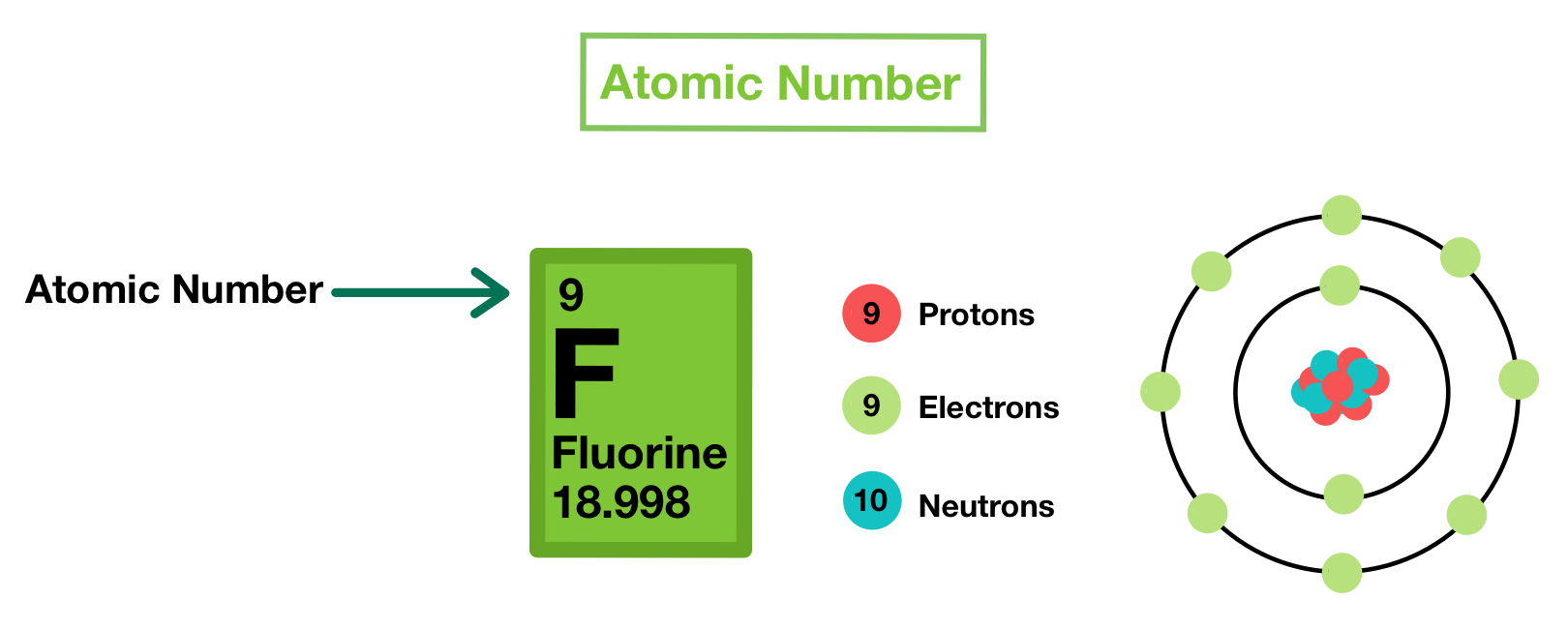
Atomic Number
Represents the number of protons that element has in its nucleus.
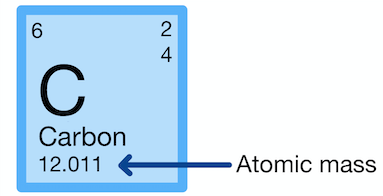
Atomic mass
The average mass of the atom’s element measured in atomic mass unit (amu).
Protons + Neutrons
Mixture
Otherwise known as an impure substance, it contains two or more substances that are not chemically combined.
Sediment
Formed at the bottom of a liquid from the process in which insoluble particles separate from that liquid because of gravity.
Solution
Homogeneous mixture of one or more solutes dissolved in a solvent.
Solute
The substance that dissolves in a solvent to produce a homogeneous mixture.
E.g. The salt being placed in water to make salt water
Solvent
Any substance, usually liquid, capable of dissolving one or several substances, thus creating a solution.
Solubility
Defined as the maximum amount of a substance that will dissolve in a given amount of solvent at a specified temperature.
Soluble
When it is capable of being dissolved in some solvent (usually water)
Insoluble Substance
A substance (solid) that will not dissolve in a solvent even after mixing
Concentration
The amount of a substance in a given amount of another substance
Dilute (solution)
Which there is a relatively small amount of solute dissolved in the solution
Supersaturated solution
A solution that contains more than the maximum amount of solute that is capable of being dissolved at a given temperature.
Filtration
Can be used to separate insoluble solids from a liquid. It uses a filter. The holes in a filter are usually too small to see, but solid pieces get trapped whereas the liquid and anything soluble pass through.
Separates based on differences in particle size and solubility.
Decanting
A simple separation technique used to separate a liquid (and anything dissolved in it) from an insoluble solid – meaning a solid that doesn't dissolve.
Useful for separating suspension mixtures.
Gravity causes the solid particles to settle at the bottom, forming sediment. Solid at bottom, liquid at top.
Relies on difference in density.
Magnetism / Magnetic Separation
Used to separate mixtures where one part is magnetic and the other is not. Uses a magnet to attract magnetic materials, while the non-magnetic parts stay behind.
Doesn’t require any heating or chemicals, just a magnet.
E.g. Recycling: Removing steel cans from a pile of mixed waste. Mining: Separating magnetic iron ore from rock.
Distillation
A separation technique used to separate mixtures based on differences in boiling points. It involves heating a liquid to create vapour, which is then condensed back into liquid to collect the distillate.
Centrifuging
A method used to separate mixtures with different densities by spinning them very quickly around a fixed point. This process creates a strong centrifugal force that pushes denser materials outward, separating them from lighter substances.
e.g. Washing machines.
Evaporation
The process where liquid turns into a vapour.
Separate soluble solids from the solvent they have dissolved in.
Relies on boiling point.
Crystallisation
A solution heated very gently. As the solution is heated, some of the solvent evaporates. The remaining solution becomes more concentrated. Once hot, this concentrated solution is then removed from the heat and allowed to cool. As the solution cools, solid crystals will form.
Separate soluble solids from the solvent they have dissolved in.
Relies on solubility and boiling point.
Hand Picking
The separation by hand of desired particles from a mixture containing undesired particles.
Winnowing
A separation method that is designed to remove lighter particles while maintaining heavier ones. It is commonly used in separating seeds from their outer shells or coatings (husks).
Yandying
Similar to winnowing. The yandy is held in the hand, raised in one corner, and then gently shaken back and forth forcing the smaller and denser particles to collect at the bottom while the larger and less dense particles remain higher up.
Sieving/Filtering
Pushing a mixture through a physical barrier with small holes or gaps to separate the larger particles from the smaller ones.
Cold-pressing
A separation technique that uses pressure to extract oils from plant matter. No heat is used in the process.
Distillation
A process that separates a mixture of liquids based on their differences in boiling points.
Residue
The solid or insoluble component left in the filter after the process of filtration.
Separation Techniques at Home
Using sieves to separate pasta from water
Decanting oil from vinegar in salad dressings
Filtering tea leaves from brewed tea
Evaporating water from clothes that dry in the sun
Desalination plants
Turn seawater into fresh water by using thermal desalination, or membrane desalination. In thermal desalination, they use distillation – evaporate the water, then condense the water vapor. There are two types of membrane desalination: reverse osmosis, and electro-dialysis.
Possible environmental impacts can on marine life is that tiny micro-organisms, such as planktons, can get sucked into the machine too.
Reverse osmosis
Seawater is pushed through, with high pressure, a special filter paper, that can catch salt and other small things. In electro-dialysis, salt from the seawater is removed with electricity.