Ch 1 Intro to Biology, Introduction to Biology, Intro to Biology, Introduction to Biology: Themes, Cell Structure, Evolution, and Scientific Method
 Call Kai
 Learn
Learn Practice Test
 Spaced Repetition
 Match
Match Flashcards
 Knowt Play
1/138

There's no tags or description
Looks like no tags are added yet.
Name | Mastery | Learn | Test | Matching | Spaced | Call with Kai | Chat |
|---|
No analytics yet
Send a link to your students to track their progress
139 Terms
Biology
The study of life
Organism
An individual living thing
Biodiversity
The number of different species in an area
Species
A group of similar organisms that can breed and produce fertile offspring.
Cell
The basic unit of structure and function in living things
Homeostasis
Process by which organisms maintain a relatively stable internal environment
Evolution
Change in the genetic makeup of a population over time
Adaptation
A trait that helps an organism survive and reproduce
Observation
Information obtained through the senses.
Hypothesis
An educated answer to a scientific question
Data
numerical or descriptive evidence collected during scientific experiments
Scientific Method
A logical, systematic approach to the solution of a scientific problem
Scientific theory
A well-tested explanation for a wide range of observations or experimental results.
Independent variable
The ONE variable that is changed during an experiment
Dependent variable
The variable that is measured during an experiment
Constant
The conditions that do not change during an experiment
DNA
A molecule containing the genetic information in all cells.
Metabolism
All of the chemical reactions that occur within an organism
All organisms
must respond to their environment and use energy to survive
science
How we study and understand the world around us. It can be both a noun and a verb.
biologist
Scientists that study living organisms.
biological
Anything related to living things.
inquiry
The process of questioning the world around us in order to better understand it. Based on two premises: that the natural world is predictable and that we can understand it through careful study.
hypothesis
A proposed solution to a problem, based on careful study and observations. Must include a "because" component. NOT A GUESS.
independent variable
The only thing in an experiment you change.
dependent variable
Your data. It changes as a result of the independent variable.
control
Factors that must remain the SAME throughout the experiment to ensure the results are valid.
qualitative
Information about qualities, cannot be described using numbers.
quantitative
Information about amount, usually expressed using numbers or values.
life
the condition that distinguishes animals and plants from nonliving matter because they possess all eight characteristics
cell
The basic unit of life.
autotroph
An organism that can make its own food from non-living elements via photosynthesis or chemosynthesis.
heterotroph
An organism that needs to consume other living things for survival.
species
A group of organisms that are closely related enough to mate and produce fertile offspring.
multicellular
An organism made up of many cells
unicellular
An organism made up of only one cell.
Science
A way of learning about the natural world

Hypothesis
An educated guess

Observation
the act of viewing and knowing characteristics of objects or events
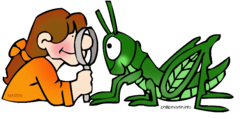
Scientific investigation
a plan for asking questions and testing possible answers.
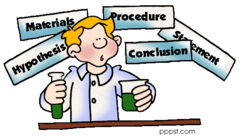
Scientific theory
explanation for a large number of findings in the natural world

Model
A representation of an object or event
Dependent variable
a variable (often denoted by y ) whose value depends on that of another.

Independent variable
variable that affects the manipulated variable, I change

experiment
An organized procedure to study something under controlled conditions
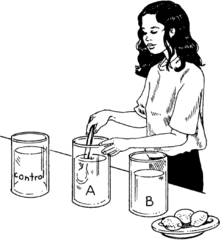
Scientific law
a statement that summarizes a pattern found in nature

Evidence
Collected body of data from observations and experiments

Homeostasis
process by which organisms maintain a relatively stable internal environment
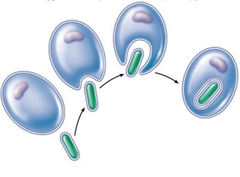
cell theory
all living things are composed of cells
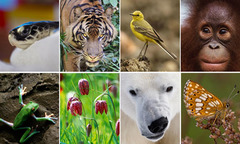
community
All the different populations that live together in an area

biome
A group of ecosystems that share similar climates and typical organisms

biodiversity
variety of life within an area
tissue
A group of similar cells that perform the same function.

cell
Basic unit of life

biosphere
part of Earth in which life exists including land, water, and air or atmosphere

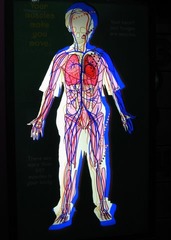
organ system
a group of organs that work together to perform body functions
population
group of individuals of the same species that live in the same area

organ
A structure in the body that is composed of tissue
ecosystem
all the organisms that live in a place, together with their nonliving environment

organism
An individual living thing
Bias
is the assumption that a theory is true or false without evidence one way or another, often on political or ideological grounds.
What is biology?
The study of life, encompassing a broad scope from sub-microscopic to global biosphere.
What are the two levels of organization in living organisms?
Cellular level and entire organismal level.
What are the two types of reproduction?
Sexual reproduction (involving DNA from two or more parents) and asexual reproduction (involving genetic material from one parent).
What is the difference between growth and development?
Growth is the increase in mass and accumulation of new substances, while development refers to changes in body form or proportions over time.
What is energy utilization in biological systems?
The use of ATP as the universal molecule of energy for cellular and organismal activities.
Define homeostasis.
The maintenance of stable internal conditions while environmental conditions fluctuate.
What is evolutionary adaptation?
The process by which living organisms undergo evolution over time.
What is the structural hierarchy of life?
A system where each level builds into the next, from sub-atomic particles to the biosphere.
What are the major categories of cells?
Prokaryotic cells (small, lacking organelles) and eukaryotic cells (larger, with organelles).
Who coined the term 'cell'?
Robert Hooke, who viewed cork microscopically and likened it to the cells of monks.
What are the three points of the Cell Theory?
1. All living things are composed of cells. 2. The cell is the basic unit of life. 3. All cells come from pre-existing cells.

What is DNA?
The molecule that provides biological instructions for the complex structure of an organism.
What are the components of a nucleotide?
A nucleotide consists of a pentose sugar, a phosphate group, and nitrogen bases.

What year did Watson and Crick discover the structure of DNA?
1953.

What is the significance of the year 1962 in genetics?
Watson and Crick won the Nobel Prize in Medicine for their discovery of DNA.
What is a biome?
A broad geographical area characterized by a particular vegetation type.
Give an example of a biome.
Tundra, desert, tropical rainforest, or Eastern Deciduous Forest.
What is the role of ATP in living organisms?
ATP serves as the universal energy molecule for cellular activities.
What is irritability in biological terms?
The ability of an organism to respond to external and internal stimuli.
What is the controversy surrounding viruses?
Viruses only show characteristics of life when parasitizing living cells, raising questions about whether they are truly alive.

What are the domains of life?
Bacteria, Archaebacteria (Archaea), and Eukarya.
What is the significance of the year 1987 in forensics?
The first use of DNA in forensics occurred in England.
What are the two major types of stimuli that organisms respond to?
External stimuli (like temperature and light) and internal stimuli (like hunger and thirst).
What is the relationship between structure and function in biology?
There is a correlation where the structure of biological components relates directly to their function.
What is the concept of 'unity vs. diversity' in biology?
It refers to the common characteristics shared by all living organisms despite their diversity.
What is the scientific process?
A systematic approach to understanding the natural world through observation, experimentation, and analysis.
What structure in DNA is compared to a staircase?
The hydrogen bonds linking nitrogen bases.
What forms the backbone of the DNA structure?
Alternating pentose sugar and phosphate groups.
How is DNA described in terms of its shape?
As a double helix.
What is the genetic code?
The description of DNA structure as presented in various organisms.
What are the four nitrogen bases found in DNA?
Adenine, Thymine, Cytosine, and Guanine.
What do inter-specific differences refer to?
Differences between different species.
What do intra-specific differences refer to?
Differences within a species.
What does the phrase 'form fits function' imply?
Biological structure offers clues as to how a structure works.
What is an example of a structure-function correlation in birds?
Wings with feathers and musculature enable bird flight.
What is the role of producers in an ecosystem?
They convert radiant energy to chemical energy (glucose).
What are primary consumers?
Herbivores or omnivores that consume producers.
What are secondary consumers?
Carnivores or omnivores that consume primary consumers.
What is the role of decomposers in an ecosystem?
They break down organic molecules, carried out by bacteria and fungi.