Unit 4 Section 14 - The Structure of DNA, DNA Replication, Transcription, Translation
 Call Kai
 Learn
Learn Practice Test
 Spaced Repetition
 Match
Match Flashcards
 Knowt Play
1/61

Earn XP
Description and Tags
covers the structure of DNA and the processes of DNA replication and protein synthesis. The central dogma of biology is DNA --> to RNA --> to proteins. This shows the flow of genetic information within the cell.
Name | Mastery | Learn | Test | Matching | Spaced | Call with Kai | Chat |
|---|
No analytics yet
Send a link to your students to track their progress
62 Terms
The building blocks of DNA are ____
nucleotides
The building blocks of DNA are nucleotides, which are made up of three parts:
deoxyribose, phosphate group, nitrogenous base
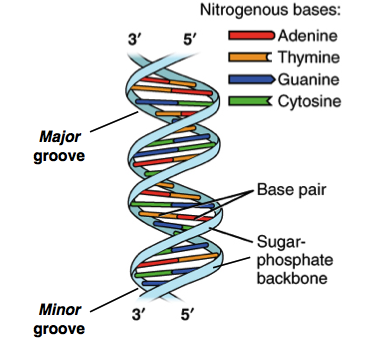
There are four types of nitrogenous bases in DNA. what are they?
Adenine (A) and guanine (G) are double-ringed purines, and cytosine (C) and thymine (T)
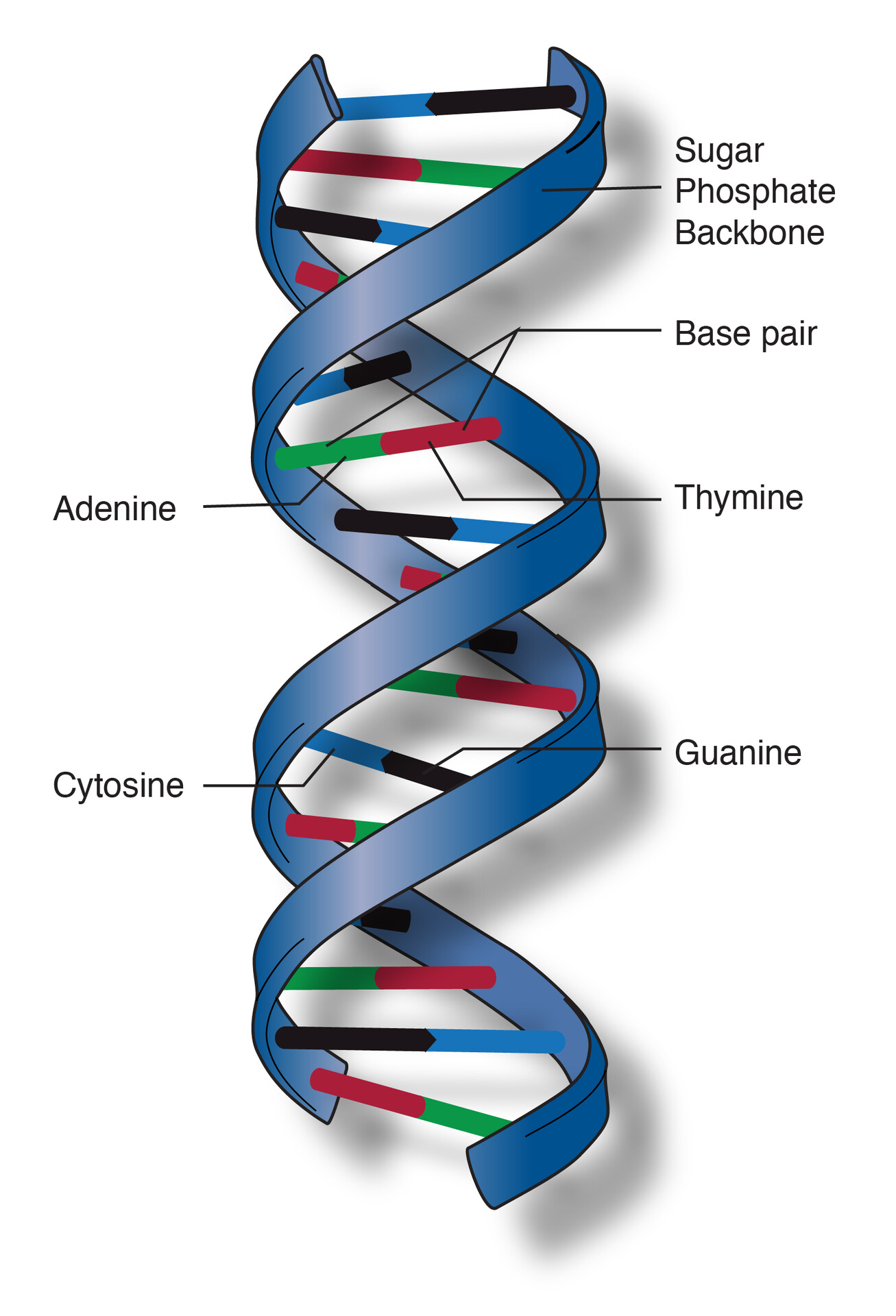
what is double helix?
DNA is made up of two strands that are twisted around each other to form a right-handed helix
what base pairs are contemplonary to eachother?
adenine and thymine are complementary base pairs, and cytosine and guanine are also complementary base pairs.
There is a second nucleic acid in all cells called ____
ribonucleic acid, or RNA
RNA is a..
polymer of nucleotides.
the 5 carbon sugar in RNA is..
Ribose
RNA nucleotides contain the nitrogenous bases:
adenine, cytosine, and guanine, and uracil
True or false: RNA exists as a single-stranded molecule rather than a double-stranded helix.
True
what are the sevral kinds of RNA?
include messenger RNA (mRNA), transfer RNA (tRNA), and ribosomal RNA (rRNA)
what do the diffrent kinds of RNA do?
They are involved in the production of proteins from the DNA code.
The replication of DNA occurs during the…
synthesis phase, or S phase, of the cell cycle, before the cell enters mitosis or meiosis.
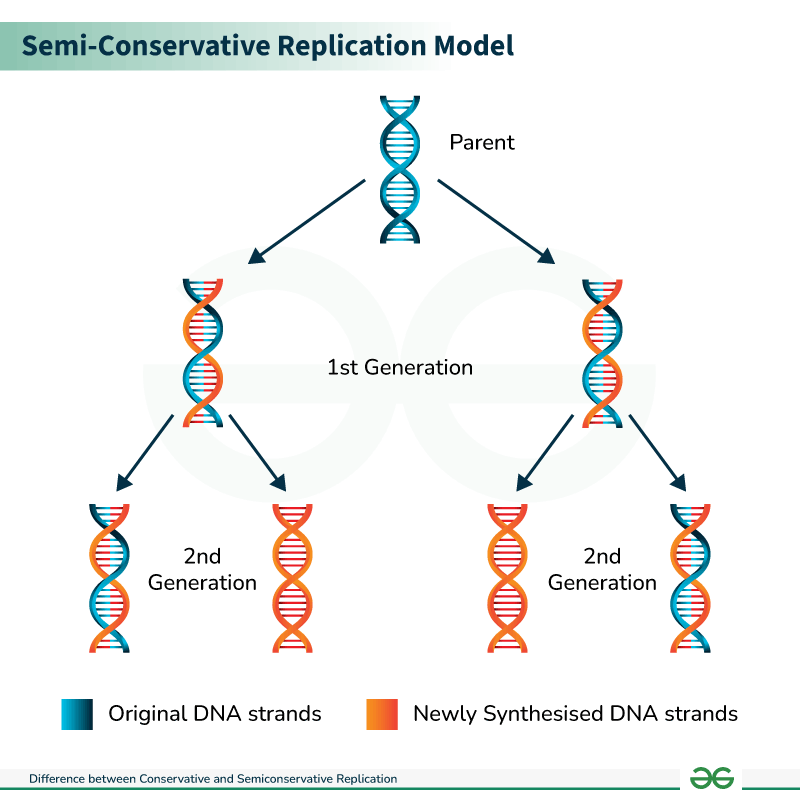
what is semiconservative replication.
the normal way DNA copies itself, where each new double helix contains one old parental strand and one brand-new strand
what are the three main stages of DNA replication?
initiation, elongation, and termination.
what happens during initiation?
specific proteins bind to the origin of replication, the double helix is unwound, and two replication forks are formed. This process prepares the DNA template so that copying enzymes can attach and begin building the new strands.
what is helicase
a vital motor protein and enzyme that uses energy to unwind and separate double-stranded nucleic acids into single strands
what are replication forks?
a Y-shaped structure where a cell unwinds and copies its DNA
whats happens during elongation?
an enzyme called DNA polymerase adds DNA nucleotides to the 3' end of the template. a molecule or chain grows longer: RNA is synthesized during transcription, or a polypeptide chain is built during translation
what is a leading strand?
he newly synthesized DNA strand that is built continuously in the same direction as the advancing replication fork. Because DNA polymerase can only build strands in the 5' to 3' direction
what are Okazaki fragments?
are short, newly made pieces of DNA formed on the lagging strand during DNA replication. They are important because DNA polymerase only builds DNA in one direction, forcing the cell to copy this strand in separate, short sections
what are lagging strand?
The strand with the Okazaki fragments
what is a DNA ligase?
a special type of enzyme that joins DNA strands together by making a chemical bond called a phosphodiester bond. It acts like molecular glue to fix broken DNA or connect different DNA pieces
what is a telomeres?
are the protective caps at the ends of our chromosomes, made of repetitive DNA sequences and proteins, that function much like the plastic tips on shoelaces to prevent genetic damage during cell division.
Telomerase is typically found to be active in…
in germ cells, adult stem cells, and some cancer cells.
What is the central dogma of biology?
DNA → RNA → Protein. DNA stores instructions, RNA copies them, and proteins are made from them.
What is transcription?
The process of copying DNA into mRNA.
What is translation?
The process of using mRNA to build a protein.
What is mRNA?
Messenger RNA that carries the genetic instructions from DNA to the ribosome.
Where does transcription occur in eukaryotic cells?
In the nucleus.
Where does transcription occur in prokaryotic cells?
In the cytoplasm.
What are the three stages of transcription?
Initiation, Elongation, Termination.
What happens during initiation?
DNA unwinds, forming a transcription bubble, and RNA polymerase binds to the promoter.
What is a promoter?
A DNA sequence where RNA polymerase binds to start transcription.
What enzyme builds mRNA?
RNA polymerase.
Which DNA strand is used to make mRNA?
The template strand.
What base replaces thymine in RNA?
Uracil (U).
What three changes happen to eukaryotic mRNA before it leaves the nucleus?
Add a 5' cap
Add a 3' poly-A tail
Remove introns (splicing)
What is the purpose of the 5' cap?
Protects mRNA and helps start translation.
What is the purpose of the poly-A tail?
Protects mRNA and helps it leave the nucleus.
What are introns?
Sections of RNA that are removed before making a protein.
What are exons?
The coding parts of a gene that remain and are translated into protein.
What is RNA splicing?
Removing introns and joining exons together.
What is translation?
The process of making a protein from mRNA.
Where does translation occur?
At the ribosome in the cytoplasm.
What organelle makes proteins?
The ribosome.
What are ribosomes made of?
rRNA and proteins.
What is tRNA?
Transfer RNA that brings amino acids to the ribosome.
What does "charging" a tRNA mean?
Attaching the correct amino acid to the tRNA.
What is a codon?
A group of 3 mRNA nucleotides that codes for one amino acid.
How many nucleotides make one codon?
3
How many amino acids are used to build proteins?
20
How many possible codons exist?
64
What is the start codon?
AUG (codes for methionine).
What amino acid does AUG code for?
Methionine
What are the three stop codons?
UAA, UAG, UGA
What happens during initiation? in protein synthesis
The ribosome attaches to mRNA and finds the AUG start codon.
What happens during elongation? in protein synthesis
tRNAs bring amino acids, and the protein chain grows.
What happens during termination? in protein synthesis
A stop codon is reached, the protein is released, and the ribosome comes apart.
What does theribosome A site do?
Accepts incoming tRNA carrying an amino acid.
What does the P site do?
Holds the growing protein chain.
What does the E site do?
Releases the empty tRNA.