Gaba-ergic agents
 Call Kai
 Learn
Learn Practice Test
 Spaced Repetition
 Match
Match Flashcards
 Knowt Play
1/11

There's no tags or description
Looks like no tags are added yet.
Name | Mastery | Learn | Test | Matching | Spaced | Call with Kai | Chat |
|---|
No analytics yet
Send a link to your students to track their progress
12 Terms
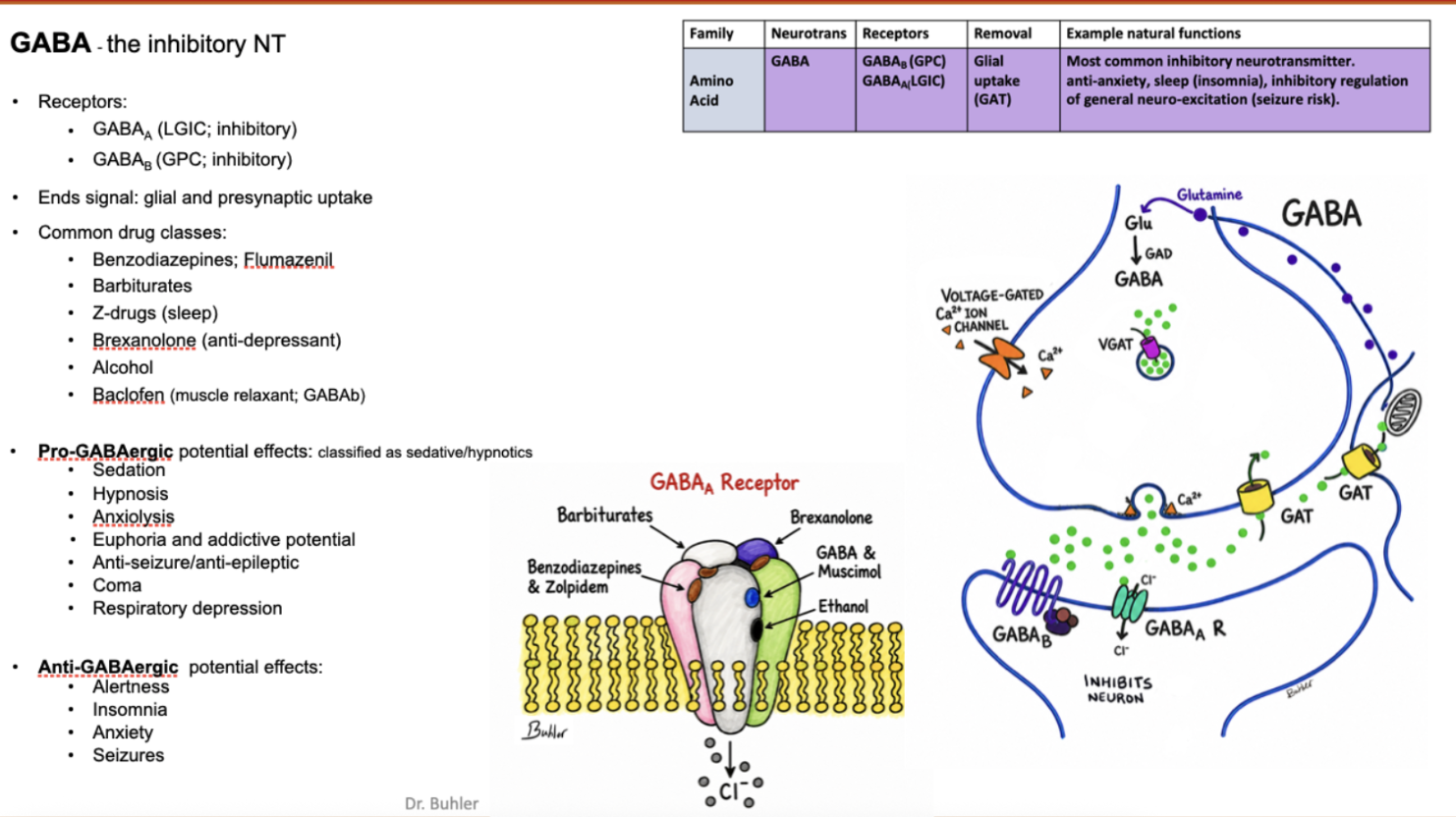
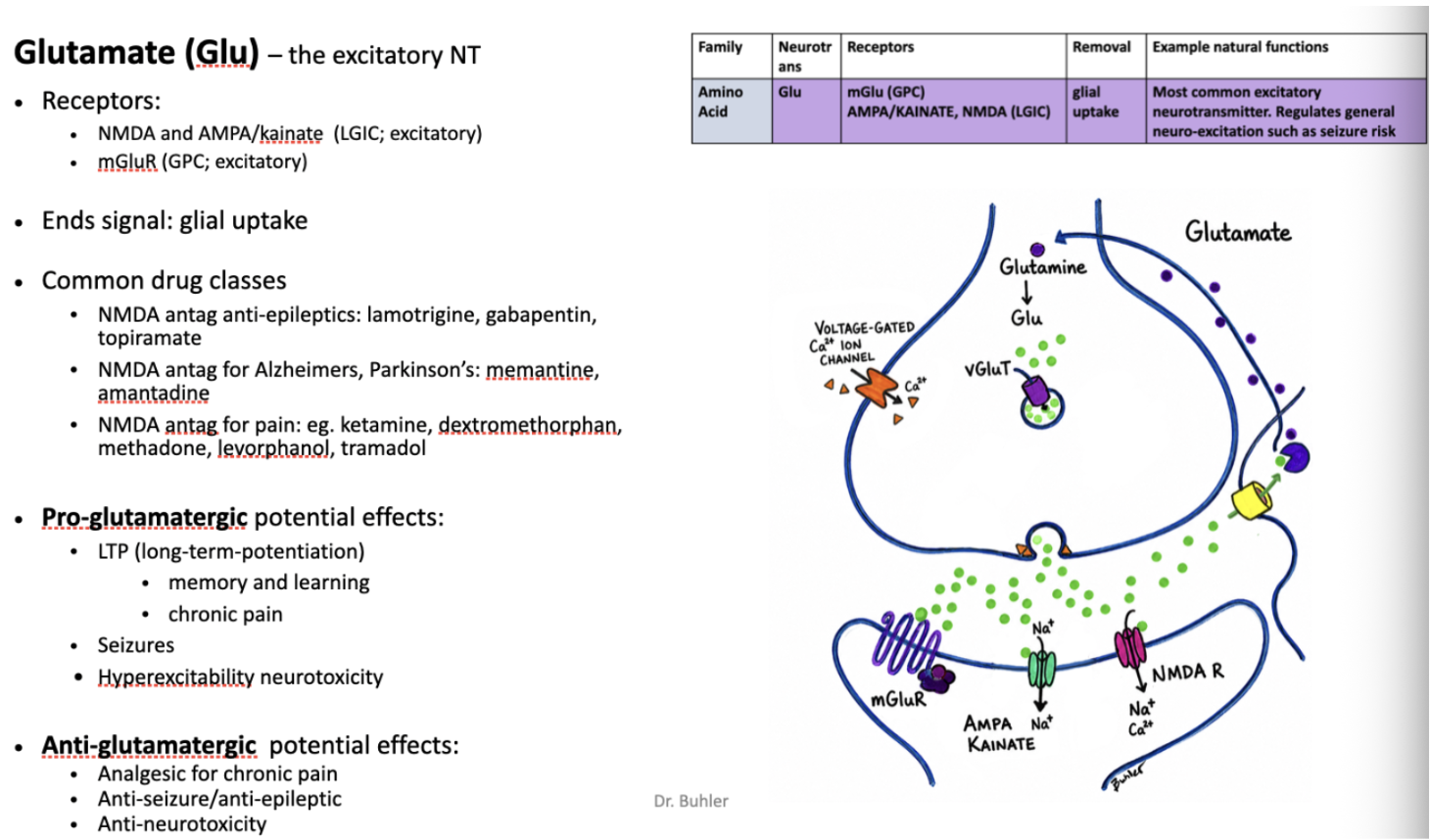
Sedative-hypnotics
Sedative - calming, etc
Hypnotic - sleep onset and maintenance
CNS depressants
Sedative/hypnotic class: benzodiazepines, barbiturates, Z-drugs, melatonin, orexin antagonists
Opioids
Alcohol
Trazodone
Antihistamines
Skeletal muscle relaxants
Antipsychotics
Mirtazapine

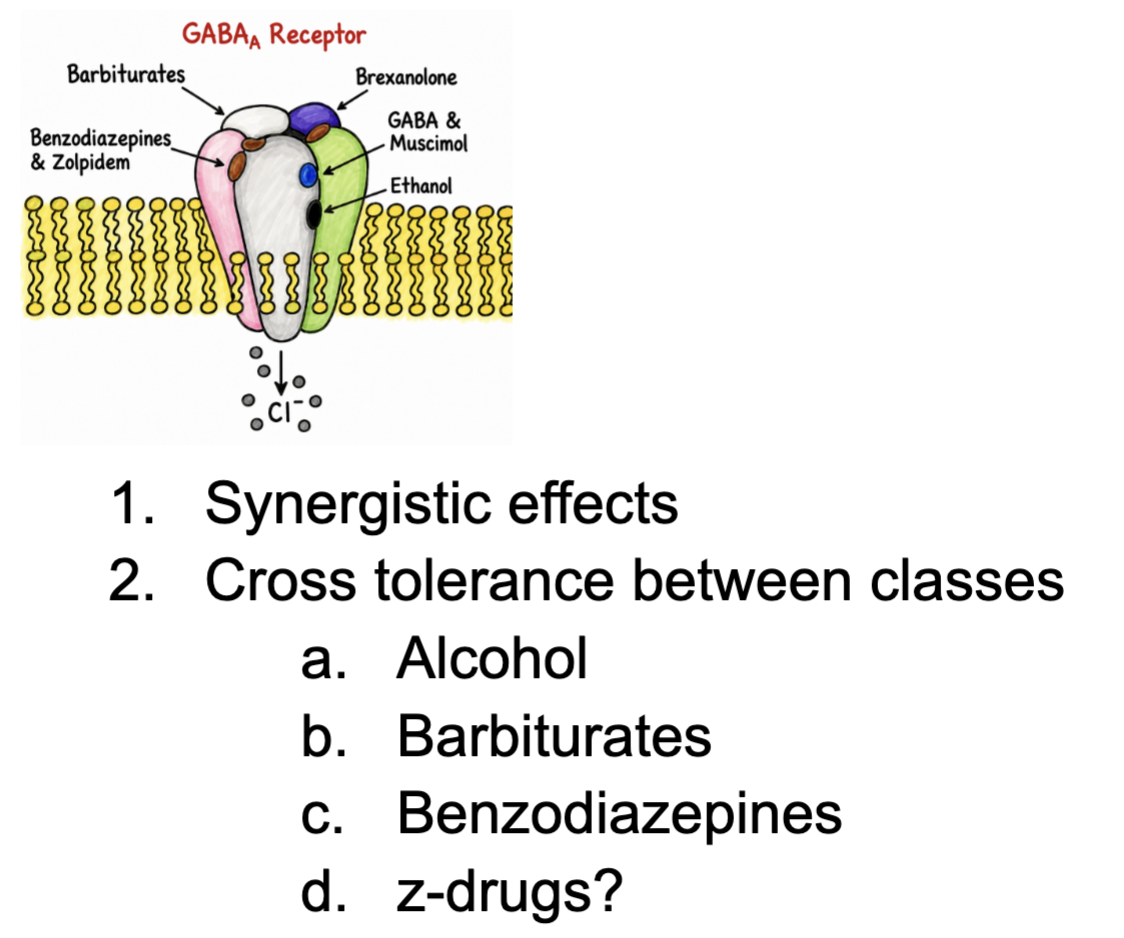
Drugs acting through same GABAA receptor
Benzodiazepines (sedative-hypnotics)
Sedative, euphoric, and hypnotic
Ceiling effect below lethal effects: low risk for death
Risk for addiction: indirect DA bump
MOAs:
Molecular: Allosteric potentiator at GABAA receptors
Cellular: Increase GABAA signaling in presence of GABA
Clinical: Increased hyperpolarization of neuron
Drugs: -azopam or - azolam
Temazepam (Restoril)
Lorazepam (Ativan)
Triazolam (Halcion)
Diazepam (Valium)
Alprazolam (Xanax)
Clonazepam (Klonopin)
Oxazepam (Serax)
Midazolam (Versed)
Because of their ceiling effect, benzos cannot cause maximum GABAergic effects and are low risk for lethal oversee when taken alone
Z-drugs or non benzodiazepine hypnotics
Structure unrelated to benzos but bind same site on receptor
Beneficial hypnotic mechanism:
Rapid onset of action, short half-life
More selective action to sleep/wake regions
Less sedation
Minor disruption of REM
MOAs:
Molecular: Allosteric potentiator of GABAA in sleep/wake regions
Cellular: Increase GABAA signaling in presence of GABA
Clinical: Increased hyperpolarization of neuron
Drugs:
Zolpidem (Ambien)
Eszopiclone (Lunesta)
Zaleplon (Sonata)
Starts with Z = ZZZZzzzzz for sleep!
Ambient noise
Luna = moon
Sonata = relaxing music
Benzodiazepine antagonist
Competitive antagonist of benzos/Z-drug, not of barbiturates
Rapid onset (1-2 minutes)
MOAs:
Molecular: Competitive antagonist at benzo/Z-drug site of GABAA
Cellular: Reverses benzos/Z-drugs without blocking normal GABA activity
Clinical: Return to normal neuronal activity
Drug: Flumazenil (Romazicon)
Barbiturates
Can directly activate GABAA receptor → lethal potential
Highly sedative and hypnotic
High risk for addiction: large indirect DA bump
MOAs:
Molecular: Agonist & allosteric potentiator GABAA
Cellular: Activates GABAA even in absence of GABA
Clinical: Hyperpolarization of neurons
Drugs:
Phenobarbital (Luminal)
Secobarbital (Seconal)
Pentobarbital (Nembutal)
Thiopental sodium
Methohexital
Non-GABA-ergic sedative/hypnotic
Melatonin receptor agonist
Contrast with Z-drugs
No action at GABA receptors
Induces normal sleep patterns
Ramelteon (Rozerem)
Recognize the dose-dependent effects of sedative/hypnotic CNS depressants and explain why fatal overdose does not occur with benzodiazepines alone.
CNS depression = CNS-mediated physiology decrease in activity
Coma, respiratory depression, C.V. failure
Anesthesia, loss of consciousness
Hypnosis
Moderate sedation, cognitive impairment, rest/relax, delayed motor response time, euphoria (some addictive)
Mild sedation, calming, anxiolytic

Describe the key differences between barbiturates and benzodiazepines, and between benzodiazepines and Z-drugs.
Bensoz and Z-drugs
Benzodiazepines
Acts on wide range of brain regions
Abnormal sleep patterns
General sedation/ADEs
Half-life longer than Z-drugs
Z-drugs
Preferentially acts on sleep/wake regions
More normal sleep patterns (REM, etc)
Little general sedation/fewer ADEs
Very short half-life
Benzos and Barb
Barbiturates-
”stronger” - Agonist plus allosteric potentiator
Directly activate GABAA receptor
High risk for lethal overdose
High risk for addiction
Benzodiazepines-
”weaker”- Allosteric potentiator only
Needs GABA release to work
Ceiling effect => Low risk for lethal overdose alone
Moderate risk for addiction

Barb: agonists + allosteric potentiators (can work without GABA); benzos: allosteric potentiators only (need GABA release to work)
Barb: high risk for lethal effects; benzos: have a ceiling effect causing them to be less likely to be lethal.
Explain simply why flumazenil will not reverse barbiturate overdose.
If the patient has a benzodiazepine in their system, the flumazenil will displace it and the benzodiazepine will have less activity. It will reverse any sedative effects.
If the patient has no benzodiazepines in their system then there is nothing to be displaced. You would see no effect from the Flumazenil at all.
Describe the properties of Z-drugs that make them good agents for insomnia.
Z drugs: more specific action in sleep/wake regions produces more natural sleep patterns and less sedation. (also: have less tolerance and dependence, have rapid onset of action and short half-life)
Benzodiazepines
Acts on wide range of brain regions
Abnormal sleep patterns
General sedation/ADEs
Half-life longer than Z-drugs
Z-drugs
Preferentially acts on sleep/wake regions
More normal sleep patterns (REM, etc)
Little general sedation/fewer ADEs
Very short half-life