Topic 49: Construction and Administration of the British Colonial Empire in the Eighteenth and Nineteenth Centuries. Joseph Conrad and Rudyard Kipling.
 Call Kai
 Learn
Learn Practice Test
 Spaced Repetition
 Match
Match Flashcards
 Knowt Play
1/27

There's no tags or description
Looks like no tags are added yet.
Name | Mastery | Learn | Test | Matching | Spaced | Call with Kai | Chat |
|---|
No analytics yet
Send a link to your students to track their progress
28 Terms
The British Empire. 2.1. North American Colonies. Export of resources and mercantile and navigation systems
Early 18th century → Establishment for exporting commodities like timber, wheat, tobacco, and rice to European markets.
British trade: supported by a mercantilist system enforced through the Navigation Acts: colonial exports would arrive through British ports.
The British Empire. 2.1. North American Colonies. What is the salutary neglect? Hudson Bay Company and New Amsterdam
That the British government strategically exercised relatively little direct control over the colonies to gain their favor and keep exploiting.
Hudson Bay Company expanded the fur trade exchanging European goods with Native American peoples.
Establishment of additional colonies like Carolina and Pennsylvania.
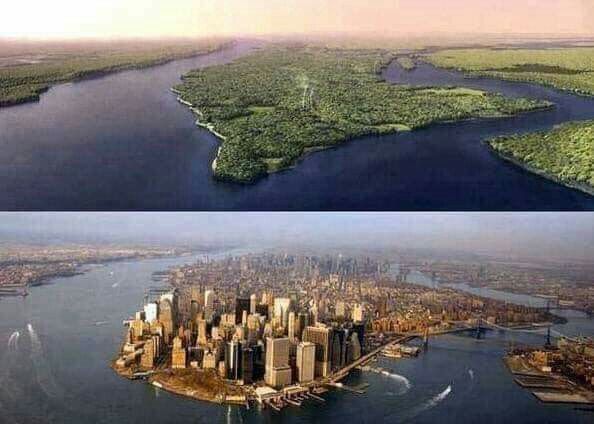
1664 → Seize of New Amsterdam, which becomes New York.
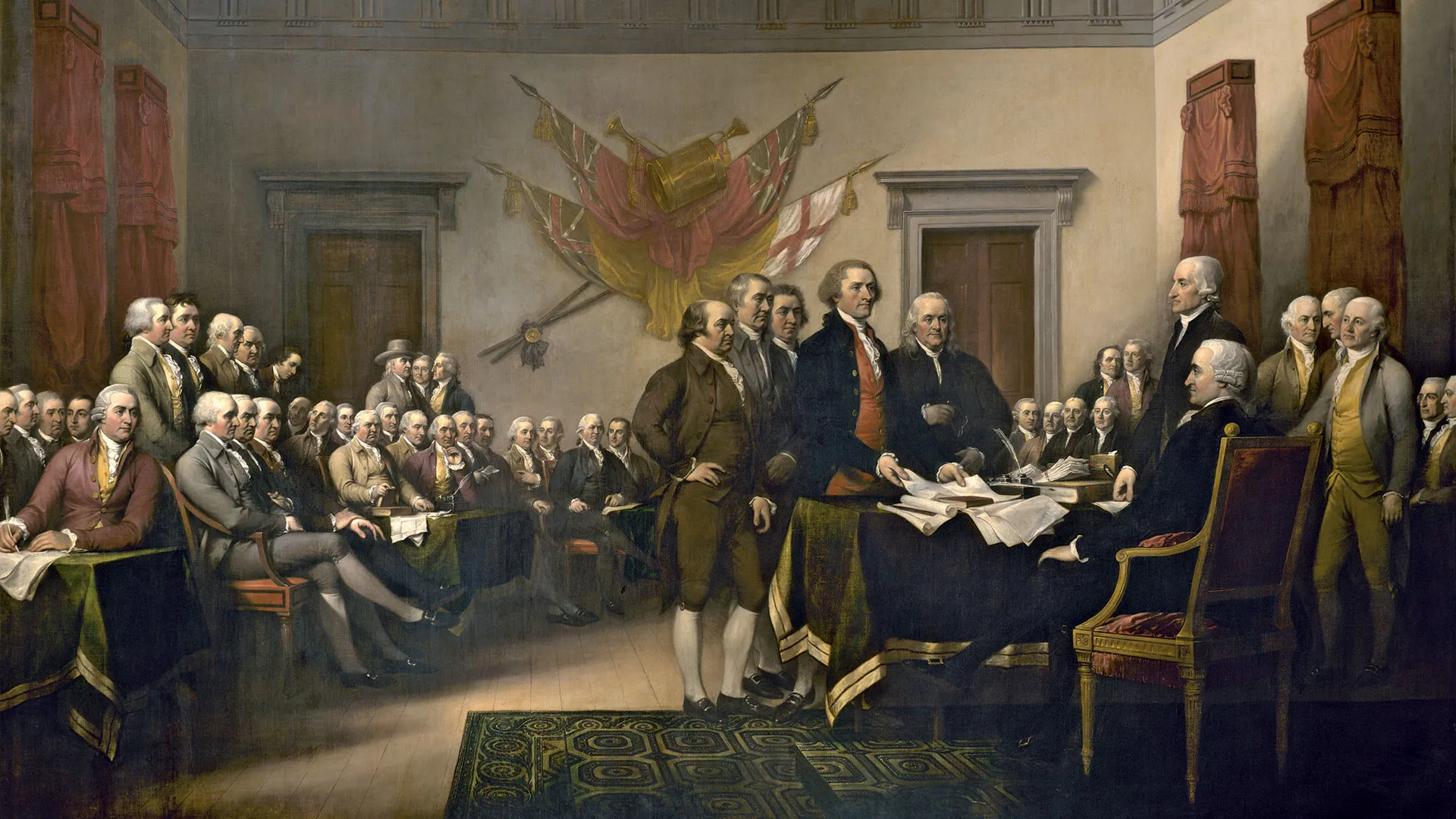
The British Empire. 2.1. North American Colonies. Deterioration of relationships with the colonies and American Revolutionary War.
Tea Act, Sugar Act (1764) Stamp Act (1765), Townshend Acts, Boston Massacre and Boston Tea Party (1773)
“No taxation without representation”.
First and Second Continental Congress
American Revolutionary War (1775-1783)
The British Empire. 2.2. Australia and New Zealand. Australia.
After the loss of American colonies → prioritising colonisation in other parts of the world
1788 Started as a penal colony, more than 162,000 convicts by 1868. Then some of them stayed and later founded Australia.
The British Empire. 2.2. Australia and New Zealand. New Zealand.
Under British control since 1840 through the Treaty of Waitangi (controversial)
Controversial because the Maori and British versions of the treaty differed significantly.
Maori version → the English have the right to govern over British people (kawanatanga).
English version → the English have complete control over NZ.
The British Empire. 2.3. Canada
After the Seven Years’ War and the Treaty of Paris, Canadian lands that belonged to the French fell into British hands, establishing the first British colony in Quebec.
19th century → Canada gained significant political autonomy.
1867, the Confederation and Dominion of Canada are created under the British North American Act → Canada has substantial control over it lands and affairs while maintaining allegiance to the British Crown.
2.3. Canada. The formation of the Commonwealth of Nations
Commonwealth of Nations is currently formed by 56 former British Territories, including Canada, South Africa, New Zealand, Australia, etc. These countries nowadays recognise the King of England as head of state, while many others are independent republics.
It is nowadays often labelled as a neo-colonial institution.
The British Empire. 2.4. India
Began with the establishment of the East India Company in 1600, focused on trade . Company merchants operated within Indian sociopolitical structures of that time.
Following the Battle of Plassey in 1775, control over Bengal
Over following decades, EIC expanded its authority.
The British Empire. 2.4. India. How was British control reinforced?
Sepoys (armies of Indian soldiers) commanded by British officers
Princely states→ Indian rulers had limited authority and stayed under British influence. Highest power ALWAYS fell on British hands.
The British Empire. 2.4. India. Sepoy Munity and Independence.
Growing dissatisfaction grew with the Indian Rebellion of 1857 (Sepoy Munity) after grease of pork and cow had been used to grease ammunition.
It failed and the EIC was abolished. Rule of India passed to the British Crown, that promised them freedom of speech, religion, etc.
The “Divide and Rule” → The British, afraid of further revolts, modified original Indian caste systems and purposely divided Hindus and Muslims.
However, India or Bharat achieved independence in 1947
The British Empire. 2.5. China
Problem? 18th century. British demand for Chinese goods like tea increased rapidly. China imported relatively few European goods, causing IMBALANCE.
British solution? Expand the opium trade to China, producing widespread addiction and social disruption.
Tensions led to the Opium Wars (1839-1842; 1856-1860). The Chinese LOST and the British Empire forced them to open additional ports for foreign trade and cede Hong Kong.
The British Empire. 2.6. Africa
18th century → European involvement in Africa largely confined to trade ports and slave trade.
19th century → “Scramble for Africa” and control over the continent’s interior.
The British → West, East, Southern Africa. Like present day Nigeria, Gambia, Zimbabwe, Kenya, South Africa
African resistance → often successful but eventually futile because of European possession of weapons, transportation, communication systems and strategic benefiting from alliances with local groups and internal divisions.
Boer Wars (1880-1881; 1899-1900) were among the most significant conflicts in southern Africa, pitting British forces against Dutch-descended settlers.
The British Empire. 2.7. Administration and decline of the Empire
Evolved considerably over time, but during the 19th century and early 20th century, some colonies gained extensive self-governance (Australia, NZ, South Africa, etc.) while keeping constitutional ties with the Crown.
In contrast, predominantly non-European colonies like the Caribbean, India or Nigeria remained under control. It was after WWII that Britain couldn’t maintain them, which led to their independence.
Literature
Introduction. What are the central themes of Imperial literature?
The moral self-examination
The colonial mission and adventure
It was strongly gendered (predominantly masculine narratives)
It aimed to represent non-Western cultures
The perceived resistance or incomprehensibility of the colonised ones.
Literature
3.1. Joseph Conrad (1857- 1924) Life
Born Józef Teodor Konrad Korzeniowski (Polish-born writer)
English? his third language
His early life was marked with hardship and political exile. Death of his parents under Russian rule in Poland. THIS MARKED HIS LITERATURE!!
Literature. 3.1. Joseph Conrad (1857- 1924) Style and literary themes.
Fiction often sets i maritime environments and explores:
Moral ambiguity
Human endurance
Psychological consequences
His style is:
Distinctive and descriptive
Sensibility
Realistic
Symbolic
Psychological depth
Literature 3.1. Joseph Conrad (1857- 1924) Why is Joseph Conrad a precursor to Modernism?
Because of…
His complex narrative structures
His focus on an unstable moral perspective
Literature. 3.1. Joseph Conrad (1857- 1924) Early works.
Almayer’s Folly and An Outcast of the Islands → exotic maritime fiction, deeper concerns with identity and displacement
The N**** of the Narcissus, Youth, and Lord Jim → complex exploration of guilt, responsibility, limits of human integrity, cowardice…
Literature. 3.1. Joseph Conrad (1857- 1924) Heart of Darkness (1899) Introduction
1890→ Conrad travels to the Congo Free State where he served as first mate on a Belgian river steamer.
This experience exposed him to the brutality and cruelty of colonialism and the experience marked him forever.
Literature. 3.1. Joseph Conrad (1857- 1924) Heart of Darkness (1899) The critique
European imperialism
Greed, exploitation, hypocrisy
Explores larger psychological questions about human nature
Literature. 3.1. Joseph Conrad (1857- 1924) Heart of Darkness (1899) What is the meaning of the title?
It has a twofold meaning:
The darkness because of Africa as a continent and its people
Human corruption under power.
Literature. 3.1. Joseph Conrad (1857- 1924) Heart of Darkness (1899) Kurtz
A relevant character who is an experienced European trader.
He initially embodies European ideals but is revealed to be morally corrupted: “The horror! The horror!”.
Literature. 3.1. Joseph Conrad (1857- 1924) Nostromo (1904)
South American republic of Costaguana, port city of Sulaco (a site of economic and political prosperity that is regarded as one of Conrad’s most detailed fictional cration)
It explores interaction between social politics and economic exploitation
Its critique lies on:
Power and corruption
Destabilising influence of wealth
Characters become tangled in political manipulation
The fragility of ethical ideas.
Literature. 3.1. Joseph Conrad (1857- 1924) What makes Nostromo different from HoD?
That Nostromo is structured through multiple perspectives and shifting timelines (LAYERED NARRATIVE TECHNIQUE)
Literature. 3.2. Rudyard Kipling (1865-1936). Life
Born Bombay (Mumbai, India) during the height of British imperialism
One of the most celebrated authors of his period. Henry James “the most complete man of genius”
First British writer to achieve a Nobel Prize in 1907.
Refused to be given the title of Poet Laureate and knightship
Highly controversial due to his strong association with British imperialism.
His works are often seen as “reinforcing colonial attitudes”
George Orwell “a Prophet of English colonialism”
Literature. 3.2. Rudyard Kipling (1865-1936). Works.
WORKS
The First Jungle Book (1894) and The Second Jungle Book (1895)
The Man Who Would Be King (1898)
Kim (1901)
POEMS (which helped him establish his reputation)
Mandalay (1890)
Gunga Din (1899)
Literature. 3.2. Rudyard Kipling (1865-1936). 3.2.1. The Jungle Books.
Collections of interlinked stories accompanied by poetry
Mowgli is taken care by animals in the jungle, and later reunites with his Indian people.
Story emphasises order, law, and hierarchy with the animal world, often contrasting it with human society.
Kipling’s broader interest in systems of survival and discipline.
Literature. 3.2. Rudyard Kipling (1865-1936). 3.2.1. Kim (1901)
Kimball O’Hara, an orphan of Irish descent who travels to India and serves the British intelligence services during the Great Game.
Remarkable because of…:
Its vivid depiction of Indian society and culture
Its depiction of British espionage and exploration of socio-political dynamics.