Chapter 1- General knowledge
 Call Kai
 Learn
Learn Practice Test
 Spaced Repetition
 Match
Match Flashcards
 Knowt Play
1/45

There's no tags or description
Looks like no tags are added yet.
Name | Mastery | Learn | Test | Matching | Spaced | Call with Kai | Chat |
|---|
No analytics yet
Send a link to your students to track their progress
46 Terms
Maps
A tool for storing reference material and a tool for communicating.
Human Geography
Part of geography concerned with spatial differences and patters of human activity and its interrelations with the physical environment.
Scale
A comparison of distances on a map to distances on earth
Small scale
Smallest amount of detail shown on map, so biggest picture
Projection
Method to represent earths curved surface on a flat map
What does projection distort
Shape, area size, distance, direction
Robinson map

Goode's Interrupted

Mercator

Azimuthal - polar - planar

Mental Map
Images about an area developed by an individual on the basis of information or impressions
Symbol
Graphic elements that convey geographic information
Choropleth map

Thematic map
A map that portrays some sort of data (Not political or physical)
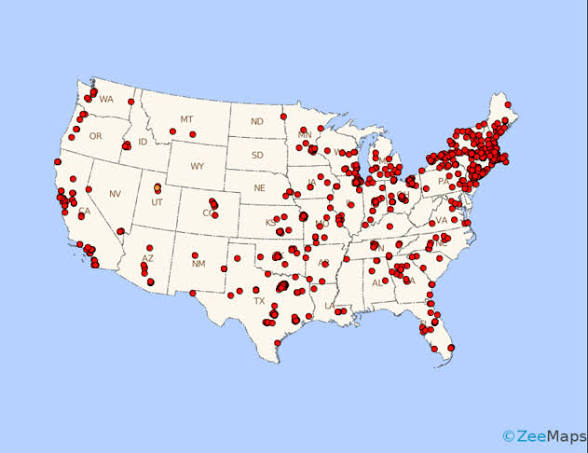
Dot map
Proportional map

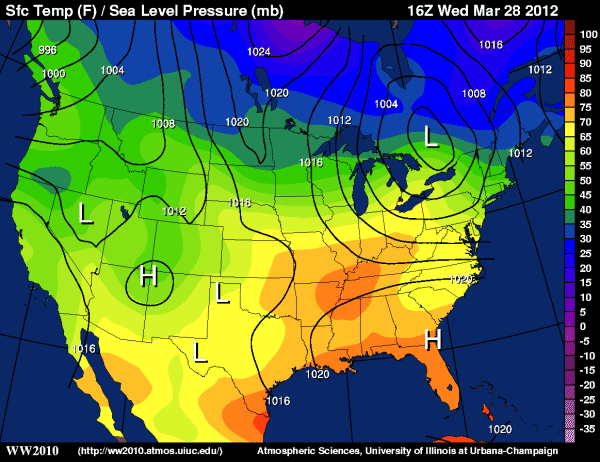
Isoline Map
Cartogram Map

GIS (geographic information system)
Allows for us to take multiple sets of data and combine, also helps us see the correlation
GPS (global positioning system)
Using satellites to connect to pinpoints and direct where they need to go
remote sensing
Compare or look at something through arial images and observe what is happening somewhere.
Models
To explain patterns, predict future behavior. For example where/ why things are located in a city
spacial analysis
Petraying to space on or near earths surface, study arrangement of places
Density type- Arithmetic
People to land
Density type- Physiological
Number of people to farmable land
Density type- Agricultural density
Farmers to farm land
Absolute location
the identification of a place by some precise and accepted system of coordinates
Absolute Distance
The distance that can be measured from point A to point B
absolute direction
A compass direction such as north or south.
relative location
The position of a place in relation to another place
relative distance
Distance measured in terms such as cost or time
relative direction
culturally based and locationally variable direction despite reference to cardinal compass points eg. "Near and Far East"
Distribution
The arrangement of something across Earth's surface.
Dispersion
How far you can spread out
Pattern
the geometric arrangement of objects in space
Site
Unique coordinate points, unique cultural and physical characteristics. reason why someone settled in that area
Situation
the location of a place relative to other places. Helps us find unfamiliar place with a familiar one
Regions
Earths areas that display significant elements of internal uniformity and external difference from surrounding areas
What is the purpose of regions
to make the world understandable, to organize and group areas for analysis & comparison
Characteristics of regions
Location, Spatial extent -> unifying factor, Boundaries, hierarchically arranged
Type of region- Formal
Has essential uniformity in one or limited combination of physical or cultural characteristics
Type of Region- Functional
A node or central point and all points that are connected to it by interactions or the movement of people, goods, or ideas
Type of region- Perceptual
Mental map divisions, reflect feelings and impressions of the individual
Core of a region
Center/ hearth, possesses all the traits of region, focus of region
Domain of region
area in which traits of region are dominant, but minority traits exist
Sphere of a region
the area outside of the core of a culture region in which the culture is still dominant but less intense (Islam in US)