econ ch7

0.0(0)
Studied by 0 people
call kaiCall Kai
Locked
learnLearn
examPractice Test
spaced repetitionSpaced Repetition
heart puzzleMatch
flashcardsFlashcards
GameKnowt Play
Card Sorting

1/68

encourage image

There's no tags or description

Looks like no tags are added yet.

Last updated 9:34 PM on 8/28/26
Name
Mastery
Learn
Test
Matching
Spaced
Call with Kai
Chat

No analytics yet

Send a link to your students to track their progress

69 Terms

1
New cards

Marginal and average cost in the short run

knowt flashcard image
2
New cards

Market for supply and demand in perf competition
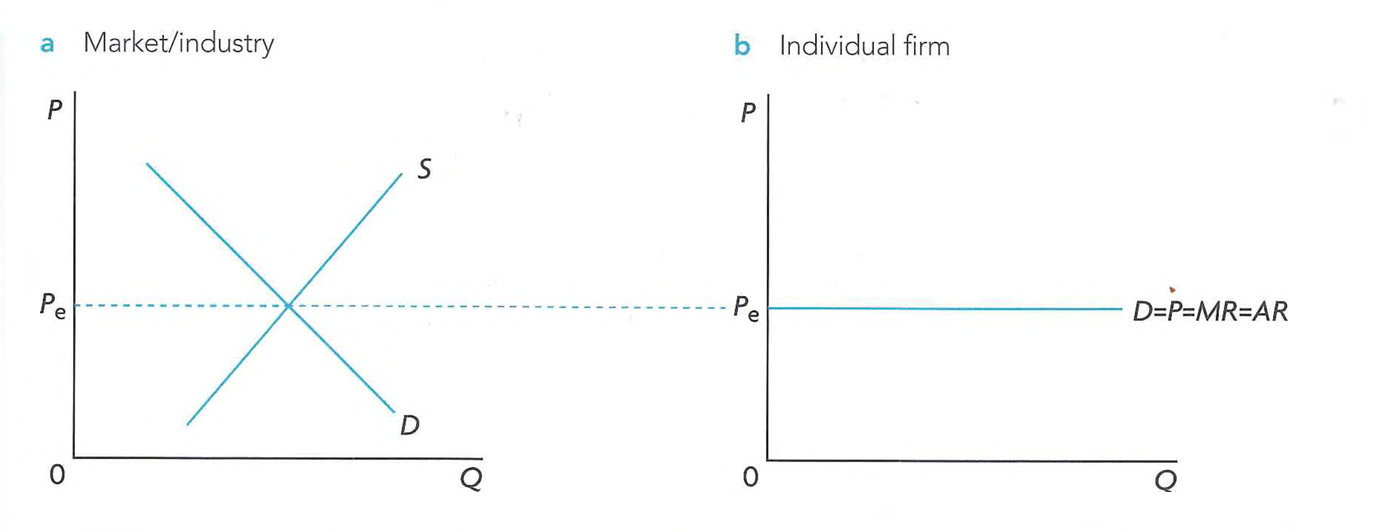
knowt flashcard image
3
New cards

Short run profits in perf comp

Difference in where P and AC is set is where it determines a firms profit (P above AC = abnormal, P=AC Normal, P lower than AC = loss)
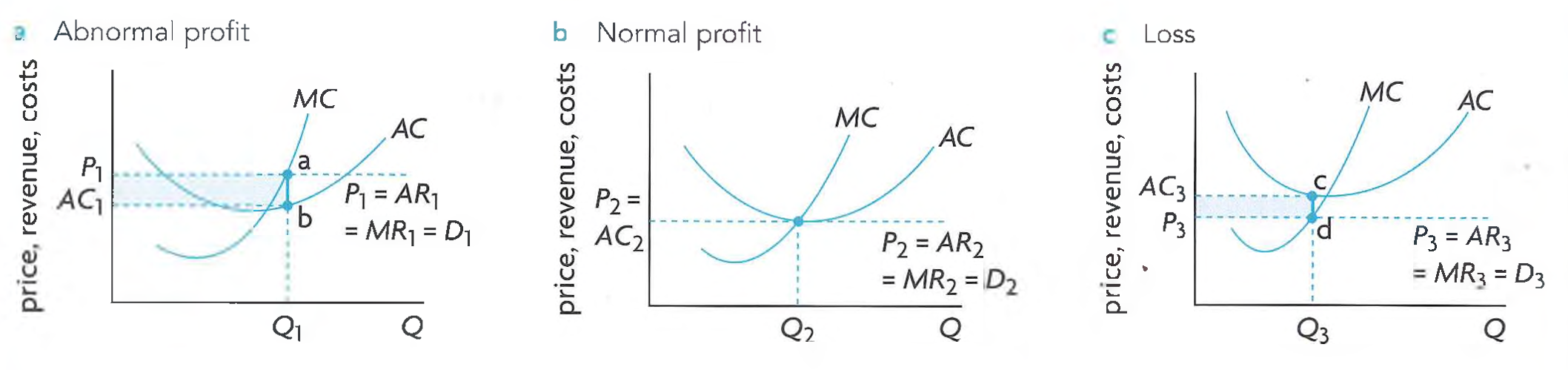
<p>Difference in where P and AC is set is where it determines a firms profit (P above AC = abnormal, P=AC Normal, P lower than AC = loss)</p>
4
New cards

Long run equilibrium in perf comp

knowt flashcard image
5
New cards

Allocative efficency in perf comp long run
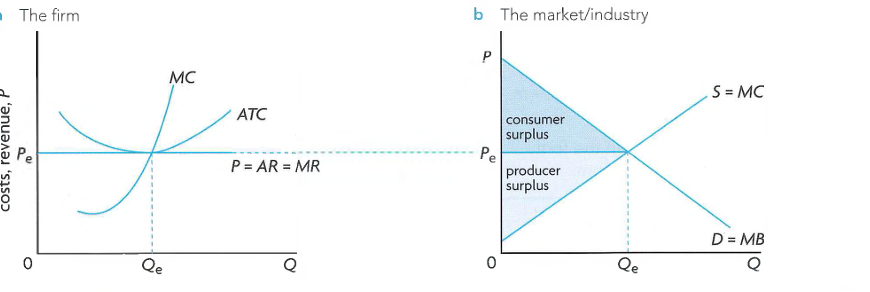
knowt flashcard image
6
New cards

TR, MR and AR curves in monopoly

AR and P represent demand curve, MR curve lies below demand curve

<p>AR and P represent demand curve, MR curve lies below demand curve </p>
7
New cards

Profits in monopolies, MR and cost approach
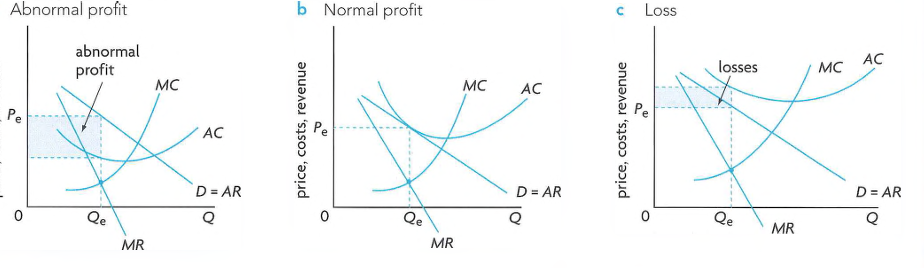
knowt flashcard image
8
New cards

Natural monopoly

knowt flashcard image
9
New cards

higher price and lower output in perf comp (left), and monopoly (right)

knowt flashcard image
10
New cards

Market failure in perf comp (left), and monopoly (right)

knowt flashcard image
11
New cards

Allocative efficiency (left) and inefficency (right) monopoly

(P=MC) AE, (P>MC) AI

<p>(P=MC) AE, (P&gt;MC) AI</p>
12
New cards

Demand curves for perf comp, monopoly, and monopolistic comp

knowt flashcard image
13
New cards

Profits of monopolistic comp

knowt flashcard image
14
New cards

Long-run equilibrium of monopolistic comp

knowt flashcard image
15
New cards

Game theory

(Final result is called Nash equilibrium)
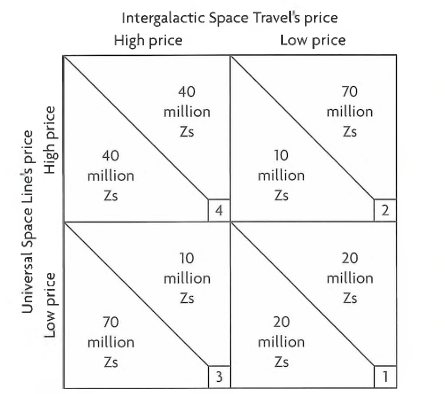
<p>(Final result is called Nash equilibrium)</p>
16
New cards

Profit maximizing in a cartel

knowt flashcard image
17
New cards

Concentration ratio

indication of percentage of output produced by the largest firms
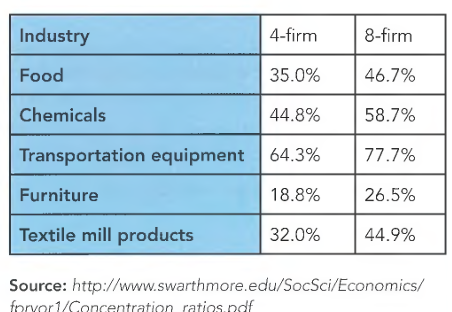
<p>indication of percentage of output produced by the largest firms</p>
18
New cards
Market power
extent to which each individual firm in the industry is able to control the price at which it sells its products
19
New cards
Perfect competition
firms have no market power (don’t result in market failure, and achieve allocative efficiency, highly unrealistic)
20
New cards
Monopoly
a single firm has the ability to control price of its product (holds all market power)
21
New cards

Market structure characteristics

  1. Number of firms

  2. 2. Product differentiation

  3. 3. Difficulty in barriers to entry


22
New cards
Product differentiation
how similar or different goods and services are produced
23
New cards
Barriers to entry
the difficulty for new firms to enter the industry
24
New cards

Perfect competition characteristics

  1. Large number of firms

  2. 2. Homogeneous products

  3. 3. No barriers to entry


25
New cards

Monopoly characteristics

  1. Single dominant seller

  2. 2. Heterogeneous products

  3. 3. High barriers to entry


26
New cards

Monopolistic competition characteristics

  1. Fairly large number of small firms

  2. 2. No barriers to entry

  3. 3. Product differentiation


27
New cards

Oligopoly characteristics

  1. Small number of large firms

  2. 2. Both differentiated and undifferentiated

  3. 3. High barriers to entry

  4. 4. Interdependence


28
New cards

Interdependence traits

  1. Strategic behaviors: actions that take into account rivals possible course of action

  2. 2. Conflicting incentives: incentives to collude or incentive to compete


29
New cards
Total revenue (TR)
Price X Quantity
30
New cards
Average Revenue (AR)
TR/Q (note: always equal to price, AR=P)
31
New cards
Marginal Revenue (MR)
additional revenue arising from sale of additional unit of output (sum of TR/ sum of Q)
32
New cards
Average total cost
total cost per unit of output (TC/Q)
33
New cards
Marginal cost (MC)
change in cost arising from one additional unit of output (Sum of TC/ sum of Q)
34
New cards

Revenues in 2 different types of markets

  1. Perfect competition: firm is unable to control the price

  2. 2. Firm has control of the price, monopoly, oligopoly, monopolistic competition


35
New cards
Implicit cost
the sacrificed income arising from the use of self-owned resource by a firm
36
New cards
Economies of scale
decreases in average cost of production over the long run as a firm increases all its factors of production (explains downward sloping portion of LRAC curve
37
New cards

Reasons why economies of scale occur

  1. Specialization of labor

  2. 2. Specialization of management

  3. 3. Bulk buying of inputs

  4. 4. Financing economies

  5. 5. Spreading of certain costs


38
New cards
Specialization of labor
as scale of production increases, more workers must be employed, allowing for greater specialization of labor, thus increasing efficiency and allow output to be produced at lower average cost
39
New cards
Specialization of management
larger scale of production allows for more managers to be employed, increasing specialization and increasing greater efficiency
40
New cards
Bulk buying of inputs
as quantities of input purchases increase, the price per unit drops
41
New cards
Financing economies
larger firms may have lower interest rates, thus contributing to lower costs per unit of output
42
New cards
Spreading of certain costs
activities such as marketing, and advertising, design, research and development, result in lower average costs
43
New cards
Diseconomies of scale
increases in the average cost of production in the long run as a firm increases its outputs by increasing its inputs
44
New cards

Reasons for diseconomies of scale

  1. co-ordination and monitoring difficulties

  2. 2. Communication difficulties

  3. 3. Poor worker motivation


45
New cards
Co-ordination and monitoring difficulties
as a firm grows larger, management may run into difficulties of co-ordination, organization, co-operation and monitoring. Results involves growing inefficiencies causing higher average costs
46
New cards
Communication difficulties
larger firm size may lead to difficulties in communication between various components parts of the firm, resulting in inefficiencies and higher average costs
47
New cards
Poor worker motivation
workers begin to lose their motivation, to feel bored and to care little about their work, become less efficient
48
New cards
Profits (calculations)
revenue – cost of production, total revenue – total costs, total revenue – the sum of explicit costs + implicit costs (Total costs)
49
New cards
Profit maximization
theory of firm that assumes firm behavior is guided by the goal to maximize profits (MC=MR) and (profit/Q = P-AC)
50
New cards
Profit amounts
TR>TC (abnormal profits), TR=TC (normal profits), TR<TC (loss)
51
New cards
Normal profit
minimum number of profit in order to keep the firm running (when TR = TC+Profits = 0)
52
New cards
Allocative efficiency
when firms produce the particular combination of goods and services the consumers prefer ( P=MC or MB=MC)
53
New cards
Natural monopolies
firms that have economies of scale so large they can produce for an entire market
54
New cards

Barriers to entry for monopolies

Economies of scale,

natural monopoly,

branding,

legal barriers,

control of essential resources,

aggressive tactics

55
New cards

Legal barriers to monopolies

  1. Patents

  2. 2. Licenses

  3. 3. Copyrights

  4. 4. Tariffs and other trade restrictions


56
New cards

Criticisms of monopoly

  1. Welfare loss, allocative inefficiency and market failure

  2. 2. Higher price and lower output in monopoly

  3. 3. Loss of consumer surplus to monopolists

  4. 4. Negative impacts on distribution of income

  5. 5. Lack of competition gives rise to higher costs

  6. 6. Possibly less innovative


57
New cards

Benefits of monopoly

  1. Economies of scale

  2. 2. Natural monopoly

  3. 3. R&D for product developments


58
New cards
Price competition
when a firm lowers its price to attract customers away from rival firms
59
New cards
Non-price competition
when firms use other methods than price to attract customers
60
New cards
Nash equilibrium
shows the conflict between individual self-interest and collective firm interest on Game Theory
61
New cards

Collusive oligopoly

when firms form an illegal agreement between themselves to limit competition, increase market power and profits

62
New cards
Cartels
A formal agreement that may involve limiting and fixing the quantity to be produced by each firm. (key objective is to limit competition between member firms and attempt to maximize joint profits)
63
New cards

Cartel incentives

  1. Increased market power

  2. 2. Increased profits

  3. 3. Elimination of competition between firms


64
New cards

Cartels difficulties in maintaining

  1. Incentive to cheat

  2. 2. Cost differences between firms

  3. 3. Number of firms

  4. 4. Possibility of price war


65
New cards

Other types of collusion

  1. Price leadership

  2. 2. Non-collusive oligopoly


66
New cards

Criticisms of oligopoloy

  1. welfare loss,

  2. 2. higher prices and lower quantities,

  3. 3. loss of consumer surplus,

  4. 4. Negative impacts on distribution of income

  5. 5. Higher production costs due to no comp

  6. 6. Possibly less innovative

  7. 7. A lot easier to get under anti-monopoly policies


67
New cards

Benefits on oligopoly

  1. Economies of scale

  2. 2. Product and technology developments

  3. 3. Increased product variety


68
New cards
Abuse of power
when firms engage in activities that result in reduced competition
69
New cards
Legislation to protect competition
competition policy; firms that are found guilty to anticompetitive behavior results in fines or may be broken up into smaller firms