Communicate the Army Health System
 Call Kai
 Learn
Learn Practice Test
 Spaced Repetition
 Match
Match Flashcards
 Knowt Play
1/56

There's no tags or description
Looks like no tags are added yet.
Name | Mastery | Learn | Test | Matching | Spaced | Call with Kai | Chat |
|---|
No analytics yet
Send a link to your students to track their progress
57 Terms
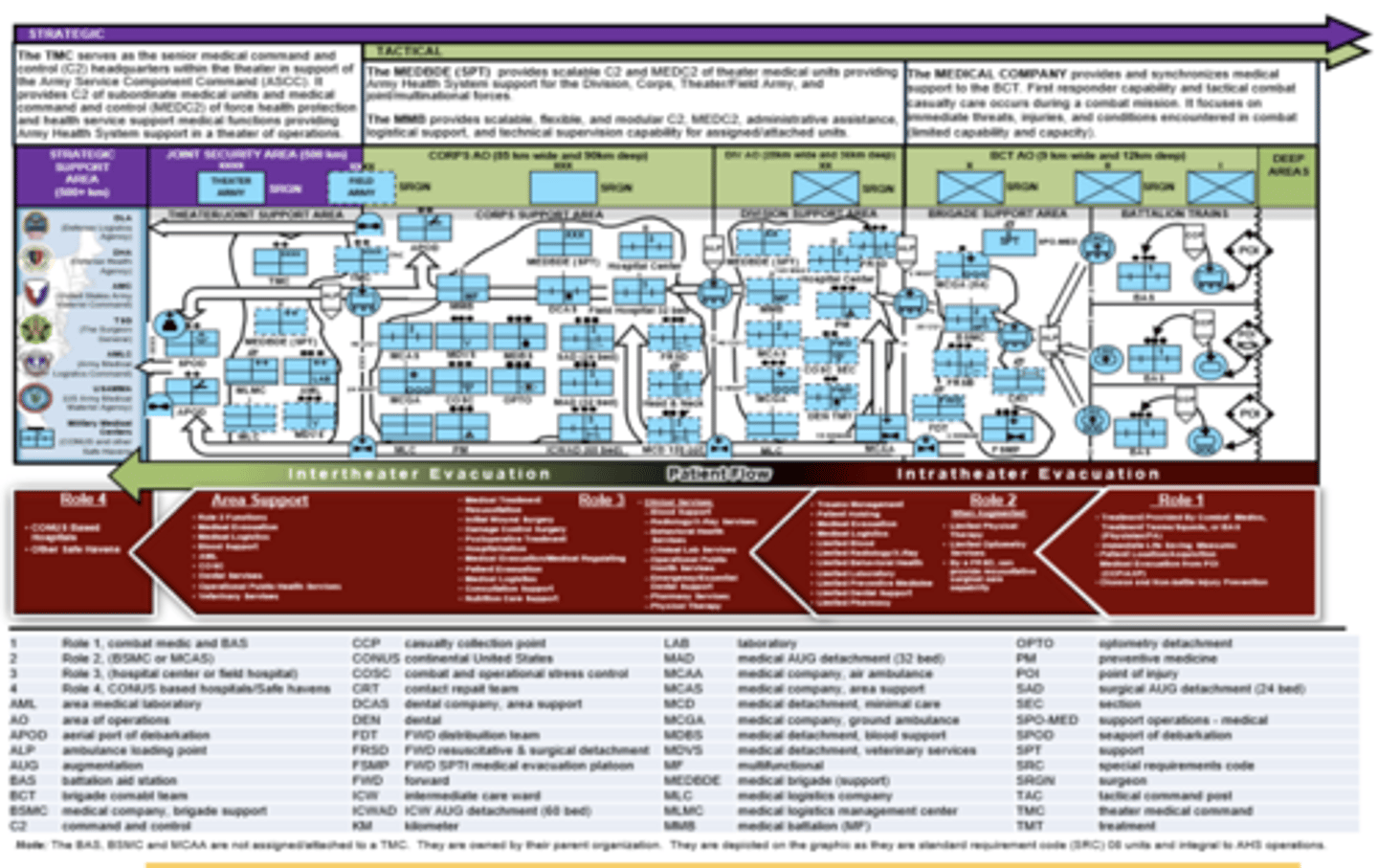
AHS Operational Framework (image)
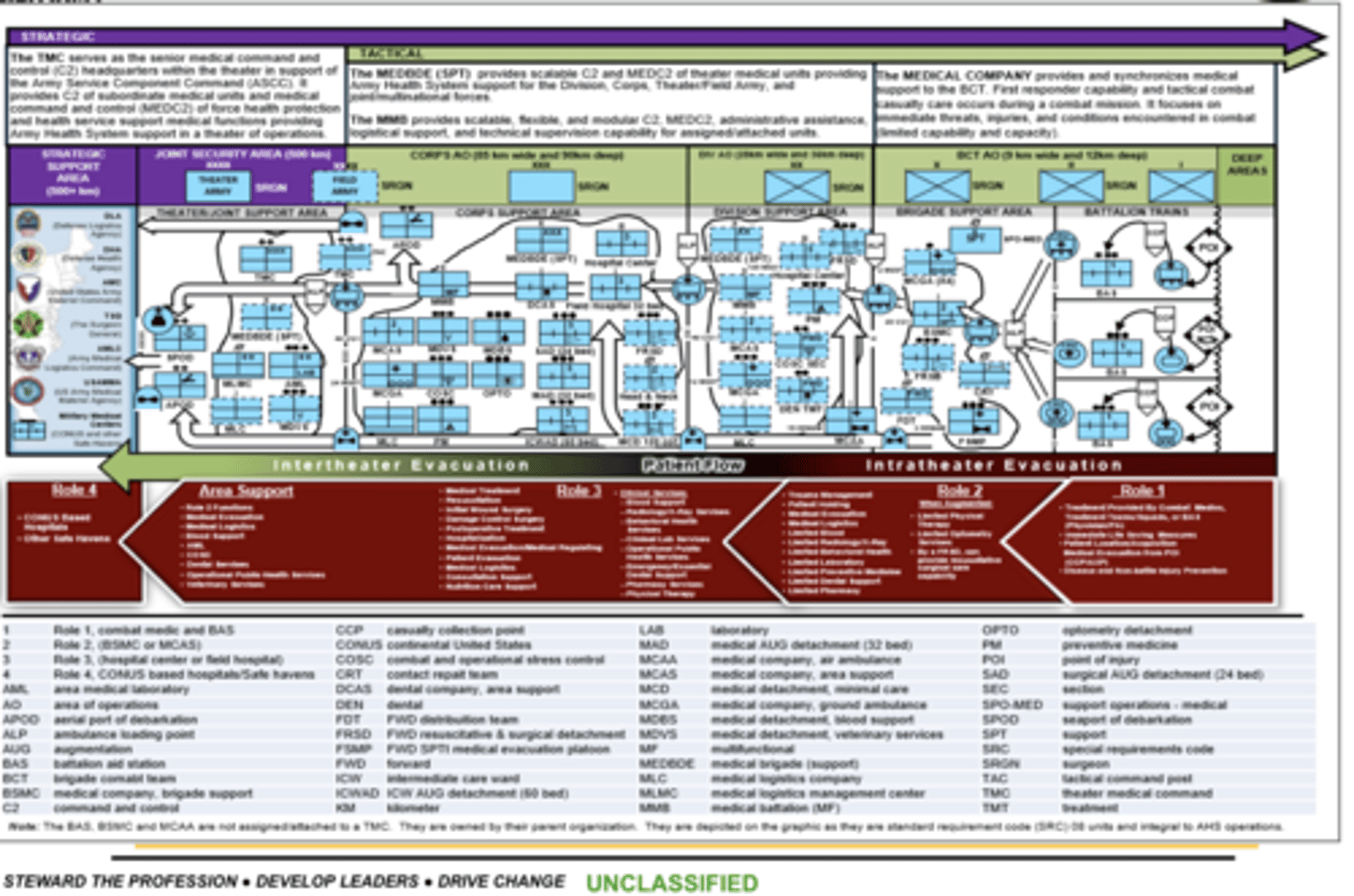
AHS Overview (image)
Define the Operational Environment
1) Define Operational Environment
2) Deep, Close, and Rear Operations
3) Identify Threats
4) Identify Health threat
5) Identify General Threat
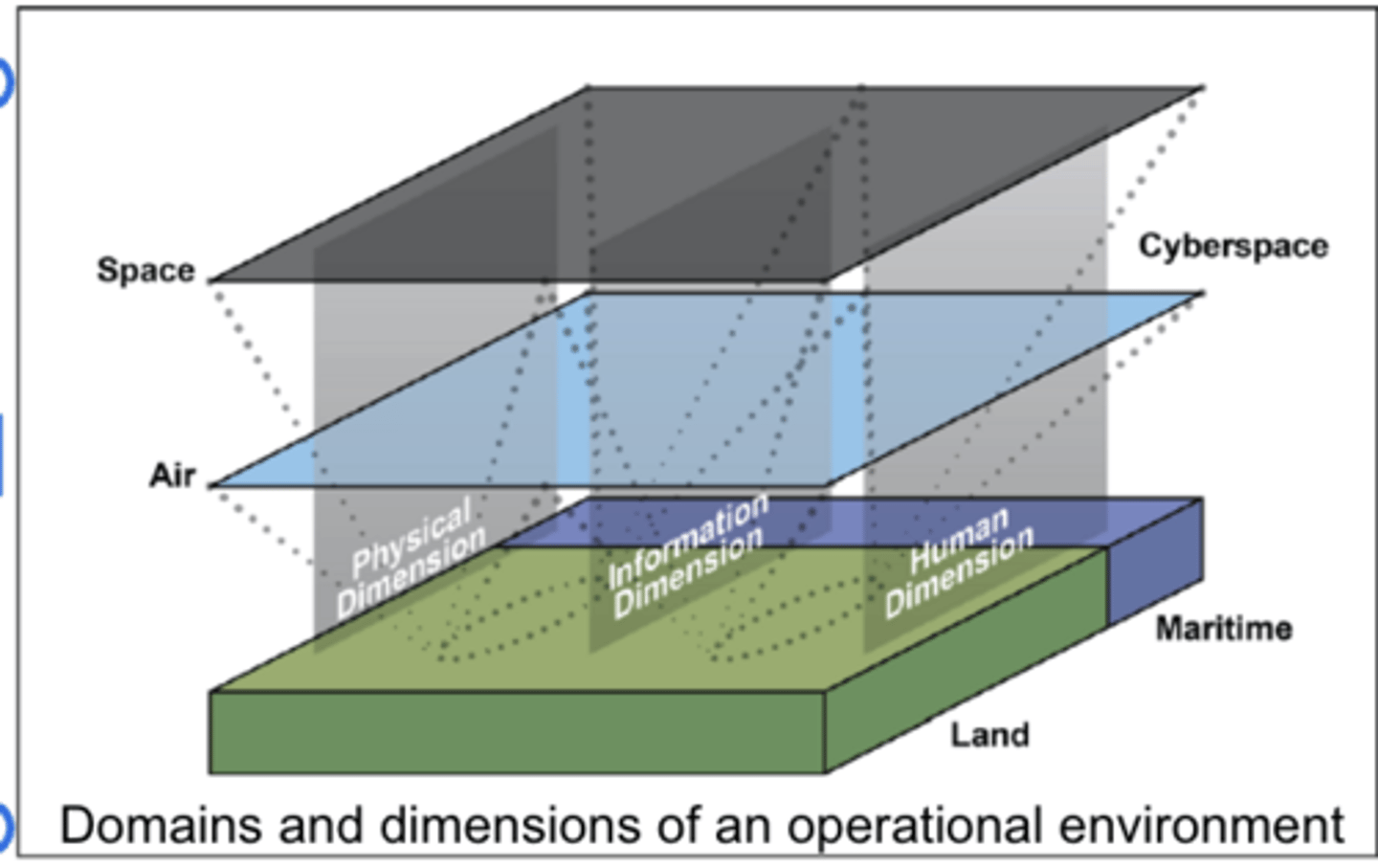
Operational Environment definition:
An operational environment is a composite of the conditions, circumstances, and influences that affect the employment of capabilities and bear on the decisions of the commander. Also called OE (JP 3-0).
Operational Environment (OE) image
The Army accomplishes its mission by supporting the joint force in four strategic roles:
1) shape operational environments
2) counter aggression on land during crisis
3) prevail during large-scale ground combat
4) consolidate gains
Deep operations are:
tactical actions against enemy forces, typically out of direct contact with friendly forces, intended to shape future close operations and protect rear operations
Close operations are:
tactical actions of subordinate maneuver forces and the forces providing immediate support to them, whose purpose is to employ maneuver and fires to close with and destroy enemy forces
rear operations are:
tactical actions behind major subordinate maneuver forces that facilitate movement, extend operational reach, and maintain desired tempo. Rear operations typically include the protection and security of support areas
Identify Threats
Army Medicine views threats from 2 perspectives: the general threat and the health threat
what is a health threat?
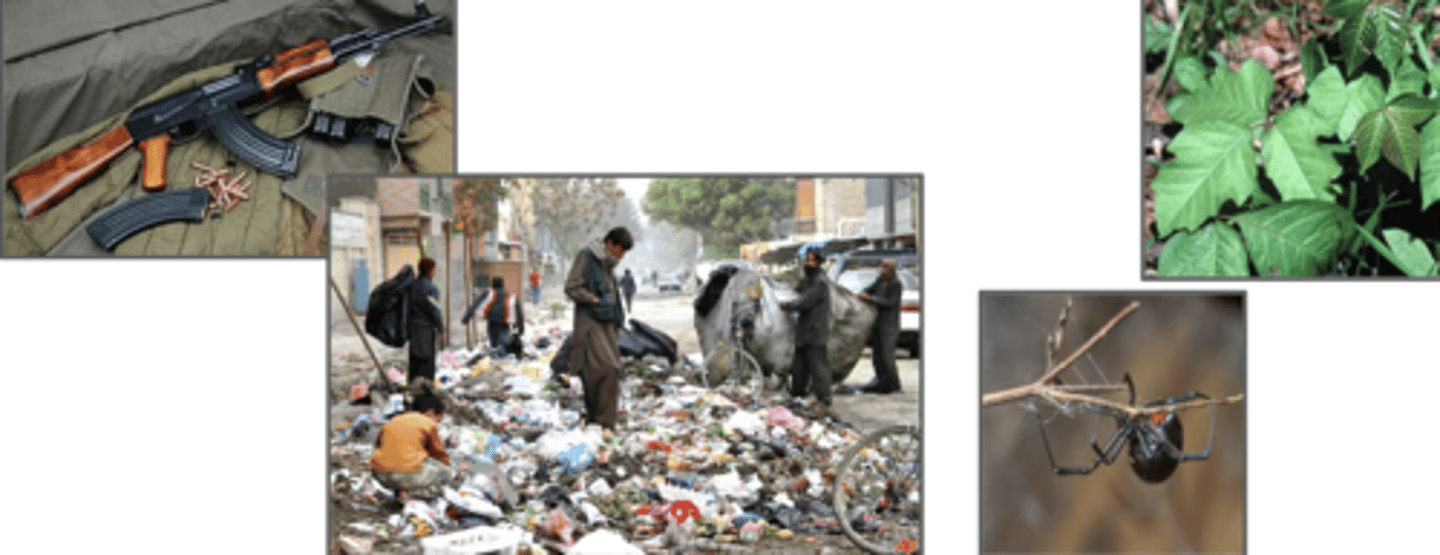
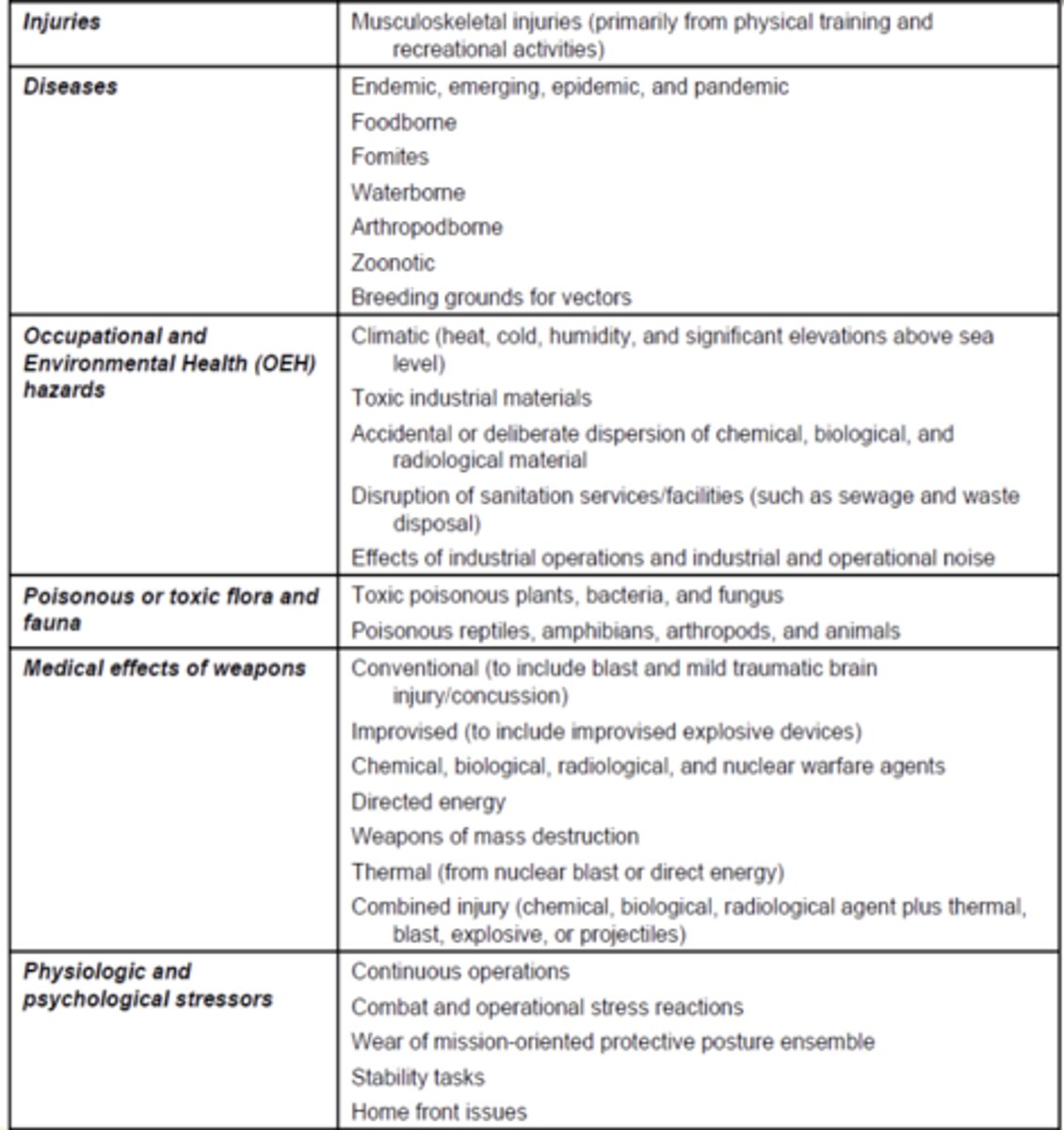
a composite of ongoing or potential enemy actions; adverse environmental, occupational, and geographic and meteorological conditions; endemic and emerging diseases; and employment of CBRN weapons (to include weapons of mass destruction that have the potential to affect the short-or long-term health (including physcological impact) of personnel)
the health threat is analyzed during the:
planning process of an operation in order to develop the Health Service Support/Force Health Protection (HSS/FHP) plan
Health threats (image):
General threat Definition
although the Army's primrary concern is that of a health threat, the general threat must also be fully considered as it influences:
- character, types, and severity of wounds and injuries to which our forces may be exposed
- Enemy's ability and willingness to disrupt AHS operations
- Geneva Conventions, in regards to the protection of AHS personnel while engaged in their humanitarian mission
in general, threats qualify as either an ________ or an _______.
enemy; adversary
What is an enemy?
a party identified as hostile against which the use of force is authorized
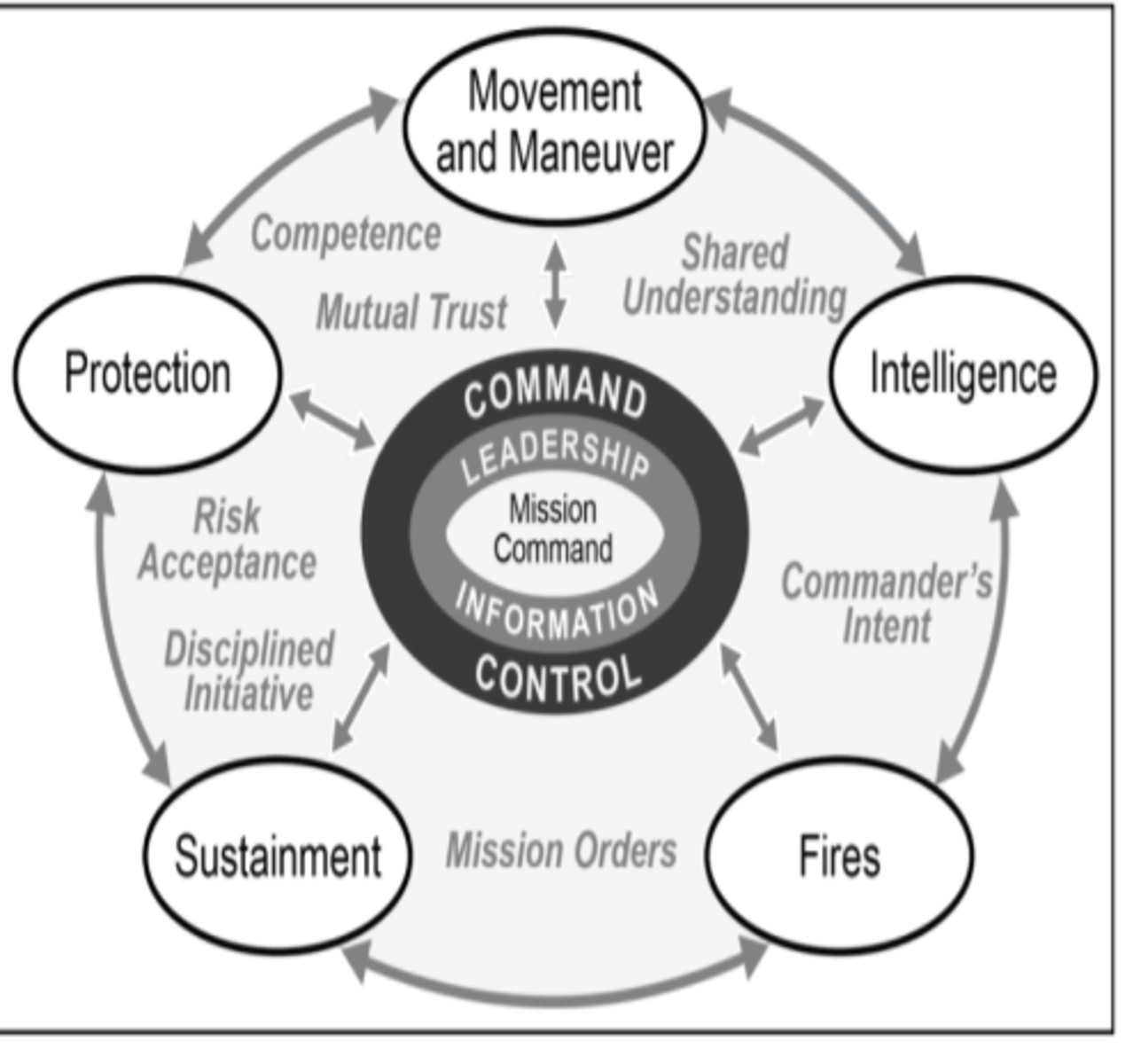
Communicate the 6 Warfighting Functions:
1) Movement and Maneuver
2) Intelligence
3) Fires
4) Sustainment
5) Protection
6) Command and Control
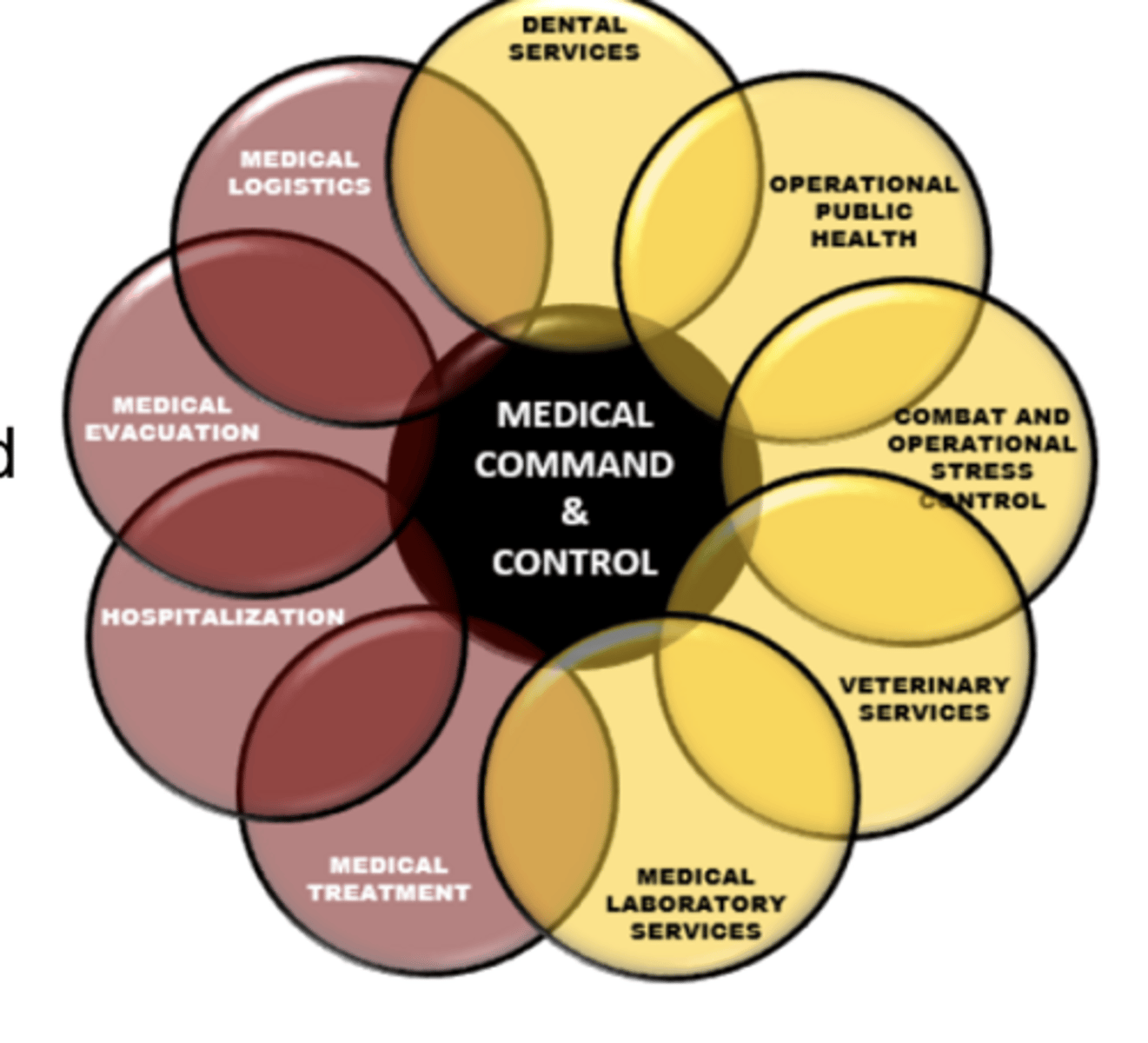
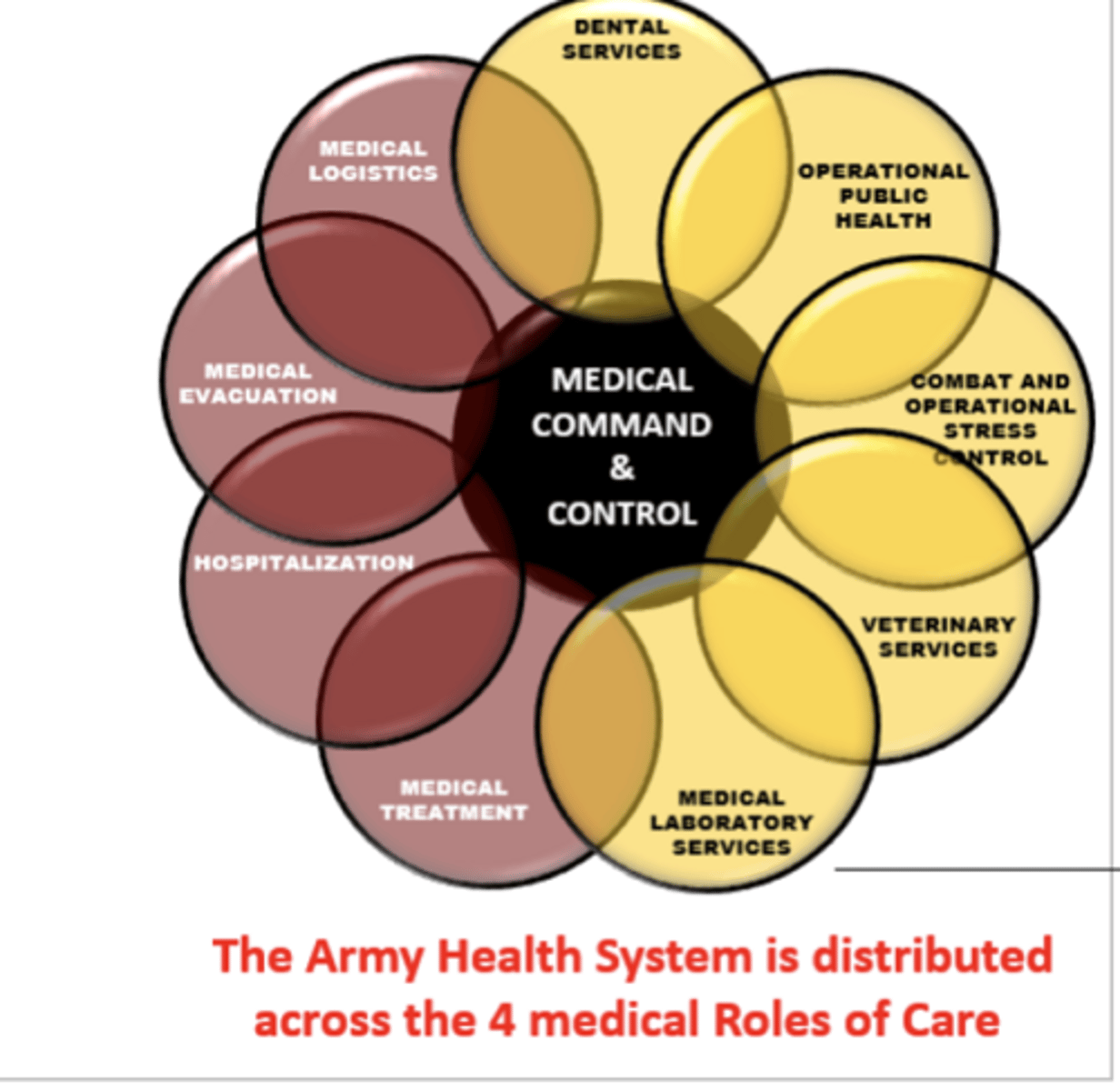
AHS: The 10 Medical Functions
the AHS principles apply across all ten medical functions
synchronized through medical Command and Control (C2) through close coordination and synchronization of all deployed medical assets
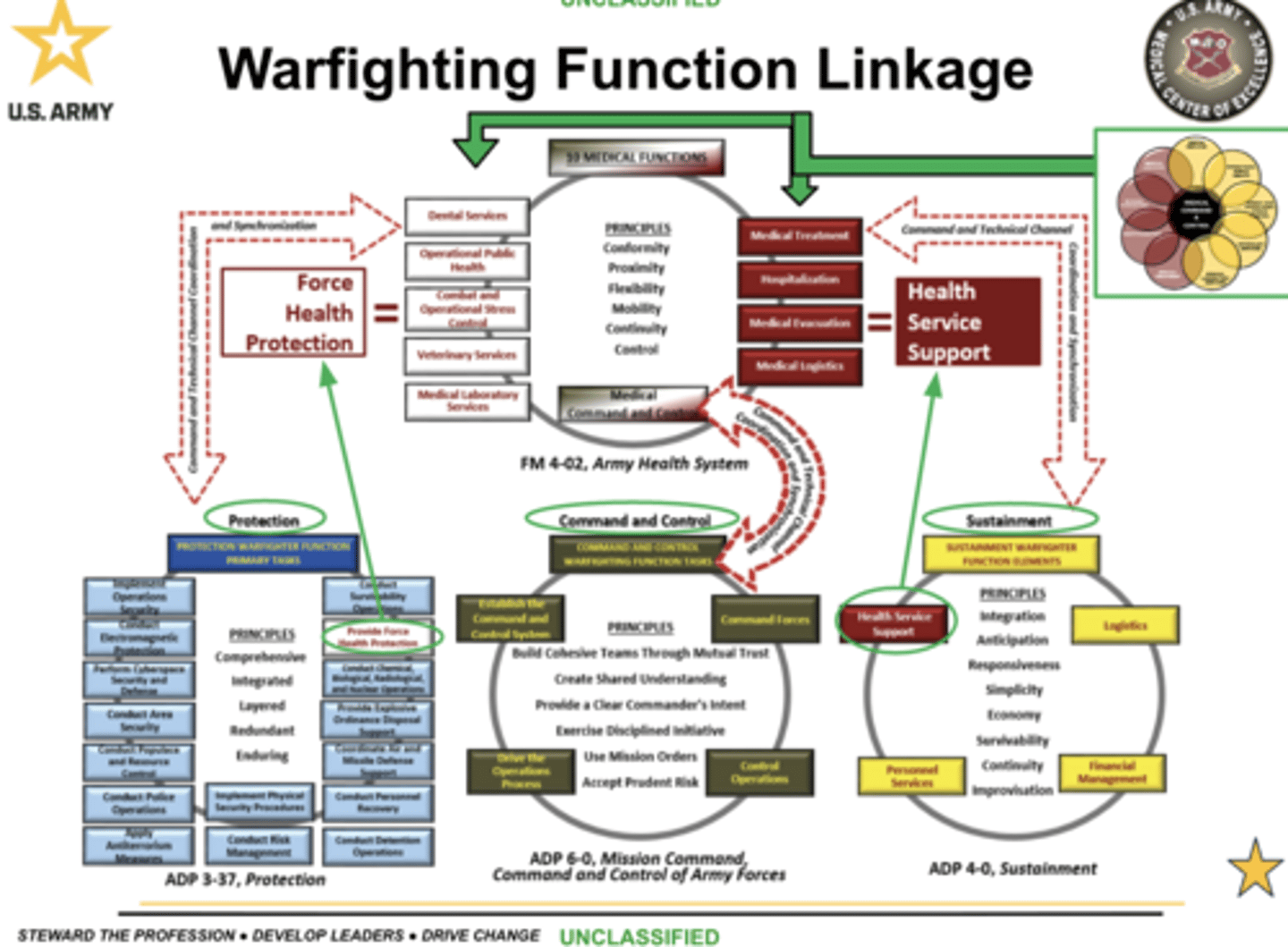
Warfighting Function Linkage (image)
Define Force Health Protection:
1) Define Force Health Protection
2) Operational Public Health
3) Veterinary Services
4) Combat and Operational Stress Control
5) Dental Services
6) Laboratory Services
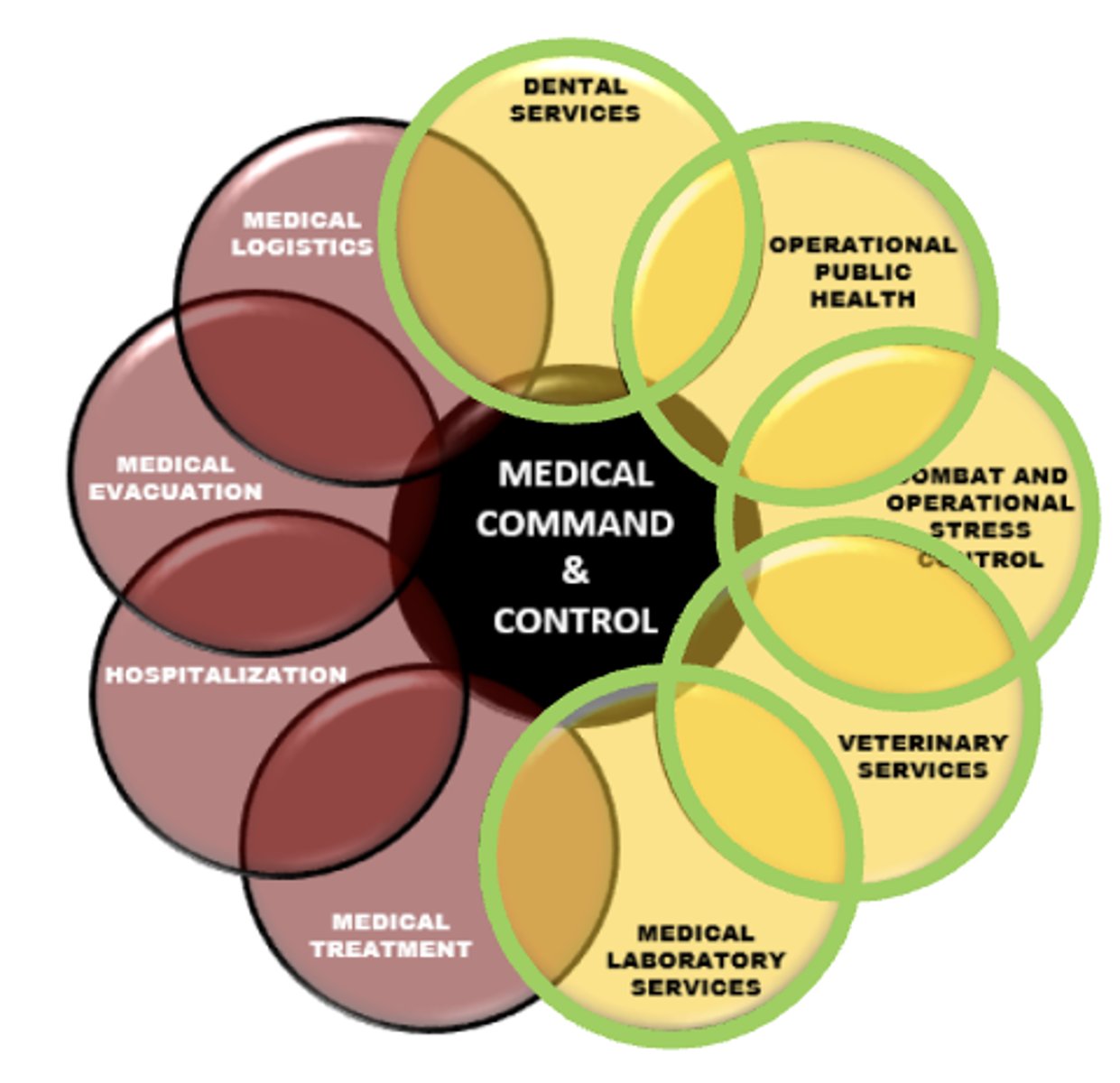
what are measures that promote, improve, or conserve the beahvioral and physical well-being of Soldiers comprised of preventive and treatment aspects of medical functions that include:
1) Operational Public Health
2) Veterinary services
3) Combat and Operational Stress Control (COSC)
4) Dental Services
5) Laboratory Services
6) Comman and control (in FHP and HSS)
Force Health Protection
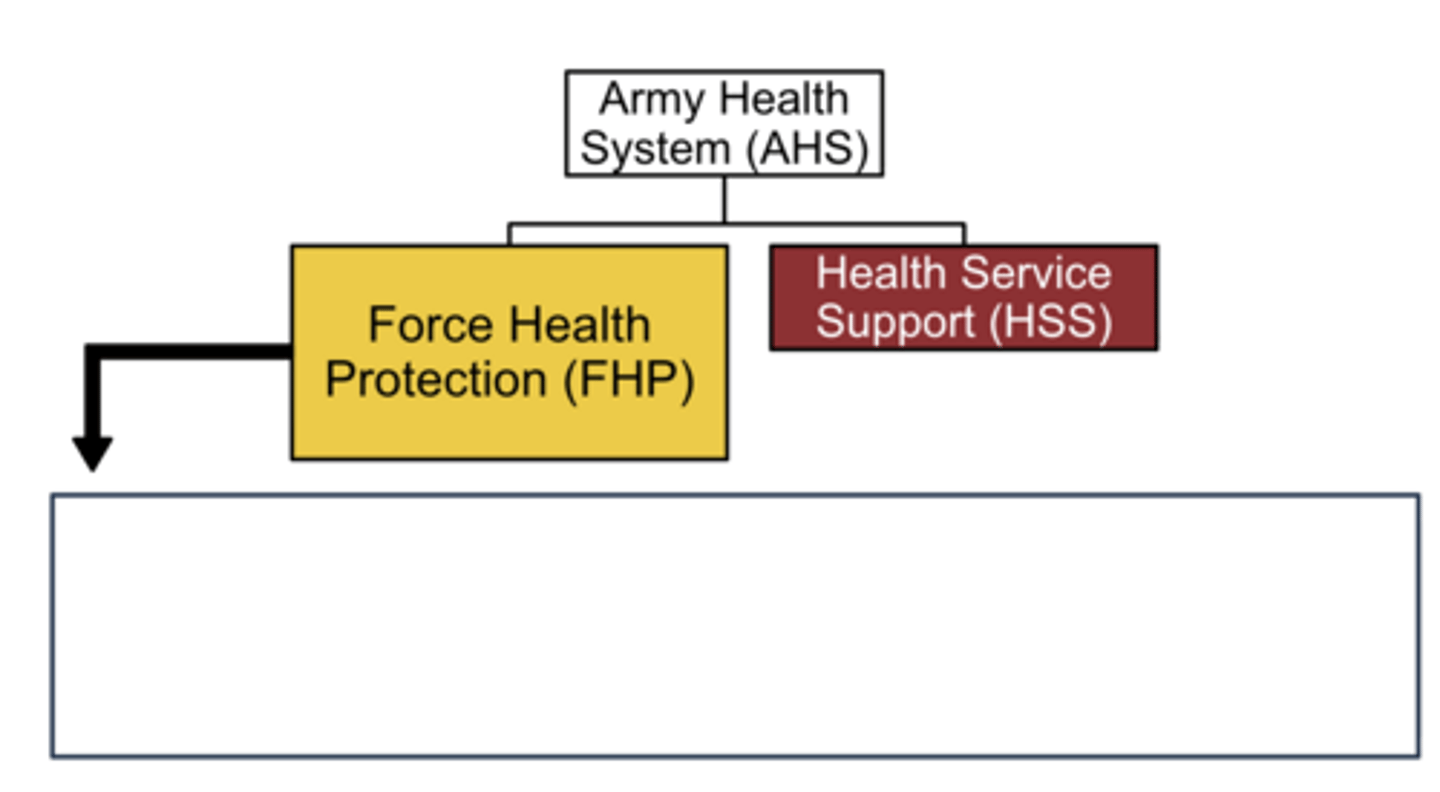
The Army Health System (AHS) Chart
10 Medical Functions (image)
Force Health Protection
falls under the Protection Warfighting Function
ELO D
Define Health Service Support
1) Define Health Service Support
2) Medical Treatment
3) Medical Evaluation
4) Hospitalization
5) Medical Logistics
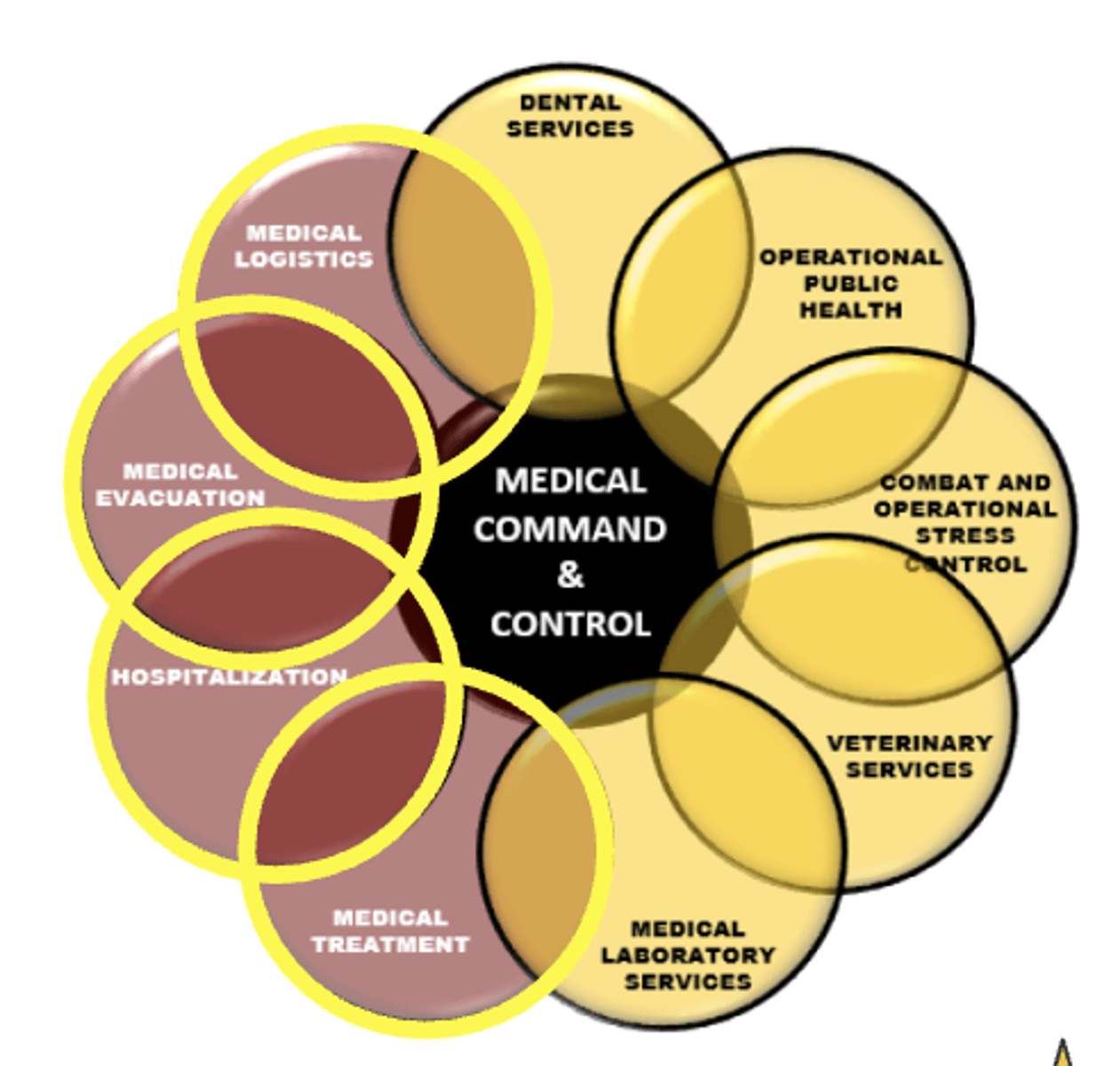
Health Service Support are:
services to promote, improve, conserve, or restore the behavioral and physical well-being of personnel by providing direct patient care. Medical functions include:
1) medical treatment
2) medical evacuation
3) hospitalization
4) medical logsitics (to include blood management)
5) command and control (in FHP and HSS)
Finished Army Health System (AHS) chart
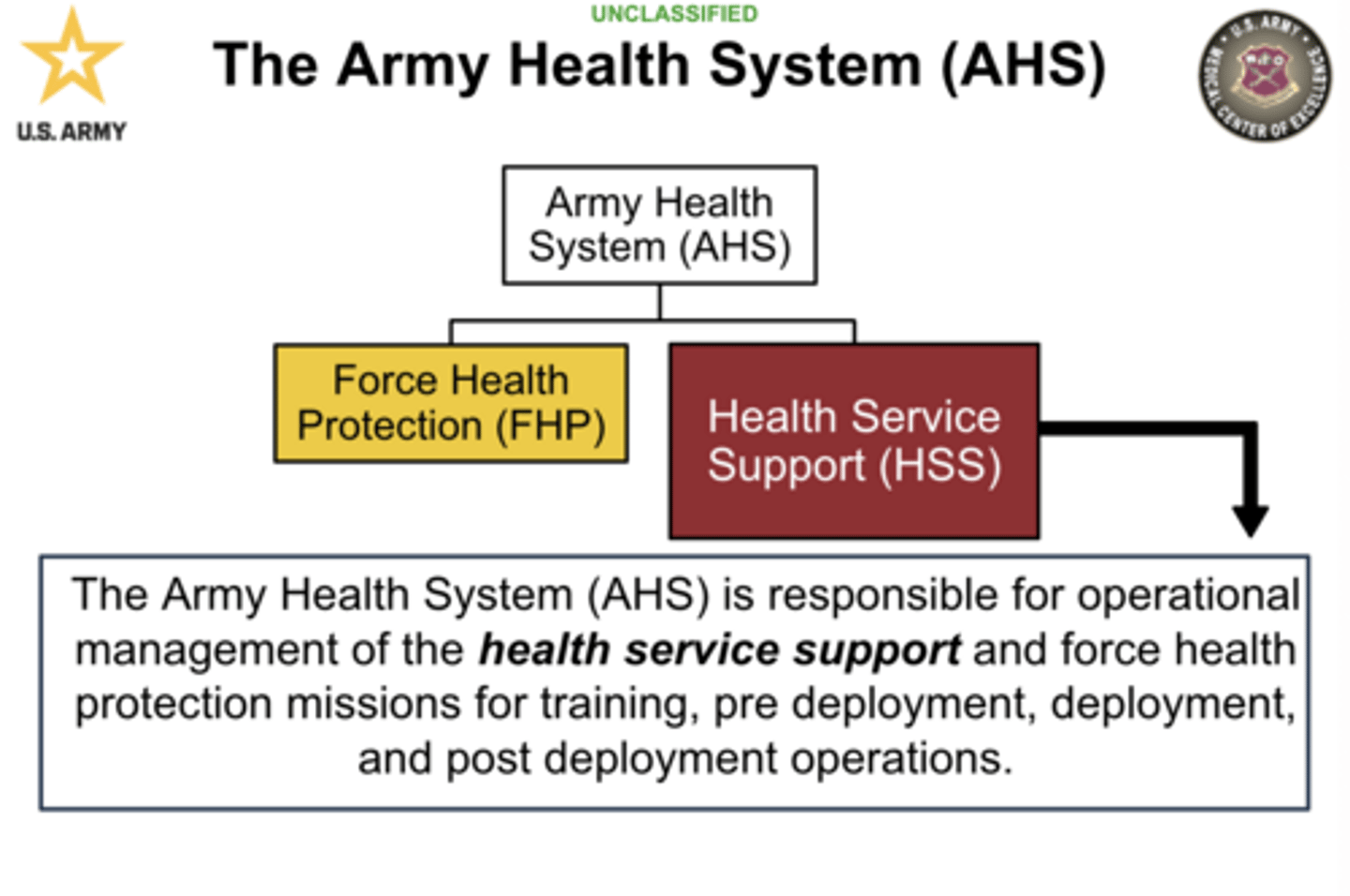
Health Service Support fall under the _________ Warfighting Function
Sustainment
Communicate the Six Army Health System Principles
1) Define Conformity
2) Define Proximity
3) Define Flexibility
4) Define Mobility
5) Define Continuity
6) Define Control
medical capabilities are grouped under the joint functions of _______ and __________
protection (force health protection FHP); sustainment (Health Service Support HSS)
Principles of the AHS
!) Conformity - the medical plan conforms to the operation plan (OPLAN), and operation orders (OPORDs)
2) Proximity - providing AHS support to sick, injured, and wounded at the right time and place to keep mortaliy to a minimum
3) Flexibility - being prepared and empowered to shift medical resources to meet changing requirements
4) Mobility - ensures medical assets remain within supporting distance of maneuvering forces
5) Continuity - moving the patient through progressive, phases roles of care.
6) Control - required to ensure scarce medical resources are efficiently employed to support the operational and strategic plan
Force Health Protection (FHP) falls under which Warfighting Function?
Protection.
Which medical functions are included in the Health Service Support (HSS) mission?
Medical Treatment, Evacuation, Hospitalization, Medical Logistics and Command and Control
Which Principle of the AHS is defined as moving the patient through progressive, phased roles of care?
Continuity.
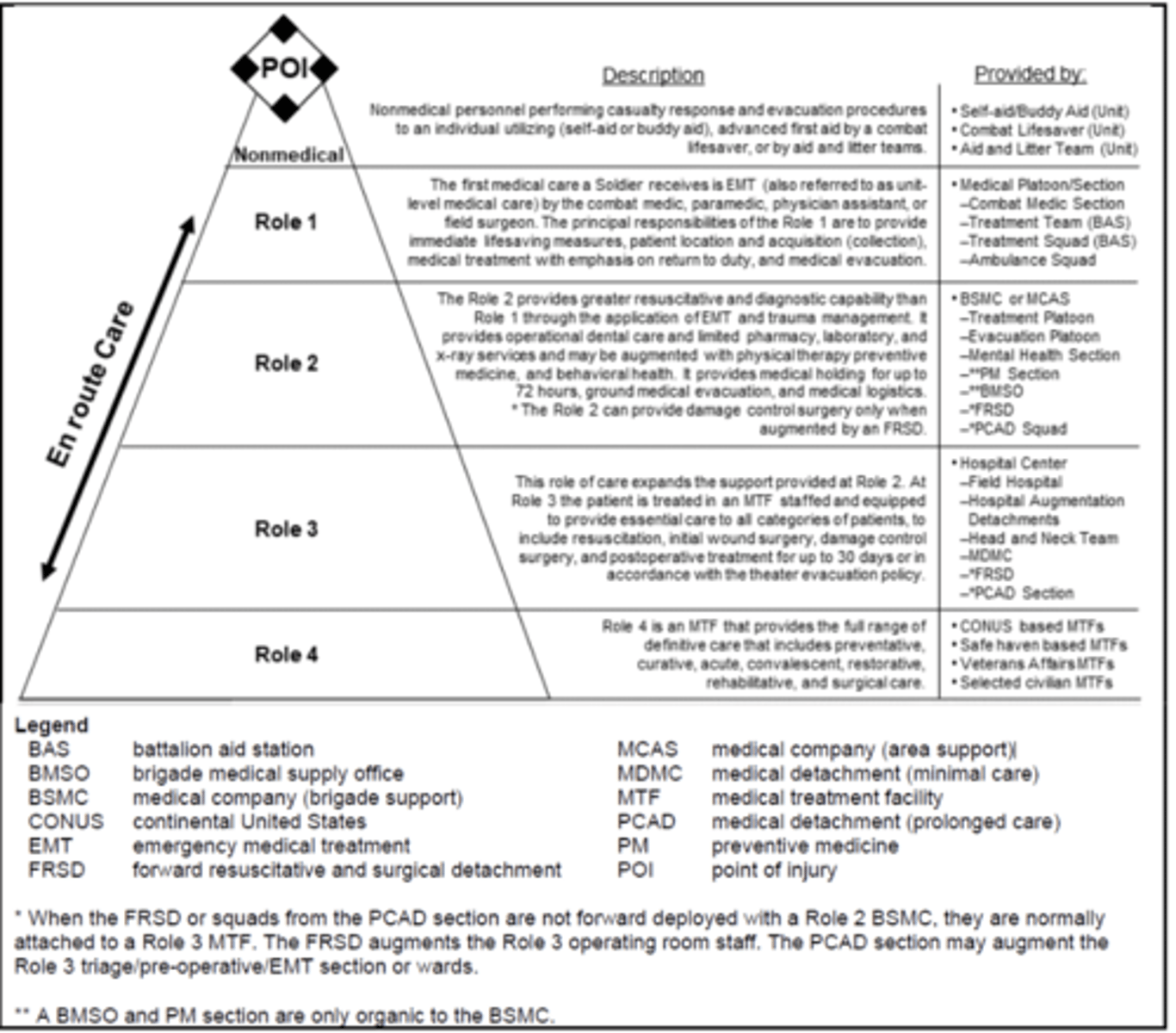
Identify the Four Roles of Care:
1) Role 1
2) Role 2
3) Role 4
4) Role 4
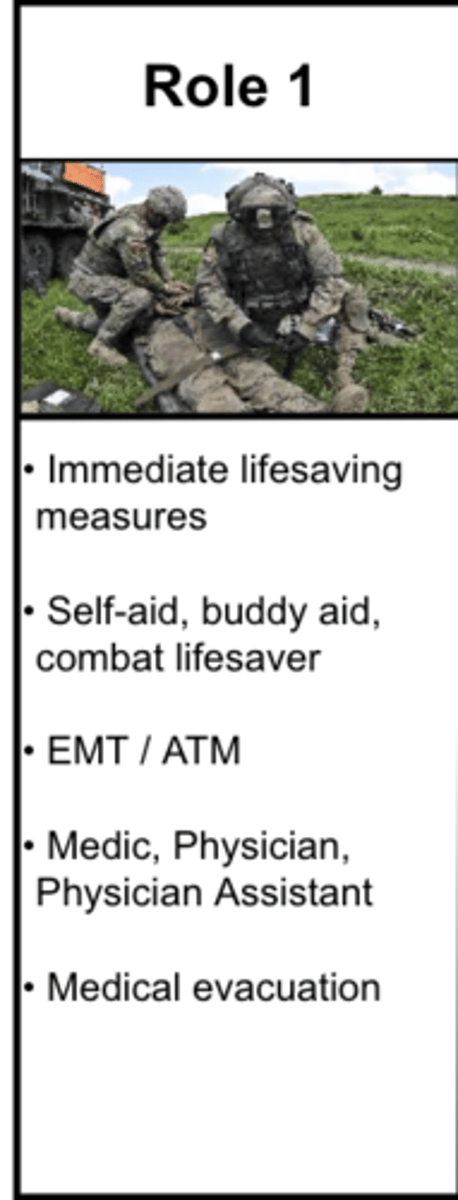
Role 1
Immediate lifesaving measures
Self-aid, buddy aid, combat lifesaver
EMT/ATM
Medic, physician, physician assistant
medical evacuation
Battalion Aid Station and Below
Role 2
X-ray, laboratory, and dental support
preventative medicine
patient hold
advanced trauma management
med log
medical evac
limited pharmacy
COSC
Medical company (BSMC/MCAS)
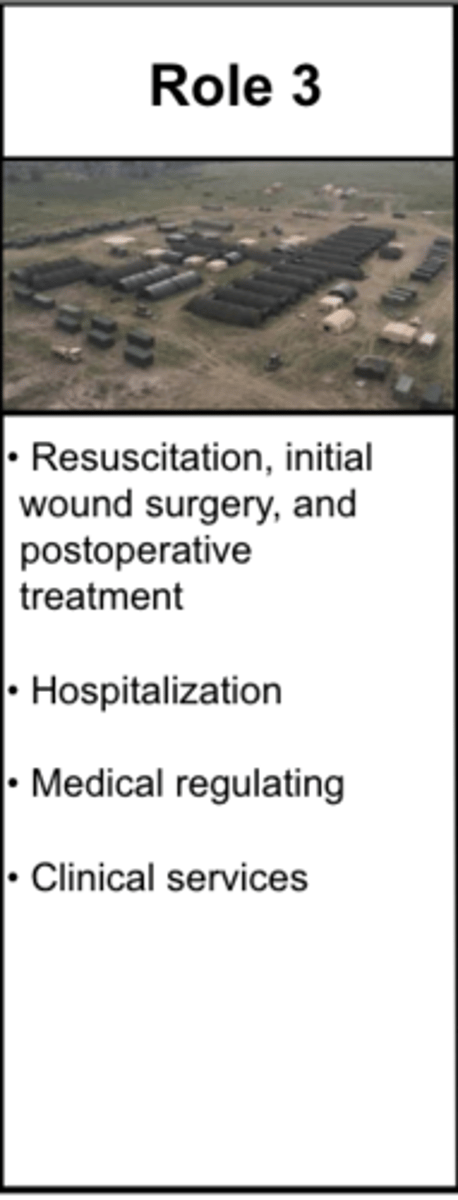
Role 3
resuscitation, initial wound surgery, and postoperative treatment
hospitalization
medical regulating
clinical services
field hospital
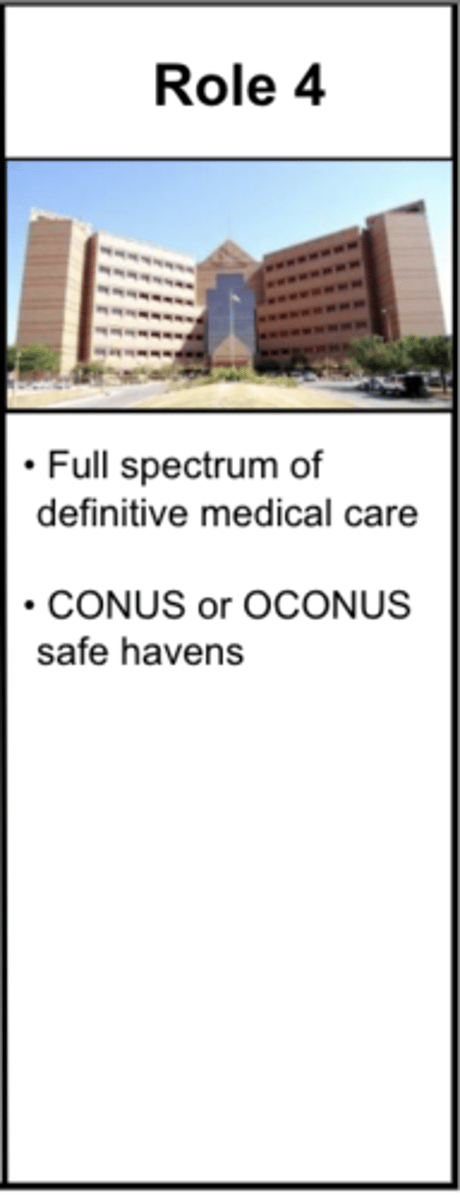
Role 4
full spectrum and definitive medical care
CONUS or OCONUS safe havens
definitive care
Role 1 medical personnel include and capabilities:
physician
PAs
Combat Medics
immediate lifesaving measures
disease non-battle injury (DNBI)
combat stress preventative measures
patient collection
medical evac from supported units
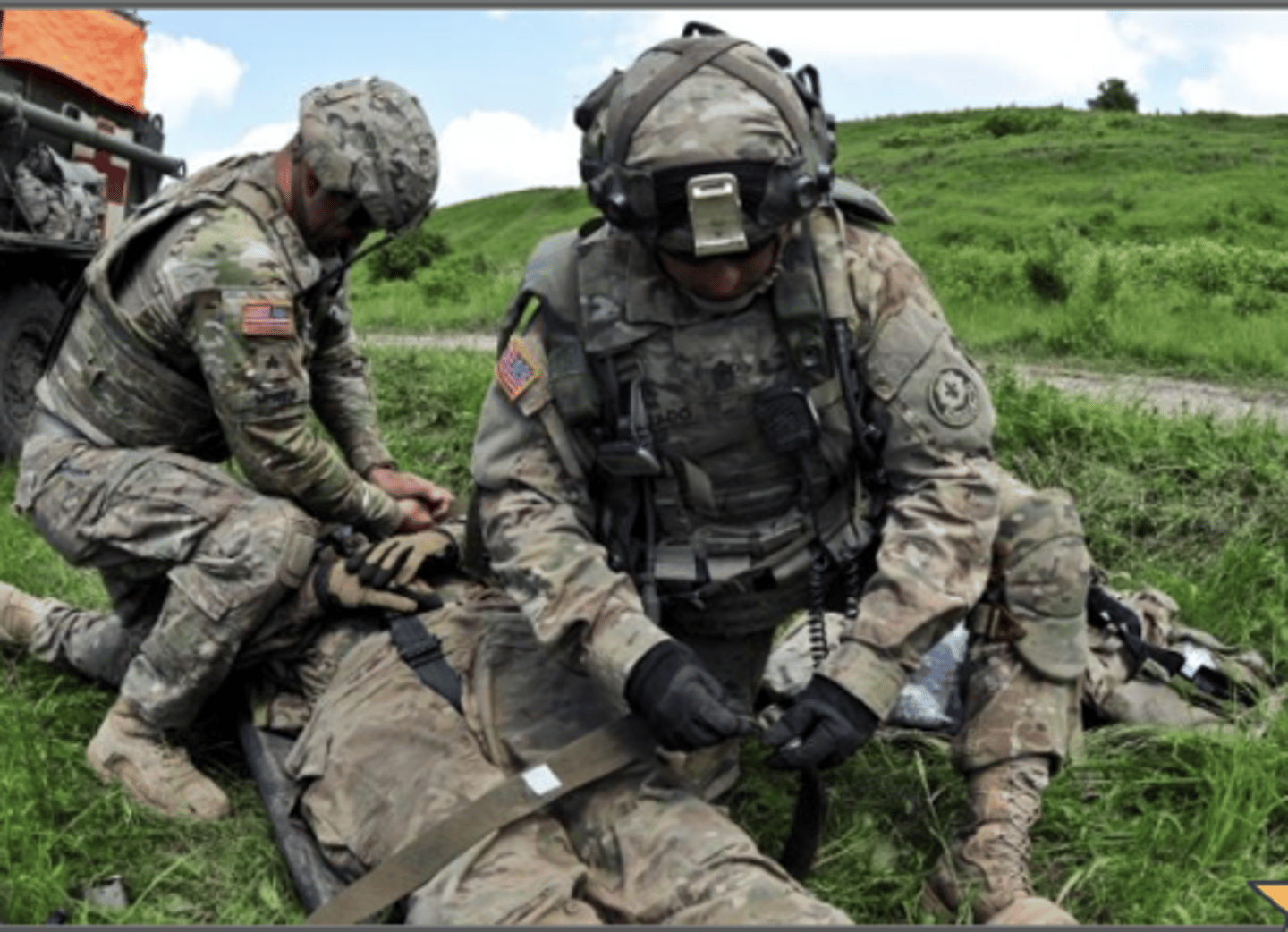
2 types of Role 2:
Brigade Support Medical Company (BSMC)
Medical Company, Area Support (MCAS)
Role 2 includes all the capabilities of Role 1 plus:
area support squad - lab, dental, x-ray
patient holding (RTD up to 72 hours)
behavioral health (COSC) section
packed red blood cells (liquid)
Brigade Medical Supply Office (BMSO)
Physical Therapy
Preventative Medicine Section
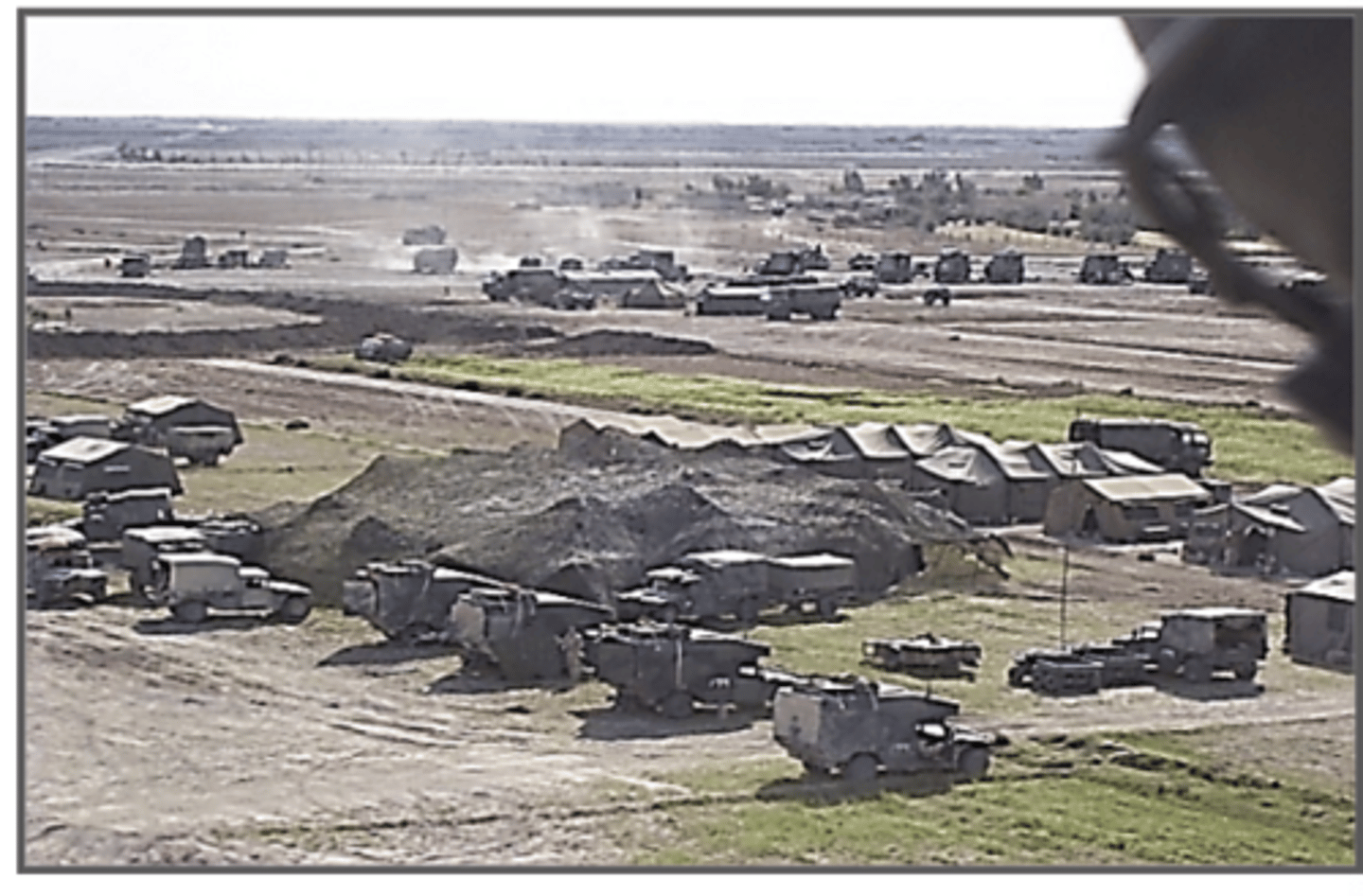
At Role 3, the patient is treated in a Medical Treatment Facility (MTF) staffed and equipped to provide care to all categories of patients, to include:
- resuscitation
- initial wound surgery
- damage control surgery
- postoperative treatment
those patients expected to return to duty (RTD) are provided convalescent care and rehab services
at Role 3, those patients not expected to RTD within the theater evacuation policy are stabilized and evacuated to Role 4 facilities
Role 3 is provided by the Field Hospital
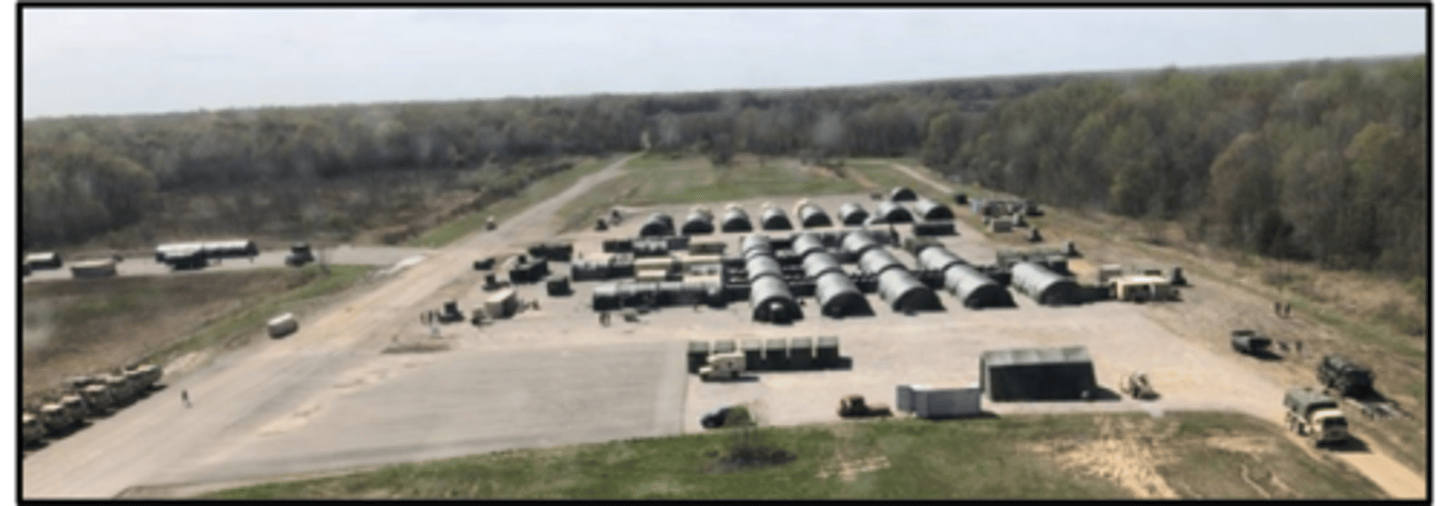
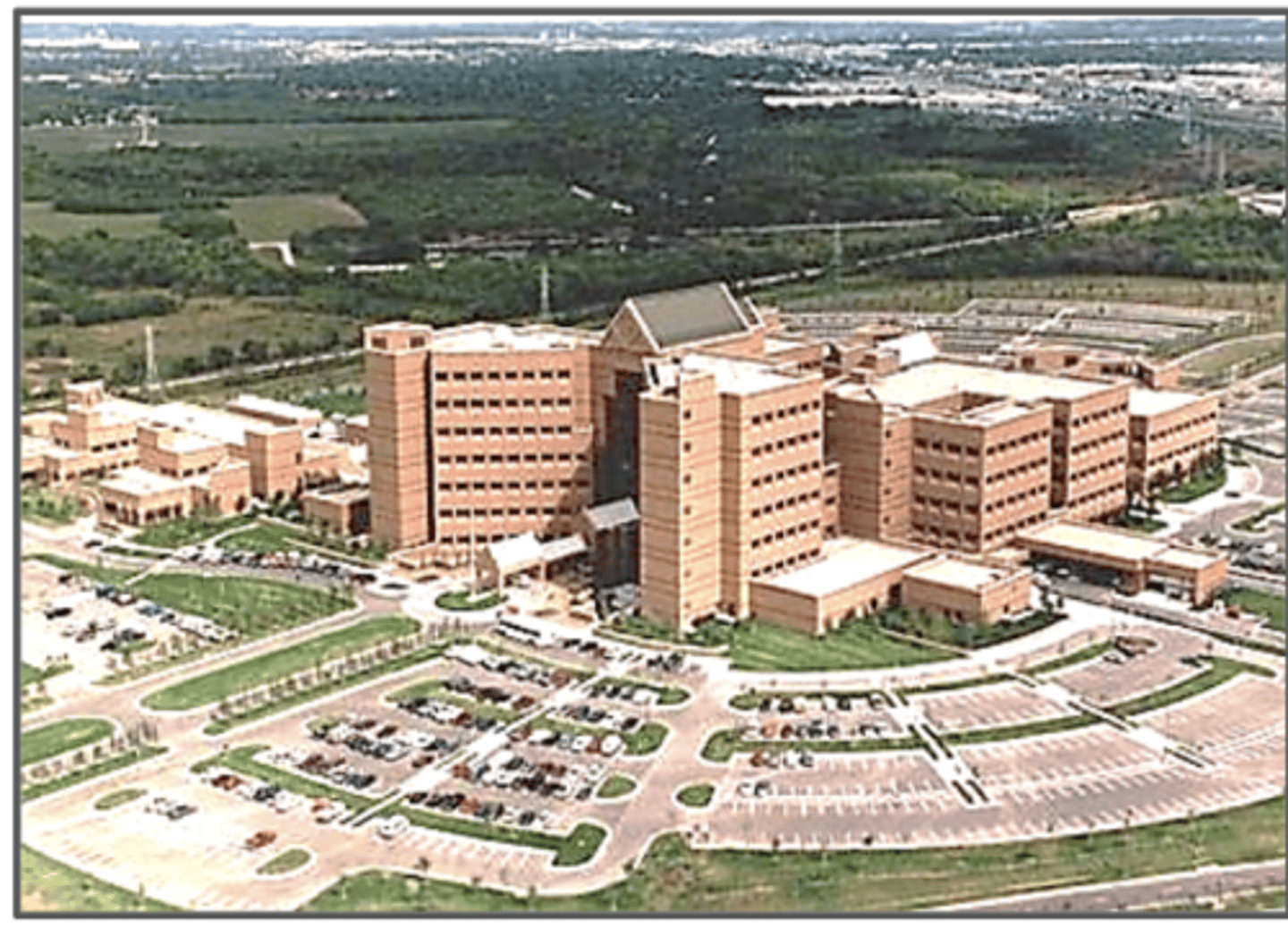
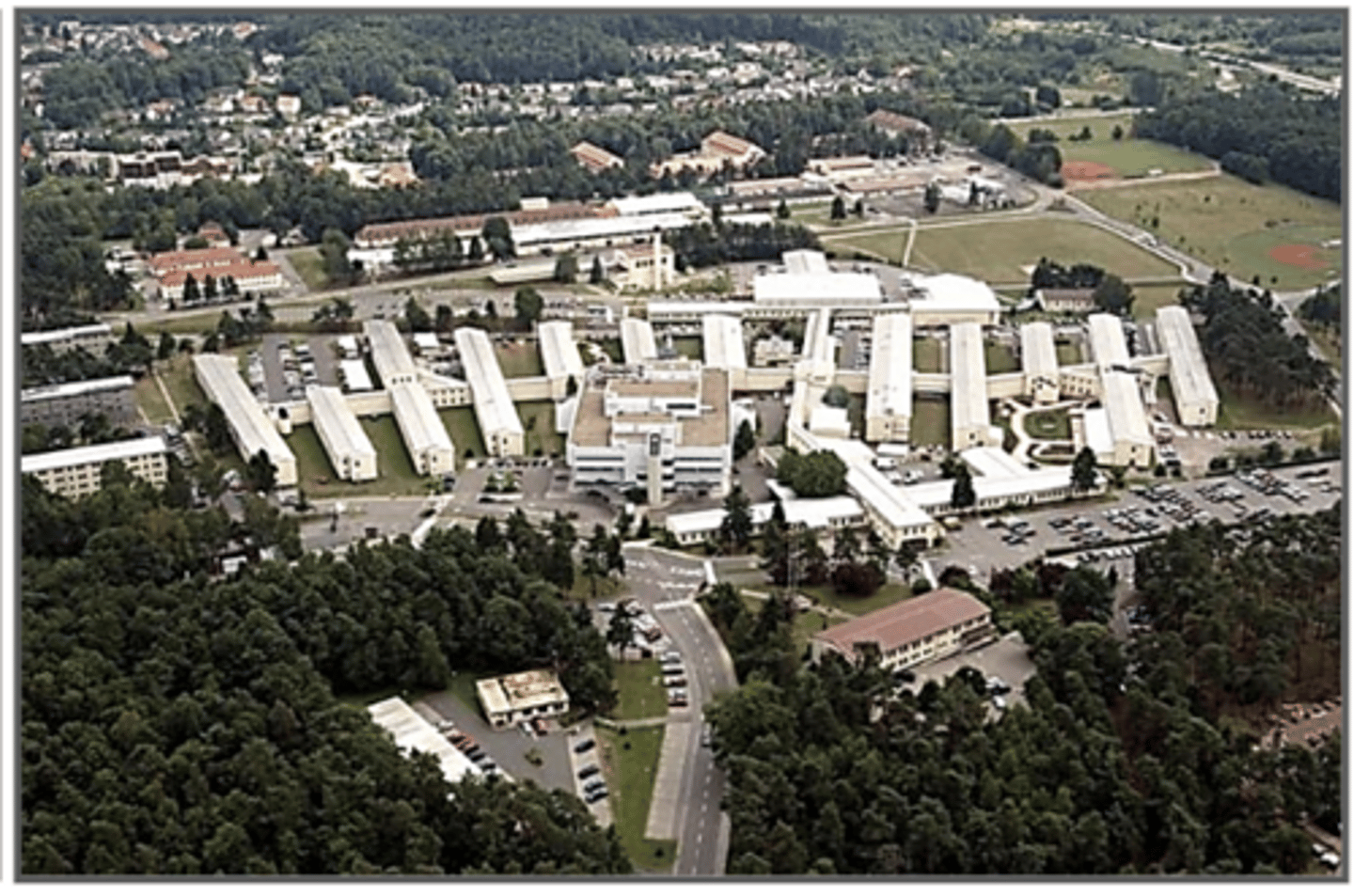
Role 4 medical care is found in CONUS-based hospitals and other safe havens (OCONUS, VA, National Disaster Medical System (NDMS) and Civilian Hospitals) and these hospitals represent what?
the most definitive medical care available in the Army Health System
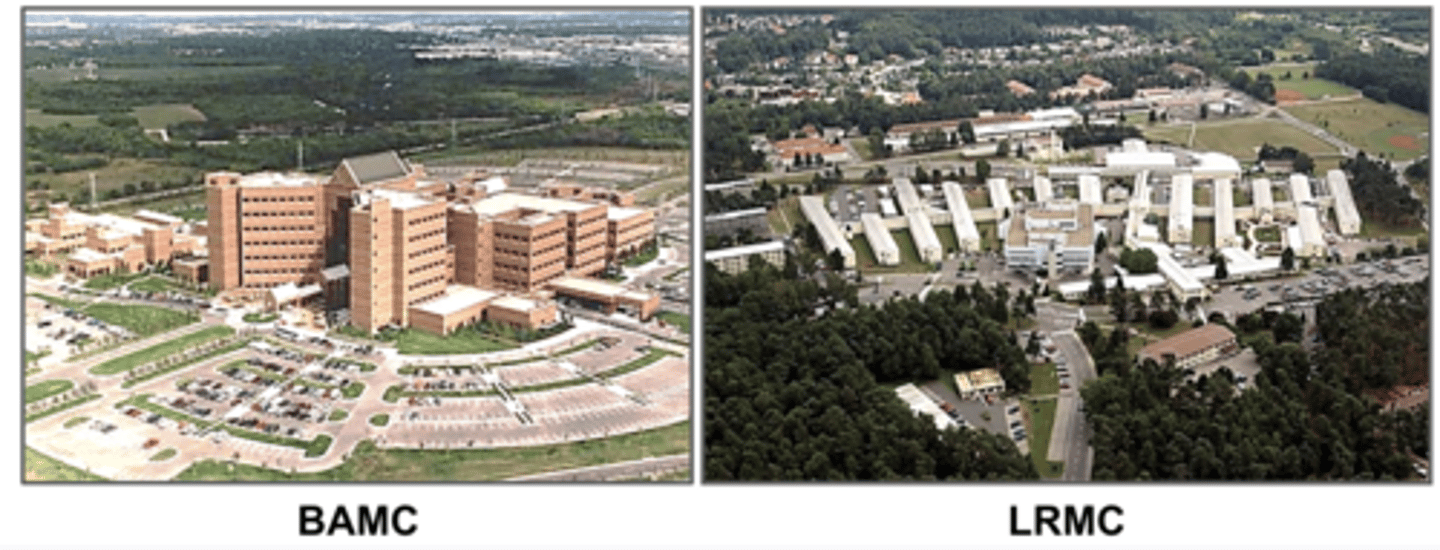
BAMC
type of Role 4
LRMC
Type of Role 4
What best describes Role 1 medical care?
It is the first care a Soldier receives (unit-level medical care), either through self and buddy aid, or Combat Lifesaver or other medical personnel who can provide Emergency Medical Treatment (EMT) and Advanced Trauma Management (ATM).
What type of units provide Roles 2 and 3 medical care?
Role 2: Brigade Support Medical Company (BSMC) and Medical Company, Area Support (MCAS)
Role 3: Field Hospital
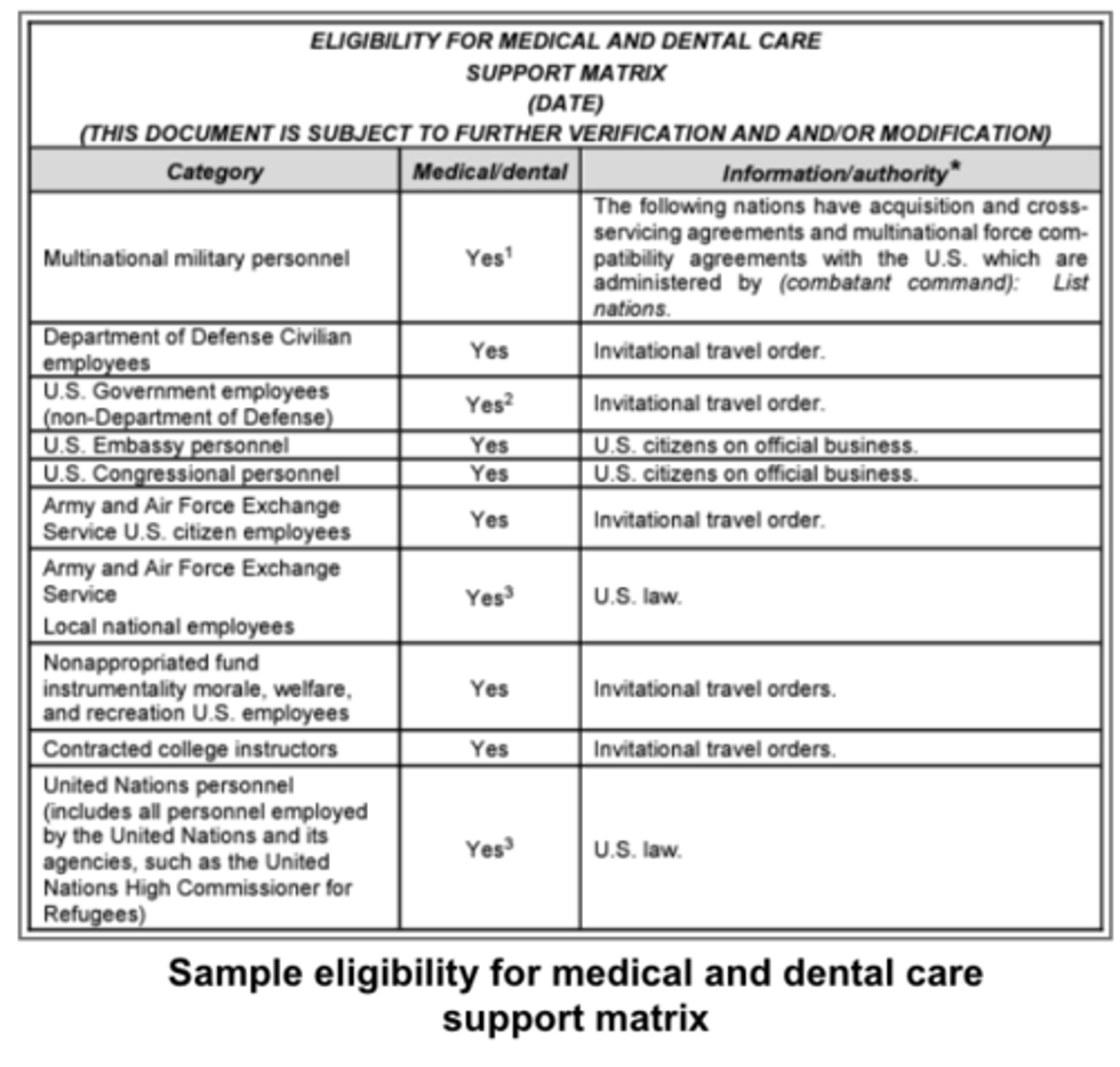
Eligibility of care determination (image):
Provisions of the Geneva Conventions
- protection of the sick and wounded
- protection and care
- enemy wounded and sick
- search for and collection of casualties
- assistance for civilian population
- enemy civilian wounded and sick
- protection and ID of medical personnel
- medical repatriation
The Geneva Conventions are four separate international treaties, signed in 1949. The conventions are very detailed and contain many provisions, which are tied directly to the medical mission. They consist of the above bullet points^
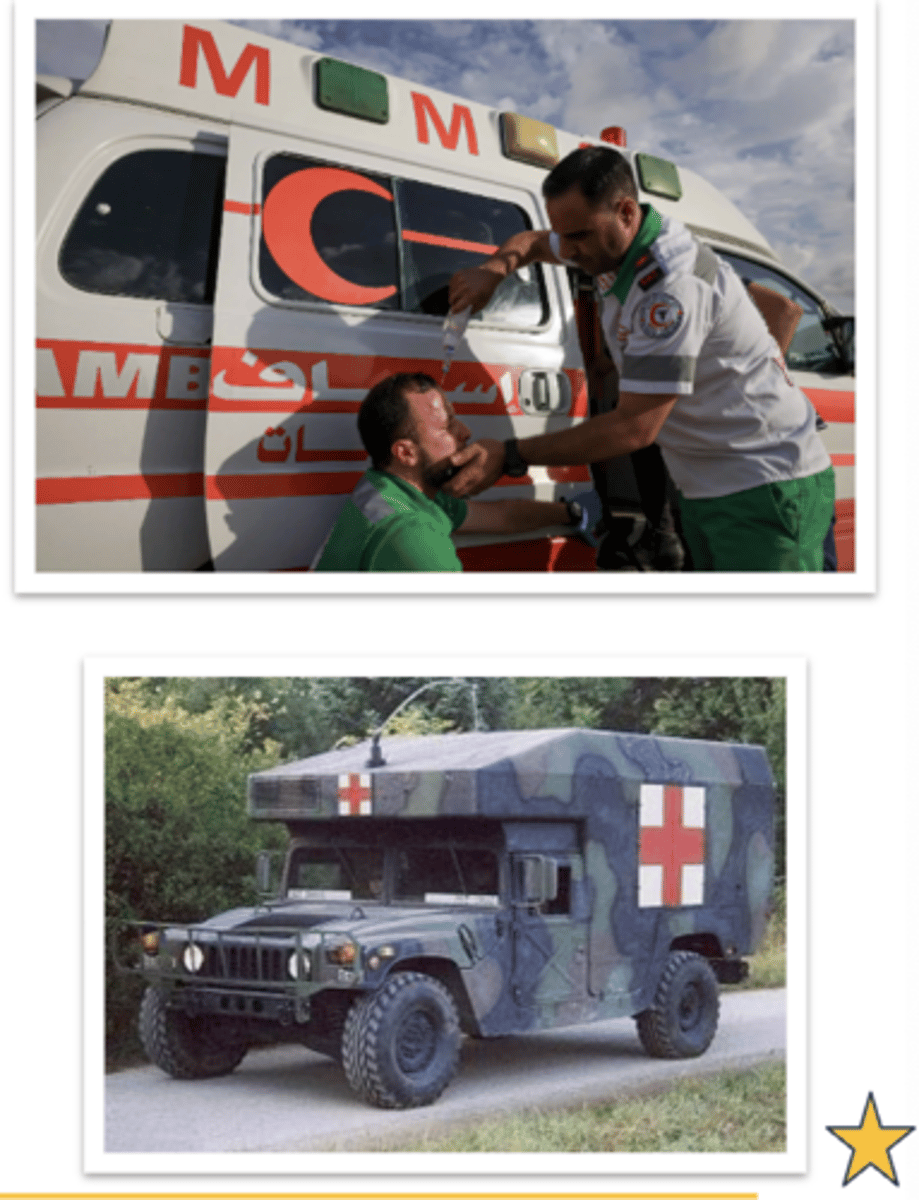
Provisions of the Geneva Conventions protection from intentional attack
medical personnel, units, establishments, and transports are protected from intentional attack if they are identifiable as such by an enemy in a combat environment
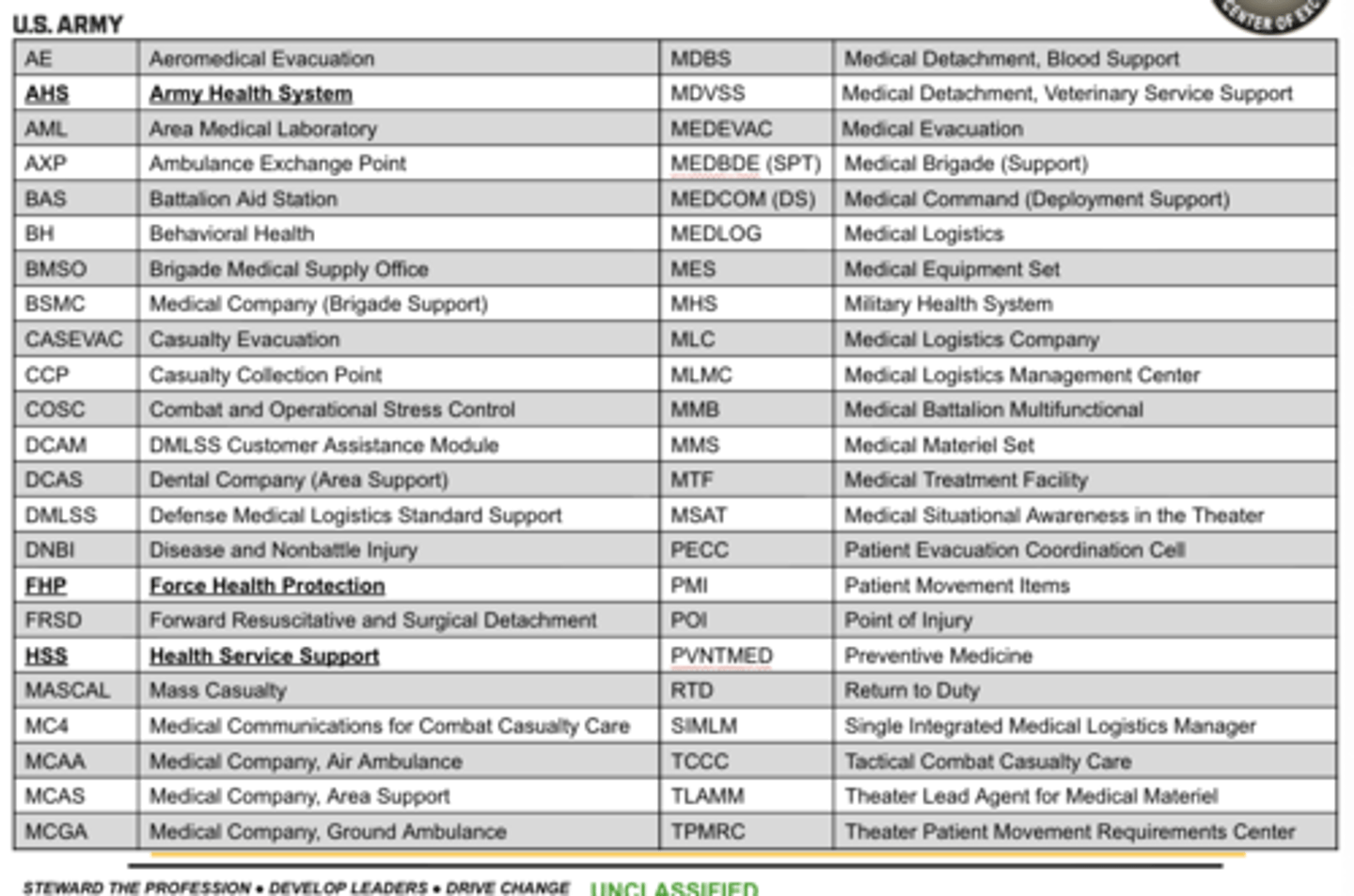
AHS =
Army Health System
MDVSS
Medical detachment, veterinary service support
FHP =
Force Health Protection
PMI
Patient Movement Items
HSS =
health service support
PVNTMED
preventative medicine
AHS Acronyms
AHS Operational Framework (again!) image:
The Law of Land Warfare
The law of land warfare, often called the Law of Armed Conflict (LOAC), is a branch of international law that regulates the conduct of hostilities on land. It seeks to prevent unnecessary suffering, protect civilians and combatants, and safeguard the fundamental rights of prisoners of war and the sick
Provisions of the Geneva Conventions
Care for Sick and Wounded
The wounded and sick are to be respected just as much when they have fallen into the hands of the enemy as when they are with their own Army