plant biology lecture 9- vascular tissues revisited
 Call Kai
 Learn
Learn Practice Test
 Spaced Repetition
 Match
Match Flashcards
 Knowt Play
1/20

There's no tags or description
Looks like no tags are added yet.
Name | Mastery | Learn | Test | Matching | Spaced | Call with Kai | Chat |
|---|
No analytics yet
Send a link to your students to track their progress
21 Terms
about xylem tissue
conducts water + minerals
dead at maturity
lignified (secondary cell walls)
about phloem tissue
conducts mixture of sugars, proteins, amino acids, hormones, etc.
alive at maturity
non-lignified
what are tracheary elements
primary xylem conducting cells
lack a protoplast
what are the two types of tracheary elements
vessel elements and tracheids
what are vessel elements
xylem conductive cells in angiosperms
Have perforations on end walls
Joined end to end to form vessels
Typically aligned with pits
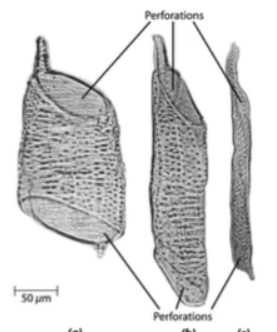
what are tracheids
xylem conductive cell in gymnosperms
no perforations
aligned with tapering walls
lined with pits
longer and narrower
what are pits
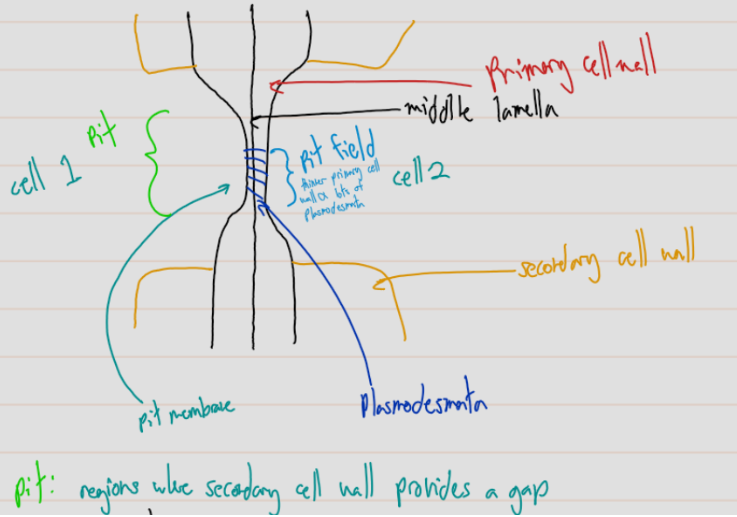
an area where two adjoining cells have a closer connection
connects neighbouring vessel elements and allows movement of materials between vessels
what are the 2 types of pits
simple pit: secondary wall comes straight in
bordered pit: secondary overhangs the pit field and created cavity
what are annular cell walls
secondary cell walls laid in rings to allow for expansion
what are helical cell walls
secondary cell walls laid in criss cross pattern to allow for cell wall expansion
where can helical and annular cell walls be found
further down the stem in the zone of cell elongation and maturation
how does a tracheary element develop
xylem cell begins with a nucleus, large central vacuole, cytoplasm and primary cell wall
cell deposits secondary cell wall and end walls expand
programmed cell death occurs— cell walls, tonoplast and nucleus disintegrate
leaves primary cell wall with thickenings and perforations
what are sieve elements
primary conducting cells of phloem
only has primary cell walls
alive at maturation by highly modified (loses nuclei, tonoplast, ribosomes, golgi apparatus, and cytoskeleton)
what are the 2 types of sieve elements
sieve tube elements and sieve cells
what are sieve tube elements
phloem conductive cells in angiosperms
wider
has sieve plates
larger pores
stacked end to end
has companion cells
what are sieve cells
phloem conductive ells in gymnosperms
narrower and longer
no sieve plates, but has sieve areas
smaller pores
has albuminous cells
what’s a sieve area
sites with a concentration of pores
connects cytoplasm between adjoining cells
sieve cells
what’s a sieve plate
area on the end of a cell with larger pores compared to sieve cells
allows for efficient flow of material
sieve tube elements
how do sieve tube elements develop
young sieve tube element nucleus splits into 2
the young cell divides into 2 (sieve tube element and companion cell)
sieve tube element nucleus, tonoplast, ribosomes, G.A and cytoskeleton degenerates
the remains of the sieve tube elements (cytoplasm and cell membrane) press against cell wall and leave open space for movement of materials
what are companion cells
specialised parenchyma cells that act as life support for sieve tube cell and delivers substances to sieve tube element
connected to sieve tube element through plasmodesmata
sieve tube cell
what are albuminous cells
specialised parenchyma cells that traffick substances in/out of sieve cells