Neoclassicism and Romanticism
 Call Kai
 Learn
Learn Practice Test
 Spaced Repetition
 Match
Match Flashcards
 Knowt Play
1/36

There's no tags or description
Looks like no tags are added yet.
Name | Mastery | Learn | Test | Matching | Spaced | Call with Kai | Chat |
|---|
No analytics yet
Send a link to your students to track their progress
37 Terms
Age of enlightenment
Reason, order, clarity, logic, secularism, scientific inquiry, individual rights, opposition to superstition and absolute monarchy. Neoclassicism is the visual equivalent of Enlightenment values: inspired by ancient Greece and Rome (democracy, republicanism, rationality), it rejected Baroque excess (curves, emotion, theatricality) in favor of straight lines, symmetry, restraint, and moral seriousness
Reason and Science: from the Scientific to the Industrial Revolution
Reason against Religion
Reason and Knowledge: the Encyclopédie
Reason and Education
Reason, Philosophy and Society
Reason and Government: Enlightened absolutism
Reason and Politics: “Life, liberty and the pursuit of happiness”
Reason and Social Change: French Revolution
Reason, Liberty and Economics
Reason and Aesthetics: There is more to Art than Beauty
Reason and Art
Jean le Rond d'Alembert and Denis Diderot: “Particularly influential Enlightenment publication was the Encyclopédie (Encyclopedia).
Published between 1751 and 1772 in 35 volumes
A massive collaborative work with over 140 contributors (Voltaire, Rousseau, Montesquieu, etc.). Aimed to "change the way people think" by gathering all human knowledge. Included detailed engravings of manufacturing techniques (turning, weaving, mining). Banned by French authorities (attacked religious authority and royal absolutism), but continued publication with secret support.
Why important to this period: The quintessential Enlightenment publication. Spread secular, empirical, and critical thinking across Europe.
How it displayed the period: Embodied faith in reason, classification, and shared knowledge. Each entry cross-referenced (undermining absolute truths). Diderot's "Prospectus" (1750) argued that useful knowledge should replace theological speculation
Johann Joachim Winckelmann, the origin of the History of Art as a discipline: Thoughts on the Imitation of Greek Works in Painting and Sculpture (1750) and History of Ancient Art (1764)
Winckelmann (German scholar) argued that Greek art achieved ideal beauty: "noble simplicity and quiet grandeur" (edle Einfalt und stille Größe). He never visited Greece (only saw Roman copies) but theorized that climate, democracy, and freedom produced superior art. Called for return to classical principles.
Why important to this period: Founded the discipline of art history. Provided the philosophical basis for Neoclassicism.
How it displayed the period: Enlightenment historicism: art understood as a product of historical conditions. Winckelmann's preference for Greek over Roman art influenced generations. His claim that Greek art embodied "freedom" resonated with revolutionary politics
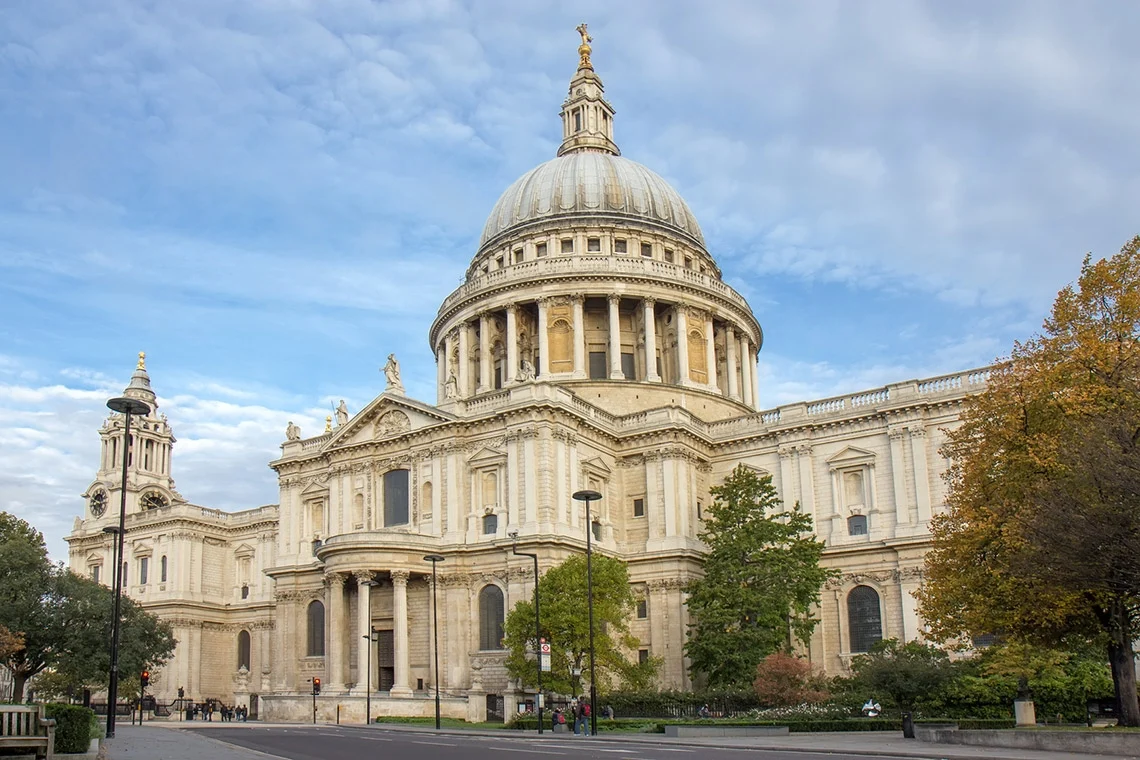
Christopher Wren: St Paul's Cathedral, London and Pantheon, Rome (118-125 AD)
1675-1710
Wren's dome is inspired by Michelangelo's St. Peter's but also by the Pantheon's oculus and coffered ceiling. However, St. Paul's is Baroque (dynamic, theatrical), not full Neoclassical (which came later, c. 1750s–1830s). The Pantheon is the ur-model for Neoclassical domed buildings.
Why important to this period: The Pantheon was the most imitated ancient building in Neoclassical architecture (e.g., Panthéon in Paris, Jefferson's Rotunda, British Museum reading room).
How it displayed the period: Neoclassical architects admired the Pantheon's perfect geometry (sphere inside cylinder), coffered concrete dome, oculus (eye to heavens), and portico. Wren's St. Paul's is transitional: Baroque massing but classical orders
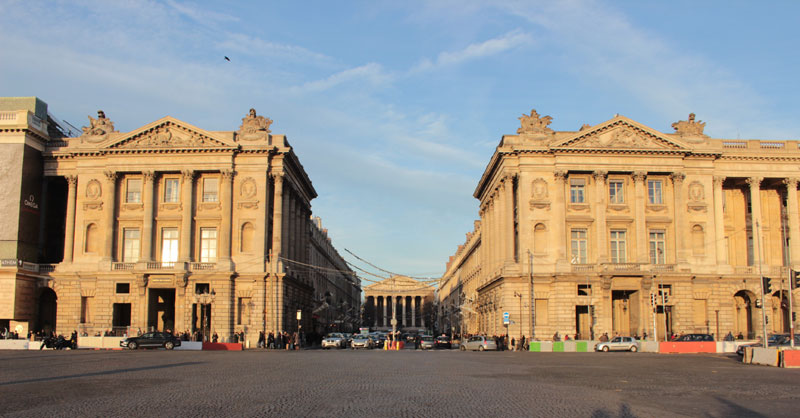
Ange-Jacques Gabriel: Place de la Concorde
1771
A large octagonal square (now with obelisk from Luxor). Gabriel designed two identical Neoclassical palaces flanking the Rue Royale. The square's open plan (no enclosing buildings on two sides) was unprecedented.
Why important to this period: Exemplifies French Neoclassical urbanism: symmetry, clarity, monumental scale, and open public space.
How it displayed the period: Enlightenment urban planning: the square was dedicated to the king (equestrian statue, later destroyed) but also to public enjoyment. Open design allowed procession and gathering. Later renamed Place de la Concorde (ironically the site of Louis XVI's guillotine)
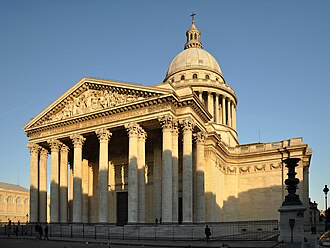
Jacques-Germain Soufflot: Panthéon, Paris
1755-1790
Greek-cross plan with a massive Corinthian portico (22 columns) and a dome (inspired by St. Peter's and St. Paul's). The interior is extraordinarily light (thin columns, large windows). In 1791, it was secularized into a mausoleum for French heroes (Voltaire, Rousseau, Hugo, Zola, Curie).
Why important to this period: The first major French Neoclassical monument. Created the "public secular temple" model.
How it displayed the period: Enlightenment rationalism: Soufflot used scientific structural principles (lightweight masonry, iron reinforcement). The lightness rejects Baroque heaviness. Later secularization (Revolution) shows the shift from religious to republican values
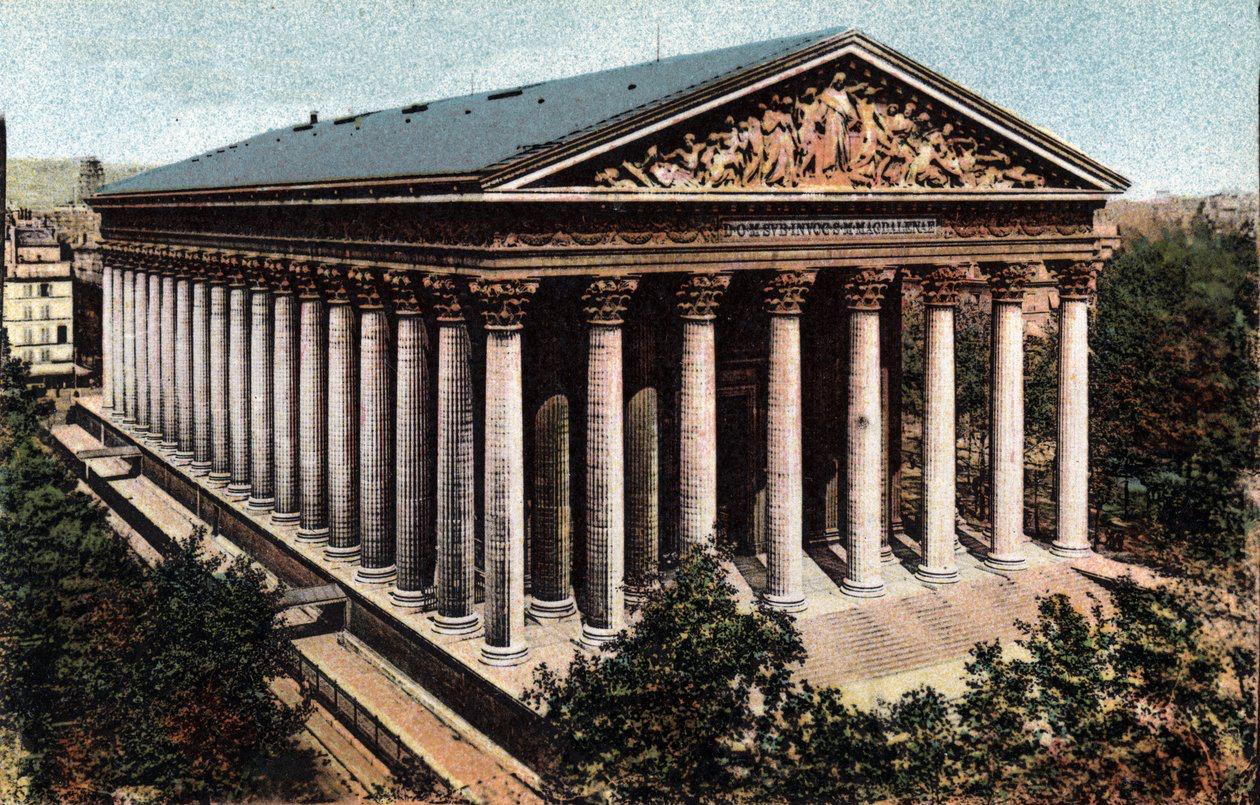
Pierre-Alexandre Vignon, Jacques-Marie Huvé: La Madeleine, Paris
1813-1842
A massive temple with a colossal Corinthian colonnade (52 columns, 20 meters tall) surrounding the entire structure. No windows; light enters from above. Napoleon intended it as a "Temple to the Glory of the Grande Armée" (like a Roman triumphal temple). After Napoleon's fall, it was consecrated as a church.
Why important to this period: The most extreme example of a Roman temple form used for a modern building. Entirely lacks Christian medieval features.
How it displayed the period: Napoleonic Neoclassicism: imperial Rome reborn. Napoleon saw himself as a Roman emperor (the Madeleine is his Temple of Peace). The severe exterior (no Christian symbols) proclaims secular glory. Later as a church, it remained a pagan temple in form
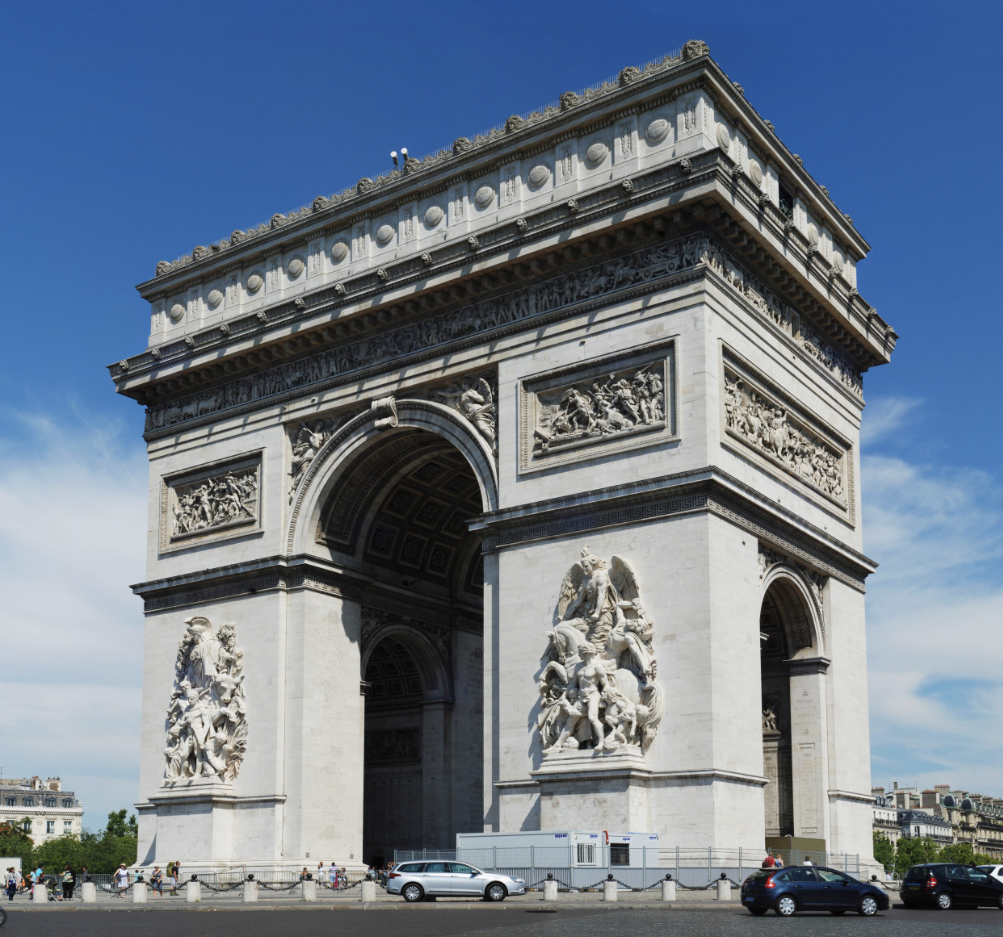
Jean Chalgrin: Arc de Triomphe, Paris
1806-1836
Massive triumphal arch (50m tall, 45m wide) inspired by the Arch of Titus (Rome, c. 81 AD) but far larger. Four sculptural groups (including Rude's "La Marseillaise" or "Departure of the Volunteers"). Inscriptions list French generals and battles. Tomb of the Unknown Soldier (1920) added later.
Why important to this period: The largest triumphal arch in the world. Napoleon's most iconic urban project.
How it displayed the period: Imperial Neoclassicism: revives Roman military triumphal architecture for Napoleon's victories. The arch is a propaganda machine: reliefs show Napoleon's battles (before his fall). It celebrates conquest, empire, and military glory. The scale (cars now drive through it) reflects Napoleonic ambition
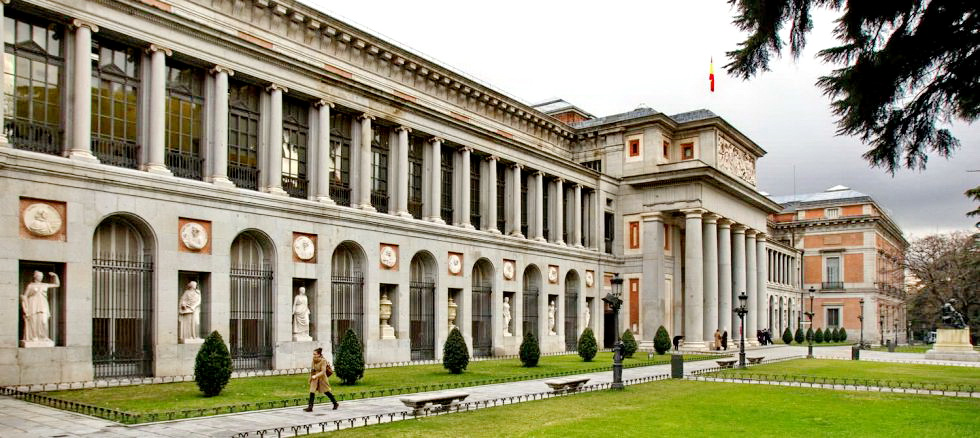
Juan de Villanueva: Prado Museum
1785-1811
Long rectangular building (approx. 200 m) with a peristyle (ionic columns) on the main facade, a central rotunda (later used for sculpture), and two side wings. Designed by Charles III's court architect for science and education, not yet a museum. After the Peninsular War, Ferdinand VII turned it into a museum of painting and sculpture.
Why important to this period: The finest Neoclassical public building in Spain. Model of clarity, symmetry, and Enlightenment purpose.
How it displayed the period: Enlightenment civic architecture: building for public instruction (sciences, then arts). No religious or royal symbolism (except the main facade's restrained elegance). The plan is rational: symmetrical wings, central rotunda, clear circulation. Now one of the world's greatest museums, still housing Villanueva's core
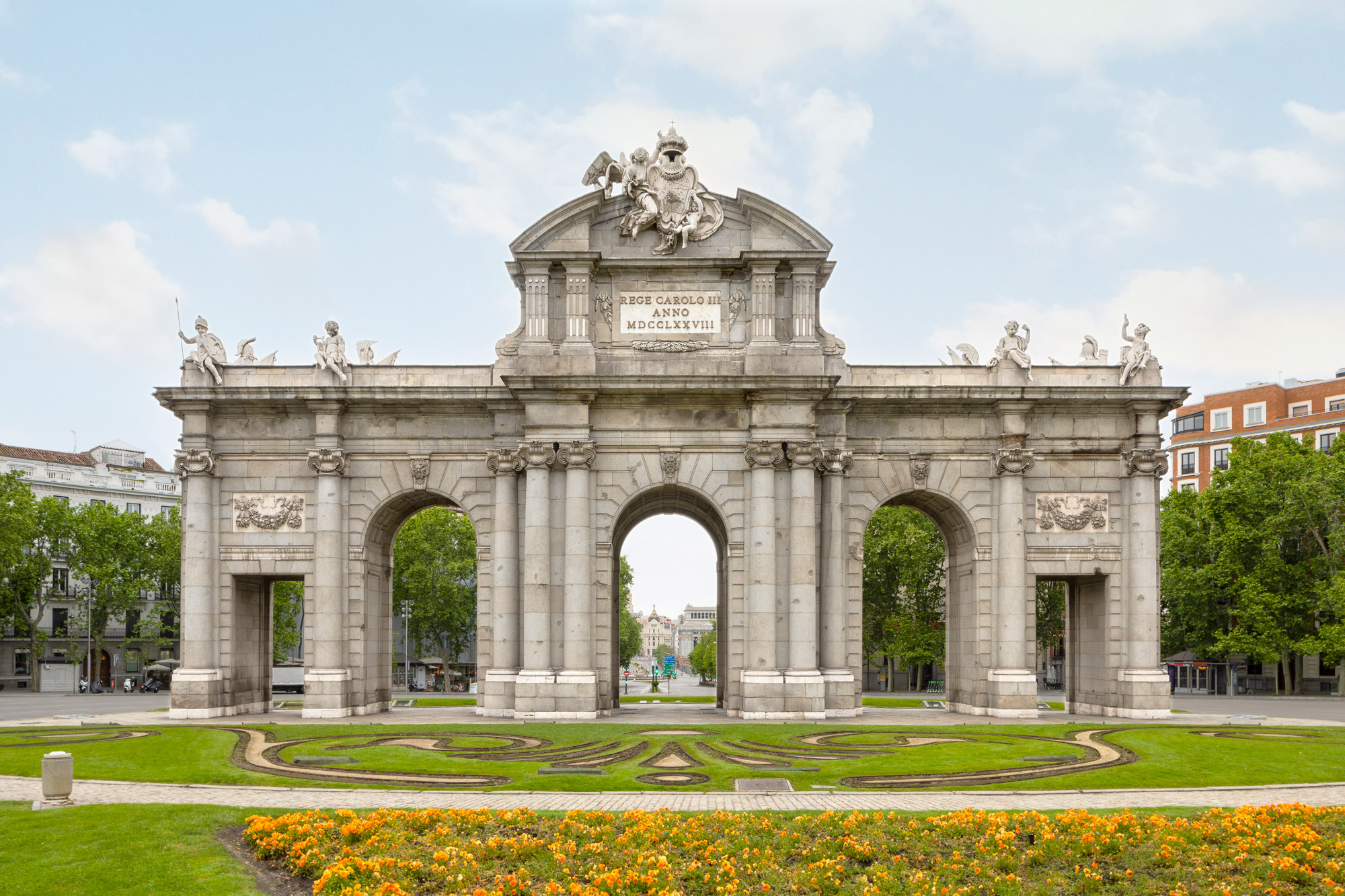
Francesco Sabatini: Puerta de Alcalá
1778
A monumental Neoclassical gate (5 arches: 3 semicircular, 2 rectangular). Granite and limestone. Inspired by Roman triumphal arches (Arch of Titus, Arch of Septimius Severus). Replaced a 16th-century Habsburg gate. Located at the entrance to the Buen Retiro grounds.
Why important to this period: Spain's most important Neoclassical triumphal arch. Commissioned by Charles III (the "best mayor of Madrid").
How it displayed the period: Neoclassical rationalism: clear geometric volumes, no Baroque ornament (only bas-reliefs of the king's virtues). The gate was open to the city (not fortified). It proclaims Bourbon modernity (contrast with Habsburg Madrid). Now a symbol of Madrid
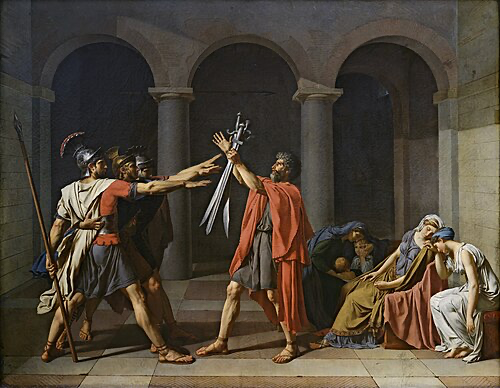
Jacques-Louis David – The Oath of the Horatii
The leader of Neoclassical painting
1784
Three brothers swear allegiance to Rome before battle. Linear, frieze-like composition; male figures rigid (duty); women weeping (emotion). Painted just before the French Revolution; read as a call to sacrifice for the state
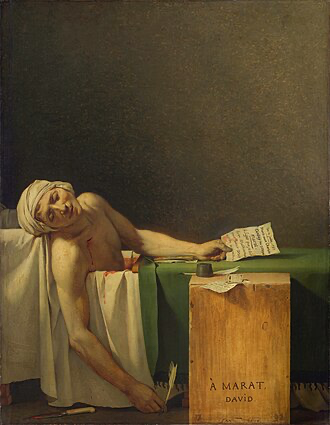
Jacques-Louis David - The Death of Marat
1793
Revolutionary martyr Marat stabbed in his bath. Caravaggesque light, stark simplicity, almost religious iconography (Marat as secular saint).
Why important: David turned painting into revolutionary propaganda. Rejects Baroque emotion for classical clarity, moral seriousness, and civic virtue
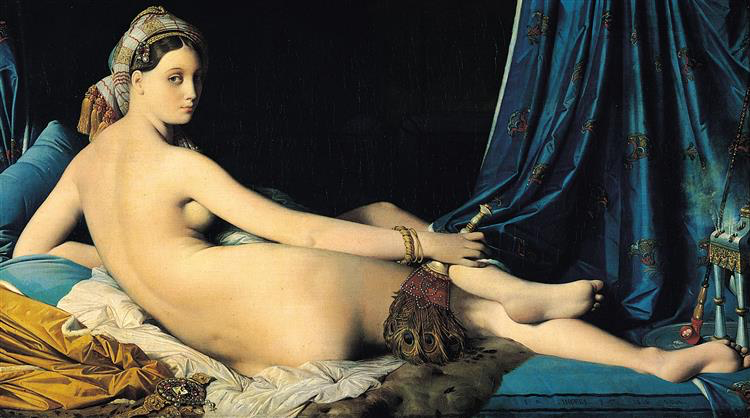
Jean-Auguste-Dominique Ingres - The Grande Odalisque
1814
Jacques Louis Davids Student
Exaggerated elongated spine, cool colors, and an impossible anatomy (three extra vertebrae). Criticized as "gothic" but admired for contour and line
Why important: Pushed Neoclassical line and idealized beauty but also introduced exoticism (prefiguring Romanticism)
Key characteristics of Neoclassical painting
Linear clarity over color; sculptural figures; shallow stage-like space; moral or civic themes (Roman history, ancient virtues); restrained emotion (no Baroque ecstasy); idealized bodies based on antique statue
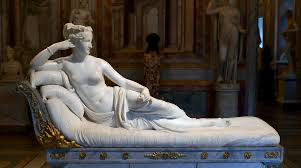
Antonio Canova - Pauline Bonaparte as Venus Victrix
Italian, the greatest Neoclassical sculptor.
1805–1808
Napoleon's sister reclining nude as a goddess. Marble, extremely polished
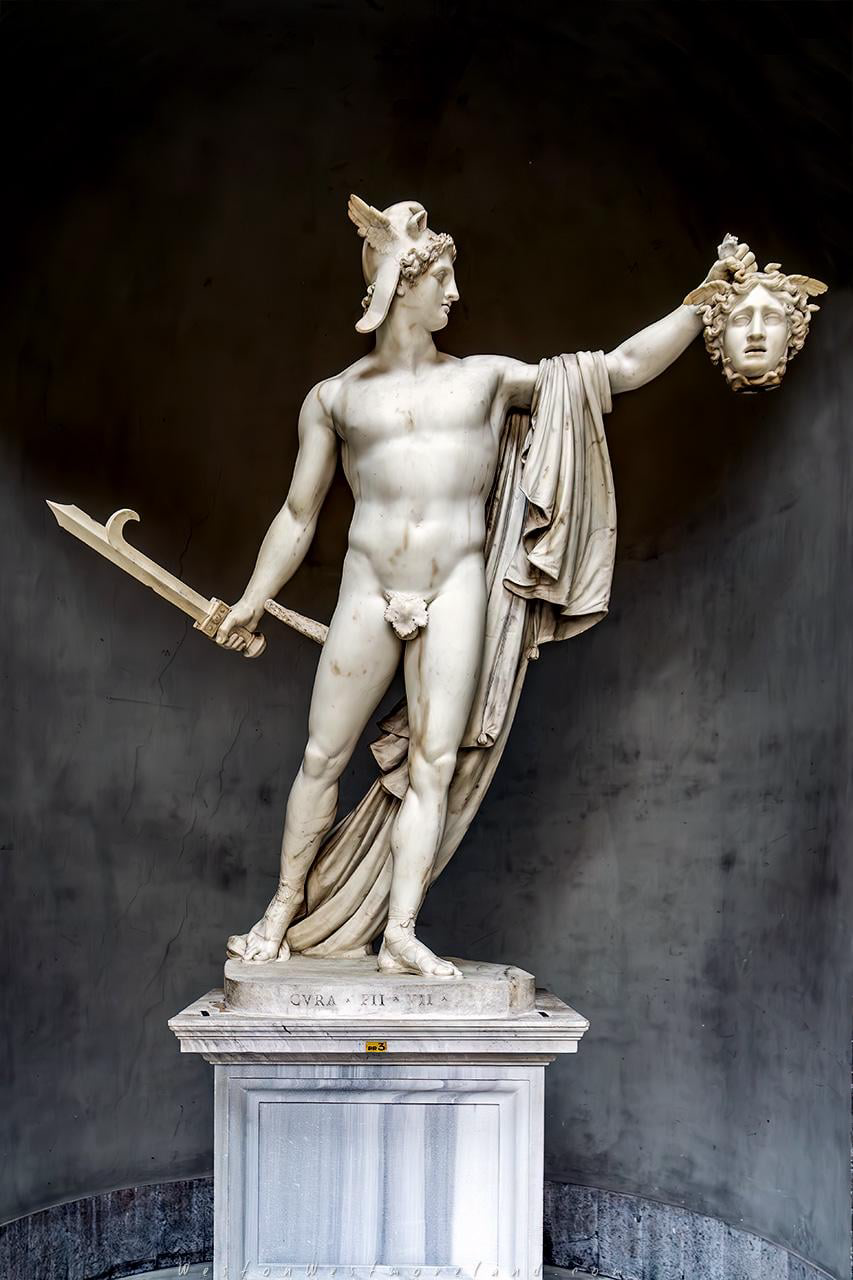
Antonio Canova - Perseus Triumphant
1801
Beheaded Medusa, inspired by the Apollo Belvedere. Bronze (Vatican)
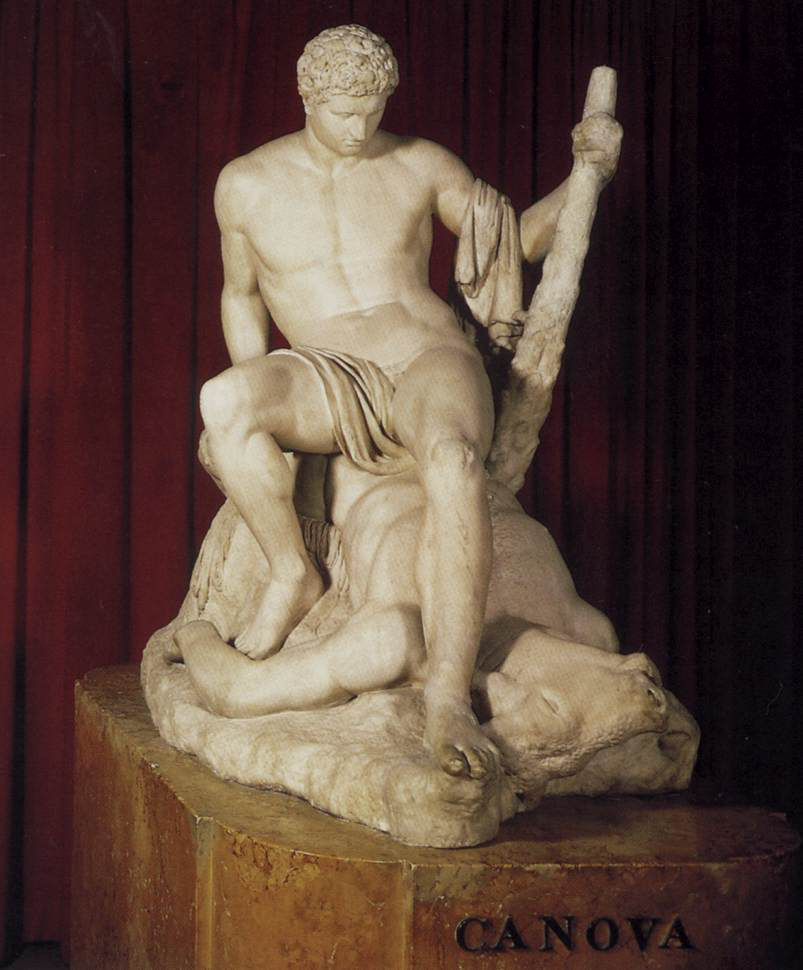
Antonio Canova - Theseus and the Minotaur
1783
Theseus seated on the dead Minotaur, exhausted after victory. Calm and contained.
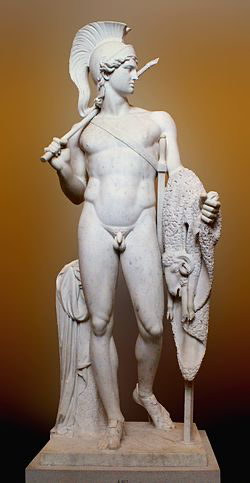
Bertel Thorvaldsen - Jason with the Golden Fleece
Danish
1803: Heroic nude leaning on a spear, inspired by Greek kouroi. Extremely severe and linear.
White marble (no polychromy, ignoring Greek evidence of painted statues), polished smooth (no Baroque surface texture), calm expressions, heroic nudes, contrapposto, and archaeological "purity" (togas, sandals, Greek hairstyles)
Francisco de Goya y Lucientes
Court painter to three Spanish monarchs (Charles III, Charles IV, Ferdinand VII). Deafened by an illness in 1792. Witnessed the horrors of the Peninsular War (1808–1814) and the brutal suppression of Spanish liberalism. Lived in self-imposed exile in Bordeaux, France from 1824 until death. His work spans Rococo, Neoclassical, and pre-Romantic. He is the bridge between Old Masters and Modern Art
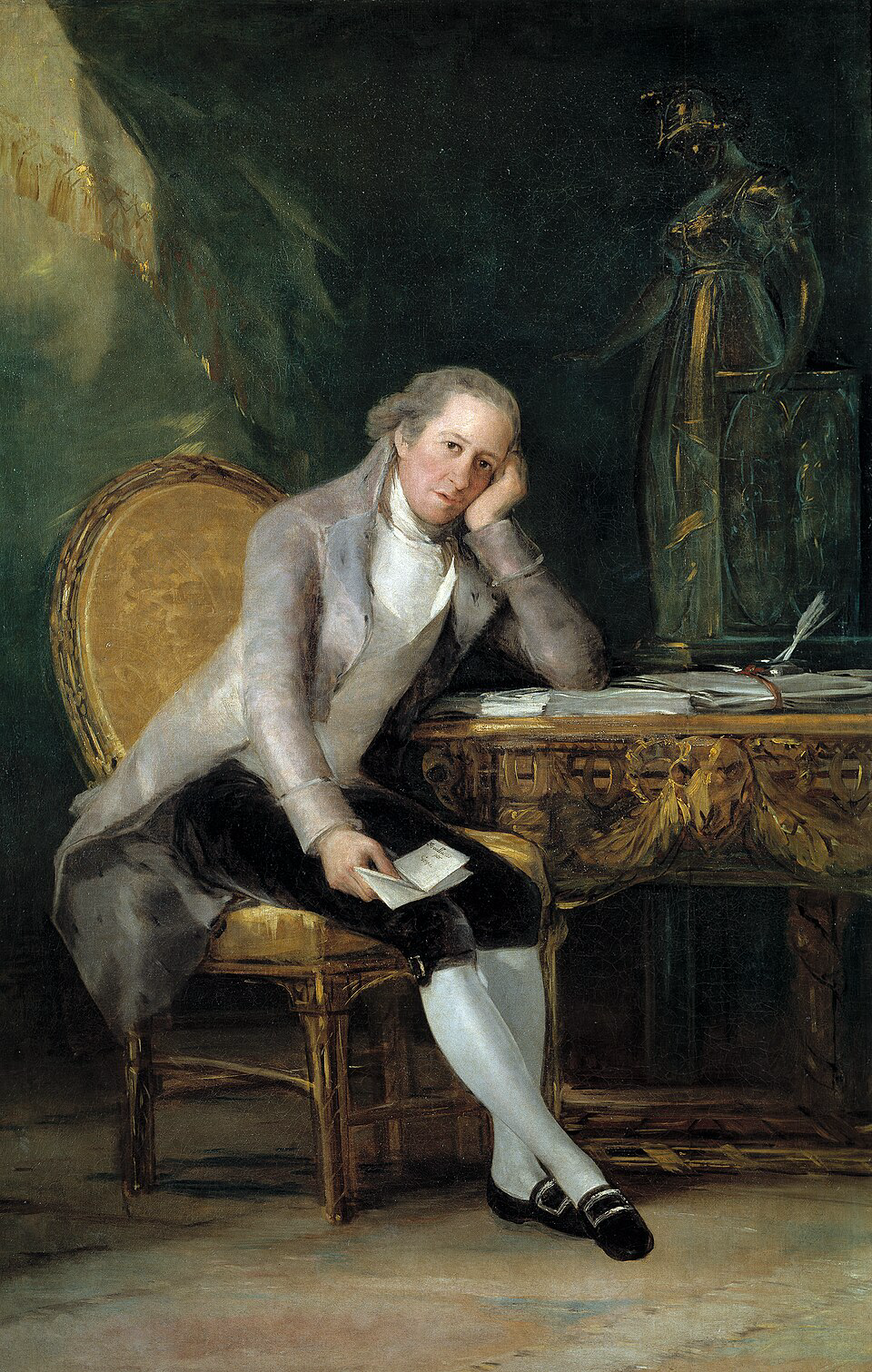
Francisco de Goya: Gaspar Melchor de Jovellanos
1798
Portrait of the Enlightenment statesman, writer, and reformer (close friend of Goya). Jovellanos wears plain clothes (not courtly costume), stands before a dark background. His face is intelligent, tired, dignified. He holds a paper (his reform proposals).
Why important to this period: Jovellanos was Spain's leading ilustrado (Enlightenment figure). He was imprisoned in 1801 by the Inquisition (political enemies). Goya admired him.
How it displayed the period: Goya's Enlightenment portraits: psychological depth over flattery. Jovellanos is a thinker (not a noble). The dark background, the steady gaze, the plain dress: all suggest seriousness, integrity, and reason. Goya painted him again after his death (1801, imaginary)
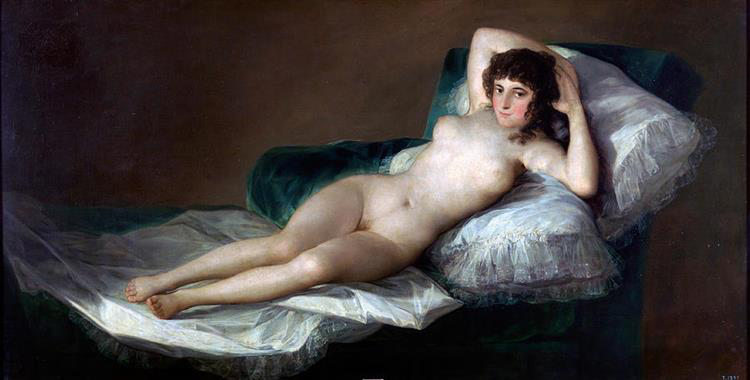
Francisco de Goya: La maja desnuda
1798-1805
A reclining nude woman (unknown identity: Duchess of Alba? Pepita Tudó? A merchant's mistress?) resting on pillows, hands behind her head, looking directly at the viewer. Pubic hair shown (scandalous for Spanish painting). Goya also painted La maja vestida (The Clothed Maja) with the same pose.
Why important to this period: One of the few pre-20th-century Western nudes to show pubic hair and a direct, unmythological gaze. The Inquisition summoned Goya in 1815 to explain why he painted "indecent" works.
How it displayed the period: Goya's defiance: no classical pretext (Venus, Danaë, etc.). This is a specific woman, not a goddess. The direct gaze challenges the viewer. The Inquisition's interrogation shows Enlightenment resistance: Goya claimed he was following Velázquez and Titian. The vestida version allowed display of desnuda as a "variant."
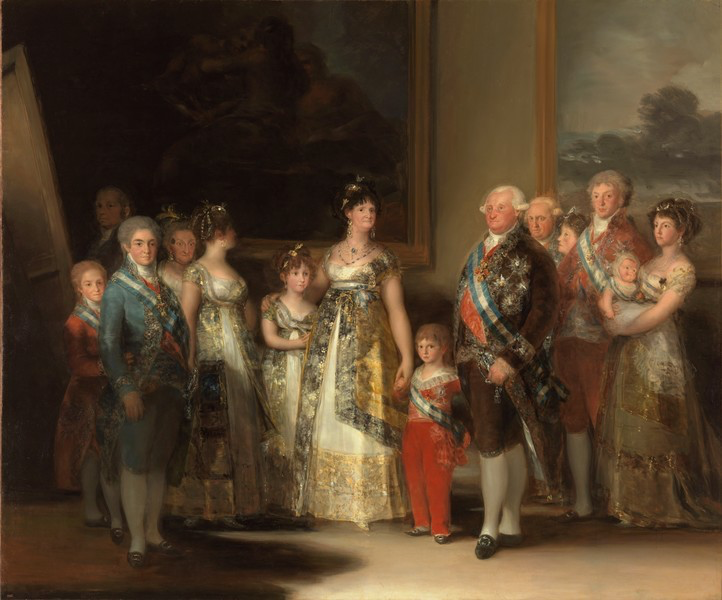
Francisco de Goya: La familia de Carlos IV (Charles IV and his Family)
1800-01
Group portrait of King Charles IV, Queen María Luisa, and their children (including the future Ferdinand VII). Goya himself appears at the left (behind the canvas, like Velázquez in Las Meninas). The queen is central (actually the power behind the throne). The figures are not idealized: the king looks weak, the queen vulgar, the prince (Ferdinand) sullen, the princesses a bit foolish.
Why important to this period: Possibly the most psychologically ruthless royal portrait in Western art. The royal family reportedly loved it (didn't see themselves honestly).
How it displayed the period: Goya's realism (not flattery) prefigures Romantic depictions of royal stupidity. The composition borrows from Velázquez (Las Meninas). The brushwork is loose, Velázquez-like. The jewel effects (queen's diamonds, king's gold fleece) are virtuoso. But the faces reveal a dysfunctional family at the head of a dying empire
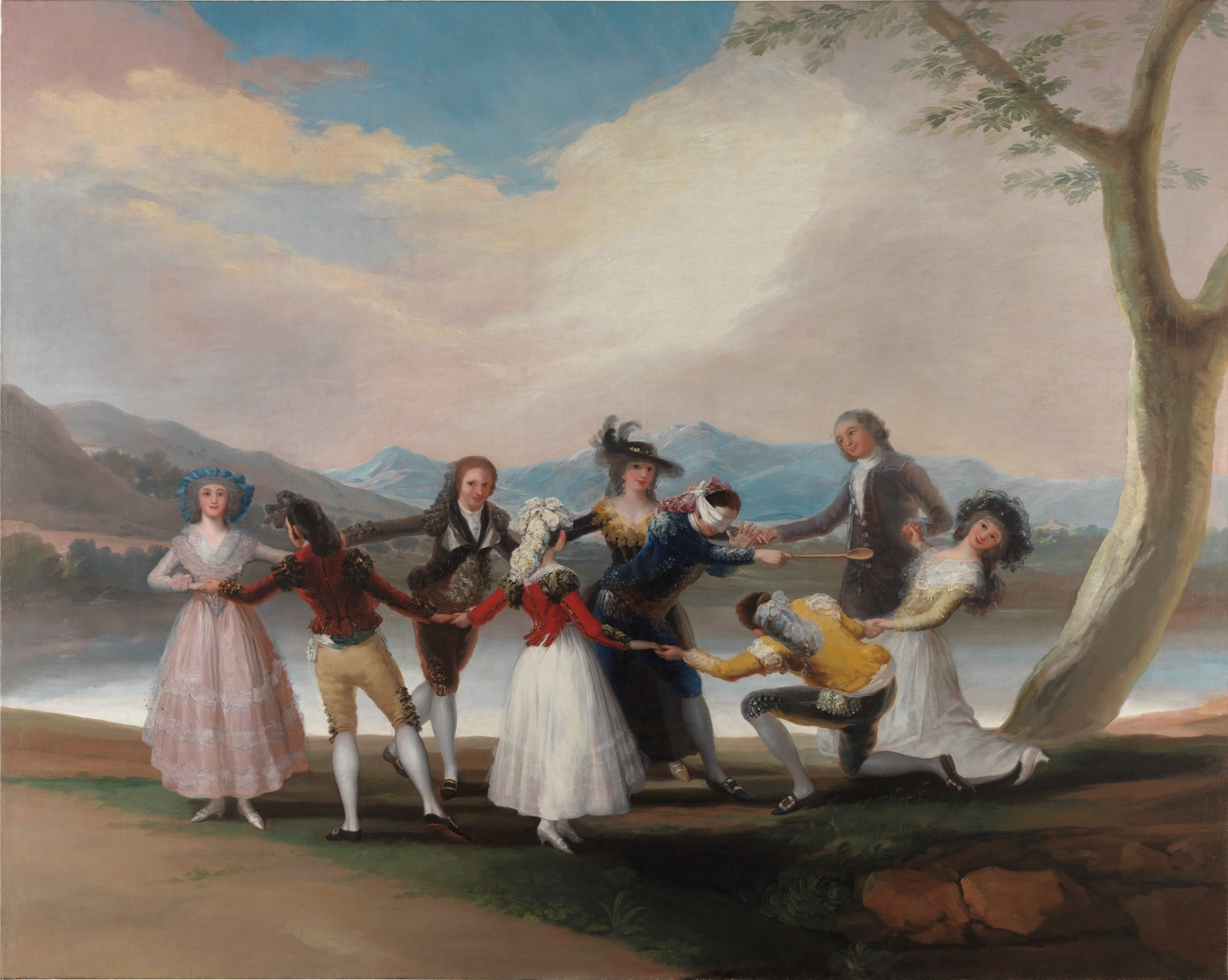
Francisco de Goya: La gallina ciega
1788-89
A rococo scene: elegantly dressed young people playing a blindfolded game (tag-like) in a festive outdoor setting. Bright colors, smooth brushwork, lively atmosphere. Painted for the Duke and Duchess of Osuna.
Why important to this period: Represents Goya's early, lighter style (before deafness and war). Commissioned as a tapestry cartoon (Rococo designs for royal tapestries).
How it displayed the period: Pre-Enlightenment lightness? Actually, this is still Rococo (not Neoclassical). But within the Enlightenment context: the leisure of the aristocracy is shown without criticism (yet). Soon Goya would turn to darker visions. The cartones para tapices (tapestry cartoons, 1775–1792) are Goya's apprenticeship
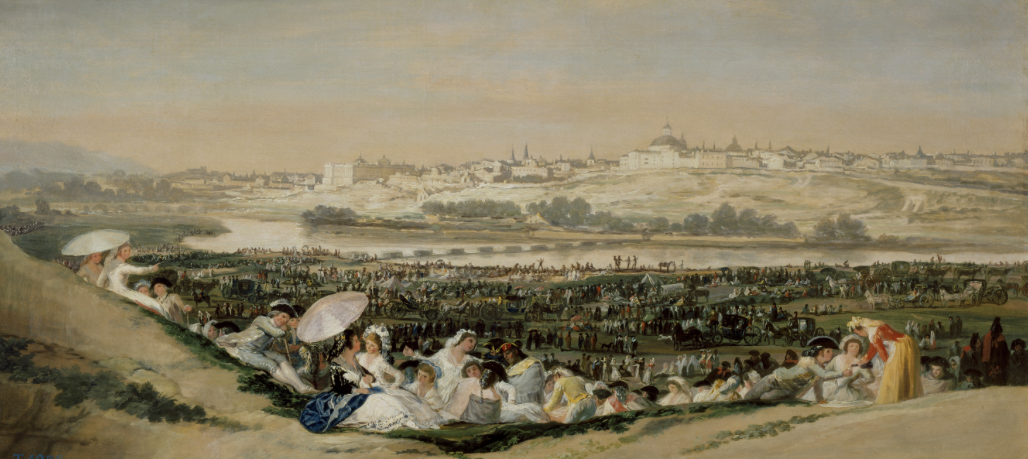
Francisco de Goya: La pradera de San Isidro (The Meadow of San Isidro)
1788
A panoramic view of Madrid's annual pilgrimage to the hermitage of San Isidro (patron saint of Madrid) on the banks of the Manzanares River. Hundreds of tiny figures in festive dress, carriages, and picnicking groups. Bright, sunny, airy.
Why important to this period: Goya's most ambitious tapestry cartoon (preparatory oil sketch). Shows Madrid society on a holiday.
How it displayed the period: Goya's pre-deafness optimism: a celebration of popular festivity (not aristocratic). The viewpoint is from above (unusual). The small figures anticipate Goya's later ability to capture anonymous crowds. But this is still Rococo/Neoclassical transition. Years later, he would paint the same location in The Meadow of San Isidro? Actually, the Black Paintings were on the walls of the Quinta del Sordo (House of the Deaf Man) which overlooked this meadow
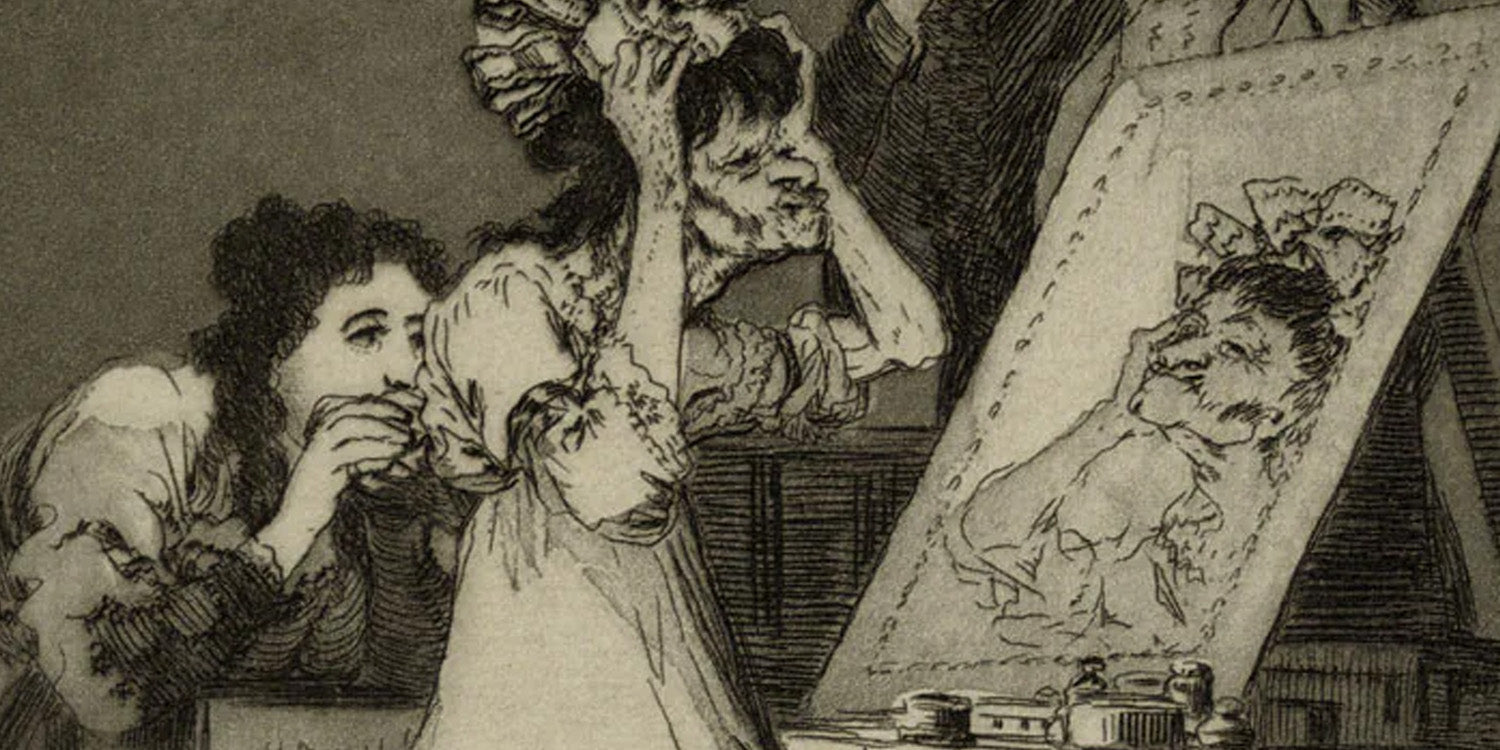
Towards the black paintings: The Caprichos collection
1797–1799 (published 1799)
80 etchings (aquatint) satirizing Spanish society: superstition, the Inquisition, clerical corruption, arranged marriages, prostitution, witchcraft, political abuses, and human stupidity. The most famous is No. 43: El sueño de la razón produce monstruos (The Sleep of Reason Produces Monsters): a sleeping man (Goya) surrounded by owls, bats, and a lynx.
Why important to this period: A radical Enlightenment attack on "the dark forces of ignorance." Goya withdrew the prints from sale after the Inquisition threatened him.
How it displayed the period: The title Caprichos means "whims" or "fantasies." Each plate has a caption (often ironic, opaque). Goya wrote: "Painting, like poetry, chooses from the universal that which is most appropriate to its end." The prints show the artist as social critic (Enlightenment role). The aquatint technique allowed broad dark areas, perfect for night scenes
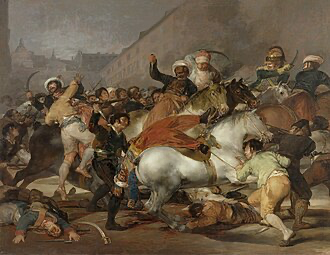
Francisco de Goya: El Dos de Mayo de 1808 (The Second of May 1808)
1814
The uprising in Madrid: Spanish civilians attack Mameluke mercenaries (Egyptian cavalry in Napoleon's army). Horses rear, knives flash, bodies fall. No order, no heroism (just chaos, violence, and rage).
Why important to this period: Commissioned by the restored Ferdinand VII to honor the Spanish resistance. But Goya did not paint a glorious victory scene.
How it displayed the period: Pre-Romantic (soon to be fully Romantic) historical painting: no classical clarity, no heroic general on a horse. Just the messy, brutal reality of street fighting. The brushwork is loose, violent, almost expressionist. The light is harsh, shadow-less. This is a new kind of history painting: not idealized, but journalistic
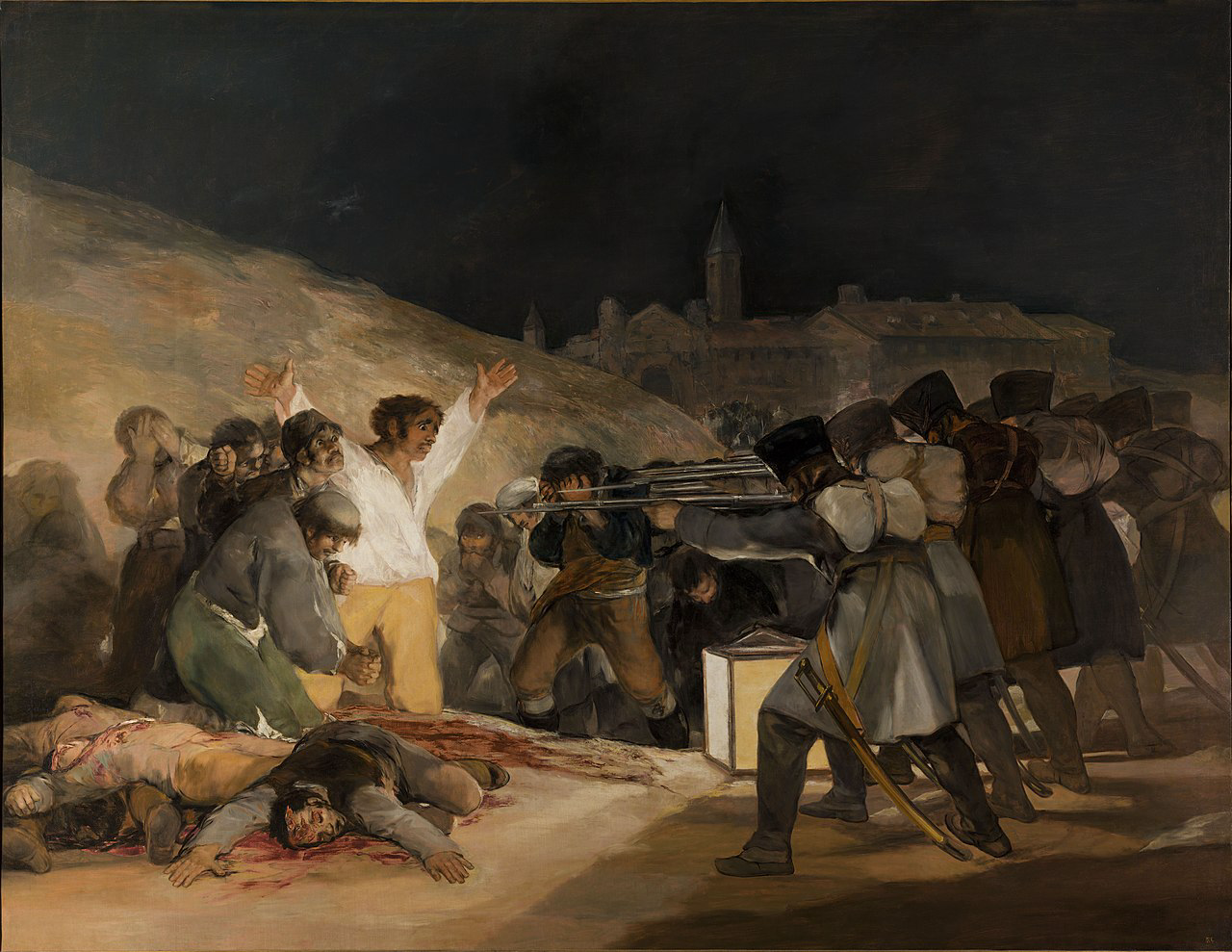
Francisco de Goya: Los fusilamientos del Tres de Mayo (The Third of May 1808)
1814
French soldiers execute Spanish civilians (the same ones who fought on May 2nd). A central figure in a white shirt raises his arms like a crucified Christ. The dead lie in pools of blood. The firing squad is a faceless machine. The church (background) is dark, offering no help.
Why important to this period: One of the most powerful anti-war paintings ever made. Has no precedent and countless successors (Manet, Picasso, etc.).
How it displayed the period: Goya invents modern war painting: no heroism, no glorification of death. The central figure's pose (arms raised, Christ-like) is not religious (the Church is absent). The lantern between the victims and the squad creates dramatic tenebrism. The faceless soldiers (mechanical, repeating) dehumanize execution. This is Romanticism's dark heart: the individual crushed by history
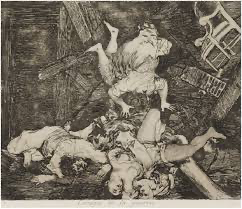
Los desastres de la guerra ("The Disasters of War")
Collection of 82 etchings 1810–1820 (published posthumously 1863)
Graphic, unflinching depictions of atrocities during the Peninsular War (Spanish resistance to Napoleon, 1808–1814) and the subsequent famine (1811–1812). Examples: "Great deeds! With dead men!" (corpses on a tree), "This is worse" (rape, mutilation), "Neither do these" (a priest dies with partisans), "The same elsewhere" (body of a woman impaled).
Why important to this period: The first anti-war documentary in Western art. No heroic generals, only civilians starving, executed, and mutilated.
How it displayed the period: Goya's captions are ironic, bitter, or simply descriptive. He disowns both sides (French and Spanish). The etchings show the Enlightenment belief in truth-telling (showing reality, not propaganda). But the savagery depicted is anti-Enlightenment (irrational cruelty). This is Romantic engagement with the real
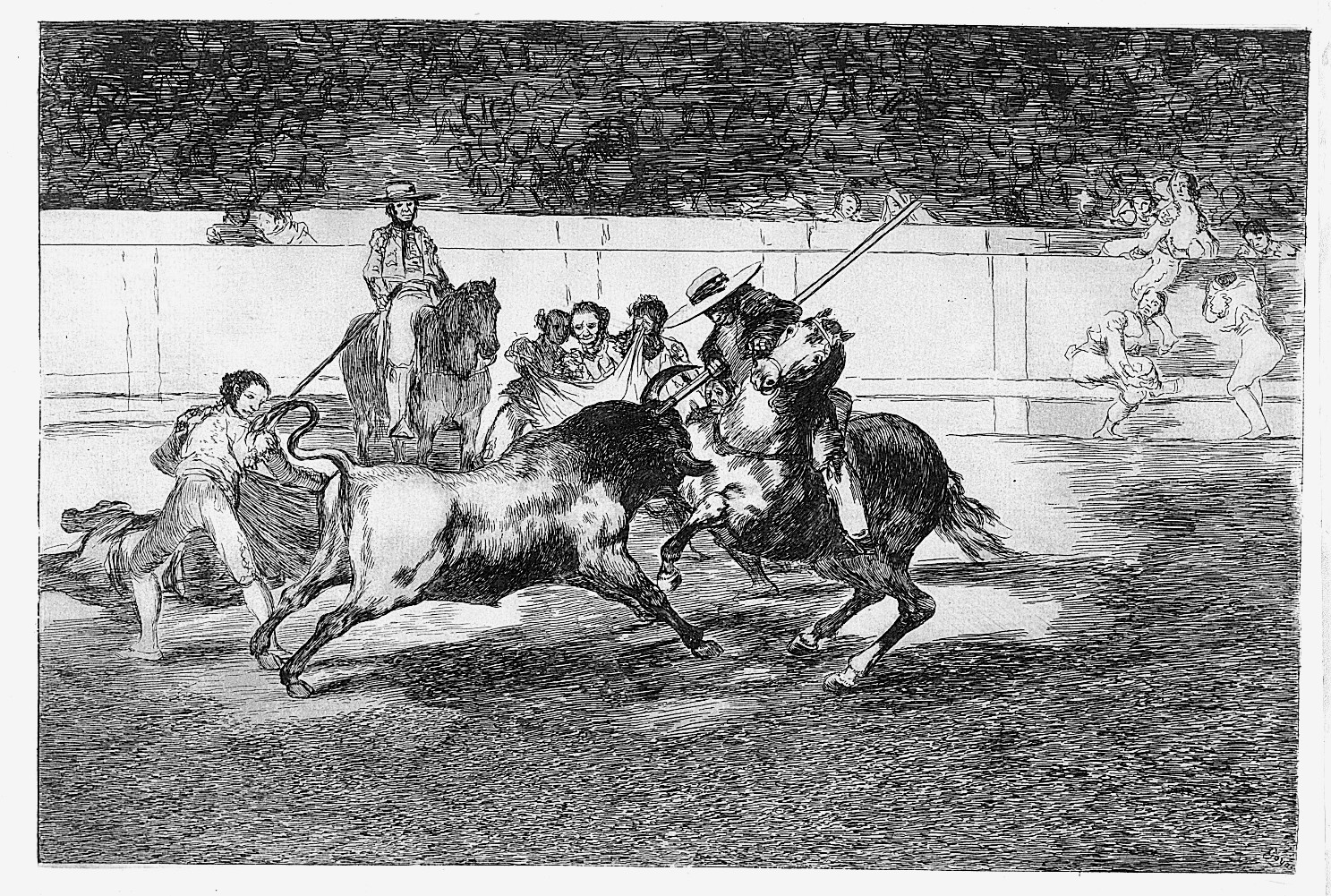
Tauromaquia
1816
Bullfighting scenes, from ancient origins to Goya's time. Not a celebration: Goya treats bullfighting as a ritual of violence and death, but within a Spanish tradition.
Why important to this period: After the war, Goya returned to a Spanish theme. The prints are technically superb.
How it displayed the period: The Tauromaquia can be read as allegory: the bull (Napoleon? tyranny?) and the matador (Spain? courage?). But Goya also just loved bullfighting. The darkest plates show gored horses and dead matadors
Los disparates o proverbios
1815-1924
22 etchings of absurd, dreamlike, nightmarish scenes: figures floating, sliding, dancing, wrestling, engulfed by bizarre creatures. Captions like "The way to fly" (but they fall). Very difficult to interpret.
Why important to this period: Bridges the Caprichos (social satire) and the Black Paintings (pure nightmare). Goya's most enigmatic works.
How it displays the period: Goya's disillusionment after the war: reason has failed, monsters remain. These are proto-Surrealist: illogical, dream-logic, ambiguous. The Enlightenment dream of clarity is gone
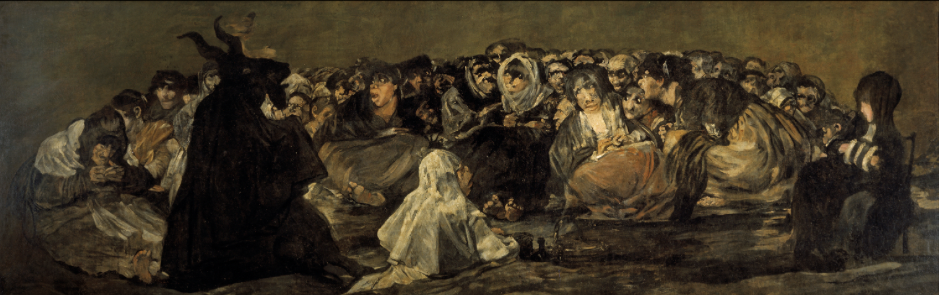
Black paintings - Francisco de Goya: Aquelarre o El Gran Cabrón (Witches' Sabbath or The Great He-Goat)
1820-23
A black mass: a huge male goat (the Devil) preaches to a coven of haggard, terrified witches. The moon is a sickly white. The palette is black, brown, grey, ochre. The goat is based on traditional depictions of Satan. The witches are not glamorous: they are old, ragged, terrified.
Why important to this period: Part of a series of 14 Black Paintings that Goya never intended to be seen publicly. He was 74, deaf, and profoundly pessimistic about humanity.
How it displayed the period: Goya abandons all classical rules: no linear perspective, no central focal point, no beauty, no moral clarity. The palette is almost monochrome. The brushwork is extremely loose (almost abstract at close range). This is the birth of Expressionism. The Enlightenment's faith in reason has collapsed into the nightmare of superstition, but now the Devil has won
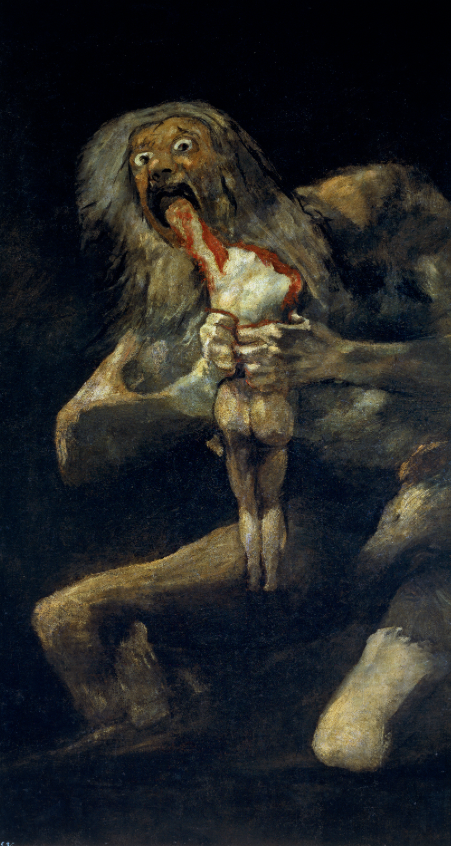
Francisco de Goya: Saturno devorando a sus hijos (Saturn Devouring His Son)
1819-23
The Titan Saturn, fearing a prophecy that his children will overthrow him, devours each newborn. One body (already decapitated and with an arm missing) is clutched by the giant, blood-smeared figure of Saturn, eyes wide and mad, mouth full of flesh. The background is absolute black.
Why important to this period: The most shocking and famous of the Black Paintings. Originally on the dining room wall of the Quinta del Sordo (imagine eating in front of this).
How it displayed the period: Goya reinterprets Greek myth not as Neoclassical reason but as primal horror. Saturn is not a classical god but a monster from the id. The violence is not heroic (like Rubens's version) but cannibalistic madness. This is often read as a political allegory (Spain consuming its own citizens) or a psychological one (time devouring all). It is the ultimate rejection of Enlightenment optimism. Goya paints his own despair
The transcendence and significance of Goya's work
Goya is the bridge between the Old Masters (Velázquez, Rembrandt) and Modernism (Manet, Picasso, Bacon). He painted for the Enlightenment (reason, critique, satire) but witnessed its collapse into war, terror, and irrationality. His work prefigures:
Romanticism (emotion, individualism, the sublime)
Realism (unflinching depiction of war, poverty, old age)
Expressionism (distortion, emotional intensity, dark palettes)
Surrealism (nightmare imagery, dream-logic)
He is both the last great court painter and the first painter of the modern condition: isolation, cruelty, madness, and the failure of reason
Romanticism
1798–1850
A reaction against Neoclassicism and Enlightenment rationalism. Key values: emotion over reason, imagination over calculation, nature over civilization, individualism over collectivism, the sublime (awe mixed with terror) over the beautiful, the exotic over the familiar, the medieval/gothic over the classical, and the artist as genius (tormented, isolated, visionary)
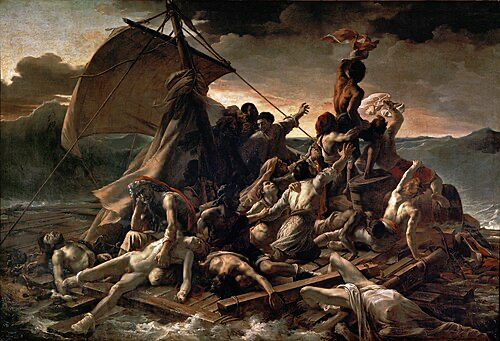
Théodore Géricault: The Raft of the Medusa
1819
Based on a true scandal (1816): the French frigate Méduse ran aground off West Africa. The captain (an incompetent aristocrat) took the lifeboats; 147 people were crowded onto a makeshift raft. After 13 days, only 15 survived (5 died after rescue). They resorted to cannibalism. Géricault shows the moment of false hope: they spot a rescue ship (tiny silhouette in distance). The figures are enormous, pyramidal, muscular, writhing. The painting is 5 x 7 meters.
Why important to this period: The first masterpiece of Romantic painting. Géricault interviewed survivors, studied corpses, and even painted with body parts in his studio.
How it displays the period: Romantic trauma: no classical heroism, just desperate, dying humans. The composition is diagonal (dynamic, unstable). The light is Caravaggesque (dramatic, tenebrous). The black man (Jean Charles, at the top waving) signals a new racial consciousness in painting. The painting attacked the French establishment (the captain was acquitted). It is a condemnation of institutional incompetence and human suffering
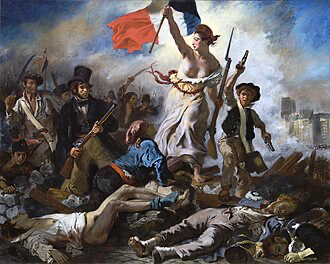
Eugéne Delacroix: Liberty Leading the People
1830
Allegorical figure of Liberty (a bare-breasted woman wearing a Phrygian cap, holding the tricolor flag and a bayonet) leads a multi-class crowd over a barricade of dead bodies. The crowd includes: a factory worker with a sabre, a bourgeois intellectual with a top hat and shotgun, a boy (Gavroche, from Victor Hugo) holding pistols. Notre-Dame in background smoky.
Why important to this period: The iconic image of the July Revolution (1830) that overthrew Charles X. Delacroix captured a specific historical event as an eternal symbol of popular uprising.
How it displays the period: Romantic politics: Liberty is not a cold Neoclassical goddess; she is vigorous, dirty, alive, and leading a ragged, heroic crowd. The painting mixes allegory (Liberty) and realism (the dead, the barricade). The dynamic composition (pyramid of bodies rising to Liberty's flag) and brilliant color (red, white, blue, ochre, black) are Delacroix's signature. Banned under Louis-Philippe (too revolutionary), then hung after the Revolution of 1848
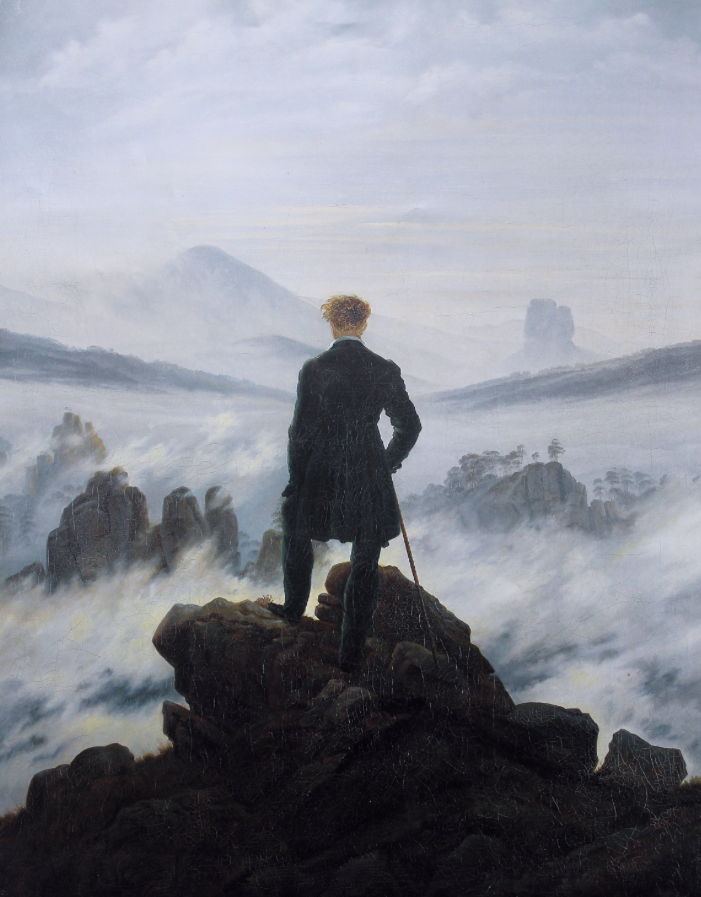
Caspar David Friedrich: Walker on a Sea of Clouds
1817-1818
A lone man (possibly Friedrich himself) stands on a rocky peak, back to us, facing a vast landscape of misty mountains and distant peaks. He wears a dark green overcoat and carries a walking stick. The clouds stretch to a hazy horizon. He is alone, small against nature's immensity.
Why important to this period: The most iconic image of German Romanticism. Friedrich invented the Rückenfigur (figure seen from behind) as the viewer's surrogate.
How it displays the period: Romantic solitude, the sublime, and the relationship between self and nature. The figure does not master nature (contrast with Enlightenment). He contemplates it, is humbled by it, and merges with it. The mist (nothing certain, no clarity) rejects Neoclassical definition. The painting is a meditation on mortality, transcendence, and the infinite. The Rückenfigur allows the viewer to step into the painting. Friedrich's precise, luminous technique (Nordic light) contrasts with Delacroix's color