Biochemistry 1 Chapter 16 : Citric Acid Cycle
 Call Kai
 Learn
Learn Practice Test
 Spaced Repetition
 Match
Match Flashcards
 Knowt Play
1/54

There's no tags or description
Looks like no tags are added yet.
Name | Mastery | Learn | Test | Matching | Spaced | Call with Kai | Chat |
|---|
No analytics yet
Send a link to your students to track their progress
55 Terms
cellular respiration
Process that releases energy by breaking down glucose and other food molecules in the presence of oxygen
what need to happen to Pyruvate before the citric acid cycle can start?
it needs to be converted to acetyl coa
What enzyme complex converts pyruvate to acetyl CoA by oxidative decarboxylation?
pyruvate dehydrogenase complex (PDH)
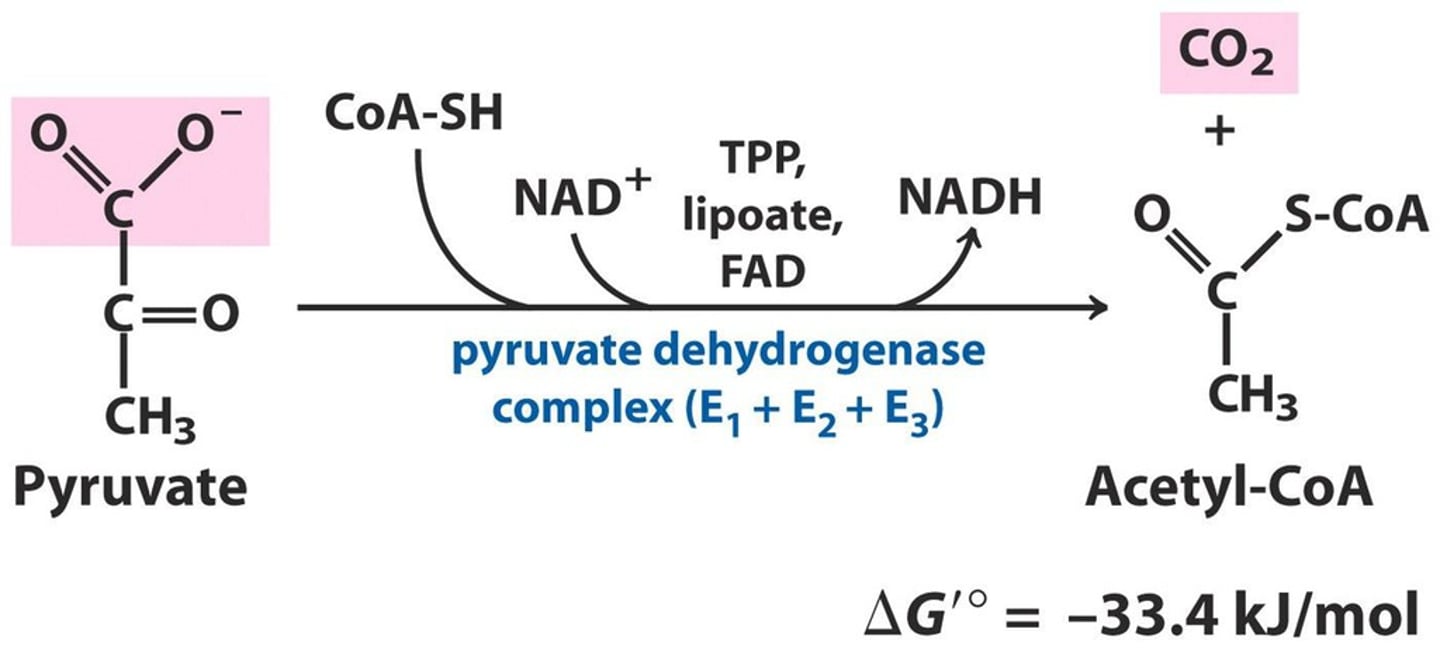
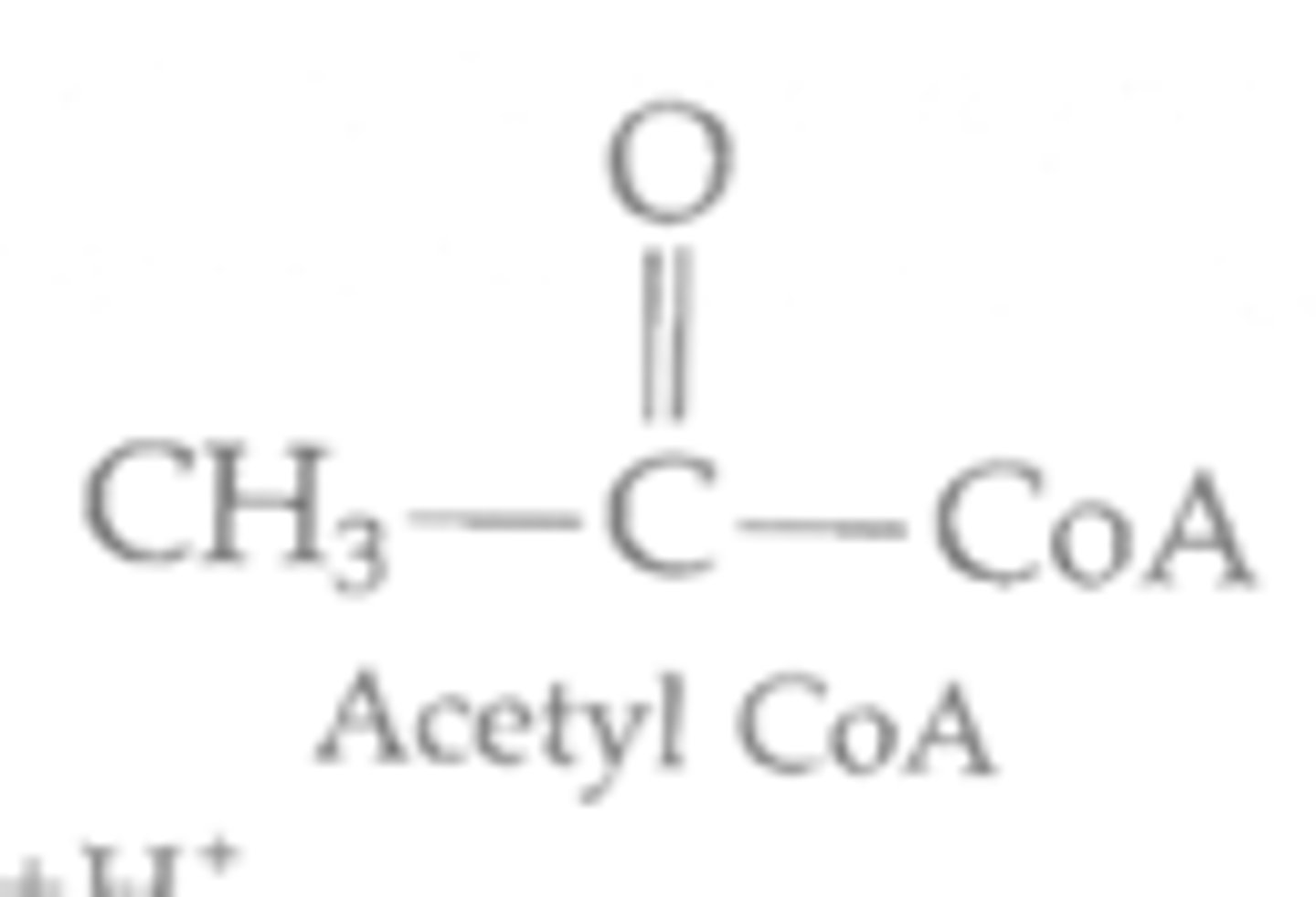
Acetyl coa structure
Oxidative decarboxylation
oxidation reactions in which a carboxylate group is removed, forming carbon dioxide
when pyruvate is converted to acetyl CoA is it oxidized or reduced?
Oxidized
How many enzymes are part of the pyruvate dehydrogenase complex (PDH)?
3 enzymes, given abbreviations E1 (pyruvate dehydrogenase), E2 (dyhrdeoxyllipoyl transacytylace) and E3 (dihydrollipoyl dehydrogenase)
What does pyruvate dehydrogenase (E1) do?
Decarboxylation: Cleaves the bond of pyruvate, releasing a molecule of CO₂.
Intermediate Formation: Binds the remaining two-carbon fragment (hydroxyethyl group) to the TPP cofactor.
Acyl Transfer: Helps transfer the acetyl group onto the lipoyl-lysine swinging arm of the E2 component
What are the benefits of having 3 enzymes in one complex?
- everything can be regulated as one unit instead of as multiple
-intermediates dont need to travel far so there are less side reactions and its faster
What does dihydrolipoyl transacetylase (E2) do?
hydroxyethyl-TTP interacts with lipoamide and CoA to form acetyl CoA. TTP is regenerated.
What does dihydrolipoyl dehydrogenase (E3) do?
Catalyzes the reoxidization of lipoic acid to allow the process to restart by reducing FAD to FADH2
When this FADH2 is later oxidized it is used to reduce NADH
What cofactors are involved in citric acid cycle?
Coenzyme A
Lipoic Acid
NAD+
TPP
FAD
What does coenzyme A do?
Transfers acetate between molecules
What does NAD+ do in PDH?
substrate for E3 and accepts a hydride/ is reduced by FADH2
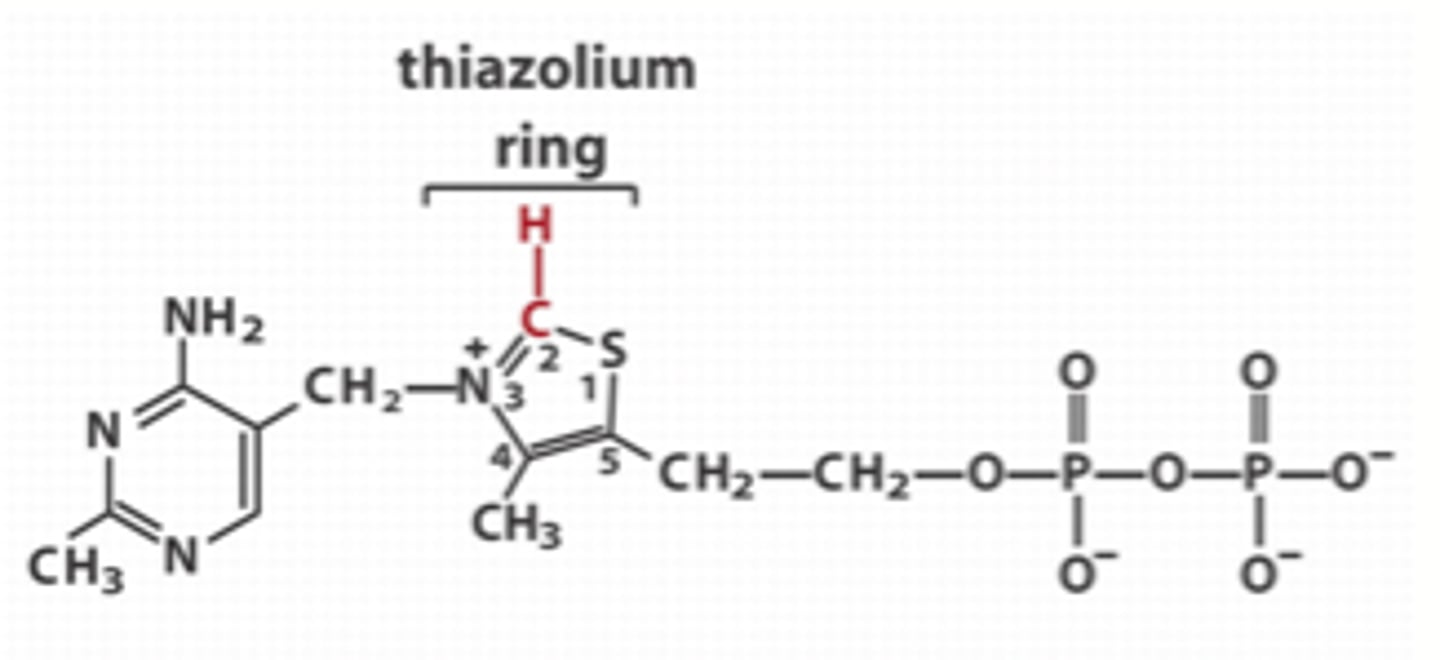
What does TPP do?
decarboxylates pyruvate
What does FAD do?
It accepts electrons doing redox reactions (is reduced)
To what enzyme is TPP bound?
E1
To what enzyme is Lipoic acid bound?
E2
Which cofactor is like a swinging arm that interacts with both E1 and E2?
Lipoic acid
What enzyme is coenzyme A bound to?
Disociably bound to E2
Where is FAD in the PDH complex?
Bound to E3
What is released when PDH converts pyruvate to acetyl CoA
CO2 and NADH
Is the conversion of Pyruvate into Acetyl CoA reversible?
No, its irreversible because its favorable to lose CO2 when pyruvate is converted
citric acid cycle (CAC or TCA cycle)
A chemical cycle involving eight steps that completes the metabolic breakdown of glucose molecules to carbon dioxide;
Where in the cell does the citric acid cycle occur?
Mitochondria
Step 1 of CAC
Acetyl CoA + Oxaloaetate ---> Citrate + CoASH
Enzyme is Citrate Synthase
IRREVERSIBLE, Product Inhibition
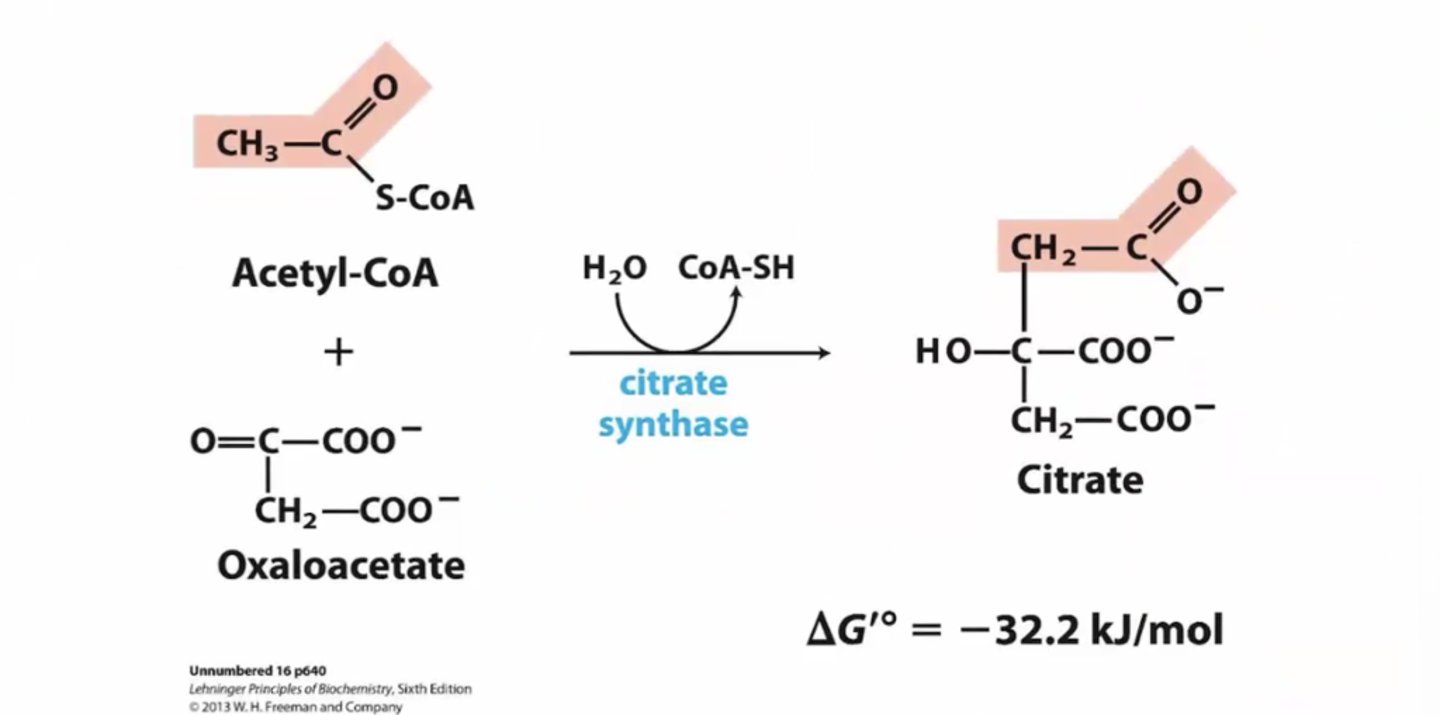
Cofactors inout and output in step 1 of CAC when acetyl CoA is turned into citrate
Input: H2O
output: H2O, HSCoA
Step 2 of CAC
citrate converted to isocitrate by aconitase
REVERSIBLE
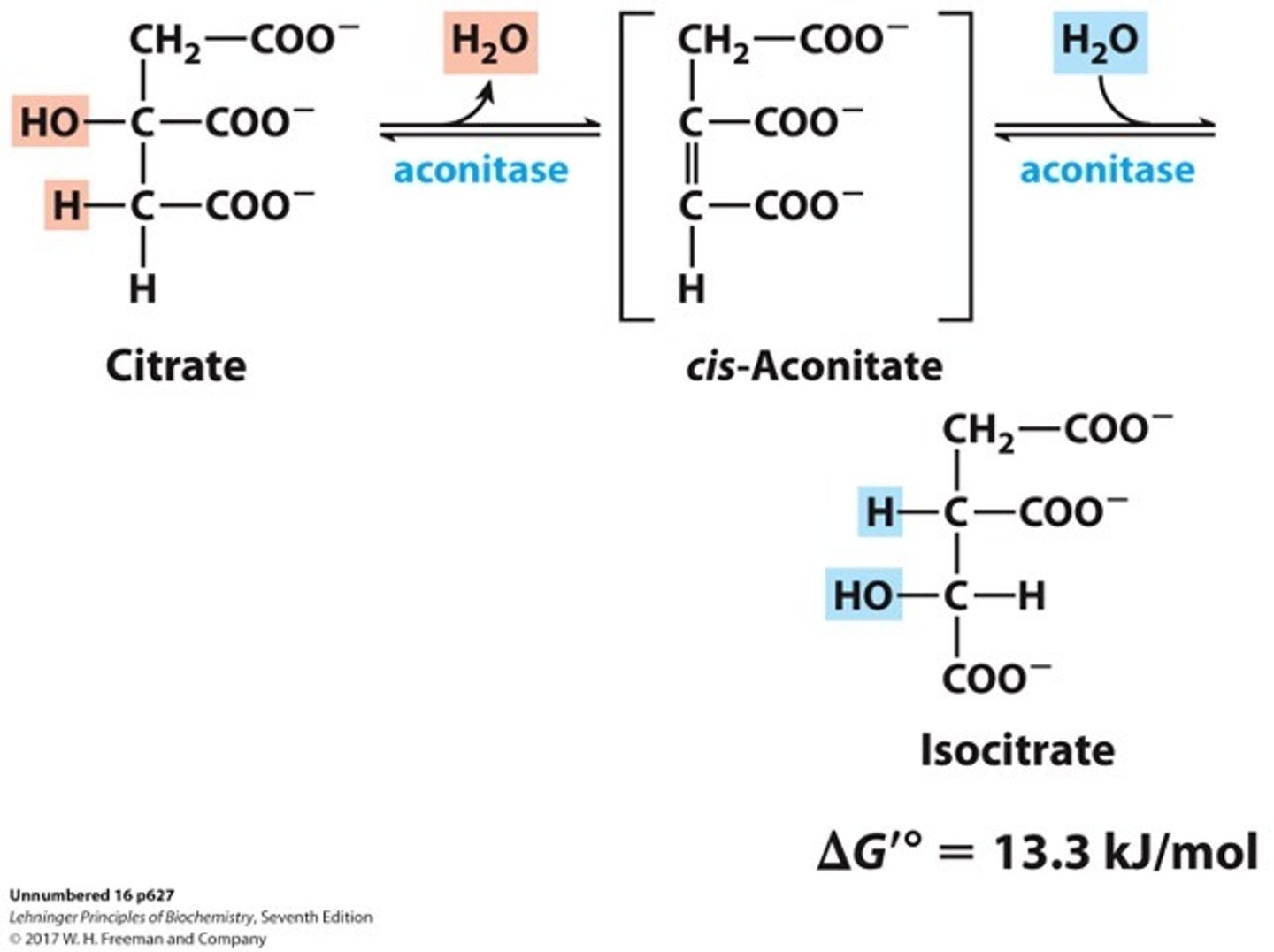
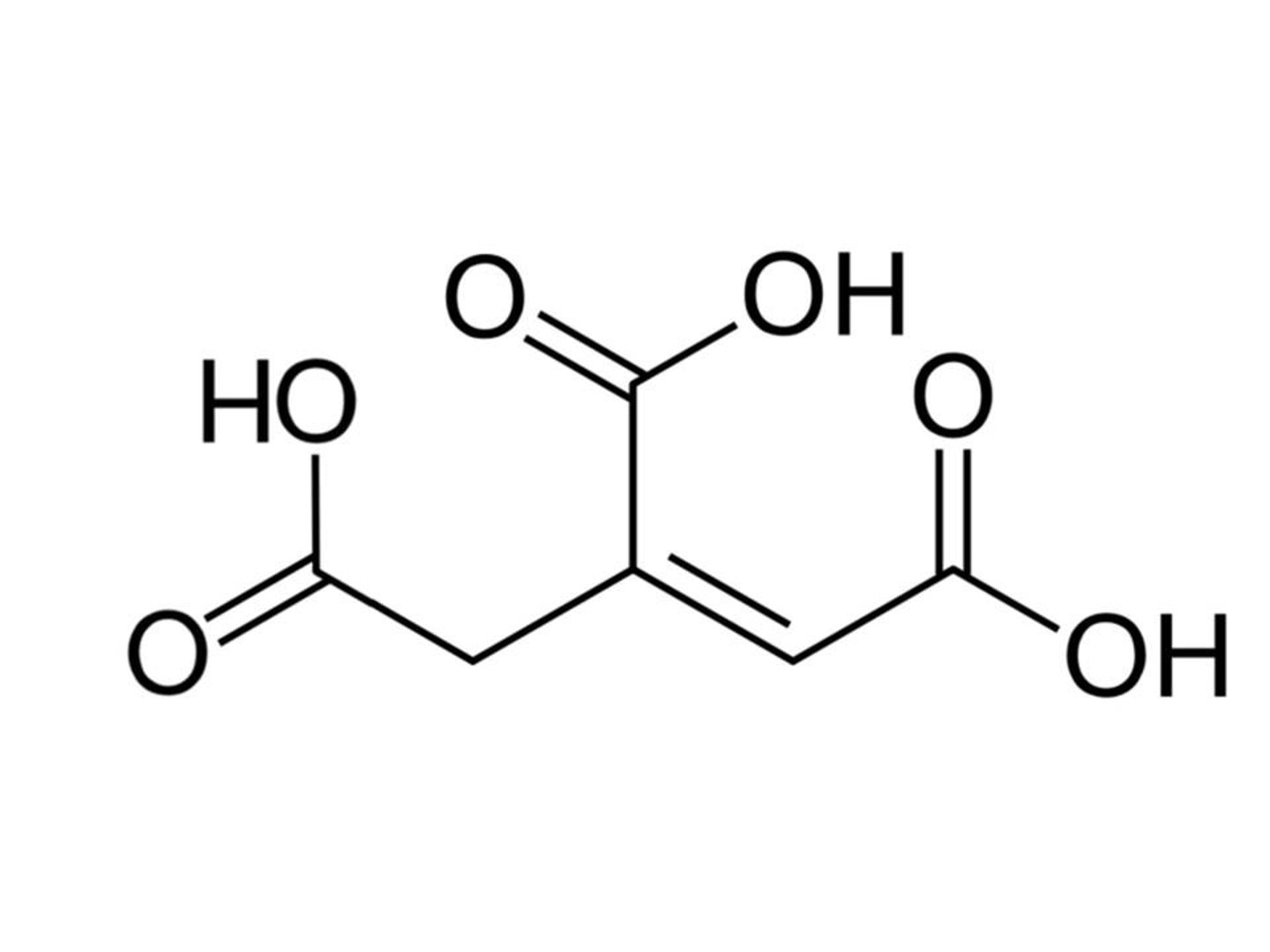
What is the intermediate that citrate goes through before becoming isocitrate?
Aconitate
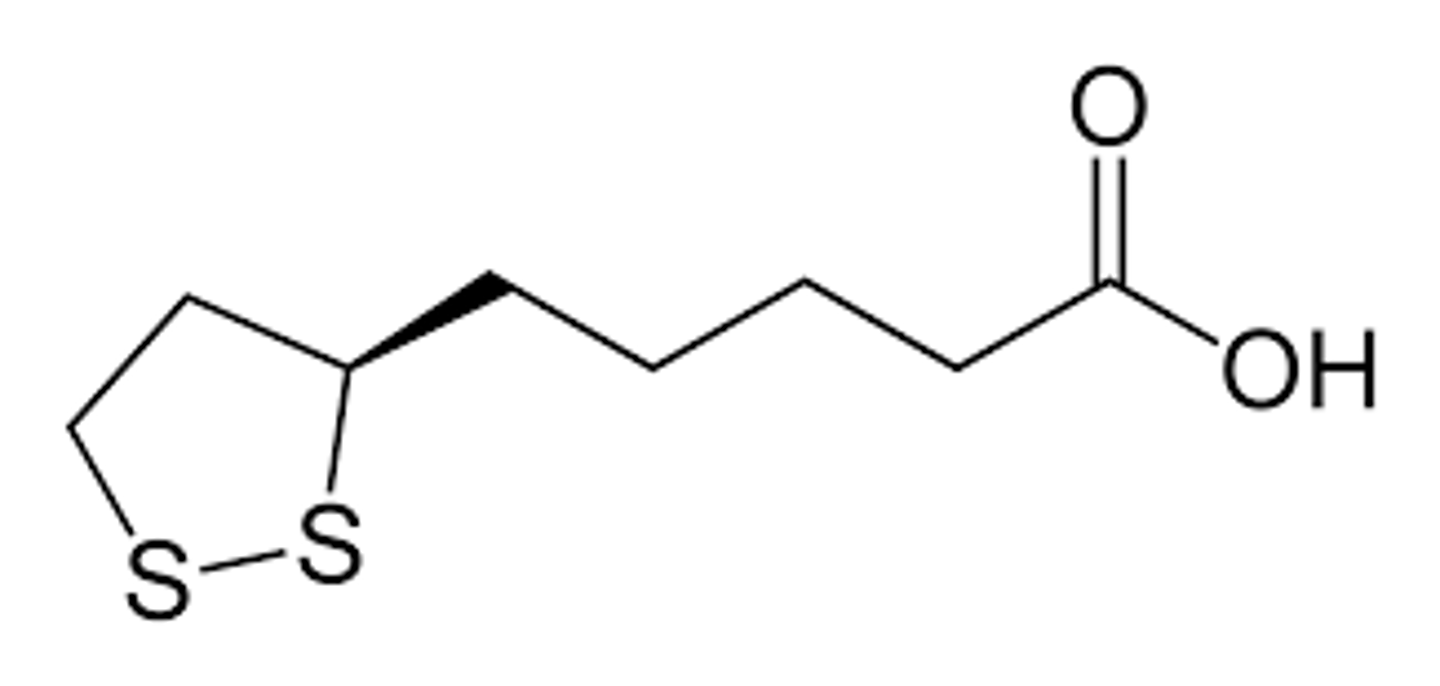
What does lipoic acid do?
covalently linked to lysine on E2; accepts the carboanion from E1 as an acetyl group
Step 3 of CAC
isocitrate undergoes oxadative decarboxylation to give a-Ketogluterate
(IRREVERSIBLE)
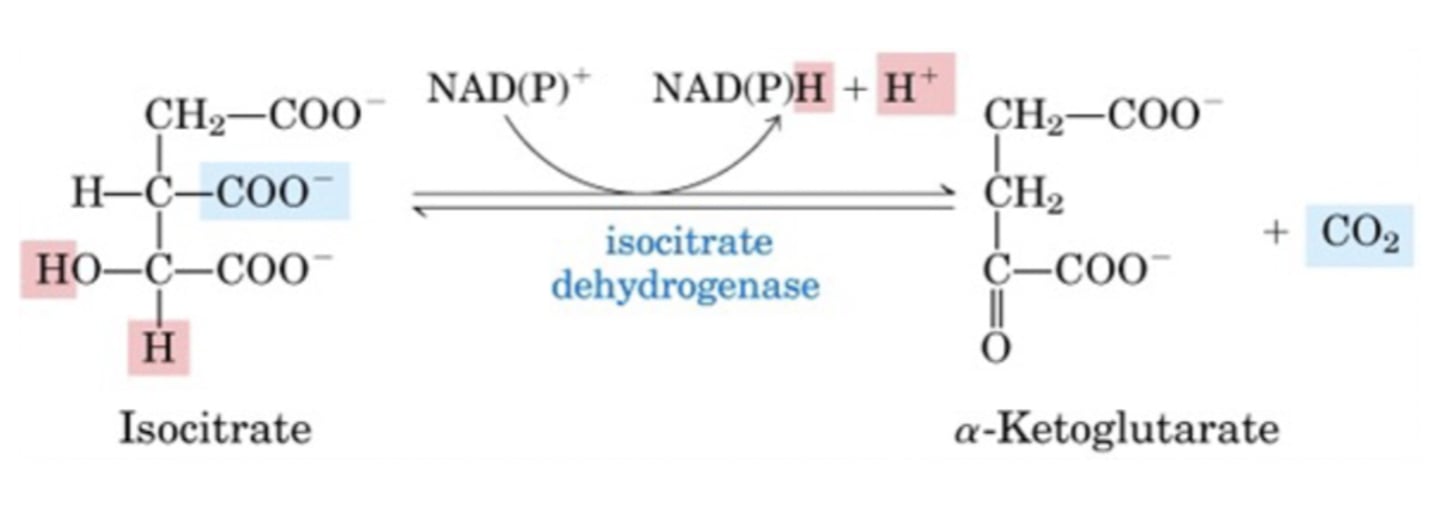
Enzyme used to convert isocitrate to a-ketogluterate
Isocitrate dehydeogenase
What is the cofactor input to convert isocitrate to a-ketogluterate, and what are the cofactor output(s)?
Input: NAD+
Output: NADH and CO2
step 4 CAC: oxidative decarboxylation
alpha-ketoglutarate ----> Succinyl CoA
Enzyme is alpha-ketoglutarate dehydrogenase
NADH Created
Irreversible
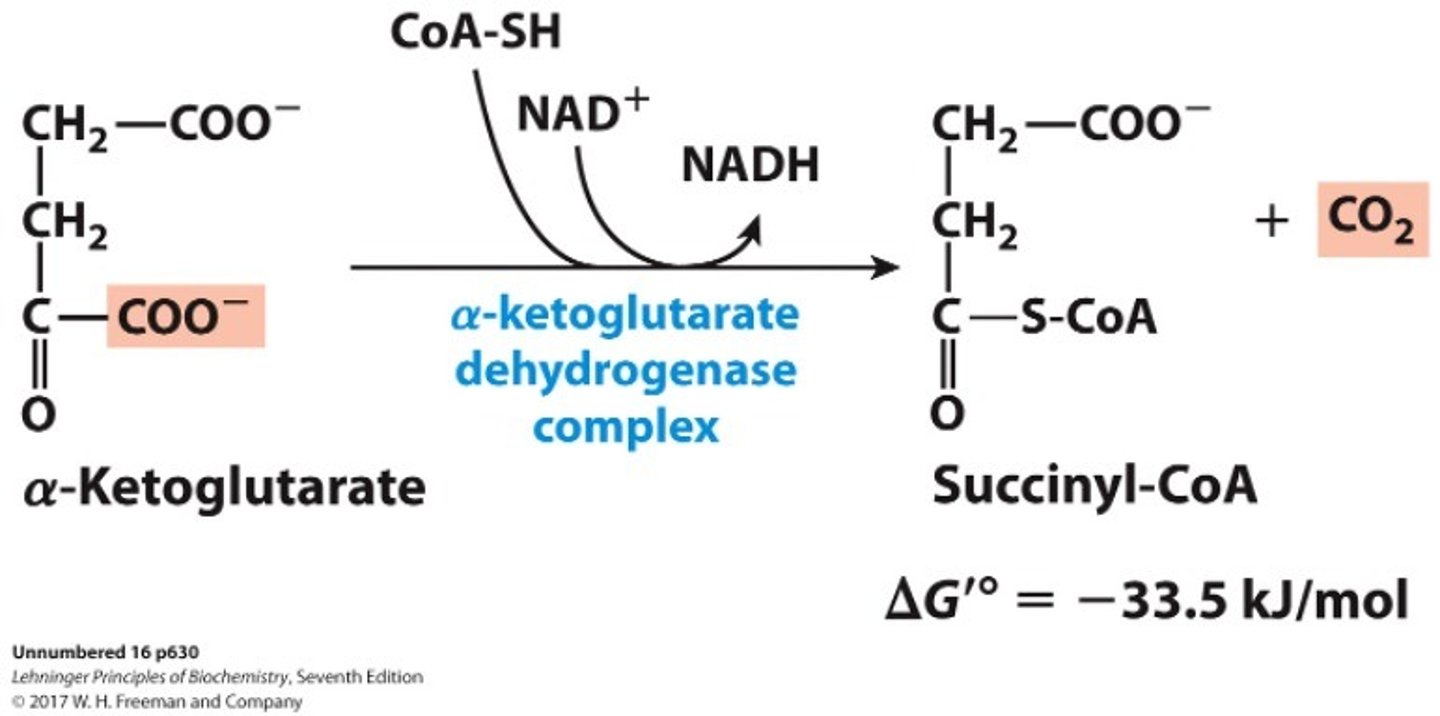
Enzyme used to turn a-ketogluterate into succinyl-CoA
alpha-ketoglutarate dehydrogenase
What cofactors are used and released in step 4 of the CAC when a-ketogluterate is turned into succinyl-CoA
Input: NAD+, Coenzyme A
output: NADH, CO2, H+
Step 5 of CAC(substrate level phosphorylation)
succinyl-CoA turned into succinate
enzyme: succinyl CoA synthase
reversible
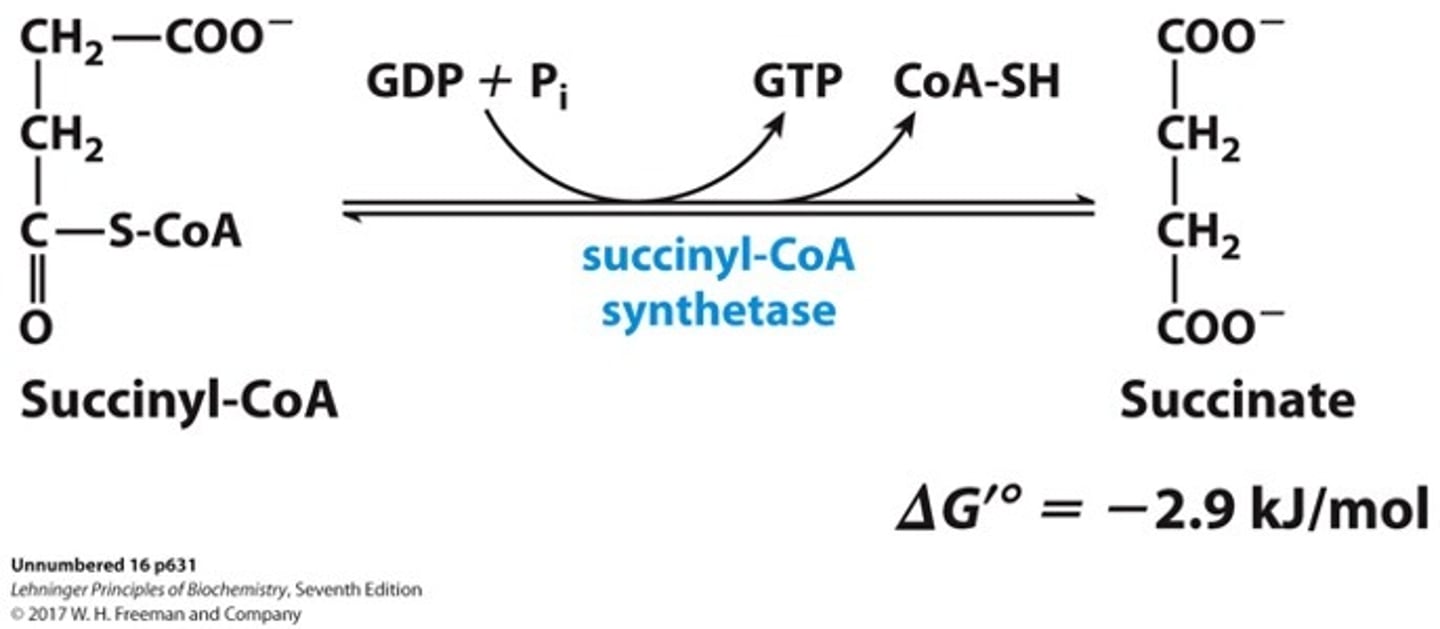
Step 6 of CAC (Oxidation of an alkane)
succinate turned into fumarate
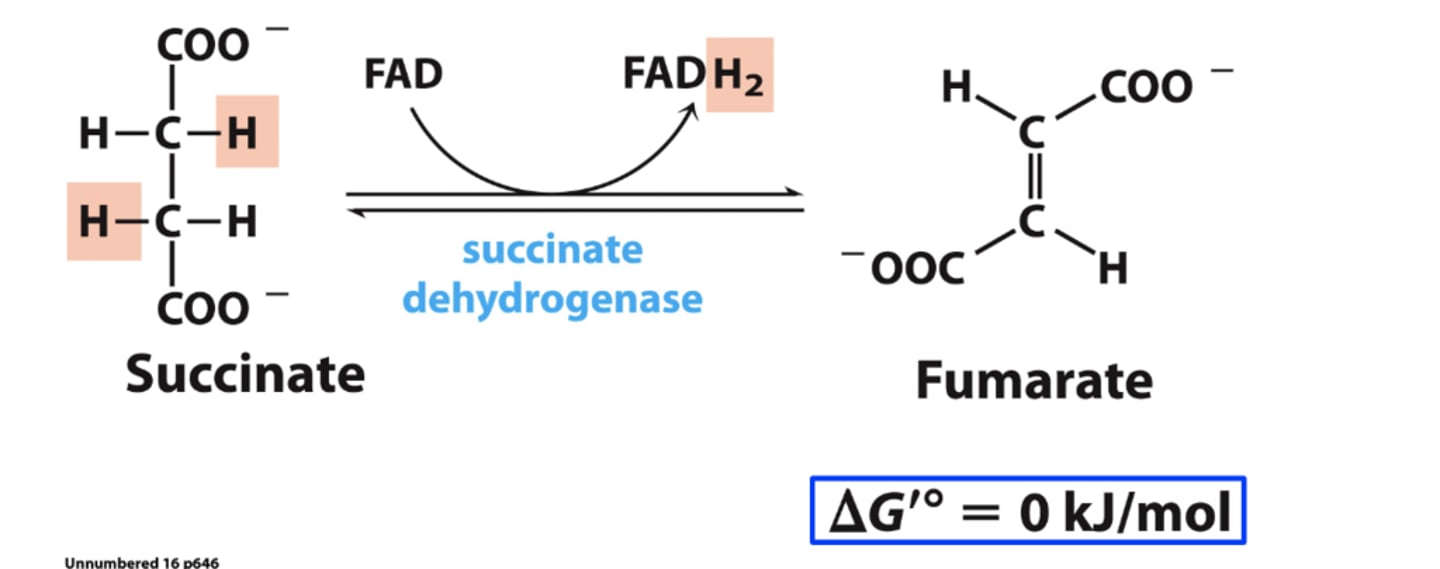
Enzyme that turns succinate into fumarate
Succinate dehydrogenase
What cofactor is input and output in turning succinate into fumerate?
input: FAD
output: FADH2
Why is FAD used instead of NAD+ in the conversion of succinate to fumarate in the citric acid cycle?
the redox potential of NAD is too low, so FAD is used instead. FAD also is more tunable
Step 7 of the CAC (Hydration)
conversion of fumarate to malate
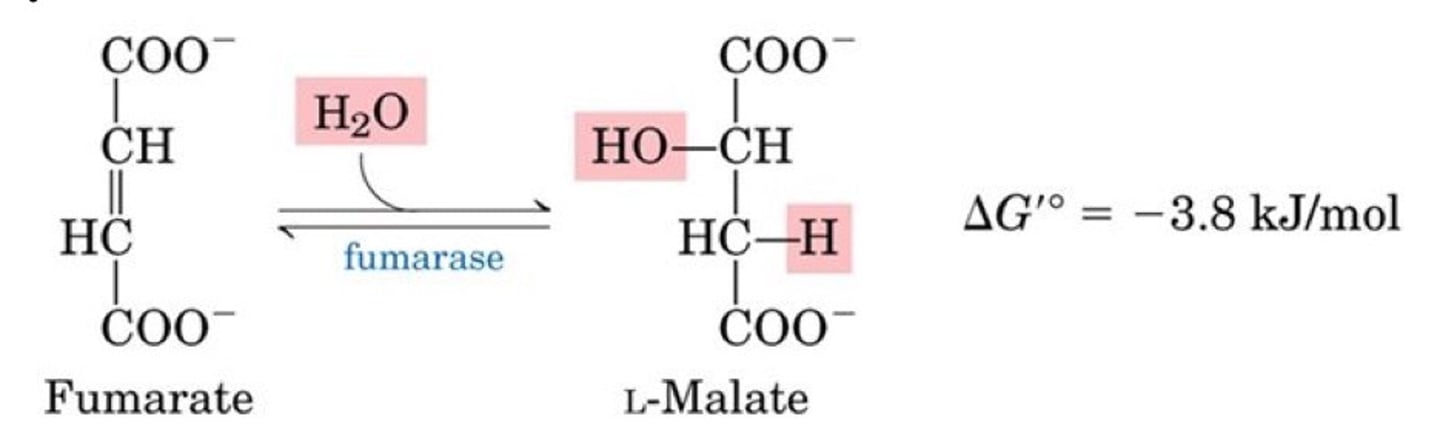
what enzyme catalyzes the conversion of fumarate to malate
fumerase
what molecule is used in the hydration of fumerate to malate
H2O
step 8 of the CAC (oxidation of an alcohol to a ketone)
conversion of malate to oxaloacetate
What enzyme catalyzes the conversion of malate to oxaloacetate?
malate dehydrogenase
what cofactors are input and output in the conversionof malate to oxaloacetate?
input: NAD+
output: NADH
how many moles of CO2 do you get per pyruvate after the citric acid cycle? How about per glucose?
2 Moles per pyruvate, 4 moles per glusse
how many moles of NADH are produced by the citric acid cycle per mole pyruvate?
3 mol
How many moles of FADH2 are made by the CAC per mole pyruvate?
1 mol
How many moles of ATP(of GTP) are made by the CAC per mole pyruvate?
1 mol
what signs down regulate (deactivate) the citric acid cycle?
signs of high energy
what signs upregulate (activate) the citric acid cycle
signs of low energy
NAD+
CoA (substrate activation)
does insulin increase or decrease PDH complex activity?
increase
Still learning (29)
You've started learning these terms. Keep it up!