#1 Lipids
 Call Kai
 Learn
Learn Practice Test
 Spaced Repetition
 Match
Match Flashcards
 Knowt Play
1/13

Earn XP
Description and Tags
Lipids fc
Name | Mastery | Learn | Test | Matching | Spaced | Call with Kai | Chat |
|---|
No analytics yet
Send a link to your students to track their progress
14 Terms
What are lipids?
Small water insoluble molecule (soluble in organic solvents), often amphipathic but mostly hydrophobic. General contain sterols, fatty acyl, or isoprenoid moioties.
What are the 7 major lipid groups?
Fatty acids (FAs), Triacylglycerols (TAGs), Glycerophospholipids, Shingolipids, Cholesterols, Waxes, and Eicosanoids
Fatty Acids
Carboxylic acids w/ long hydrocarbon chain that can be saturated (no db) or unsaturated (yes db), carboxyl group deprotonated under physiological conditions
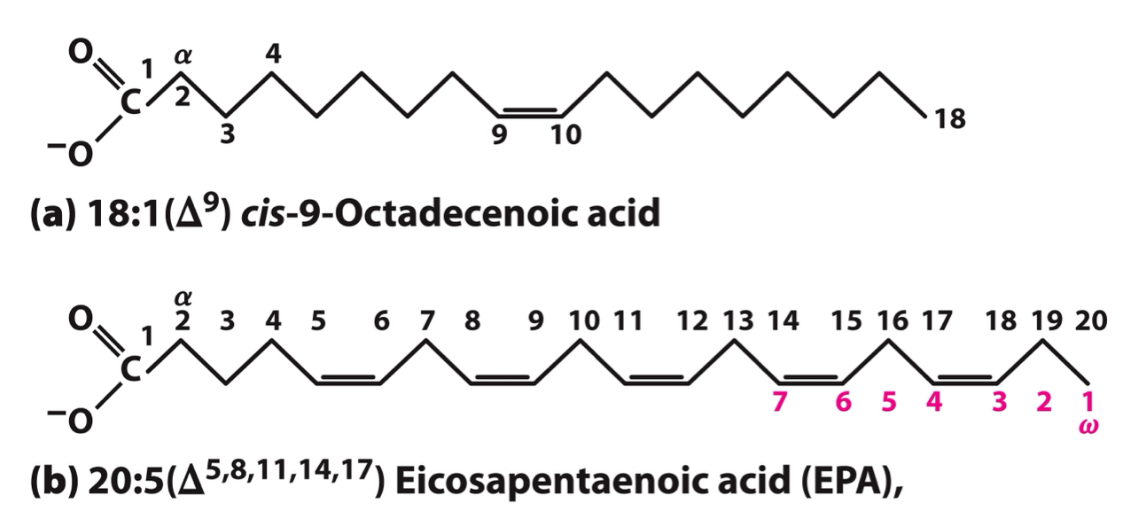
FA simple numbering
Count Cs starting from carb acid C, db indicated by carbon closest to carb acid
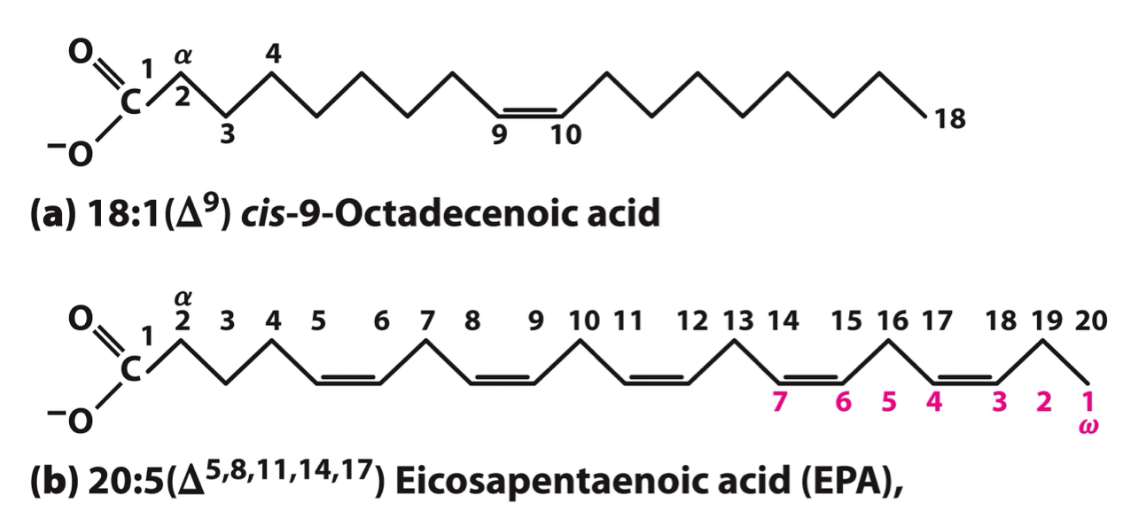
FA greek letters
Second C is alpha, then beta and etc. Last C is always omega, db indicated by counting from omega C
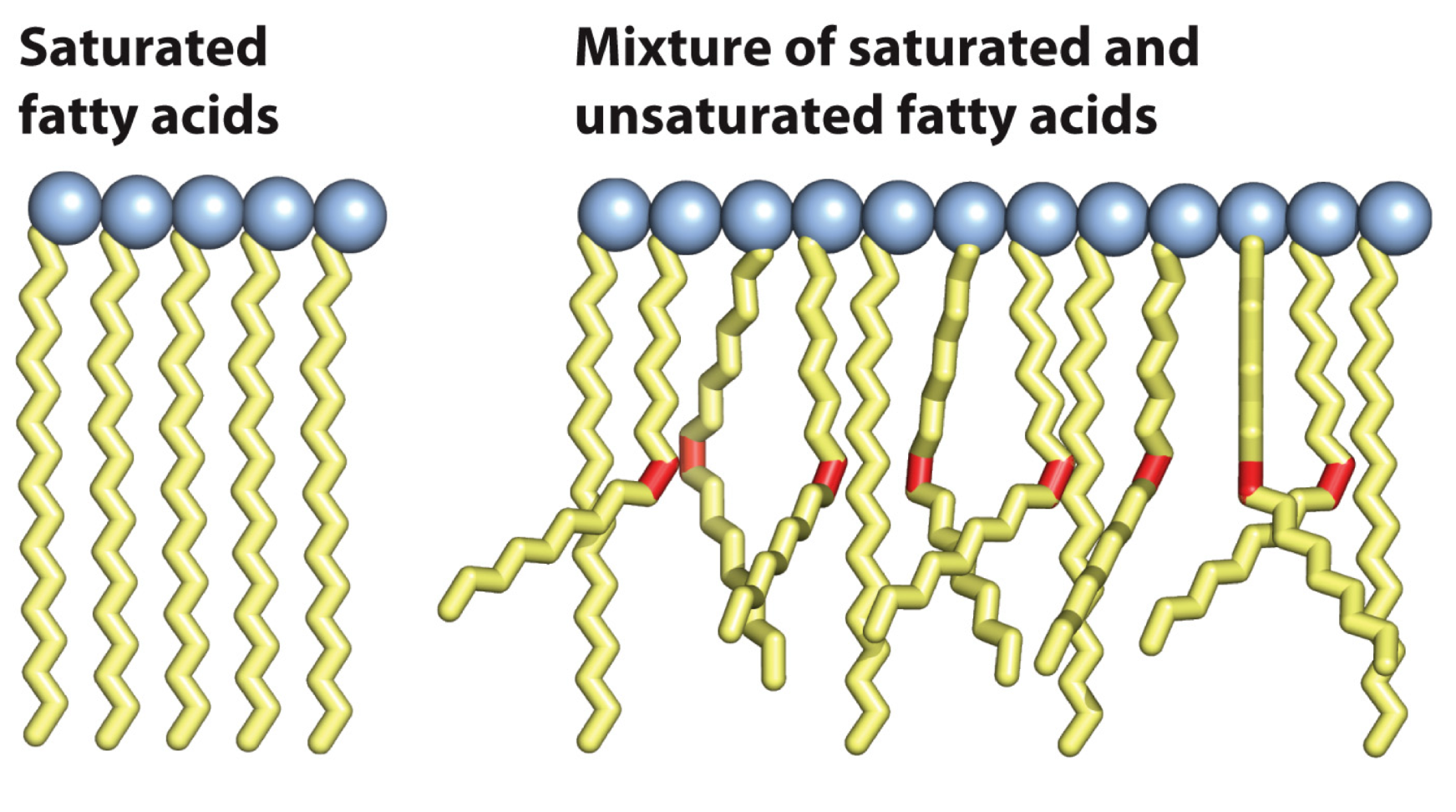
FA melting points
Increasing chain lengths means higher MP due to more van der waals
More db means lower melting point due to db causing bends in chain disrupting FA packing
Cis vs Trans FA
Almost ALL unsaturated FA are in cis orientation, small amount of trans FA in dairy and meat. Trans FA used to be found in food until 2018
Triacylglycerols (TAGs)
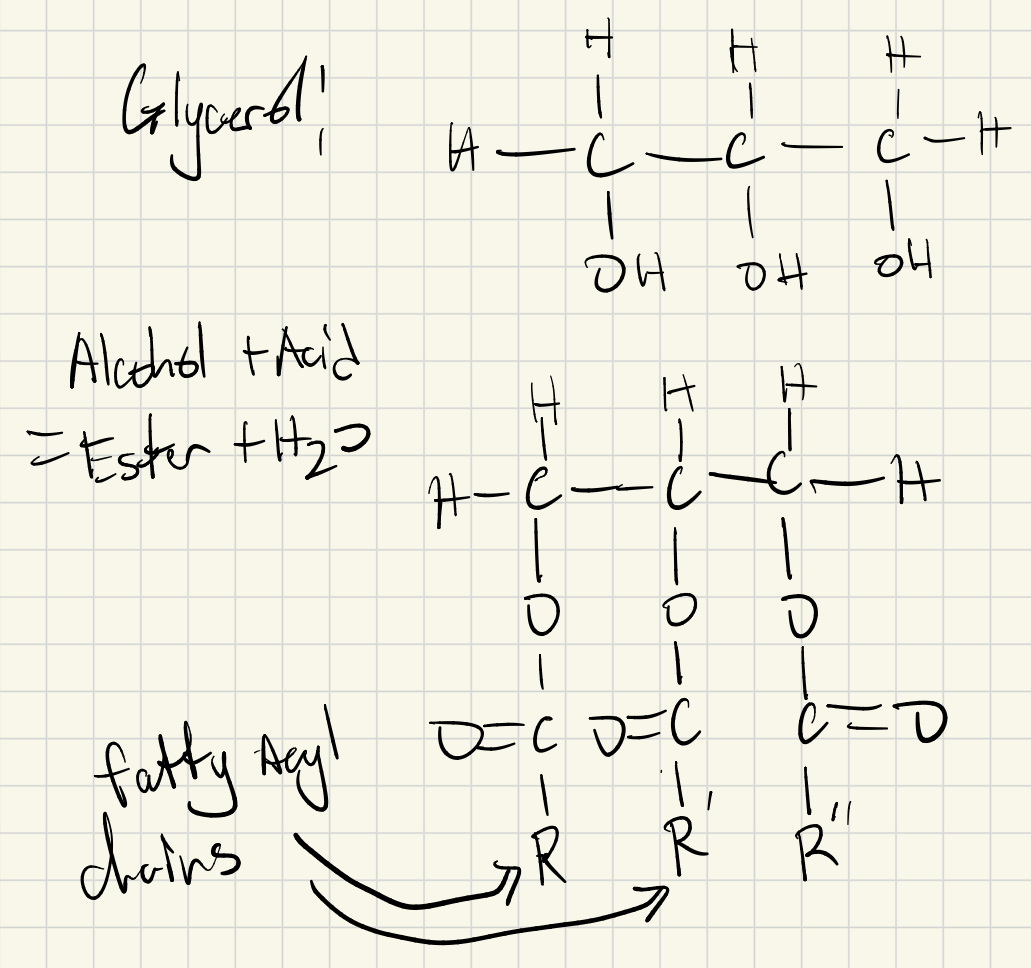
TAGs are glycerols that have fatty acid chains attached to each of their hydroxyl groups, body usually stores FAs as TAGs
Why are tags the main energy form in animals?
FA are almost completed reduced and contain more energy than glycogen
TAGs are VERY hydrophobic, don’t need water for storage and can store more
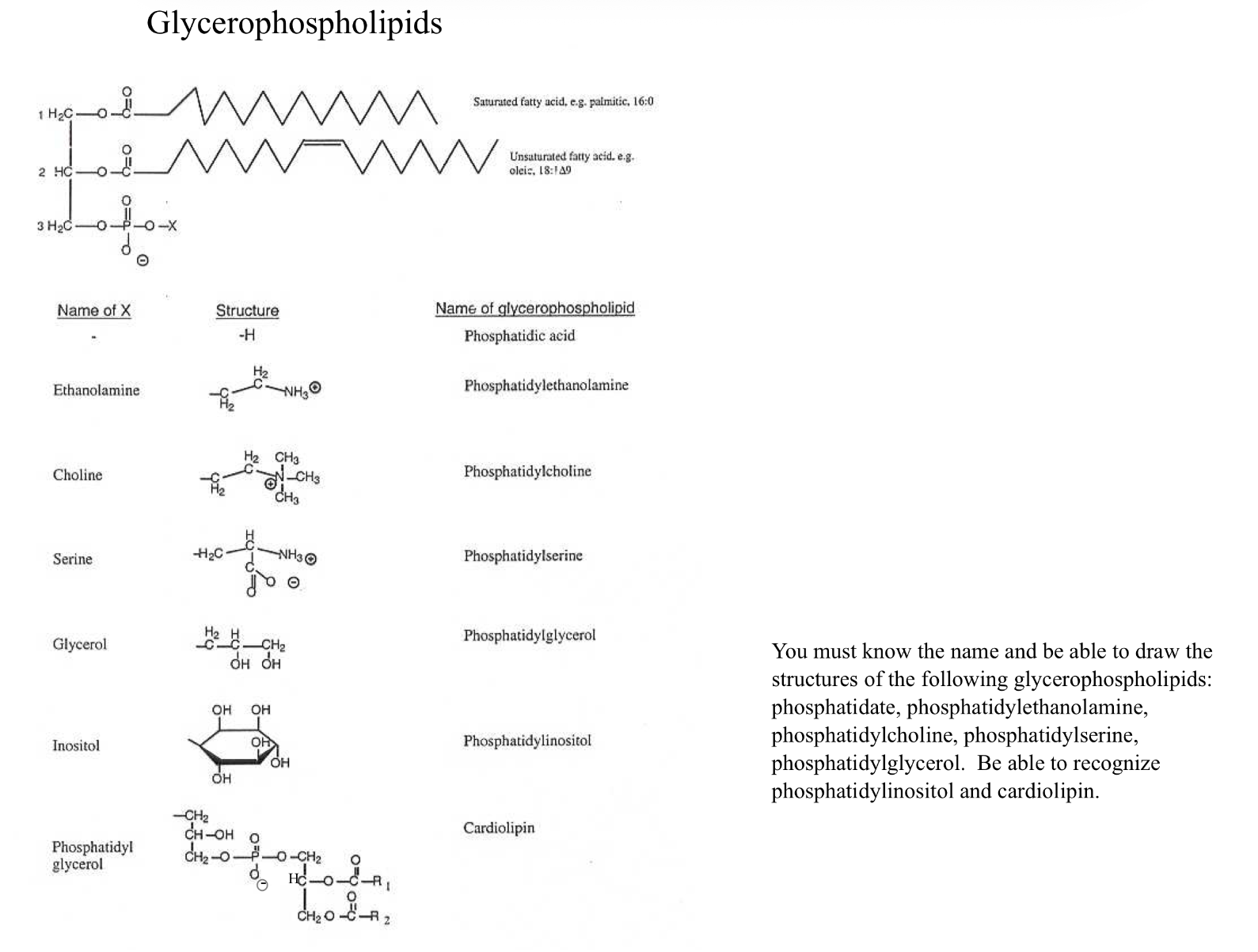
Glycerophospholipids
Similar to TAGs with glycerol backbone but C3 is linked by phosphodiester bond which links to different head groups. FAs can also vary and molecule can have different properties based on attachments
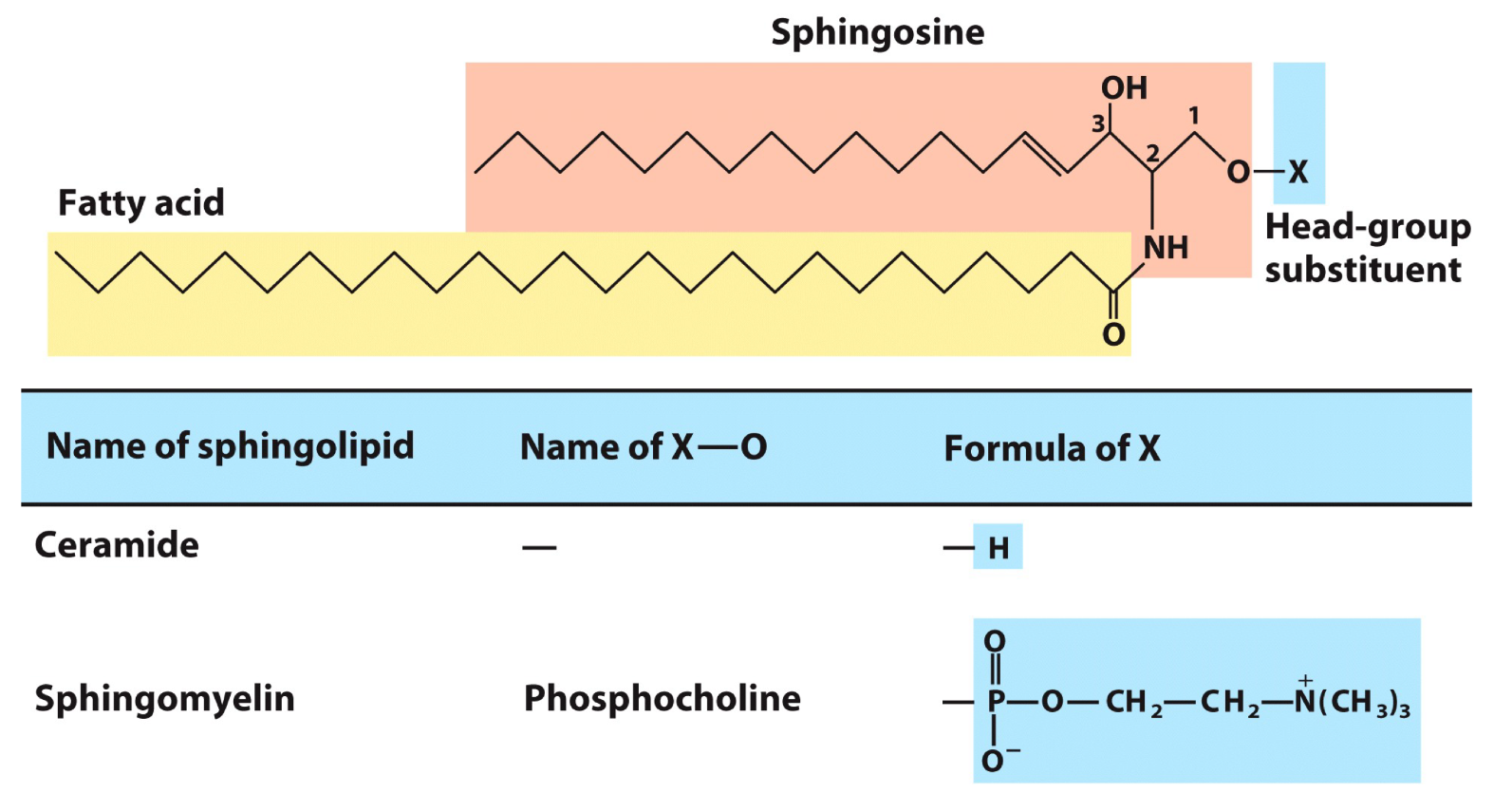
Sphingolipids
Have sphigosine as a base, attached to FA tail (via amide bond) and head group (via OH)
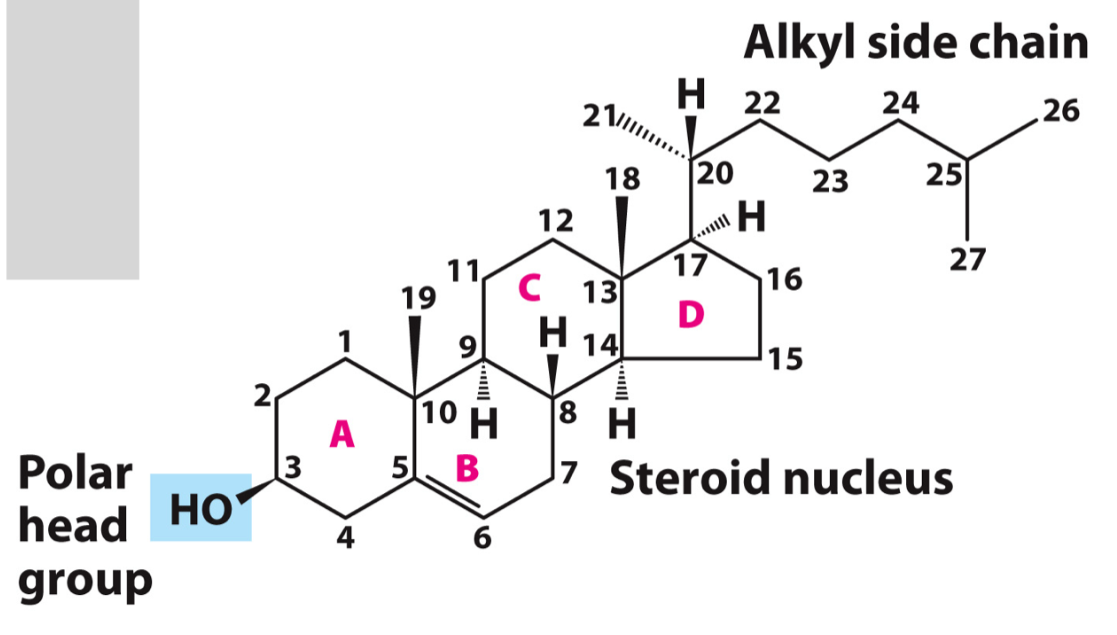
Cholesterol/sterols
Have steroid core (4 closed rings), fairly planar and rigid structure, amphipathic. Steroid + alcohol = sterol
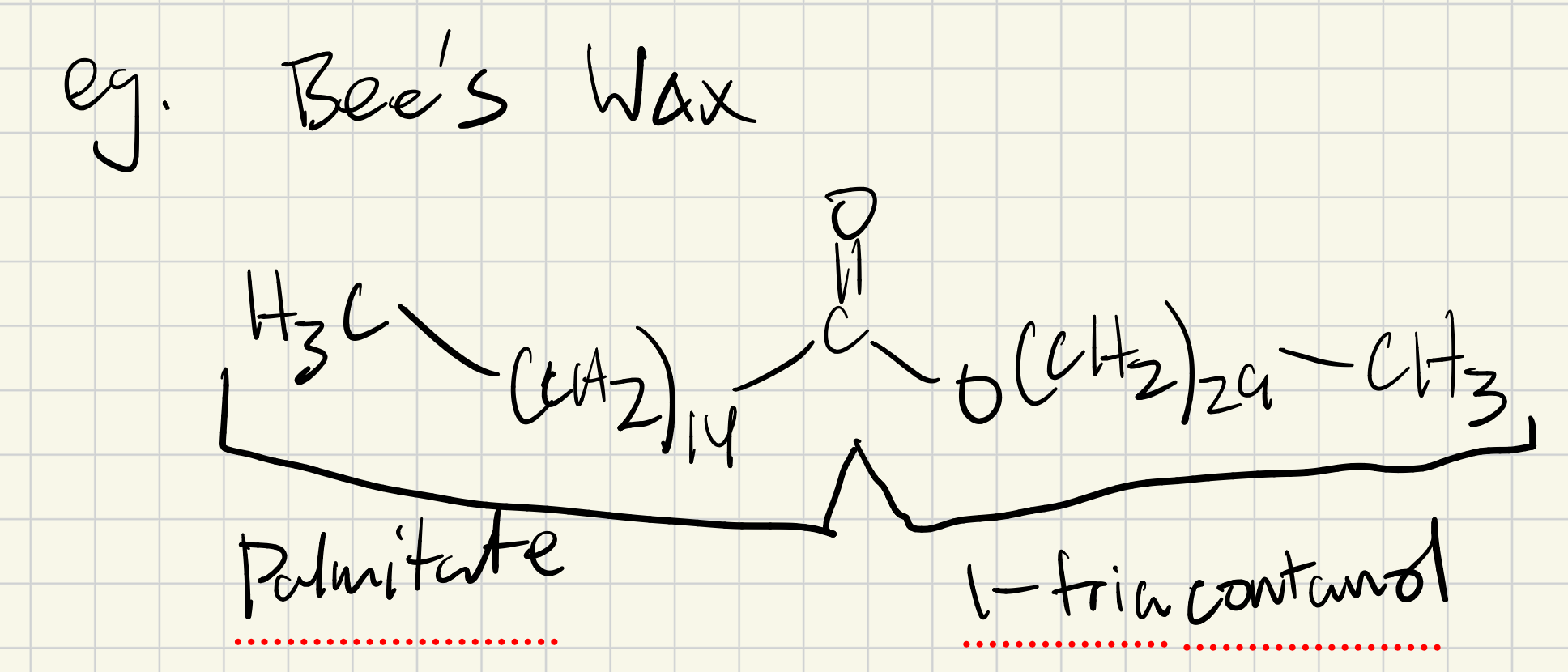
Waxes
Like FAs but have long chained alcohol attached, non-polar and hydrophobic. Have high melting points, great fuel sources
Eicosanoids
Contains 20 carbons, derived from phospholipids containing an arachidonyl acyl chain. Usually act as paracrime hormones (short range signal)