Chapter 1.1: Some Fundamental Definitions
 Call Kai
 Learn
Learn Practice Test
 Spaced Repetition
 Match
Match Flashcards
 Knowt Play
1/19

Name | Mastery | Learn | Test | Matching | Spaced | Call with Kai | Chat |
|---|
No analytics yet
Send a link to your students to track their progress
20 Terms
Chemistry
The scientific study of matter and its properties, the changes it undergoes, and the energy associated with it
Matter
Anything that has mass and volume
Composition
The types and amounts of simple substances that make matter up
Substance
Matter with a defined, fixed composition, regardless of state
States of matter
Includes:
Solid
Liquid
Gas
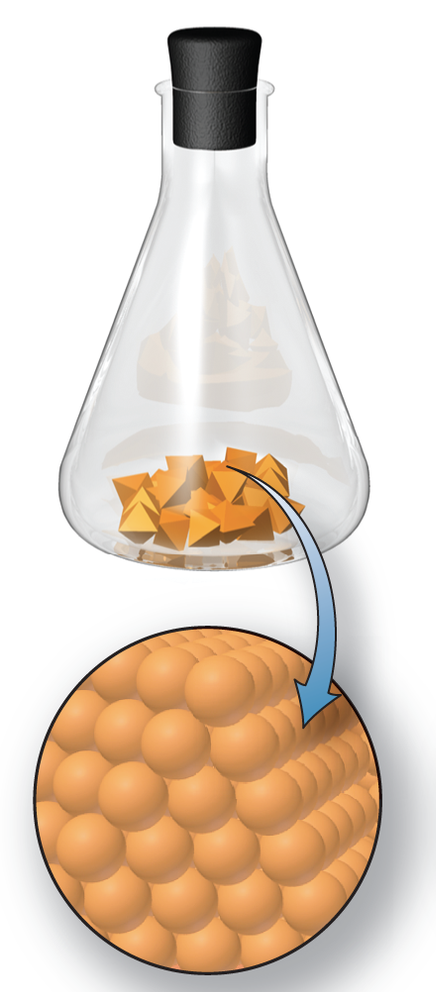
Solid
A state of matter that has a fixed shape that doesn’t conform to the container
Particles lie next to each other in an array
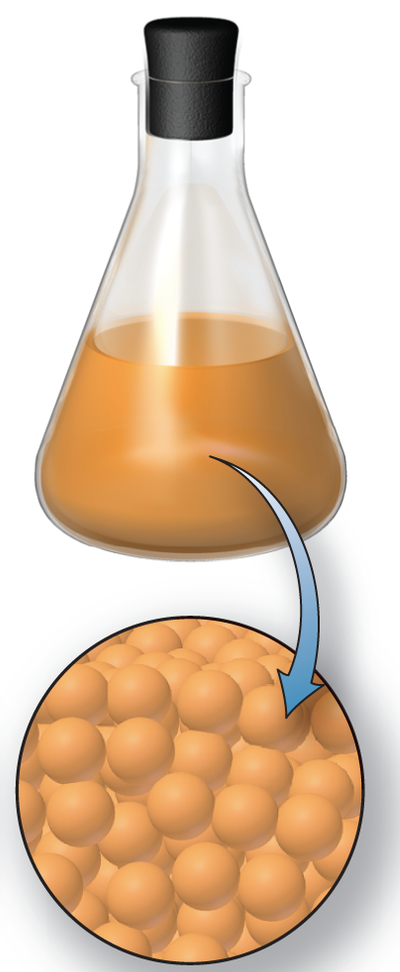
Liquid
A state of matter that conforms to the container shape and has a surface constrained by volume

Gas
A state of matter with varying, conformant shape, filling the entire container but with no fixed surface
Particles move randomly and with greater distance
Array
The three-dimensional arrangement of particles in solid matter
Properties
The characteristics that give each substance its unique identity
Physical properties
Characteristics a substance shows by itself
Density
Color
Melting point
Chemical properties
Characteristics a substance shows as it changes into or interacts with another substance
Includes:
Flammability
Corrosiveness
Acid reactivity
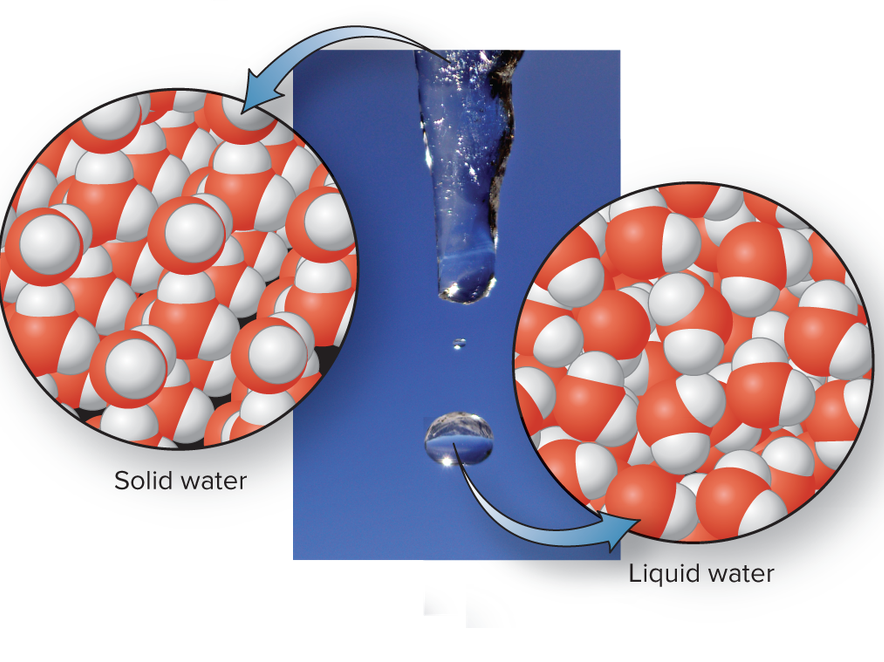
Physical change
A change that occurs when a substasnce alters its physical properties, not composition
Water state changes still retain water structure
Is more easily reversible, changing to different states easily
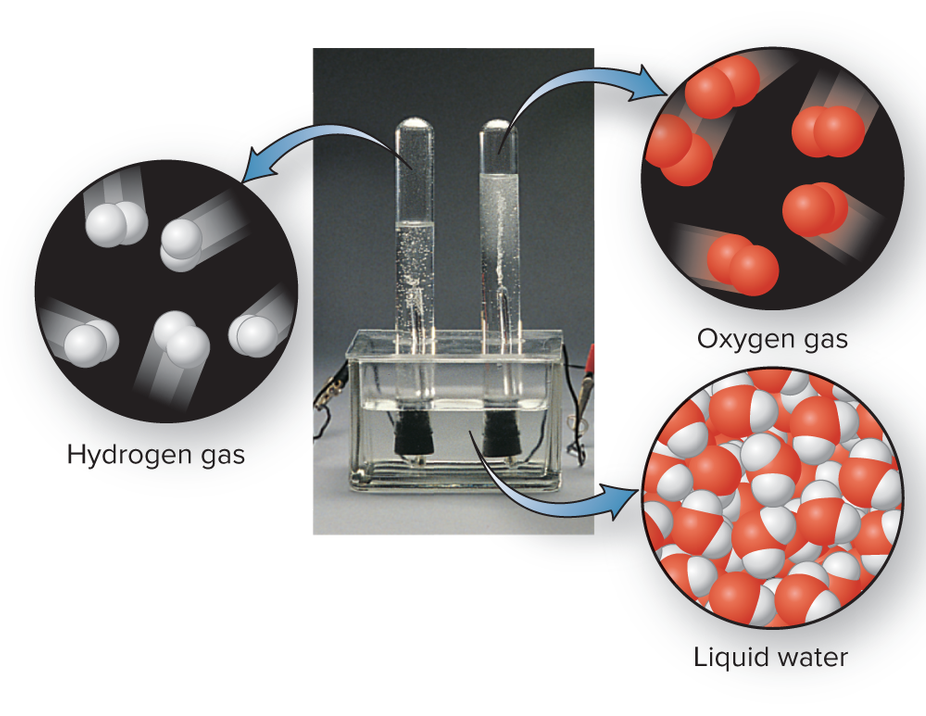
Chemical change
A change that occurs when substances change identity with different composition and properties
Electrical currents can induce this in water, breaking apart bonds
Not as reversible, requiring another one of these
Energy
The ability to do work
Typically involves movement to transfer this to and from matter
Is the sum of its potential and kinetic parts
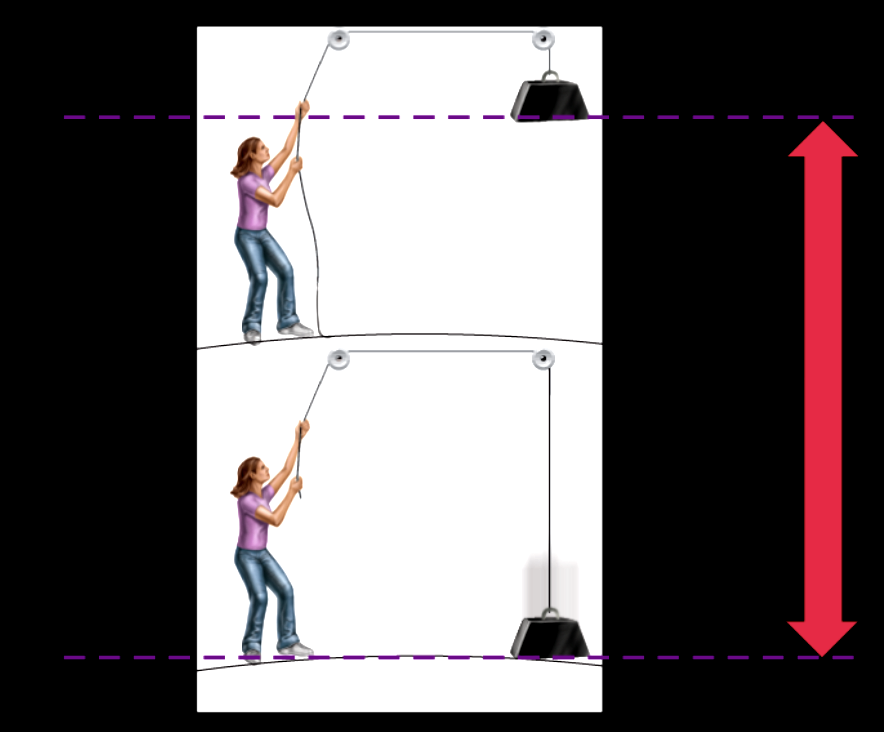
Potential energy
Energy due to the position of the object relative to other objects
Seen with a weight being raised above the ground, or the pulling apart of a spring
In chemistry, this can be seen when two like charges come close together or two opposite charges diverge

Kinetic energy
Energy due to the motion of the object
Seen with dropping the weight to the ground, or allowing a spring to relax
In chemistry, this can be seen in gasoline powering an engine to convert chemical-based potential energy into kinetic energy
Principles of energy
Includes:
Conservation of energy (energy is neither created nor destroyed)
Lower energy states are more stable than higher states
Conservation of energy
The principle of energy that energy is neither created nor destroyed
Lower-energy states
These are more stable than higher-energy states