HY-ROAD Section 3 -> THYROID GLAND
 Call Kai
 Learn
Learn Practice Test
 Spaced Repetition
 Match
Match Flashcards
 Knowt Play
1/83

Earn XP
Description and Tags
Endocrine Lecture 3 - Exam 1
Name | Mastery | Learn | Test | Matching | Spaced | Call with Kai | Chat |
|---|
No analytics yet
Send a link to your students to track their progress
84 Terms
Gross Anatomy of the Thyroid Gland
The thyroid gland is located anterior and lateral to the trachea, just below the
thyroid cartilage (Adam's apple).
It consists of two (sometimes three) lobes (one on each side of the trachea).
The lobes are connected by a bridge of thyroid tissue called the isthmus, which is located just below the cricoid cartilage.
The thyroid gland is barely palpable.
The thyroid gland weighs 10 to 20 grams in normal adults.

Microanatomy of the Thyroid Gland
Microscopically, the thyroid is composed of
spherical follicles, each composed of a single
layer of follicular cells surrounding a lumen
filled with colloid

TGB
thyroglobulin (some people call it TG)
C cells (parafollicular cells)
secrete calcitonin
There are two types of thyroid hormone
triiodothyronine (T3 )
thyroxine (T4 )
Thyroid Hormone Structure
Thyroid hormones are derivatives of the amino acid tyrosine. A majority of
the thyroid hormone secreted by the thyroid gland is T 4 (approx. 95%). Most of
the T 4 released by the thyroid gland, however, is converted to T 3 by target
tissues. T 3 is about 4‐5 times more potent than T4 .
Thyroid hormones are unique in that they contain …
60‐65% of the trace element
iodine (I). Adequate iodide (I‐) intake is necessary for normal thyroid hormone
synthesis as thyroid hormones are the only substances in the body that have iodine
in their structure.
How much iodine should one eat?
The minimum dietary requirement
of iodide for adults is about 75‐150 micrograms/day (normal US daily intake is 500).
What’s the difference between primary, secondary and tertiary hypothyroidism?
Primary is thyroid
Secondary Pituitary
Tertiary is making to little hormones in the hypothalamus
What’s the difference between primary, secondary and tertiary hyperthyroidism?
Thyroid Hormone Synthesis 8 Steps (3 catagories)
GATHER UP THE INGREDIENTS
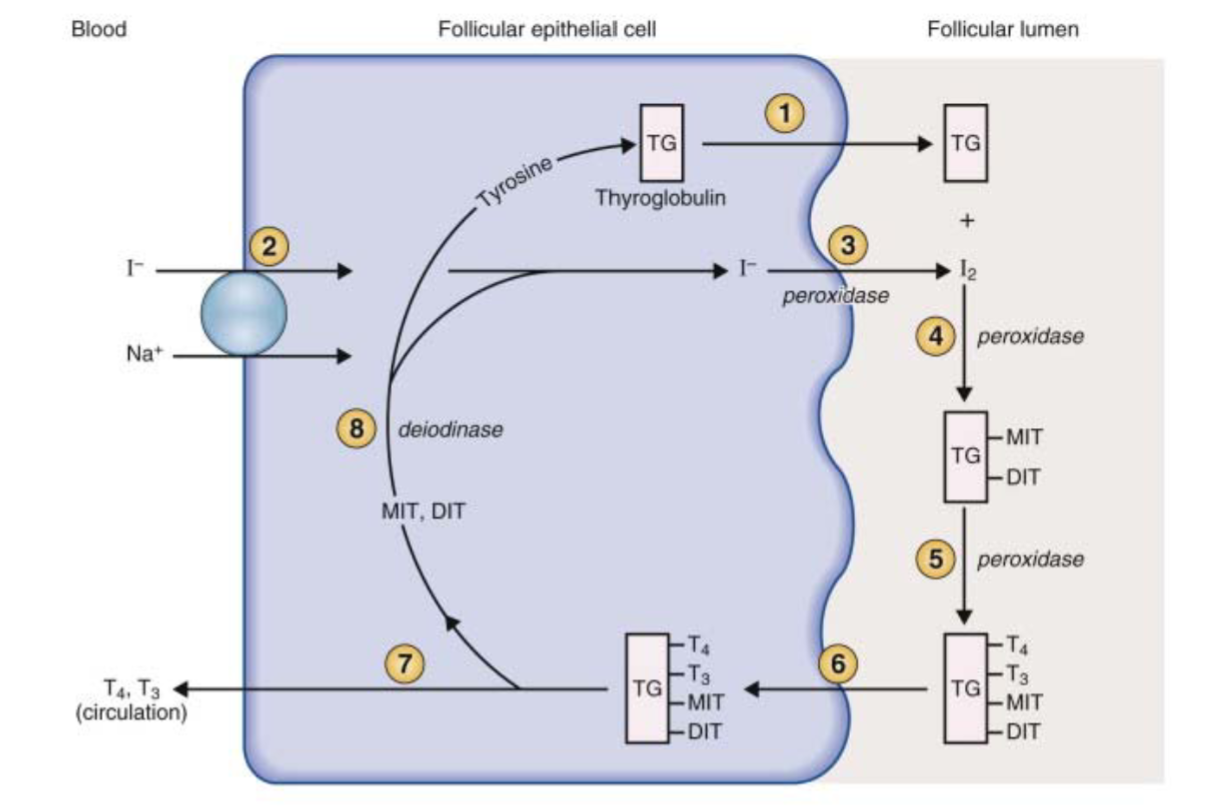
1) Follicular cells synthesize TGB (with its numerous tyrosine) and dump into the colloid
2) Iodine trapping via the Na+ /I‐ pump (active transport)
.
MIX & BAKE THE INGREDIENTS
3) Oxidation of I‐ to I2
4) Organification of I2 , i.e., add the iodine to the tyrosine on TGB to make MIT and DIT
5) Coupling and colloid storage
• MIT + DIT = T3
• DIT + DIT = T 4
The mixing and baking steps (3‐ 5) require THYROID PEROXIDASE
Thyroid Hormone Synthesis (GATHER UP THE INGREDIENTS)
1) Follicular cells synthesize TGB (with its numerous tyrosine) and dump into the colloid
2) Iodine trapping via the Na+ /I‐ pump (active transport)
Thyroid Hormone Synthesis (MIX & BAKE THE INGREDIENTS)
3) Oxidation of I‐ to I2
4) Organification of I2 , i.e., add the iodine to the tyrosine on TGB to make MIT and DIT
5) Coupling and colloid storage
• MIT + DIT = T3
• DIT + DIT = T 4
The mixing and baking steps (3‐ 5) require THYROID PEROXIDASE

Thyroid Hormone Synthesis (RELEASE THE FINISHED PRODUCT)
6) Transport from colloid to follicular cells
7) Cleavage of T 3 , T 4 , DIT and MIT (via lysosomal fusion) & release of T 3 and T4 to the blood
.
8) Deiodination of residual MIT & DIT (via thyroid deiodinase) and recycling of I‐ and tyrosine

Enlarged Theroid is ….
Goiter
How long can people go without Iodine/no T3/T4
Estimated that individuals can store
1‐2 month supply of T 3/T 4
TSH Actions
Stimulates TGB synthesis
Stimulates Na+ /I‐ pump
activity
Activates thyroid peroxidase
Stimulates growth of thyroid
follicles (hypertrophy and
hyperplasia of thyroid
follicular cells and increased
thyroidal blood flow) If
TSH levels are extremely
high, this can manifest in a
patient as _______
Thyroid Hormone Transport
Thyroid hormones are transported in blood bound to carrier
proteins. Although only approx. 0.04% of T3 and T4 are "free", it is
the free fraction that is responsible for hormonal activity.
There are three major thyroid hormone transport proteins:
thyroxine‐binding globulin (TBG) [Don’t confuse with TGB]
• thyroxine‐binding pre‐albumin (TBPA)
• albumin
The total amount of thyroid hormones bound to these plasma
proteins provides a substantial reservoir of T3 and T4 in the blood
Congenital Hypothyroidism
Either no thiroid
Have a thrioid that jsut does not work
.
Incidence 1 in 3000 to 5000 newborns
Untreated Growth retardation and delayed cognitive development
Three screening approaches are generally used:
Primary screening for low free T 4 with follow up (secondary) screening for high TSH if the free T 4 value is below a certain concentration
• Primary screening for high TSH
• Primary screening for both low free T 4 and high TSH
How can the lab tell if a baby needs theriod treatment?
Blood for screening is collected onto filter paper cards after heel prick, usually two to five days after birth.

In the adult, thyroid hormones’ effects
on the CNS mainly consist of maintaining a level of alertness, concentration and focus
Thyroid hormone & growth
Thyroid hormone is required for growth to adult stature.
Thyroid hormones act synergistically with growth hormone and somatomedins to promote bone formation.
Thyroid hormones promote ossification and fusion of bone plates and bone maturation.
In hypothyroidism, bone age is less than chronologic age.
Mainly important in pre puberty (After puberty growth hormone takes over)
Thyroid Hormones on BMR

Thyroid Hormones on Metabolism

Thyroid Hormones on Cardiovascular

Thyroid Hormones on intestinal motility
Thyroid hormones stimulate intestinal motility
Causes of Hypothyroidism (4)
Hashimoto’s (chronic autoimmune)
thyroiditis (P) [the most common
cause]
• Iodine deficiency (P)
• Thyroidectomy (P)
• Lack of TSH (S
Clinical Manifestations of Hypothyroidism

Hypothyroidism → Soft tissue damage process
Synthetic thyroid hormone (T4)
Levothyroxine (T4 ) [Levothroid, Levoxyl, Synthroid, Unithroid]
.
By far and away, the most popular preparation used clinically
Synthetic thyroid hormone (T3)
Liothyronine (T3 ) [Cytomel]
Typically only given to patient in which they cannot naturally produce this (typically converted from T4)
Typical Dosing of Levothyroxine
The average replacement dose of T 4 in adults is approx. 1.6‐1.8 mcg/kg
body weight per day (approx. 112 mcg/day in a 70‐kg adult)
Dosing of Levothyroxine in the Elderly
In older patients, those with heart problems, and those with long‐
standing hypothyroidism they should be started on a lower dose (as
little as 12.5‐25 mcg/day), as moving from a hypothyroid to a euthyroid
state can cause excessive stress on the cardiovascular system; the dose
can be increased, if necessary, by 12.5‐25 mcg/day every 4‐6 weeks
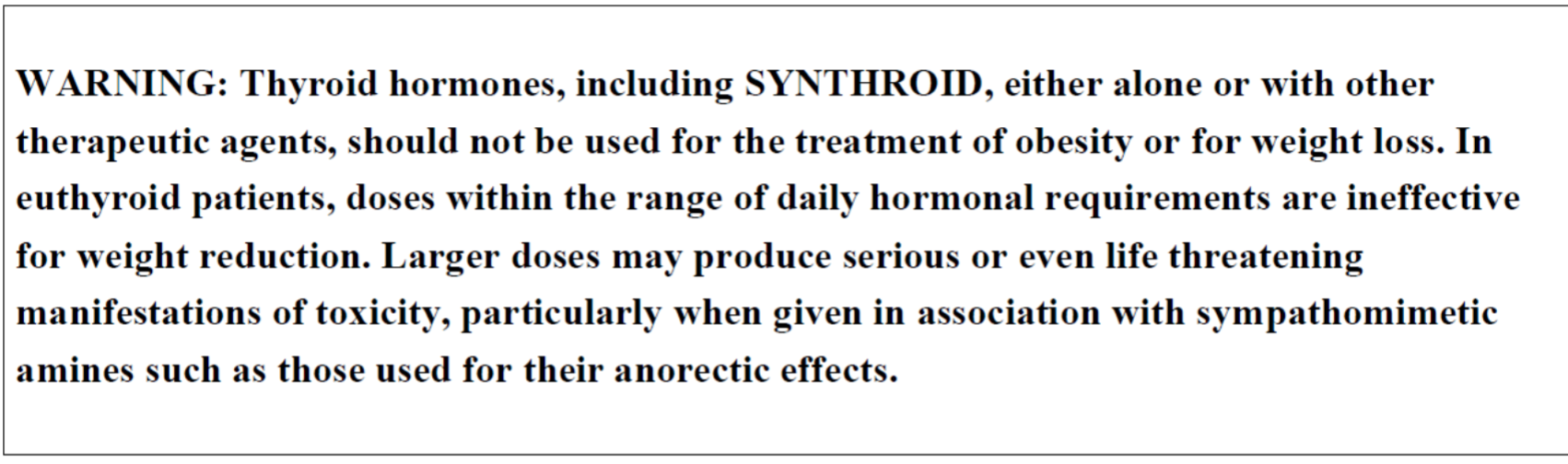
Levothyroxine for weight loss
This can lead to what is known as FACTITIOUS
HYPERTHYROIDISM
Levothyroxine Negative Side Effects (7)
General fatigue, increased appetite, weight loss, heat intolerance, fever, excessive sweating
• Central nervous system hyperactivity, nervousness, anxiety, irritability, insomnia
• Musculoskeletal tremors, muscle weakness
• Cardiovascular/Respiratory palpitations, tachycardia, arrhythmias, increased blood pressure, angina, myocardial infarction, dyspnea
• Gastrointestinal diarrhea, abdominal cramps
• Endocrine decreased bone mineral density
• Reproductive menstrual irregularities, impaired fertility
Myxedema
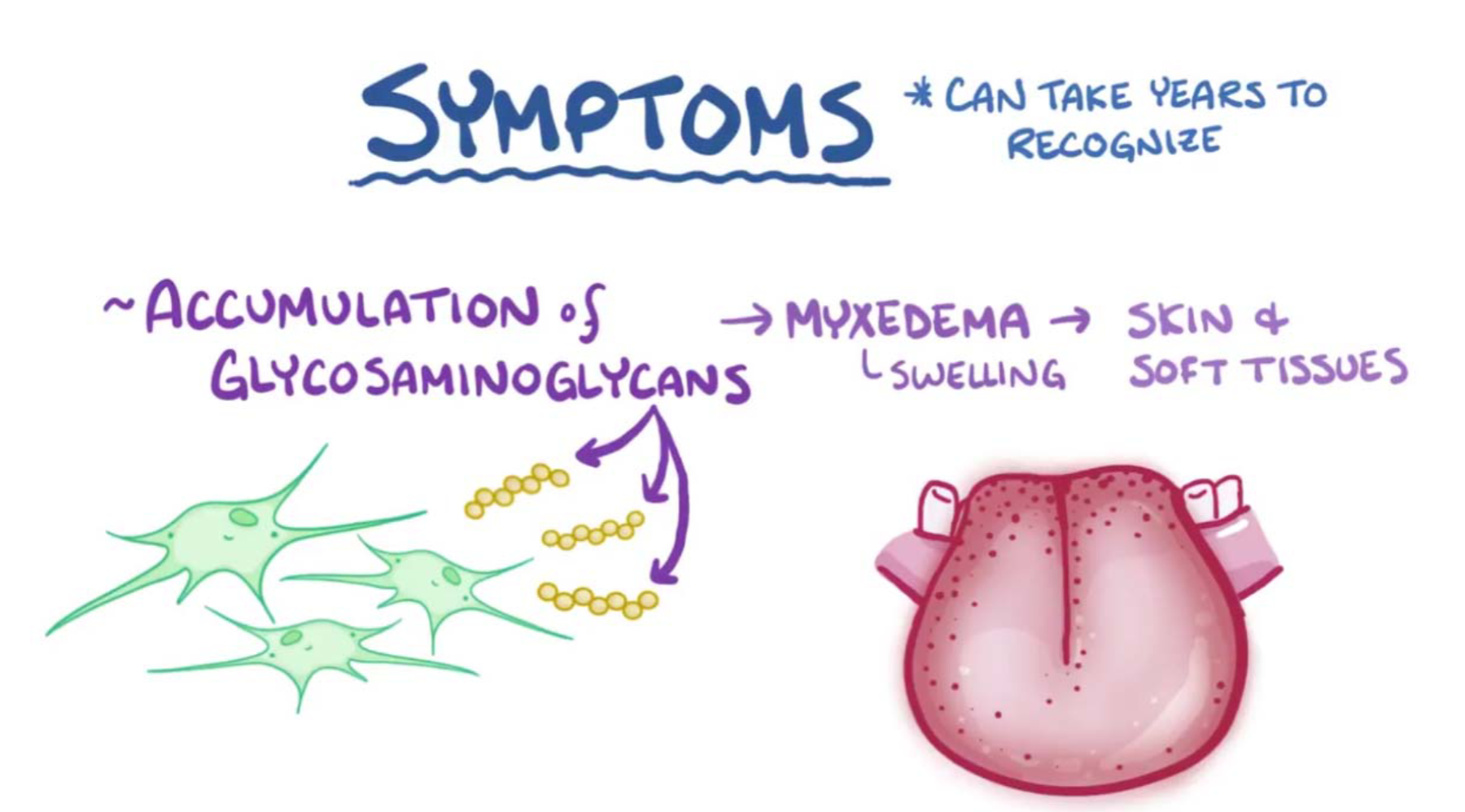
Myxedema describes the skin and soft
tissue changes that occur in
hypothyroidism (especially when severe)

What causes the Skin Swelling in Myxedema
The deposition of GLYCOSAMINOGLYCANS
occurs most notably in the dermis of the
skin, which results in swelling of the
affected areas.
Myxedema Coma
Myxedema coma is defined as severe hypothyroidism (with all the
skin and soft tissue swelling) PLUS DECREASED MENTAL STATUS
(mental slowness, confusion, apathy, depression) and
HYPOTHERMIA. However, hypotension, bradycardia, hypoglycemia,
hyponatremia, and hypoventilation are often present as well.
.
It is a medical emergency with a high mortality rate (30‐40%);
fortunately, it is a rare presentation of hypothyroidism
Myxedema Coma Management:
• Supportive measures correction of hypothermia, administration
of electrolytes and glucose, mechanical ventilation if necessary
• IV T 4
Potential oral findings in hypothyroidism include:
macroglossia (which would be a sign of ______)
• micrognathia (pediatric)
• dysguesia
• enamel hypoplasia in both dentitions (being less intense
in the permanent dentition)
• delayed eruption in children
• poor periodontal health
• delayed wound healing
• thick lips (which would be a sign of ________)
• burning mouth syndrome
Clinical Manifestations of Hyperthyroidism
Causes
• Graves’ disease (P) [the most common cause]
• Toxic nodular goiter (P)
• Hyperfunctioning thyroid adenoma (P)
• Acute (destructive) thyroiditis (P)
• Jod‐Basedow syndrome (iodine‐induced
thyrotoxicosis)
• TSH‐secreting adenoma (S)
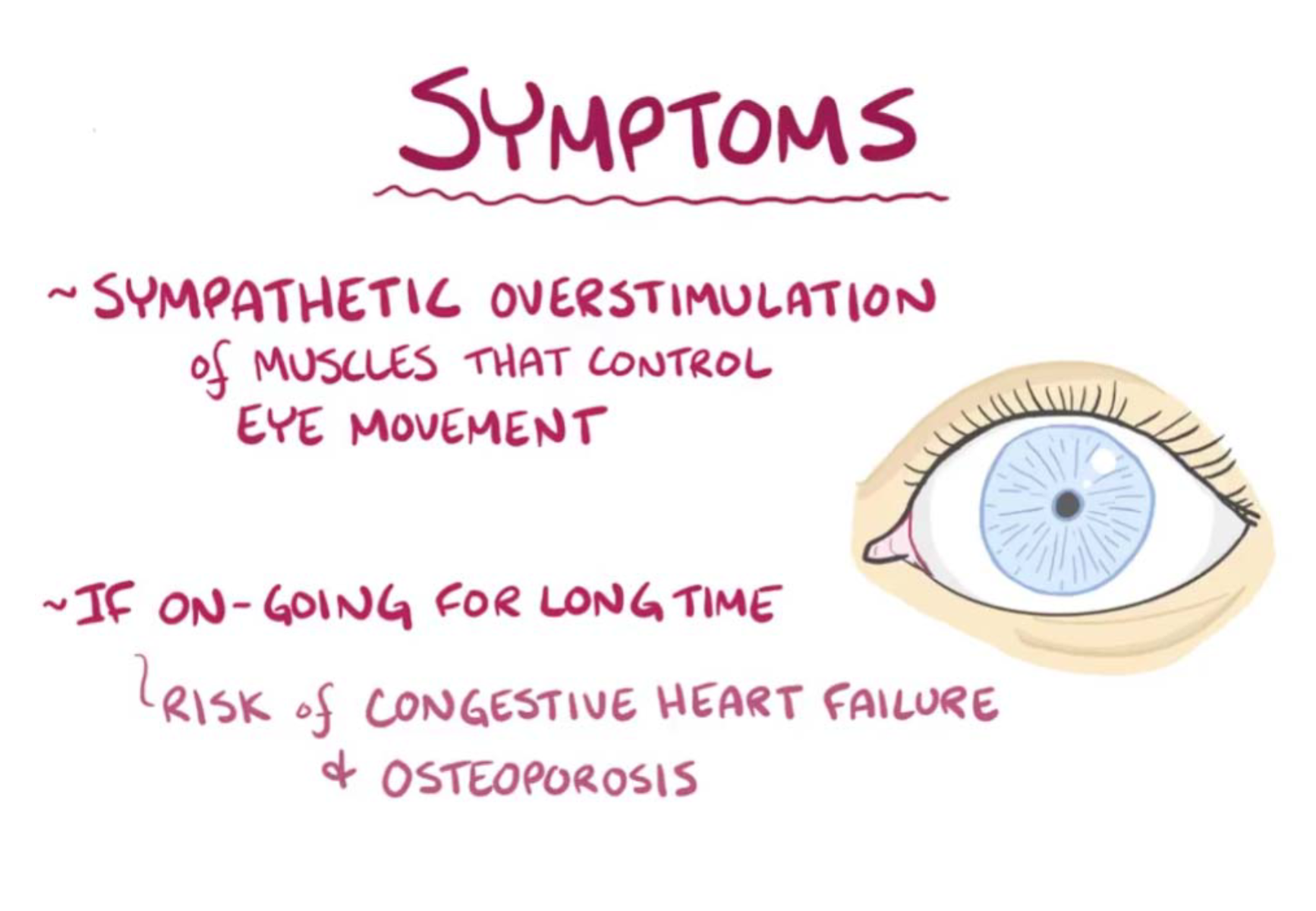
Symptoms of Hyperthyroidism (3)

More Symptoms of Hyperthyroidism (2)
Graves’ Disease Photo

Graves’ Disease Cause
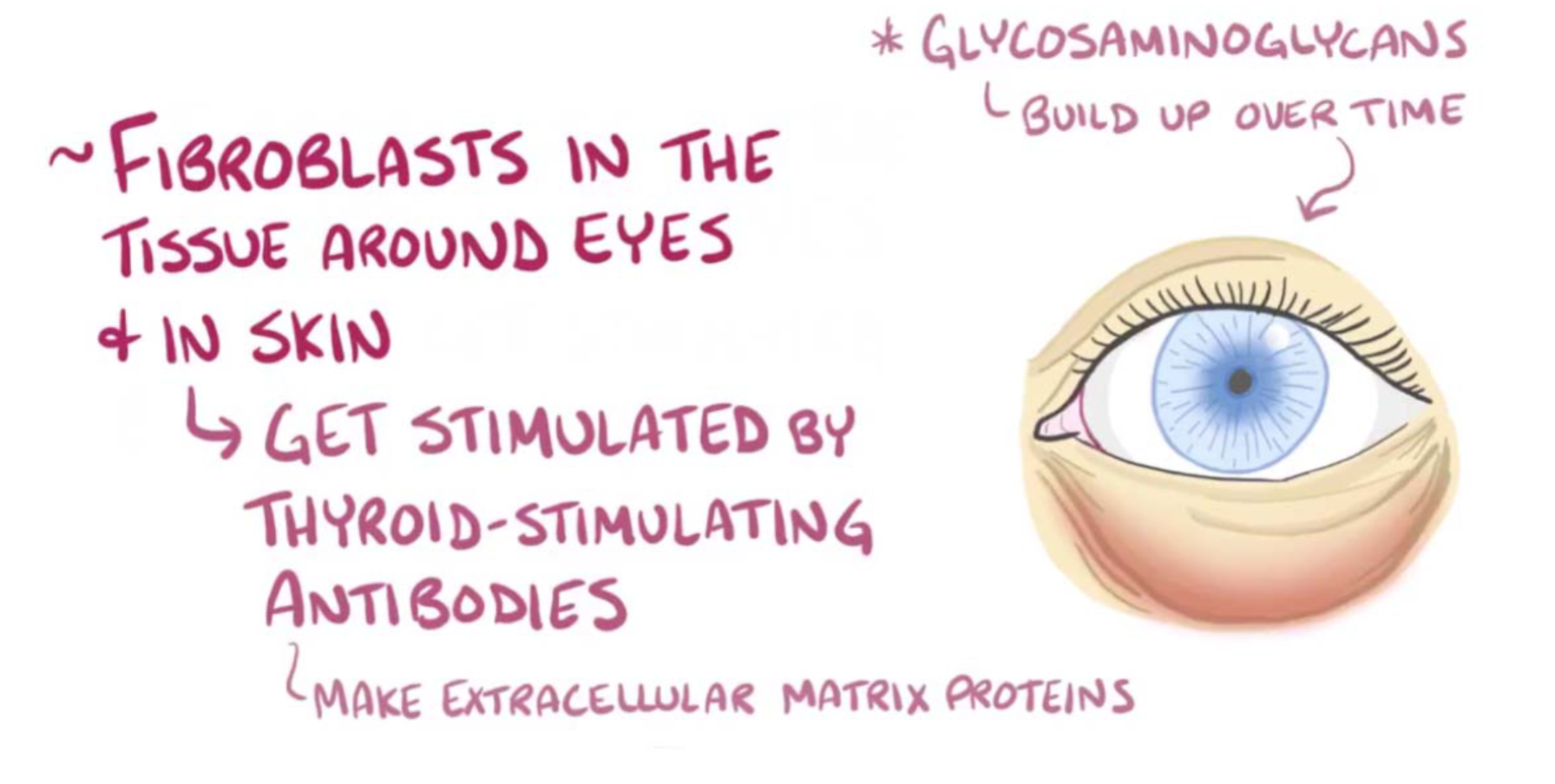
TSH Actions (Graves’ Disease)
Graves’ disease occurs
when autoantibodies
known as TSIs (thyroid
stimulating
immunoglobulins)
.
DON’T
DESTROY THE THYROID
GLAND, but instead BIND
TO TSH RECEPTORS AND
CONSTANTLY STIMULATE
THE THYROID
Acute (Destructive) Thyroiditis
First things first: Acute (destructive) thyroiditis is NOT the same as Hashimoto’s
thyroiditis
In acute thyroiditis, here is an initial presentation of hyperthyroidism which is followed by a hypothyroid phase and then recovery of thyroid function
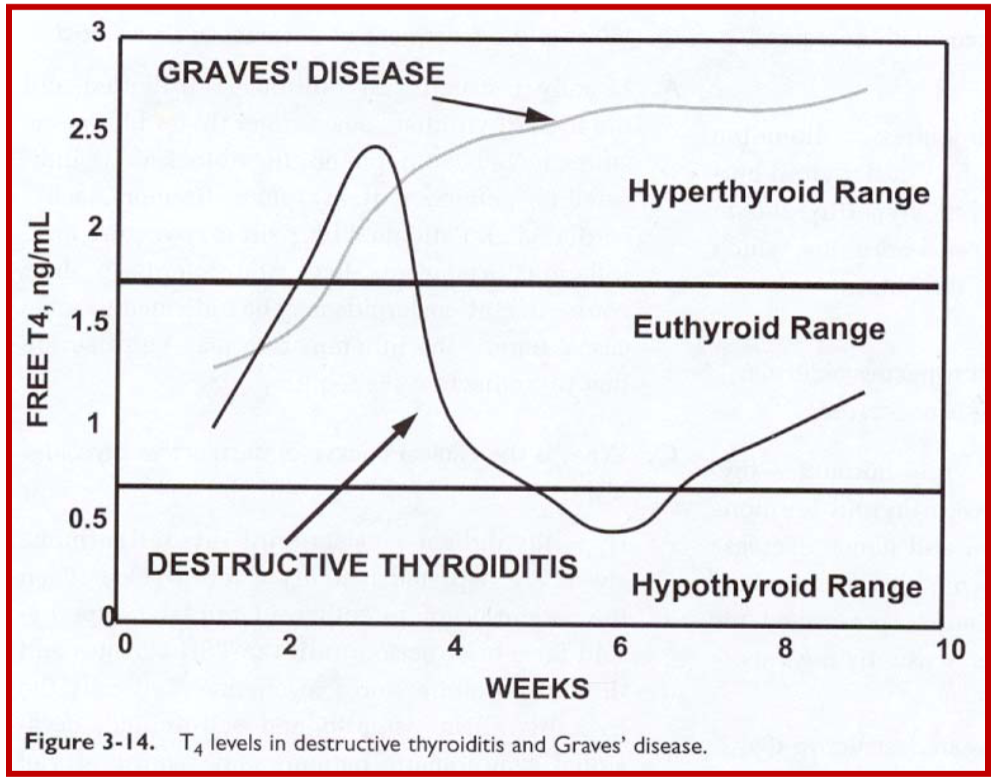
In Hashimoto’s thyroiditis
In Hashimoto’s thyroiditis, there is no
recovery of thyroid function
Treatment of Hyperthyroidism
Graves’ disease may be treated with:
• anti‐thyroid drugs (i.e., thionamides)
• radioactive iodine (RAI) therapy
• surgery (thyroidectomy)
Ancillary medications may also be used to treat specific
symptoms as well.
Thionamide Drugs
Methimazole and propylthiouracil (PTU) inhibit thyroid peroxidase‐ catalyzed steps in the synthetic process
.
In addition, PTU inhibits the conversion of T4 to T3 in peripheral tissues

Thionamide Drugs
Although the inhibition of thyroid hormones synthesis occurs promptly, thyroid hormone levels may not become normal for several weeks (typically 4‐8) because thyroid hormone already stored in the colloid of thyroid follicles continues to be released into the circulation.
.
Once thyroid hormone stores are depleted, doses can be gradually tapered at monthly intervals to achieve the desired steady‐state thyroid hormone level.
Why do patients with Graves Disease take a Thionamide Drugs? (2)
In patients with Graves disease, a thionamide
drug can be used in:
1) An attempt to induce remission (may take 1‐2 years)
2) As a means to control symptoms before surgery or RAI
treatment.
Side Effects of Thionamide Drugs (3 Minor)
Relatively minor side effects of thionamides include
Skin rash
Gastric intolerance
Arthralgia.
Side Effects of Thionamide Drugs (2 Serious)
Serious side effects associated with thionamides include:
Agranulocytosis (granulocyte count < 250 l; normal: 2500‐6000)
Liver failure (much higher incidence with PTU)
Frequency of side effects in Thionamide Drugs
Agranulocytosis occurs in less than 0.5% of patients, generally within the first 3
months of taking thionamides, but may occur at any time.
.
To detect this complication as early as possible, patients are instructed to have a CBC done immediately if they develop unexplained fever, malaise, sore throat, mouth sores or flu‐like symptoms, and not to resume the medication until a normal white blood cell count is reported.
Prior to initiating thionamides, many clinicians obtain baseline blood tests, including a complete blood count (white count with differential) and a liver profile
Radioactive Iodine (RAI) Therapy
A single dose of radioiodine will cure the majority of patients with Graves’ disease within 6 weeks to 3 months
a second dose may be given after this time if necessary (10‐15% of patients typically need a second dose).
.
Radioiodine is administered orally as sodium 131 I in solution or capsule.
The radioiodine is rapidly incorporated into the thyroid, and its beta‐emissions result in extensive local tissue damage (tissue penetration of 2 mm).
Who should not receive Radioactive Iodine (RAI) Therapy
No woman of child‐bearing age should be treated with radioiodine without a careful inquiry about or testing for pregnancy.
.
Fetal thyroid tissue is present by 10 to 12 weeks and would be destroyed by the radioiodine, resulting in cretinism

Does Radioactive Iodine (RAI) Therapy help hypothyroidism?
In the past, it was controversial whether radioiodine should be given in a sufficient dose to induce hypothyroidism or a lower dose in an attempt to achieve a euthyroid state.
However, due to the high failure rate associated with lower doses designed to leave a patient euthyroid, most experts advocate radioiodine doses that result in hypothyroidism.
There is no evidence that radioactive iodine treatment of hyperthyroidism causes cancer of the thyroid gland or other parts of the body
Post‐Treatment Precautions of RAI Therapy
Patients who receive RAI therapy have the potential to expose their home and household contacts via saliva, urine, or radiation emitting from their body. They should be instructed to avoid the following during the restricted period:
.
1) Sharing cups or utensils
2) Sleeping in the same bed with another adult, pregnant woman, infant, or child
3) Sexual contact
4) Close contact with children and pregnant women
Thyroidectomy
The use of surgery as definitive therapy for hyperthyroidism varies with the cause of the disease and the characteristics of the patient.
Subtotal or total thyroidectomy is appropriate for patients with:
very large or and/or obstructive goiters (as in some cases of Graves' disease)
those who allergic to thionamides
those who are unable to or refuse to receive RAI therapy.
Thyroidectomy complications include (4)
1) Transient vocal cord paralysis ‐ 3%
2) Prolonged post‐operative hypocalcemia – 3%
3) Permanent hypoparathyroidism – 1%
4) Recurrent hyperthyroidism – 2%
Beta‐blockers
Beta‐blockers are often started in most patients soon after the diagnosis of hyperthyroidism is made (assuming no contraindications to their use).
.
Beta‐blockers decrease the adrenergic manifestations (e.g. – tachycardia, palpitations, tremulousness, anxiety etc.) of hyperthyroidism.
.
Due to their relatively rapid onset of action, they can be used to alleviate symptoms until a thionamide takes effect or the patient is scheduled for surgery or RAI therapy.
Iodine Salts / Solutions
These salts/solutions also became “famous” during the age of nuclear reactor accidents, as they can block radioactive iodine uptake due to accidental exposure.
Why it is important for Treatment of Graves’ Ophthalmopathy
Reducing thyroid hormone secretion does not necessarily improve the pathology of Graves' ophthalmopathy, although it does decrease eyelid retraction and stare.
Patients with Graves' ophthalmopathy should be treated according to the severity of their eye disease.
Treatment of Graves’ Ophthalmopathy (Mild)
For these patients only local measures are required, including
Eye shades, artificial tears (saline eye drops),
Avoiding sleeping on the face
Raising the head of the bed
Treatment of Graves’ Ophthalmopathy (Severe)
The patient with red eyes and increasing diplopia & proptosis ‐‐‐ A trial of oral glucocorticoid therapy (prednisone, 30 mg/day for four weeks) can be initiated in patients with progressive ophthalmopathy.
Higher doses may be required if this dose is ineffective. Local measures should also be used.
Thyroid Storm
Thyroid storm is a rare, life‐threatening condition causes by severe
clinical manifestations of hyperthyroidism (basically, exaggeration of
the usual symptoms of hyperthyroidism)
Often precipitated by an acute event such as surgery, trauma,
infection or parturition
More likely to occur in a patient who has or has had Graves disease.
Thyroid Storm Symptoms (6)
Resting tachycardia (>140 bpm) or cardiac arrhythmia (A‐fib)
Hypotension/shock
Hyperpyrexia (104‐106 o F)
Agitation/anxiety/delirium/psychosis/stupor/coma
Severe nausea/vomiting/diarrhea/abdominal pain
Lab: elevated T3 & T4, low TSH
Potential oral findings in hyperthyroidism include (3)
1) Accelerated dental eruption in children
2) Increased susceptibility to dental caries & periodontal disease burning mouth syndrome
3) Plus, hyperthyroidism can exacerbate the patient’s response to dental pain and anxiety
First signs of Thyroid Cancer

Thyroid Cancer Types (5)
PAPILLARY
FOLLICULAR
HURTHLE CELL
MEDULLARY
ANAPLASTIC
PAPILLARY
Arises from follicular cells, slow‐growing, treatable with good prognosis
Cancer cells look and act similar to normal follicular cells
Most common form of thyroid cancer, females affected 3X more than males
Often spreads to lymph nodes
(80%)
FOLLICULAR
Arises from follicular cells, slow‐growing but more aggressive than papillary
Cancer cells look and act similar to normal follicular cells
2nd most common thyroid cancer, females affected 3X more than males
Associated with low dietary iodine
Does not spread to lymph, but rather through the blood to lungs, liver, bone and/or brain
(10%)
HURTHLE CELL
Arises from follicular cells, spreads through the blood, fairly aggressive,
lower cure rate than papillary and follicular thyroid cancer
(3‐4%)
MEDULLARY
Arises from C‐cells, hence tumor secretes large amount of calcitonin
25% cases are inherited (familial medullary thyroid carcinoma)
Fairly aggressive, will spread through lymph nodes
Females and males are equally affected
(4‐5%)
ANAPLASTIC
Rare (accounts for 1‐2% of thyroid cancer), but extremely aggressive
as it spreads to nearby structures (trachea, lungs, esophagus)
.
Cancer cells look much different compared to normal follicular cells
Very poor prognosis
Treatment for thyroid cancer
thyroidectomy (partial or total)
• radiation therapy
• radioactive iodine therapy
• chemotherapy
• various types of immunotherapies and target therapies
(typically medications)
Radiation therapy and chemotherapy can lead to oral
health concerns such as ____________________