Chapter 1: Cells: The Fundamental Units Of Life
 Call Kai
 Learn
Learn Practice Test
 Spaced Repetition
 Match
Match Flashcards
 Knowt Play
1/60

There's no tags or description
Looks like no tags are added yet.
Name | Mastery | Learn | Test | Matching | Spaced | Call with Kai | Chat |
|---|
No analytics yet
Send a link to your students to track their progress
61 Terms
What are the fundamental properties that characterize living things and distinguish them from nonliving matter?
All Living things are built from cells
Cells
Small, membrane-enclosed units, filled with a concentrated aqueous solution of chemicals and endowed with the extraordinary ability to create copies of themselves by growing and then dividing in two.
The simplest forms of life are solitary cells.
More complex organisms, including ourselves, are communities of cells derived by growth and division from a single founder cell.
Every animal or plant is a vast colony of individual cells, each of which performs a specialized function that is integrated by intricate systems of cell-to-cell communication.
“Life” is easy to recognize but difficult to define. According to one popular biology text, living things:
Are highly organized compared to natural inanimate objects
Display homeostasis, maintaining a relatively constant internal environment
Reproduce themselves
Grow and develop from simple beginnings
Take energy and matter from the environment and transform it
Respond to stimuli
Show adaptation to their environment
Cells that become so specialized..
Some cells become so specialized that they cease to proliferate, thus producing no descendants. Such a fate would be senseless for cells that live a solitary life.
In a multicellular organism, however, there is a division of labor among cells, allowing some cells to become specialized to an extreme degree for particular tasks and leaving them dependent on their fellow cells for many basic requirements. Even the most basic need of all, that of passing on the genetic instructions of the organism to the next generation, is delegated to specialists: the egg and the sperm.
Central Dogma
In all living cells, genetic information flows from DNA to RNA (Transcription) and from RNA to protein (Translation) — a hierarchy known as the central dogma.
The sequence of nucleotides in a particular segment of DNA (a gene) is transcribed into an RNA molecule, which can then be translated into the linear sequence of amino acids of a protein. Only a small part of the gene, RNA, and protein is shown.
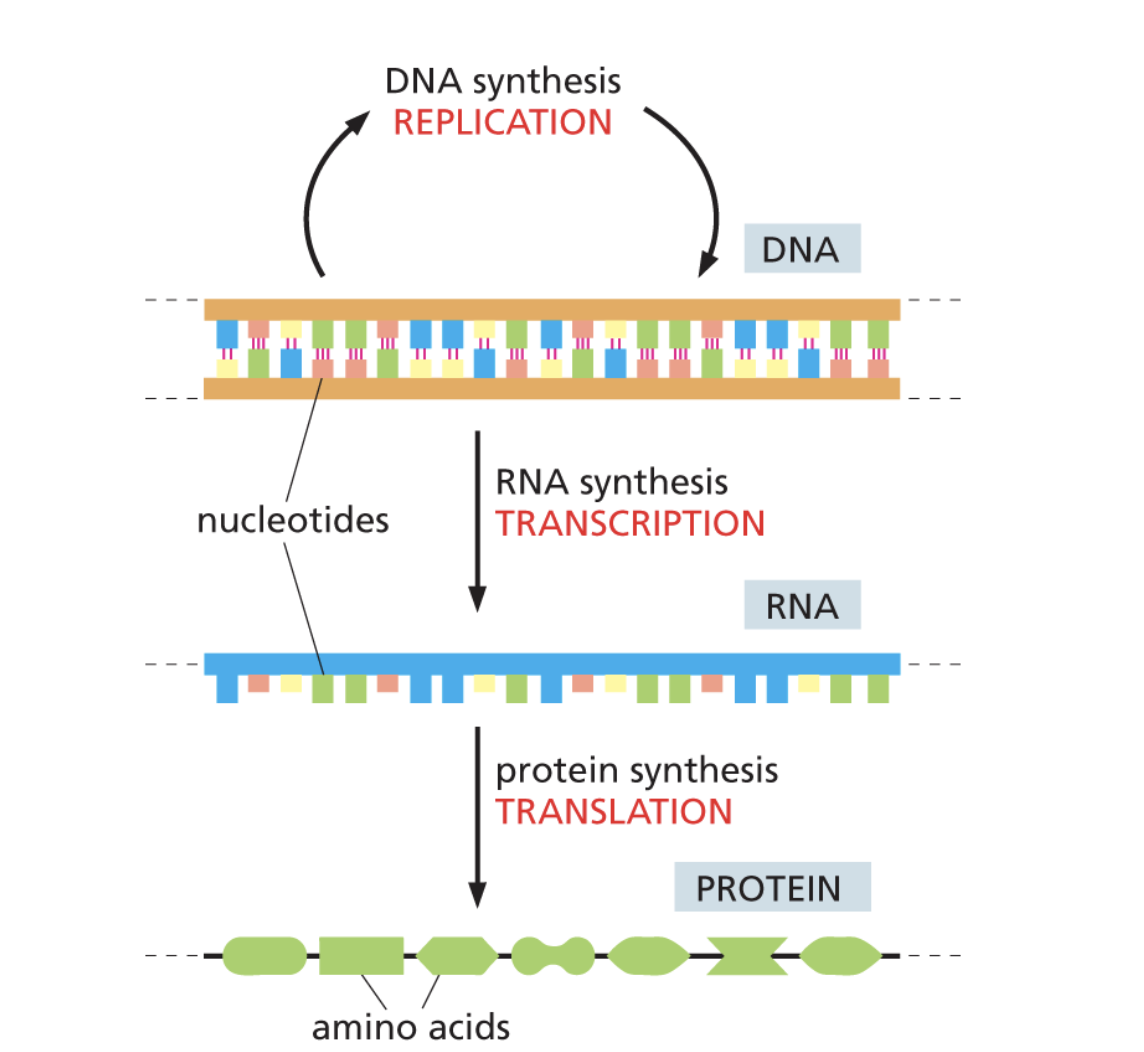
The central dogma more indepth
In every cell, long polymer chains of DNA are made from the same set of four monomers, called nucleotides, strung together in different sequences like the letters of an alphabet.
The information encoded in these DNA molecules is read out, or transcribed, into a related set of polynucleotides called RNA
Although some of these RNA molecules have their own regulatory, structural, or chemical activities, most are translated into a different type of polymer called a protein. This flow of information — from DNA to RNA to protein — is so fundamental to life that it is referred to as the Central Dogma.
Cells protein molecules
The appearance and behavior of a cell are dictated largely by its protein molecules, which serve as structural supports, chemical catalysts, molecular motors, and much more.
Proteins are built from amino acids; all organisms use the same set of 20 amino acids to make their proteins.
But the amino acids are linked in different sequences, giving each type of protein molecule a different three-dimensional shape, or conformation, just as different sequences of letters spell different words. In this way, the same basic biochemical machinery supports and serves the full gamut of life on Earth.
Feedback loop
The special relationship between DNA, RNA, and proteins—reflected in the central dogma—makes this self-replication possible. DNA encodes information that ultimately directs protein assembly: the sequence of nucleotides in a DNA molecule dictates the sequence of amino acids in a protein. Proteins, in turn, catalyze DNA replication and the translation of RNA into proteins. This feedback loop between proteins and polynucleotides underlies the self-reproducing behavior of living things.
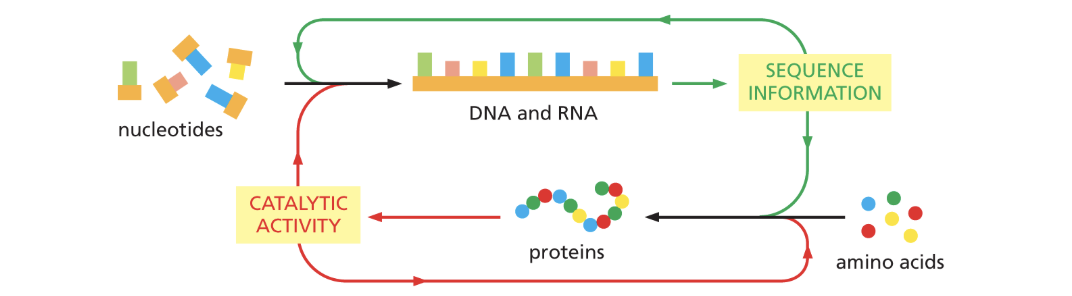
Life is an autocatalytic process
DNA and RNA provide the sequence information (green arrows) that is used to produce proteins and to copy themselves. Proteins in turn, provide the catalytic activity (red arrows) needed to synthesize DNA, RNA, and themselves. Black arrows represent the biochemical processes by which new DNA, RNA, and proteins are manufactured in cells. Together, these feedback loops create the self-replicating system that endows living cells with their ability to reproduce.
Viruses
Only living cells can self-replicate. Viruses, which are a little more than DNA or RNA wrapped in a protective coat, do not have the ability to reproduce by themselves. Instead, they parasitize the reproductive machinery of the cells that they invade to make copies of themselves. Without a host cell to aid them, viruses are inert and therefore are not considered living. Unfortunately for us, these genetic zombies are not entirely harmless: once viruses gain entry, they can exert a malign influence over a cell or an organism, as demonstrated by the COVID-19 pandemic.
Mutations
When a cell replicates its DNA in preparation for cell division, the copying is not always perfect. Sometimes, the instructions are misread or damaged by mutations that change the DNA nucleotide sequence. For this reason, daughter cells are not necessarily exact replicas of their parent.
Mutations can create offspring that are changed for the worse (in that they are less able to survive and reproduce), changed for the better (in that they are better able to survive and reproduce), or changed in a neutral way (in that they are genetically different but equally viable). The struggle for survival eliminates the first, favors the second, and tolerates the third. The next generation will inherit the genes of the survivors.
Mutations are mistakes in the DNA that change the genetic plan from that of the previous generation. Imagine a Shoe factory. Would you expect mistakes (i.e. unintentional changes) in copying the shoe design to lead to improvements in the shoes produced? Explain your answer.
I would not expect most mistakes in copying a shoe design to improve the shoes. If a factory accidentally changed parts of the design, most changes would either have no noticeable effect or make the shoe worse, such as making it uncomfortable or less durable. However, occasionally a random mistake could accidentally improve the shoe, such as making it lighter or more comfortable. Mutations in DNA work similarly: most mutations are neutral or harmful, but occasionally a mutation can be beneficial and give an organism an advantage.
Evolution
The process by which living species become gradually modified and adapted to their environment in more and more sophisticated ways.
Evolution offers a startling but compelling explanation of why present-day cells are so similar in their fundamentals: they have all inherited their genetic instructions from the same common ancestral cell.
It is estimated that this cell lived between 3.5 and 3.8 billion years ago
Genome
A cells genome, that is, the entire sequence of nucleotides in an organism’s DNA provides a genetic program that instructs a cell how to function.
Gene expression
Different cells express different genes, that is they use their genes to produce some RNAs and protiens and not others, depending on their identity, their current state, and on cues that they and their progenitors have received from their surroundings—mainly in the form of signals from other cells in the organism.
Genetic changes acted on by selection are best described as the fundamentals of what process?
Evolution
Determine whether the following statement is true or false and why.
All cells require oxygen in order to survive
False, because some cells perform anaerobic respiration.
Is the following statement true, false, or impossible to determine?
Organisms that have inherited their genetic instructions from a common ancestor share the same DNA sequence.
False
When was the microscope invented?
17th century
Electron microscopes
Wavelength of light limit the fineness of detail microscopes reveal: it is simply not possible, using visible light to distinguish objects beyond a certain resolution.
Electron microscopes, invented in the 1930s, go beyond this limit by using beams of electrons instead of beams of light as the source of light; because electrons have a much shorter wavelength, these instruments greatly extend our ability to see the fine details of cell structure even render some of its larger molecules visible individually.
Robert Hooke
Using a microscope, Robert Hooke examined a piece of cork and in 1665 reported to the Royal Society of London that the cork was composed of a mass of minuscule chambers. He called these chambers “cells”, based on their resemblance to the simple rooms occupied by monks in a monastery.
—> he was actually looking at the cell walls that remained after the plant cells living inside them had died.
Antonie van Leeuwenhoek
discovered that even a single drop of pond water contains a previously unseen world of tiny creatures.
You have embarked on an ambitious research project: to create life in a test tube. You boil up a rich mixture of yeast extract and amino acids in a flask, along with a sprinkling of the inorganic salts known to be essential for life. You seat the flask and allow it to cool. After several months, the liquid is clear as ever, and there are no signs of life. A friend suggests that excluding the air was a mistake, since most life as we know it requires Oxygen. You repeat the experiment, but this time you leave the flask open to the atmosphere. To your great delight, the liquid becomes cloudy after a few days, and, under the microscope, you see beutiful cells that are actively growing and dividing. Does this experiment prove that you somehow managed to create life from inanimate materials? how might you redesign your experiment to allow air into the flask, yet eliminate the possibility of contamination by airborn microorganisms.
No, this experiment does not prove that you created life from nonliving materials. The cells most likely came from airborne microorganisms that entered the open flask and reproduced in the nutrient-rich liquid.
To test this more carefully, you could use a swan-neck flask, like Louis Pasteur did. The curved neck would allow air and oxygen to enter the flask, but dust and microorganisms from the air would become trapped in the bend before reaching the liquid. If the broth remained clear, it would show that simply allowing air into the flask does not cause life to appear.
Matthias Schleiden and Theodor Schwann
Responsible for the emergence of cell biology.
The cell theory
all living cells are formed by the growth and division of preexisting cells.
this theory was proven by louis pasteur
Extracellular matrix
A dense material that separates cells, often made of protein fibers embedded in a gel of long sugar chains.
Plasma Membrane
In a animal cell A selectively permeable phospholipid bilayer that surrounds the cell and controls what enters and leaves it. It contains proteins involved in transport, cell signaling, and cell recognition.
Nucleus
A membrane-bound organelle in eukaryotic cells that contains most of the cell’s DNA and controls cellular activities by regulating gene expression. It is surrounded by a double membrane called the nuclear envelope.
Cytoplasm
The material inside the plasma membrane but outside the nucleus, consisting of the cytosol, organelles, and other cellular components. Many important metabolic reactions occur within the cytoplasm.
fluorescence microscopes
A microscope that uses fluorescent dyes or proteins that absorb light at one wavelength and emit light at a longer wavelength, allowing specific cell structures, molecules, or proteins to be visualized and located.
Robosomes
Small cellular structures made of ribosomal RNA (rRNA) and proteins that carry out protein synthesis by translating the information in mRNA into a chain of amino acids.
Steps of using a light microscope
The sample needs to be fixed ( preserved by a chemical solution), supported by embedding in a solid wax or resin, cut, or sectioned, into thin slices, and stained before it is viewed.
Transmittion electron microscope
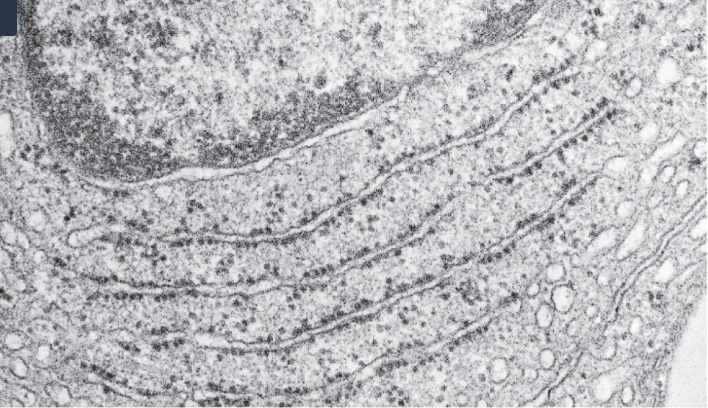
The type of microscope used to look at thin sections of tissue is known as a transmission electron microscope. It transmits a beam of elextrons rather than a beam of light through the sample.
Scanning electron microscope
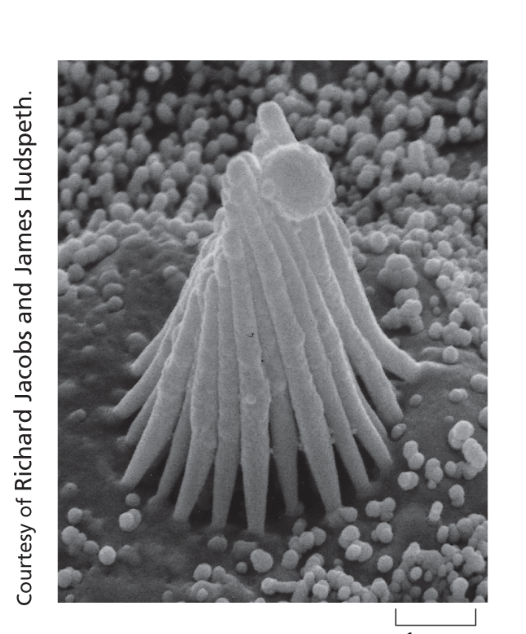
Scatters electrons off the surface of the samle and so is used to look at the surface detail of cells and other structures.
What microscope would you need to see atoms?
Electron microscope
What microscope would you need to see molecules?
Electron microscope on the smaller end and super-resolution florescence microscope on the higher end
What microscope would you need to see organelles?
Light microscope
What microscope would you need to see cells?
unaided eye
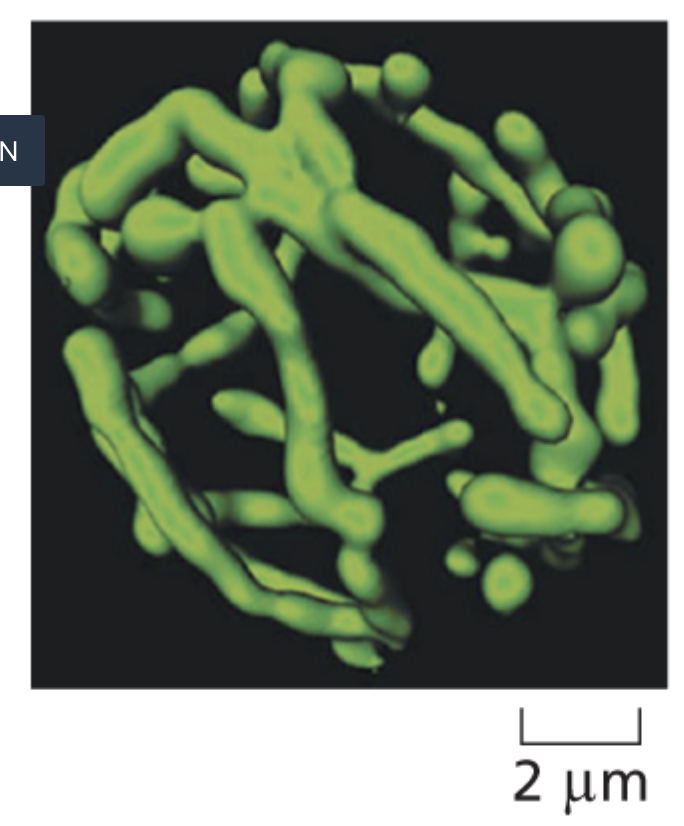
A confocal microscope
A confocal microscope is a specialized type of fluorescence microscope that builds up an image by scanning the specimen with the laser beam. The beam is focused onto a single point at a specific depth in the specimen, and a pinhole aperture in the detector allows only fluorescence emitted from this point to be included in the image. Scanning the beam across the specimen generates a sharp image of the plane of focus—an optical section. A series of optical sections at different depths are then combines to form a three-dimensional image, such as this highly branched mitochondrion.
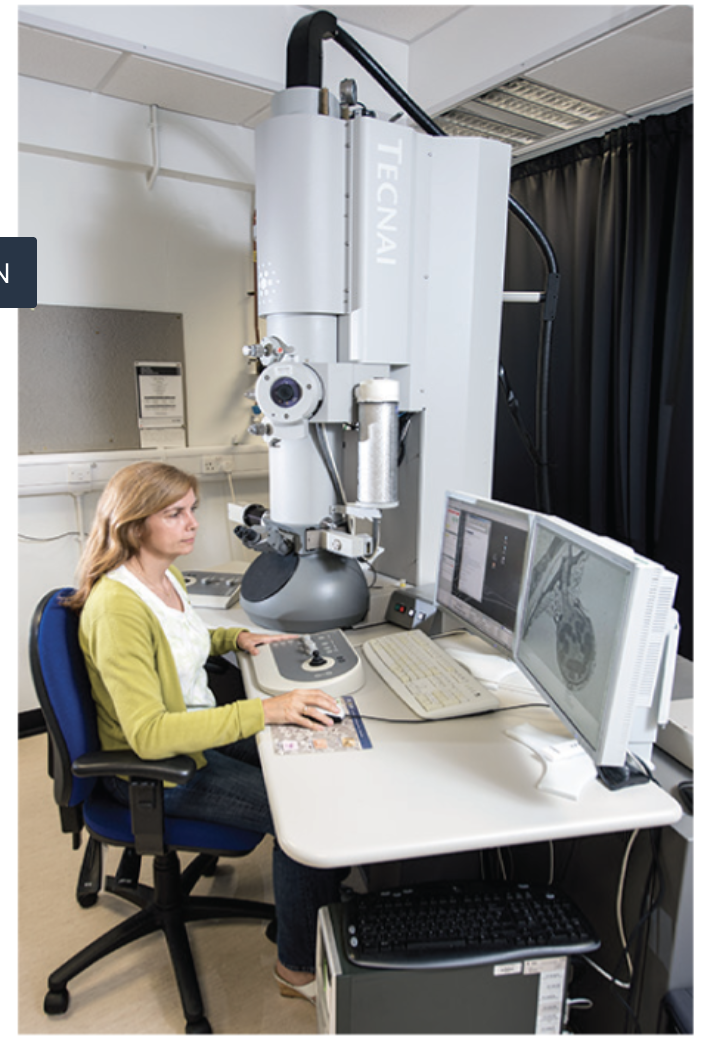
Transmission electron microscope (TEM)
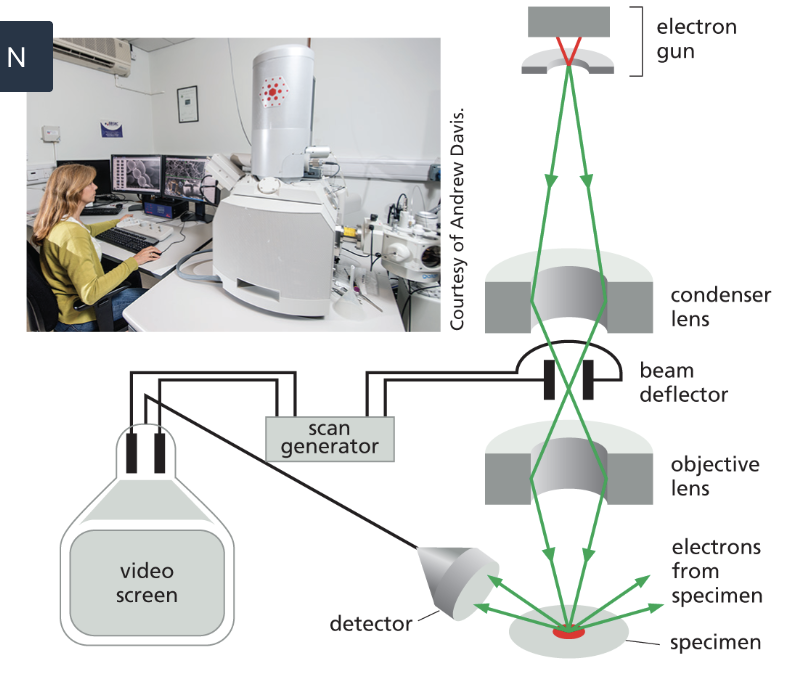
Is in principle, similar to a light microscope, but it uses a beam of electrons instead of a beam of light, and magnetic coils to focus the beam instead of glass lenses.
Scanning electron microscope (SEM)
The specimen, which is coated with a very thin film of heavy metal, is scanned by a beam of electrons brought to a focus on the specimen by magnetic coils that act as lenses. Creates 3 dimensional images.
What is a drawback to using electron microscopy?
It cannot be used to view living things
What is a drawback to using light microscopy?
It cannot be used to view structures smaller than a bacterium
3 domains
Archea, bacteria, and eukaryotes
Which domain has the greatest diversity?
Bacteria
Eukaryotes
Contain a nucleus
Prokaryotes
Lack a nucleous
Do eukaryotic or bacteria or archea have the most genes?
Eukaryotes
Bacteria
Are generally very small: only a few micrometers long, they are invisible to the naked eye. Most live as single-celled organisms, although some join together to form chains, clusters, or other organized, multicellular structures. Bacteria are typically spherical, rodlike, or corkscrew-shaped. They often have a tough protective coat, or cell wall, surrounding the plasma membrane, which encloses a single compartment containing the cytoplasm and the DNA. Viewed with an electron microscope, the cell interior typically appears as a matrix of varying texture, without any obvious organized internal structure.
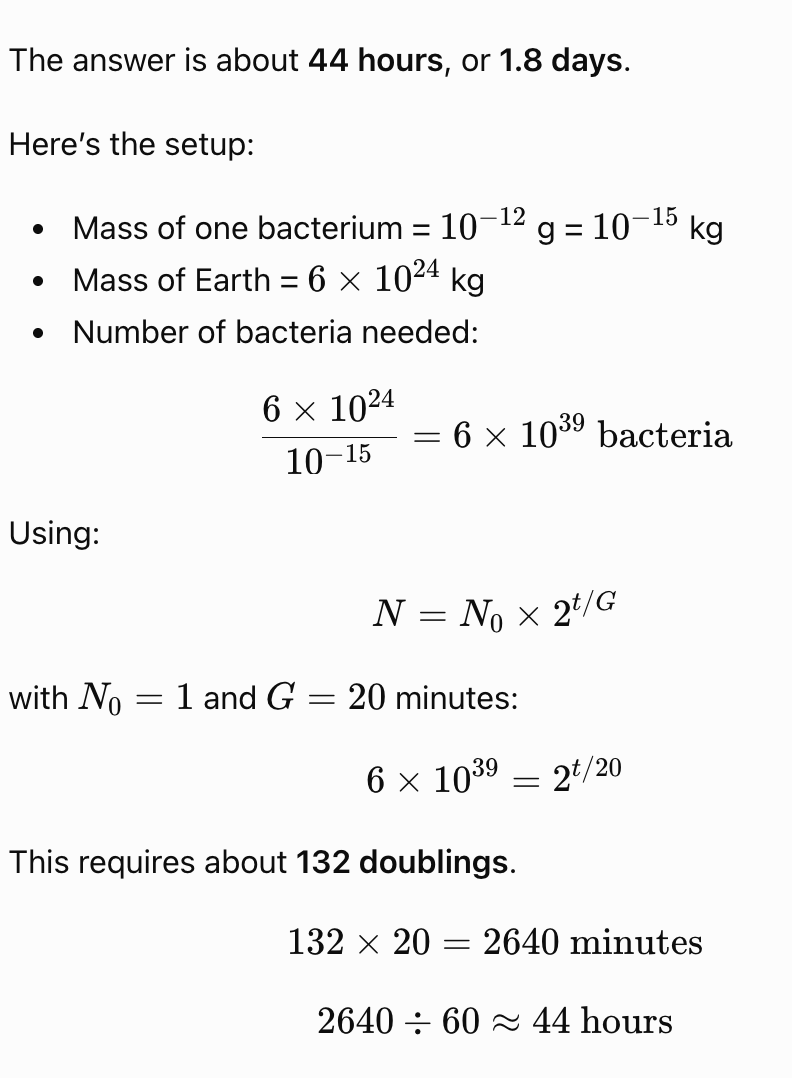
A bacterium weighs about 10 ^ -12 g and can divide every 20 minutes. If a single bacterial cell were to continue dividing at this rate, how long would it take before the mass of bacteria would match that of earth (6 × 10 ^ 24 kg)? Contrast your result with the fact that bacteria originated at least 3.5 billion years ago and have been dividing ever since. Explain the apparent paradox. (the number of cells N in a culture at time t is described by the equation N=N0 × 2 ^ t/G, where N0 is the number of cells at zero time, and G is the time it takes for the population to double in size).
Apparent paradox :
If bacteria can multiply that quickly, why hasn’t Earth become completely covered in bacteria over the last 3.5 billion years?
Because bacteria cannot keep growing exponentially forever. Their growth is limited by things such as food/nutrients, space, water, oxygen, temperature, competition, waste buildup, and death. Many bacteria die while others reproduce, so populations eventually stop increasing exponentially.
Although simple in shape and structure, in terms of their chemistry bacteria are incredibly sophisticated. Some are aerobic, using oxygen to oxidize food molecules; some are strictly anaerobic and are killed by the slightest exposure to oxygen.
Some bacteria perform photosynthesis, using energy from sunlight to produce organic molecules from CO2, a strategy we commonly associate with plants.
Bacteria play a unique and fundamental part in the nutritional “economics” of life on earth, as other living organisms depend on the organic compounds that these versatile cells generate from inorganic materials.
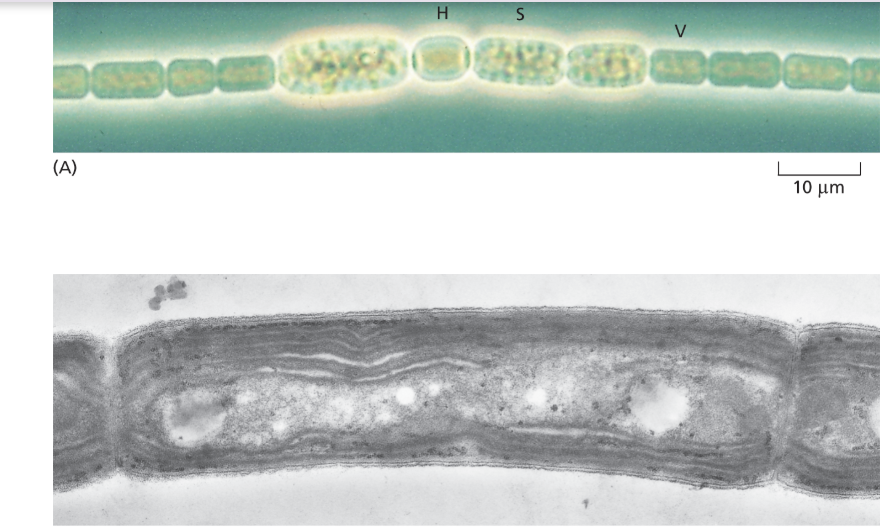
Some bacteria are photosynthetic
(A) Anabaena cylindrica forms long, multicellular chains. This light micrograph shows specialized cells that either fix nitrogen (that is, capture N2 from the atmosphere and incorporate it into organic compounds; labeled H), fix CO2 through photosynthesis (Labeled V), or become resistant spores (labeled S) that can survive under unfavorable conditions. (B) An electron micrograph of a related species, Phormidium laminosum, shows the intracellular membranes where photosynthesis occurs. As shown in these micrographs, some prokaryotes can have intracellular membranes and form simple multicellular organisms.
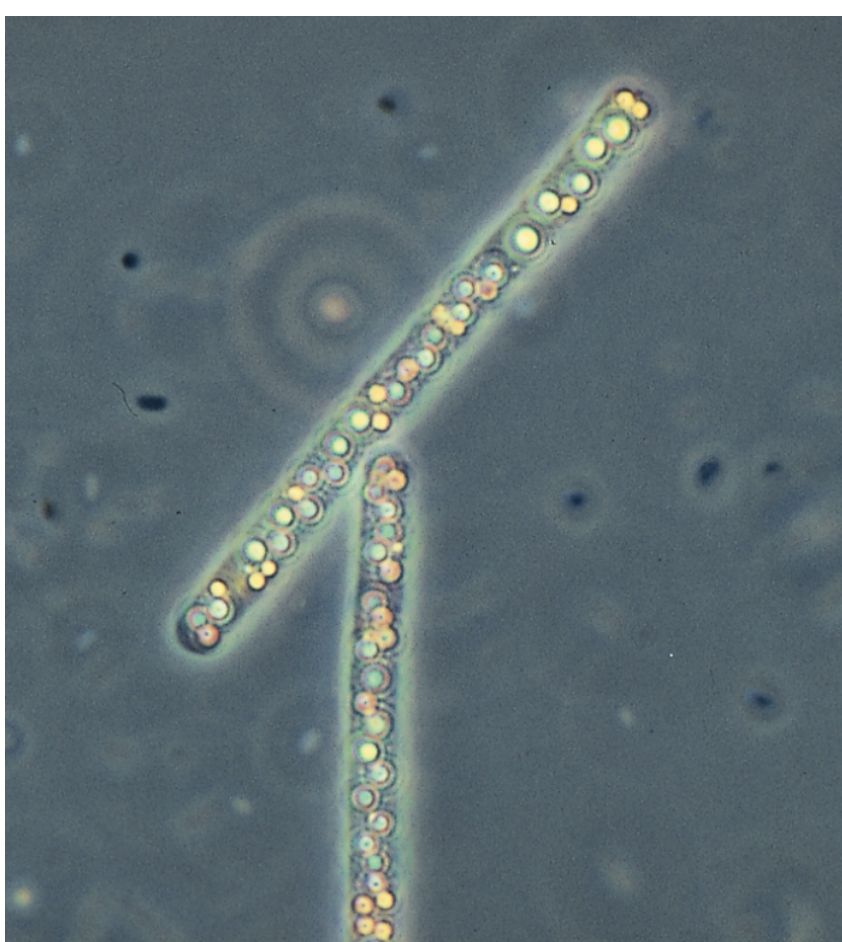
A sulfur bacterium gets its energy from hydrogen sulfide
Beggiatoa, a bacterium that lives in sulfurous environments, oxidizes H2S to produce sulfur and can fix carbon even in the dark. In this light micrograph, yellow deposits of sulfur can be seem inside two of these bacterial cells.
Mitochondia and bacteria
The mitochondia is thought to have evolved from aerobic bacteria that took to living inside an anaerobic ancestral cell. Thus our own metabolism can be regarded as a prodcut of the activity of an organelle whose evoluntionary birthright we can trace to a bacterial cell.
Bacteria vastly outnumber all eukaryotic organisms on earth not only because they are small and have been around for much longer, but because they reproduce so quickly. Under optimum conditions, when food is plentiful, a bacterial cell can divide in 2 every 20 minutes. In only 11 hours, a single bacterium therefore can rise to more than 8 billion progeny (more than total people on earth).
Archaea is the most poorly understood.
Most of its members have been identified only by DNA sequencing of environmental samples. Like bacteria, the archaea we know most about are small and lack the internal, membrane-enclosed organelles that distinguish the eukaryotes. But archaea also differ from bacteria in many ways, including the chemistry of their cell walls, the types of lipids that make up their membrane, and the range of chemical reactions they can carry out.
At first, biologists believed that archaea occupied only the most extreme environments on Earth: the hot acid of volcanic springs, the airless depths of marine sediments, the sludge of sewage treatment plants, the icy pools beneath Antarctica, etc. But archaea can live anywhere, even on skin. Archaea are believed to be the predominant form of life in soil and seawater, and they play a major role in recycling nitrogen and carbon, two of the most important elements for the biology of all cells.
Although archaea resemble bacteria in their outward appearance, their genomes are much more closely related to those of eukaryotes
Asgard cells
Some antibiotics target features that are unique to bacterial cells and absent from our own cells. Which of the following would present a safe new target for a new anti biotic?
Cell wall.
Bacteria have cell walls made up of a chemical polymer called peptidoglycan. Human cells do not have cell walls at all. Thus, an antibiotic that targets cell walls would be a great candidate.
Which of of these three classifications is included within one of the others: prokaryotes, eukaryotes, or archaea?
archaea.
Is the following statement true, false, or impossible to determine?
Genome sequencing has revealed that archaea and bacteria — which are both prokaryotes — differ as much from each other as either does from eukaryotes.
False