Unit 10 Vocabulary: Waves and Sound
 Call Kai
 Learn
Learn Practice Test
 Spaced Repetition
 Match
Match Flashcards
1/22

There's no tags or description
Looks like no tags are added yet.
Name | Mastery | Learn | Test | Matching | Spaced | Call with Kai | Chat |
|---|
No analytics yet
Send a link to your students to track their progress
23 Terms
Wave
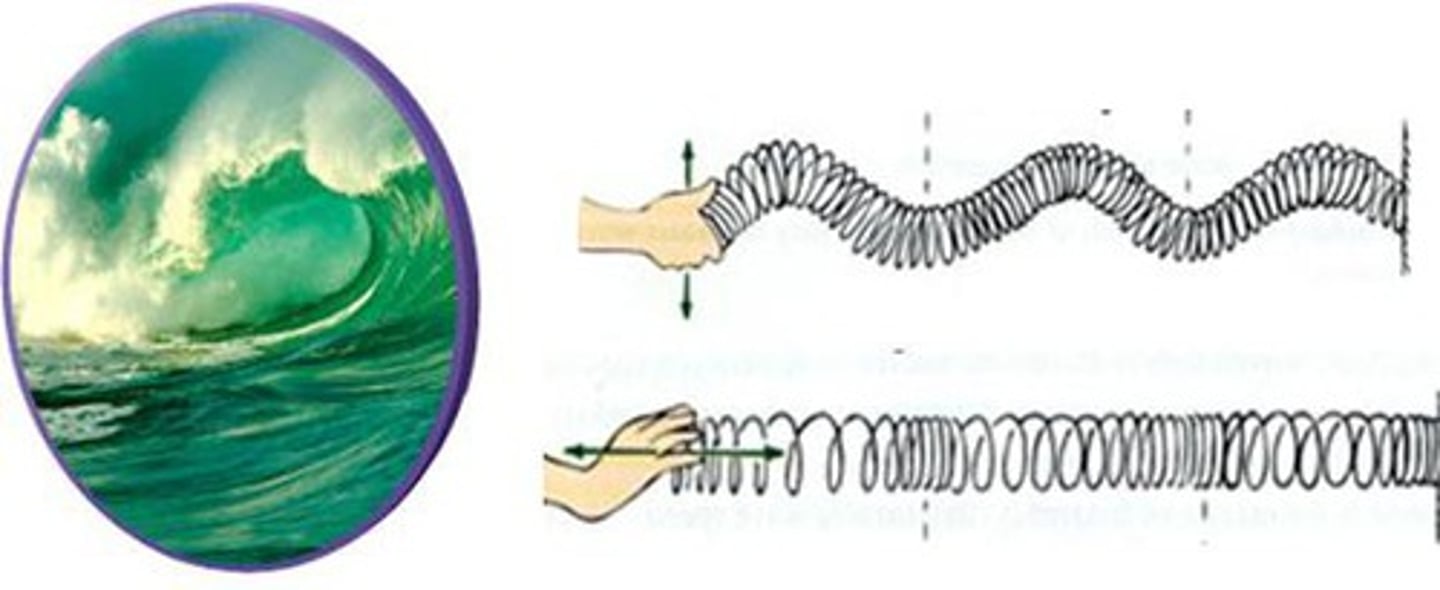
A disturbance that transfers energy through matter (medium) or space (vacuum)
Medium
Any substance (solid, liquid or gas) that a wave moves through

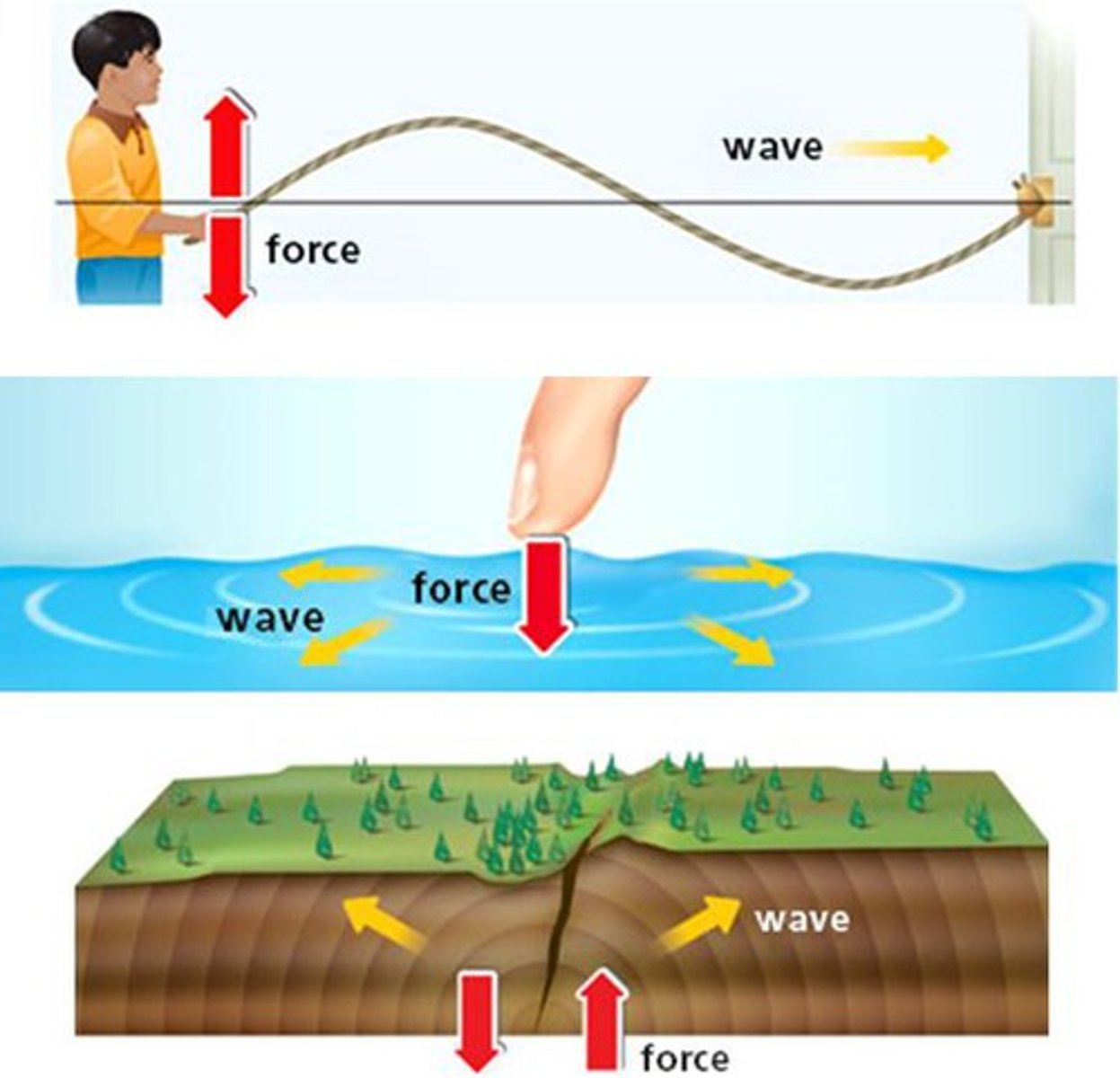
Mechanical wave
Waves that can only travel through a medium (matter). Example: Sound waves
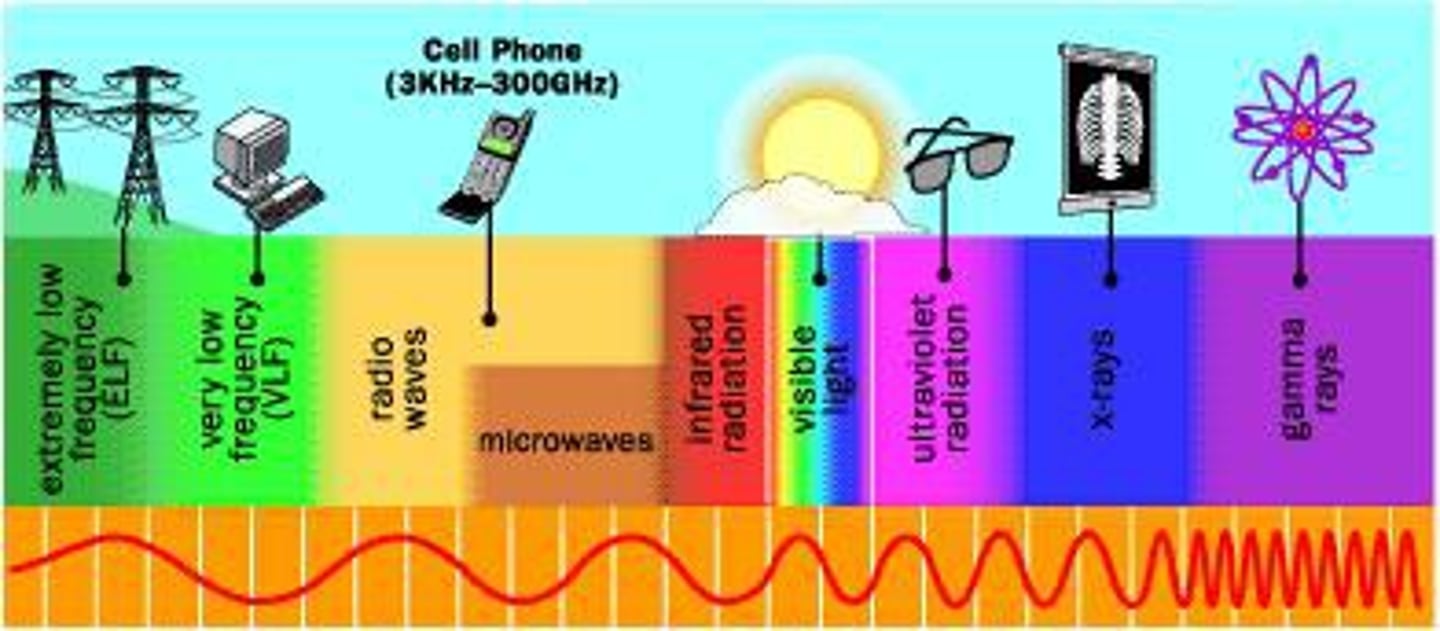
Electromagnetic wave
Waves caused by disturbance in electric and magnetic fields that do not require a medium to travel. Example: Light waves
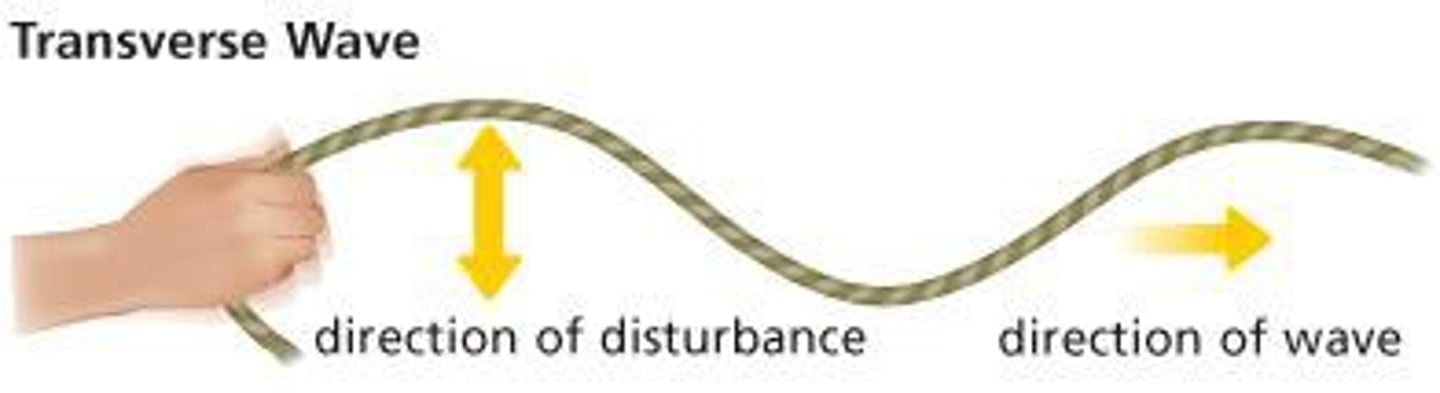
Transverse wave
A wave in which particles vibrate perpendicular to the direction in which the wave is travelling.
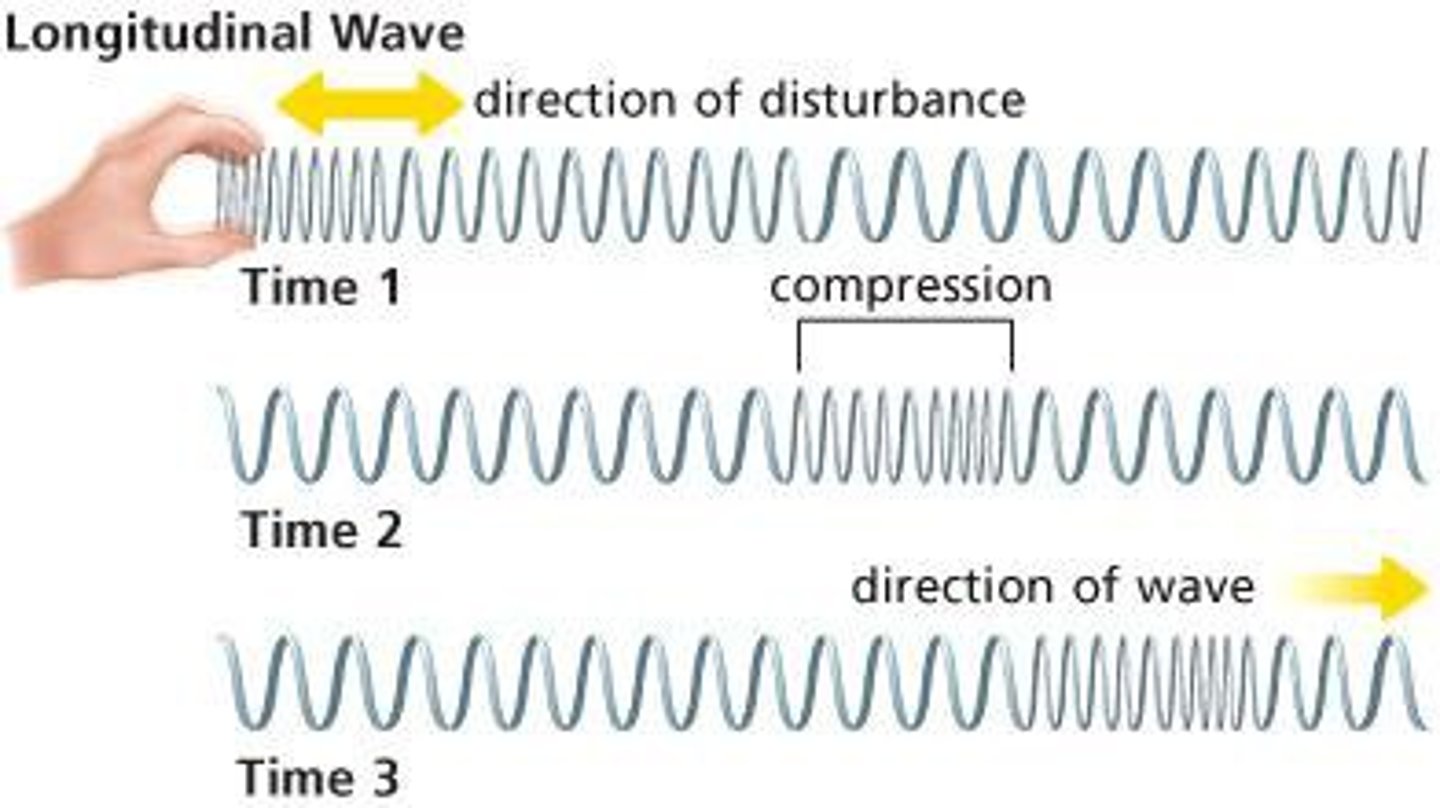
Longitudinal wave
A wave in which particles vibrate back and forth along the direction in which the wave is travelling. Also known as compression waves.
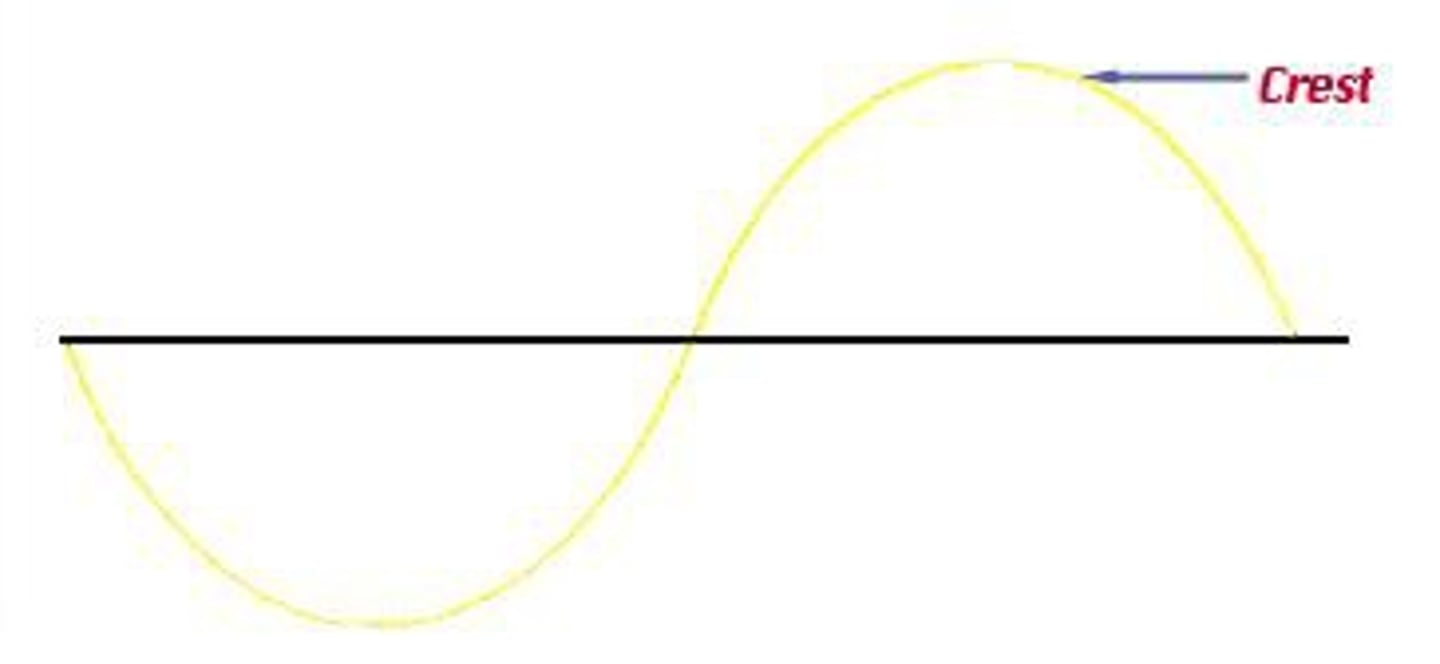
Crest
The highest point, or peak, of a transverse wave
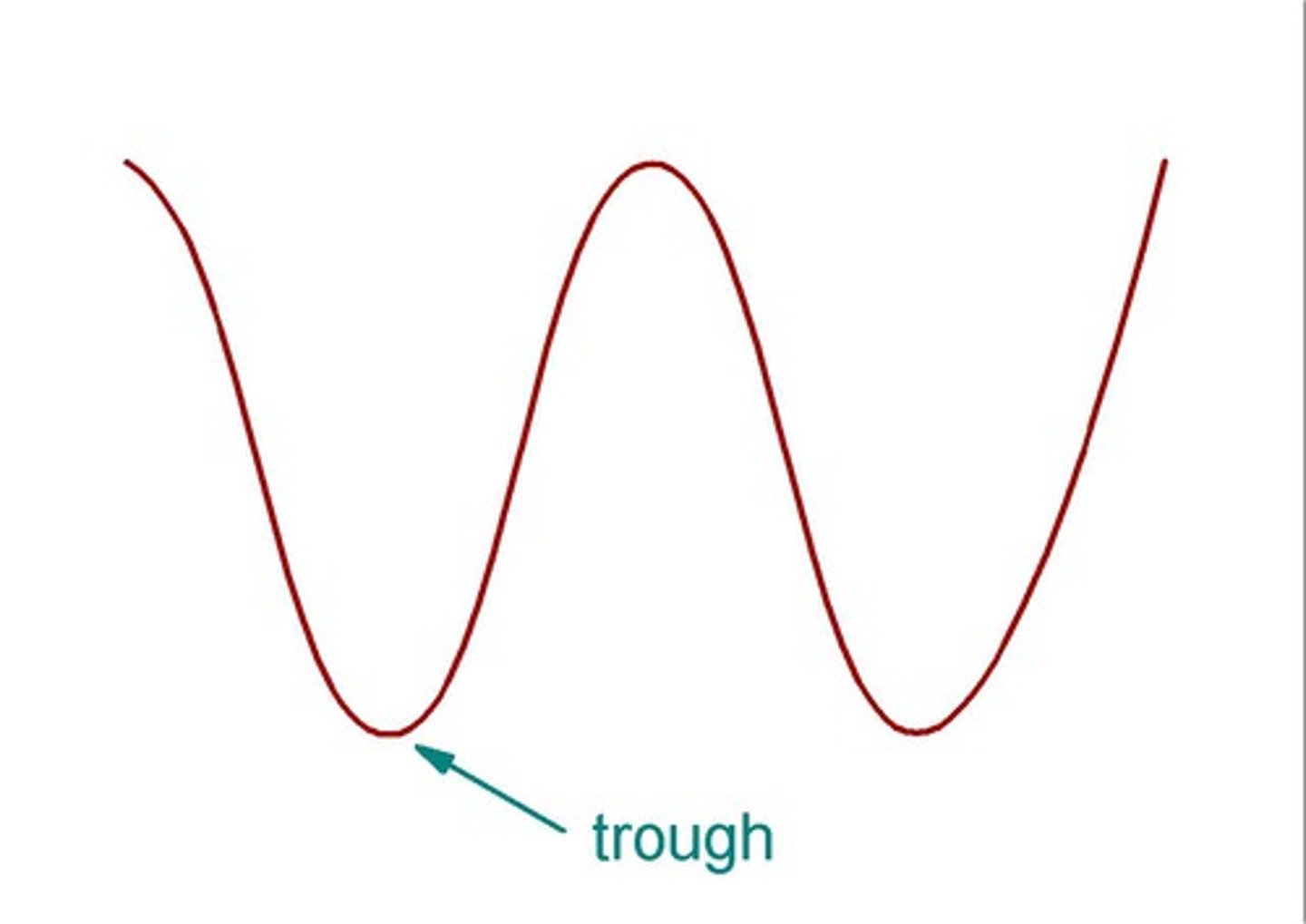
Trough
The lowest point, or valley, of a transverse wave
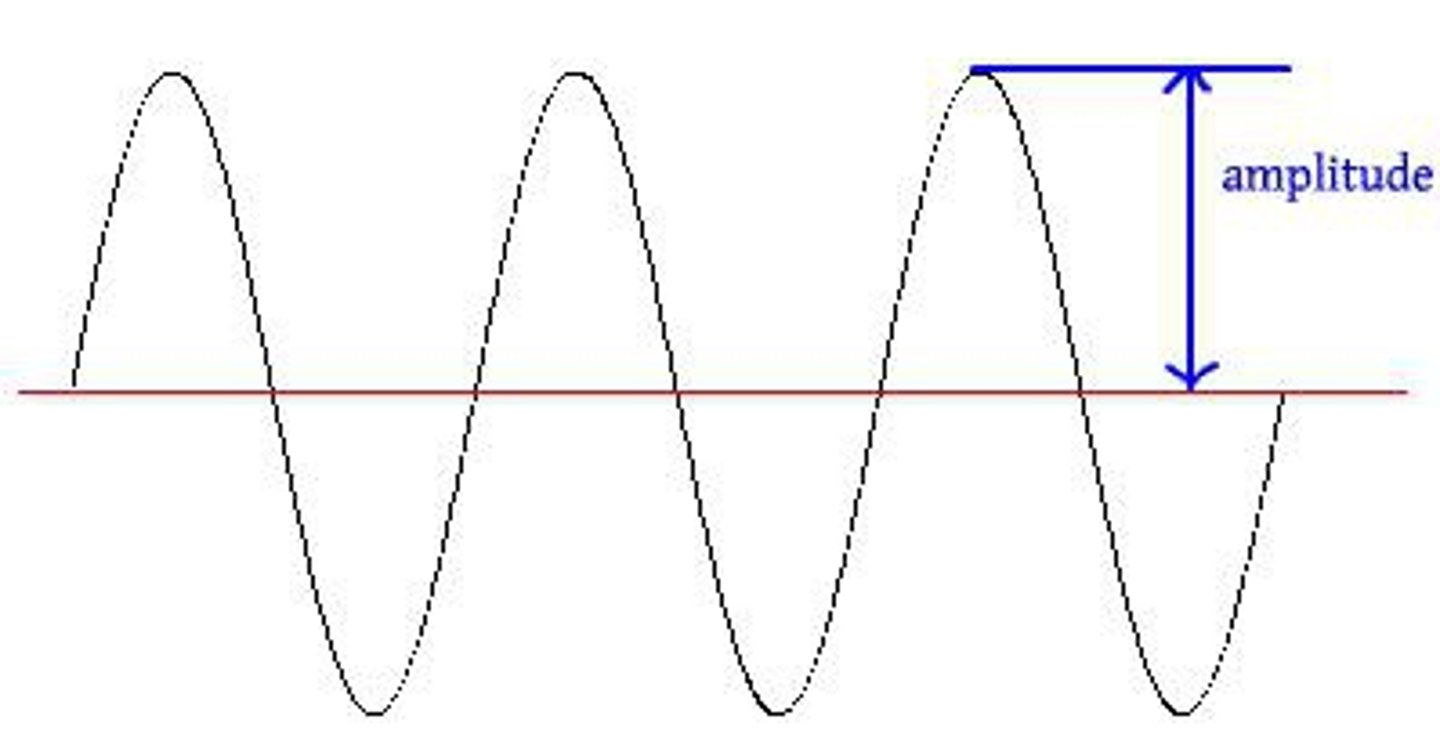
Amplitude
The maximum distance the wave moves from its rest position. More energy = more amplitude
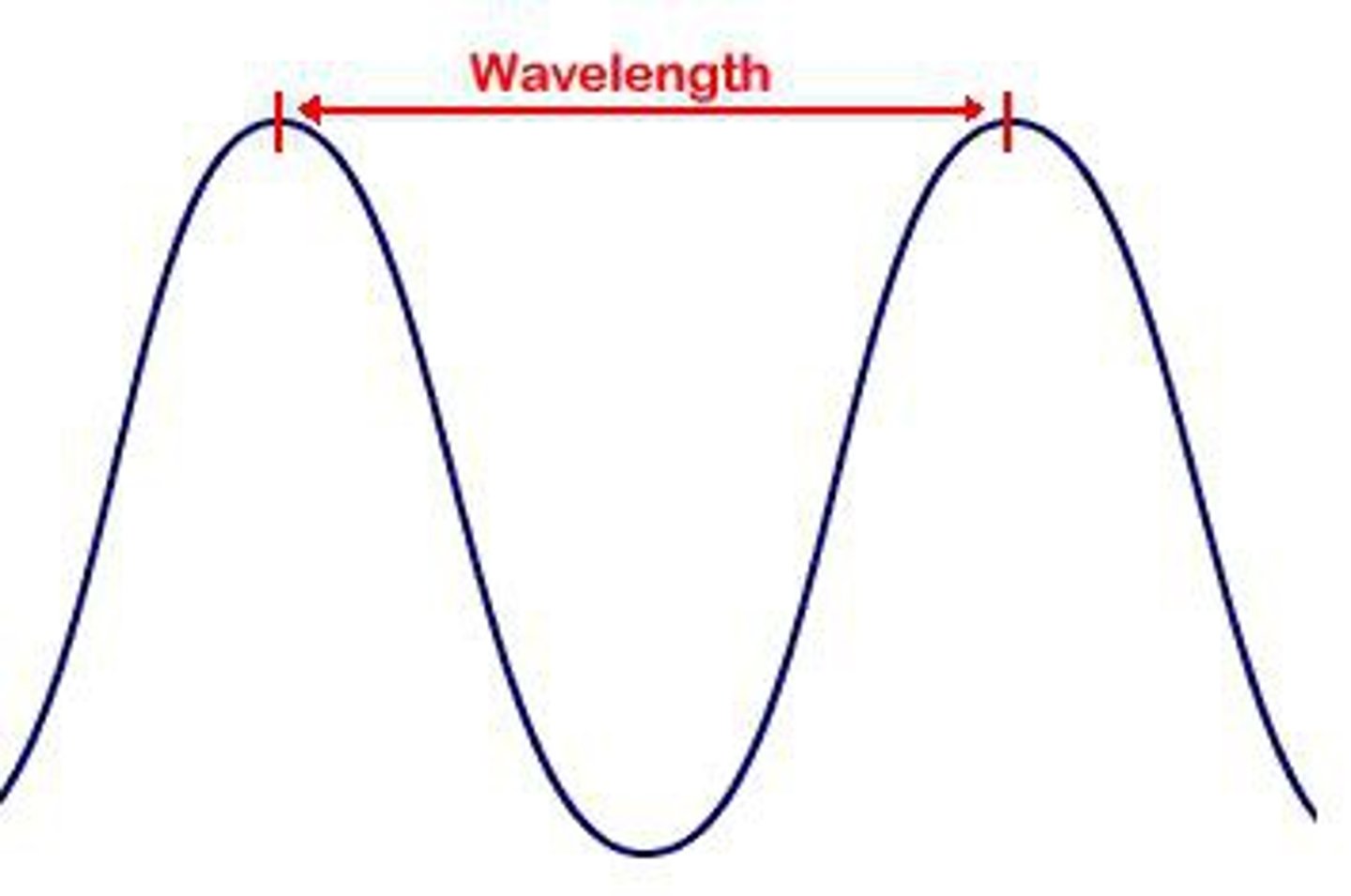
Wavelength
The distance from one part of one wave to the identical part of the next wave. Example: trough to trough OR compression to compression
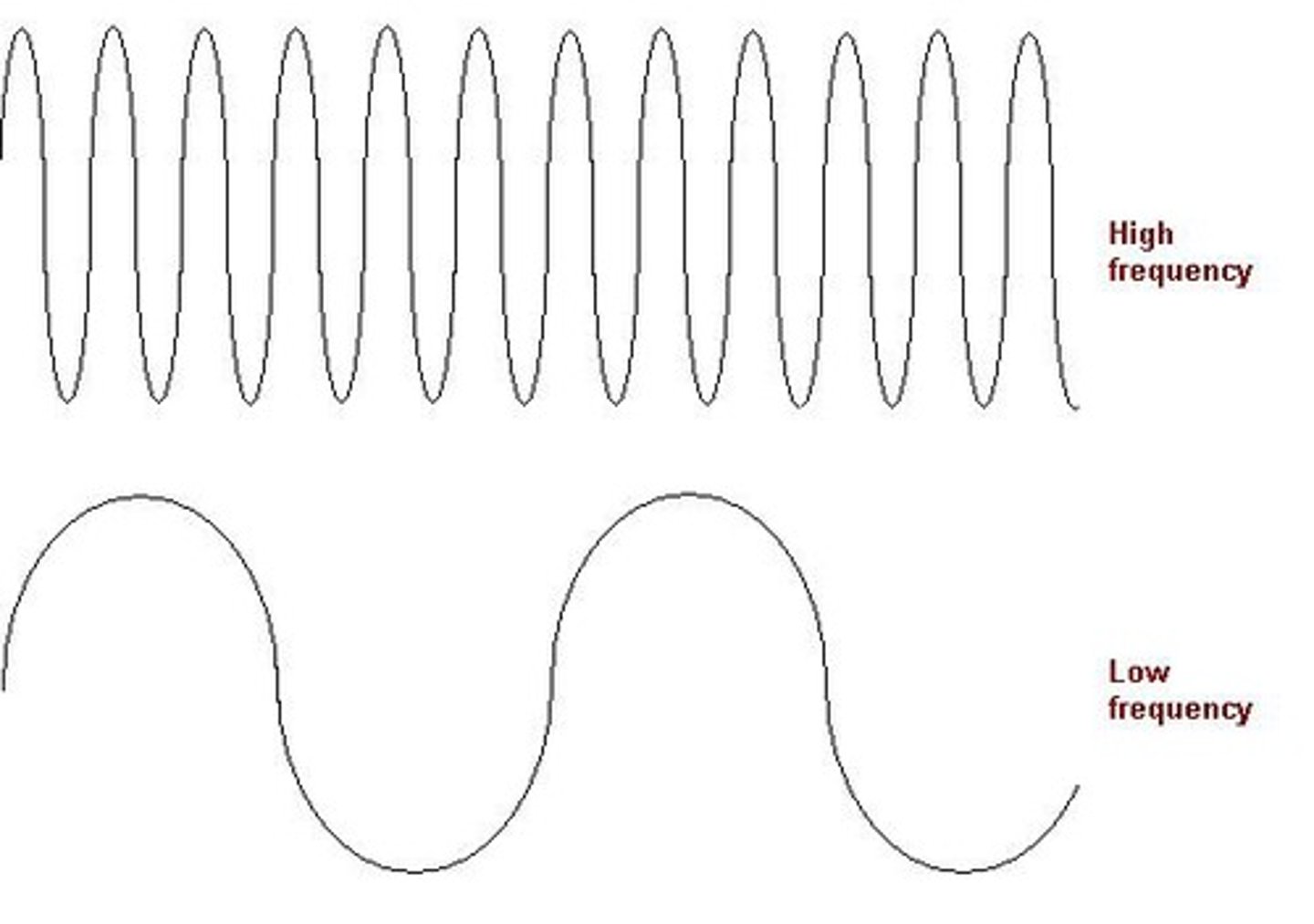
Frequency
The number of waves passing a fixed point in a certain amount of time. Unit = Hertz (Hz) or per second (1/second)
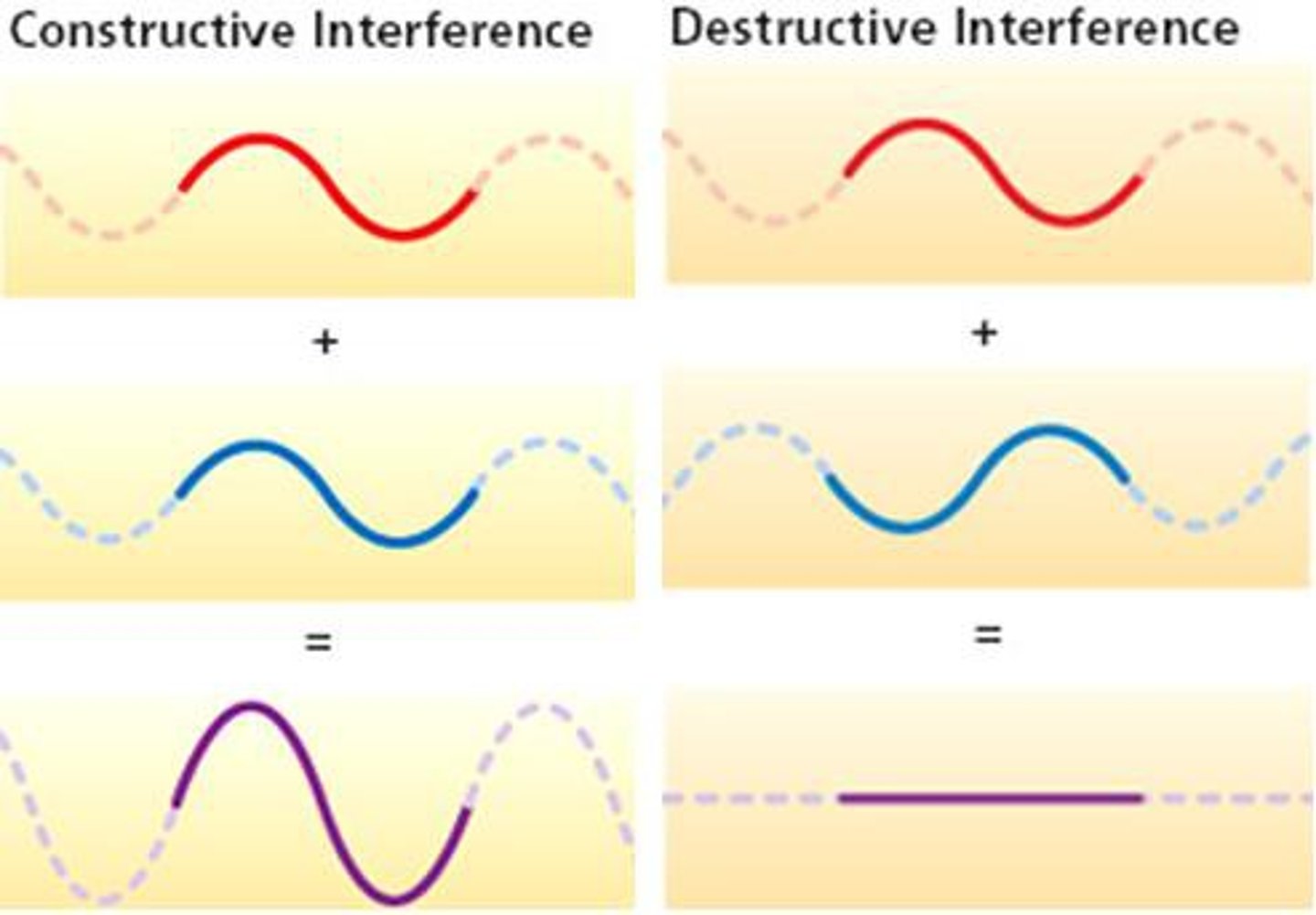
Interference
The meeting and combining of waves. Can be constructive (bigger wave) or destructive (smaller wave)
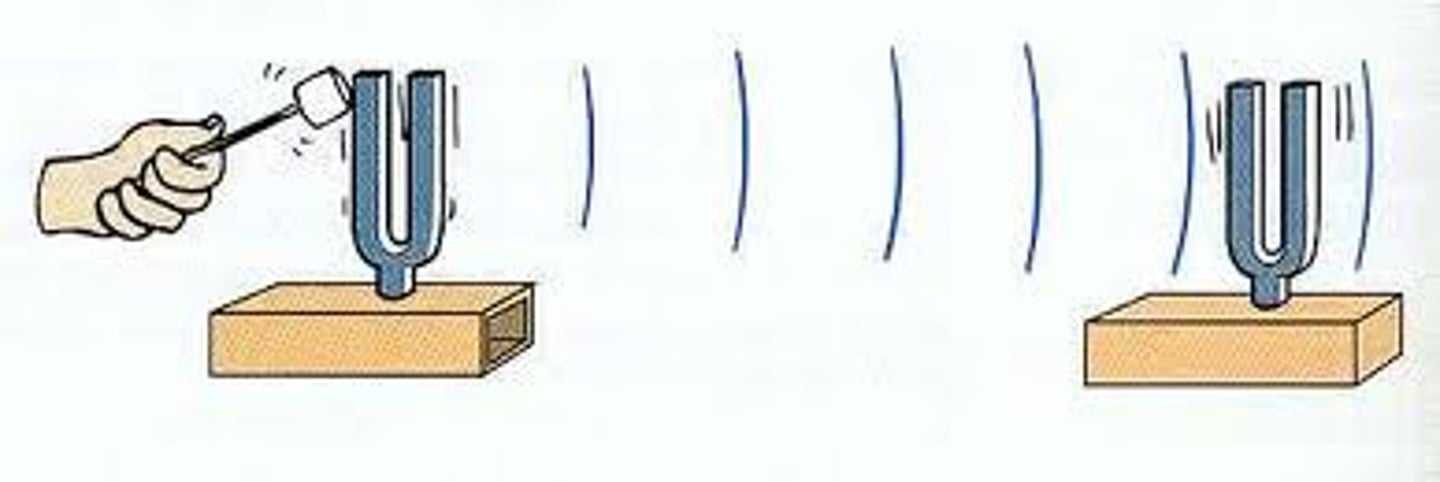
Resonance
A phenomenon that occurs when two objects naturally vibrate at the same frequency
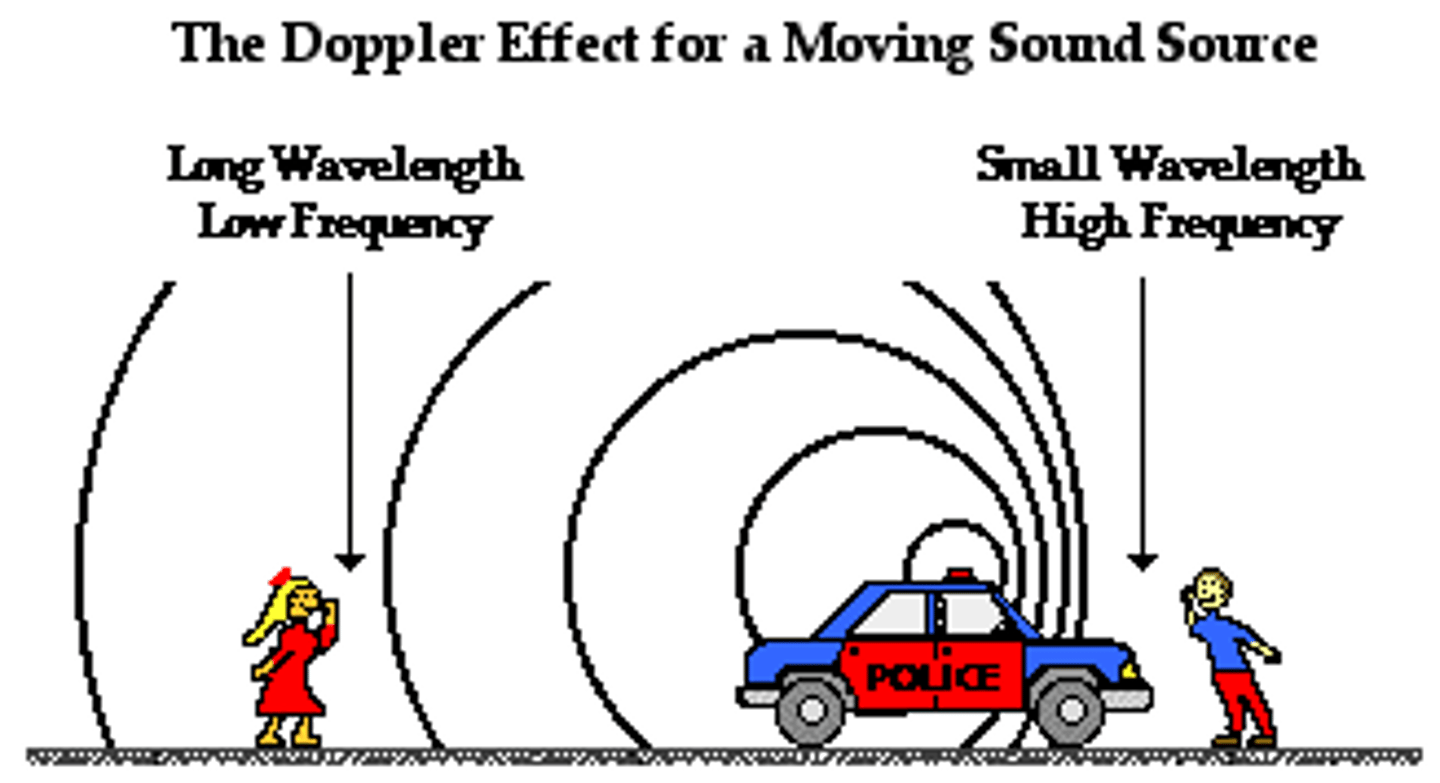
Doppler effect
The apparent change in frequency of a wave due to the motion of the source or of the receiver
Compression
Part of a longitudinal wave where the particles are crowded together
Rarefaction
Part of a longitudinal wave where the particles are further apart.
Rest position
Position where particles of the medium stay when there is no disturbance.
Hertz (Hz)
The SI unit to measure frequency of a wave. Same as wave per second.
Decibel (db)
Unit to measure the loudness of sound (more energy = more amplitude = louder sound)
Pitch
How high or low a sound is, depends on frequency. Higher frequency = higher pitch
Infrasonic
Sound waves with frequencies below 20 hertz, below range of human hearing.
Ultrasonic
Sound waves with frequencies above 20,000 Hz, above the range of human hearing (DIFFERENT FROM SUPERSONIC)
Wave speed (v)
The speed at which a wave travels (frequency x wavelength)