CS - Paper 2
 Call Kai
 Learn
Learn Practice Test
 Spaced Repetition
 Match
Match Flashcards
 Knowt Play
1/199

Earn XP
Description and Tags
Name | Mastery | Learn | Test | Matching | Spaced | Call with Kai |
|---|
No analytics yet
Send a link to your students to track their progress
200 Terms
Natural numbers
all positive integers, including 0
symbol → N
used for counting
Integer numbers
all positive and negative integers
symbol → Z
Rational numbers
set of numbers that can be written as fractions
symbol → Q
Irrational numbers
set of numbers that cannot be written as a fraction
e.g. root 2 or pi
Real numbers
set of all possible real world quantities
symbol → R
used for measurement
Ordinal numbers
when objects are placed in an order
e.g. 1st, 2nd, 3rd
Number bases
decimal → base 10, subscript 6710
binary → base 2, subscript 100110112
hexadecimal → base 16, subscript AE16
why is hexadecimal used
as a shorthand for binary
easier for humans to read and error check
e.g. colours
bit
fundamental unit of information
either 0 or 1
byte
8 bits
how many values can be represented by n bits
2n, e.g. 23=8, can represent 8 different values
Kibi
210 → Ki
Mebi
220 → Mi
Gibi
230 → Gi
Tebi
240 → Ti
Kilo
103 → k
Mega
106 → M
Giga
109 → G
Tera
1012 → T
what is signed binary
when the most significant bit is used as a placeholder for sign rather than a value, 0=+ and 1=-
minimum and maximum number of bits for unsigned binary
minimum → 0
maximum → 2n-1
two’s complement
most significant bit represent -2n-1 e.g. 10002=8
range from -2n-1 to 2n-1-1
fixed point binary
binary point fixed between a set number of bits
e.g. 0000.0000
not as precise
greater speed of calculation
only when data is known to be within a certain range
Floating point binary
binary point can float between number of bits
mantissa and exponent
lower speed of calculation
more memory to store mantissa
greater precision
for greater range of values
mantissa
represents value with decimal after first bit
exponent
represents position of point to convert to actual value
why might fixed/floating point binary be inaccurate
for a real number to be represented exactly by the binary number system it must be capable of being represented by a binary fraction in the given number of bits
some cannot every be represented exactly, e.g. 0.110
Absolute error
difference between the actual number and the binary value
e.g. 1/3 accurately would be 0.01(recursively), if rep by 4 bits, 0.0101=5/16, absolute error 16/48-15/48=1/16
Relative error
percentage difference between the actual number and binary value
using 1/3 and 4 bits = 5/16 divided by 1/3=15/16
Why are floating point numbers normalised
to store a greater range of values, reduces need for repeated binary values
what is normalised binary
starts with 10 or 01
uses two’s complement floating point binary
how to normalise floating point binary
convert into fixed point
adjust exponent accordingly
if number starts with >one 1, cut them off (will be added when converted)
underflow
not enough bits available to represent a number therefore would cut off the least significant bit
e.g. 0.00001 with only 5 bits would be 0.0000
overflow
significant when using signed binary as if you were to add 127 and 1 using 8 bits, answer would be -128 hence overflow has occurred
differentiation between character code, decimal digit and pure binary representation
Character code representation (like ASCII) treats digits as symbols (e.g. 5 is 53 in ASCII), while pure binary representation directly converts the digit's value (5 becomes 101 in binary)
ASCII
way of representing characters with seven bits; later extended to eight
Unicode
16 to 32 bits, created to represent more languages and symbols, now have more storage
why error check
bits can change erroneously due to interference, need to verify
Parity bits
additional bit used to check that the other bits transmitted are likely to be correct, very efficient
odd or even parity, used to ensure that total number of 1s in each byte (inc. parity) equals an odd or even number e.g. 01010010 → odd parity
Disadvantage:
if there are two 1’s in an even parity, 4 bits being transmitted would not cause error and if error occurs, need to retransmit data
Majority voting
data transmitted multiple times, most commonly occurring value taken to be correct
corrects error - no need for retransmission but volume of data being transmitted increased(takes longer hence less efficient)
checksum
algorithm applied to data to determine checksum, e.g. modulo to return division remainder
value appended to original in binary (put on end)
recipient removes checksum and applies same algorithm to ensure this matches (efficient when algorithm is not complex)
cannot correct the error, must retransmit
check digit
type of checksum where only single digit added to transmitted data
reduces number of different algorithms that could be used, reduces variety of errors that can be detected - efficient
how can bit patterns be used to represent images/sound
images can be stored using the images height and width in pixels with the colour depth
sound can be stored as digital samples of the original sound.
analogue data
continuous and has no limits
analogue signal
can take any values
changes frequency as required
digital data
discrete, represents particular values
digital signal
takes range of values
changes frequency at specific intervals
ADC
Analogue to Digital Converter
samples the data (takes readings at regular intervals and records frequency)
frequency → no. samples/second, increased better but uses more space as increased number of bits
used with analogue sensors
e.g. temperature sensors or microphones
DAC
Digital to Analogue Converter
reads bit pattern representation of analogue signal and outputs alternating, analogue, electrical current
mostly for audio, e.g. speakers
How are bitmaps represented
image broken into pixels, each of which have a binary value assigned
resolution
number of dots per inch, where a dot is a pixel
colour depth
number of bits stored for each pixel
size in pixels
width of image in pixels x height of image in pixels
storage requirements for bitmapped images ignoring metadata
storage requirements = size in pixels x colour depth
typical metadata
width
height
colour depth
date created
how vector graphics represent images
uses list of objects containing the properties of each geometric object/shape
typical vector properties of objects, e.g. rectangle
width
height
position
fill
colour
Vector graphics evaluation
scaled without loss of quality
better for simple images but worse for photographs
less storage space
bitmapped graphics evaluation
enlargement = blurry
better for photographs
information stored for each pixel hence more storage space
sample resolution
number of bits per sample
higher sample resolution = higher audio quality = greater file size
sample rate
number of samples per second
Nyquist Theorem
sample rate must be at least twice the frequency of the sound or it is not accurately represented
calculate sound sample sizes in bytes
duration of sample x rate x resolution
describe the purpose of MIDI and its use of event messages
used with electronic musical instruments connected to computers stores sound in event messages
event messages can hold duration of note, instrument note is played by, volume, if sustained, etc.
Advantages of using MIDI files to represent music
easy manipulation without loss of quality (instrument can be changed)
often smaller file size and lossless
cant be used for storing speech
often less realistic
why are files often compressed
to reduce file size, hence can be transferred faster
Lossy compression
some information lost
can reduce resolution, e.g. image or audio, as extent of reduction unlimited
Lossless compression
no information lost
e.g. run length encoding and dictionary based methods
Run Length Encoding
removing repeated information and replacing with one occurrence followed by number of times repeated
e.g. pixels of same colour
dictionary-based methods
dictionary containing repeated data is appended to the file
e.g. for ‘keep calm keep happy’ could be 1213, with ‘keep’ value having a key of 1
encryption
process of scrambling data so it cannot be understood if cannot be understood if intercepted (secure during transmission)
what is needed to decrypt
method
key used
ciphertext
encrypted information
plaintext
unencrypted information
Caesar cipher vs Vernam cipher
Caesar → imperfect
Vernam → perfect
opposite extremes of ciphers that are computationally secure
Caesar ciphers
by replacing characters, cipher kept constant
Shift ciphers:
each letter shifted by same amount (key) in the alphabet
Substitution cipher
letters randomly replaced, a little harder to crack, usually based on frequency/logic
The vernam cipher
key is chosen uniformly at random
ciphertext distributed uniformly
key only used one → one-time pad
mathematically proven to be completely secure
Vernam cipher - method
align characters of plaintext and key
convert character to binary
apply XOR to the two bit patterns
convert back to character
Vernam ciphers vs ciphers that depend on computational security
in theory, every cryptographic algorithm except for vernam cipher can be broken, given enough ciphertext and time
hardware
physical components (e.g. hard drive, printer, speaker)
software
sequency of instructions which are executed to perform a task - program code
system software
operates, controls, and maintains the computer and its components
operating system, utility programs, library, programs, translators
application software
programs that complete specific tasks for the user (e.g. word processor)
operating system
handles resource management, managing hardware to allocate processors, memories, I/O devices among competing processes, and interrupts
to hide the complexities of the hardware
utility programs
housekeeping tasks:
backup
defragmenting hard drives
compression
encryption
libraries
contain useful functions frequently used by programs to simplify process
imported into the program
translators
translate different types of languages to machine code
e.g. assemblers, compilers, interpreters
low-level languages
specific to the type of processor
e.g. machine code and assembly language
machine code
binary
very long and difficult to understand and debug - prone to errors
direct, not constrained, better for embedded and real-time applications
machine code
mnemonics
more compact, less error prone
one to one relation with machine code
high level languages
include imperative high-level language
not platform specific but needs to be translated by compiler/interpreter before execution
use English instructions and mathematical symbols
easier to understand, learn, and debug as it uses named variables and indentation
built in functions to save time
imperative high level languages
formed from instructions that specify how computer should complete task
declarative description - what
assembler
translates assembly language to machine code
they have a 1:1 relationship so translation quick but platform specific
compilers
high level → machine code (platform specific)
high level taken as source code, checked for errors and code translated at one if no error is detected
once translated, can be run without any other software
interpreter
high level to machine, line by line
procedures that can be used to interpret each kind of program instruction
checks for errors as it goes (can be partially translated until error reached)
both source and interpreter must be present (poor protection of source)
why is intermediate language (bytecode) produced as the final output by some compilers
Source code (only translated once so it can be executed on a variety of processors) → immediate (often bytecode) →machine code
allows platform independence as it uses a virtual machine to execute on different processors
source code
input to translators
object code
output from translator
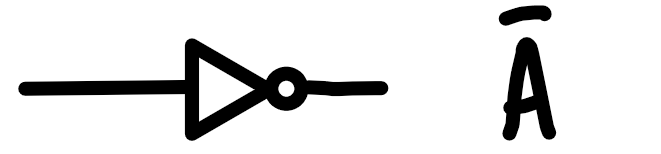
logic gates - NOT
NOT(1) = 0
Logic gates - AND
1 AND 0 = 0
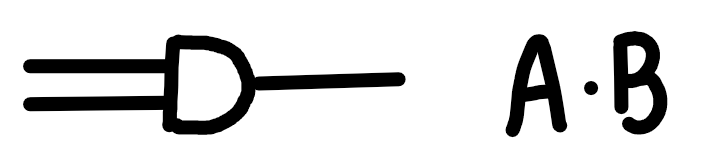
1 AND 1 = 1