Module 10: Patient care coordination and education
 Call Kai
 Learn
Learn Practice Test
 Spaced Repetition
 Match
Match Flashcards
 Knowt Play
1/61

There's no tags or description
Looks like no tags are added yet.
Name | Mastery | Learn | Test | Matching | Spaced | Call with Kai | Chat |
|---|
No analytics yet
Send a link to your students to track their progress
62 Terms
Team based care
partnership between provider and patients (communication along all parts of team)
Patient centered medical home
accountable care organization
both models have patient as the focus with all members of team working to provide best outcome for patient.
Patient centered medical home care delivery model (PCMH)
coordinates patient treatment through primary care provider
centralized setting that facilitates partnerships
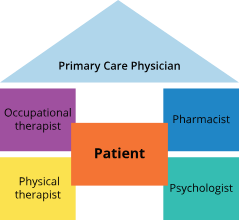
Five core functions of PCMH
Comprehensive care: care for patient’s needs (whole patient) not just certain medical/physical concerns
Patient centered care: patients and families are the core members of the team
coordinated care: provider directed medical practice with good communication through things like EHR
Accessible services: tools provided through patient information and web portals
quality and safety commitments: delivering quality health care
Accountable care organizations
made of providers associated with defined patient population
voluntarily coordinates care for defined patient population, instead of paying for volume of services it shifts to paying for value of care delivered
Primary care provider
first provider from whom a patient will seek care and services
role: coordinate preventative health care checkups
Specialist
provider that diagnoses or treats conditions that require a specific area of expertise and knowledge
Physician Assistant (PA)
similar training to physicians and are licensed to practice medicine as long as MD/DO supervises them
Advance Practice Nurse (APN)
more education and experience than RN and can perform many same tasks as PA
Registered nurse (RN)
licensed by individuals states and can perform complicated clinical tasks and oversee the case management of patients
Licensed practical nurse
vocational nurses, licensed by individual states
train for 1 year at community college and recieve diploma/AS
Pharmacist
prepare and dispense medications prescribed by provider
must be knowledgeable of individual and various combinations of medicines
Dentist
treat and diagnose issues relating to health of teeth and mouth
Therapist
rehabilitation services
occupational therapist: assist and educate patients on performing everyday tasks
physical therapist: asses patient’s pain/strength/mobility and treatment plain to improve
Speech therapist: work with patients who have had injury, cancer, stroke to regain and maintain ability to communicate, chew, swallow
Psychiatrist
physicians who diagnose, prescribe medications for, and treat mental, behavioral, and emotional disorders
Psychologist
not physicians but have a doctor of psychology (PsyD) or Doctor of philosophy (PhD)
Social worker
assist patients and families in times of transition or crisis
Dietitian
Expert in diet and nutrition
educate patients on connection between chronic disease and nutrition
Support staff
clinic coordinator
medical admin assistant
clinic MA
medical records specialist
Medical billings specialist
financial counselor
scheduler
List of community resources
important to know to benefit patients with certain needs
brochures from organizations are usually free
Depending on specialty CDC has resources that provide services for specific geographic locations
Blood pressure screening
Risk factor: African American race, being overweight, family history, previously recorded high
Breast Cancer
mammogram is x-ray to help identify cancer
recommend that screening starts at age 40
Cervical cancer
pap test used to help identify
recommend every 3 years from 21-29 y/o and every 3-5 years from 30-65 y/o
colorectal cancer
starting at age 45 and can be done by performing fecal occult blood test (FOBT) to detect blood in stool or colonoscopy
Cholesterol screening
adults with family history need to tested more regularly
dental examination
recommended exam and cleaning yearly
Lung cancer
annual lung cancer screening with low dose computed tomography (LDCT) is recommended for adults age 50-80 years who have 20 pack year smoking history and currently smoke or have quit within the past 15 years
bone density
screening for osteoporosis with bone measurement testing in postmenopausal patients younger than 65 years
Diabetes
blood glucose tests are recommended every 3 years or sooner based on medical history
Dilated eye examination
patients with risk of eye disease should have dilated eye exam
risk factor: African American, 40+, and family history of glaucoma
Abdominal aortic aneurysm
recommended one time screening with ultrasonography in male patients 65-75 y/o who have ever smoked
Hep C screening
one time screening for those with risk factors:
risk factors: being born between 1945-1965, history of blood transfusions or organ transplant before 1992, use of injected illegal drugs, and chronic liver disease/HIV/AIDS
HIV
one time screening for adolescents aged 15-65 years
Alcohol use
drinking in moderation:
female have no more than one drink a day
male patients have no more than two drinks a day
Nicotine or tobacco use
questions are related to current and past nicotine usage:
what product, which kind, how much per day, history of use, quitting behaviors
Drug use
Identify any history or recent drug abuse
signs of drug abuse
poor hygiene
change in eating habits or sleep patterns
loss of interest in favorite things
very energetic, talking fast, very sociable
tired, sad, nervous, agitated, bad moods
missing school, work, appointments
spending money excessively
slowed reaction time, paranoid thinking
Intimate partner violence
domestic abuse for all genders, controlling behavior, physical abuse, sexual abuse, emotional/verbal abuse
Older adult safety
how safe older person feels at home, screen for abuse and neglect
depression
several tools can scan for depression most ask questions related to moods, thoughts, and feelings
patient interview
discuss changes in health status
perform medication reconciliation (determine if refills are needed)
confirm allergies
screen for any health conditions (fall risks, mental health status, developmental screening tests)
update health history
educate patient regarding preventative services needed
discuss any needed or recommended immunizations
Clinical quality measures
identify treatments, processes, experiences, outcomes
Transportation and medical equiptment
resource that assists with transportation to and from medical appointments and aids in obtaining needed medical equiptment
Adult day programs
community resource that offers daily activities for older adults
Assistive living
community resource that houses older adults or disabled individuals
provides nursing care, housekeeping, and prepares meals
Long term care
community resource that offers services for individuals who can no longer perform basic daily living activities independantly
educational program and support groups
educate and support individuals with specific needs
Low cost medication programs
community resource that assists low income individuals with obtaining needed medications
Community health programs
community resource that provides programs to promote health and overall well being
Nutrition education
encourage limiting fat intake, eat fruits, veggies, fiber
Heart healthy diet (AHA): limit sugary drinks, sweets, fatty meats, salty/high processed foods
eating foods lower in sodium (less than 2,300 mg of sodium in a day)
Exercise
regular exercise can help patients maintain weight and lower blood pressure or cholesterol
How much exercise is required to lower blood pressure or cholesterol
40 minutes of aerobic exercise of moderate to vigorous intensity three-four times a week
Resources for disabilities
TASH: advocates for human rights and inclusion for people who have significant disabilities and support needs
national disability rights network
specialty designed instruction programs
American association on intellectual and developmental disabilities
The arc: develops programs and funds public policy
Who orders referrals for patients to see specialists?
primary care provider
Behavioral barriers to care
decisions regarding diet, exercise, smoking, cessation, avoiding illicit drug use
Biological/genetic barriers to care
sickle cell anemia, hemophillia, cystic fibrosis, heart disease, cancer
environmental barriers to care
opportunities for employment and education, access to fresh foods, exposure to crime and violence, adequate transportation
Physical barriers to care
natural environment on health including weather/climate change, housing, neighborhoods, work sites, recreational settings, exposure to toxic substances
Cultural barriers to care
role in the family or community, views on: health, wellness, dying, death, relationships, beliefs related to foods, diet, illness, health, fertility, childbirth
Which communicable diseases should be reported?
TB
E. coli
foodborne diseases
Lyme disease
Hepatitis B, C, D, & E
human Immunodeficiency virus (HIV)
Gonococcal infections
COVID-19
which form of telehealth is a substitute for in-person visits?
Live video
What is the main reason for patient deficiencies during transition of care
lack of communication
Can a medical assistant refer a patient to a resource without the provider’s referral?
Yes, a referral is not needed in formal writing to refer to a rehabilitation (drug addiction) or other community resource