Adv Med Surg Exam 1
 Call Kai
 Learn
Learn Practice Test
 Spaced Repetition
 Match
Match Flashcards
 Knowt Play
1/194

There's no tags or description
Looks like no tags are added yet.
Name | Mastery | Learn | Test | Matching | Spaced | Call with Kai | Chat |
|---|
No analytics yet
Send a link to your students to track their progress
195 Terms
cardiac catheterization
most definitive and invasive test in the diagnosis of heart disease
palpitations, feeling heat/hot flash, desire to cough as medium is injected into right side
what sensations might a patient experience when going through cardiac catheterization
remain supine, keep insertion site straight, monitor VS every 15 min for 1 hour, then every 30 mins for 2 hours, then every 4 hr, assess peripheral pulses in affected extremity and skin temp/color
post-op care for a cardiac catheterization patient
NPO 4-8hr, assess for iodine/shellfish allergy (contrast media)
pre-op care for a patient undergoing cardiac catheterization
metformin
contraindication to cardiac catheterization
coronary artery blood flow
what does cardiac catheterization measure?
90 mins
what is the door to balloon time for cardiac cath?
protamine
what is the antidote for heparin?
vasovagal reaction (sudden drop in HR and BP)
what complication can happen during cardiac cath
hemodynamic monitoring
refers to a variety of monitoring techniques designed to provide quantitative information about vascular capacity, blood volume, pump effectiveness, and tissue perfusion
placed at phlebostatic axis (4th intercostal midline)
how do we know if the invasive line for hemodynamic monitoring (arterial line, CVP) is in the correct place and measuring pressure correctly?
2-8 mmHg
normal central venous pressure (CVP)
4-8
normal cardiac output (CO)
show real-time BP, not for fluid administration, draw blood for ABGs
what can an arterial line do?
endocarditis (bleeding and infection)
what is a big risk with invasive hemodynamic monitoring and what do we watch for
amount of blood returning to the heart (preload)
what is the CVP
administer fluids
what to do if the CVP is low
4-6 hours
how quickly does an MI need an intervention?
morphine, oxygen (only if 90 or lower), nitro, antiplatelets
treatment for MI (MONA)
morphine, nitro
what medications to NOT give to a patient experiencing an MI if their BP is too low
10 mins
how quickly should an ECG be obtained with reports of chest pain and possible MI
when the patient is actively bleeding out
when does airway not take priority over circulation?
furosemide, hydrochlorothiazide, spironolactone
diuretics that decrease circulating volume and are for HF with fluid overload and congestion
digoxin, dobutamine
drugs that enhance contractility of the heart
GI upset, fatigue, confusion, vision changes (yellow halos, blurred vision), bradycardia, PVCs, heart block, anorexia, N/V, dizziness, lightheadedness
signs of digoxin toxicity
with hypokalemia
when is there a higher risk of digoxin toxicity
increases HR and contractility to increase CO
what does dobutamine do to the heart
shunts blood and increases HR/BP and oxygen demand on heart
what does dopamine do
cardiogenic shock
what is dopamine designed to treat?
central
what kind of line does dopamine need to be given through?
HTN, tachycardia, ectopic beats, angina
adverse effects of dopamine
assess F&E balance, neurological status every 30-60mins
postop care for CABG surgery
1.3-2.1
normal mag levels
3.5-5.0
normal potassium levels
8.5-10.5
normal calcium levels
tachycardia, HTN, increased DTR, shallow RR, irritability/confusion, tetany/seizures, twitches/paresthesia
s/s of hypomagnesium
thready/weak/irreuglar pulse, ortho hypotension, shallow respirations, lethargic/anxiety/confusion, paresthesias, decreased DTR, constipation, N/V, abdominal distention, ECG changes
s/s of hypokalemia
necrosis in hands
what does long term use of levophed (norepi) lead to
in the last resort to keep the pt alive
when is levophed (norepi) used
tissue necrosis, sloughing if given peripheral IV, arrhythmias
adverse effects of levophed
improves mean arterial pressure by increasing peripheral resistance and increasing venous return
what does levophed do in the body
assess for chest pain, monitor urine output hourly, assess BP Q15 min (HTN =overdose), assess HA, Q30 for extravasation, extremities for color/perfusion
nursing interventions for levophed
loss of fluids or blood (hemorrhage, dehydration, vomiting/diarrhea, inadequate clotting)
cause of hypovolemic shock
30mL/kg bolus IV with isotonic/LR solution, levophed if fluids aren’t working
interventions for hypovolemic shock
direct pump failure (acute MI)
causes of cardiogenic shock
treat underlying cause, support cardiac function, NOT fluids, dopamine/digoxin
treatment for cardiogenic shock
blood flow redistribution; sepsis, anaphylaxis
cause of distributive shock
antibiotics (sepsis), fluids, treat underlying cause
interventions for distributive shock
noncardiac obstruction (cardiac tamponade most common)
cause of obstructive shock
O2, IV fluids, vasoconstrictors/inotropes, improve myocardial perfusion, pericardiocentesis (cardiac tamponade)
interventions for obstructive shock
dyspnea
what is an early sign of heart failure and may only present in females?
HTN, cardiac infections/inflammation, cardiomyopathy, dysrhythmias, valvular disease, congenital defects, CAD, family hx, hyperkinetic conditions (pump failure)
causes of left-sided HF
left-sided HF, pulmonary HTN, chronic lung disease, obesity, sleep apnea, smoking, substance misuse
causes of right-sided HF
echocardiogram
what is the best tool for diagnosing heart failure
less than 100
what is a normal BNP
when greater than 100
when does a BNP indicate HF
less than 0.04
normal troponin level
55-70
normal ejection fraction
when greater than 4, or greater than 2 after IV fluids are given
when is lactic acid concerning
mechanical
life long anticoagulation therapy with warfarin is required (INR 3.0-4.0) for this kind of valve replacement
biologic valve replacement (pig/cow)
temporary valve replacement that you may put in an 80 year old but not a 20 year old because it wont last long
mechanical valve
type of valve replacement that requires patients to be on life-long anticoagulation therapy but lasts longer
dark leafy greens/vegetables
what foods to avoid if on warfarin therapy bc they are high in vitamin K
3.0-4.0
therapeutic level for INR for a patient on anticoagulation therapy after a mechanical valve replacement
2-3
normal therapeutic level of INR
dental procedures for 6 mo
what kind of procedure should people avoid after valvular surgery and how long because of the potential for endocarditis
yes
can CNAs assist with EKG lead
atrial fibrillation
what rhythm is this?

P waves absent, regular rhythm
what does Afib look like on an EKG
assess BP/LOC, vagal maneuvers, antidysrhythmics (amio/diltizaem), cardiovert
interventions for Afib from first to last
pulmonary embolism
what are patients who have Afib at high risk for?
pericarditis
ST elevation in all 12 leads is what?
substernal precordial pain radiates to left side, pericardial friction rub
s/s of pericarditis
lower left sternal border
where is pericardial friction rub best heard at
pericardial effusion, tamponade
complications nurses need to monitor for pericarditis
flat t waves, u waves, ST depression, VT/VF risk
what does an EKG look like if a patient has hypokalemia
tall peaked T waves, widened QRS, prolonged PR, bradycardia, asystole risk
what does an EKG look like for hyperkalemia
prolonged QT, torsades de pointes
what does an EKG look like for hypomagnesemia
bradycardia, widened QRS, heart block
what does EKG look like for hypermagnesemia
prolonged QT
what does an EKG look like for hypocalcemia
shortened QT
what does an EKG look like for hypercalcemia
vfib, vtach, asystole, PEA
what are the lethal dysrhythmias
vtach
what rhythm is this

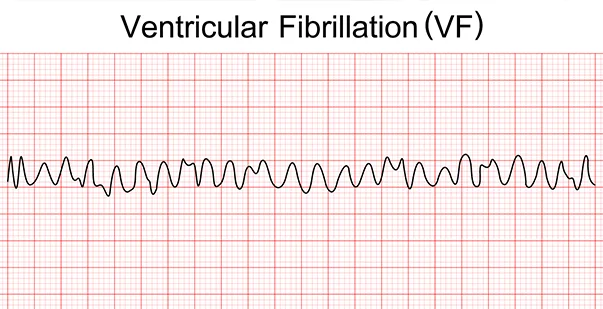
vfib
what rhythm is this
pulseless electrical activity (PEA)
what rhythm is this

p waves and t waves combined, severe tachycardia
what does SVT look like on an EKG
vagal maneuvers (blow on straw, bear down, valsalva, carotid sinus), adenosine 6mg-12mg
interventions for a stable SVT patient
brief asystole and hypotension with return to normal
what does adenosine do to the heart when pushed rapidly for SVT
cardiovert
what to do for unstable SVT
avoid magnets and transmitters, carry pacemaker ID card, med alert bracelet
patient teaching for permanent pacemakers
direclty before P wave
when do pace spikes happen before atrial programmed pacemakers?
directly before QRS complexes
when do pace spikes occur for ventricular programmed pacemakers
avoid lifting greater than 10lbs overhead for 4 weeks
activity restrictions post pacemaker insertion
sinus bradycardia
what rhythm is this

sinus tachycardia
what rhythm is this

atropine x3 every 5-15min
what med is given to stable sinus brady pts to increase HR
temporary pacemaker
treatment for unstable sinus brady
decreased CO - fatigue/weakness, oliguria/nocturia, angina, confusion/restlessness, dizziness, pallor/cool extremities, weak peripheral pulses
pulmonary congestion - hacking cough, dyspnea, crackles/wheezes, frothy pink tinged sputum, tachycardia, S3/S4 gallop
s/s of left sided HF
systemic congestion, JVD, enlarged liver/spleen, anorexia/nausea, dependent edema, distended abdomen, swollen hands/fingers, polyuria, weight gain, BP changes
s/s of right sided HF
300mg for dead, 150 for alive
how much amio to give a patient for atrial and ventricular dysrhythmia treatment