chapter 9A: asexual reproduction
 Call Kai
 Learn
Learn Practice Test
 Spaced Repetition
 Match
Match Flashcards
 Knowt Play
1/16

There's no tags or description
Looks like no tags are added yet.
Name | Mastery | Learn | Test | Matching | Spaced | Call with Kai | Chat |
|---|
No analytics yet
Send a link to your students to track their progress
17 Terms
asexual reproduction
form of reproduction involving a single parent that results in offspring genetically identical to the parent
forms of asexual reproduction
binary fission
budding
fragmentation
vegetative propagation
features of asexual reproduction
genetically identical offspring
no gamete fusion
rapid reproduction
useful in stable environments
note = decrease in genetic diversity → decrease in adaptability → risk of extinction
binary fission
a form of reproduction for prokaryotes
e.g. bacteria
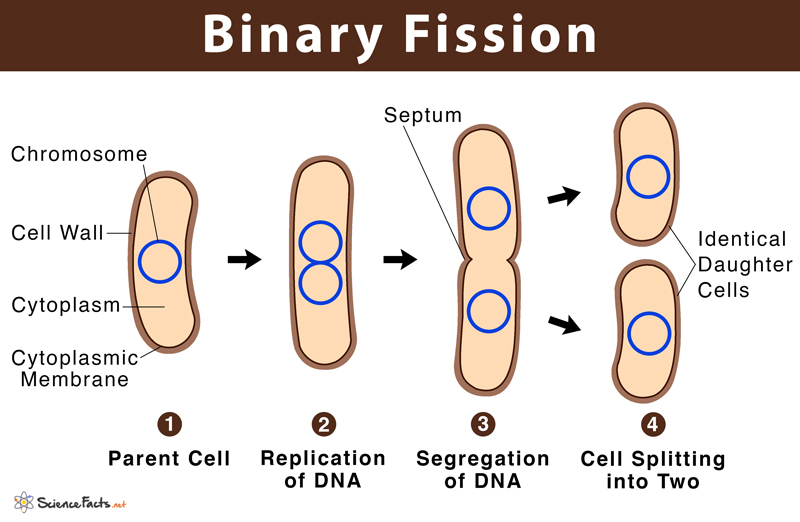
steps for binary fission
circular chromosome (1) replicates and the copies attach to the cell membrane. plasmids also replicate.
the cell begins to grow.
the cell continues to grow, elongating further.
the cell membrane + wall pinches inwards (septum) to divide the cell into two. (cytokenesis)
two daughter cells are produced, each genetically identical to each other and the original cell
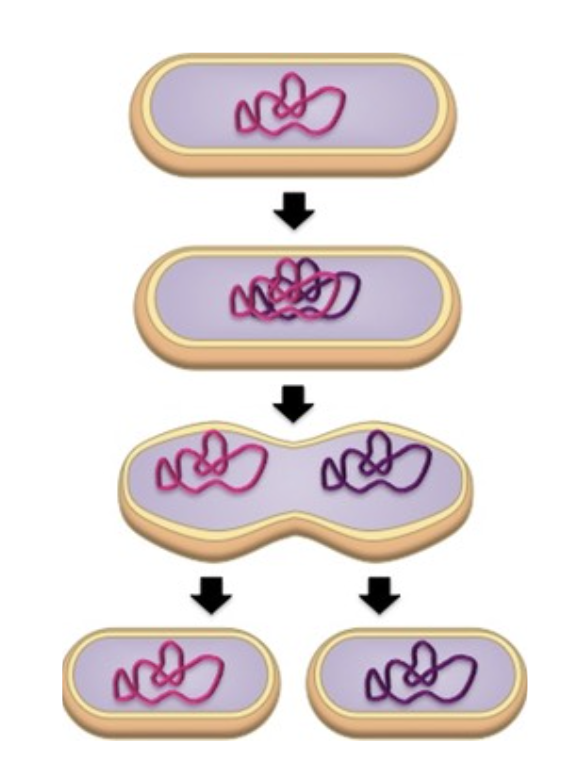
importance of binary fission
critical in bacterial reproduction
drives evolution through mutations in DNA replication
used in biotechnology for producing insulin, enzymes, etc.
budding
asexual reproduction where a new organism develops as an outgrowth from the parent due to localised mitotic cell division
has identical DNA
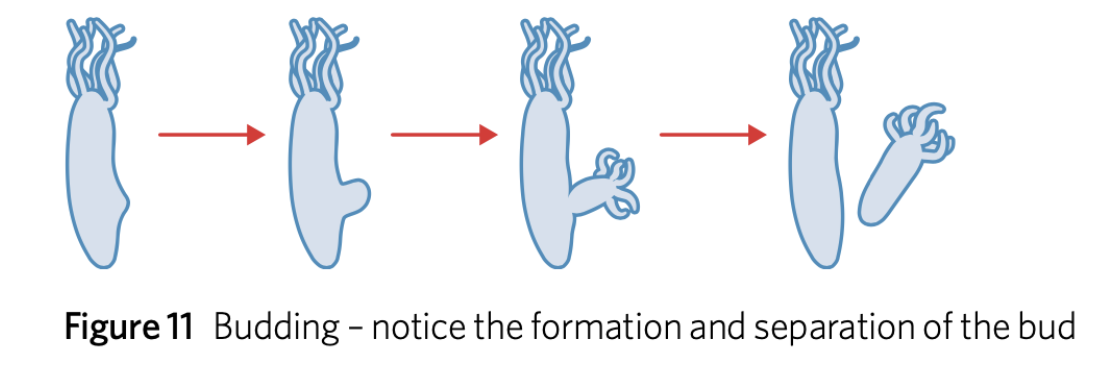
organisms that bud
yeast
sponges
jellyfish
coral
worms
steps (summarised)
bud forms → breaks away → entirely separate
bud forms due to increased cell growth
fragmentation
asexual reproduction where an organisms breaks into fragments
regenerates into a complete, genetically identical organism
may be intentional / unintentional
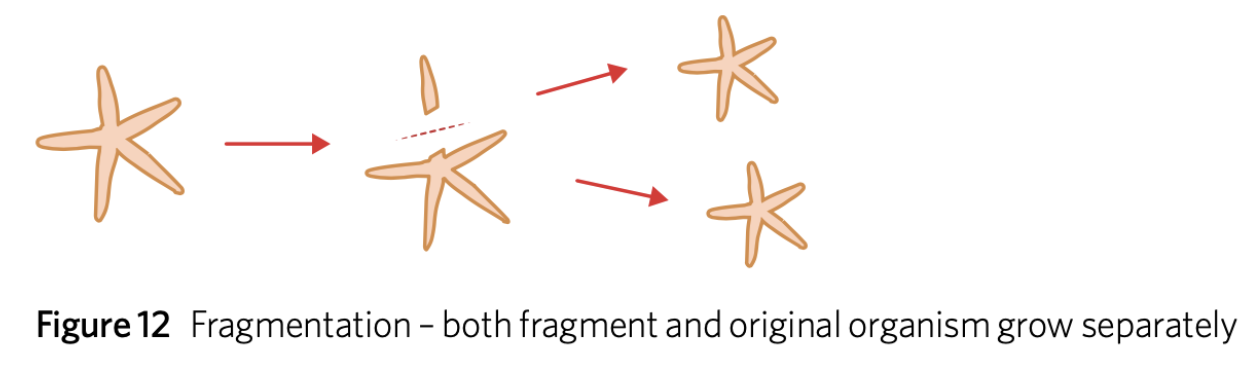
organisms that undergo fragmentation
worms, sea stars, as well as some plants
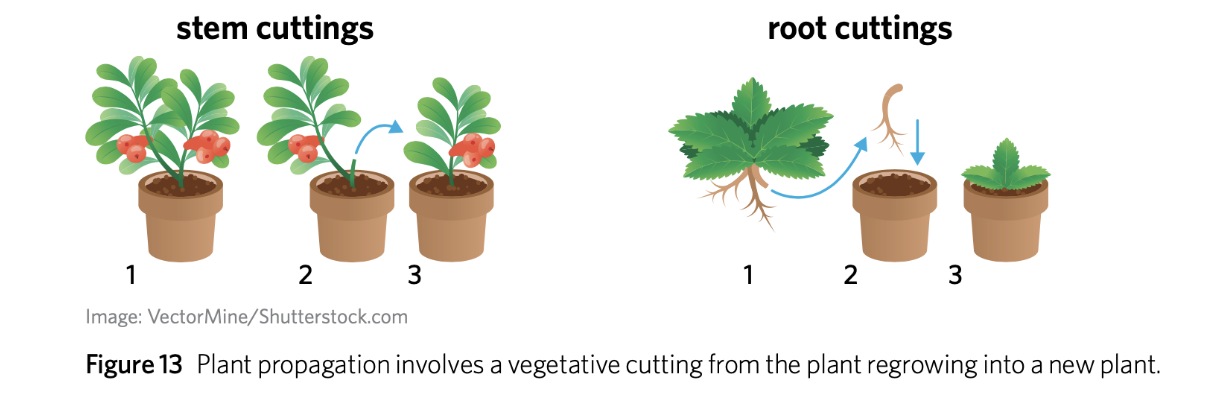
vegetative propagation
asexual reproduction in which new plants grow from the vegetative parts of a parent plant without seeds