BSCI 207 Unit 1
 Call Kai
 Learn
Learn Practice Test
 Spaced Repetition
 Match
Match Flashcards
 Knowt Play
1/78

Earn XP
Description and Tags
thermodynamics, phylogenetic tree
Name | Mastery | Learn | Test | Matching | Spaced | Call with Kai | Chat |
|---|
No analytics yet
Send a link to your students to track their progress
79 Terms
what differentiates a clump of carbon from living things?
living things can capture energy from the environment and dissipate energy as heat much more effectively
Does all life abide by the laws of thermodynamics?
YES!
what is required to develop complex and organized organisms?
all organisms require the order of cells but different cells in different organisms function in totally different ways.
How can life survive in such variable environments?
organisms have adapted to the energy resources available in their environment. This energy is used to perform chemical reactions (metabolism).
Thermodynamics
The study of energy and its transformation.
It is an intersection between physics and chemistry and governs the processes occurring in every organism.
determines the energy exchanged in a system and the ability of this energy to perform work
Each energy conversion and energy processing is controlled by thermodynamics and two fundamental laws
(Thermodynamics essentially determines which reactions can provide energy for life and which can not)
1st law of thermodynamics
Energy can only be transferred or transformed. NOT created or destroyed.
A relationship between enthalpy ( ΔH), free energy (ΔG), and entropy (ΔS).
tells us that total energy is conserved. for biological systems that generally maintain constant temperature and pressure: ΔH = ΔG + T ΔS
T is the absolute temperature in Kelvin (K)
2nd law of thermodynamics
Every spontaneous reaction increases the entropy of the universe.
tells us that the disorder (entropy) of the universe is increasing.
Spontaneous processes increase disorder by releasing energy. (-ΔG)
Non-spontaneous processes increase disorder by relying on external energy to run (ex. ATP). this energy is transferred inefficiently so the heat lost to the universe also helps increase disorder. (+ΔG)
ΔG = ΔH – T ΔS. Gibbs free energy can be used to determine whether the rxn is spontaneous in the forward or reverse direction.
Life
A collection of organized molecules that can metabolize, grow, reproduce, respond, and evolve. Thermodynamics controls each of these processes.
Every chemical reaction necessary to break or form the bonds making up an organism is contingent upon the energy sources available. (1st law)
and whether the reaction can occur without any energy input (spontaneous rxns 2nd law)
Energy sources and mechanisms organisms develop depend on:
The environment they live in.
System
the region being studied (molecules reacting, a cell, an organism, reaction vessel…)
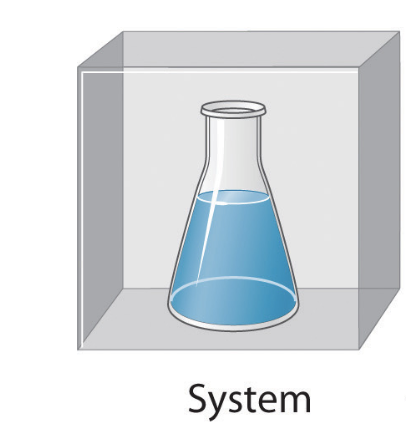
Surroundings
the rest of the universe.

Universe
System + surroundings

Enthalpy (H)
For organisms where temperature and pressure remain constant, the total energy of the system is determined by its enthalpy (H).
includes the energy that can do work as well and the energy that is due to disorder and cannot do work (such as heat).
chemical reaction equation: final state (products) - enthalpy of the initial state (reactants)= enthalpy (ΔH)
positive ΔH indicates that the products have more enthalpy (energy) than the reactants, so energy is added to the system. endothermic. (surroundings get cool)
negative Δ H indicates that the products have less enthalpy (energy), than the reactant, so energy was removed from the system. exothermic. (surroundings get warm)
Free Energy (G= Gibbs free energy)
The energy in a system that CAN be used to do work.
availability of free energy might be due to a change in potential energy or a change chemical energy (due to bonds being broken and formed).
Change in free energy equation: ΔG = G final state (products) - G initial state (reactants). OR ΔG=ΔH-TΔS
Reactants and products might include more than one molecule. ex.: A+B → C+D would be written as ΔG = GC + GD – GA – GB
Positive ΔG products have more free energy than the reactants. endergonic.
Negative ΔG products have less free energy than the reactants. exergonic.
Endergonic ( +ΔG)
free energy enters the system
NOT spontaneous by the 2nd law of thermodynamics bc energy must be added for the reactions to occur.

Exergonic (-ΔG)
free energy exits the system
ARE spontaneous by the 2nd law because energy is released by the reaction

Entropy (S)
The measure of the amount of DISORDER in a system.
if a system is highly ordered, like a neat stack of cans. when someone knocks it over, the cans scatter and the entropy (disorder) has increased.
high order= low entropy
high disorder=high entropy
Equation for change in Entropy: ΔS = S final state, products - S initial state, reactants
positive ΔS means the products are more disordered.
negative ΔS indicates that products are less disordered.
Entropy in the context
Water:
in ice, the water molecules are highly order. they can barely move.
when the ice melts, the molecules are more mobile and can move all over the beaker. much less ordered=entropy of the system increases.
Moles of gas:
an increase in the moles of gas=more disorder. in the degredation of nitrogen tetroxide, the reactants ave 1 mole of gas and the products have 2 moles of gas.
how does ΔH = ΔG + TΔS support the 1st law of thermodynamics?
the total energy of the system (ΔH) is a results of chemical work that occurs (ΔG) plus heat that increases the disorder in the system (TΔS). the equation tells us how energy flows:
if we do no work and have no change in disorder, then there is no change in energy
if we add energy into a system, only some of it does work (ΔG), and some of it is lost as heat (TΔS)
Limitations of the 1st law of thermodynamics:
the first law tells us that energy must be balanced in a system and must flow from one type to another. it also says in order to change the energy of a system you have to put energy in. BUT it doesn’t tell us which way reactions are likely to go.
How does the first law of thermodynamics help us understand glucose formation?
6 CO2 + 6 H2O + sunlight → C6H12O6 + 6O2 + heat
Energy flows from light energy to chemical energy and heat. energy must be added to change the energy of the system.
How does the Second law of thermodynamics help us understand glucose formation?
6 CO2 + 6 H2O + sunlight → C6H12O6 + 6O2 + heat
although the entropy of the system decreases, the entropy of the universe increases because the reaction converts some light energy to heat, which will increase the random motion of the surroundings.
We Use mtDNA (mitochondrial DNA) sequences as traits to build human phylogenetic tree
more similar sequences=more recent common ancestor
Time since common ancestor equation
sequence divergence / divergence rate. ex. tree shows the sequence divergence rate for the human common ancstor is about 0.57%. ( avg 5.7 out of every 1000 bp differs.) Divergence rate is 2%/Million Years.
.57/(2 ×1000000)=285000 years
Which kind of sequence is best?
depends on how long ago organisms diverged and how fast substitutions arise.
Rate of sequence change depends on:
How fast sequences mutate
how strongly selection acts to keep sequences fixed

Why do sequences vary in Mutation rate?
mTDNA mutates 10x faster than nuclear DNA because of how it replicates. (mtDNA is single stranded while nuclear is double stranded)
mtDNA is circular and single stranded during replication for some time.
Why do sequences vary in strength of selection?
Sequences that are NOT under selection change more quickly (Introns and 3rd nucleotide of a codon/the synonymous site) and aren’t held back by anything
Sequences that ARE under selection change more slowly (Exons , 2nd and 1st nucleotides, highly constrained genes ex. rRNA/histones, and Protein sequences) due to natural selection actively removing harmful variations
higher mutation=slower rate
less selection=higher rate
more substitutions=lower rate
Some sequences are VERY strongly selected to stay the same
genes critical to organismal function (Ribosomal RNA, Histones)
Why does it matter for phylogenetic comparisons how fast sequences change?
to compare CLOSELY related species, you need enough variable sites to compare. can’t use a molecule that changes very slowly
to compare DISTANTLY related species, you need sequences that change some, but NOT TOO much. (if a sequence changes back and forth too many times, it not longer represents the original relationships)
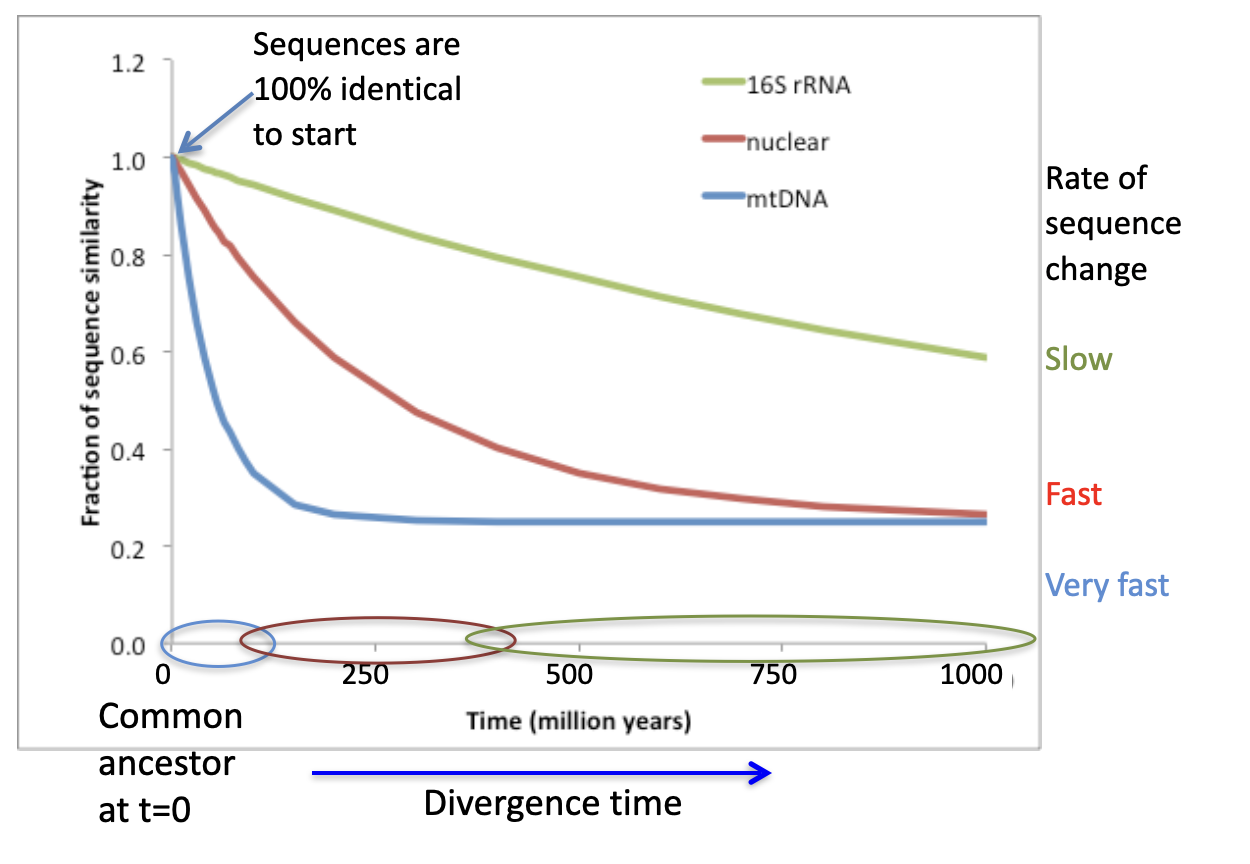
Sequence similarity over time as two species diverge from their common ancestor graph
When comparing two completely random or extremely divergent sequences, the baseline similarity naturally plateaus at roughly 20% to 25% due to mathematical probability and the chemical constraints of proteins.
Proteins are built from 20 Standard amino acids. If you were to randomly pull amino acids out of a bag and align two random sequences, you might expect a 1-in-20 chance (\(5\%\)) of an exact match at any given position if all amino acids were used equally.
rRNA
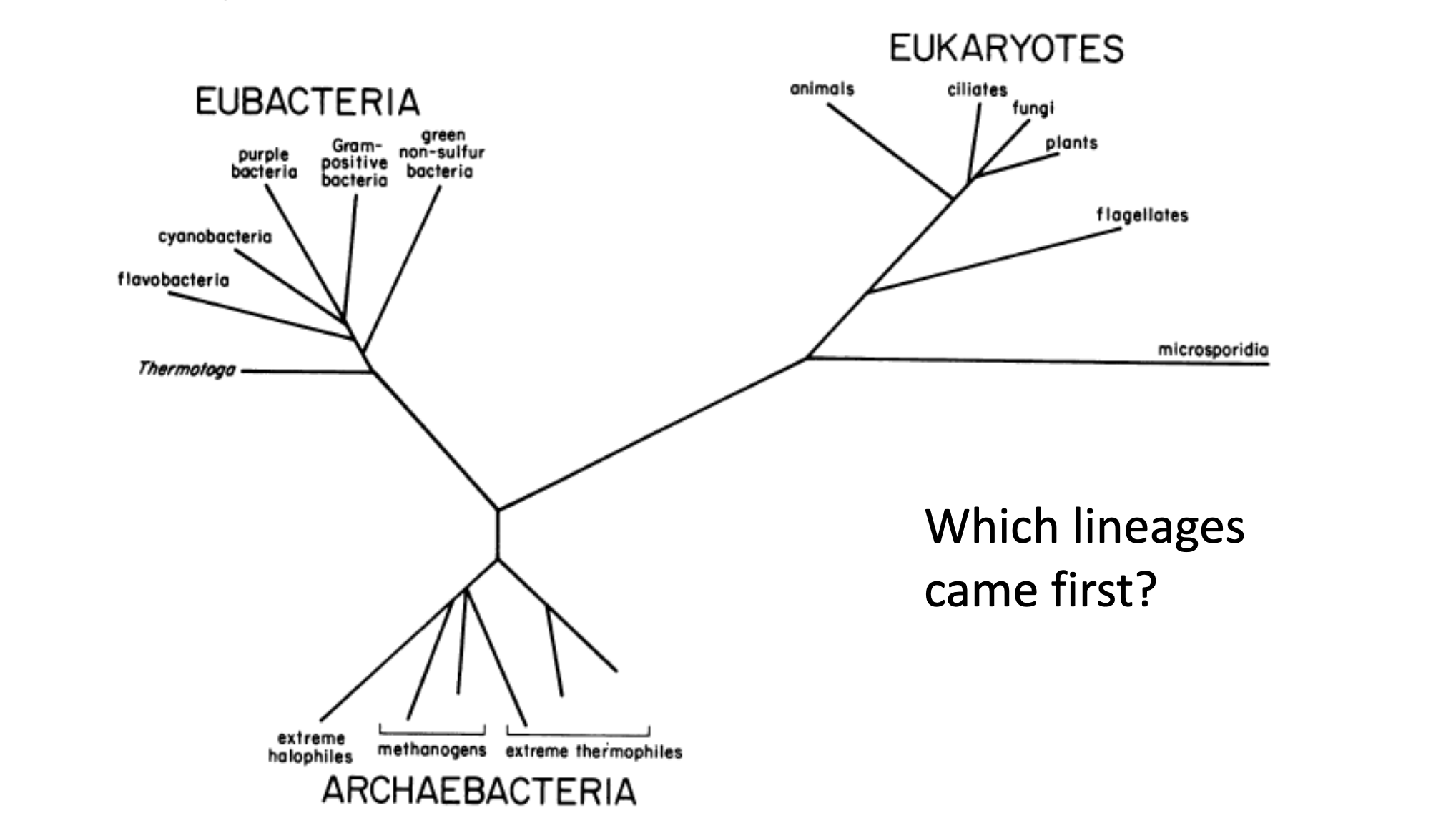
Ribosomal RNA (rRNA) is a non-coding RNA molecule that serves as the primary structural and catalytic component of ribosomes, the protein-building factories in cells. It was used by Woese to build the tree of life.
critical for translating mRNA into protein (EVERYONE has it)
Many critical domains that must fit together with 2 other rRNA molecules and ~50 different ribosomal proteins
Strong selection→ slow substitution rate
good molecular clock for deep evolutionary times
Limits of molecular data
No temporal order→ can’t tell which came first
Need additional info→ which organism is the out-group? Where is the root?
Fossil Records
can provide information to identify ancestors/outgroups
-but prokaryotes have a poor fossil record…so try gene duplication

Gene duplication
Iwabe proposed this solution to modify Woese’s tree of life
a few genes have two copies in all three prokaryotic domains (bacteria, archea, eukarya) ex. ATP synthase
ATPaseoriginal → ATPaseA + ATPaseB
Bacteria gene A Bacteria gene B
Archaea gene A Archaea gene B
Eukarya gene A Eukarya gene B
gene duplication is early and comes BEFORE species separate

Phylogenies are complicated by horizontal/lateral gene transfer
Vertical gene transfer: the transmission of DNA from parent to progeny
Lateral gene transfer: the transmission of DNA between unrelated organisms
Thermotolerant genes move by lateral gene transfer→huge selective advantage

rRNA Tree
assumes vertical gene transfer
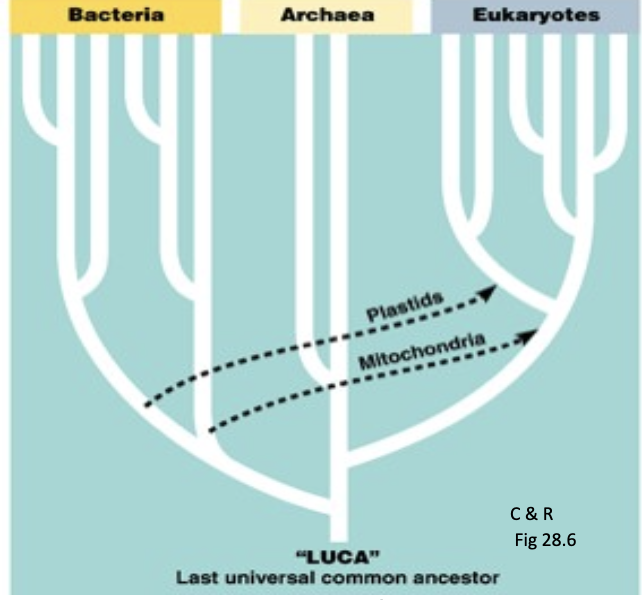
predicts last universal common ancestor (LUCA)
probably close to the true phylogeny of the major lineages of post-LUCA organisms
BUT some genes do undergo lateral transfer ex. organelle DNA
Genome model of Universal tree of life
recent lateral genome transfer of physiological and metabolic genes that give selective advantage
post last universal common ancestral community divergence of distinct lineages with differing levels of lateral genome transfer
very early/ Pre-last universal common ancestral community- interacting community of self-replicating organisms with lots of LGT → very rapid evolution
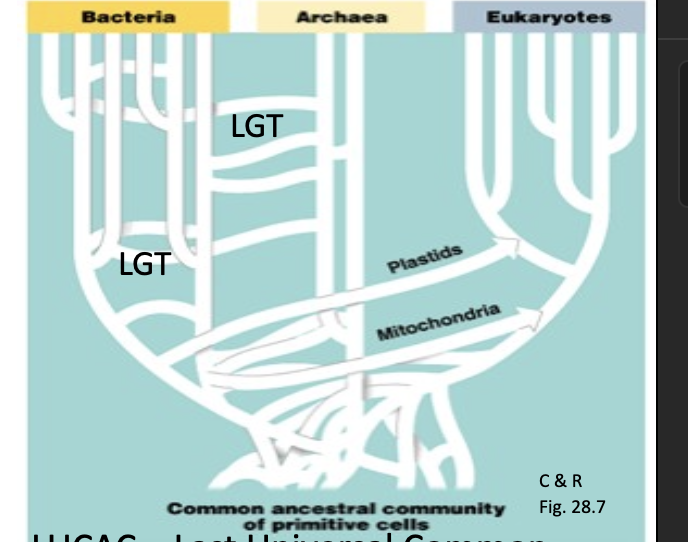
Eukaryotes vs prokaryotes
Eukaryotes have:
a nuclear membrane
have organelles (gained thru endosymbiosis of bacteria i.e Lateral Gene Transfer)
One theory of eukaryotes: Merger endosymbiosis of bacteria by archaean
rather than tree of life it’s the “ring of life”
the bacteria that became the mitochondria was an α-proteobacteria (green arrow)
capable of oxidative phosphorylation

What was the archaean ancestor of Eukaryotes?
Likely ancestor from the Asgard lineage: Heimdallarchaota
Eukarya are within Archaea, but in slightly deeper location
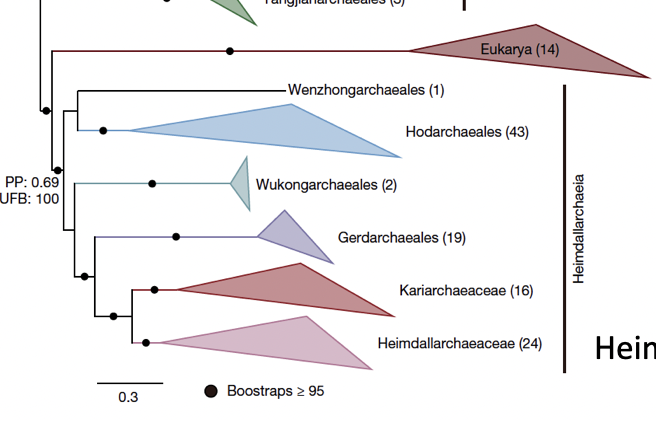
Evolution of the cosoms
formed 15 BYA
Earth formed ~4.5 BYa at just the right distance from the sun
Prebiotic Earth
chemicals formed in the ocean and increased in molecular complexity, because the water was taking it from the soil. of the volcanoes
Evolution of Early Life
Prokaryotic organisms as early as 3.5 BYA
Multicellular organisms
Evolution of more Advanced Life
more complex life forms arose 570-5-40 MYA and explanded during Cambrian Explosion (540 MYA)
Plants and animals had aquatic origins:plants invaded land follorwed by animals (440-415 MYA)
Why is the “origion” of all questions so hard to answer?
Earliest steps in life’'s evolution can no longer be observed.
We don’t know what the environment was like back then
Unclear what molecules ( DNA,RNA, or proteins) were used
What is necessary for life?
the ability to metabolize and make energy available to do biological work
the ability to pass down genetic information
Cells to contain genetic information and metabolic enzymes
Metabolism came before Genetic Information Hypotheses
Darwin’s warm little pond: Primordial soup! Suggest that life first originated in a small, warm body of fresh water filled with various chemicals, light, heat, and electricity.
Life Seeded by hydrothermal vents and catalysts made of FeS
Sulfur world hypothesis: thermal vents are high temp and high pressure. Mineral clusters drive generation of complex organic molecules (pyruvic acid, amino acids, peptides). Laboratory eperiments have demonstrated that steps in citirc acid cycle can occur.
-Speculative “evidence” for early metabolism and iron-sulfur world: metal atoms form the core for key enzymes: FE, CU, MG, Mo, for Nitrogenase, Chlorophyll, and Cytochrome C.
Thermophilic archaea and bacteria are closest to the root of the tree of life.
This suggests that the early ancestor may have been in a hot environment.
Information before metabolism hypotheses
an organism can’t evolve without a way to pass on information (DNA/RNA)
without information to provide consistency, “organisms” randomly change
Life begins with inheritance and the passing down of information
INformation flow is similar in more present day organisms: Central dogma: DNA→RNA→ protein
Info flows from DNA to RNA to proteins start from the common ancestor and then upwards to the branches.
Caveats/misunderstandings:
Genetic code does vary for a few codons. Such variation is minor and consistent with shared ancestry.
Not everything uses central dogma. SOme viruses are based on single or double stranded RNA. Do not use their own DNA to make DNA in host cells.
Alternative theory to metabolism vs info first
There could be MULTIPLE origins of life.
one group evolved metabolic diversity without any info storage
another evolved an info storage and were parasites on organisms with metabolism
Where we are now with info vs metabolism
metabolism was necessary to makee studd and so chemistry like came first
living organisms can only exist if they store genetic information and pass it down.
info storage was key to the origin of life.
Key properties of an information system
Stability: constancy of info content
Fidelity: accuracy of info readout
Redundancy: # of info copies
Entropy: degradation of information content
Information flow
fidelity vs reading errors is down
redundancy stability vs mutations is →
some parts of information flow may be more robust than others
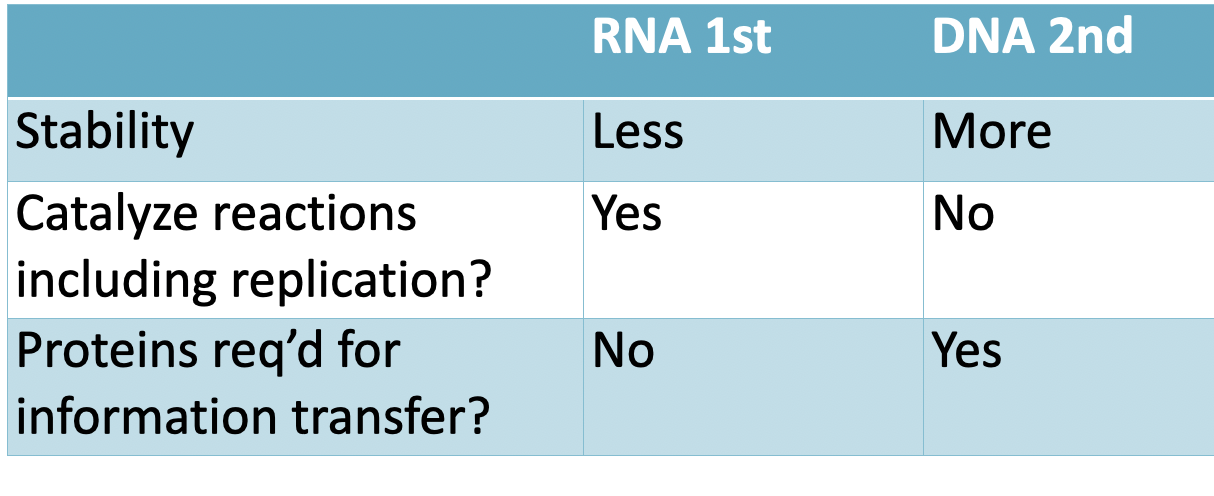
RNA is less stable bc ribose is more reactive, single stranded so more prone to errors, and no redundancy, so once it changes, you can’t go back.
DNA is more stable: inherent redundancy (double-stranded), more stable, less error prone, repairable.
Nucleic acid comparison chart

Can RNA be an enzyme?
YES!
RNA acted to splice itself in Tom Cech’s lab study in splicing Tetrahymena. And no protein was needed.
tRNAs
Ribosomes
Primitive Genetic Material
RNA may have been first info storage system used by organisms-”RNA world”
-RNA carried genetic information
RNA catalyzed reactions (like proteins)
Selection favors variants with effective replication
Why might RNA’s lower stability have been beneficial for early life?
Because it allowed early life to quickly degrade, adapt, and recycle genetic instructions in changing environments.
Key ingredients for life?
Abiotic synthesis: starts from inorganic molecules to make small organic building blocks (amino acids and nucleotides)
join building blocks into macromolecules (proteins, DNA/RNA)
Spontaneous organization: Form protobionts (earliest cells w/membranes)
Self Replication: Make copies of self for inheritance
Where did simplest organic molecules come from? theories
Cold source: inorganic molecules + energy→ organic compounds (Miller and Urey)
Hot source: organic molecules could be made on reactive metal surfaces near high-temperature thermal vents (Wachtershauser)
Out-of-this-world source: organic molecules may arrive on meteors, like the Murchison asteroid, which had 6 AA and amphipathic lipids.
How do we get from simple to complex molecules?
amino acids→ proteins
Nucleotides→ nucleic acid
Sugars→ carbohydrates
Inorganic substrates with reactive metal atoms could catalyze reactions
Spontaneous organization
Hydrophobic interactions of phospholipids
SPontaneous biological “local” order at expense of universal disorder

Protobionts and life’s origins
Protobionts: aggregations (combining) of abiotically produced molecules.
Inside proto- cell can maintain unique chemistry
Self Replication
RNA (Ribonucleic Acid) was the primary information storage and catalytic molecule used in early biological systems during the theorized RNA World hypothesis.
Alternate scenario for origins of life
abiotic geochemistry→chemoautotrophic prokaryotes, and from prokaryotes to nucleated cells..
alkaline hydrothermal vents are cooler (60—90 C) than hot smokers (> 100C)
chemistry occurred in porous rocks where “cells” are spaces lined with FeS. Pores in rocks can act as “cells,” enabling key chemicals to accumulate at higher concentrations
Natural proton gradient
Alkaline effluent inside rock. Acidic water in ocean (dissolved CO2)
Early “cells can take advantage of proton gradients. Evolution of ATP synthase to convert the energy of moving protons into ATP. ATP synthase is shared by all of life and arose just once.
Key Central Dogma differences and similarity
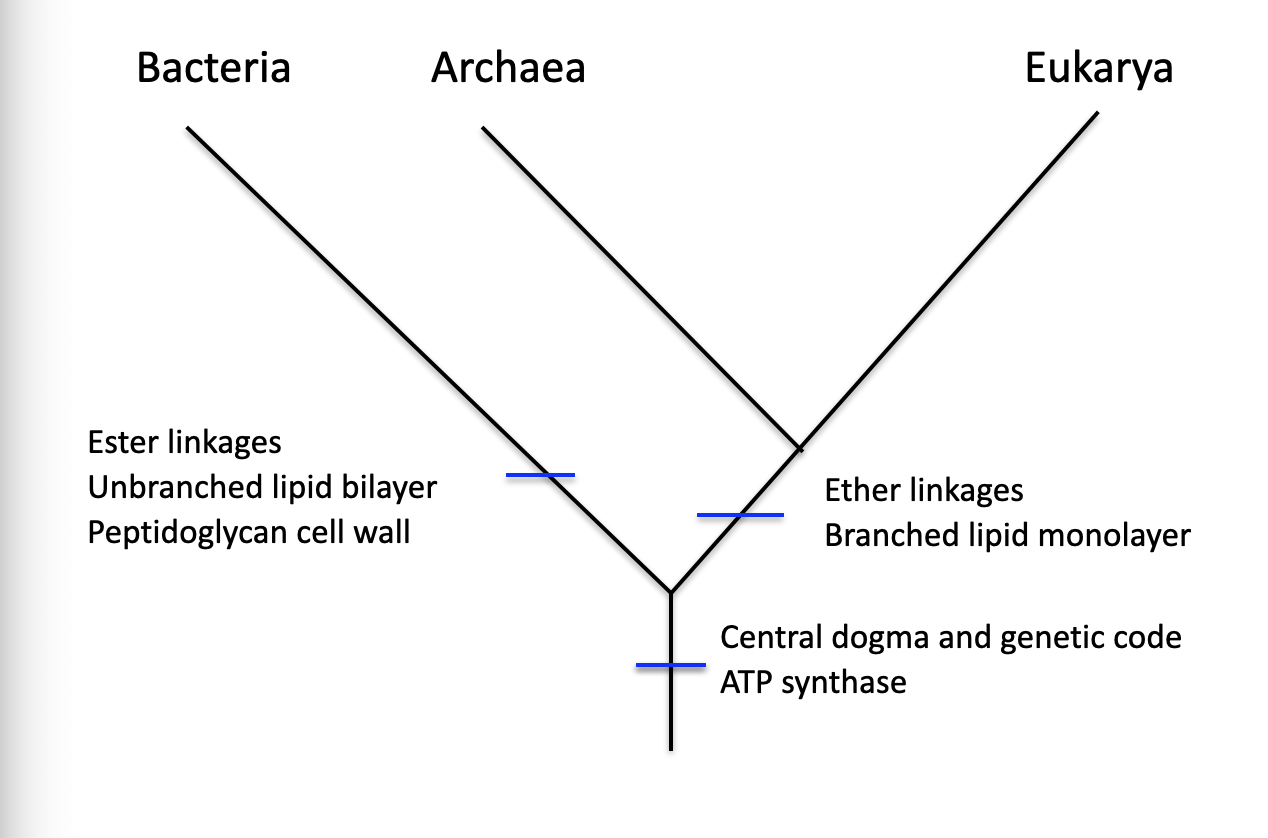
Evolution of DNA world “in rockio”
Evolution of information and metabolism. early life and metabolic processes evolved inside the inorganic, microscopic pores of alkaline hydrothermal vents before free-living cells with organic membranes existed.
Evolution of free living cells
Evolved two different biochemical reactions to generate lipids/ cell walls
became free living twice using these different membranes
scenario needs more testing
Prokaryotes: Bacteria and Archaeans
90% of. Earth’s biomass
live in all possible habitats
capable of all forms of bioenergetics
recent and ancient symbiosis nutrient cycling in biogeochemical cycles
major cause of diseases

Bacteria-diversity
are >98% of known prokaryotic species
10^7 desrcibed species, but there are maybe 10^12 species
>40 major lineages as divergent as kingdoms
protobacteria: are all gram negative
Gram Positive vs Negative (two types of cell walls.)
Gram-positive: thick peptidoglycan (sugar and protein) cell wall and no outer membrane (called monoderms). They retain the crystal violet dye and appear purple/blue.
Gram-negative bacteria: Thin peptidoglycan layer surrounded by a protective outer lipid membrane (called diderms). They wash clean of the purple dye and take up a red or pink counterstain.
Types of metabolism
Ways to produce energy (ATP) prefix:
Use light → photo-
use high energy chemicals → chemo-
Source of fixed carbon suffix:
fix C to make C-C → -autotroph
Get C-C from others → heterotroph
Use of (or tolerance to) oxygen in energy production:
yes → aerobic
no → anaerobic
Gram positive bacteria
thick peptidoglycan cell wall
many metabolic strategies
chemoheterotrophs
aerobic
facultative aerobic or anaerobic
Produce acids: yogurt, kimchi, pickles, sauerkraut, swiss cheese
produce antibiotics: streptomyces spp (streptomysin, erythromycin) bacillus spp( gramicidin, bacitracin, and polymyxin)
release exotoxins: may cause disease, but can also be useful. B.thuringiensis=Bt GMO corn- insect specific toxins, Chlorstridium botulinum-botox.
cause diseases: anthrax (B, anthracis), tuberculosis (mycobasterium tuberculosis), tetanus (Chlostridium tetani)
Gram negative bacteria
Outer cell membrane, then the thin cell wall-peptidoglycan, then inner cell membrane.
Many metabolic strategies
Photo- and chemoautotrophs, chemoheterotrophs
aerobic, facultative aerobic, or anaerobic
Bioological contributers: contribute important elements, including C, N, and S biogeochemical cycling
Help digestion: Intestinal bacteria, such as E.coli, synthesize essential B and K vitamins
Bioluminesce: Vibrio group-bioluminescent bacteria in the light organs of deep-sea fish
Cause diseases: Bubonic plague (Yersinia pestis), cholera (Vibrio cholerae), bacterial meningitis (Neisseria meningitidus), typhoid fever (Salmonella typhi)
Bacterial interactions: Symbiosis
mutualism (both benefit)
commensalism (one benefits, the other is unaffected)
parasitism (one benefits, the other is unaffected) warfare→pathogenicity antibiotics
Symbiosis in alpha-proteobacteria
Symbiotic: “the camp followers of eukaryotes”
Rhizobium-nitrogen fixation in legume hosts
Agrobacterium: crown gall disease, plant genetic engineering
Rickettsia: tiny intracellular parasites in animals (ex. typhus and Rocky Mountain spotted fever)
An ancient alpha protobacteria that likely could do both anaerobic and aerobic respiration
original symbiont that became the eukaryotic mitochondrion
Pathogens
disease-causing organisms
prokaryotes-only bacteria are pathogenic
disease-host symptoms resulting microbil colonization (bubonic plague, soybean blight)
evolutionary perspectives- LGT consequences by bacterial transfer: Gain pathogenicity, gain antibiotic resistance.