RADT 100 @ OCC - Exam 1
 Call Kai
 Learn
Learn Practice Test
 Spaced Repetition
 Match
Match Flashcards
 Knowt Play
1/136

There's no tags or description
Looks like no tags are added yet.
Name | Mastery | Learn | Test | Matching | Spaced | Call with Kai | Chat |
|---|
No analytics yet
Send a link to your students to track their progress
137 Terms
180 sec = ? sec
0.18 sec
If the original intensity is 200 mGy at 30 inches, what is the intensity at 65 inches?
42.6
If the frequency of a photon increases, its wavelength must...
decrease
Rank the following types of radiation, in order from most penetrating to least penetrating:
A. Xray
B. Alpha particles
C. Beta particles
Xray, Beta particles, Alpha particles
The binding energy of the 'K' shell in tungsten is _ keV
69
Which side of the x-ray tube is negatively charged?
Cathode
A gamma camera is used in which modality?
nuclear medicine
Occupational dose is measured by?
Sieverts
A charged particle in motion creates/induces a .....
magnetic field
Transformers work on _________ current.
alternating
The target of the typical xray is made of what metal?
tungsten
Pick the two types of xray production:
1. characteristic
2. photoelectric effect
3. bremsstrahlung
4. compton effect
characteristic; bremsstrahlung
like charges _, unlike charges _.
repel, attract
Which of the following electromagnetic radiations has the highest energy?
1. radiowaves
2. visible light
3. xrays
4. gamma rays
gamma rays
The ionized atom and the released electron are called an:
ion pair
xray voltages are measured in _ and xray currents are measured in _.
kVp, mA
The amount of background radiation the public receives is approximately _ mSv annually based on 2006 date
3.1 mSv
The atomic number is described as _
number of protons in nucleus
The external structure of the xray tube includes the support structure, the protective housing, and the _
glass envelope
As an xray tube ages, the inside can become coated with tungsten, which can cause _ in the tube
arcing
The filament is made of _
tungsten
thermionic emission at the filament creates a _
space charge
the rotating anode is turned by a _
magnetic field
The induction motor works by _
electromagnetic induction
When electrons bombard the target, _% of their kinetic energy is converted to heat
99%
The target of the rotating anode is usually coated with a _ alloy.
tungsten
The _ is the source of radiation in the xray tube
focal spot
High capacity tube rotors revolve at _ rpm.
10,000 rpm
The filament in an xray tube is about _ cm in length.
1-2 cm
A dual focus tube has two
filaments
The _ is/are outside the glass envelope
stators
The anode side of the tube has a _ charge
positive
The focusing cup has a _ charge
negartive
Like charges _____ and unlike charges _____
repel, attract
A _ is a source of direct current
1. wall socket
2. generator
3. spark
4. battery
battery
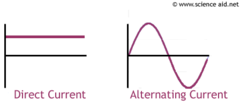
An alternating current is represented by a ____ line
sinusoidal
A charged particle in motion creates a _.
magnetic field
Rubber and glass are _
insulators (because they are nonconductors)
potential energy
the ability to do work by virtue of position
kinetic energy
the energy of motion; it is possessed by all matter in motion
chemical energy
the eenrgy released by a chemical reaction; at a molecular level
electrical energy
the work that can be done when an electron moves through an electric potential difference (voltage)
gravity
fundamental invisible force or attraction between any two objects that have mass or energy
weight
force on mass that is caused by the acceleration of gravity
expressed in Newtons: 1 N = 4.4 lb
mass
quantity of matter as described by its energy equivalence
thermal energy
The energy of motion at the molecular level
nuclear energy
the energy that is contained within the nucleus of an atom (E=mc2)
electromagnetic energy
type of energy that is used in xray imaging
includes: radio waves, microwaves, and ultraviolet waves
radiation
the transfer of energy through space
ionizing radiation
removal of an electron from an atom
properties of xrays
highly penetrating, electrically neutral, releases small amounts of heat, travels at speed of light, produce secondary & scatter radiation, travel in a straight line
Radiology emerged as a medical specialty because of the _ transformer and the _ xray tube
Snook, Coolidge
ALARA
As Low As Reasonably Achievable
filtration
metal aluminum filters inserted in the xray housing so that low energy xrays are absorbed before reaching the patient
collimation
The restriction of the size and shape of the x-ray beam in order to reduce patient exposure
matter
anything that occupies space
energy
ability to do work
xray voltages are measured in
kilovolt (kVp)
* 1 kilovolt is equal to 1,000 volt of electrical potential
xray current is measured in
milliampere (mA)
* (A) is a measure of electrical current
* milli = 1/1000 or .001
Air Kerma (Gya)
unit of radiation exposure
Gray (Gyt)
Unit of radiation absorbed dose (rad)
sievert (Sv)
unit of occupational radiation exposure and effective dose
becquerel (Bq)
unit of radioactivity
velocity (equation)
distance/time
force (equation)
mass x acceleration
work (equation)
force x distance
heat
kinetic energy of the random motion of molecules (conduction, convection, radiation)
Bohr atom
represents the atom as a nucleus surrounded by electrons in discrete electron shells
atomic number
whole number at the top representing the number of protons (this defines an element)
chemical symbol
a 1 or 2 letter representation of an element
atomic mass
the weighted average of the masses of the isotopes of an element
groups (columns)
there are 18 groups. Elements in the same group have the same number of valence electrons (electrons in the outer shell)
periods (rows)
7 periods. The period number indicates the number of electron shells an atom has
periodic law
elements in the same column exhibit similar chemical properties and repeating physical trends due to their outermost electrons
metals (in periodic table)
located on the left and center of the table. Typically they are shiny, malleable, ductile, and conductors of heat and electricity.
nonmetals (in periodic table)
located on the far right of table. Generally dull, brittle, and poor conductors.
metalloids/semimetals (in periodic table)
found along a staircase-like dividing line. Posess properties of both metals and nonmetals
alkali metals (group 1)
highly reactive, soft metals (n/a hydrogen)
alkaline earth metals (group 2)
reactive but harder and denser than alkali metals
transition metals (group 3-12)
hard, dense, & less reactive metals
Halogens (Group 17)
highly reactive nonmetals that often bond with metals to form salts
Noble Gases (Group 18)
unreactive, stable gases because their outer electrons are full
atomic radius (periodic trends)
decreases from left to right (as the nucleus pulls electrons closer) and increases as you move down (due to adding more electron shells)
ionization energy (periodic trends)
increases from left to right (harder to remove electron) and decreases moving down (easier to remove)
electronegativity (periodic trends)
increases from left to right and decreases fom top to bottom
fundamental particles of an atom _
electron, proton, neutron
atomic mass units (amu)
mass of a neutral atom of an element
atomic mass numbers (A)
number of protons plus number of neutrons in the nucleus
atomic number (Z)
the number of protons in the nucleus of an atom
isotopes
Atoms of the same element that have different numbers of neutrons
isobars
atomic nuclei that have the same atomic mass number but different atomic numbers
isotones
same number of neutrons, different number of protons
isomers
same atomic number and same atomic mass number
the smallest particle of an element is an _. The smallest particle of a compound is a _.
atom, molecule
radioactive half-life
time required for a quantity of radioactivity to be reduced to one-half its original value
types of atomic bonds
covalent, ionic
ionic bonding
occurs when an electron from one atom transfers to another atom
covalent bonding
two atoms are bonded by sharing some of the same electrons that revolve around both nuclei
wavelength equation
wavelength = velocity/frequency
frequency
number of wavelengths that pass a point of observation per second