Human Anatomy Exam 1 Study Guide
 Call Kai
 Learn
Learn Practice Test
 Spaced Repetition
 Match
Match Flashcards
 Knowt Play
1/218

There's no tags or description
Looks like no tags are added yet.
Name | Mastery | Learn | Test | Matching | Spaced | Call with Kai | Chat |
|---|
No analytics yet
Send a link to your students to track their progress
219 Terms
cytology
study of cells; structure/function
histology
study of biological tissues
surface anatomy
surface of the body, able to see/feel from the outside
regional anatomy
structures in a specific area of body
systemic anatomy
structures/organ systems working together to accomplish certain functions
Levels of organization (simple to complex)
chemical/molecular level
cellular level
tissue level
organ level
organ system level
organism level
chemical/molecular level
hydrogen, oxygen, carbon, nitrogen make up ~99% of the body
tissue level
muscular, neural, connective, epithelial
organ level
made up of combinations of tissue
homeostasis
baseline/normal range of internal environment
disease
failure to maintain homeostatic conditions
pathology
study of disease
superficial
easily noticeable
anatomical landmarks
important clinical points, usually palpable, on the body
supine
body laying on its back
prone
body laying face down
superior
towards head
inferior
towards feet
anterior
towards front
posterior
towards back
medial
towards midline
lateral
towards outside of body (more left or right)
proximal
closer to attachment point
distal
further away from attachment point
sagittal plane
midsagittal and parasagittal
transverse
superior and inferior
frontal
anterior and posterior
epithelial tissue
sheets of tightly bound, parallel/adjacent cells that line internal cavities
connective tissue
provides support and structure
muscular tissue
ability to contract and produce movement, linear/parallel appearance
neural tissue
conducts electrical impulses, carries information
3 main categories of connective tissue
1. connective tissue proper
2. fluid connective tissue
3. supporting connective tissue
3 main components of connective tissue
1. specialized cells
2. extracellular protein fibers
3. matrix
connective tissue proper
loose and dense
fluid connective tissue
blood and lymph
supporting connective tissue
cartilage and bone
loose connective tissue proper
fibers create loose and open framework
-areolar tissue
-adipose tissue
-reticular tissue
dense connective tissue proper
fibers densely packed
-dense regular
-dense irregular
-elastic
blood
contained in the cardiovascular system
-contains rbcs, wbcs, and platelets
lymph
contained in lymphatic system
-contains lymphocytes
cartilage
solid, rubbery matrix (made of chondrocytes), avascular (no blood supply)
-hyaline cartilage
-elastic cartilage
-fibrous cartilage
bone
solid, crystalline matrix
-made of osteocytes
areolar tissue
deep in dermis, binds skin to muscles
-minimal suport
-movement
adipose tissue
around organs to provide cushion and insulation
-energy storage
- brown and white
reticular tissue
provides supporting framework to organs
- latticework
- liver, spleen, kidney, lymph nodes, tonsils, appendix, bone marrow
dense regular connective tissue
tendons and ligaments
- densely packed
-organized
-strength
elastic connective tissue
very dense and strong, but more elastic
-fasha, stabilizing vertebrate and spinal column
dense irregular connective tissue
strength and support, but not as strong as regular connective tissue
-around organs and dermis glands
-outer layer of bone and cartilage
hyaline cartilage
articular surfaces of bones, most major joints
ex: ribs and sternum, throat region
elastic cartilage
provides flexible support
ex: external flap of ear, inner ear canal, epiglottis
fibrous cartilage
resists compression, absorbs shock, very strong
ex: tissue to bone attachment, menisci in the knee, intervertebral disks
fascia
layers of connective tissue that connect organs with the rest of the body
Types of fascia
1. superficial fascia
2. deep fascia
3. subserous fascia
myofascia
fascia covering skeletal muscles
functions of the skeletal system
-support
-storage of minerals
-blood cell production
-leverage
-protection
osteocytes
mature bone cells
osteoblasts
immature bone cells
osteoprogenitor cells
bone stem cells that are important in bone repair
osteoclasts
dissolves bone by secreting acids
osteogenesis
creating new bone
what is the purpose of osteoclasts?
the compact bone needs to grow, but it will get to heavy, so the osteoclasts dissolve the compact bone from the inside
medullary cavity
where bone marrow is found
diaphysis
shaft, contains yellow bone marrow
yellow bone marrow
where white blood cells are made
red bone marrow
where all components of blood are made
-made in flat bones and ends of long bones
metaphysis
growth plate
periosteum
external covering of bones; links to tendons, ligaments, and joint capsules
-has nerves
endosteum
inner surface of bone
7 types of bone
1. sutural
2. pneumatized
3. flat
4. long
5. sesamoid
6. short
7. irregular
joints
juntctions between two or more bones
synarthrosis
immovable joint
-suture
-gomphosis
-synostosis
- sychondrosis
amphiarthroses
sightly movable joints
-syndesmosis
-symphysis
diarthroses
freely movable synovial joints
-synovial
synovial joints types of movement
angular motion, rotation, special movements
abduction
moving away from body
adduction
moving toward the body
flexion
decreases the angle between the bones of the joint
extension
increases the angle between the bones of the joint
hyperextension
extending beyond the normal limits
circumduction
making a circular motion
left and right rotation
moving the head in a "no" manner
medial and lateral rotation
rotating the arm outward at the shoulder, rotating the arm inward at the shoulder
pronation and supination
hand in anatomical position, hand facing backwards
protraction and retraction
move head front or back
elevation and depression
up and down movement
dorsiflexion
toes towards calf, flexing the foot
plantar flexion
toes pointed down
flat bone
thick layers of compact bone, has thin, rough parallel surfaces

pneumatized bone
a bone that is hollow or contains many air cells

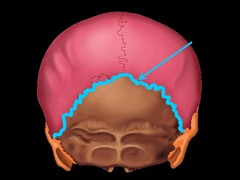
sutural bone
found between the flat bones of the skull
long bone
long and slender

seasmoid bones
round, flat, and small; usually found near joints

short bones
boxlike

irregular bones
complex shapes with short, flat, and notched surfaces

maxillae

palatine bones
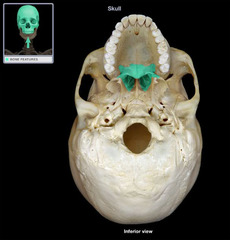
nasal bones

inferior nasal conchae

zygomatic bones
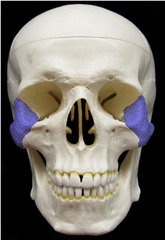
lacrimal bones
