Synthesis of Alkyl Halides

0.0(0)
Studied by 0 people
call kaiCall Kai
Locked
learnLearn
examPractice Test
spaced repetitionSpaced Repetition
heart puzzleMatch
flashcardsFlashcards
GameKnowt Play
Card Sorting

1/14

encourage image

There's no tags or description

Looks like no tags are added yet.

Last updated 1:25 AM on 7/9/26
Name
Mastery
Learn
Test
Matching
Spaced
Call with Kai
Chat

No analytics yet

Send a link to your students to track their progress

15 Terms

1
New cards

Alkyl Halide

an organic compound where one or more hydrogen atoms in an alkane (a saturated hydrocarbon) have been replaced by a halogen atom (fluorine, chlorine, bromine, or iodine).
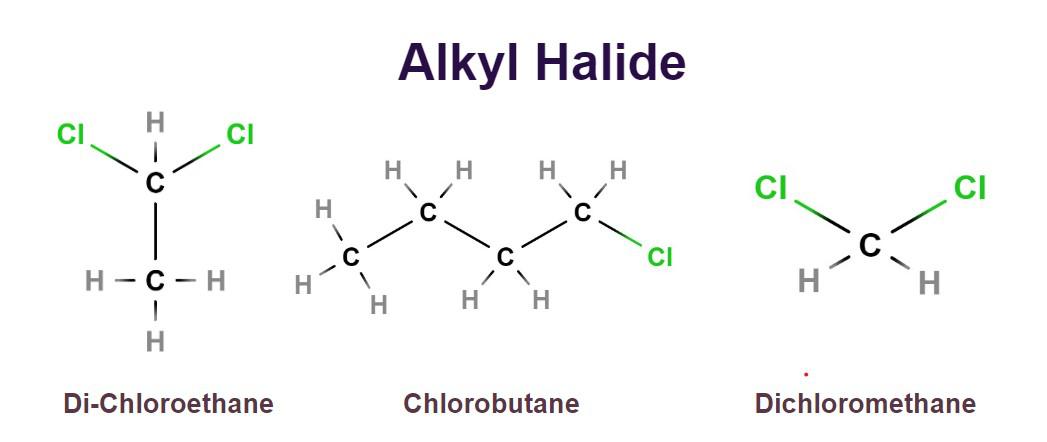
<p> an organic compound where one or more hydrogen atoms in an alkane (a saturated hydrocarbon) have been replaced by a halogen atom (fluorine, chlorine, bromine, or iodine).</p>
2
New cards

How do you make Alkyl Halides?

Synthesis simply means making a new compound. For alkyl halides, you're usually trying to make:

R–X. where X = Cl, Br, or I. There are several common ways to do this.

3
New cards

METHOD 1: From an Alkane (Radical Halogenation)

Starting material: Alkane Reagents: Cl₂, hν or Br₂, hν. Reaction: Replace one hydrogen with a halogen.
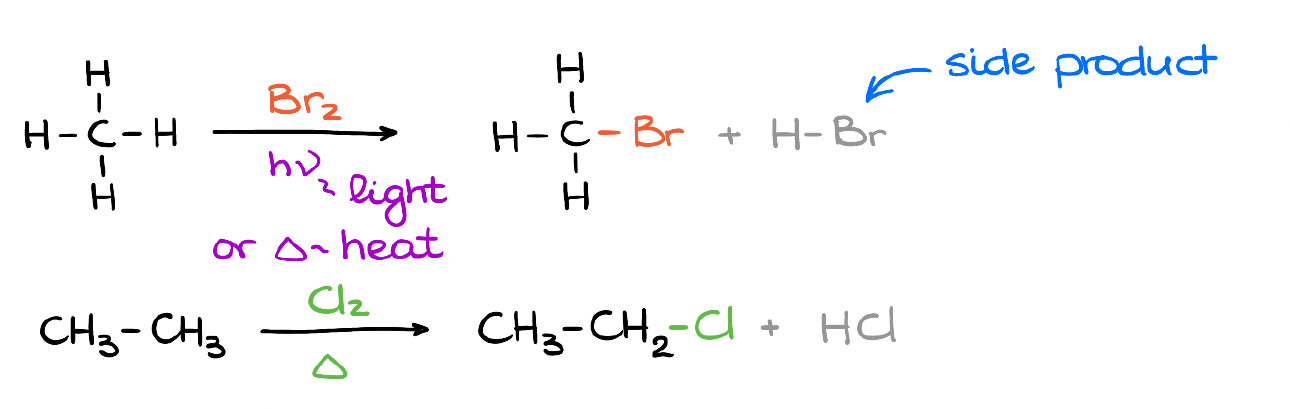
<p>Starting material: Alkane Reagents: <strong>Cl₂, hν</strong> <em>or </em><strong>Br₂, hν</strong>. Reaction: Replace one hydrogen with a halogen.</p>
4
New cards

METHOD 2: From an Alcohol

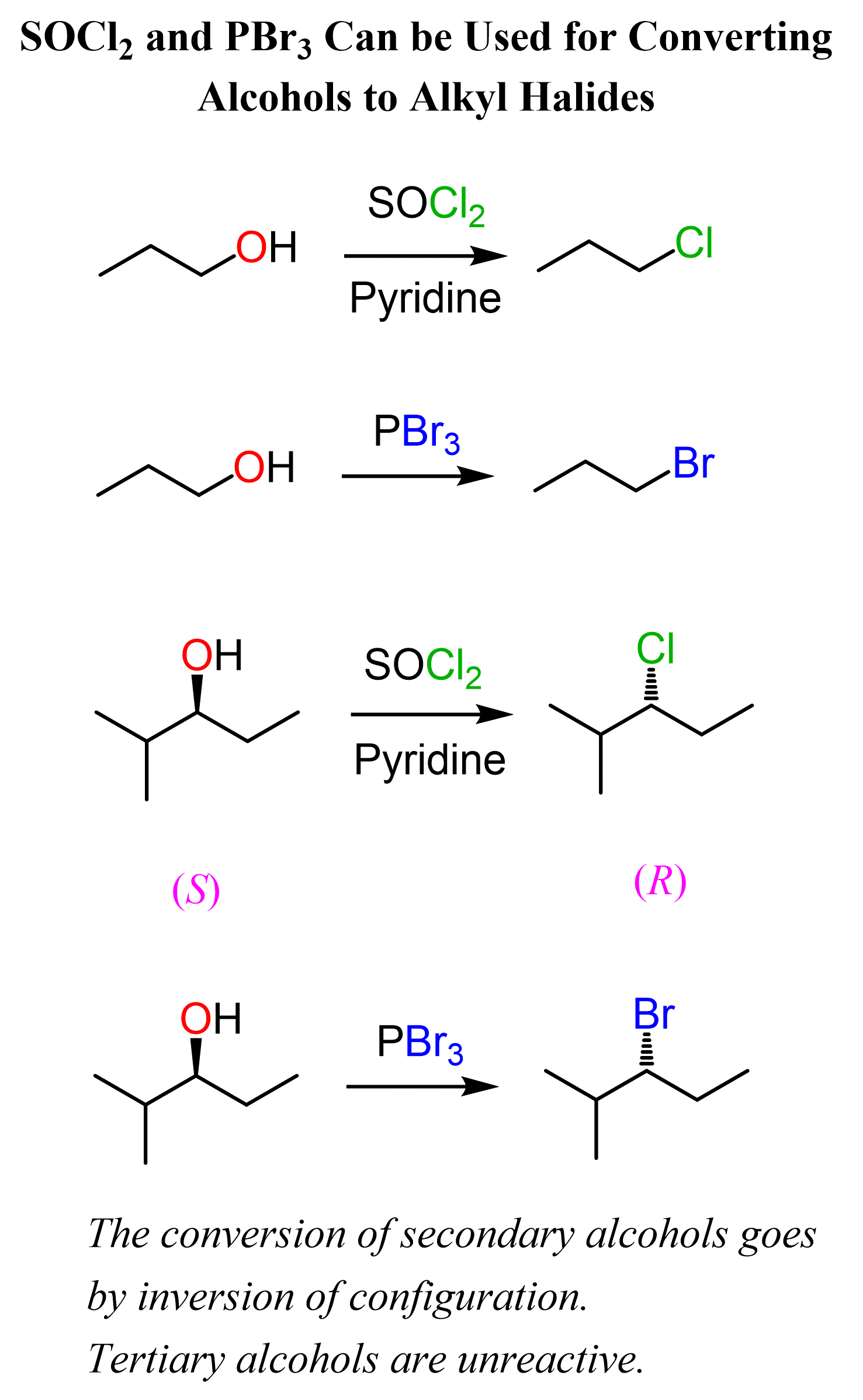
Alcohols contain: OH. Replace OH with a halogen. There are three common reagents:

  1. PBr₃

  2. SOCl₂

  3. HBr

<p>Alcohols contain: OH. Replace OH with a halogen. There are three common reagents:</p><ol><li><p>PBr₃</p></li><li><p>SOCl₂</p></li><li><p>HBr</p></li></ol><p></p>
5
New cards

PBr₃

Purpose: Replace OH with Br. PBr₃ = Put Br on the molecule.
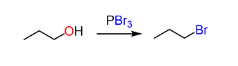
<p>Purpose: Replace OH with Br. <strong>PBr₃ = Put Br on the molecule.</strong></p>
6
New cards

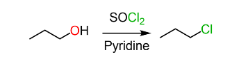
SOCl₂

Purpose: Replace OH with Cl

<p>Purpose: Replace OH with Cl</p>
7
New cards

HBr

Purpose: Also replaces OH with Br.
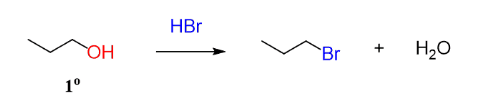
<p>Purpose: Also replaces OH with Br.</p>
8
New cards

NBS, hν

Starting molecule: CH2=CH-CH3 Product: CH2=CH-CH2Br

Notice:

Double bond stays.

Br goes next to the double bond.

9
New cards

3 different ways to add Bromine

All three put a bromine on the molecule, but they answer different questions:

  • NBS, hν → "Put Br next to a double bond."

  • HBr → "Add Br across a double bond (or replace OH under acidic conditions)."

  • PBr₃ → "Replace an OH with Br."

(see image)
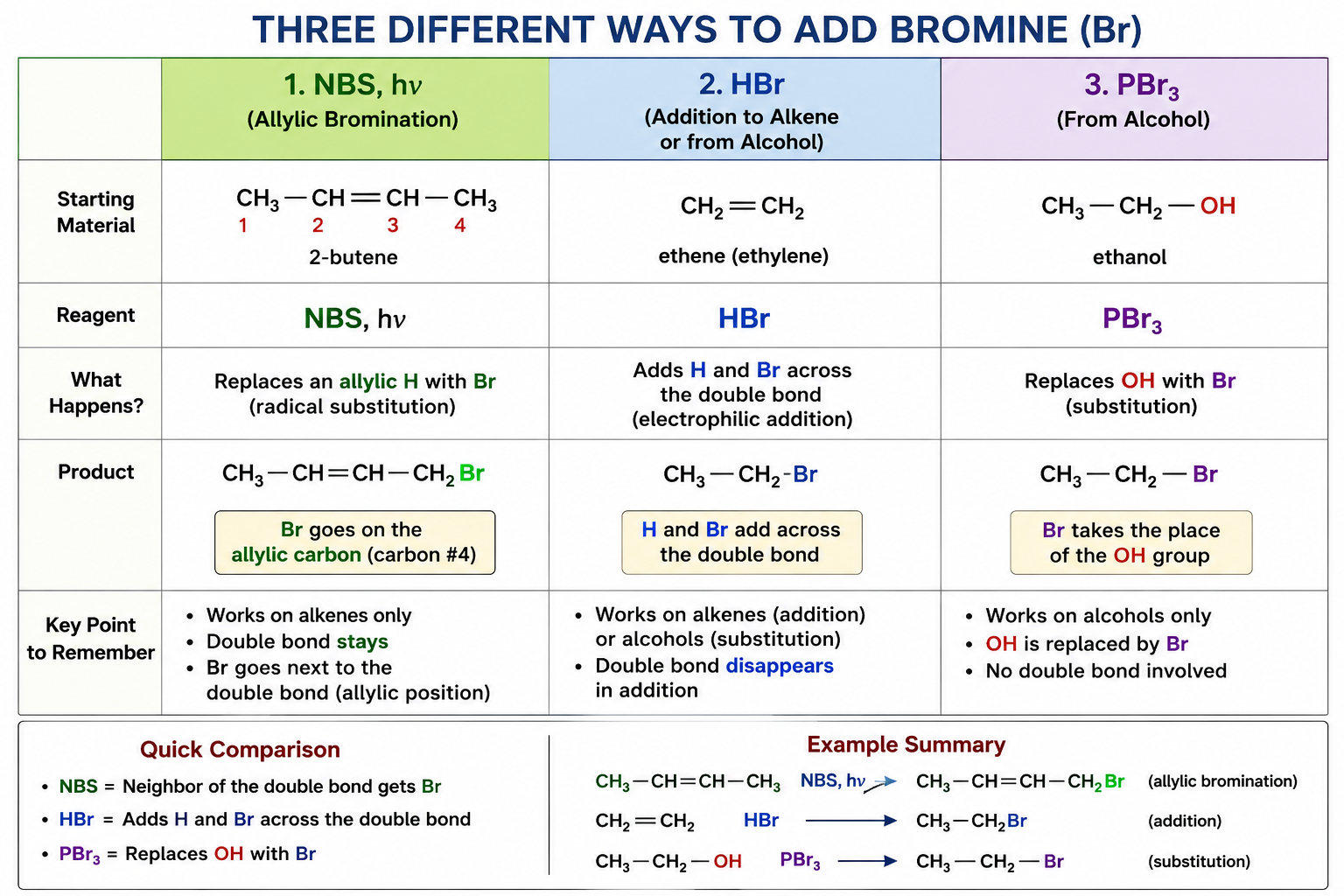
<p>All three <strong>put a bromine on the molecule</strong>, but they answer <strong>different questions</strong>:</p><ul><li><p><strong>NBS, hν</strong> → "Put Br <strong>next to a double bond</strong>."</p></li><li><p><strong>HBr</strong> → "Add Br <strong>across a double bond</strong> (or replace OH under acidic conditions)."</p></li><li><p><strong>PBr₃</strong> → "Replace an <strong>OH</strong> with Br."</p></li></ul><p>(see image)</p>
10
New cards

2 major types of Alkyl Halide Reactions

  1. Substitution

  2. Elimination

11
New cards

Substitution (Nucleophilic Substitution Reaction)

SN2: Replace halogen: R-Br —> R-OH, Br replaced by OH.

Nucleophile attacks carbon.

Halogen leaves.
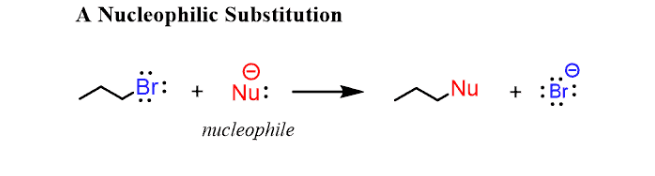
<p><strong>SN2</strong>: Replace halogen: R-Br —&gt; R-OH, Br replaced by OH.</p><p><strong>Nucleophile attacks carbon.</strong></p><p><strong>Halogen leaves.</strong></p>
12
New cards

Alkyl halide elimination

Remove H and Halogen —> Creates double bond —> Alkene
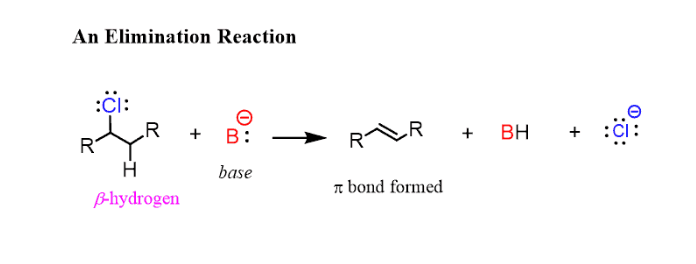
<p>Remove H and Halogen —&gt; Creates double bond —&gt; Alkene</p>
13
New cards

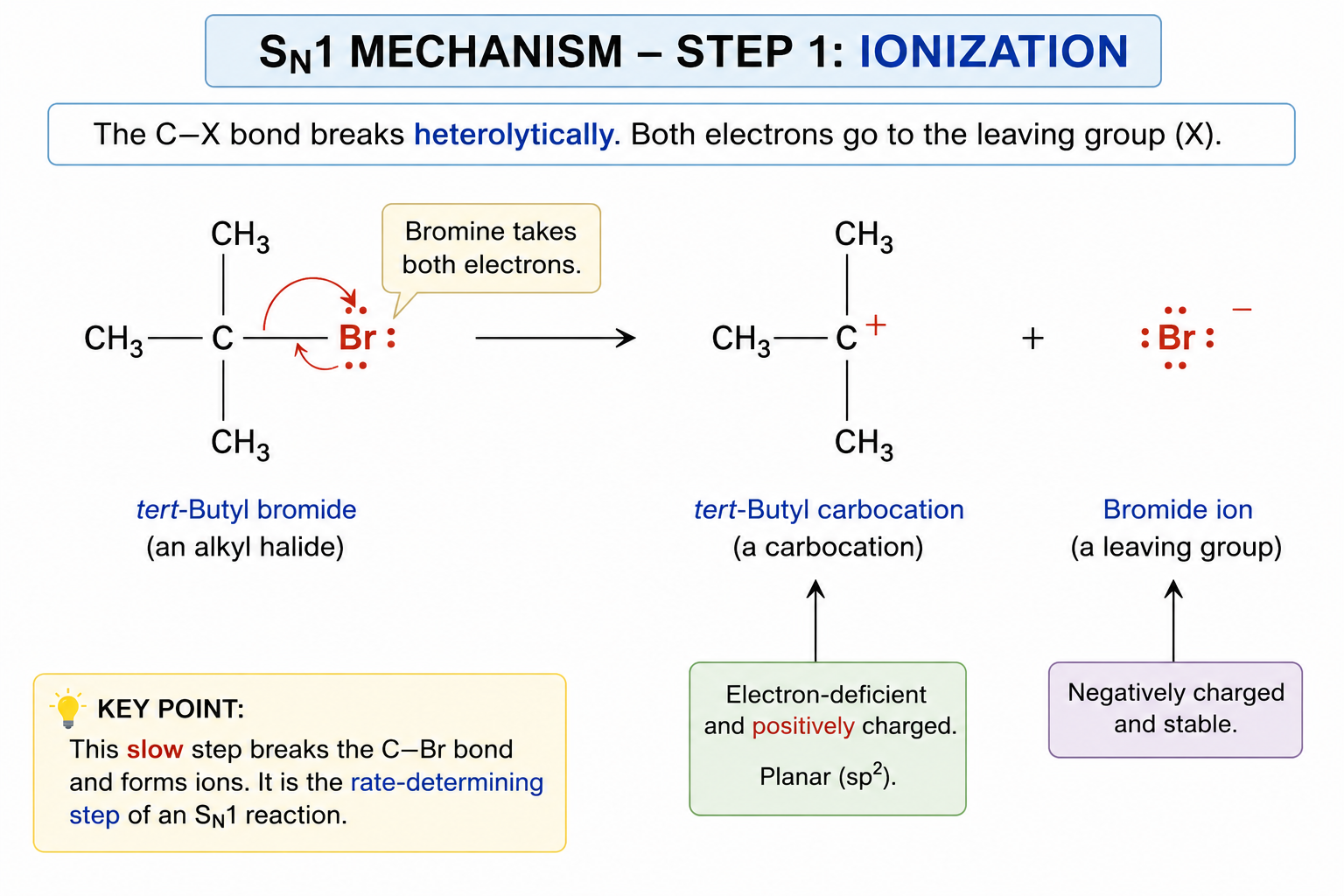
Ionization

The alkyl halide undergoes ionization first:

  • The leaving group (Br, Cl, or I) leaves first.

  • A carbocation forms.

  • This must be an SN1 or E1 mechanism

<p><u>The alkyl halide undergoes ionization first:</u></p><ul><li><p>The leaving group (Br, Cl, or I) leaves first.</p></li><li><p>A carbocation forms.</p></li><li><p>This must be an SN1 or E1 mechanism</p></li></ul><p></p>
14
New cards

SN1

Two step reaction

  • Substitution

  • Nucleophilic

  • Unimolecular

  • Two steps.

  • Step 1

  • Br leaves.

  • Makes carbocation.

  • Step 2

  • Nucleophile attacks.

Intermediate: Carbocation. SN1 likes: 3°, 2° (Ionization happens ONLY in SN1)
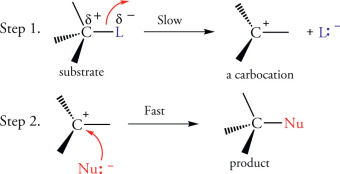
<p><strong><u>Two step reaction</u></strong></p><ul><li><p>Substitution</p></li><li><p>Nucleophilic</p></li><li><p><strong>Unimolecular</strong></p></li><li><p><strong>Two steps.</strong></p></li><li><p><strong>Step 1</strong></p></li><li><p><u>Br leaves.</u></p></li><li><p><u>Makes carbocation.</u></p></li><li><p><strong>Step 2</strong></p></li><li><p><u>Nucleophile attacks.</u></p></li></ul><p>Intermediate: Carbocation. SN1 likes: 3°, 2° (Ionization happens ONLY in SN1)</p>
15
New cards

SN2

One Step Reaction

  • Substitution

  • Nucleophilic

  • Bimolecular

  • One step.

  • Backside attack.

  • Everything happens at once.

  • Nucleophile attacks.

  • Leaving group leaves.

One transition state, No carbocation.
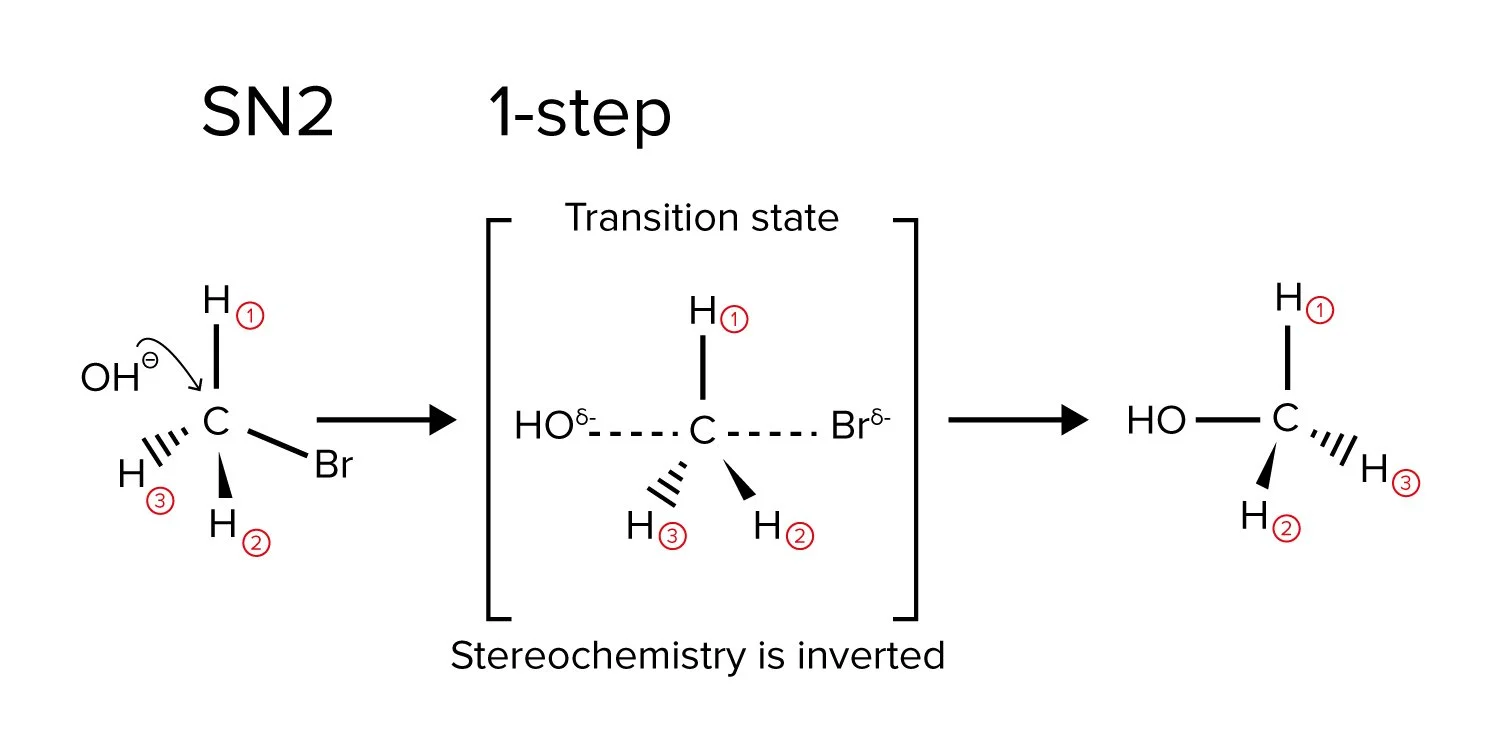
<p><strong><u>One Step Reaction</u></strong></p><ul><li><p>Substitution</p></li><li><p>Nucleophilic</p></li><li><p><strong>Bimolecular</strong></p></li><li><p><strong>One step.</strong></p></li><li><p>Backside attack.</p></li><li><p>Everything happens at once.</p></li><li><p>Nucleophile attacks.</p></li><li><p>Leaving group leaves.</p></li></ul><p>One transition state, No carbocation.</p>