MATHS
 Call Kai
 Learn
Learn Practice Test
 Spaced Repetition
 Match
Match Flashcards
 Knowt Play
1/42

There's no tags or description
Looks like no tags are added yet.
Name | Mastery | Learn | Test | Matching | Spaced | Call with Kai | Chat |
|---|
No analytics yet
Send a link to your students to track their progress
43 Terms
Population
the group of subjects the researcher would like information about
What is a Sample?
a subset (smaller group) of that population.
What is the difference between a survey and poll?
A poll is easy to answer because it just has one question, which can be multi-choice or open-ended (not often).
A survey asks multiple questions and sometimes personal details are collected
a survey takes longer to answer, but gives more in depth results
What is an Experimental Study?
A study where the researchers intervene, then measure the response to that intervention
What type of language/words are used in an Observational study?
suggestive words are used (can’t make a causal claim do to the lack of intervention)
What type of words/language is used in an Experimental Study?
more formal language
can be more precise with your claim HOWEVER you can never be 100% certain (“I am 95% certain that….”)
What is an Explanatory Variable
the variable that is controlled in the experimental study
used to predict a change in the response variable
goes on the x axis
What is a Response Variable?
the variable that is influenced (the measured outcome or result in a study that changes in response to another factor)
goes on the y-axis
What is a Causal Claim?
The conclusion that one variable affects the other
What is a Sampling Error?
the natural variation between samples drawn from the same population
not a human mistake
it is unavoidable
the smaller the sample size, the higher the possibility of a sampling error (less representation)
measured using the MOE and represented with a confidence interval
What is a Sample Frame?
the list of subjects that the sample is taken from
similar to the population
e.g
Target Population: People who regularly buy running shoes.
Sampling Frame: A rewards program database containing the email addresses of customers who bought running shoes in the last 12 months.
What is a Sampling Method?
the technique a researcher uses to choose a smaller group of people or items out of a larger group to study.
What does the sampling method “Simple Random Sample” involve?
number the elements within the sample frame, then pick them using a random number generator
won’t have non-sampling errors when done correctly
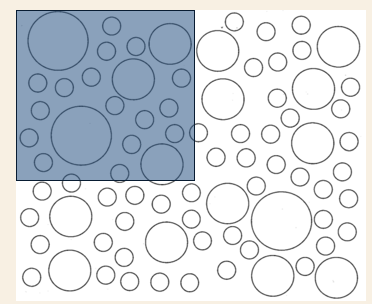
What does the sampling method “Simple Stratified Sample” involve?
stratified sample has the same proportion as the population.
won’t have non-sampling errors when done correctly
e.g.
diameter of a circle. You should have the same proportion of small, medium and large circles in the sample as in the population
What does the sampling method “Systematic Method” involve?
Involves selecting members from a larger population at regular, fixed intervals after a random starting point
valid sampling method, with a potential non-sampling error
e.g.
pick a number (10) and pick every 10th element of the sample frame until you have a large enough sample
What does the sampling method “Clustering” involve?
Involves dividing a whole population into smaller, distinct groups, and then randomly selecting some of them to study. (takes a “chunk” out of the population)
can be valid, but often has non-sampling errors
e.g.
A department store chain wants to test a new product layout. They randomly pick 5 specific store branches (clusters) out of 100 nationwide and track every customer purchase in those stores.
What does the sampling method “Person in the Street” involve?
Involves interviewing random passersby in public locations without using a formal or scientific selection process
minority of opinions are overrepresented (they classify one person’s opinion as everyone’s)
interviews are done in the same locations and at the same times, which means that you get the same type of people every time, not a variety
invalid sampling method
What does the sampling method “Self-Selected” involve?
subject chose to participate themselves, often have a strong opinion
worst type of sampling
e.g.
a morning news programme just did a segment on school uniforms and viewers are asked to text, call or email with their opinions on school uniform.
only those who were watching and care enough, will be in the sample.
OBSERVATIONAL STUDIES
Sample Frame
small part of the actual population
should ideally be exactly the same as the population
e.g.
the population is all eligible voters (don’t have a list of them) but the sample frame is all registered voters (have a list)
OBSERVATIONAL STUDIES
Response Rate
non-sampling error is non-response bias
people might not respond due to strong/controversial opinions and don’t want to be judged, therefore they decide to not participate.
OBSERVATIONAL STUDIES
Question Effects
non-sampling error is a question effect
this is when the wording of a question influences the response
often done deliberately because they are interested in a particular result
e.g.
Do you thing wealthy landlords should pay tax on their properties?
Do you think that homeowners should pay more tax for being successful?
Do you support capital gains tax on property?
First two influence the responder’s opinion.
OBSERVATIONAL STUDIES
Types of Question Effects
Double Barreled Questions: ask two conflicting questions at once (Did you study for the test and do you think you did well?)
Value Judgements: use emotional words (are you going to study for this boring topic?)
Leading Questions: state an opinion then ask if the respondent agrees (only a sweat would’ve passed that test. How did you find it?)
Incriminating Questions: makes the responder want to lie (did you cheat on the test?)
Double Negatives: unnecessarily confusing (Do you agree that it’s a bad idea to not study for this topic?)
Limited Choices: prevent truthful response (Do you think you got Achieved, Merit or Excellence for the test?)
Unknowable Questions: prevent truthful response (What grade will you get for the test tomorrow?)
EXPERIMENTAL STUDIES
involves intervention
this allows them to establish causality
start by randomly allocating subjects to one of two groups (Control - no intervention and Treatment - intervention)
Intervention is a change in explanatory variable (should be easy to measure and manipulate)
look for a change in the response variable which is caused by the intervention
if the change in response variable is significantly different int he treatment group (intervention) than the control group (no intervention) you could claim that the explanatory variable causes the response to change
EXPERIMENTAL STUDIES
Blinding
Single-blind study: prevents the subjects from knowing which group they are in
double-blind study: blinds the researchers and participants
subjects responding just because they think they are receiving an intervention is called the placebo effect.
to prevent this, a single-blind study gives both groups an intervention, but one is fake - a placebo
e.g.
in a drug test the placebo is usually a sugar pill that looks identical to the real drug.
EXPERIMENTAL STUDIES
Lurking Variables
the change in the response could be caused by another variable, such as a lurking variable
not considered in a study
e.g.
ice cream sales and drownings are positively correlated (both increase during summer months) but there is no causal link because they are both response variables to the lurking variable of temperature.
EXPERIMENTAL STUDIES
Cofounding Variables
the change in the response could be caused by another variable, such as a cofounding variable
it is considered in the study but not credited as the cause of the change
e.g.
ice cream sales and drownings are positively correlated (both increase during summer months) but there is no causal link. The amount of time spent swimming also influences the number of drownings, so it is the cofounding variable as it is considered but not credited . Other cofounding variables are fitness, water conditions, number of lifeguards etc.
EXPERIMENTAL STUDIES
Design Principles
a randomized experiment randomly allocates subjects to the two groups to minimize the impact of cofounding variables
this maximizes the chance of the two groups being homogenous (similar characteristics) so cofounding variables are evenly distributed between groups
experiment should not cause harm, otherwise it is unethical.
EXPERIMENTAL STUDIES
Paired Comparison
another way of testing causality
instead of having two groups there is one (representative) group who are measured or surveyed twice. before and after the treatment
if the group doesn’t change, it is homogenous and the only difference is the treatment.
MARGIN OF ERROR
Basics
sampling error is the natural variation from sample to sample (not made by researchers)
sampling error is represented by a margin of error (MOE)
it is exclusively determined by the sample size.
MOE is how much the result might differ from the actual value of the whole population
there is often a 95% confidence level
population result can be x% more or less that the poll result

MARGIN OF ERROR 71
How is MOE calculated?

Experimental studies have 2 groups, what are they called and which one receives the intervention?
treatment - receives intervention
control - no intervention
What is the difference between Experimental and Observational studies?
experimental studies, intervention from the researchers
observational studies, results are simply observed and recorded
What does an Experimental Study involve?
INTERVENTION from the researchers
What is the purpose of an Experimental Study?
to establish a clear cause-and-effect relationship between variables by actively manipulating one factor to observe its impact on another
compare control and treatment group results
On which axis does the Response Variable go?
y-axis
→ it needs to change (higher or lower) so needs to be able to move up and down, not sideways
On which axis does the Explanatory Variable go?
x-axis
(EXplanatory)
→ influence response variable, therefore there needs to be MORE or LESS, so moves sideways (x-axis)
In which study(ies) can you make a causal claim?
can only be made from an experimental study between similar groups
done by randomizing the groups to make them as similar as possible then giving one an intervention, so that it’s the only difference between them
if the change is large enough, researchers will make a claim
can’t be done in observational studies
Is a Sampling Error a human mistake?
no
If the sample size increases, does the possibility of a Sampling Error increase or decrease?
decrease
What is a Non-Sampling Error?
a non-sampling error is the inaccuracy within a sample that is caused by poor data collection. they are avoidable
Which sampling methods are invalid and why?
person in the street: one opinion from each type of viewpoint is used to show the total range, rather than consider the number of people who have these opinions. This means that minority opinions are again overrepresented.
Self-selected: subjects willingly choose to participate. Inaccurate population because only those who care enough will participate and be in the population.