Ch. 23 LEC - Digestive System
 Call Kai
 Learn
Learn Practice Test
 Spaced Repetition
 Match
Match Flashcards
 Knowt Play
1/82

Earn XP
Description and Tags
Lecture Exam 4
Name | Mastery | Learn | Test | Matching | Spaced | Call with Kai | Chat |
|---|
No analytics yet
Send a link to your students to track their progress
83 Terms
the digestive system has [NUMBER] groups of organs: the [FIRST GROUP] and the [SECOND GROUP] digestive organs
2, alimentary canal (gastrointestinal or GI tract), accessory
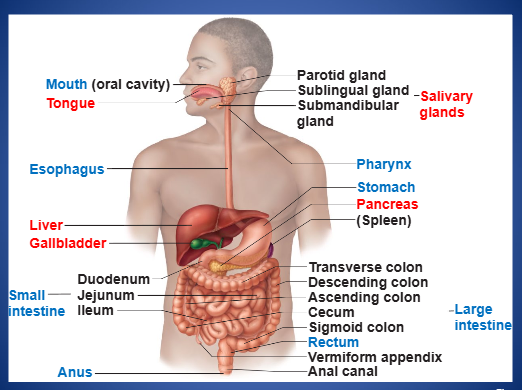
name the organs that make up the alimentary canal (gastrointestinal or GI tract)
mouth, pharynx, esophagus, stomach, small intestine, large intestine, rectum, anus
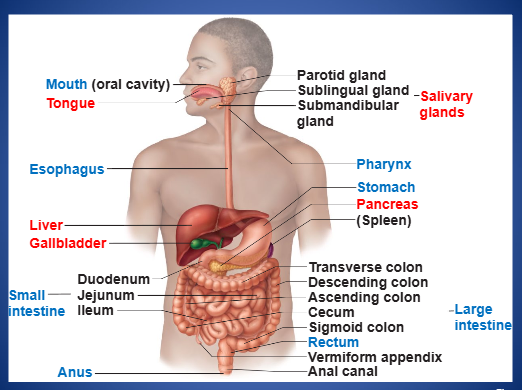
name the organs that make up the accessory digestive organs
teeth, tongue, gallbladder
digestive glands
salivary glands
liver
pancreas
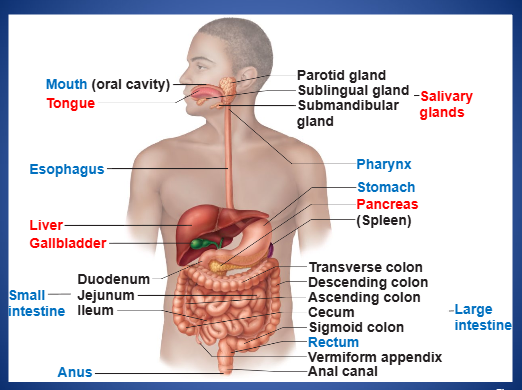
in chronological order, list the 6 essential activities of the digestive process
ingestion
propulsion
mechanical digestion
chemical digestion
absorption
defecation
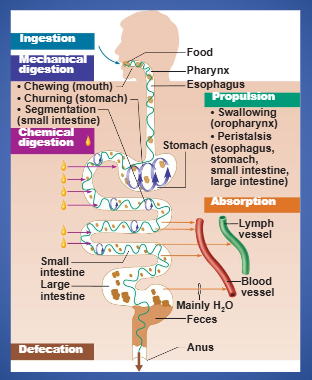
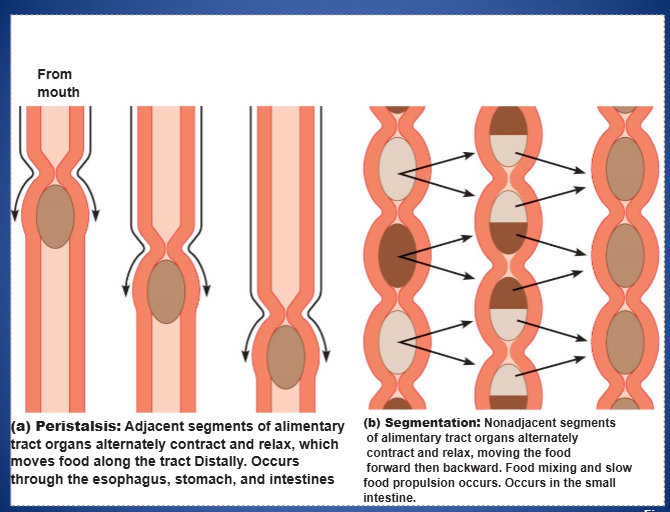
describe peristalsis, the goal of peristalsis, and the locations where it occurs
segments of alimentary tract organs alternately contract and relax;
GOAL: to move food along the tract distally
LOCATIONS: esophagus, stomach, intestines
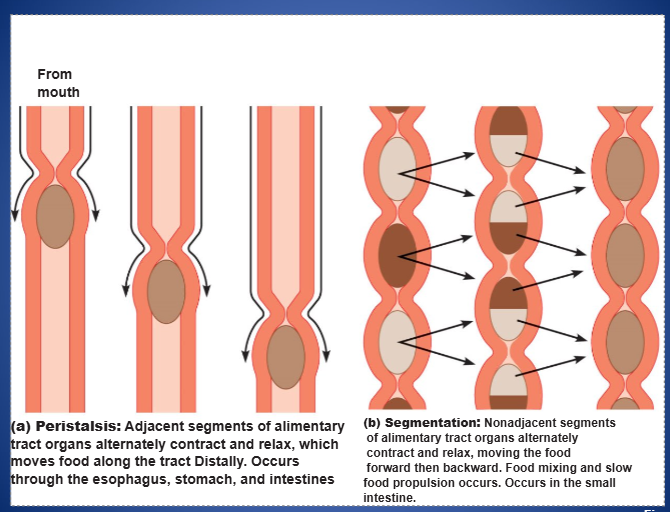
describe segmentation, the goal of segmentation, and the locations where it occurs
segments of alimentary tract organs alternately contract and relax;
GOAL: to move food forward and backward so that food mixes together
LOCATIONS: small intestine
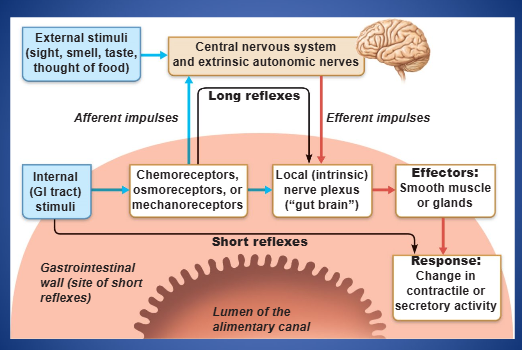
list the 2 main GI tract regulatory mechanisms
mechanoreceptors and chemoreceptors
intrinsic and extrinsic controls
what does the GI tract’s mechanoreceptors and chemoreceptors respond to?
stretch in the GI tract
changes in osmolarity
changes in pH
the presence of substrate and end products of digestion
what reflexes do the GI tract’s mechanoreceptors and chemoreceptors initiate?
activate/inhibit digestive glands
stimulate smooth muscle to mix and move lumen contents
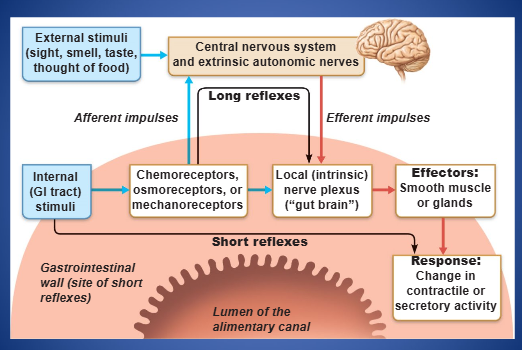
define “enteric nervous system” (enteric nerve plexus)
a network of neurons in the walls of the GI tract; operates semi-autonomously to regulate digestion, local blood flow, and immunity
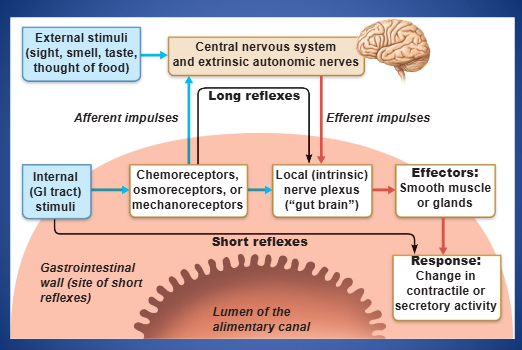
GI tract regulatory mechanism: intrinsic and extrinsic controls
[GUT BRAIN] initiate [SHORT/LONG] reflexes in response to stimuli in the [BRAIN/GI TRACT]
[SHORT/LONG] reflexes in response to stimuli inside or outside the GI tract involve [CNS/PNS] centers and autonomic nerves
[CHEMICAL MESSENGERS] from cells in the [GI TRACT ORGAN] and small intestine stimulate target cells in the same or different organs
enteric nerve plexuses, short, GI tract, long, CNS, hormones, stomach
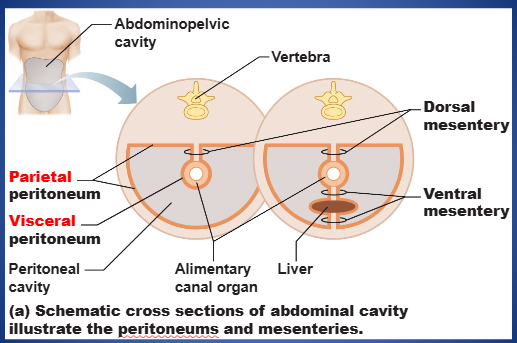
define “peritoneal cavity”
fluid-filled space inside the abdomen; the fluid acts as a frictionless lubricant that allows digestive organs to expand, contract, and slide; between the 2 peritoneum
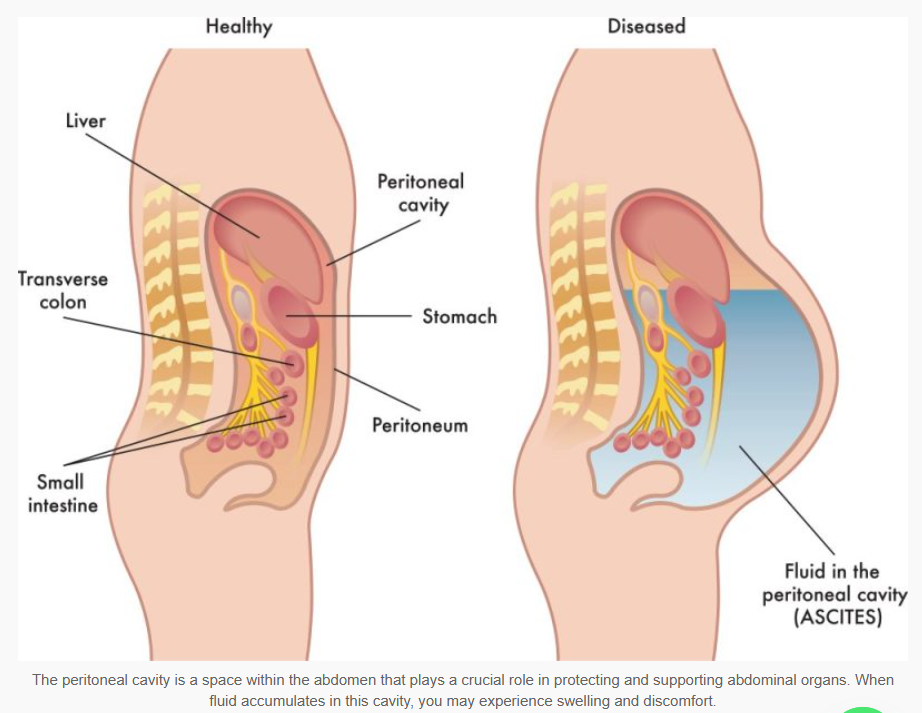
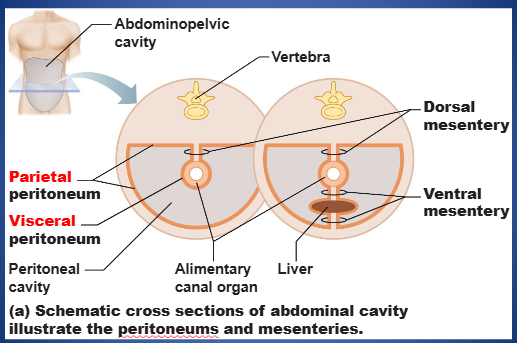
define peritoneum
2-layered serous membrane of the abdominal cavity
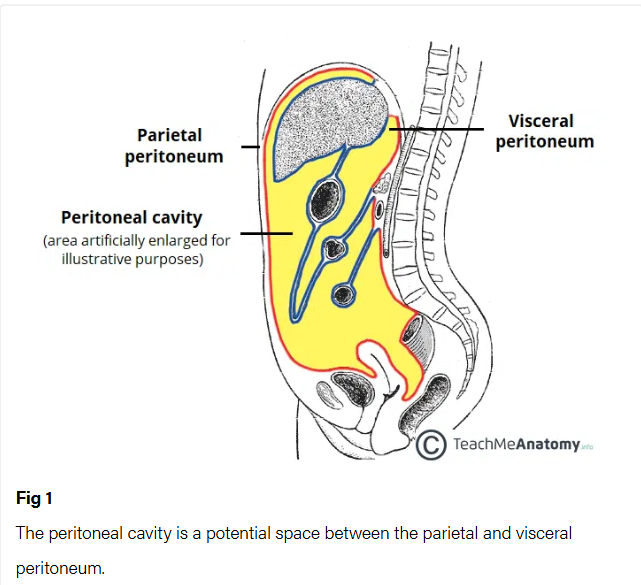
![<p>[VISCERAL/PARIETAL] peritoneum is on the external surfaces of most digestive organs</p>](https://assets.knowt.com/user-attachments/91bb27c8-ec0a-47a5-8190-d8f488315f08.png)
[VISCERAL/PARIETAL] peritoneum is on the external surfaces of most digestive organs
visceral
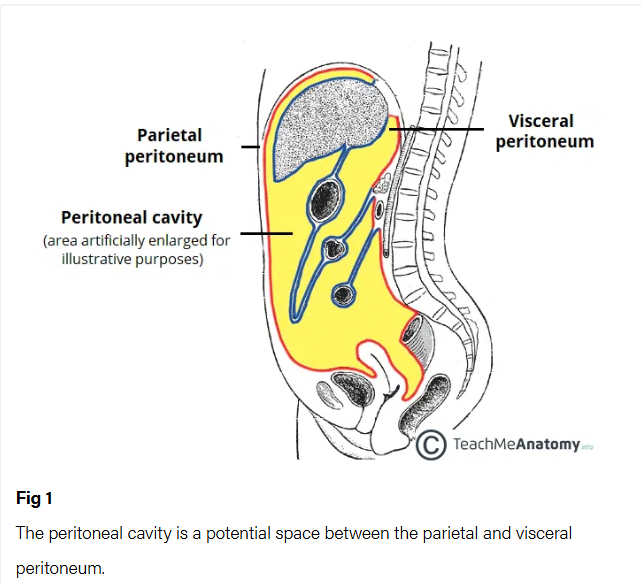
![<p>[VISCERAL/PARIETAL] peritoneum lines the body wall</p>](https://assets.knowt.com/user-attachments/3b0b19c0-39ec-4416-a8d7-ecd04008fe28.png)
[VISCERAL/PARIETAL] peritoneum lines the body wall
parietal
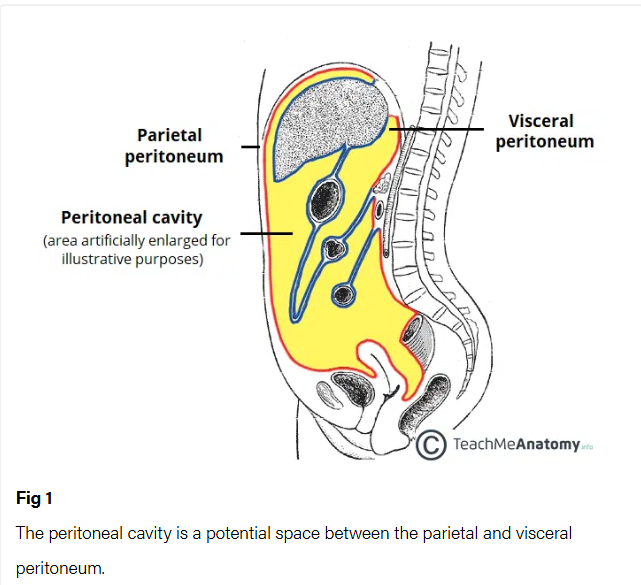
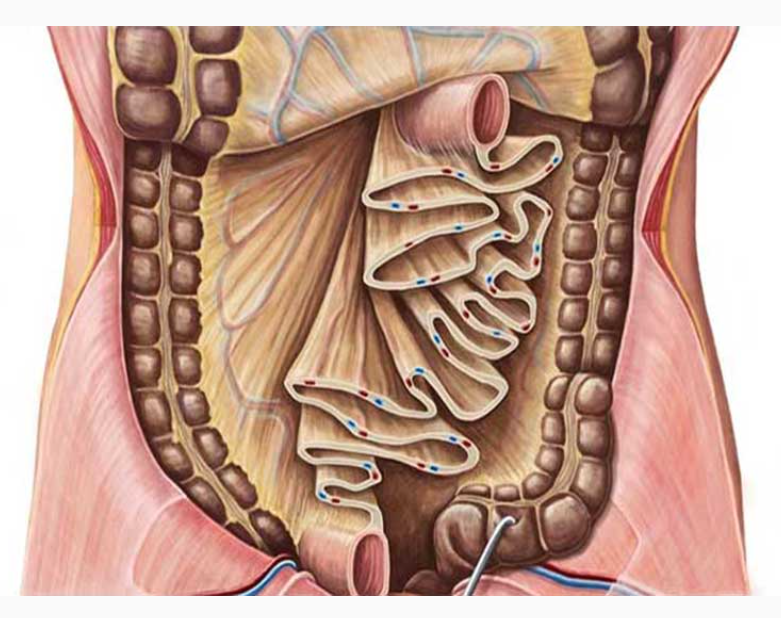
define mesentery
a double layer of peritoneum that anchors the GI organs (i.e., small and large intestines) to the posterior abdomen; it contains blood vessels, lymphatics, and nerves; stores fat
identify the functions of the hepatic portal circulation
drains nutrient-rich blood from digestive organs
delivers it to the liver for processing
histology of the alimentary canal (GI tract):
4 basic layers (tunics):
[DEEPEST]
[ ]
[ ]
[MOST SUPERFICIAL]
mucosa, submucosa, muscularis externa, serosa
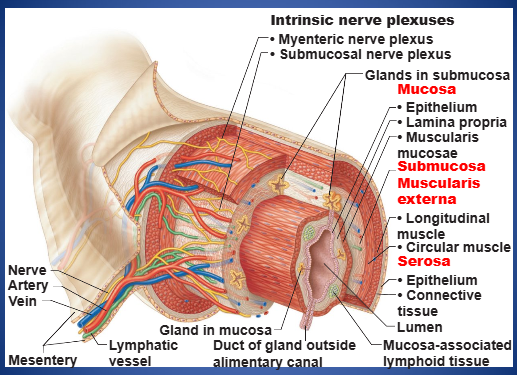
list the functions of the mucosa tunic (of the GI tract)
secretes mucus, digestive enzymes, hormones
absorbs end-products of digestion
protects against infectious disease
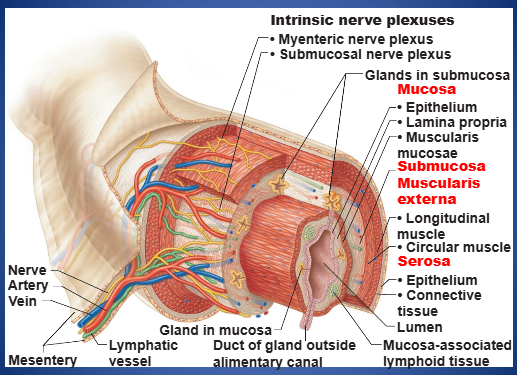
name the 3 sublayers of the mucosa tunic
epithelium, lamina propria, and muscularis mucosae
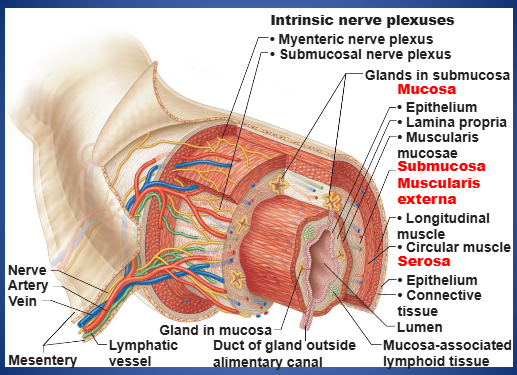
describe the specific histology and functions of the epithelium layer of the mucosa tunic
HISTOLOGY: simple columnar epithelium
FUNCTIONS:
secretes mucus: protects digestive organs from enzymes and eases food passage
sometimes secretes enzymes and hormones (in stomach and small intestine)
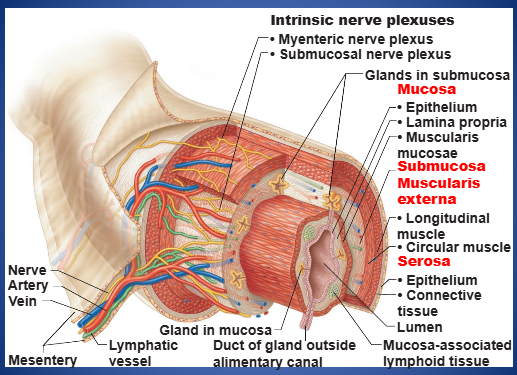
describe the specific histology and functions of the lamina propria layer of the mucosa tunic
HISTOLOGY: connective tissue, capillaries, lymphoid follicles
FUNCTIONS: supports epithelium, provide nutrients and oxygen, immune defense
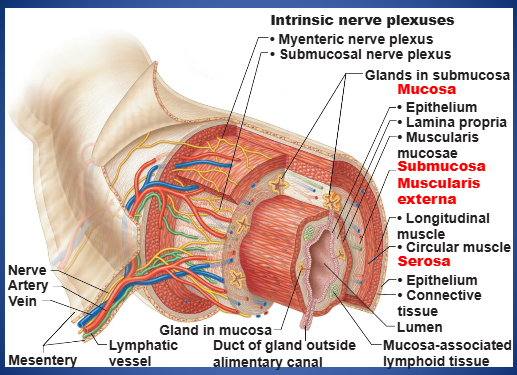
describe the specific histology and functions of the muscularis mucosae layer of the mucosa tunic
HISTOLOGY: smooth muscle
FUNCTIONS: produces local movements of mucosa to move substances along the tract
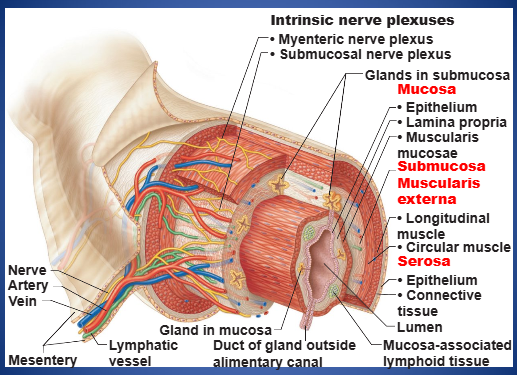
describe the specific histology of the submucosa tunic (of the GI tract)
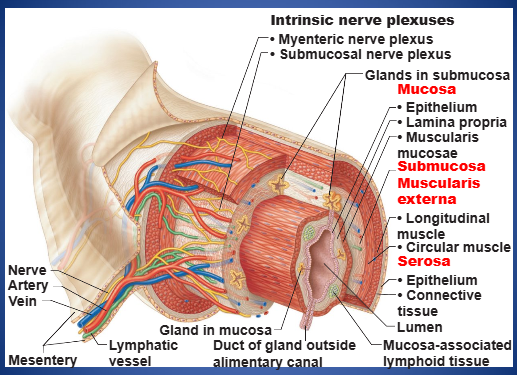
dense connective tissue, blood, lymphatic vessels, lymphoid follicles, and submucosal nerve plexus
muscularis externa tunic of the GI tract:
responsible for [MOVEMENT AND MIXING OF FOOD] and [MOVEMENT OF FOOD]
inner circular and outer longitudinal layers
myenteric nerve plexus
sphincters in some regions
segmentation, peristalsis
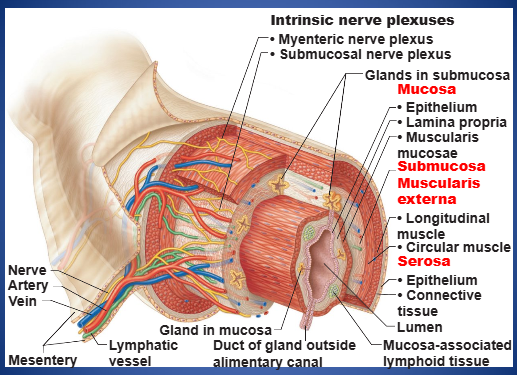
name the 2 nerve plexuses of the enteric nervous system
submucosal and myenteric
identify the function of the submucosal nerve plexus
regulates glands and smooth muscle in the mucosa
identify the function of the myenteric nerve plexus
controls GI tract motility
enteric nervous system:
linked to the [CNS/PNS] via [EFFERENT/AFFERENT] visceral fibers
long ANS fibers synapse with enteric plexuses
[SYMPATHETIC/PARASYMPATHETIC] impulses inhibit secretion and motility
[SYMPATHETIC/PARASYMPATHETIC] impulses stimulate secretion and motility
CNS, afferent, sympathetic, parasympathetic
list the functions of saliva
cleanse the mouth
moisten and dissolve food chemicals
aids in bolus formation
contains enzymes that begin the breakdown of starch (e.g., amylase, lipase)
name the types of cells that secrete saliva
serous and mucous cells
saliva is [NUMBER RANGE] % water, but is a slightly acidic solution containing [TERM] (Na+, K+, Cl-, PO4 2-, HCO3-), salivary [ENZYME] and lingual [ENZYME], mucin, metabolic wastes (urea and uric acid), and lysozyme (to neutralize some harmful bacteria in the mouth)
97-99.5, electrolytes, amylase, lipase
[INTRINSIC/EXTRINSIC] glands continuously keep the mouth moist with saliva. [INTRINSIC/EXTRINSIC] glands produce secretions when ingested food stimulates [RECEPTOR TYPES] in the mouth
intrinsic, extrinsic, chemoreceptors and mechanoreceptors
true/false: extrinsic salivary glands produce secretions when salivatory nuclei in the brain stem send impulses along sympathetic fibers in cranial nerves VII and IX
false — extrinsic salivary glands produce secretions when salivatory nuclei in the brain stem send impulses along parasympathetic fibers in cranial nerves VII and IX
what results in xerostomia?
strong sympathetic stimulation inhibits salivation
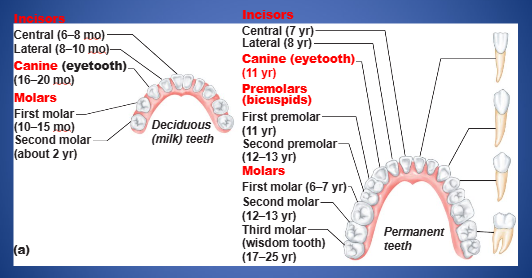
name the class of teeth that best fits this description: chisel-shaped for cutting
incisors
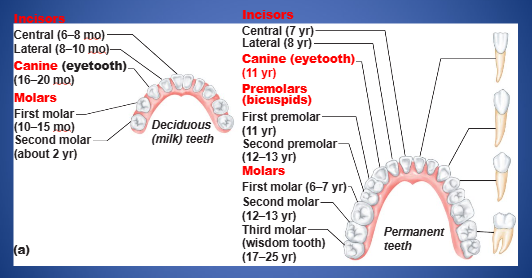
name the class of teeth that best fits this description: fang-like teeth that tear or pierce
canines
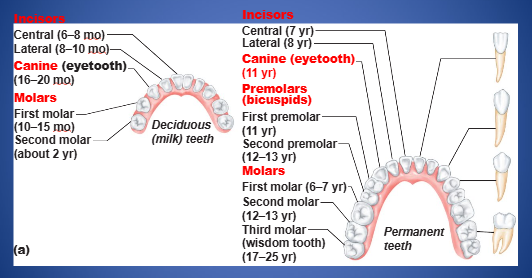
name the class of teeth that best fits this description: have broad crowns with round cusps for grinding or crushing
premolars (bicuspids) and molars
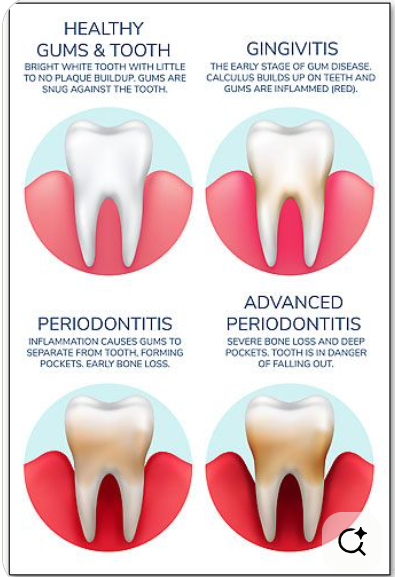
name the tooth/gum disease that fits this description:
gradual demineralization of enamel and dentin
dental plaque (sugar, bacteria, debris) adheres to teeth
acid from bacteria dissolves calcium salts
proteolytic enzymes digest organic matter
dental caries (cavities)
what are the preventative measures against dental caries (cavities)?
daily flossing and brushing
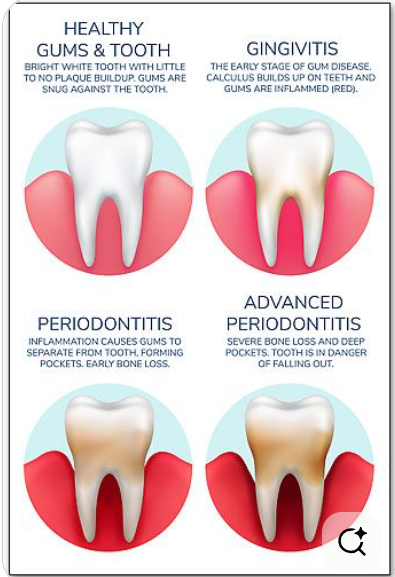
name the tooth/gum disease that fits this description:
plaque calcifies to form calculus (tartar)
calculus disrupts the seal between the gingivae (gum) and teeth
anaerobic bacteria infect gums
infection is reversible if calculus is removed
gingivitis
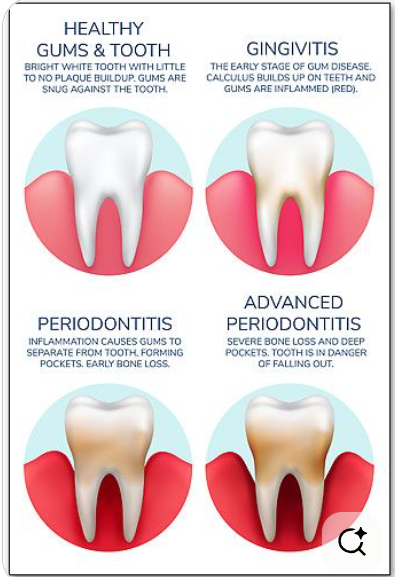
name the tooth/gum disease that fits this description:
immune cells attack intruders and body tissues
destroy periodontal ligament
activate osteoclasts
consequences
possible tooth loss
promotion of atherosclerosis and clot formation in coronary and cerebral arteries
periodontitis
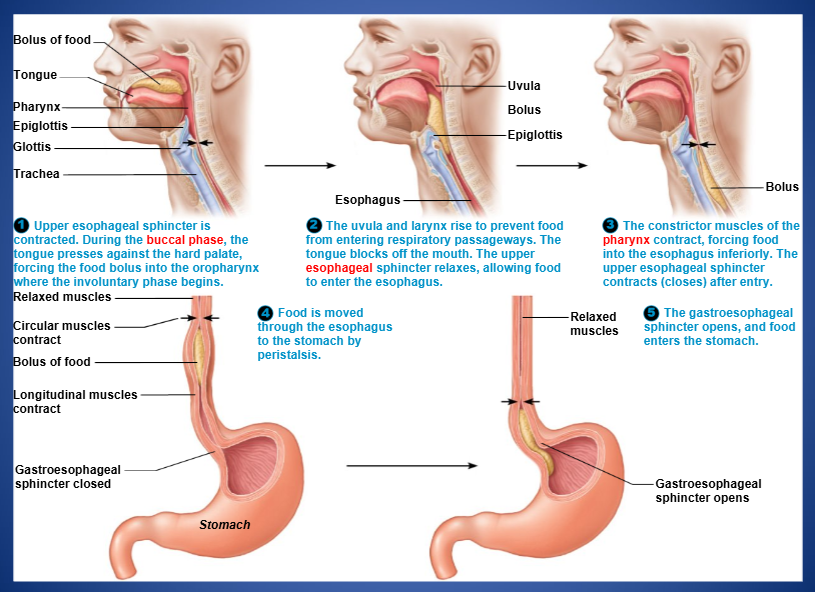
name the digestive processes that occur in the mouth
ingestion, mechanical digestion (mastication), chemical digestion (salivary amylase and lingual lipase), propulsion (deglutition, swallowing)
true/false: deglutition involves the stomach, small intestine, large intestine, and rectum
false — deglutition involves the tongue, soft palate, pharynx, esophagus, and 22 muscle groups
there are 2 phases of deglutition: first, the [NAME] phase (the [VOLUNTARY/INVOLUNTARY] contraction of the tongue). second, the [NAME] phase (the [VOLUNTARY/INVOLUNTARY] movement led by the control center in the medulla and lower pons)
buccal, voluntary, pharyngeal-esophageal, involuntary
true/false: the stomach receives innervation from the parasympathetic nervous system only
false — the stomach receives innervation from both the parasympathetic and sympathetic nervous systems
the stomach receives its SYMPATHETIC ANS nerve supply via _
splanchnic nerves and celiac plexus
the stomach receives its PARASYMPATHETIC ANS nerve supply via _
vagus nerve
where does the stomach receive its blood supply from?
the celiac trunk and veins of the hepatic portal system
the stomach is unique out of all the GI organs because it has modified _ and _ tunics
mucosa, mucularis
the stomach’s muscularis externa tunic has [NUMBER] layers of smooth muscle. the [LAYER NAME] allows the stomach to churn, mix, move, and physically break down food
3, inner oblique layer
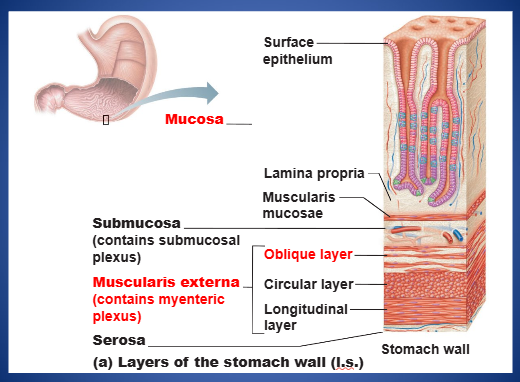
![<p>the stomach’s mucosa tunica is composed of [TYPE] epithelium composed of mucous cells. the layer of mucus traps bicarbonate-rich fluid beneath it. gastric pits lead into gastric glands</p>](https://assets.knowt.com/user-attachments/e4f22c54-817c-49c7-891d-8b2af0a942e8.png)
the stomach’s mucosa tunica is composed of [TYPE] epithelium composed of mucous cells. the layer of mucus traps bicarbonate-rich fluid beneath it. gastric pits lead into gastric glands
simple columnar
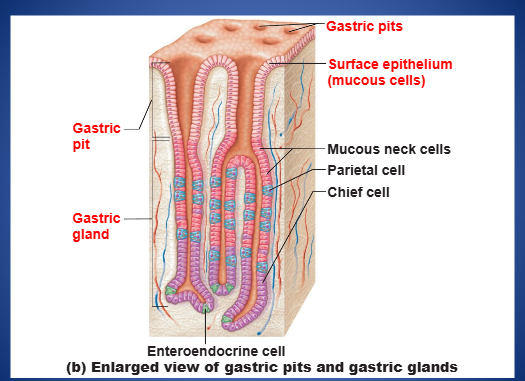
name the 4 cell types found in gatric glands
mucous neck cells (secrete thin, acidic mucus), parietal cells, chief cells, enteroendocrine cells (secretes hormones)
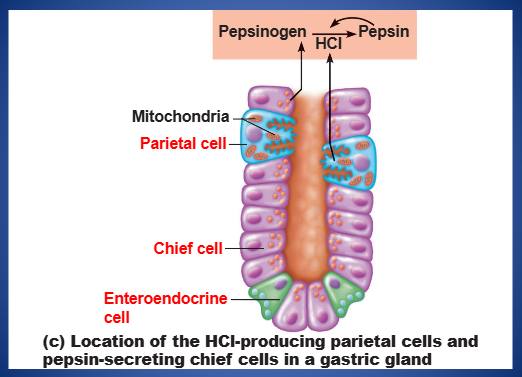
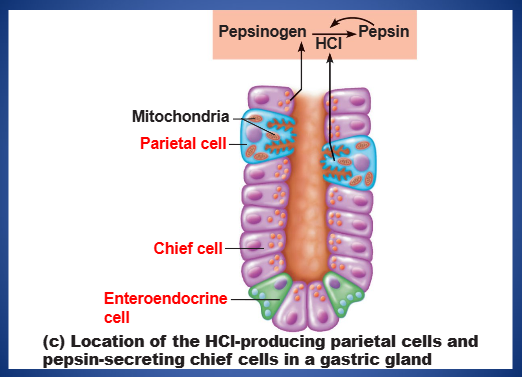
name the cell type found in the gastric glands that secrete:
HCl
lowers the pH to 1.5-3.5, which denatures protein in food, activates pepsin, and kills many bacteria
intrinsic factor
glycoprotein required for absorption of vitamin B12 in small intestine
parietal cell
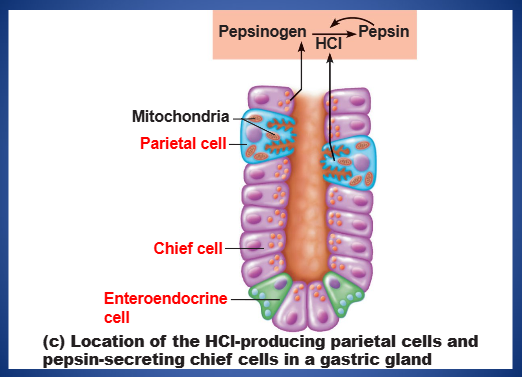
name the cell type found in the gastric glands that secrete:
inactive enzyme pepsinogen
activated to pepsin by HCl and by pepsin itself (a positive feedback mechanism)
chief cell
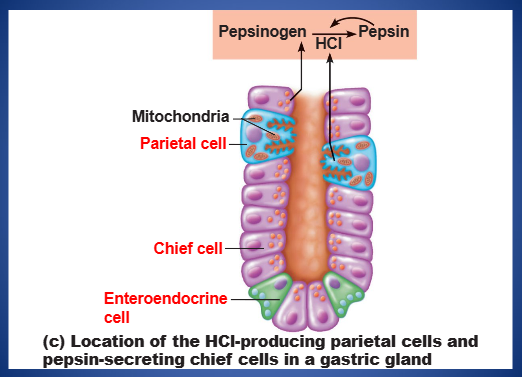
name the cell type found in the gastric glands that secrete:
chemical messengers into the lamina propria
paracrines: serotonin and histamine
hormones: somatostatin and gastrin
enteroendocrine cells
describe the mucosal barrier of the stomach:
layer of [COMPOUND]-rich mucus
[STRUCTURE] between epithelial cells
damaged epithelial cells are [QUICKLY/SLOWLY] replaced by division of stem cells
bicarbonate, tight junctions, quickly
define gastritis
inflammation caused by anything that breaches the stomach’s mucosal barrier
define “peptic/gastric ulcers”
erosion of the stomach wall (mostly caused by H. pylori bacteria)
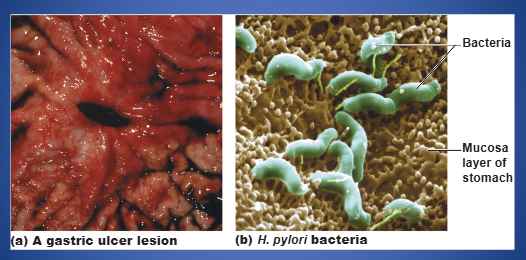
digestive processes in the stomach:
physical digestion
[STRUCTURAL BREAKDOWN] of proteins
enzymatic digestion of proteins by [ENZYME] (and [ENZYME] in infants)
secretes [SUBSTANCE] required for absorption of vitamin B12
lack of intrinsic factor can cause [DISEASE]
delivers [BOLUS/CHYME/BILE] to the small intestine
denaturation, pepsin, rennin, intrinsic factor, chyme
define “gastric secretion”
the process by which specialized cells in the stomach lining produce and release gastric juice to prepare for food digestion
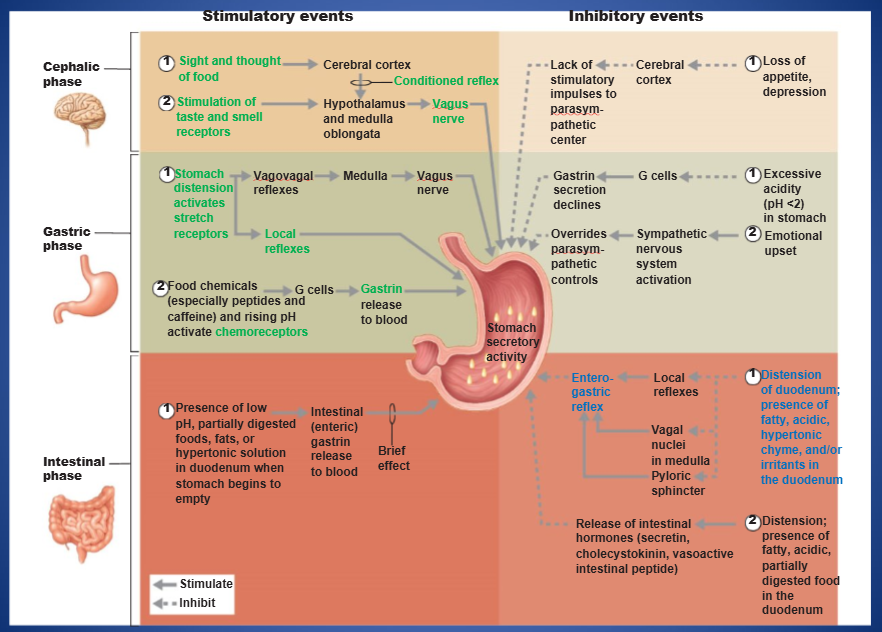
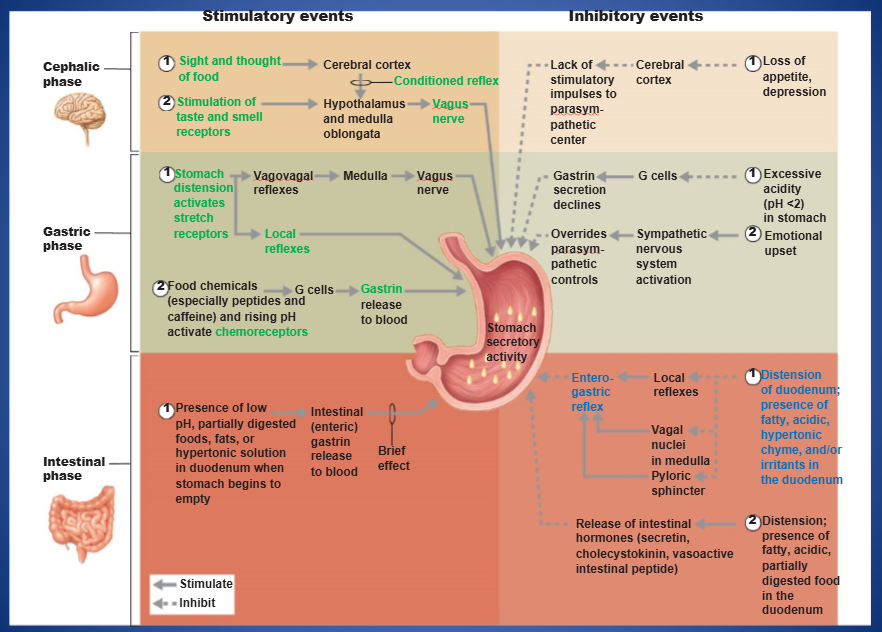
name the 3 phases of gastric secretion
cephalic (reflex) phase
gastric phase
intestinal phase
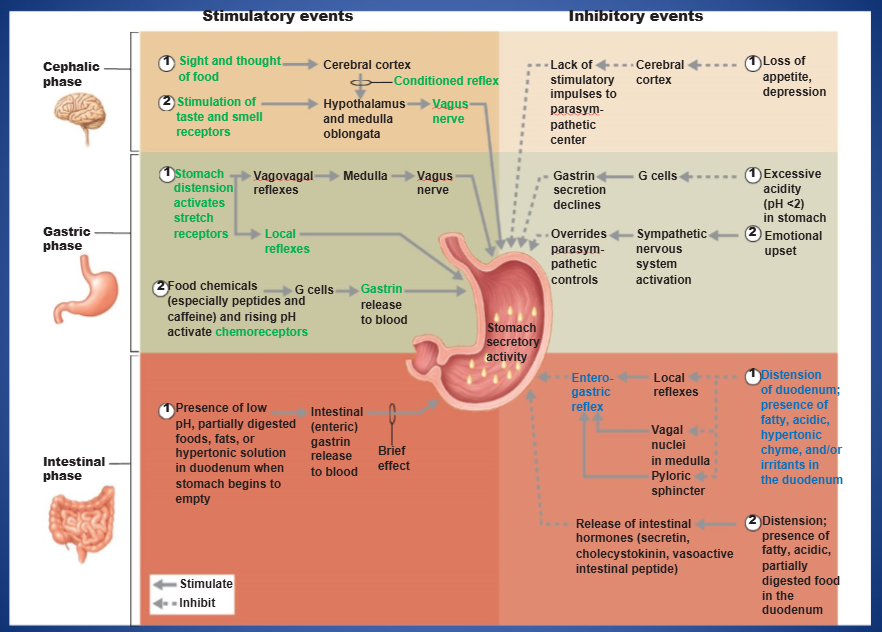
when does the cephalic (reflex) phase of the gastric secretion process take place?
few minutes prior to food entry
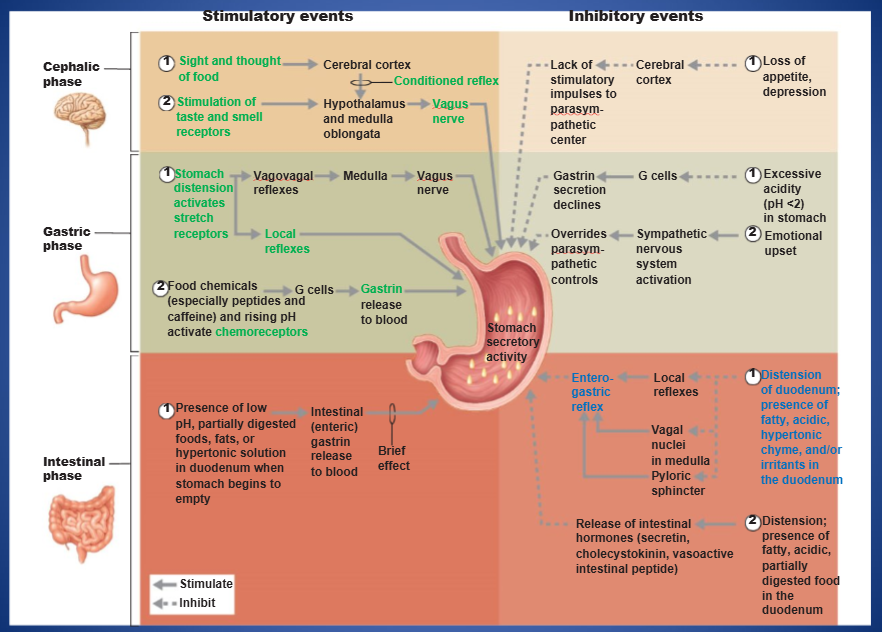
when does the gastric phase of the gastric secretion process take place?
3-4 hours after food enters the stomach
describe what occurs during the cephalic phase of the gastric secretion process
the sight, smell, or thought of food signals the vagus nerve to release acetylcholine, which prepares the stomach for incoming food
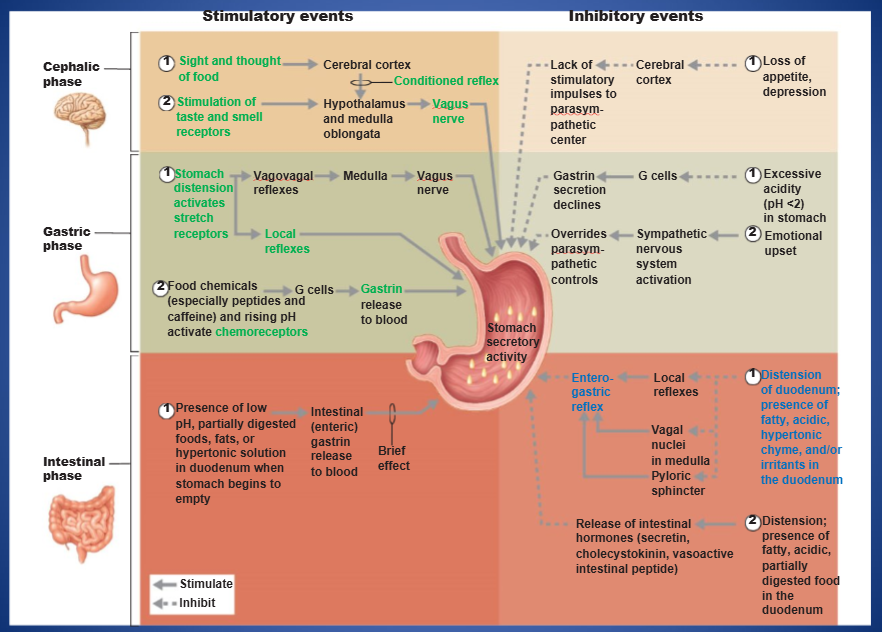
describe what occurs during the gastric phase of the gastric secretion process
the moment food arrives in the stomach
the stomach walls stretch (distension), stimulating:
MECHANICAL: local enteric reflexes (stomach motility)
CHEMICAL: the production of gastrin, histamine, and ACh (hormones needed for maximum HCl secretion)
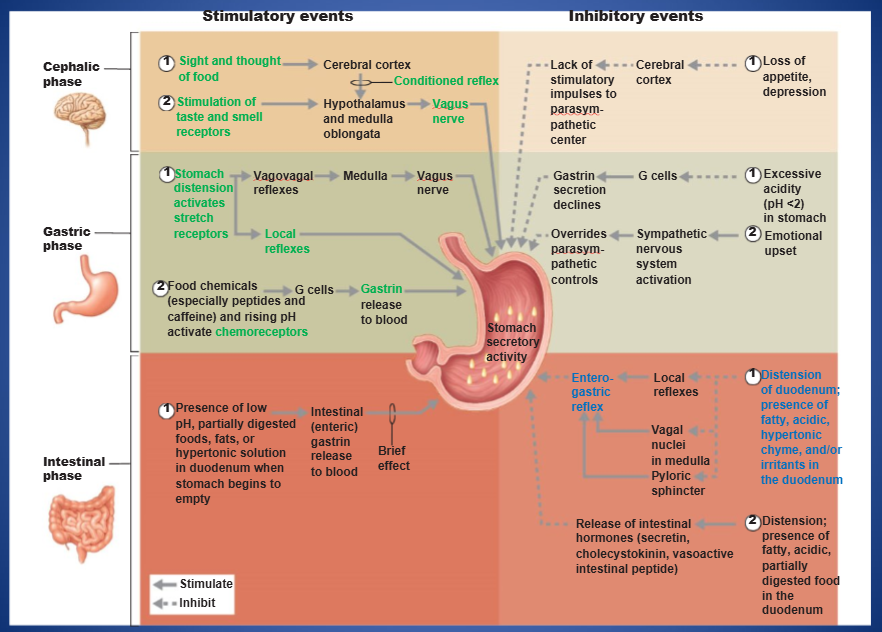
describe what occurs during the intestinal phase of the gastric secretion process
the moment the small intestine’s duodenum fills up with chyme
this phase has both a brief stimulatory and inhibitory component:
STIMULATORY: partially-digested proteins enter the duodenum, triggering the release of intestinal gastrin → stimulates gastric acid
INHIBITORY: when small intestine (duodenum) signals stomach to slow down digestion because the duodenum is filled with chyme, stretching, or becomes too acidic
MECHANICAL: enterogastric reflex (inhibit stomach muscle contraction)
CHEMICAL: enterogastrone hormone secretion (inhibits gastric motility and gastric acid secretion
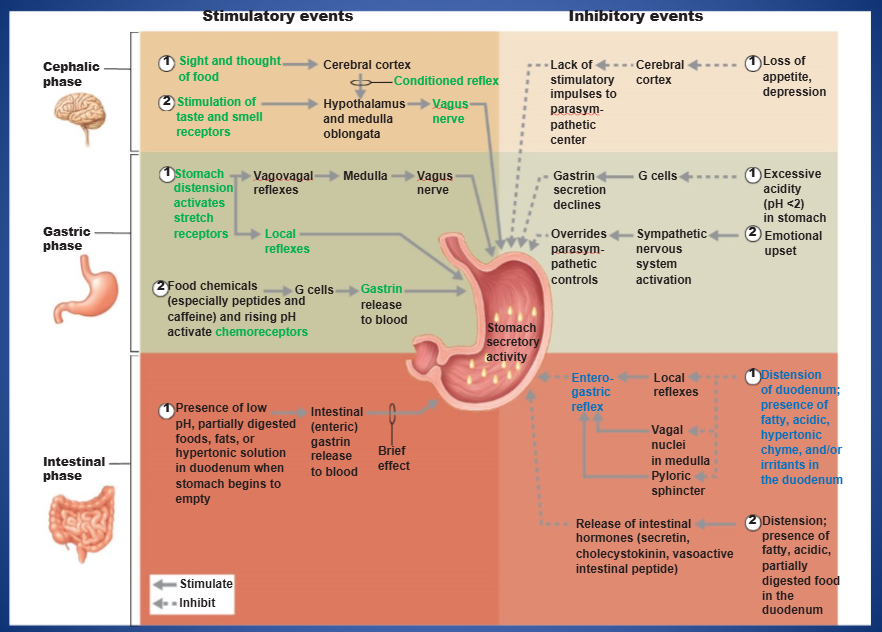
why is the intestinal phase of the gastric secretion process important?
to protect the small intestine from excessive acidity and allow time for nutrient absorption
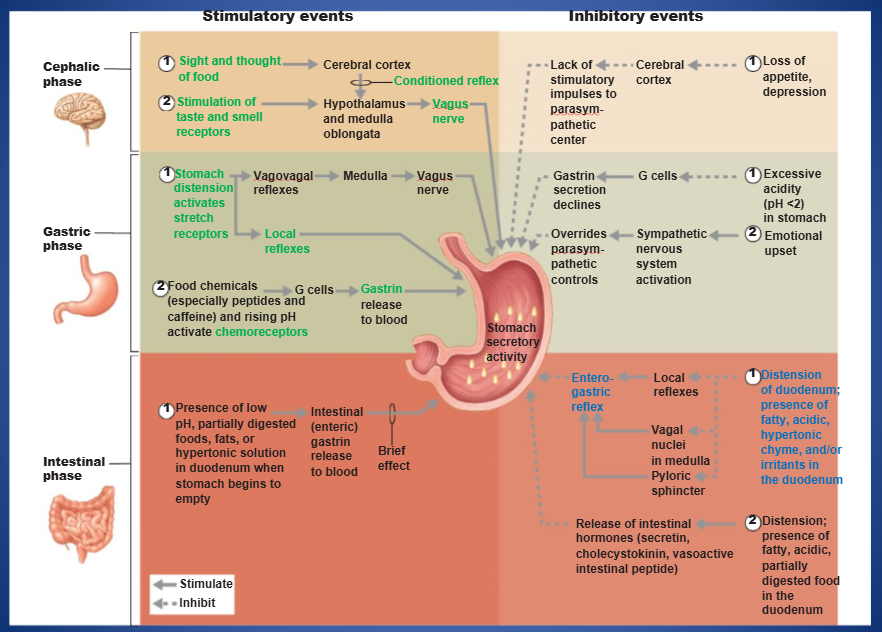
name the 3 chemicals that stimulate parietal cells to secrete maximum amounts of HCl
ACh, histamine, gastrin
how does the stomach respond to being filled up with food?
stretch!
describe the stomach’s reflex-mediated receptive relaxation
as you swallow, the swallowing center of the brain stem sends a signal to the stomach to relax the muscle to make room for incoming bolus even before it arrives
describe the stomach’s plasticity (stress-relaxation response)
the stomach’s smooth muscle can be stretched to accommodate a big meal then slowly contracts as it empties
describe the concept of “gastric accommodation”
the stomach has the ability to stretch its walls to fit up to 4L of food while maintaining a relatively constant internal pressure
what are the factors that affect the rate of digestion?
the amount and composition of what was eaten
regulation of gastric emptying:
as [BILE/CHYME/BOLUS] enters the duodenum…
[PROTEIN TYPE] respond to stretch and chemical signals
[INHIBITORY] reflex and [INHIBITORY HORMONE] inhibit gastric secretion and duodenal filling
[MACROMOLECULE]-rich chyme moves [SLOWLY/QUICKLY] through the duodenum
[MACROMOLECULE] chyme remains in the duodenum 6 hours or more
chyme, receptors, enterogastric, enterogastrones, carbohydrate, fat
true/false: the stomach is the major organ of digestion and absorption
false — the small intestine is the major organ of digestion and absorption
name the structural modifications of the small intestine that allow for increased surface area
circular folds, villi, microvilli
why is a high surface area important for the function of the small intestine?
to maximize nutrient absorption
identify the function of the small intestine’s circular folds
to force the chyme to slowly spiral through lumen
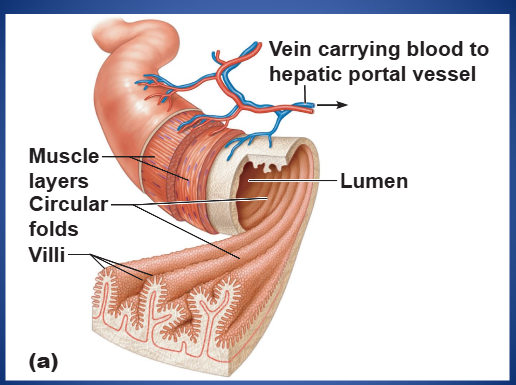
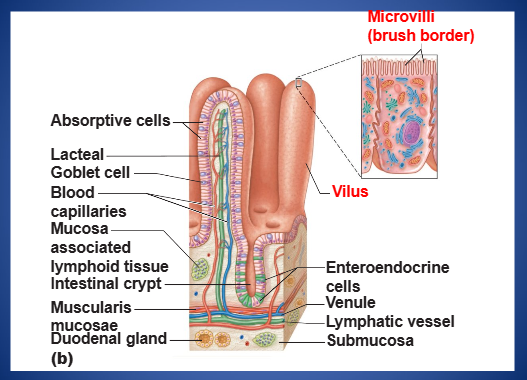
describe the small intestine’s villi
finger-like extensions (1mm high) of the mucosa
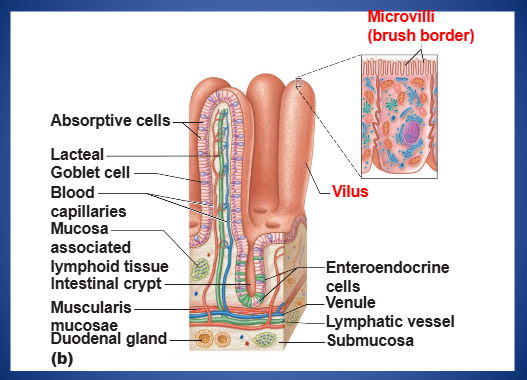
describe the small intestine’s microvilli
projections (brush border) of absorptive cells; they bear brush border enzymes
SLIDE 95