Proprioception, Nociception, and Pain Pathways in Human Sensory Systems
 Call Kai
 Learn
Learn Practice Test
 Spaced Repetition
 Match
Match Flashcards
 Knowt Play
1/26

There's no tags or description
Looks like no tags are added yet.
Name | Mastery | Learn | Test | Matching | Spaced | Call with Kai | Chat |
|---|
No analytics yet
Send a link to your students to track their progress
27 Terms
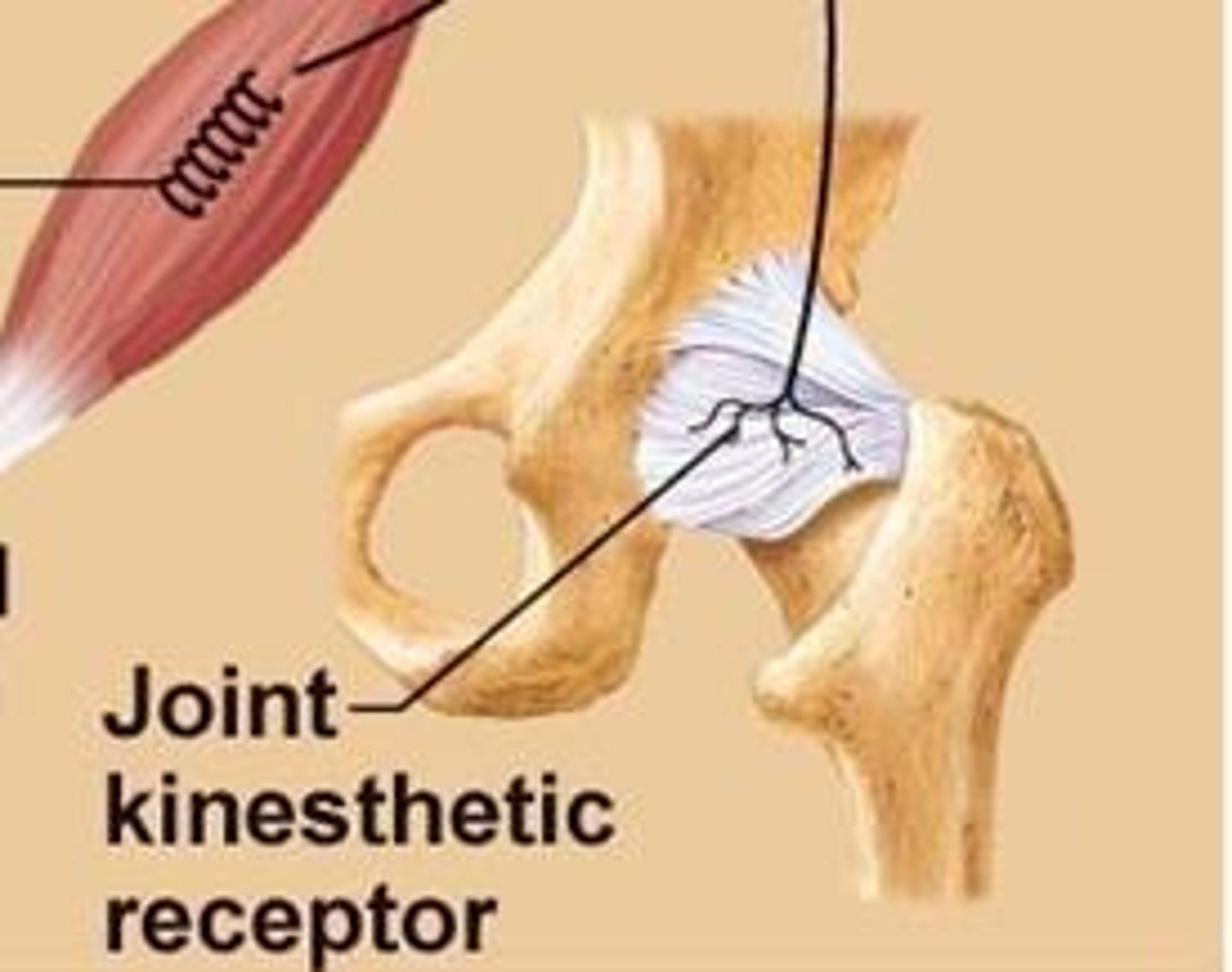
What is proprioception?
Information about limb and body position in space, essential for accurate performance of complex movement.
What are proprioceptors?
Receptors for self; a class of mechanoreceptors that provide information about body position.
What are the main types of proprioceptors?
Muscle spindles, Golgi tendon organs, and joint receptors.
What do muscle spindles detect?
Muscle length and stretch.
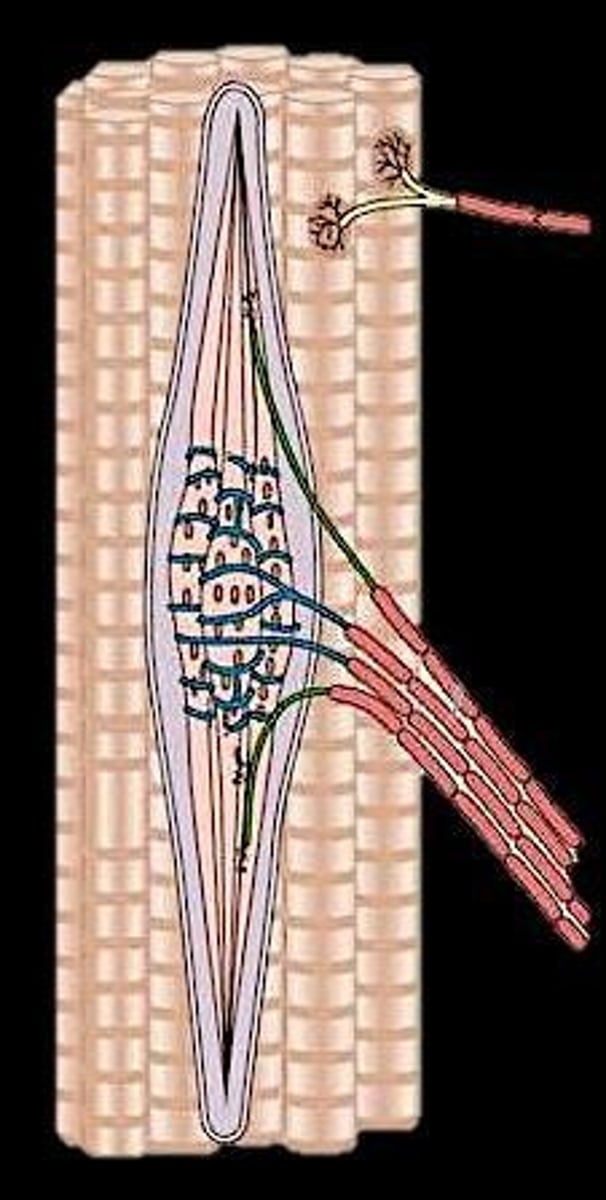
Where are Golgi tendon organs located?
In tendons, between muscle fibers and tendon.
What do Golgi tendon organs provide information about?
The force of muscle contraction and tension in the muscle.
How do muscle spindles and Golgi tendon organs respond during muscle contraction?
Muscle spindles decrease action potential firing rates, while Golgi tendon organs increase firing rates.
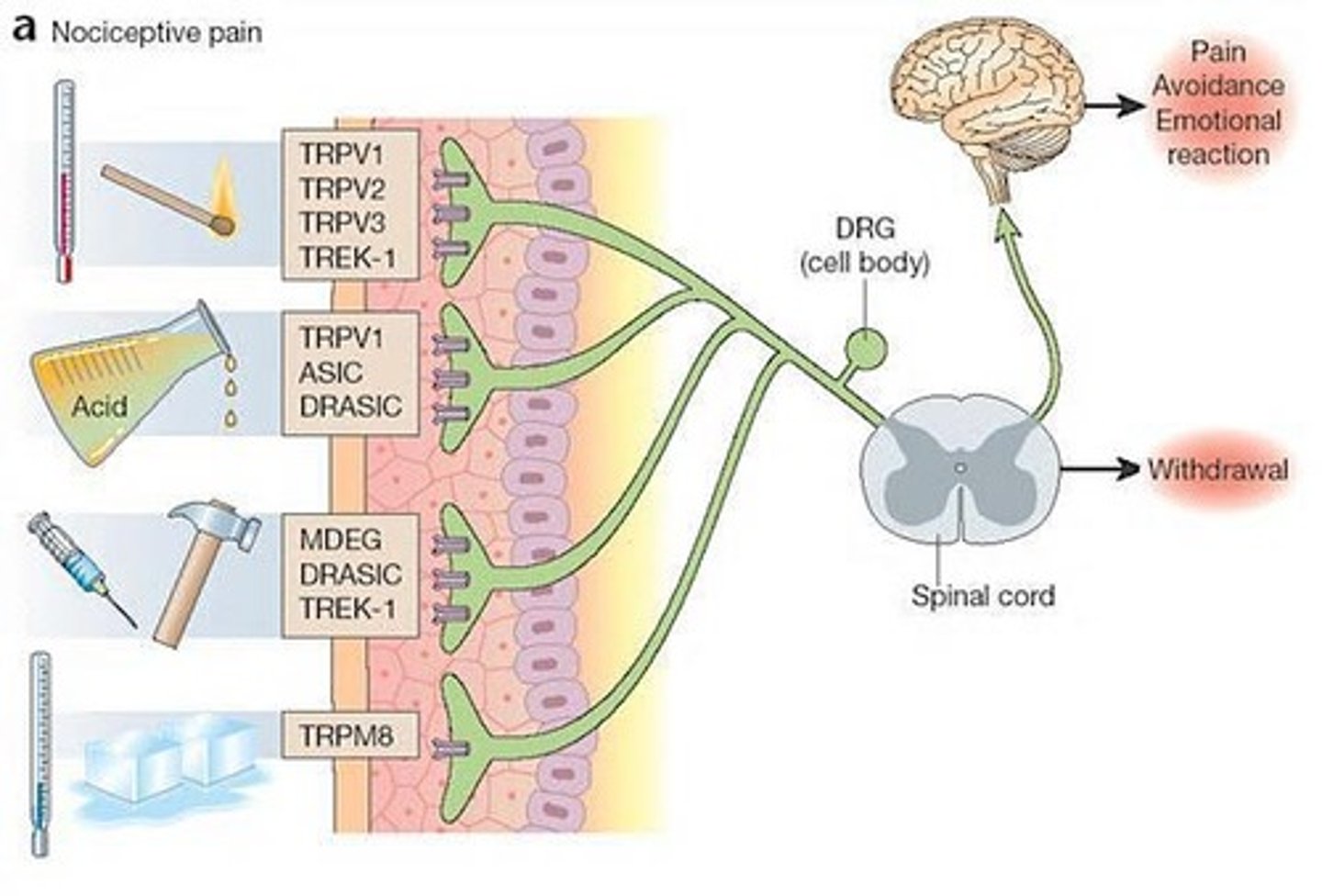
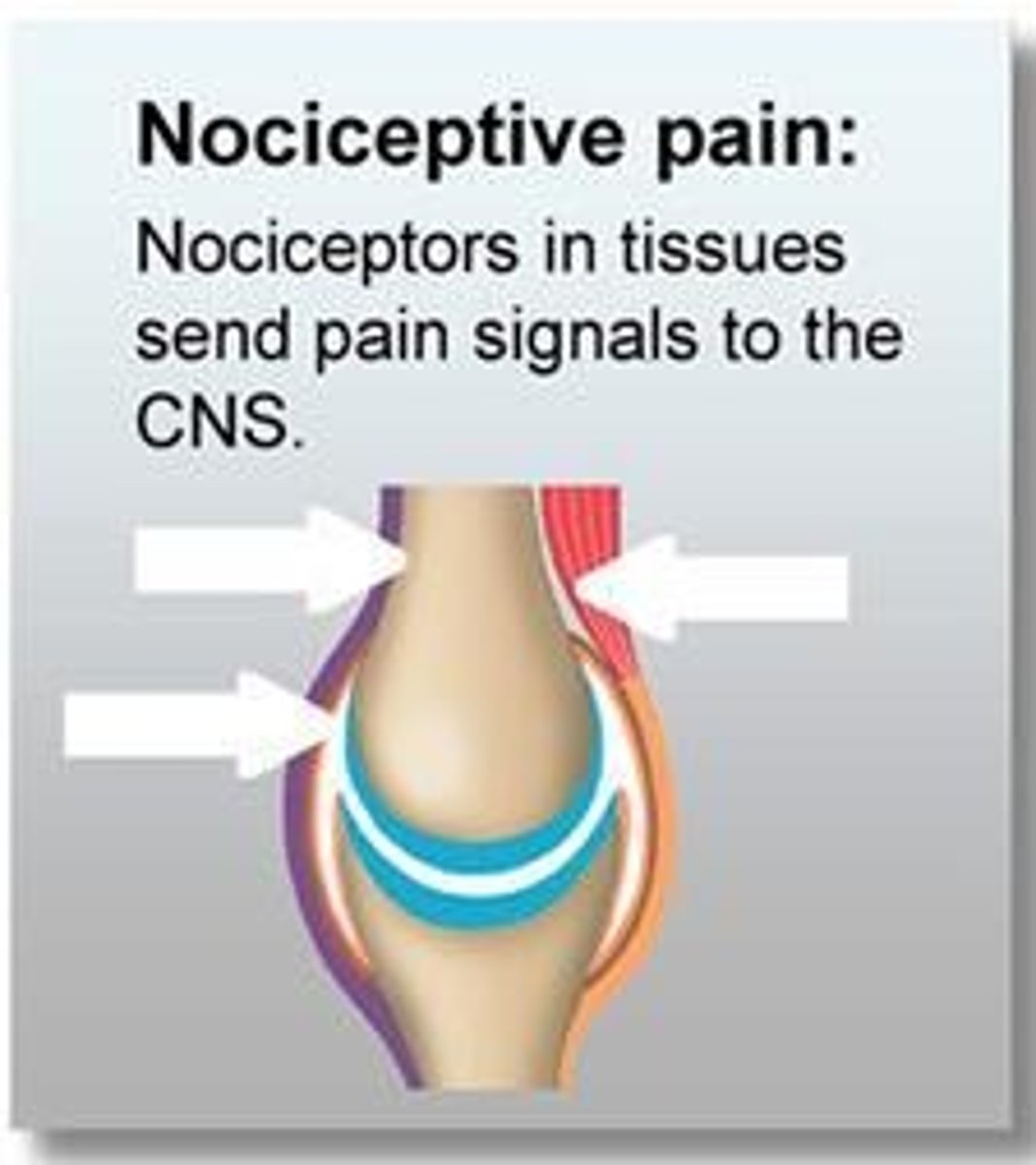
What are nociceptors?
Neurons responsible for sensing noxious stimuli from the external and internal environment.
What are the two main groups of nociceptors?
Aδ fibers and C fibers.
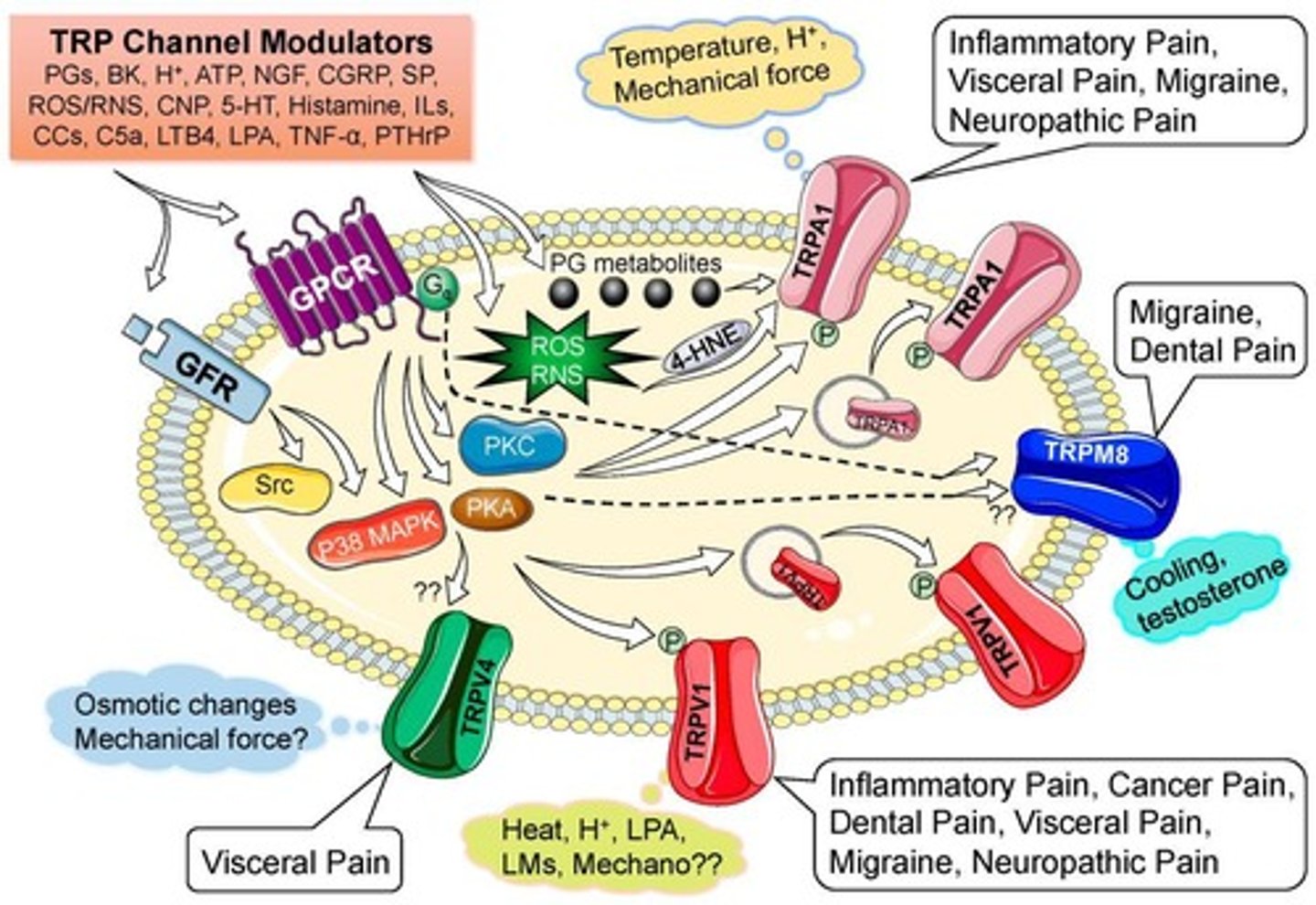
What types of stimuli do nociceptors transduce?
Mechanical, thermal, and chemical stimuli.
What is sensory transduction?
The process of converting sensory stimuli into action potentials through the activation of TRP channels.
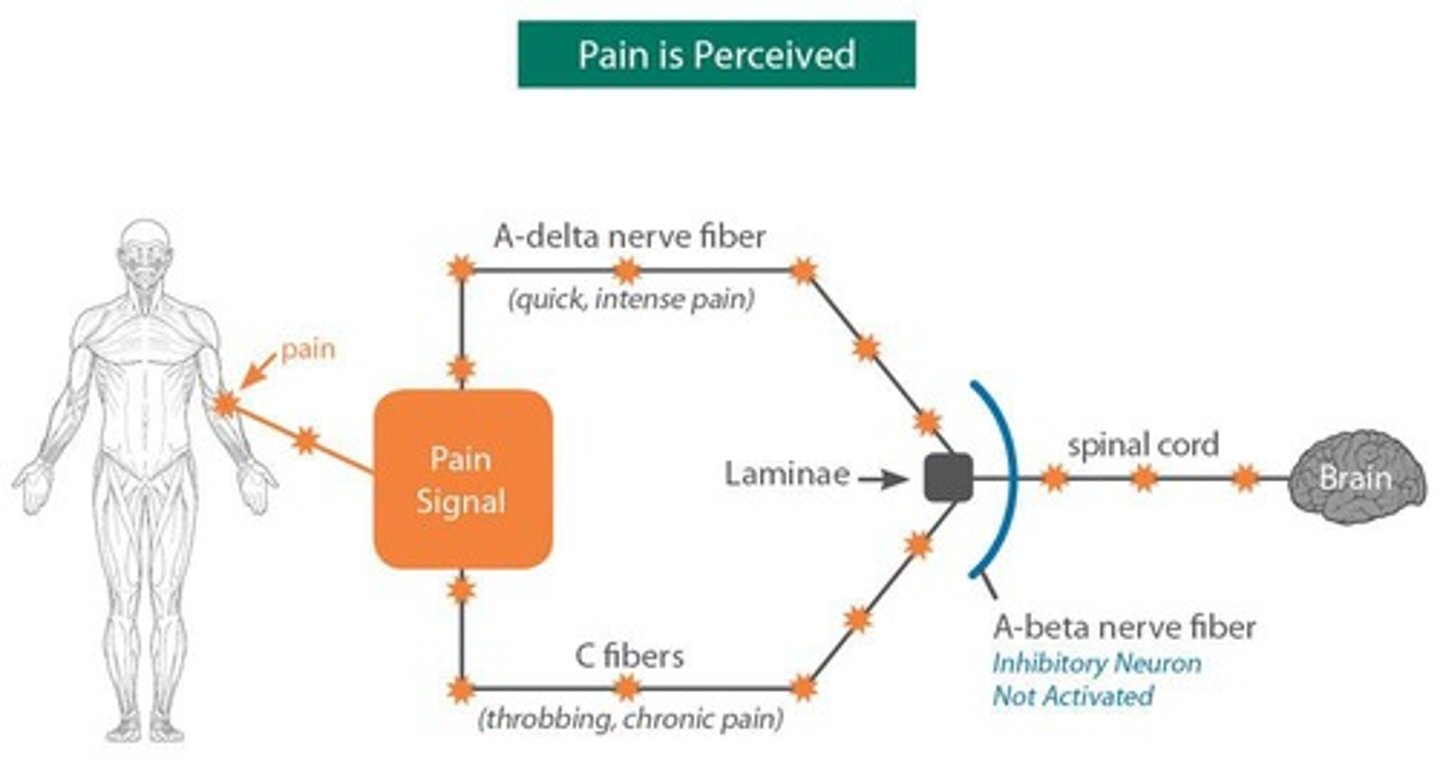
What characterizes Aδ fibers?
They are myelinated and respond to fast, intense mechanical and thermal pain stimuli.
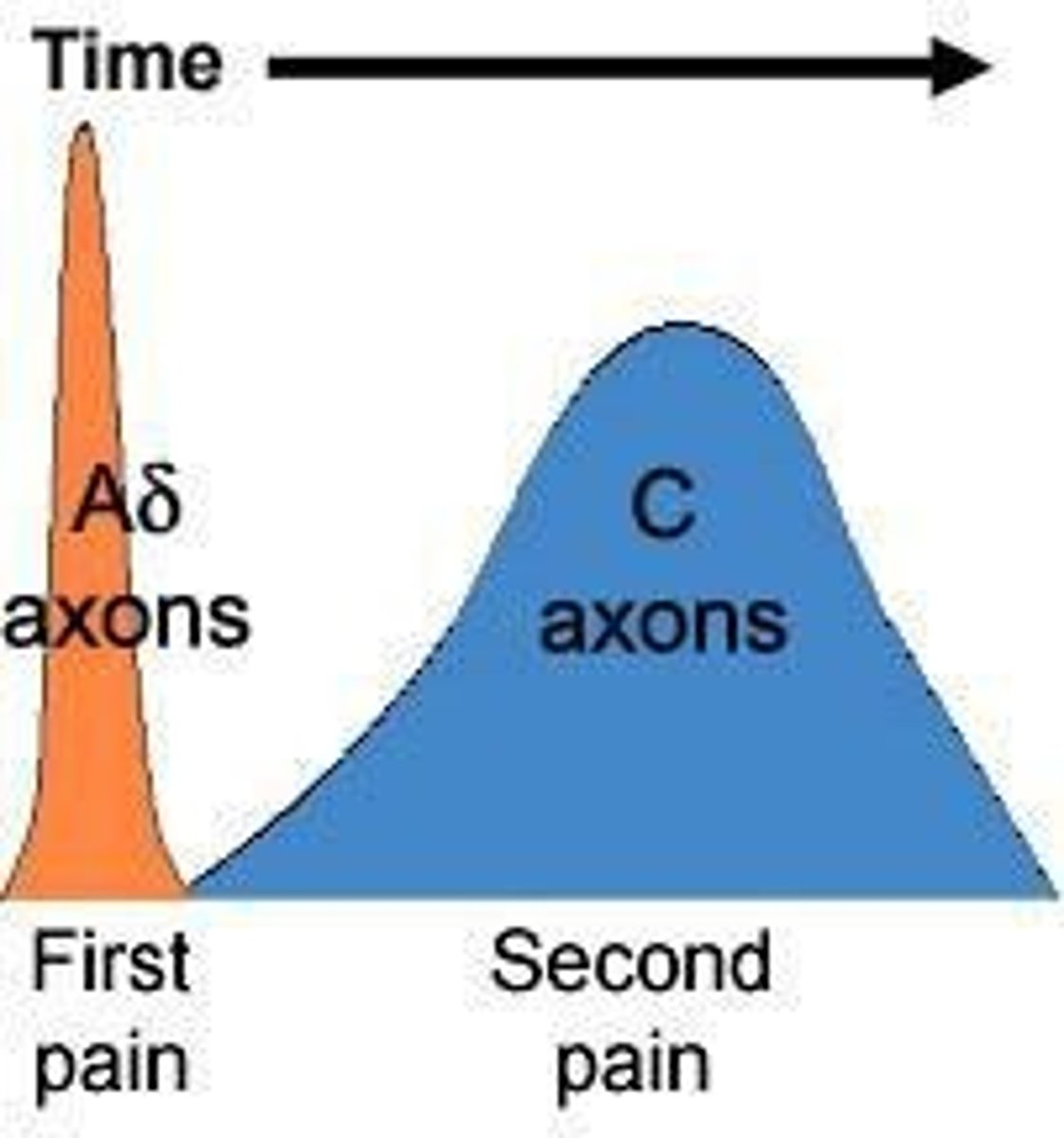
What characterizes C fibers?
They are unmyelinated and respond to throbbing, chronic mechanical, thermal, and chemical pain.
What is hyperalgesia?
Increased sensitivity to painful stimuli near the site of injury.
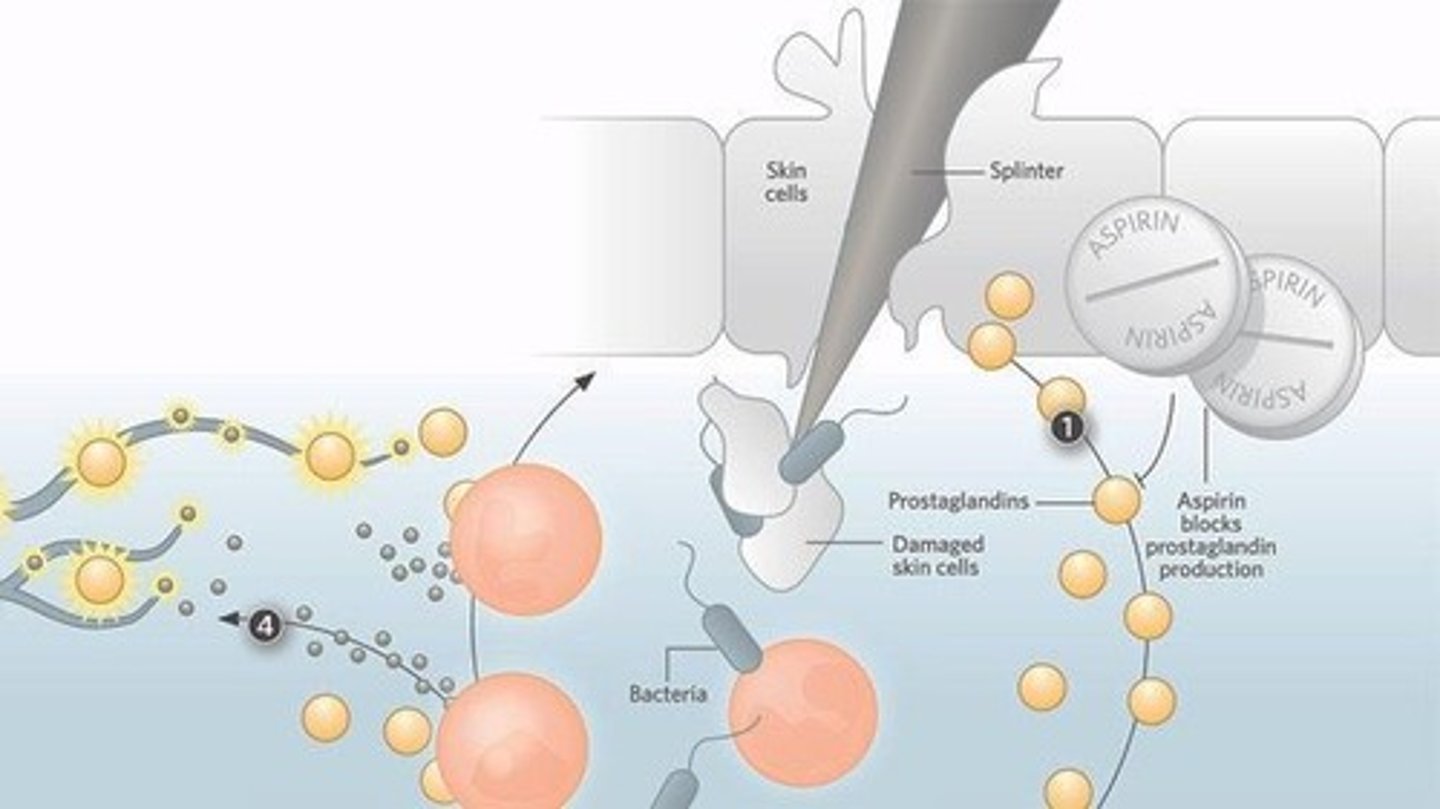
What role do prostaglandins play in pain?
They interact with pain receptors to decrease the threshold for depolarization and action potentials.
What are the two major categories of pain?
Nociceptive pain (somatic and visceral) and neuropathic pain.
What is referred pain?
Pain perceived at a location other than the site of the painful stimulus, due to shared neural pathways.
What is the function of descending pathways in pain modulation?
To relieve pain through the release of analgesic molecules like endorphins.
What are the two common pharmacological treatments for pain?
Opioids and NSAIDs (non-steroidal anti-inflammatory drugs).
How do opioids relieve pain?
By binding to endogenous opioid receptors, reducing neurotransmitter release and hyperpolarizing postsynaptic neurons.
What is the mechanism of action for NSAIDs?
They block the synthesis of prostaglandins, reducing inflammation and pain.
What is the role of the spinothalamic tract?
It is the major ascending pain pathway that alerts the CNS to the presence of noxious stimuli.
What is the significance of dermatomes?
They are territories of the body innervated by specific dorsal root ganglia and spinal nerves.
What happens during the activation of TRP channels?
Influx of Ca2+ and Na+ occurs, leading to depolarization of sensory afferents.
What is the difference between visceral and somatic pain?
Visceral pain is diffuse and often referred, while somatic pain is localized and more intense.
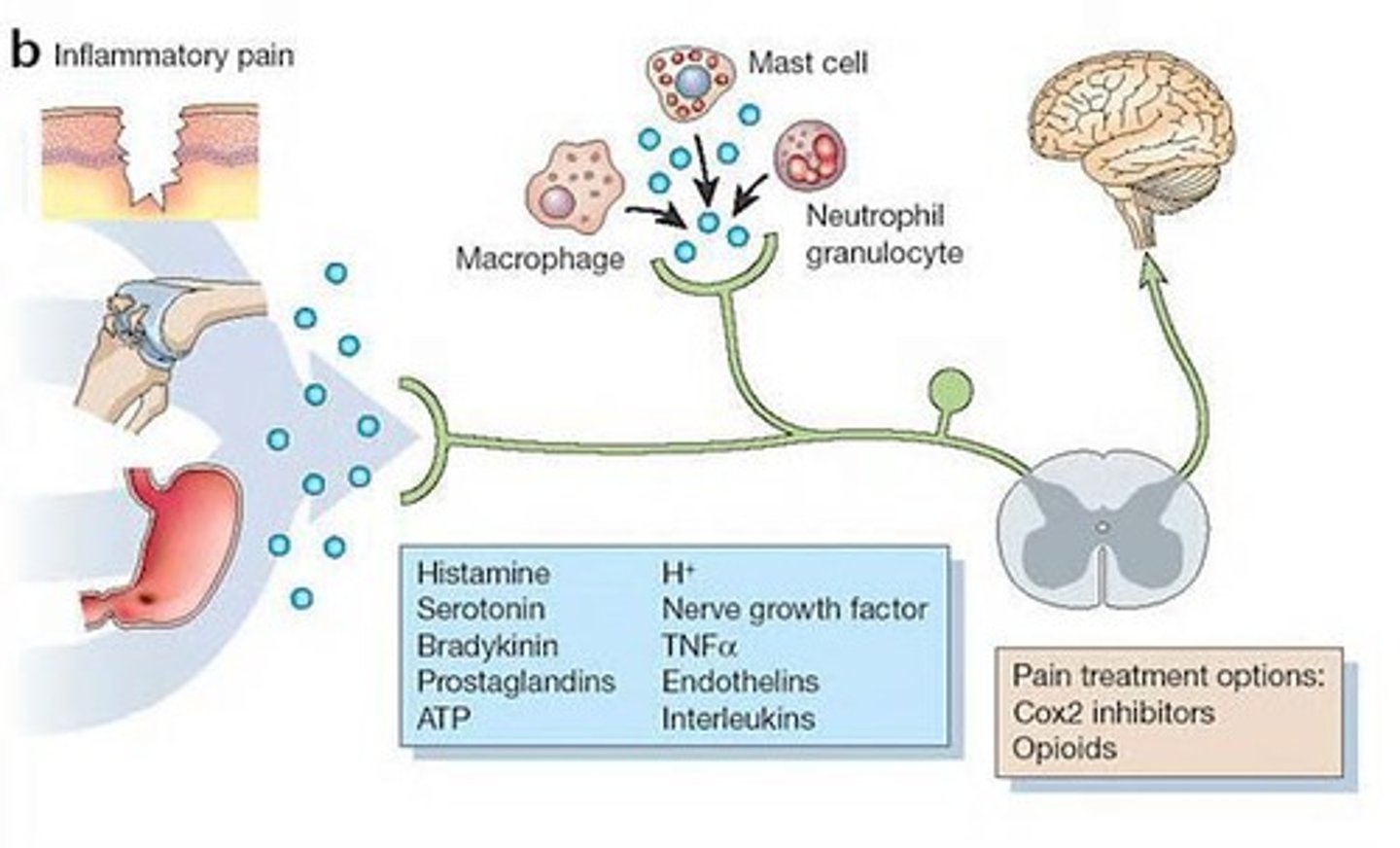
What is the relationship between nociceptors and pain signaling?
Noxious stimuli act on intact nociceptors to increase signaling, leading to pain perception.
What is the role of the periaqueductal gray in pain modulation?
It receives cortical input and sends signals down to the spinal cord to limit pain.