Foodborne and Waterborne Diseases
 Call Kai
 Learn
Learn Practice Test
 Spaced Repetition
 Match
Match Flashcards
 Knowt Play
1/33

There's no tags or description
Looks like no tags are added yet.
Name | Mastery | Learn | Test | Matching | Spaced | Call with Kai | Chat |
|---|
No analytics yet
Send a link to your students to track their progress
34 Terms
Foodborne and Waterborne Diseases - overview
big picture: pathogens (in fecal matter) → contaminate food & water → pathogens ingested → dz in host (worldwide distribution)
involves fecal-oral route:
mode of transmission: contaminated food & water
portal of entry (oral cavity): mucous membranes of GI tract
reservoirs
1° (primary) reservoir = mainly
2° (secondary) reservoir = sometimes
symptoms & diagnosis
typically GI symptoms (ex. nausea, vomiting, diarrhea, abdominal cramps)
diagnosis: based on GI symptoms
look for pathogen in food/water or in stool sample
serology (pathogen/Ab(IgM))
predisposing factors
inadequate cooking
improper food handling (temp)
poor personal hygiene
unsanitary conditions
best preventative measures & tx
preventative: washing hands, well-cooked food
tx: medications, antitoxins (Ab against a toxin), supportive therapy (oral rehydration)
bacterial infection
pathogen is consumed in food/water
invade & multiply in intestinal lining
incubation period: long/slow (hrs to days)
no s/s yet
s/s happen slowly (@ prodromal period)
nausea, vomiting, diarrhea, usually fever
bacterial intoxication
toxin is consumed in food
toxins made by pathogen → toxemia
incubation period: short (min to hrs)
s/s happen quickly
nausea, vomiting, diarrhea
usually NO FEVER (except super Ag) → probably exotoxin (protein toxin; by gram pos. cell)
Staphylococcal Food Intoxication
cause: Staphylococcus aureus, gram +, cocci, clusters, on skin/many surfaces
type: bacterial intoxication (eat toxin, NOT bacteria)
virulence factor: heat-stabile enterotoxin (GI tract)
NOT destroyed by boiling
s/s: N/V, diarrhea, abd cramps, fever
(Type I exotoxin)incubation period: min to hrs
reservoir: human skin
mode of transmission: dirty hands contaminate food
bact. produce toxin when food left at improper temp
prevention: wash hands, safe food handling, refrigerate properly
tx: oral rehydration, supportive care, abx do NOT work (d/t toxin not bact)
misc: bact. intoxication, aka “food poisoning”
Staph = skin → toxin in food → fast vomiting
botulism
cause: Clostridium botulinum, gram +, bacillus, endospore-forming, obligate anaerobe, endospore at end of cell (“drumstick” appearance)
virulence factor: potent (low LD50), heat-labile neurotoxin (heat can destroy exotoxin), endospores
s/s: flaccid paralysis, (respiratory/cardiac failure → death)
reservoir: contaminated food
mode of transmission: canned food w/ neurotoxins
prevention: proper commercial canning
treat meats w/ nitrites (inhibit germinating)
tx: respiratory assistance, antitoxins
dx: drumstick bact. appearance (terminal endospore)
misc: Clostridium Botulism Intoxication/Foodborne Botulism
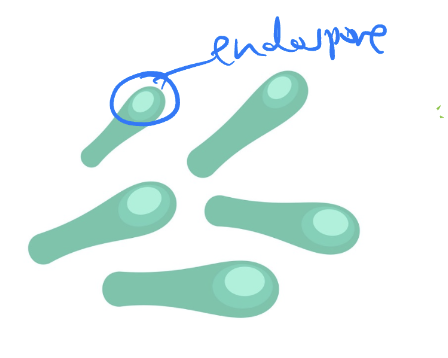
infant botulism
infant ingests C. Botulinum spores (germinate into active cell → produce potent heat labile neurotoxin)
via honey
weakened muscle tone (floppiness), trouble feeding
wound botulism
growth of C. botulinum in DEEP wounds
creates anaerobic environment → spore germinates
common in IV drug users
Clostridium difficile Associated Diarrhea (C.diff)
cause: Clostridium difficile, gram +, bacillus, endospore-forming, obligate anaerobe
virulence factor: exotoxins
s/s: mild diarrhea → colitis,
life-threatening colitis: intestinal ulceration/perforation; bloody diarrhea (sometimes)
reservoir: humans (primary), contaminated medical equipment (secondary)
mode of transmission: fecal-contaminated water, contaminated medical equipment
prevention: gowns, gloves, disposable hospital equipment
tx: antiprotozoal & abx
predisposing factors: mostly acquired in healthcare settings, extended use of abx
dx: PCR to detect toxin-producing genes in stool
misc: aka C.diff Colitis
Salmonellosis (Salmonella Gastroenteritis)
cause: Salmonella enterica serovar Typhimurium, gram —, bacillus, facultative anaerobe, motile
virulence factor: invades intestinal mucosa, multiplies in phagocytes (bacteremia)
s/s: fever (not high), N/V, abd cramps. diarrhea
incubation period: hours (infection → 1st s/s)
reservoir: contaminated meat (poultry), raw eggs, fruits/vegetables, pet reptiles
mode of transmission: contaminated food
prevention: avoid raw eggs, wash fruits/veg w/ clean water, avoid pet reptiles
tx: oral rehydration, abx
dx: PCR to identify serovar/strain in food
misc: chronic carriers (no s/s → still infectious) can shed bact. in feces for up to 6 mo
Typhoid fever
cause: Salmonella enterica serovar Typhi, gram —, bacillus, facultative anaerobe, motile
virulence factor: multiplies in phagocytes → bacteremia
s/s: prolonged high fever (104 °F), HA, muscle aches, abd cramps, diarrhea, rose spots (skin rash on trunk)
severe: intestinal ulceration/perforation → bloody diarrhea (dysentery)
incubation period: weeks (infection → 1st s/s)
reservoir: humans
mode of transmission: fecal-contaminated food or water
prevention: good personal hygiene (handwashing)
tx: abx, oral rehydration, chronic → wks tx
dx: pathogen in blood/stool, rose spots
misc: 1-3% chronic carriers (asx)/shed bact in feces (ex. Typhoid Mary)
virulence factor: multiply in phagocytes
salmonellosis
typhoid fever
brucellosis
virulence factor: toxins
staph. food intoxic
botulism
c.diff
bact. gastroenter
hemorrhagic colitis
shigellosis