Chapter 11 - Stress
 Call Kai
 Learn
Learn Practice Test
 Spaced Repetition
 Match
Match Flashcards
 Knowt Play
1/116

Earn XP
Description and Tags
Exam 4
Name | Mastery | Learn | Test | Matching | Spaced | Call with Kai | Chat |
|---|
No analytics yet
Send a link to your students to track their progress
117 Terms
stress
physical, emotional, cognitive, and behavioral responses to events that are appraised as threatening or challenging
stressors
things that cause stress
distress
experience unpleasent stressors
eustress
positive events that still make demands on a person to adapt or change
ALSO
the optimal amount of stress that people need to promote health and wellbeing
arousal theory
a certain amount of stress is needed for people to feel content and function well
ex. if you have no stress you won’t do things (no stress for exam - won’t study)
catastrophes
an unpredictable event that happens on a large scale and creates tremendous amounts of stress and feelings of threat
have large adaptive demands
impact of these can affect unborn kids too
major life changes
significant changes in one’s life
ex. marriage, kids
social readjustment rating scale (SRRS)
assessment that measures the amount of stress in a person’s life over a year period that results from major life events
units of things that cause life changes
as the score increases the risk of illness and accidents also increases
college undergrad stress scale (CUSS)
sees how much stress you might have
SRRS but for college students
hassles
daily annoyances
less intense but more frequent
lazarus and folkman hassles scale
rate items on how much of a hassle they’d be
0 - no hassle, 3 - severe hassle
predicts short term illnesses
pressure
happens when given urgent demands or expectations for behavior from an outside source
uncontrollability
not able to affect the source of the stress
how much control you have on a situation
less control more stress
Uncontrollable AND unpredictable = HIGH stress
frustration
happens when people are blocked from achieving a desired goal or fulfilling a perceived need
external frustrations
losses
rejections
delay
internal
personal frustrations
can’t attain something because of personal characteristics
ex. can’t play basketball because i’m short
persistence
continue your efforts in order to get around whatever is causing the stress
frustration-aggression hypothesis
frustration leads to aggression -
displaced agression
take out one’s frustration on a less threatening more available target
escape or withdrawl
leaving the presence of a stressor
ex. drugs, fantasy, suicide
approach-approach
have to choose between 2 desirable goals
ex. win--win situation
not too much stress involved
avoidance-avoidance
choose between 2 undesirable goals
lose-lose situation
will try and delay the decision
approach-avoidance
have to choose or not choose 1 goal that has positive and negative aspects
ex. moving to school in NY
good prestige
lots of money
double approach-avoidance conflict
have two goals and each has positive and negative aspects
ex. choosing a house
leads to indecisiveness
vacillation
indecisiveness
multiple approach-avoidance conflicts
more than 2 goals with each having positive and negative aspects
ex. choosing a college
autonomic nervous system
automatic activities are controlled by this
sympathetic
fight or flight
parasympathetic
returns everything to normal
general adaptation syndrome
three stages of the body’s physiological reaction to stress
what is happening to your body when it goes through stress
alarm
sympathetic nervous system activates when body first reacts to a stressor
burst of energy because adrenal glands are releasing hormones and all your vitals are increasing
resistance
as stress continues, body is settling into sympathetic activity
less of the alarm stage (wears off)
this stage continues until stressor ends
what affects the brain’s processing so you won’t feel pain in the resistance stage
norepinephrine
analgesia
insensitivity to pain
exhaustion
when body resources are gone
can lead to stress related diseases and death
prolonged secretions of stress hormones during exhaustion can lead to the most harmful effects of stress
you are still stressing but your body has nothing to give anymore
immune system
system of cells, organs, and chemicals of the body that respond to attacks from diseases, infections, and injuries
psychoneuroimmunology
the study of the effects of psychological factors on the immune system
vagus nerve
longest nerve that connects the body to the brain
stress activates the same system that is used to deal with a…
infection
dehydroepiandrosterone (DHEA)
provides stress toleration to humans
regulates effects of stress on the hippocampus
stress increases the activity of the immune system because it thinks its getting sick when get the priming where the white blood cells surround bacteria and releasees chemicals that activate receptor sites on the vagus nerve
continuous stress can cause what to the immune system inflammatory response (describe)
breakdown
damaged cells release chemicals that then cause the blood vessels to leak fluids into surrounding tissues that can cause inflammation
increased inflammation causes more diseases
allostatsis
maintains stability through change to meet both perceived and anticipated demands
through this the body protects itself form internal and external stress
allostatic load/allostatic overload
prolonged exposure to stress hormones
results in wear and tear on the brain and body
resillience
our capacity to avoid the negative biological, psychological, and social outcomes of stress
coronary heart disease
build up of plaque in the arteries of the heart
stress and the liver
affects its functioning
the liver is not activated while the SNS is aroused in the stress process (fighting and flighting, returning the body to normal) so it can’t clear fat and cholestrol from the bloodstream
type 2 diabetes
excessive weight gain
pancreas insulin levels become less efficient as weight increases
cytokines
a chemical released in the IS
stress increases this and causes insulin resistance
sugar isn’t being processes properly
natural killer cells (NK)
antivirus and anticancer cell
suppresses viruses and destroys tumors
stress lowers this so body can’t fight cancerous growth
health psychology
focuses on how physical activities, psychological traits, stress reactions, and social relationships affect overall health and rate of illness
clinical health psychology
subfield of health psychology
uses the knowledge gained by researches in the field to promote healthy lifestyles
behavioral psychology
combine medicine and psych related to health issues
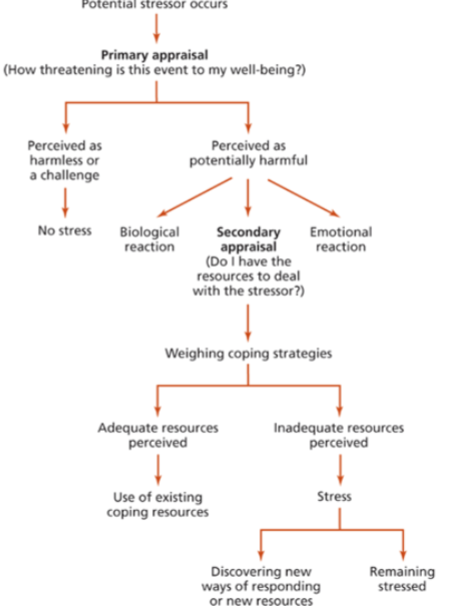
Lazarus cognitive-mediational theory of emotions
cognitive view on stress
the way that people think about a stressor is a major factor in how stressful that stressor becomes
primary appraisal (describe seeing things as a threat and a challenge)
estimating the severity of the stressor and classifying it as a threat, a challenge, or a harm or loss that has already occurred
if seen as threat
negative emotions arise and can’t cope with threat
ex. seeing a quiz as threatening because wasn’t preprared
if seen as a challenge
will meet that challenge
ex. excited for psych exam because see it as an opportunity to do well
better way
secondary appraisal
people who have identified a threat, or harmful effect must estimate the resources they have available for coping with the stress
if adequate
less degree of stress
cognitive reappraisal approach
tell participants to reappraise (reevaluate) their arousal while experiencing a stressor to help shift negative effects to positive ones
trying to see how you can go from stress to primary appraisal
trying to get away from the stress and reappraise the situation
ex. telling you stress is good right before getting on an amusement ride
arousal
stress
amount of arousal in an easy task
high moderate level for optimal performance-
amount of arousal in a difficult task
low moderate level for an optimal performance
Yerkes-Dodson Law
when tasks are simple a high level of arousal leads to better performance and when the task is difficult low levels of arousal lead to better performance
Type A personality
workaholics
competitive
easily annoyed
usually unsatisfied
can’t relax
fit neuroticism personality trait
worry a lot and moody
more likely to develop heart disease
Type B personality
easygoing
slow to anger
not competitive or driven
Type C personality
try to keep the peace
difficulty in expressing emotions
internalize anger (not good, can lead to cancer)
weakens the IS and slows recovery
Type D personality
distressed people
prone to chronic stress
experience social inhibition (don’t do well or won’t do something because of others there)
Hardy personality
thrive on stress but lack anger and hostility of the Type A personality
don’t see things that go wrong as a threat but a challenge
feel in control of their lives
AKA Type H
3 C’s in Hardy Personality
they feel commitment to their beliefs and work
they feel like they are in control of their lives
see things as a challenge
optimist
tend to look for positive outcomes
have high levels of T cells that increase function of the Immune System
pessimist
expect worst to happen
4 ways optimism may affect lifespan
optimists are less likely to develop learned helplessness
they will take care of their health by preventative measures because they believe their actions make a different in what will happen
less likely to be depressed
have better immune systems because they are less stressed
burnout
psychological strain resulting from prlonged response to job stressors
negative changes in thoughts, emotions, and behavior as a result of prolonged stress and frustration
mental and physical exhaustion
leads to withdrawal
drop in work quality, late, lack of enthusiasm
acculturation
the process of adapting to a new or different culture
acculturative stress
stress resulting from the need to change and adapt to the dominant culture
integration
how to deal with acculturative stress
the individual tries to maintain a sense of the original cultural identity while also trying to form a positive relationship with members of the majority culture
assimilation
how to deal with acculturative stress
minority person gives up old cultural identity and completely adopts the majority culture’s ways
moderate stress
separation (how to deal with acculturative stress)
how to deal with acculturative stress
minority person rejects the majority cultures ways and tries to maintain old cultural identity
high stress
marganlized
don’t join majority or maintain their old cultural
don’t feel apart of either one
no security from the familiar culture or acceptance from the majority one
homeopathy
the treatment of disease by introducing small amounts of substances that would cause disease
law of infinitesimals
dilute treatments to levels that won’t cause symptoms
coping strategies
actions people can take to master, tolerate, reduce, or minimize the effects of stressors
problem-focused coping
attempting to deal directly with the stressor
ex. not understanding prof so go to their office hours
emotion-focused coping
involves changing the way a person feels or emotionally reacts to a stressor
ex. talking to a friend about the prof
meditation
mental series of exercises meant to refocus attention and achieve a trancelike state of consciousnessc
concentrative meditation
focus min on repetitive or unchanging stimulus so mind can be cleared and body can relax
mindfulness mediation
form of concentrative meditation
purposefully paying attention to the present moment without judging or evaluating that experience
progressive muscle relaxation
tense your muscles and then relax them so you know how it feel for them to be relaxed
visualization
use imagination to go to a calm place using as many senses as you can
social-support system
network of people who can offer help to a person in need
tend and befriend
women will become friends with enemies and try to negate the threat
what gene found on the Y chromosome heightens sympathetic activity to stress and the reason why men “fight or flight'“ in stress
SRY
what can hassles also be known as
minor life changes
issues with life events scale (SRRS, CUSS)
can be dated/need revision
counteracts the definition of stress that says it is based on appraisal
doesn’t take into account appraisal
emotional exhaustion
emotional drain from work
depersonalization/cynicism
clients/customers/patients are treated as objects
ex. feel like they are a hindrance to getting the job done
depersonalization - “seeing customers like objects and not people”
cynicism - “I hate this CFA job”
ex. i hate my CFA job because I always have to smile
low personal achievement/lowered self-efficacy
feel like don’t have real impact on workplace
best efforts are seen as futile and no real motivation to improve
Lazarus cognitive-mediational theory image
giving up
stop approaching goal so stress are no longer relevant
problems with giving up
feel bad/guilty for stopping
leads to a different kind of stress
people may erroneously believe they can’t do it
falsely believe that they can’t
ex. learned helplessness
agression
act aggressively towards the thing causing stress (block goal attainment)
punch someone because it’ll get rid of stress they are causing me
problems with agression
consequences are usually bad and cause stress themselves
ex. jail
better-than-average-effect
widely held perception that one is better than average on a range of positive characteristics/qualities
self-indulgence
find a rewarding task in which to engage or object to posses and get it
ex. Ohill ice cream